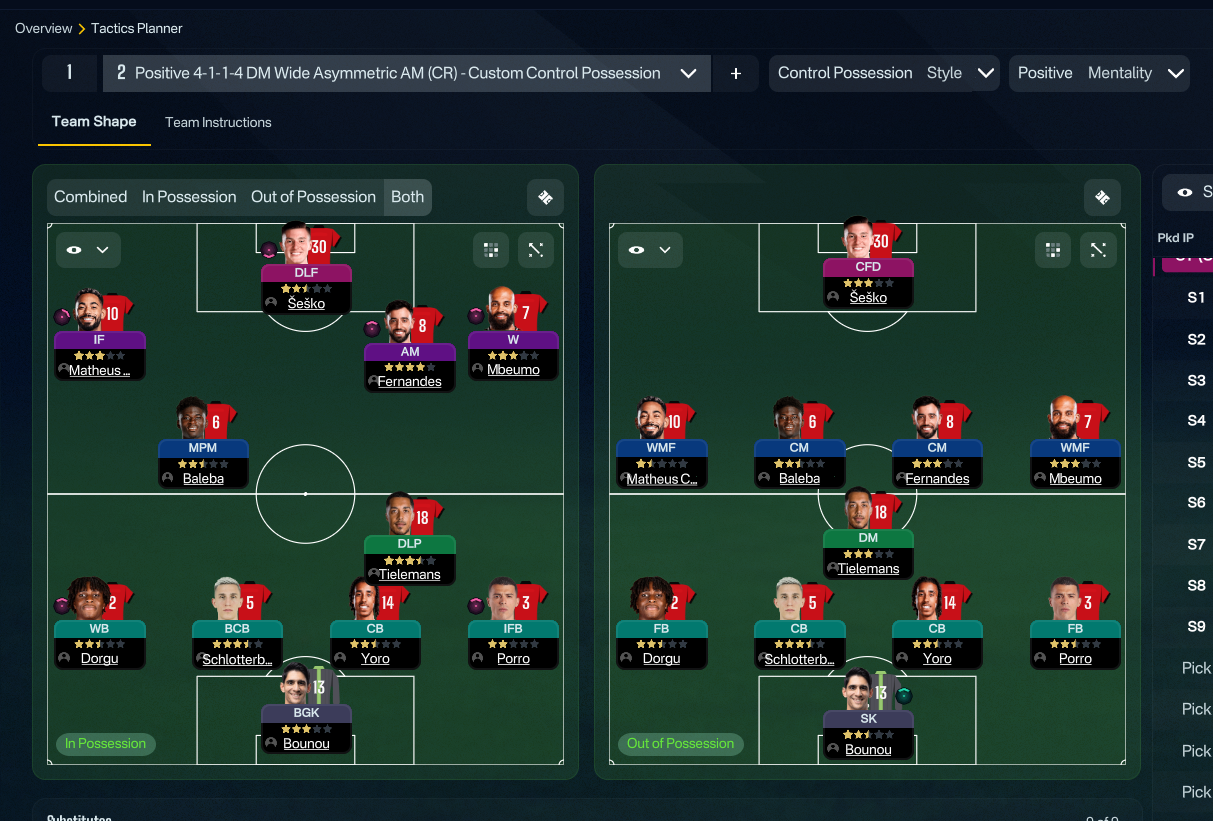
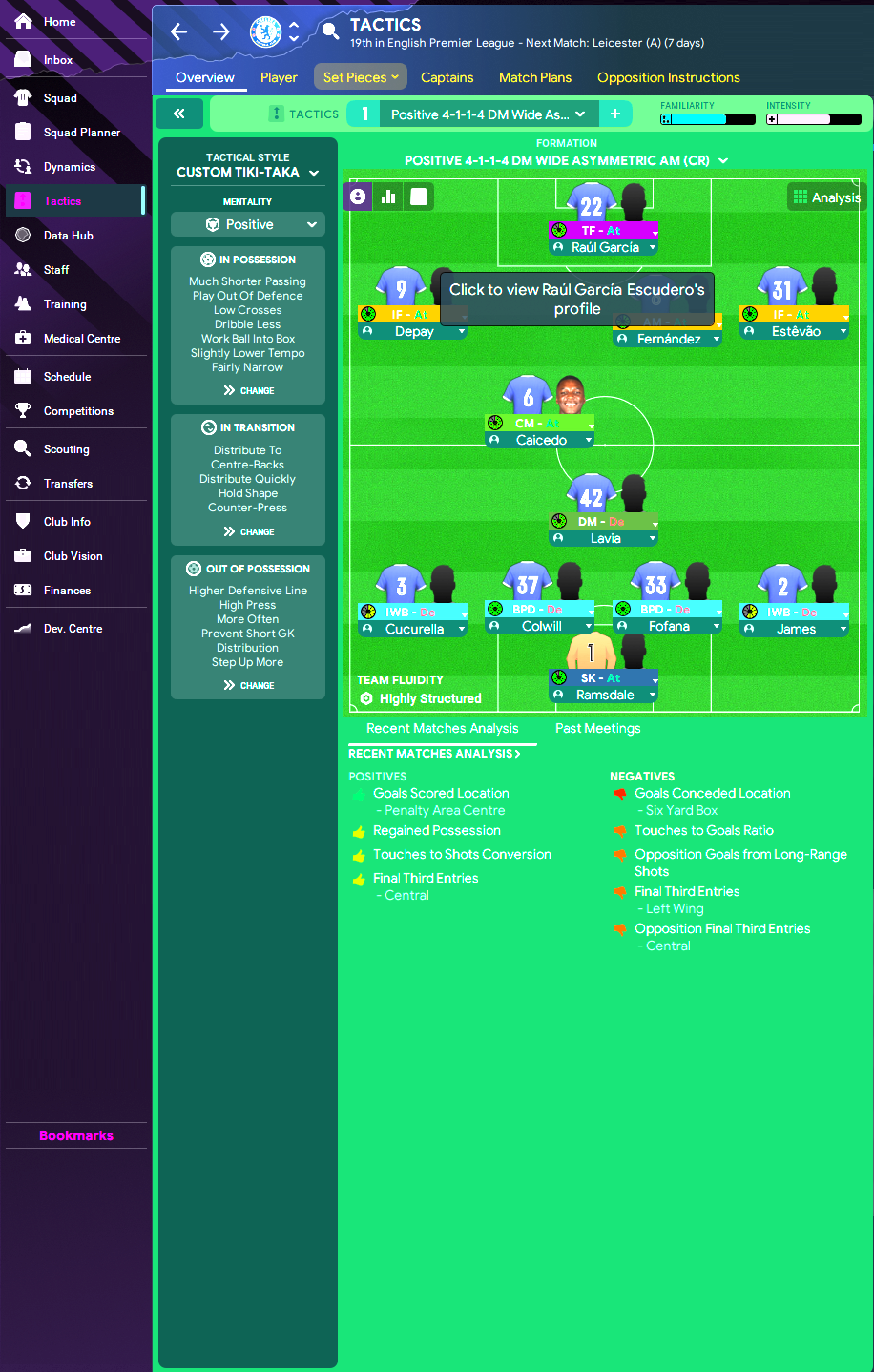
4-1-1-4 Wide Asymmetric
Utilizing the width provided by the inside forwards to create central opportunities. The deep-lying playmaker effectively dictates tempo and recycling…
Loading tactical analysis...
Tiki-Taka
Positive
4-1-1-4 Wide Asymmetric
Highly Structured
Much Shorter Passing
Play Out Of Defence
Low Crosses
Work Ball Into Box
Slightly Lower Tempo
Fairly Narrow
Distribute To Centre-Backs
Distribute Quickly
Hold Shape
Counter-Press
Higher Defensive Line
High Press
More Often
Prevent Short GK Distribution
Step Up More
GK
Sweeper Keeper
Attack
CB
Ball-Playing Defender
Defend
CB
Ball-Playing Defender
Defend
CB
Inverted Wing-Back
Defend
DM
Deep-Lying Playmaker
Defend
CM
Central Midfielder
Support
AM
Inside Forward
Attack
AM
Inside Forward
Attack
ST
Target Forward
Attack
Quick, short passing with an emphasis on retaining possession and creating space.
Immediate counter-pressing to regain possession quickly after losing the ball.
Utilizing the width provided by the inside forwards to create central opportunities.
Compact
A higher defensive line leads to a compact shape, making it easier to apply high pressure.
Higher Defensive Line combined with High Press.
Dynamic
Asymmetrical attacking shape facilitates overloads on the flanks.
Utilization of two inside forwards and a target forward.
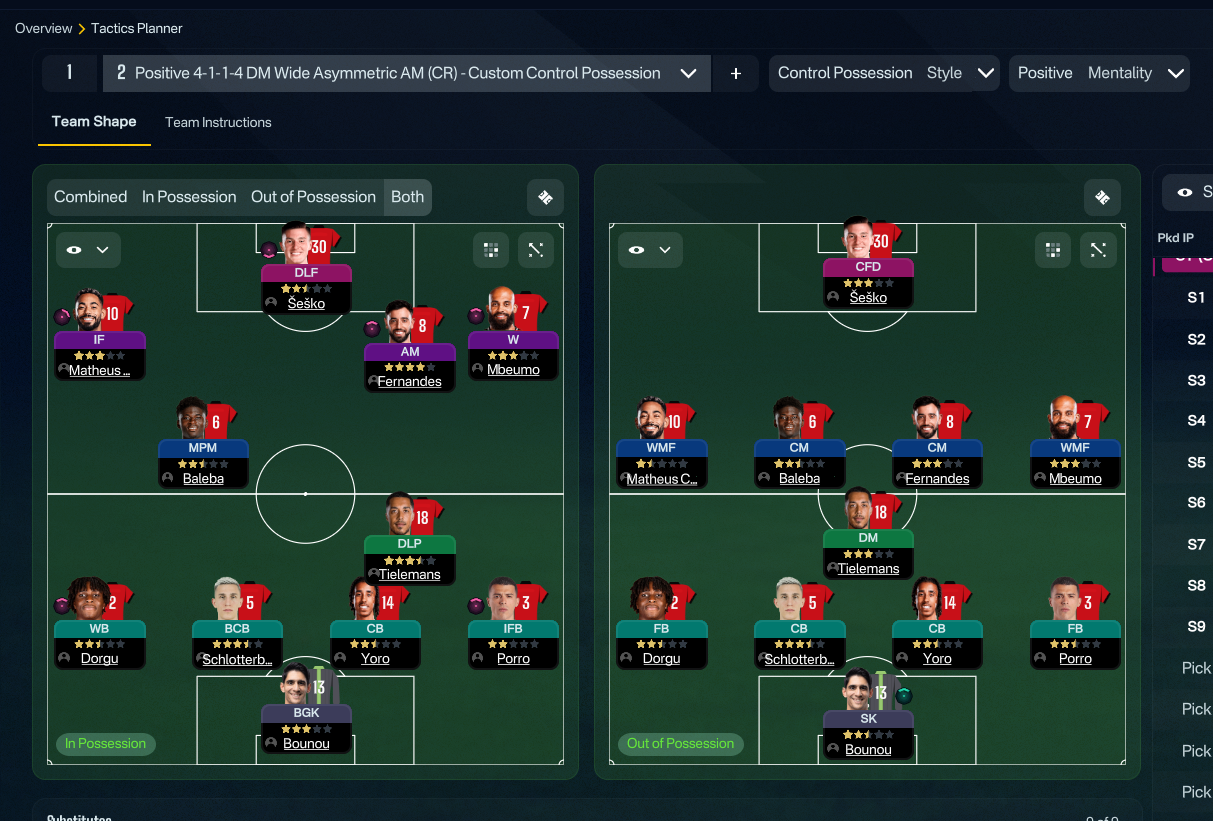
The deep-lying playmaker effectively dictates tempo and recycling possession.
DLP at [3,3] under 'Play Out of Defence'.
Utilizing inside forwards offers width and penetration into the defense.
Two IFs at [6,2] and [6,4].
A higher defensive line can expose the team to counter-attacks, especially against swift attackers.
Higher Defensive Line in conjunction with a High Press.
The two inside forwards might crowd the central areas, reducing exploitative width.
Concentration of attacking threats through IFs making it less varied.
Defensive Shape
The high line and high press can easily be exploited by quick transitions.
Higher Defensive Line and High Press settings.
Midfield Balance
An insufficiently dynamic midfield could lead to gaps, allowing opponents to exploit central lanes.
CM at [4,3] may lack coverage when ball is lost.
DLP and Central Midfielder
This pairing allows for a solid foundation in ball progression and retention.
DLP at [3,3] supports CM at [4,3].
Inside Forwards and Target Forward
Creates a strong attacking triangle, drawing defenders and opening spaces.
Two IFs at [6,2] and [6,4] in combination with TF at [6,3].
How can I improve fluidity in the midfield?
What adjustments are needed against high-pressing opposition?
Should I adjust the positioning of my inside forwards for better width?
The tactical theory behind the 4-1-1-4 Wide Asymmetric: roles, instructions, and the trade-offs that decide whether the system holds up.
Routines, takers, and target picks. How to turn corners and free-kicks into a reliable third of your goal output.
Protect a 1-0, chase a 1-0, hold a draw away. How to manage game state in FM through duties and roles, not by lurching to Defensive.
Mentality, duty, role, instruction, sub. The change hierarchy from lightest to heaviest intervention, and 60th-minute patterns by game state.