Uploaded Tactic
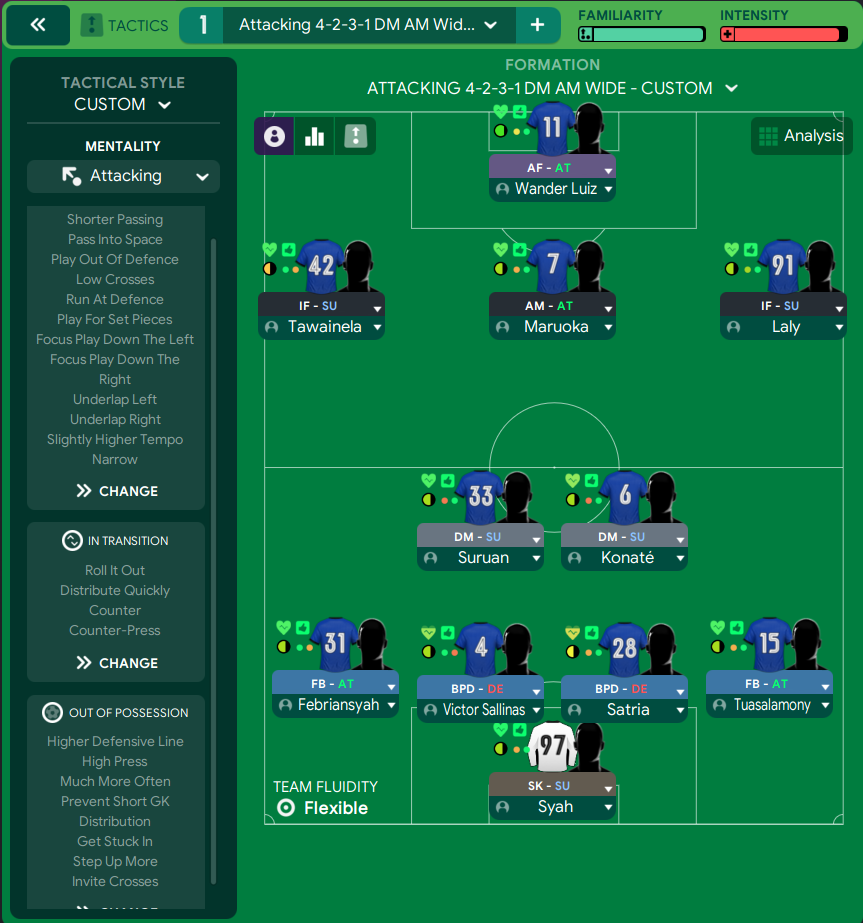
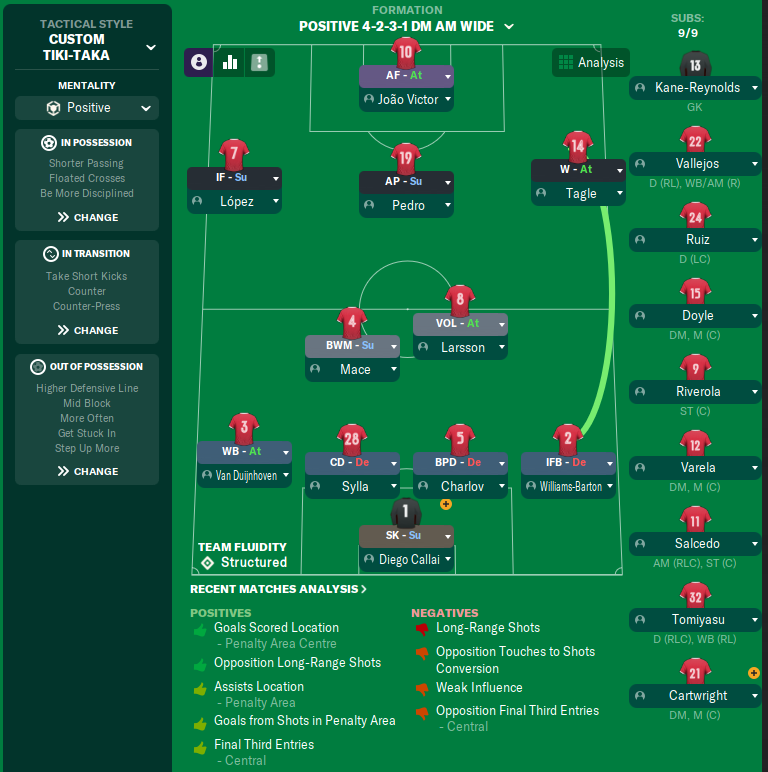
Formation & Style
Tactical Style:Custom
Mentality:Attacking
Formation:4-2-3-1 DM Wide
Team Fluidity:Flexible
In Possession
Shorter Passing
Pass Into Space
Play Out Of Defence
Low Crosses
Run At Defence
Play For Set Pieces
Focus Play Down The Left
Focus Play Down The Right
Underlap Left
Underlap Right
Slightly Higher Tempo
Narrow
In Transition
Roll It Out
Distribute Quickly
Counter
Counter-Press
Out of Possession
Higher Defensive Line
High Press
Much More Often Prevent Short GK Distribution
Get Stuck In
Step Up
Team Shape Without Ball
Shape:4-2
Description:Compact two defensive midfielders support a four-man backline to create a solid defensive structure.
Evidence:DM-S at [3,2], [3,3] supporting CBs at [2,2], [2,3]
Team Shape With Ball
Shape:4-3
Description:The attacking midfield and inside forwards stretch the pitch, providing options for diagonal passes.
Evidence:AM-A at [5,3], IF-SU at [5,1], [5,5], AF-A at [6,3]
Phase Description
Attacking Play
Focus on width through full-backs and inside forwards, utilizing a high-tempo approach.
Defensive Transition
Quickly counter-pressing to regain possession upon losing the ball.
Main Focus
Exploit space with quick passes while maintaining a narrow shape in attack.
Key Strengths
Creative Width
Utilizing full-backs and inside forwards allows the team to stretch play, creating space.
Defensive Stability
Having two defensive midfielders aids in shielding the defense while providing support in attack.
High Pressing
Engaging in a high press can disrupt opposing play and recover possession quickly.
Conflicting Directions
Inconsistent Pressing
While maintaining a high press, the defensive line's height may lead to vulnerabilities if players are drawn out.
Wide Play Vulnerability
Heavy focus on using width might exhaust the full-backs if opposing teams overload down the flanks.
Counter-Press Dependency
Relying heavily on counter-press may leave gaps in midfield if not executed effectively.
Tactical Suggestions
Adjust Pressing Strategy
To avoid overexerting players, consider alternating pressing intensity or implementing a more dynamic pressing trap.
Consider Full-Back Support
Ensure full-backs do not occupy both wide and central zones simultaneously to maintain defensive coverage.
Enhance Support Roles
Exploit the roles of the inside forwards by instructing them to interchange with the attacking midfielder more frequently.
Ask Questions About Your Lineup
Related Tactics
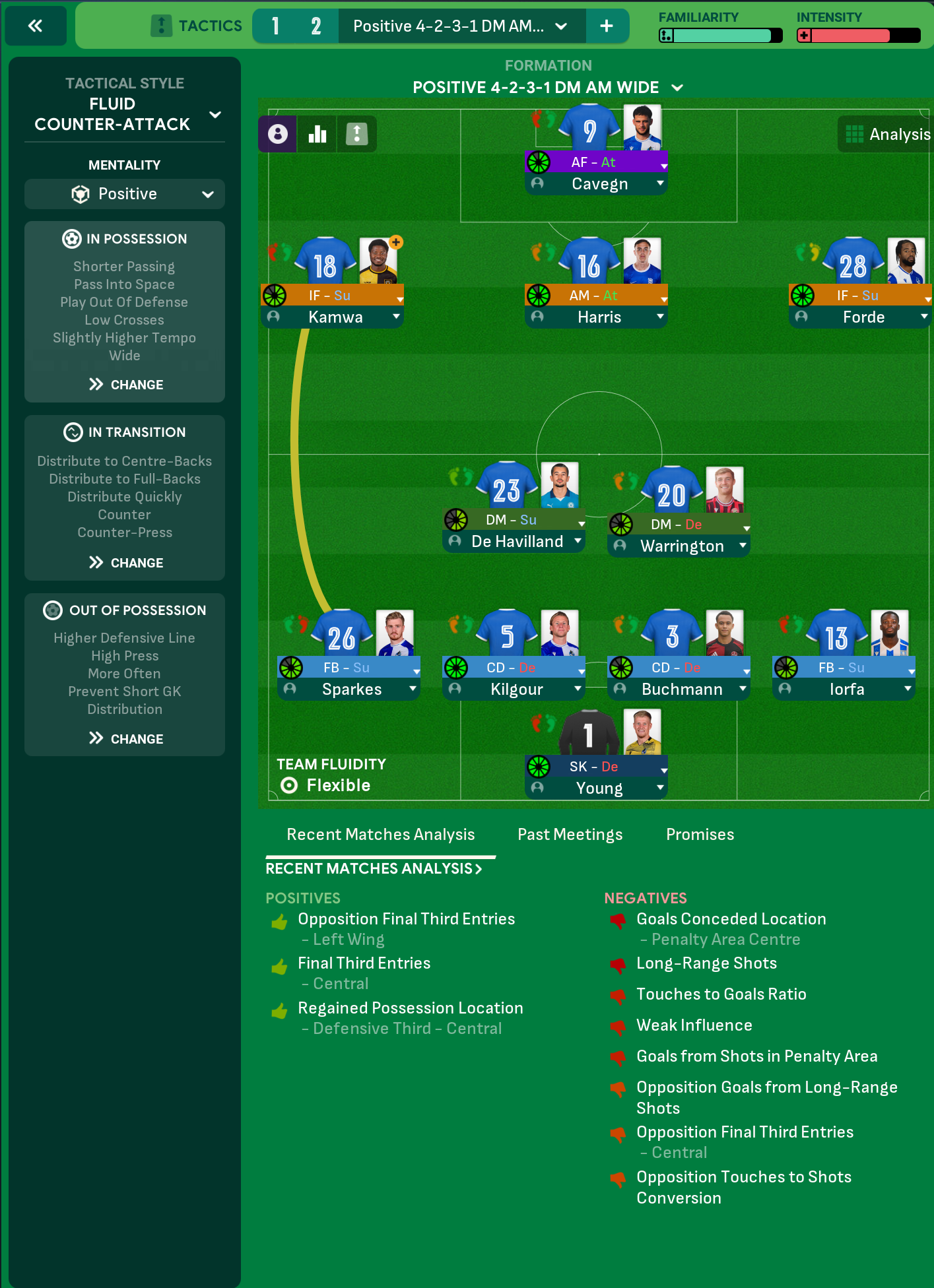
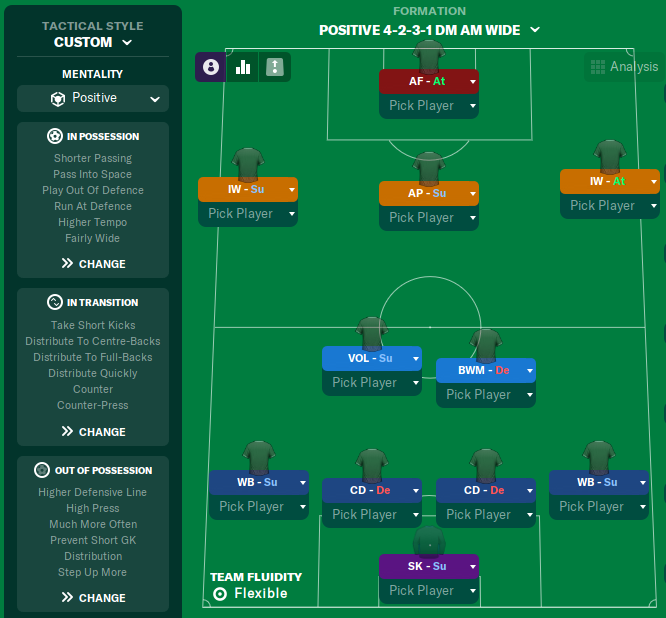
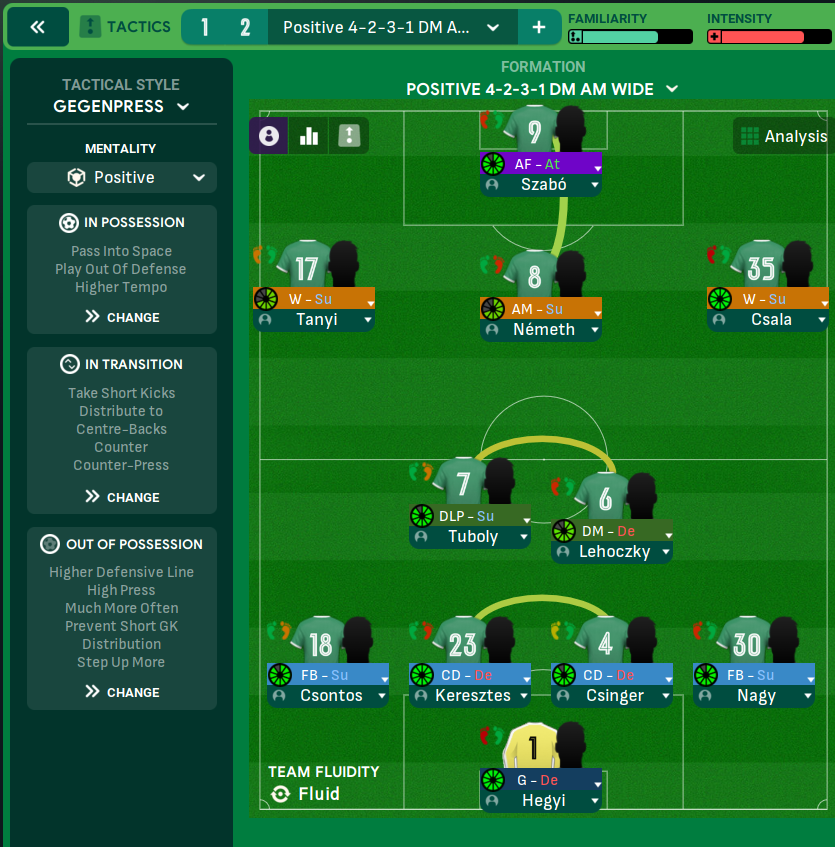
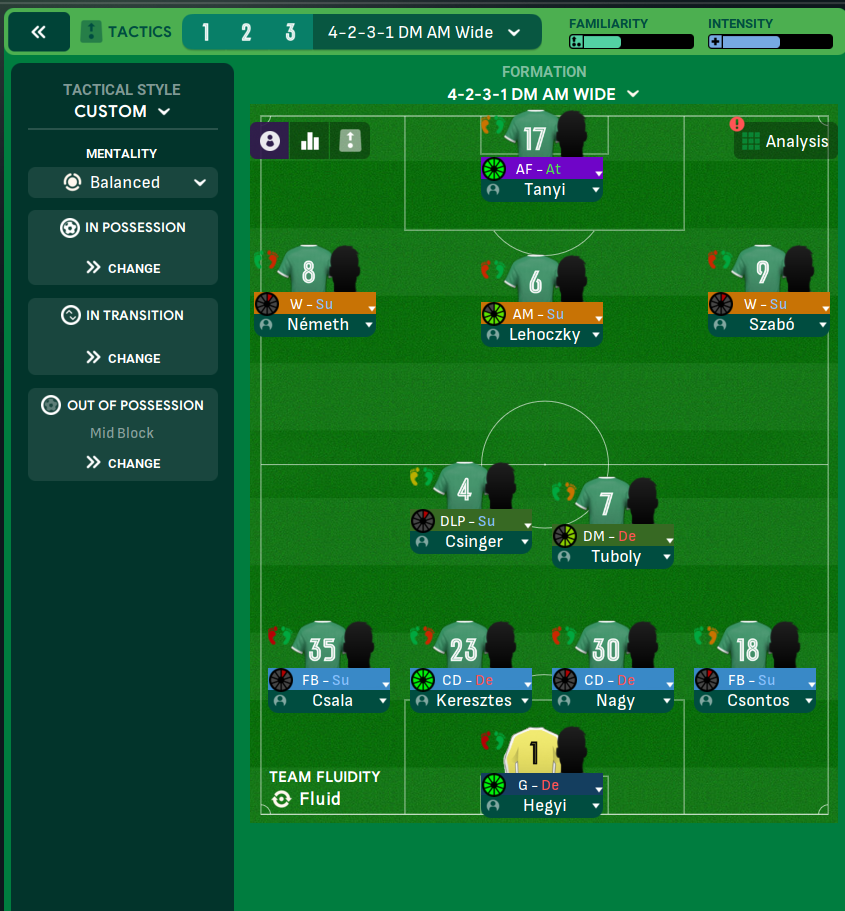
Guides for this formation
The tactical theory behind the 4-2-3-1 DM Wide: roles, instructions, and the trade-offs that decide whether the system holds up.
Player pairings
Midfield Pairs in 4-2-3-1 and 4-4-2
Double pivots and flat pairs in 4-2-3-1 and 4-4-2: when each pairing works, when it collapses, and the AMC unicorn that rescues both.
Read guide
Playing styles
Gegenpressing: A Full Guide
Klopp-style gegenpressing in FM, including squad profile, line-and-press pairing, sustainable workload, and the antipatterns to avoid.
Read guide