Uploaded Tactic
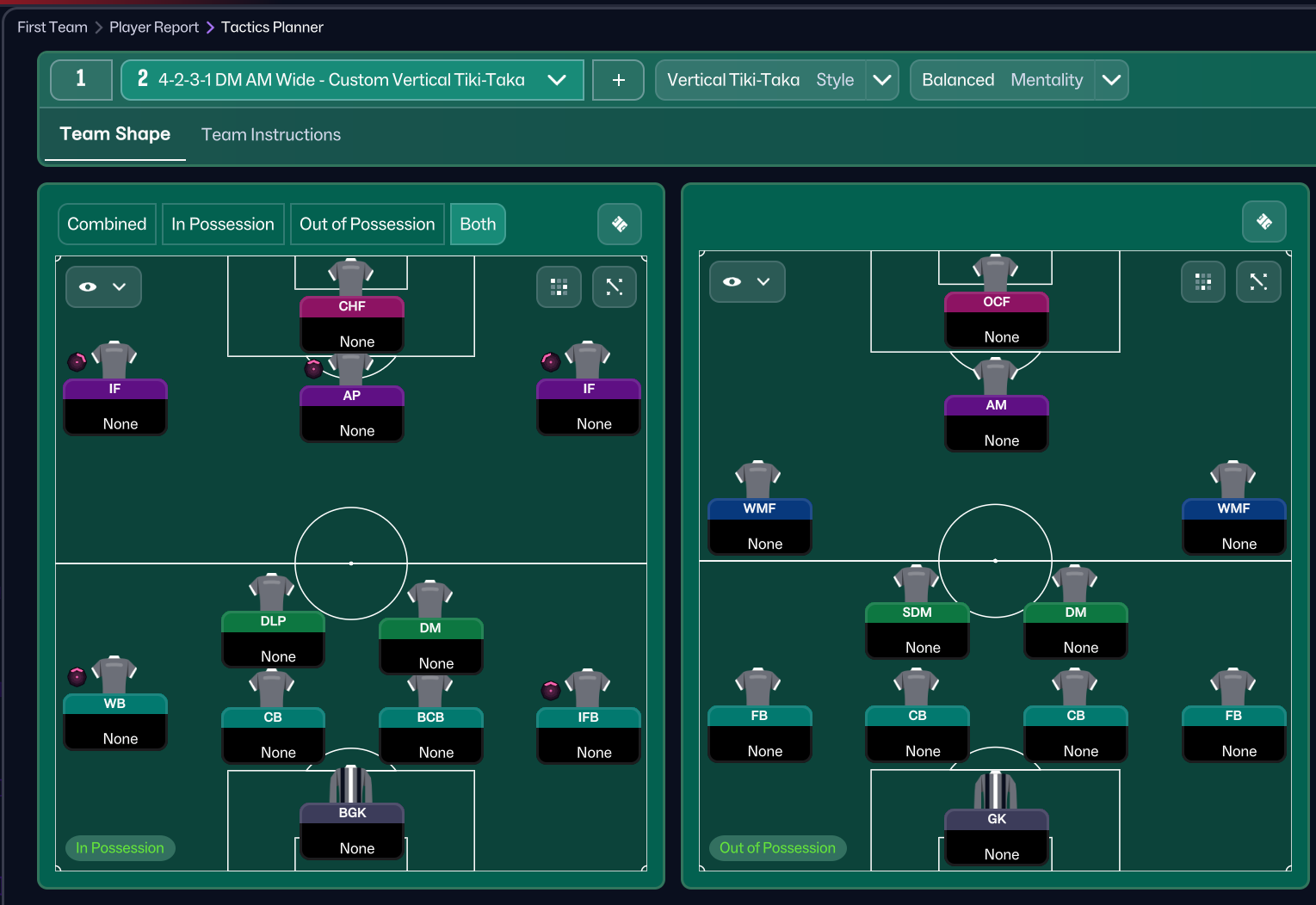
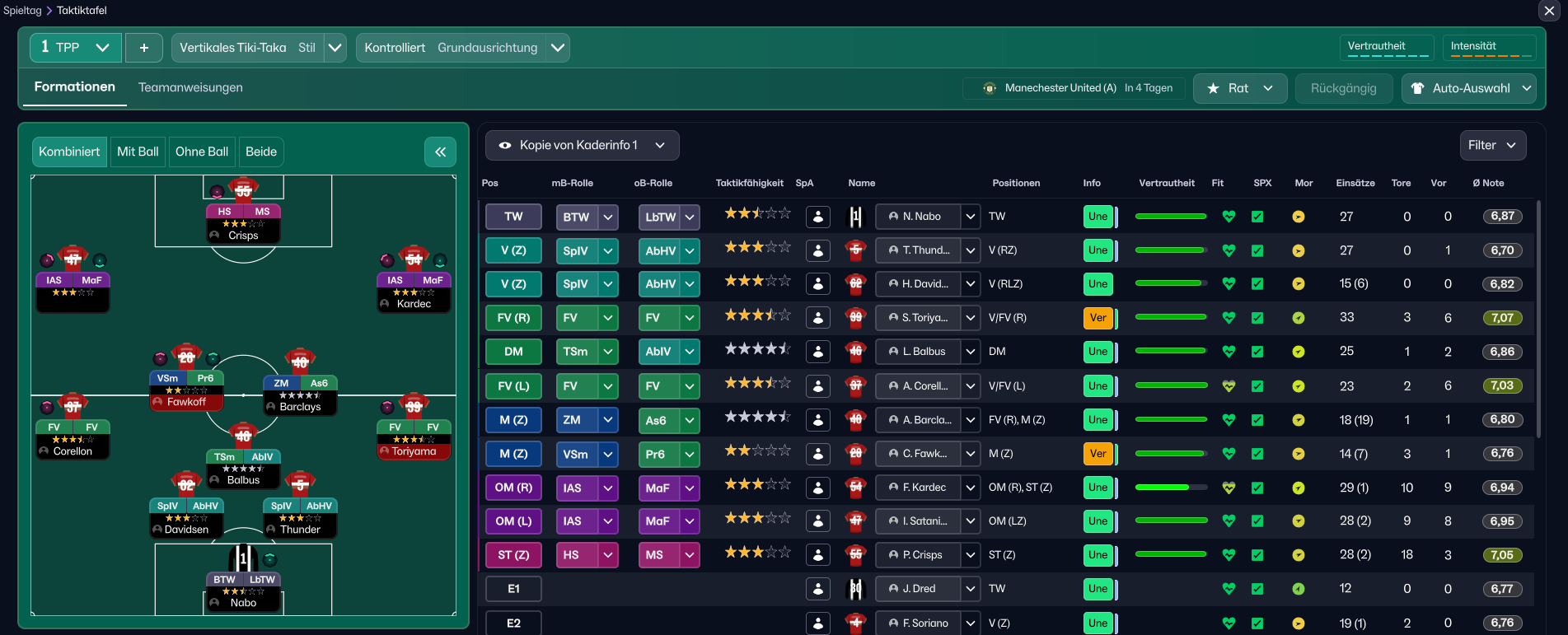
Formation & Style
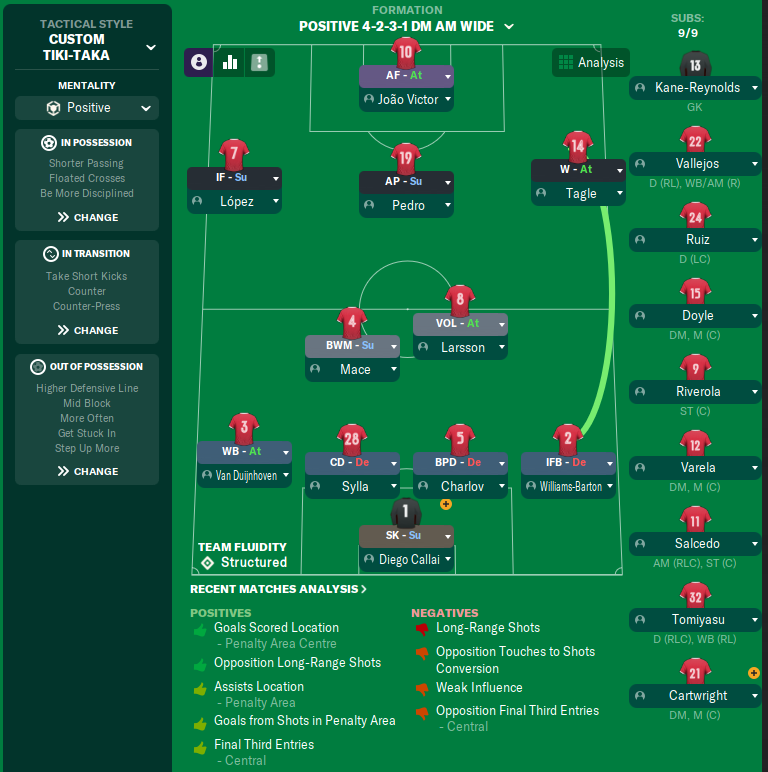
Tactical Style:Vertical Tiki-Taka
Mentality:Balanced
Formation:4-2-3-1 DM Wide
Team Fluidity:Structured
In Possession
Shorter Passing
Be More Expressive
Play Out Of Defence
In Transition
Counter
Counter-Press
Out of Possession
Higher Defensive Line
Standard Block
More Aggressive Pressing
Team Shape Without Ball
Shape:4-2-4
Description:The formation shifts to a compact shape when defending, with the midfielders dropping back to form a dual block with the defense.
Evidence:DM at [3,3] supports the defensive line, creating a strong central foundation.
Team Shape With Ball
Shape:4-2-3-1
Description:In attack, the formation spreads wide utilizing wingers and an advanced playmaker, aiming to stretch the opposition.
Evidence:Wingers at [6,2] and [6,4] coupled with AM at [5,3] allow for wide penetration.
Phase Description
Attacking Play
The team focuses on quick, short passing to maintain possession and movement off the ball, creating spaces and opportunities for the strikers.
Defensive Transition
Upon losing possession, the team immediately engages in counter-pressing to regain the ball quickly, supporting a quick transition to attacking play.
Main Focus
The main focus is to control possession through intricate passing and fluid movement, utilizing the width provided by the inverted wingers.
Key Strengths
Fluid Midfield Transition
The double pivot combination of DM and DLP provides a strong transitional play into attack, facilitating both ball recovery and distribution.
Wide Width in Attack
Inverted forwards create opportunities both centrally and on the wings, allowing for diverse attacking options.
High Pressing Capability
The team's pressing instructions allow for regaining possession quickly and putting pressure on opposing defenses.
Conflicting Directions
Defensive Cohesion vs Pressing
While maximizing pressing, the formation could leave gaps if not properly balanced defensively, risking counter-attacks.
Narrow Attack vs Width
The centrality of the advanced playmaker may lead to congested spaces, conflicting with the intended wide-play focus.
Transition Fragility
Swift transitions could lead to defensive instability if players do not recover position quickly post-attack.
Tactical Suggestions
Adjust Pressing Intensity
Consider refining pressing intensity to avoid leaving too much space for counter-attacks.
Utilize Overlapping Full-Backs
Encouraging full-backs to overlap can help maintain width and provide additional support, creating more attacking options.
Opt for a More Flexible AM Role
Consider altering the AM role to allow for fluid movement into wider channels, reducing congestion in central zones.
Ask Questions About Your Lineup
Related Tactics
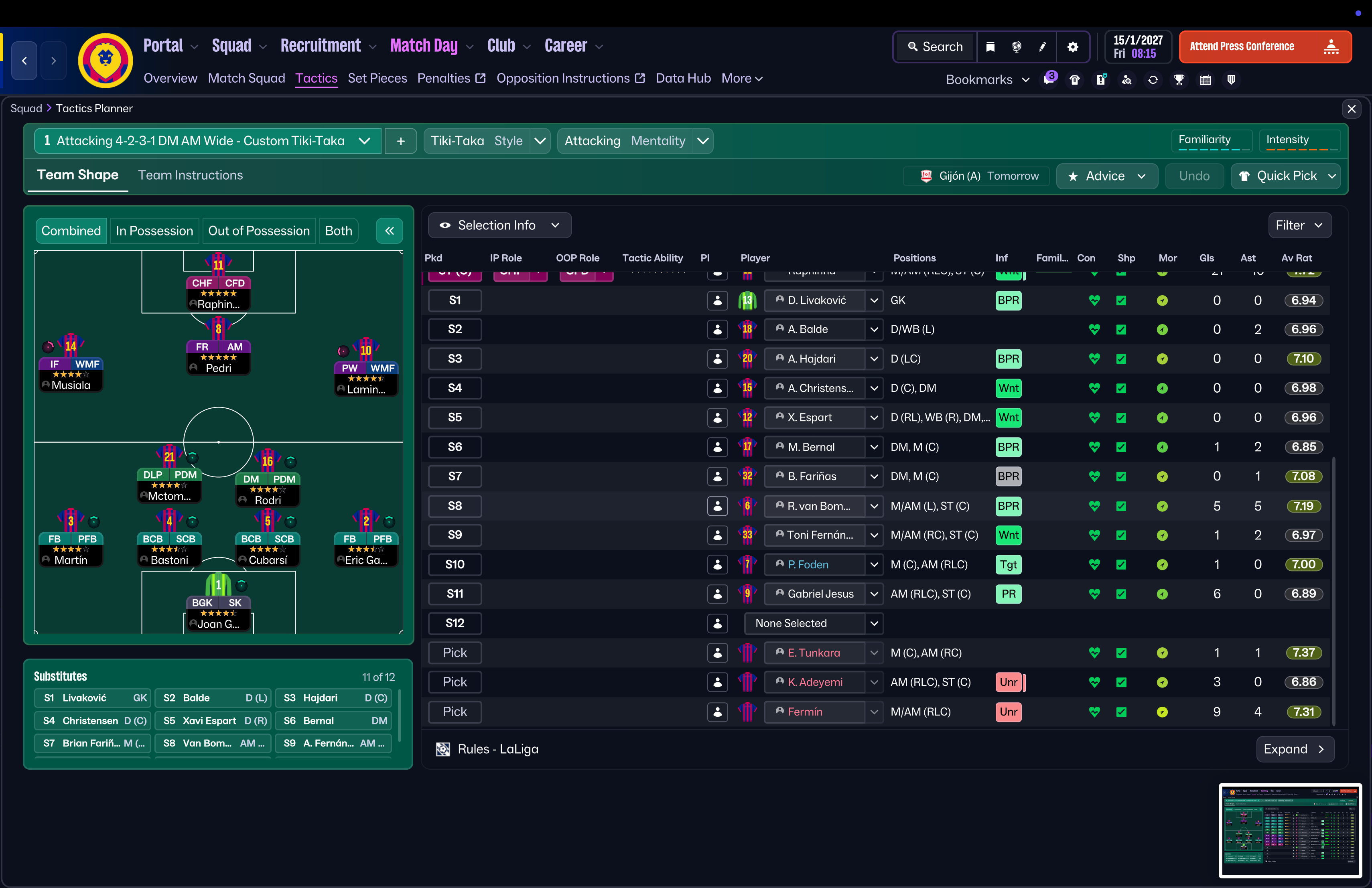
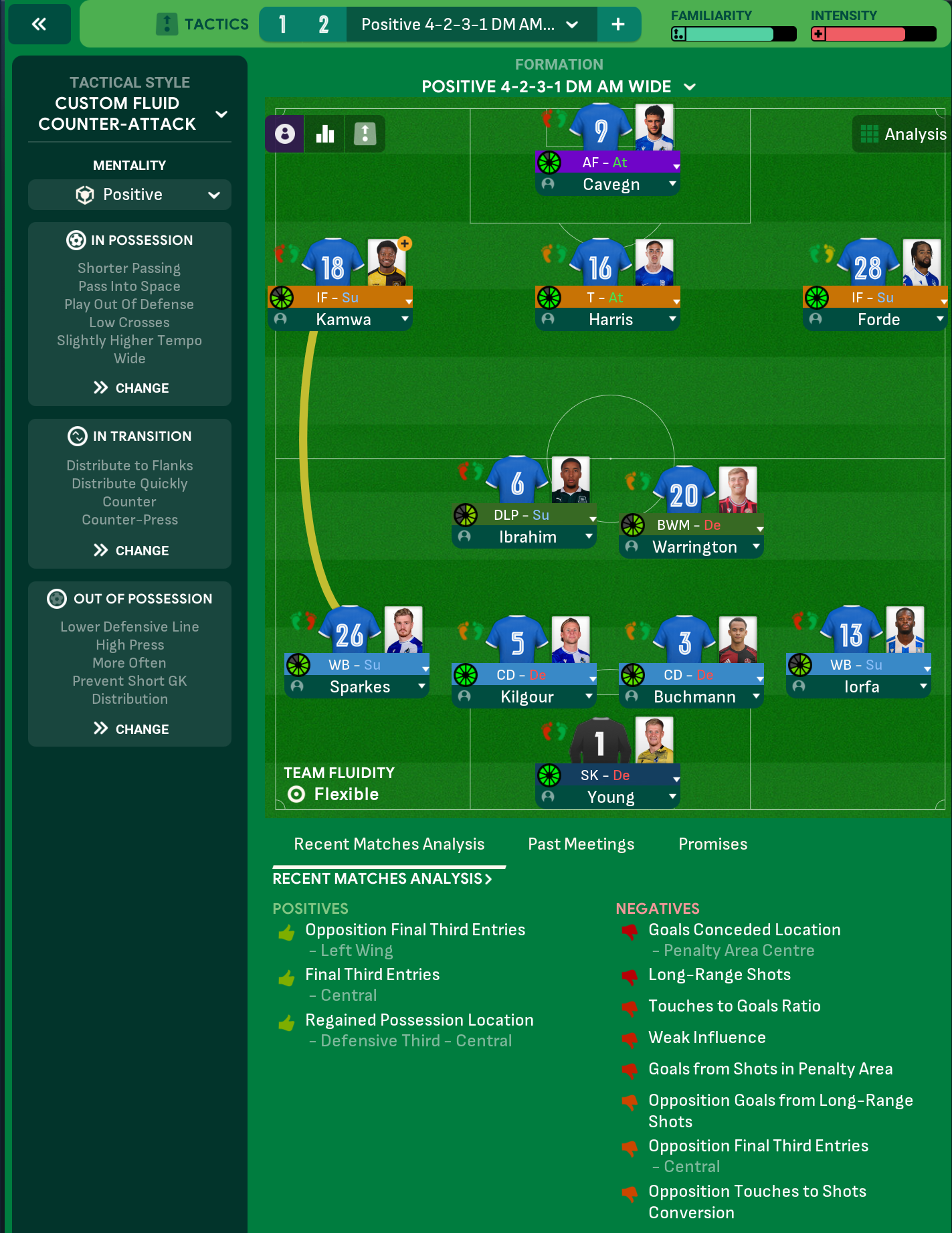
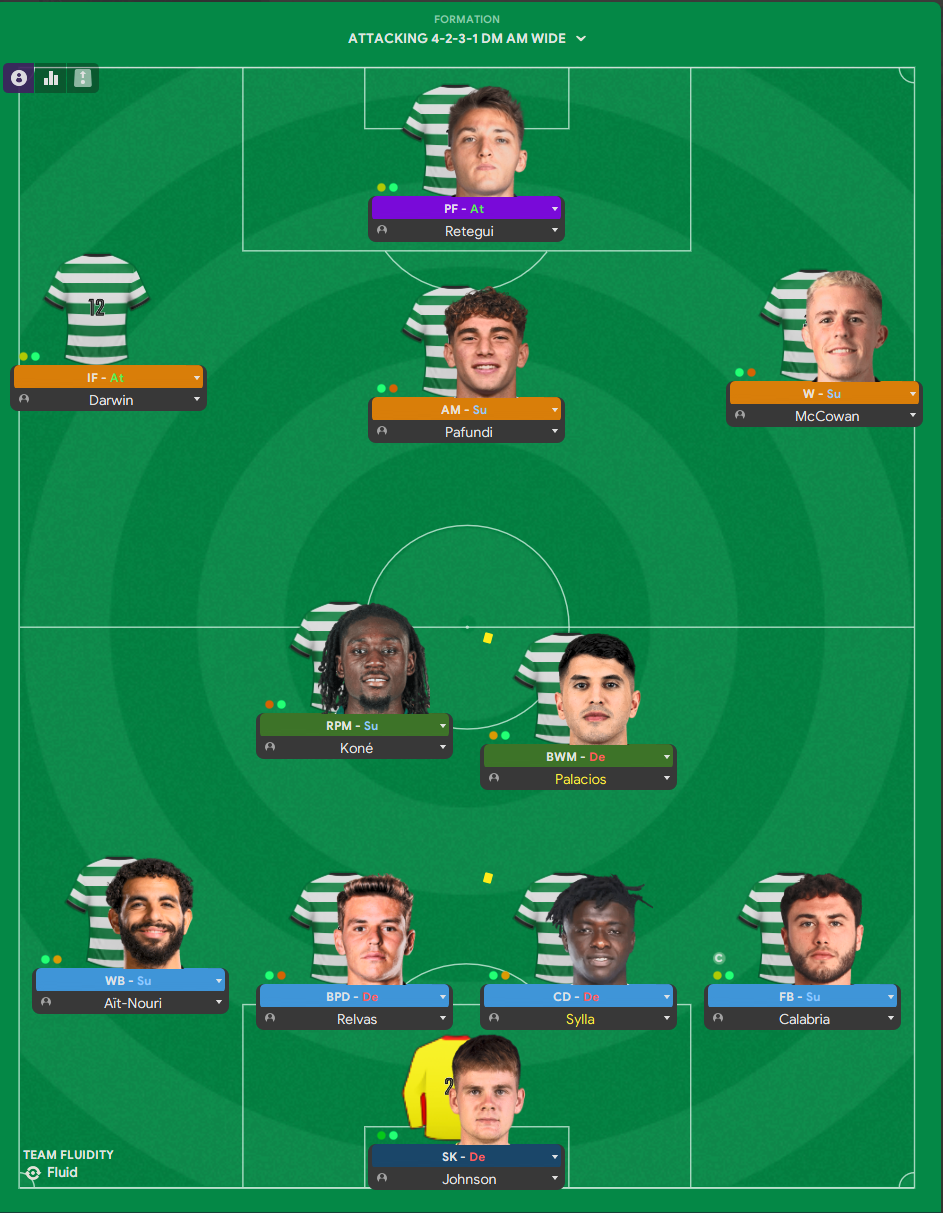
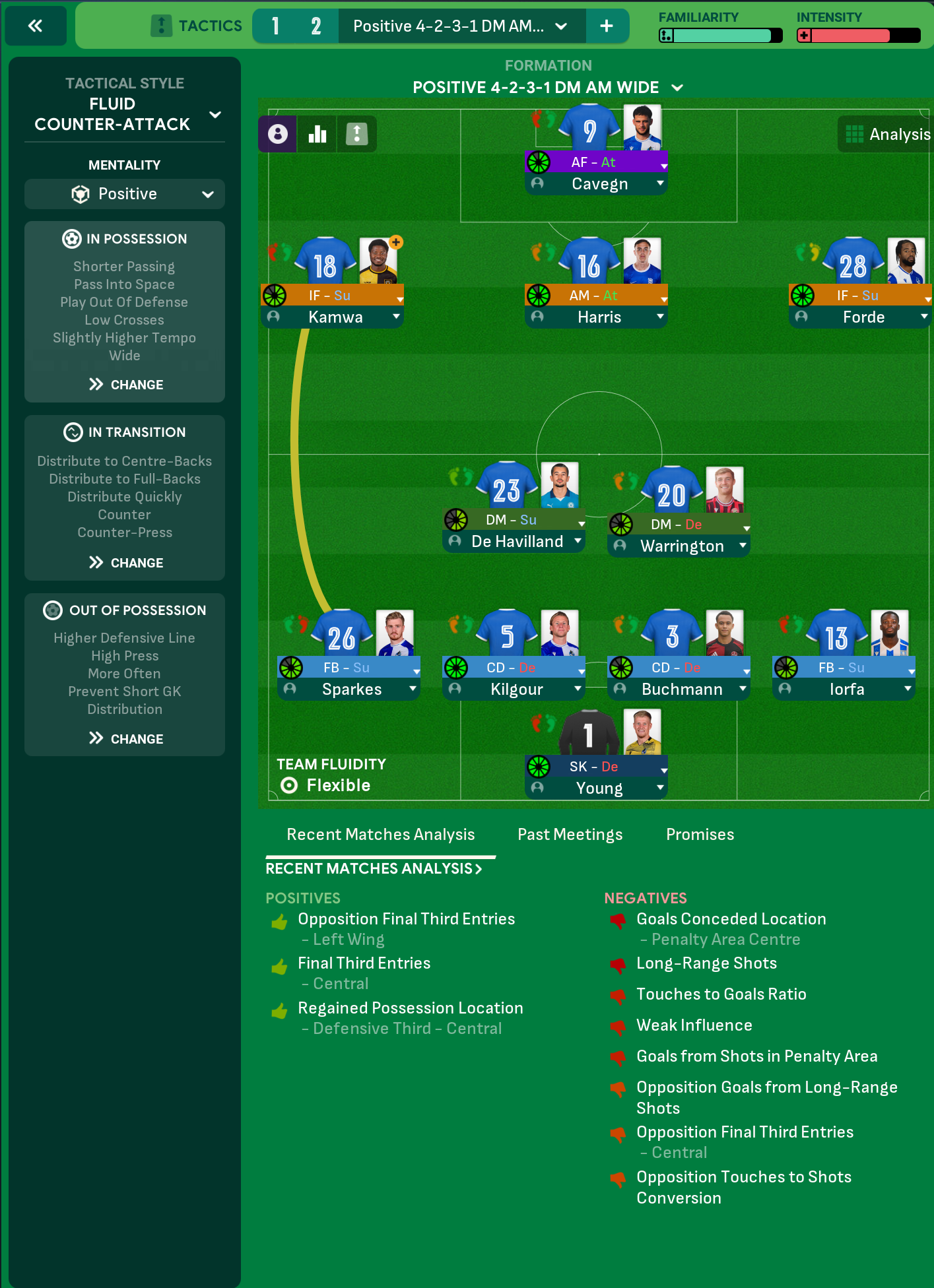
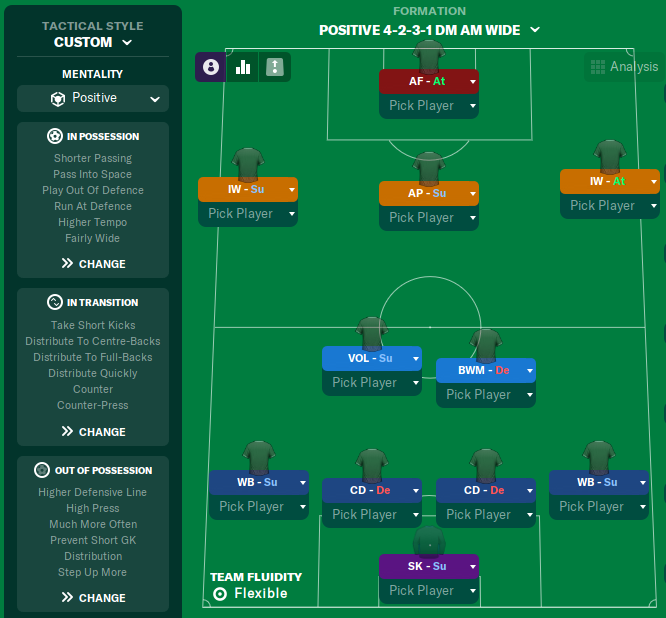
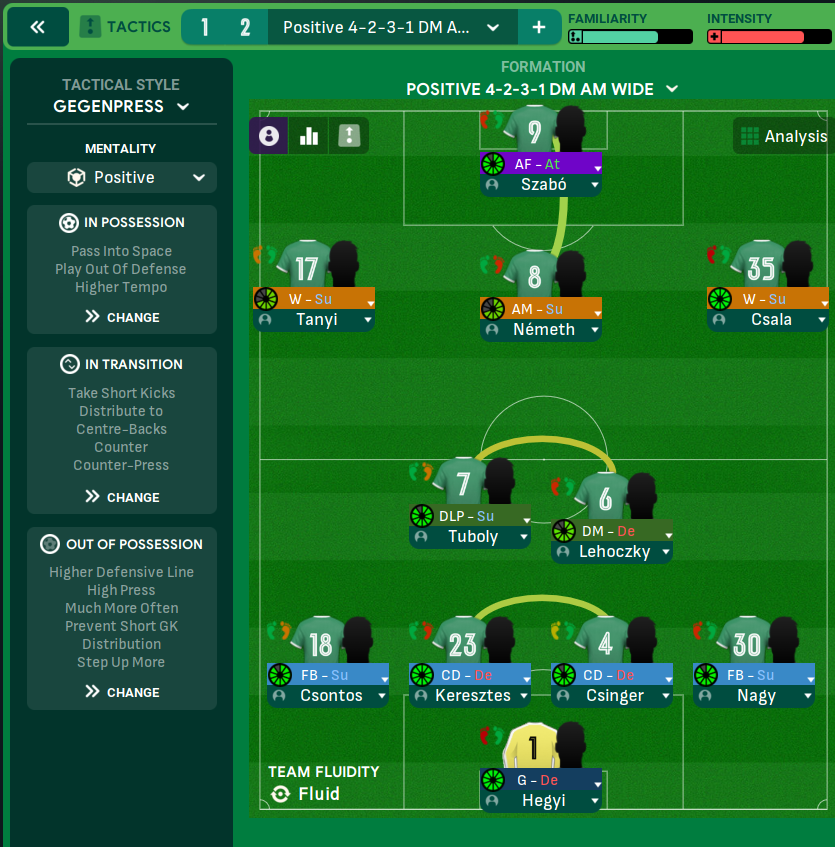
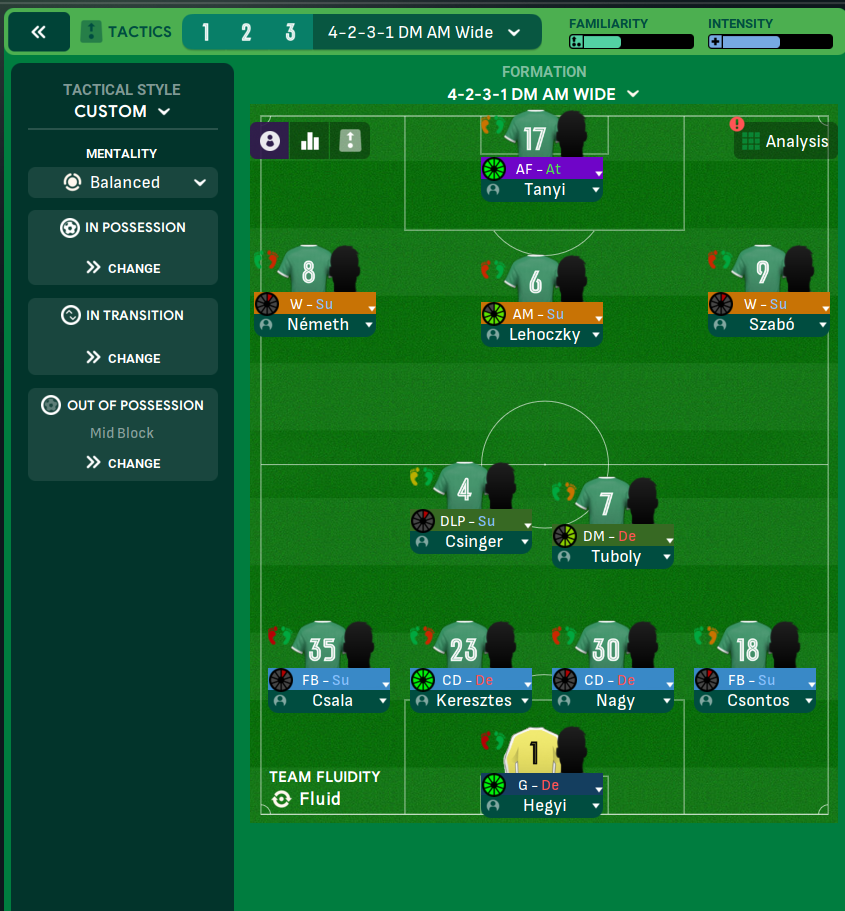
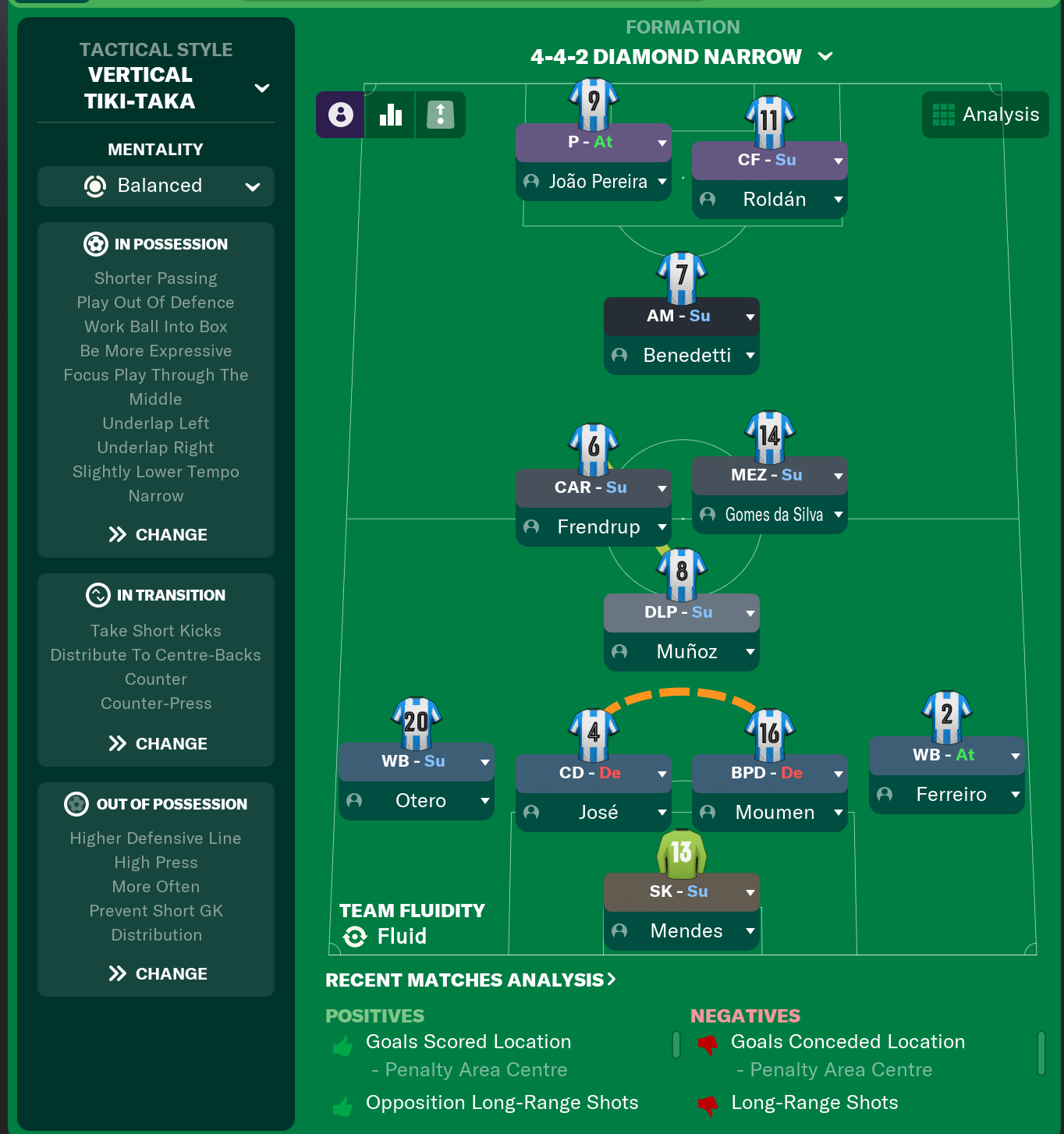
More Vertical Tiki-Taka tactics
Guides for this formation
The tactical theory behind the 4-2-3-1 DM Wide: roles, instructions, and the trade-offs that decide whether the system holds up.
Player pairings
Midfield Pairs in 4-2-3-1 and 4-4-2
Double pivots and flat pairs in 4-2-3-1 and 4-4-2: when each pairing works, when it collapses, and the AMC unicorn that rescues both.
Read guide
Playing styles
Gegenpressing: A Full Guide
Klopp-style gegenpressing in FM, including squad profile, line-and-press pairing, sustainable workload, and the antipatterns to avoid.
Read guide