Uploaded Tactic
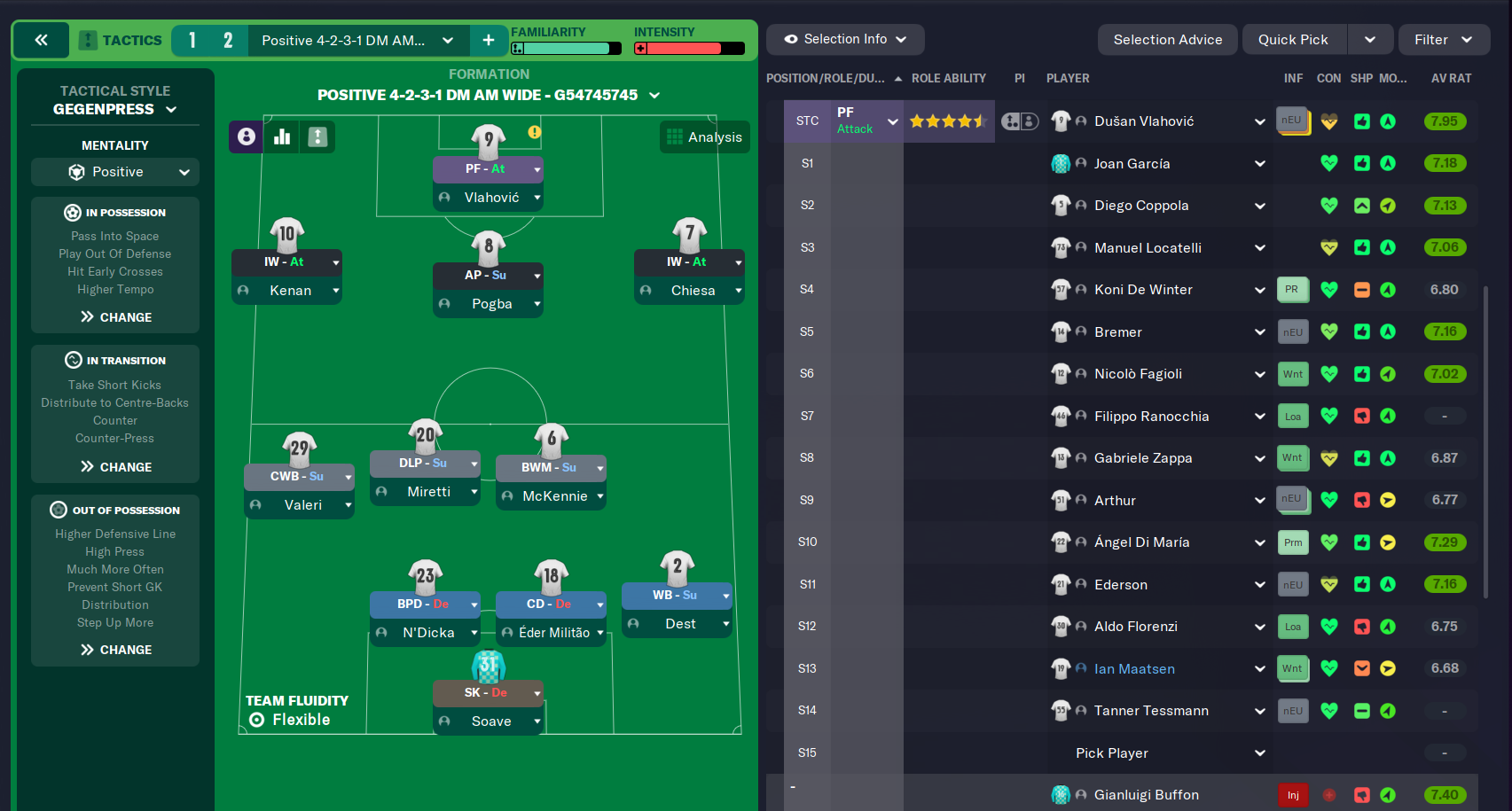
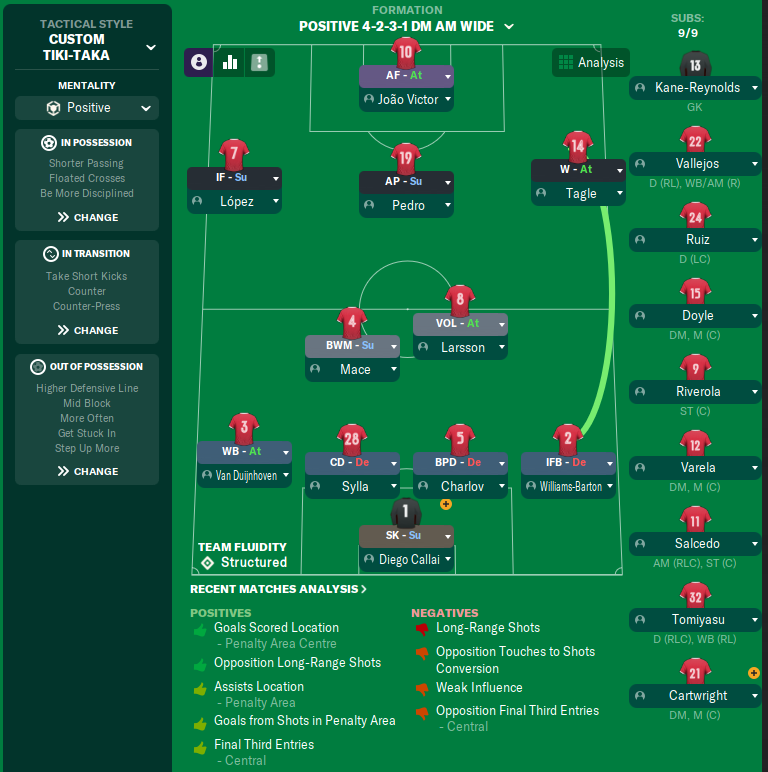
Formation & Style
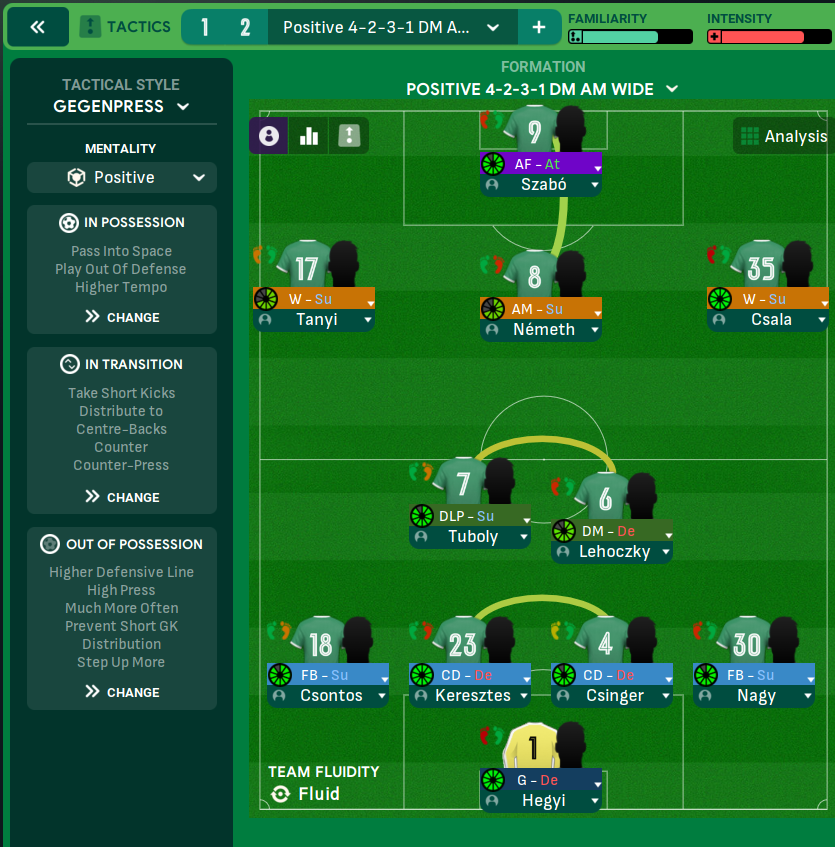
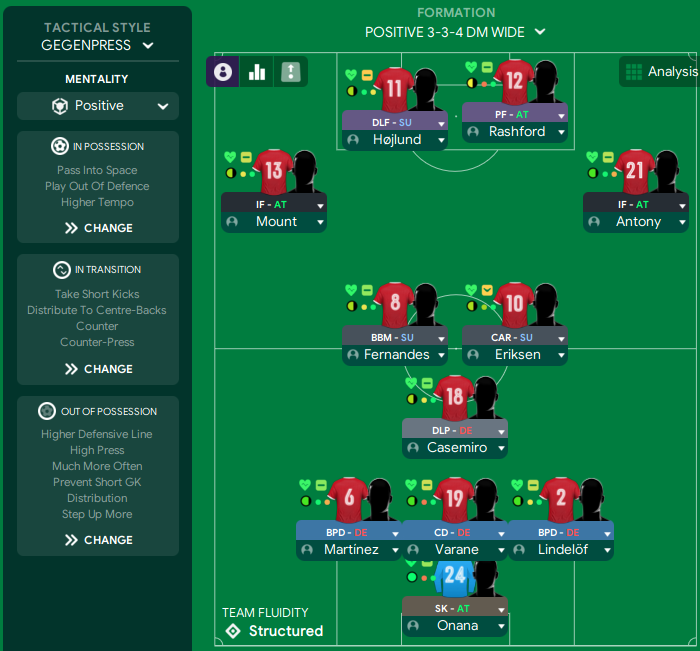
Tactical Style:Gegenpress
Mentality:Positive
Formation:4-2-3-1 DM Wide
Team Fluidity:Flexible
In Possession
Pass Into Space
Play Out Of Defence
Hit Early Crosses
Higher Tempo
In Transition
Take Short Kicks
Distribute to Centre-Backs
Counter
Counter-Press
Out of Possession
Higher Defensive Line
High Press
Much More Often Prevent Short GK Distribution
Step Up More
Team Shape Without Ball
Shape:4-2
Description:A compact defensive shape with two banks of four shaping up to maintain solidity.
Evidence:Defensive line with two CD roles and a ball-winning midfielder supporting from a deeper position.
Team Shape With Ball
Shape:4-2-3-1
Description:Utilizes the width provided by wingers and the explosive movement of the central attacking players to create opportunities.
Evidence:Inverted wingers and an advanced playmaker work together to facilitate attacks from wide areas.
Phase Description
Attacking Play
The team looks to exploit spaces with quick vertical passing and high tempo, utilizing the width provided by wingers and wing-backs.
Defensive Transition
Transitioning to defence involves immediate pressure to recover the ball, supported by high pressing and a compact formation.
Main Focus
Creating chances through aggressive pressing and exploiting spaces left by the opponent.
Key Strengths
Fluid Transition
Ability to transition quickly from defence to attack using a high tempo and immediate pressing.
Wide Play
Effective use of width from inverted wingers to stretch the opposition and create space.
Tactical Awareness
Players in central zones have roles that complement each other, allowing for dynamic midfield control.
Conflicting Directions
Overcommit in Attack
High tempo and attacking mentality may leave gaps in defence when advanced players fail to press effectively.
Pressing Inefficiency
Very high pressing might lead to fatigue and loss of shape if opponents bypass the initial pressure.
Limited Depth
With only one central defensive structure, aggression in midfield may lead to vulnerability if the ball is lost.
Tactical Suggestions
Adjust Defensive Phase
Consider adopting a more conservative approach when leading to avoid getting countered.
Incorporate More Central Movement
Encourage central players to rotate positions during attack to increase fluidity.
Increase Depth on the Bench
Acquiring additional players who can fill in highly mobile roles could assist with rotation and reduce fatigue.
Ask Questions About Your Lineup
Related Tactics
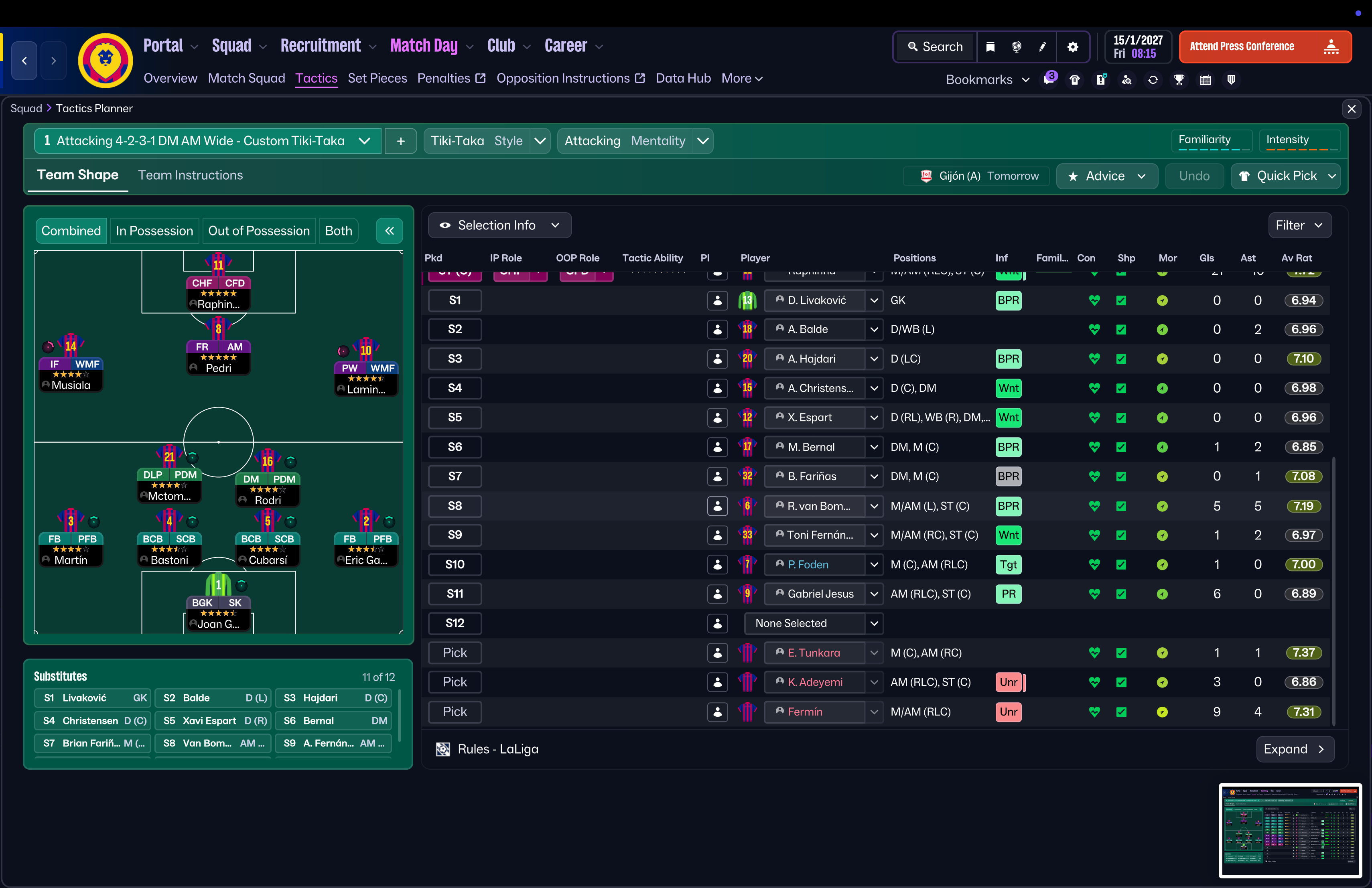
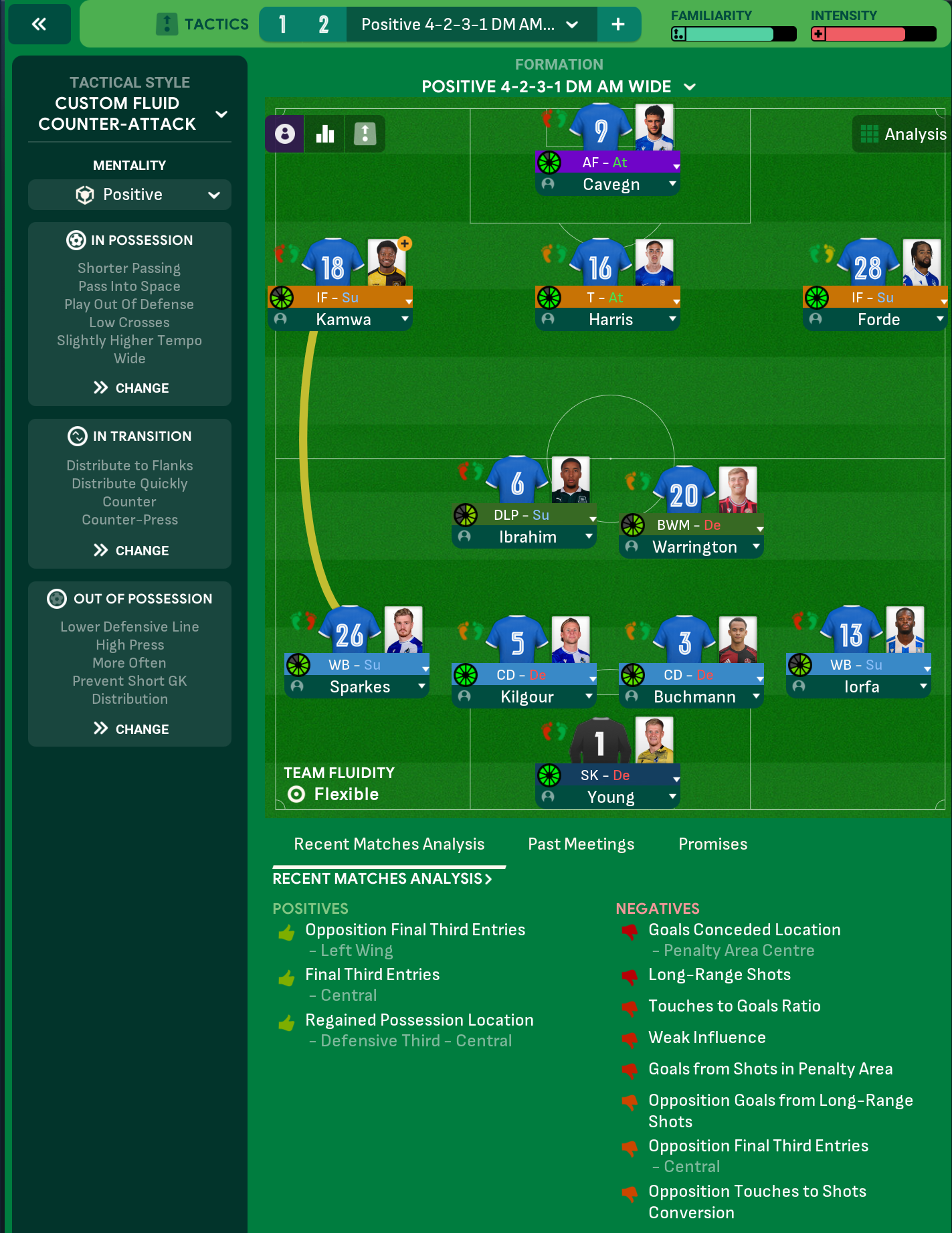
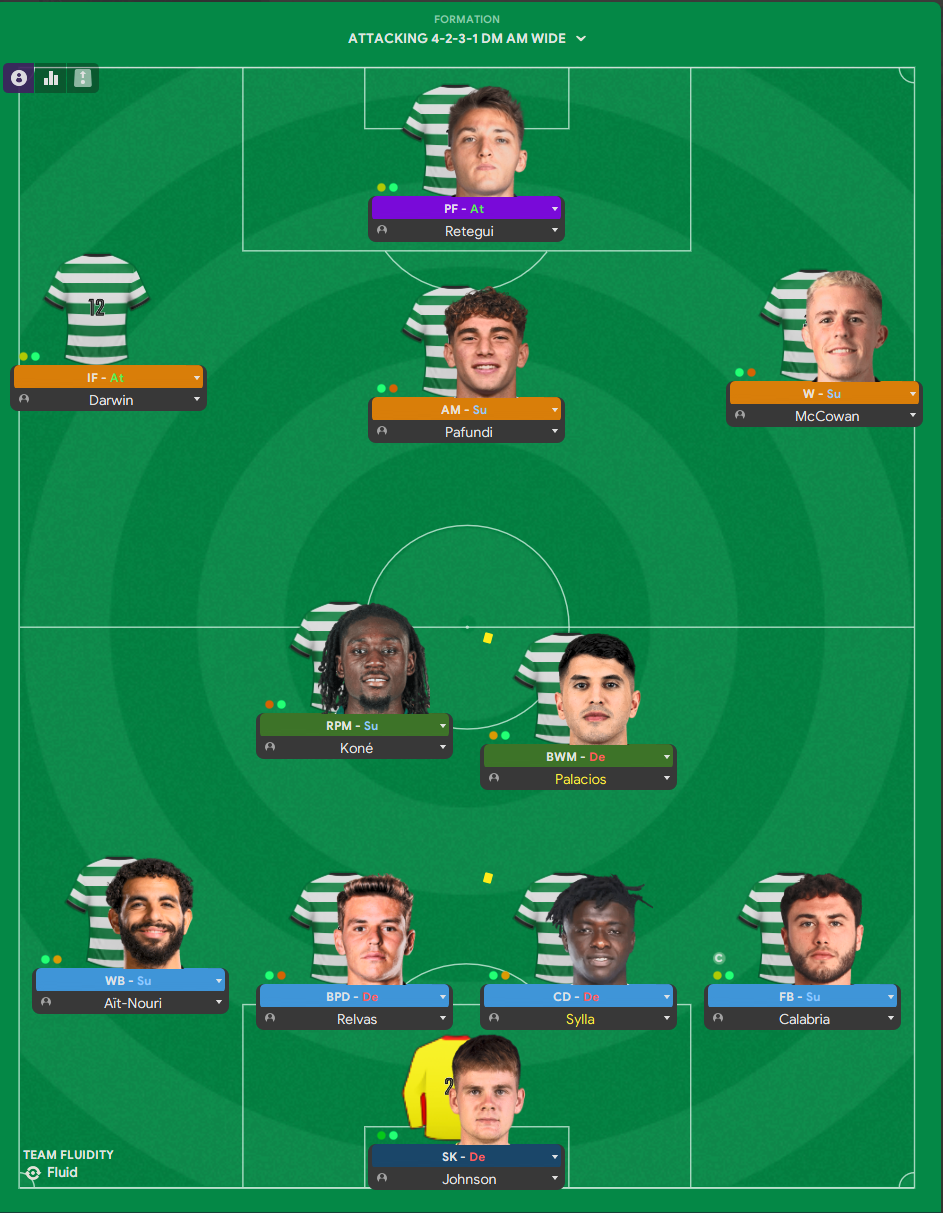
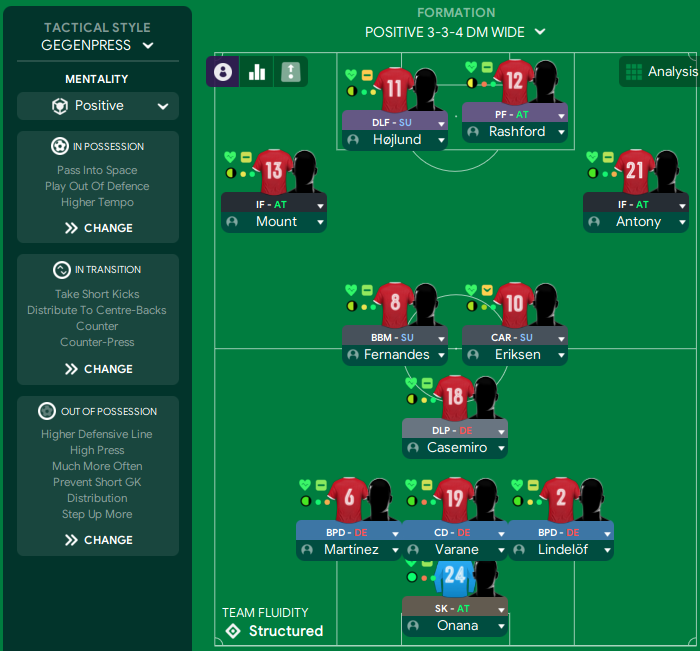
More Gegenpress tactics
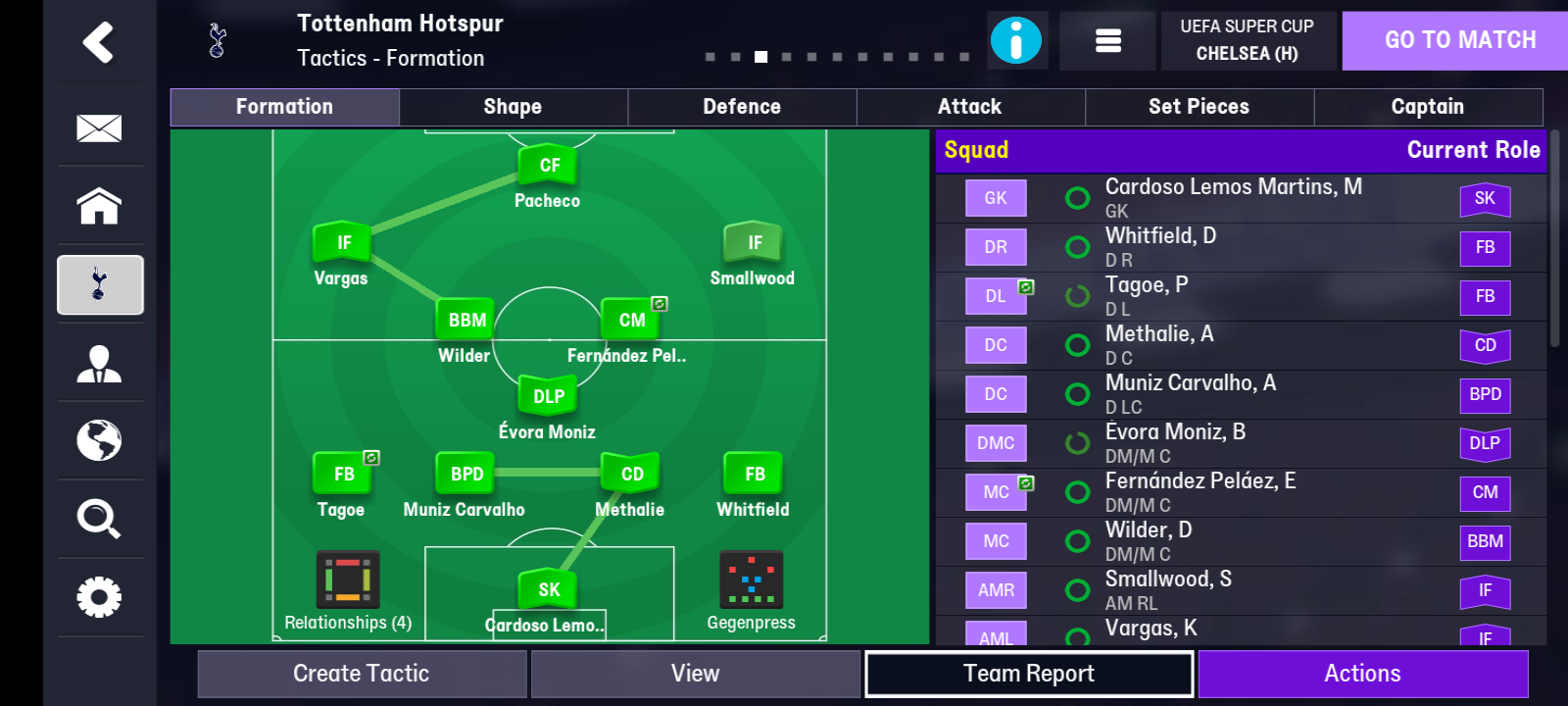
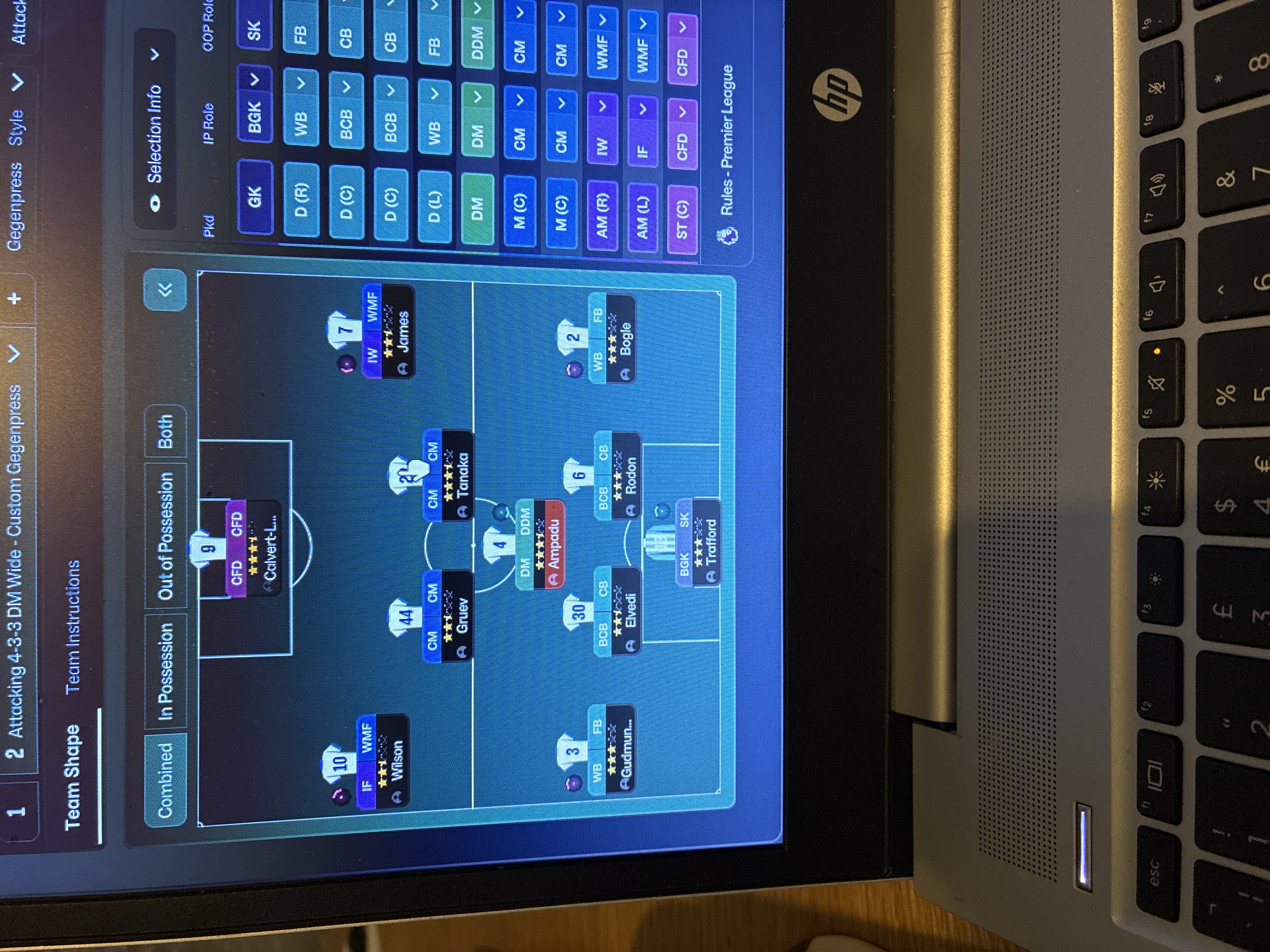
Guides for this formation
The tactical theory behind the 4-2-3-1 DM Wide: roles, instructions, and the trade-offs that decide whether the system holds up.
Player pairings
Midfield Pairs in 4-2-3-1 and 4-4-2
Double pivots and flat pairs in 4-2-3-1 and 4-4-2: when each pairing works, when it collapses, and the AMC unicorn that rescues both.
Read guide
Playing styles
Gegenpressing: A Full Guide
Klopp-style gegenpressing in FM, including squad profile, line-and-press pairing, sustainable workload, and the antipatterns to avoid.
Read guide