Uploaded Tactic
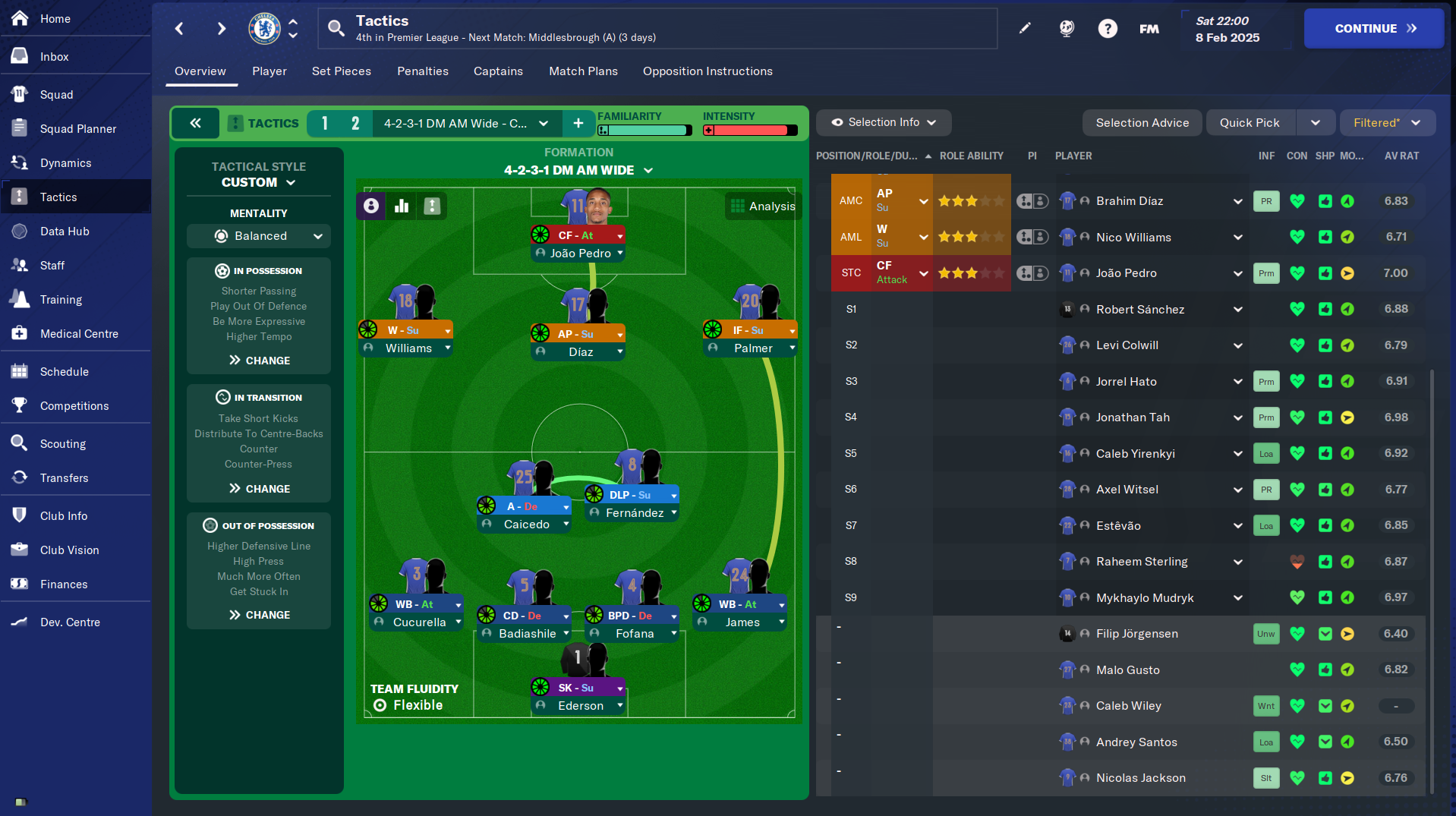
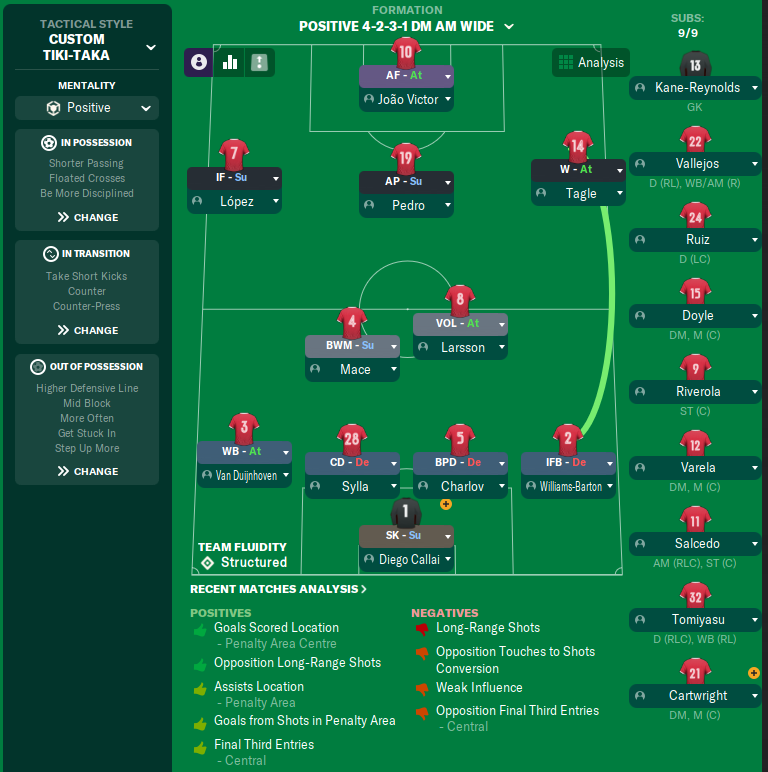
Formation & Style
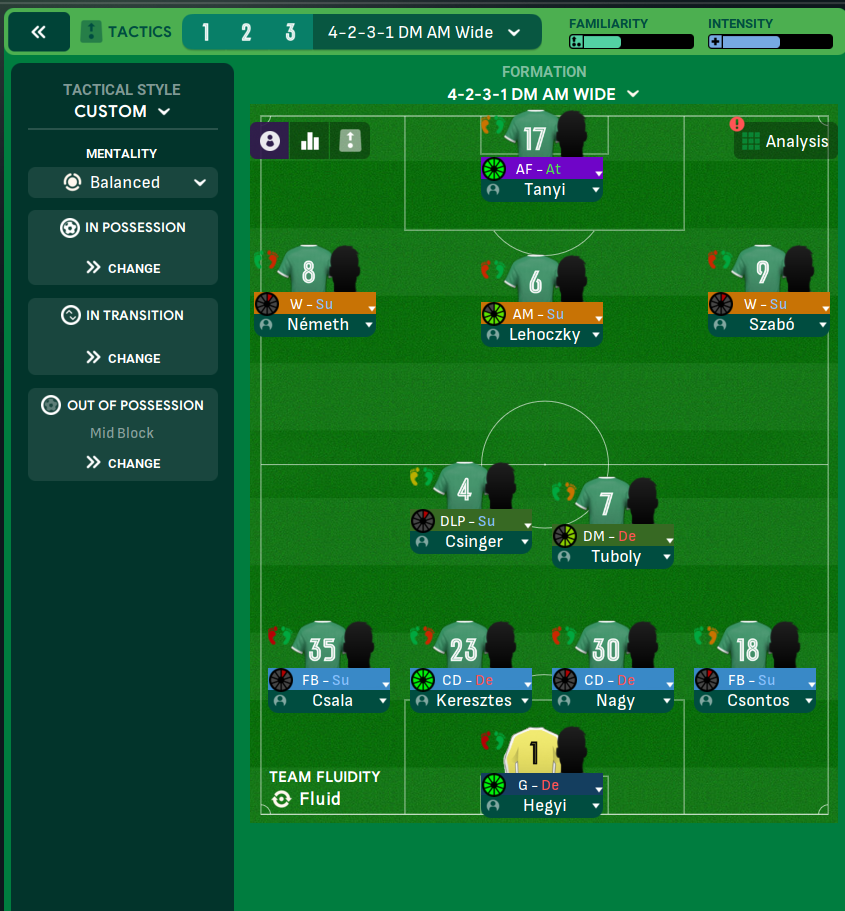
Tactical Style:Custom
Mentality:Balanced
Formation:4-2-3-1 DM Wide
Team Fluidity:Flexible
In Possession
Shorter Passing
Play Out Of Defence
Be More Expressive
Higher Tempo
In Transition
Take Short Kicks
Distribute To Centre-Backs
Counter
Counter-Press
Out of Possession
Higher Defensive Line
High Press
Much More Often Get Stuck In
Team Shape Without Ball
Shape:4-2
Description:The defensive lineup effectively covers the spaces with a higher defensive line and aggressive pressing strategy.
Evidence:CD at [2,2], BPD at [2,3], WB at [2,1] and [2,5] ensuring lateral support.
Team Shape With Ball
Shape:3-2-1
Description:The attacking shape emphasizes width from the wing-backs and central playmaking from the DLP and AP.
Evidence:DLP at [3,3], AP at [5,2], IF at [5,4].
Phase Description
Attacking Play
The team focuses on building from the back, utilizing short passes and relying on DLP to create opportunities.
Defensive Transition
In transitions, the team is quick to counter and immediately press to regain possession.
Main Focus
The primary tactical focus is ball retention and variation in attacking patterns.
Key Strengths
Flexible Midfield Control
The combination of an Anchor and a DLP offers both defensive cover and the ability to transition smoothly into attack.
Wide Attacking Potential
Wing-backs pushing up create natural width, allowing inside forwards and advanced playmakers to exploit spaces.
Dynamic Forward Line
The presence of a Complete Forward allows for versatile attacking movements, facilitating link-up play.
Conflicting Directions
High Defensive Line vs Counter-Attacks
A higher defensive line may expose defenders to fast counters, especially against pacey opponents.
Short Passing in a Fast-Paced Game
Short passes may slow down transitions in a high-tempo game where quick ball movement is needed.
Pressing with High Defensive Line
Pressing high with a high defensive line can lead to defensive vulnerabilities if the press is bypassed.
Tactical Suggestions
Adjust the Defensive Line
Consider lowering the defensive line to minimize exposure to counter-attacks.
Implement Mixed Passing Strategy
Introduce some direct passing options to enhance attacking pace.
Encourage More Movement Up Front
Fostering better positional interplay among forwards can maximize goal-scoring opportunities.
Ask Questions About Your Lineup
Related Tactics
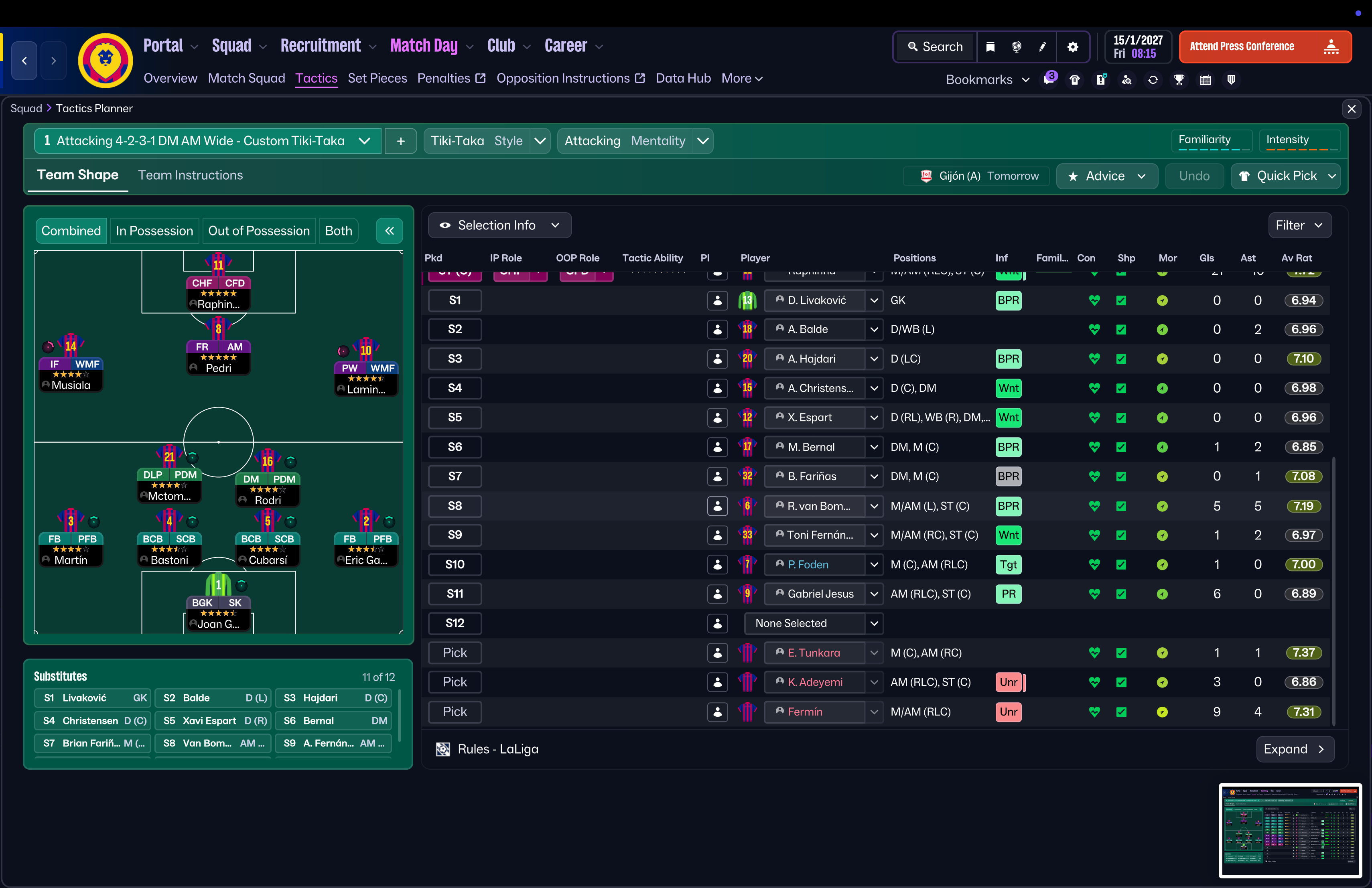
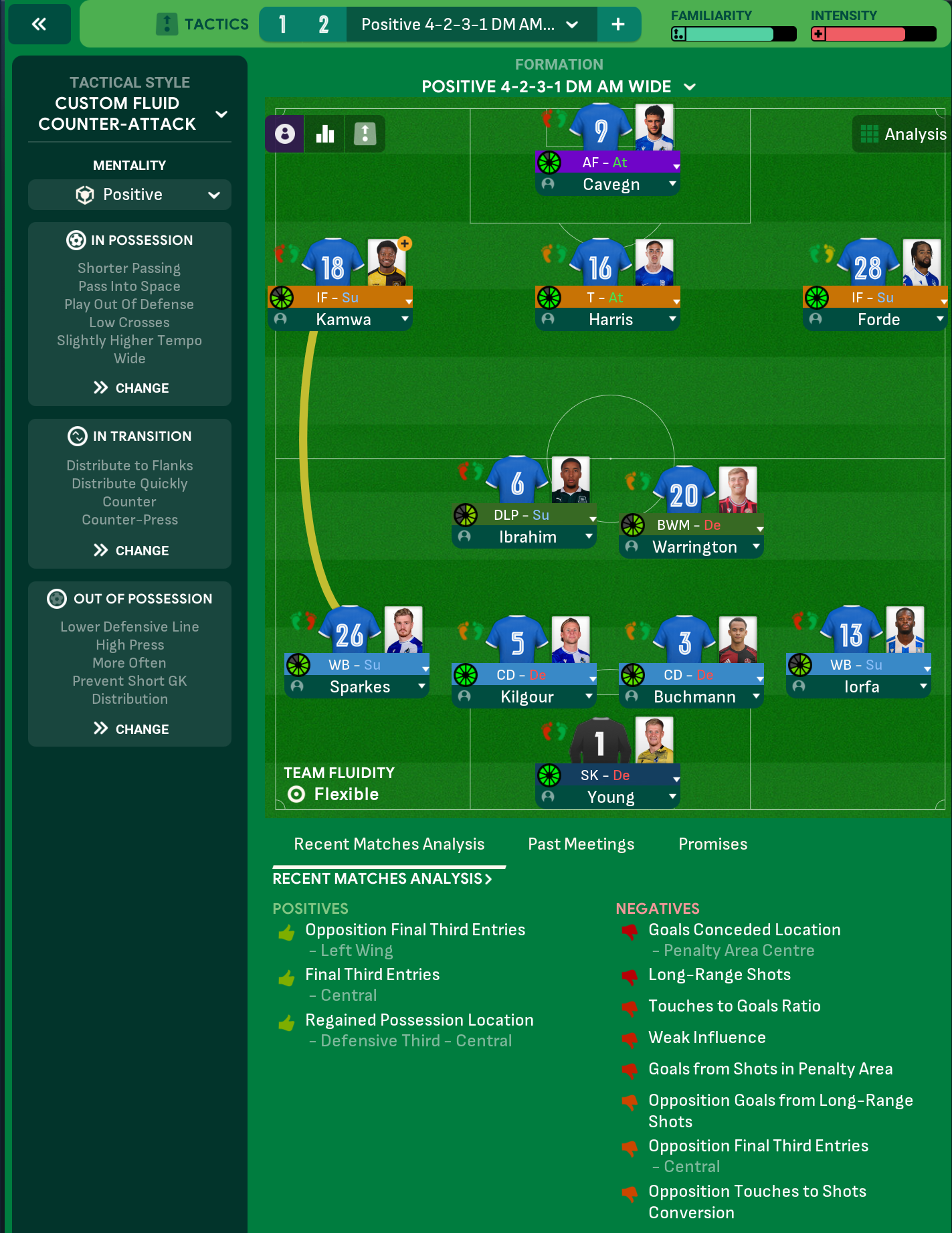
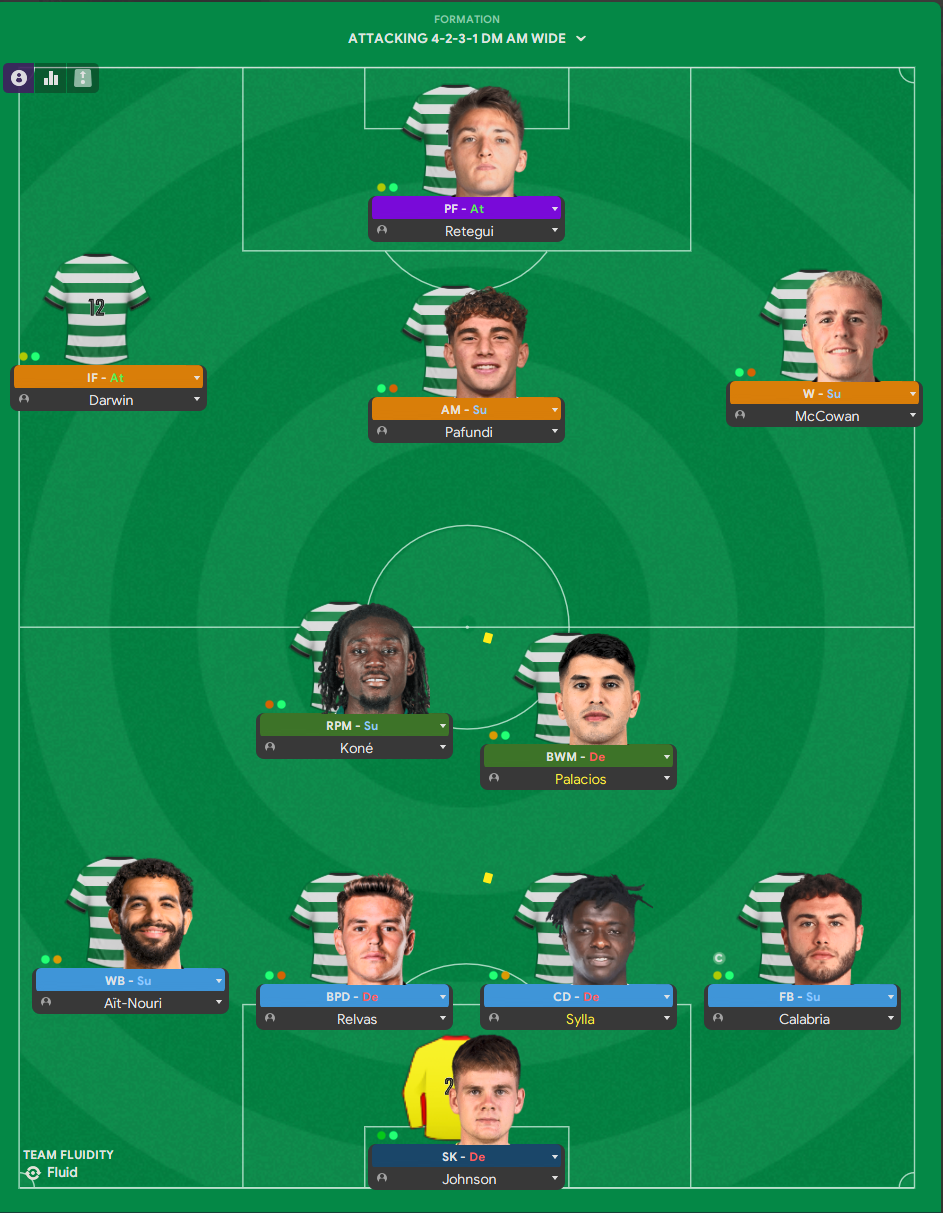
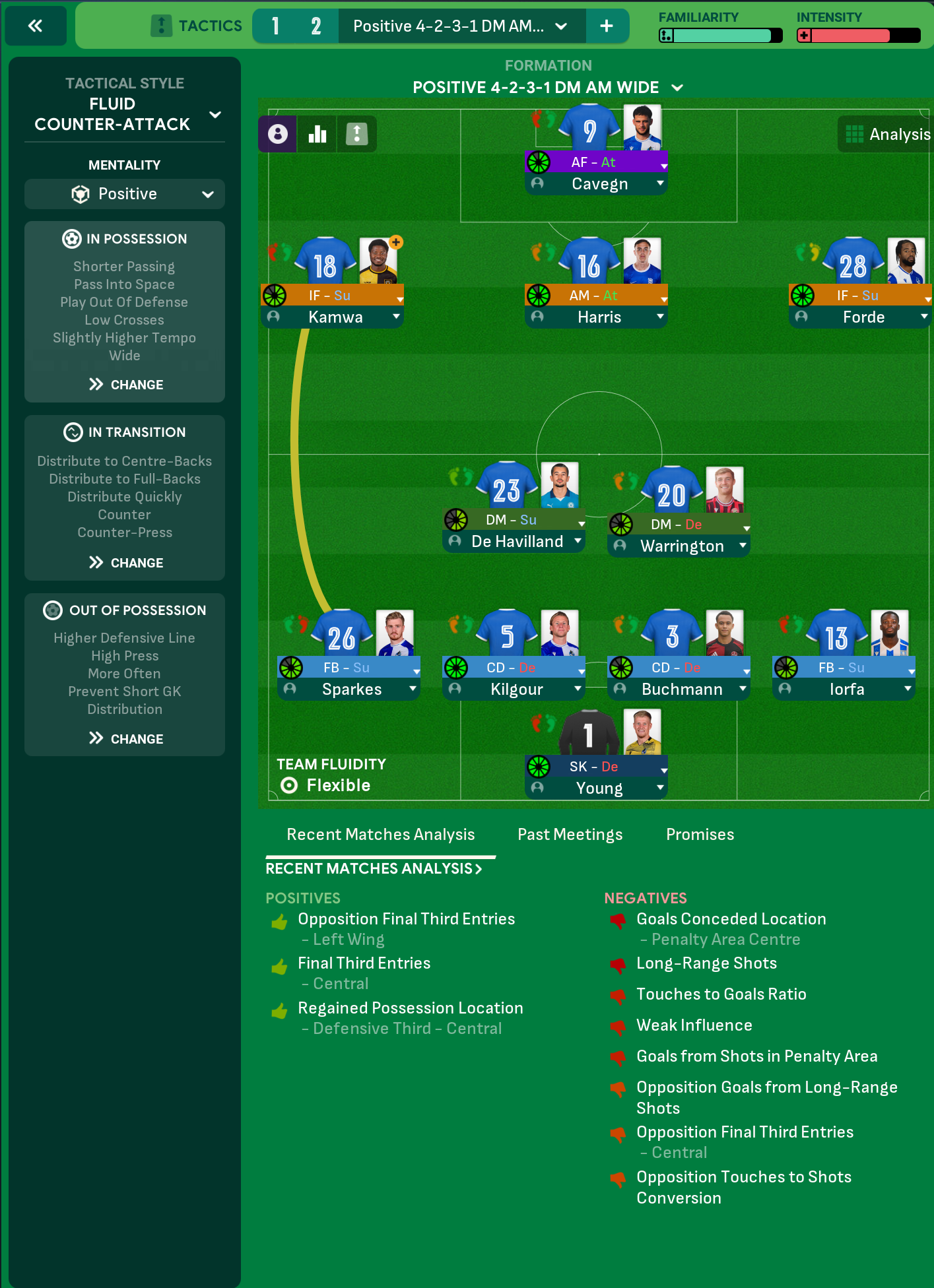
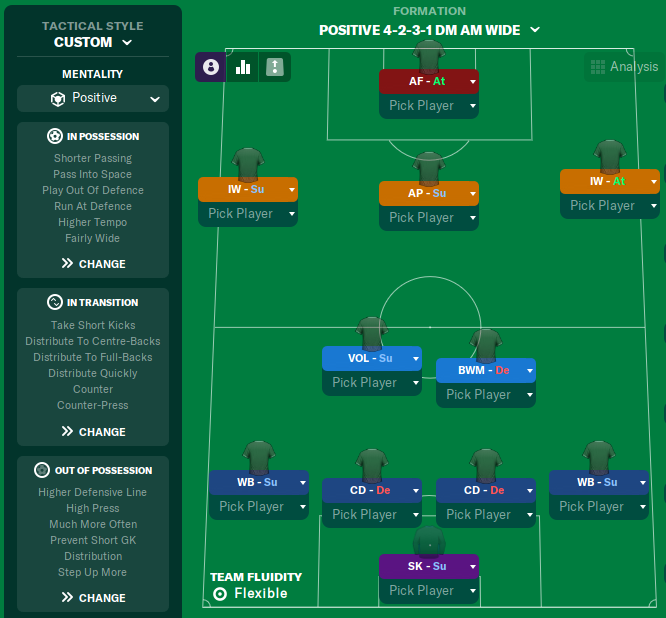
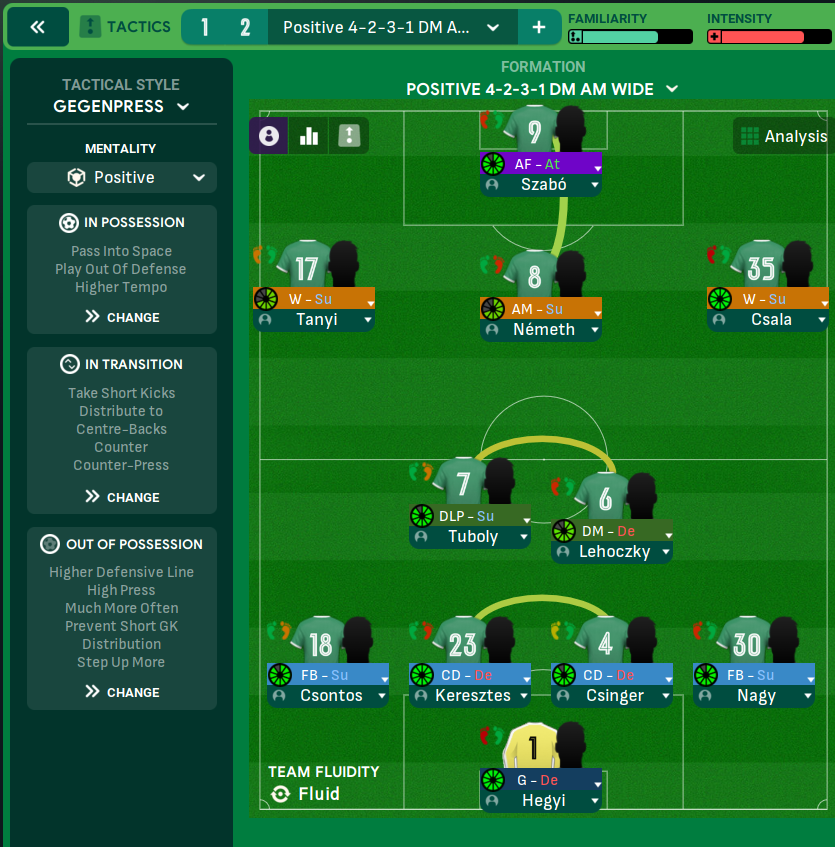
Guides for this formation
The tactical theory behind the 4-2-3-1 DM Wide: roles, instructions, and the trade-offs that decide whether the system holds up.
Player pairings
Midfield Pairs in 4-2-3-1 and 4-4-2
Double pivots and flat pairs in 4-2-3-1 and 4-4-2: when each pairing works, when it collapses, and the AMC unicorn that rescues both.
Read guide
Playing styles
Gegenpressing: A Full Guide
Klopp-style gegenpressing in FM, including squad profile, line-and-press pairing, sustainable workload, and the antipatterns to avoid.
Read guide