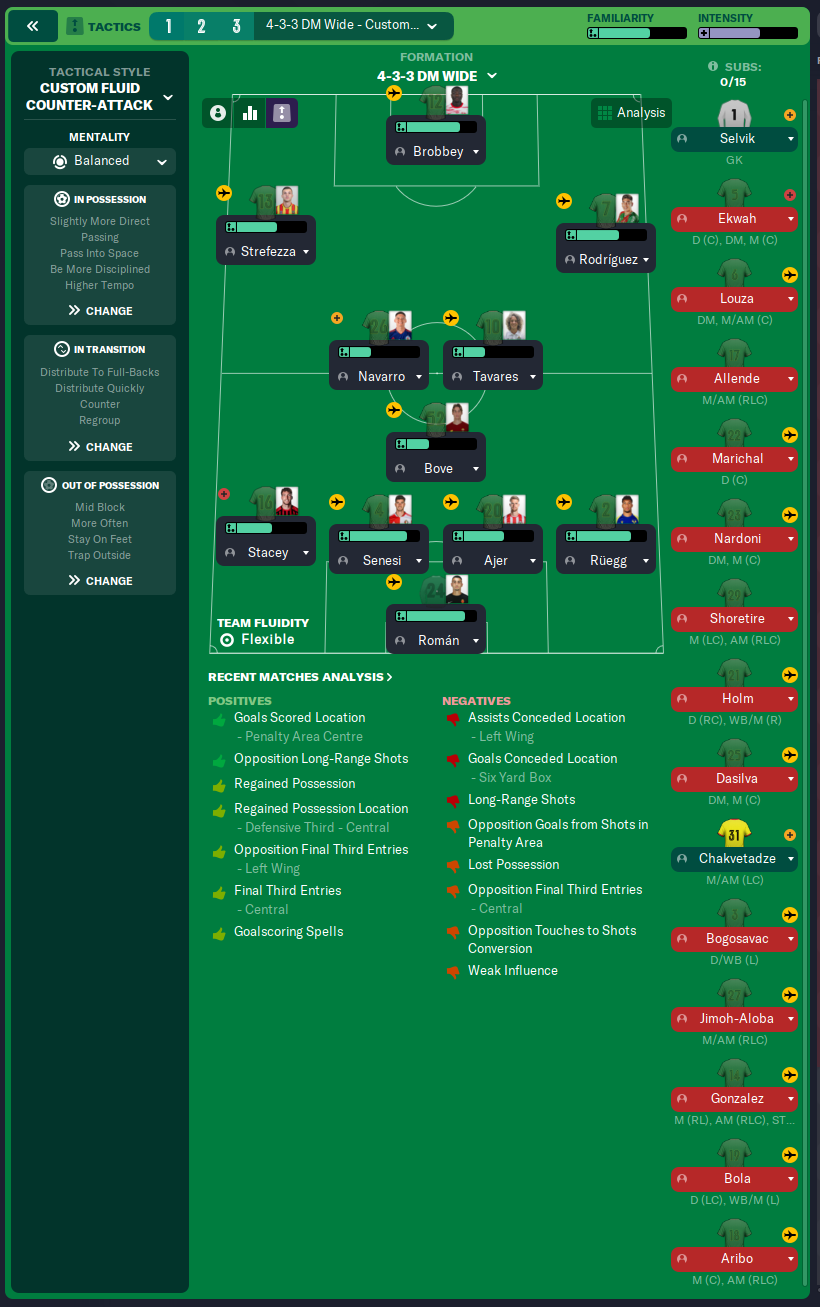
Uploaded Tactic
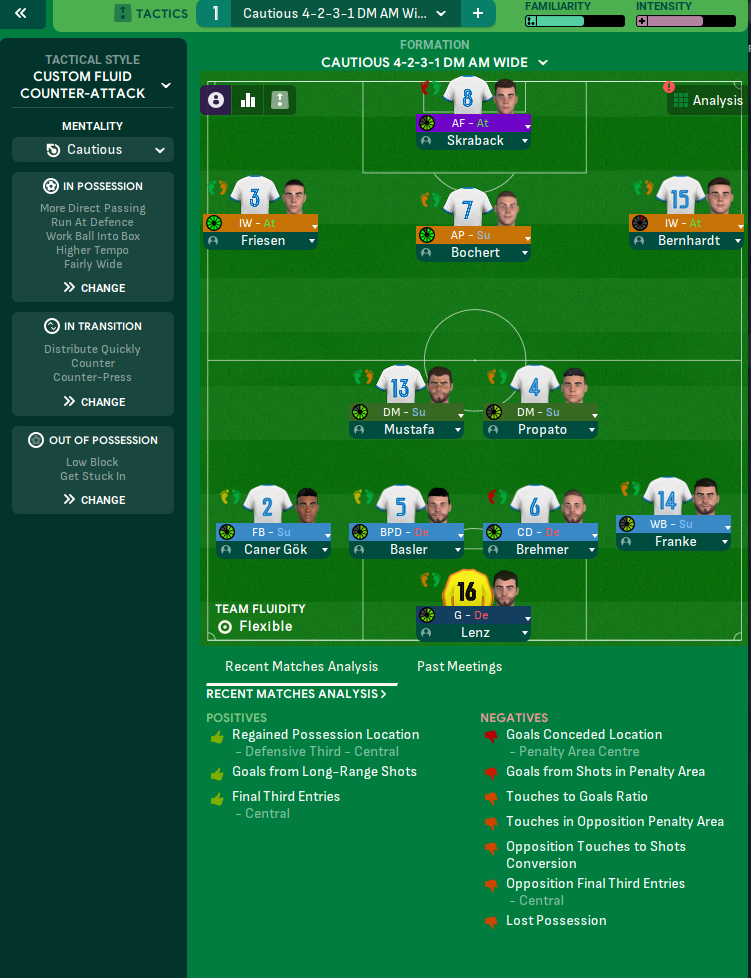
Formation & Style
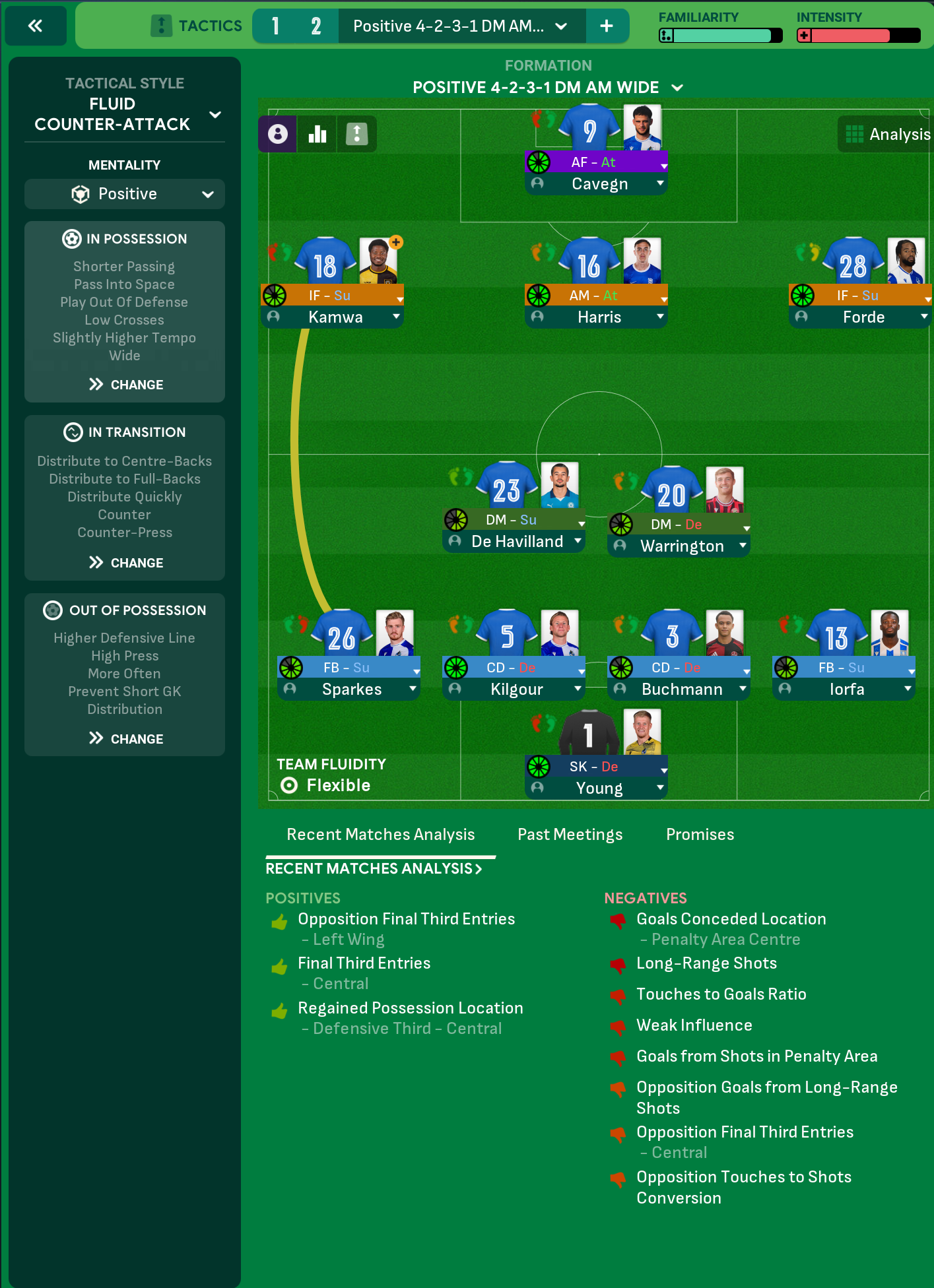
Tactical Style:Custom Fluid Counter-Attack
Mentality:Cautious
Formation:4-2-3-1 DM Wide
Team Fluidity:Flexible
In Possession
More Direct Passing
Work Ball Into Box
Higher Tempo
Fairly Wide
In Transition
Distribute Quickly
Counter
Out of Possession
Low Block
Get Stuck In
Team Shape Without Ball
Shape:Low Block
Description:The team maintains a compact shape, with a focus on cutting off central passing lanes.
Evidence:Low Block instruction with two DMs providing additional cover.
Team Shape With Ball
Shape:Fluid with width
Description:The inside wingers create space for the midfield and striker, allowing for varied attacking patterns.
Evidence:Use of inverted wingers and an advanced forward in the formation.
Phase Description
Attacking Play
This setup focuses on swift transitions from defense to attack, using width provided by the inside forwards.
Defensive Transition
The team aims to regain possession quickly after losing it, utilizing a low block to force opponents wide.
Main Focus
Maximizing counter-attacking opportunities while retaining solid defensive organization.
Key Strengths
Possession Recovery
Strong ability to regain possession in the defensive third, minimizing opponent threats.
Long-Range Threat
Ability to score from distance, making use of space outside the box.
Final Third Entries
Efficient entries into the final third, creating opportunities for the attack.
Conflicting Directions
Defensive Vulnerability
The structure can be exploited from central zones, leading to conceding goals.
Limited Goal Conversion
Challenges in turning shots into goals, leading to missed opportunities.
Dependency on Counter
Risks associated with overly relying on counter-attacks can lead to predictability.
Tactical Suggestions
Enhance Midfield Dynamics
Incorporate a more mobile midfielder role to improve ball circulation.
Adjust Offensive Width
Consider varying the width of the attacking wingers to stretch defenses further.
Focus on Set Pieces
Develop set-piece strategies to capitalize on physical mismatches in the box.
Ask Questions About Your Lineup
Related Tactics
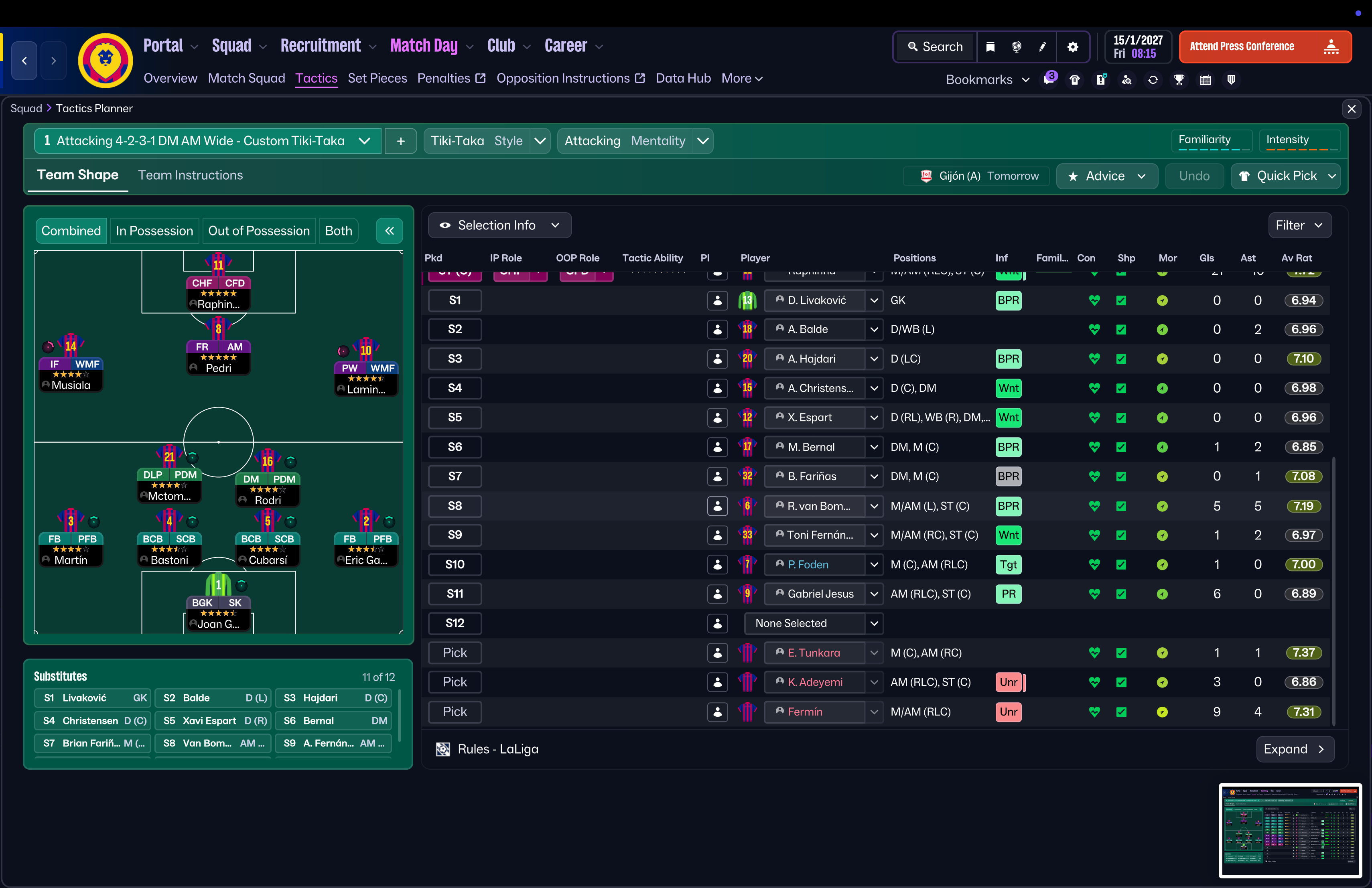
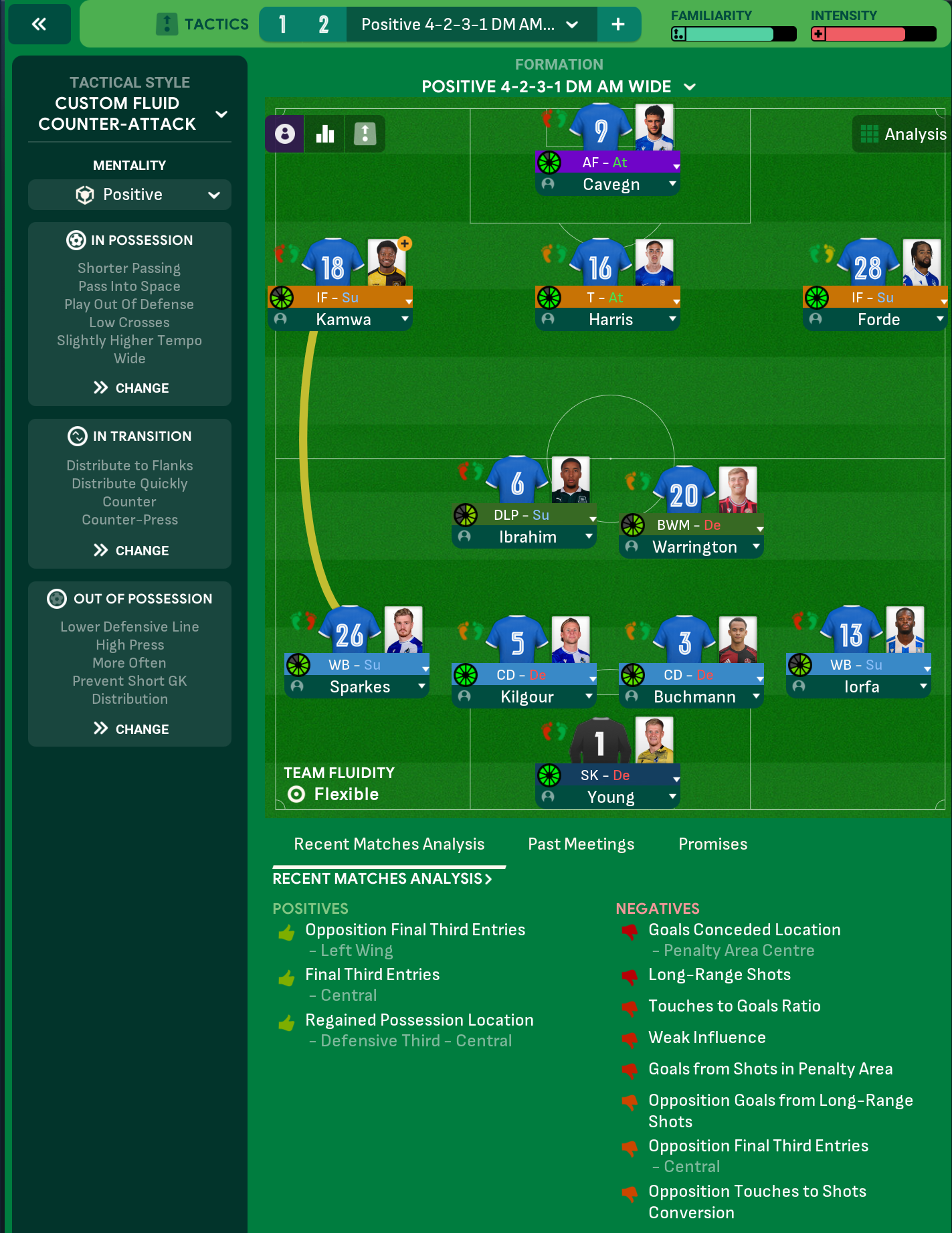
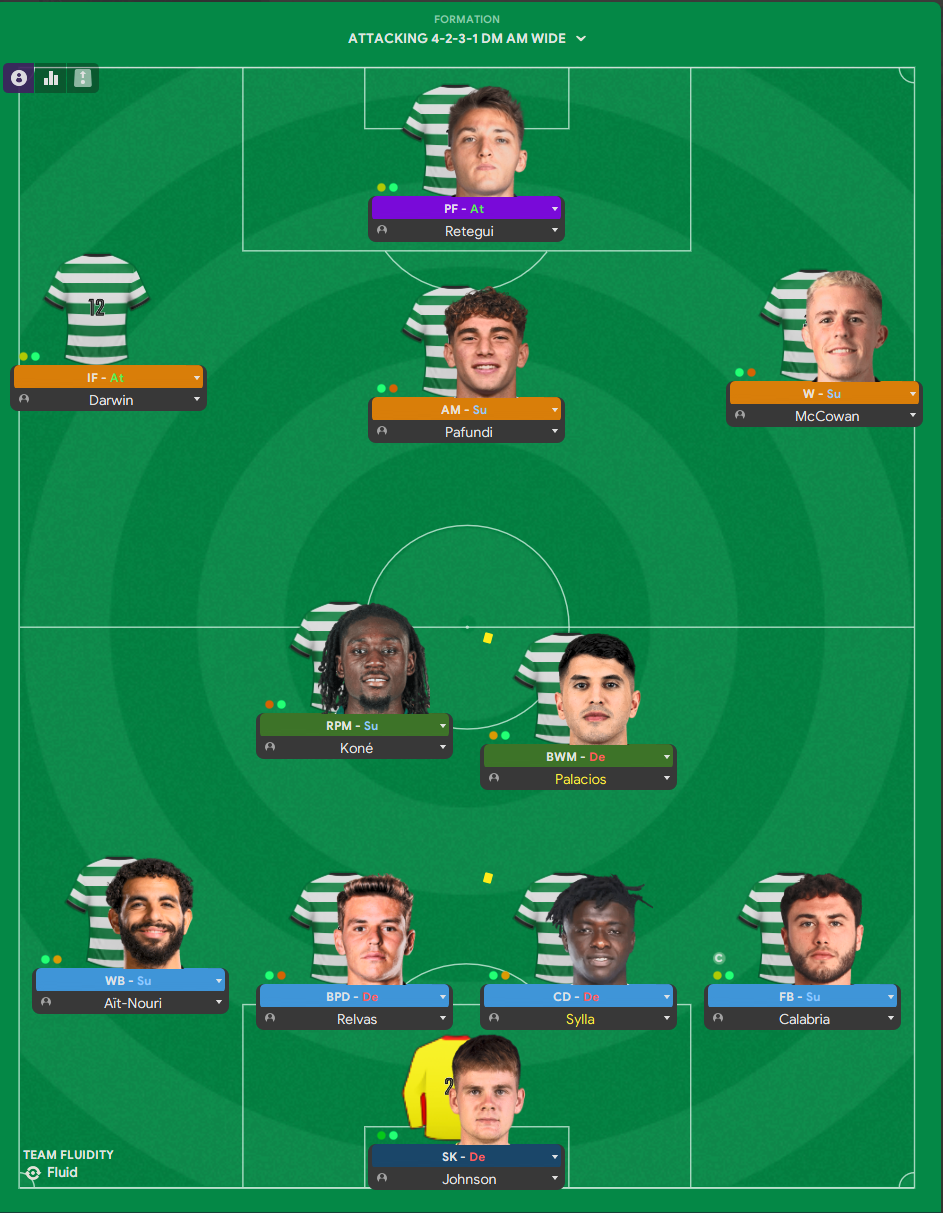
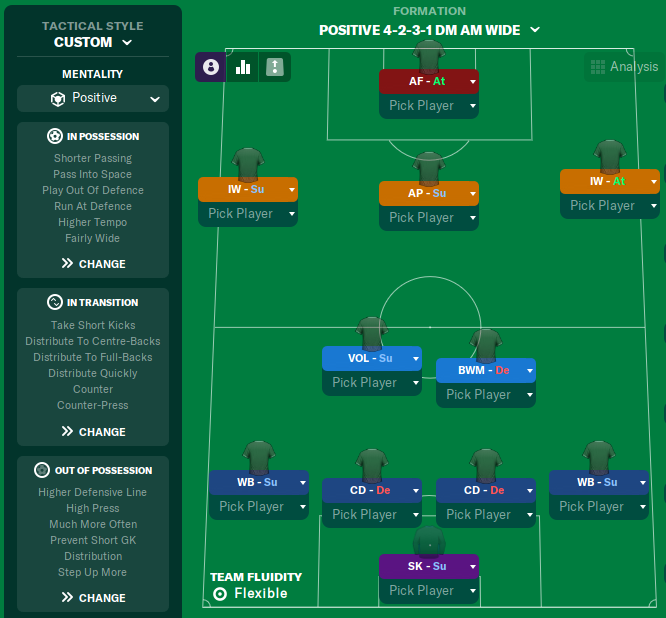
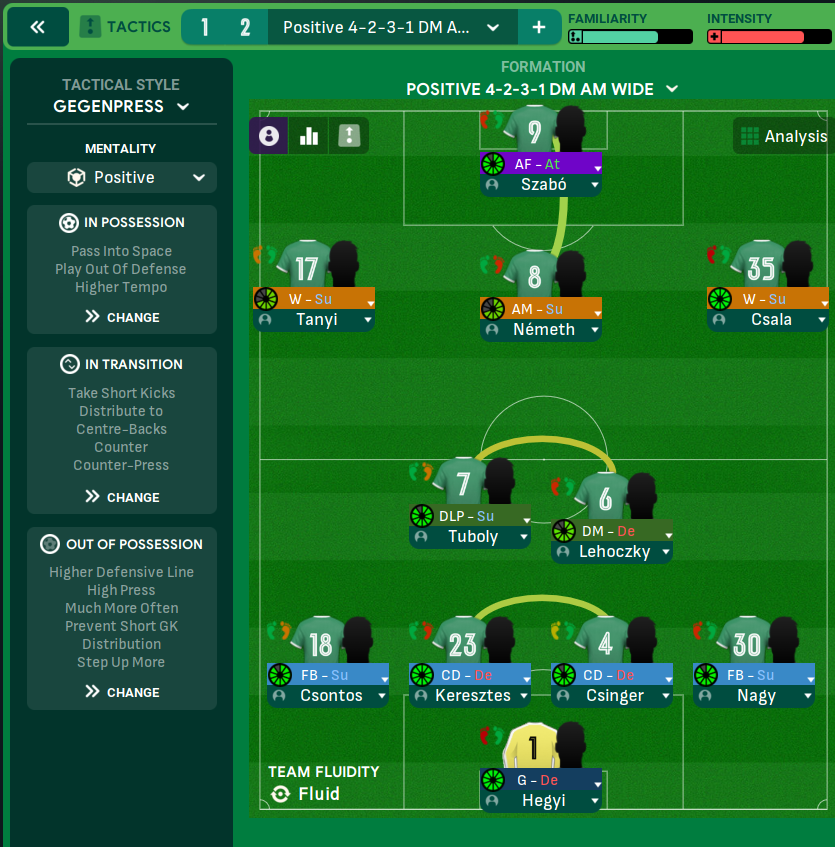
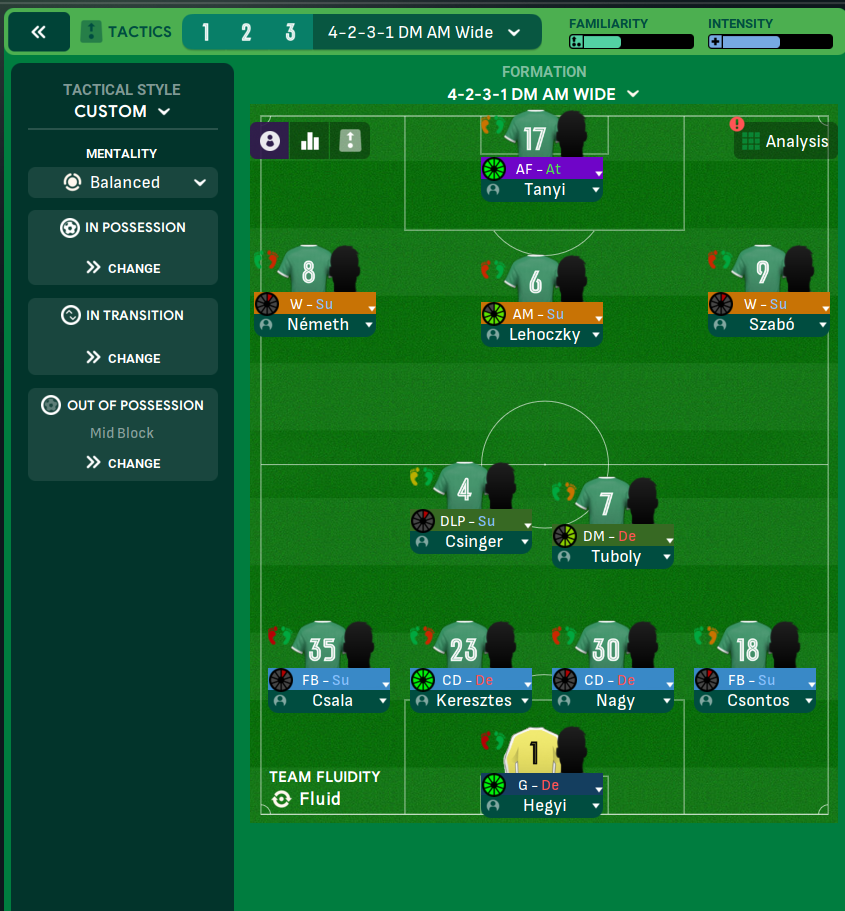
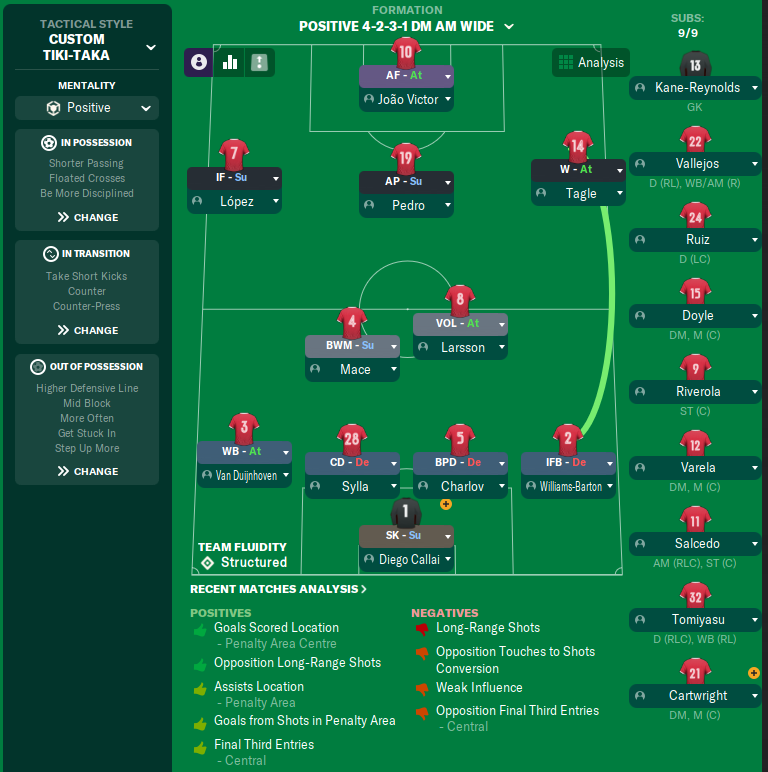
More Custom Fluid Counter-Attack tactics
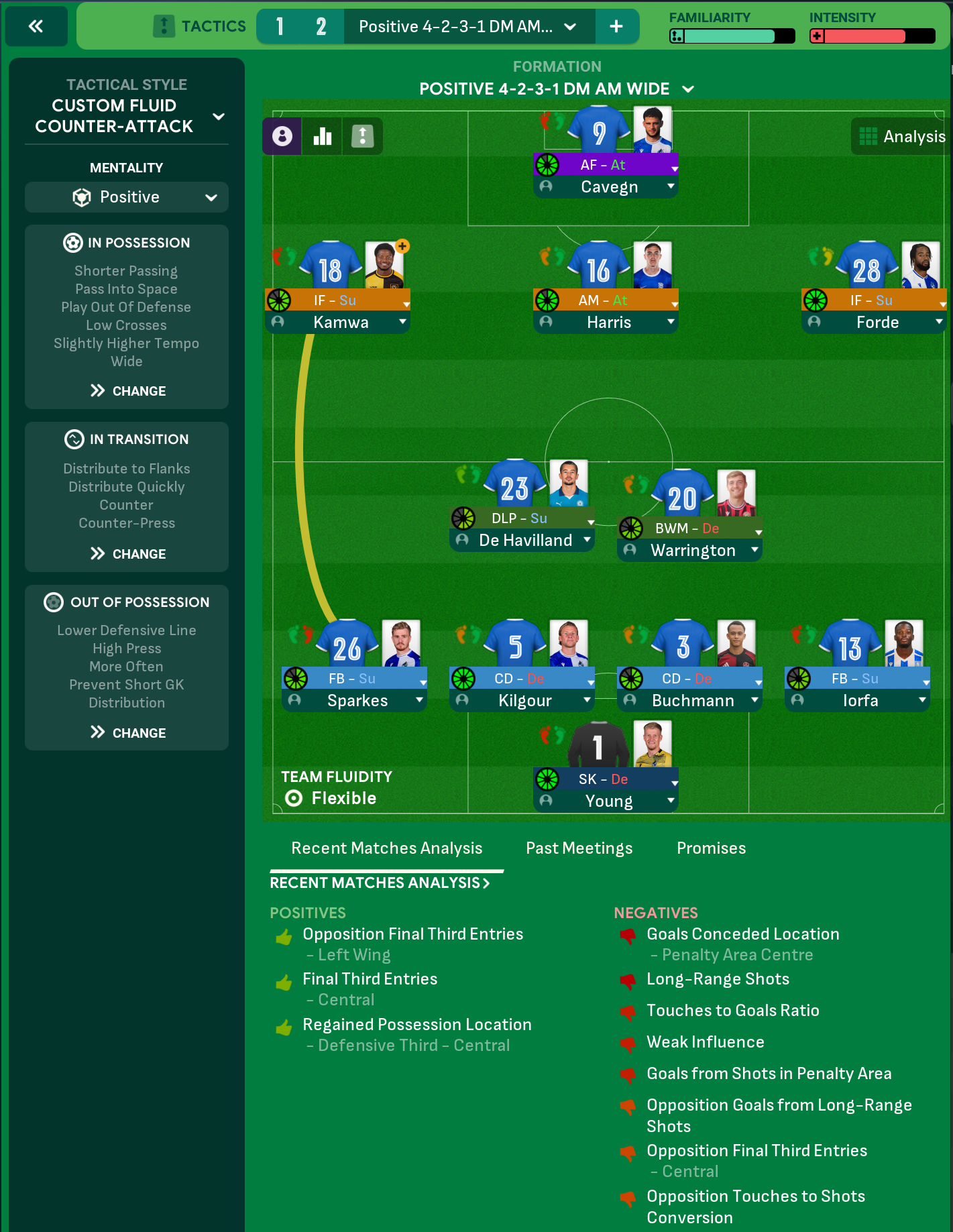
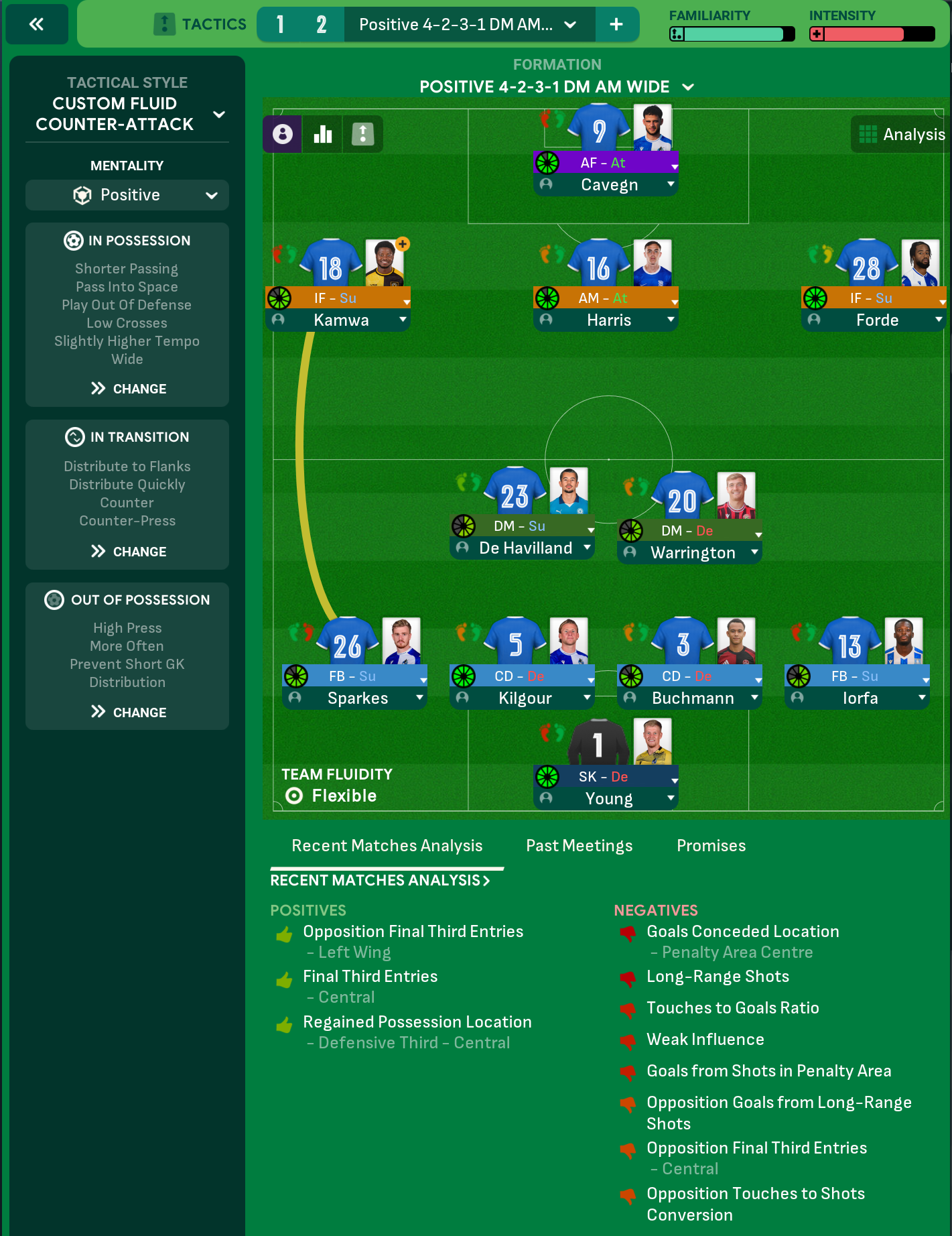
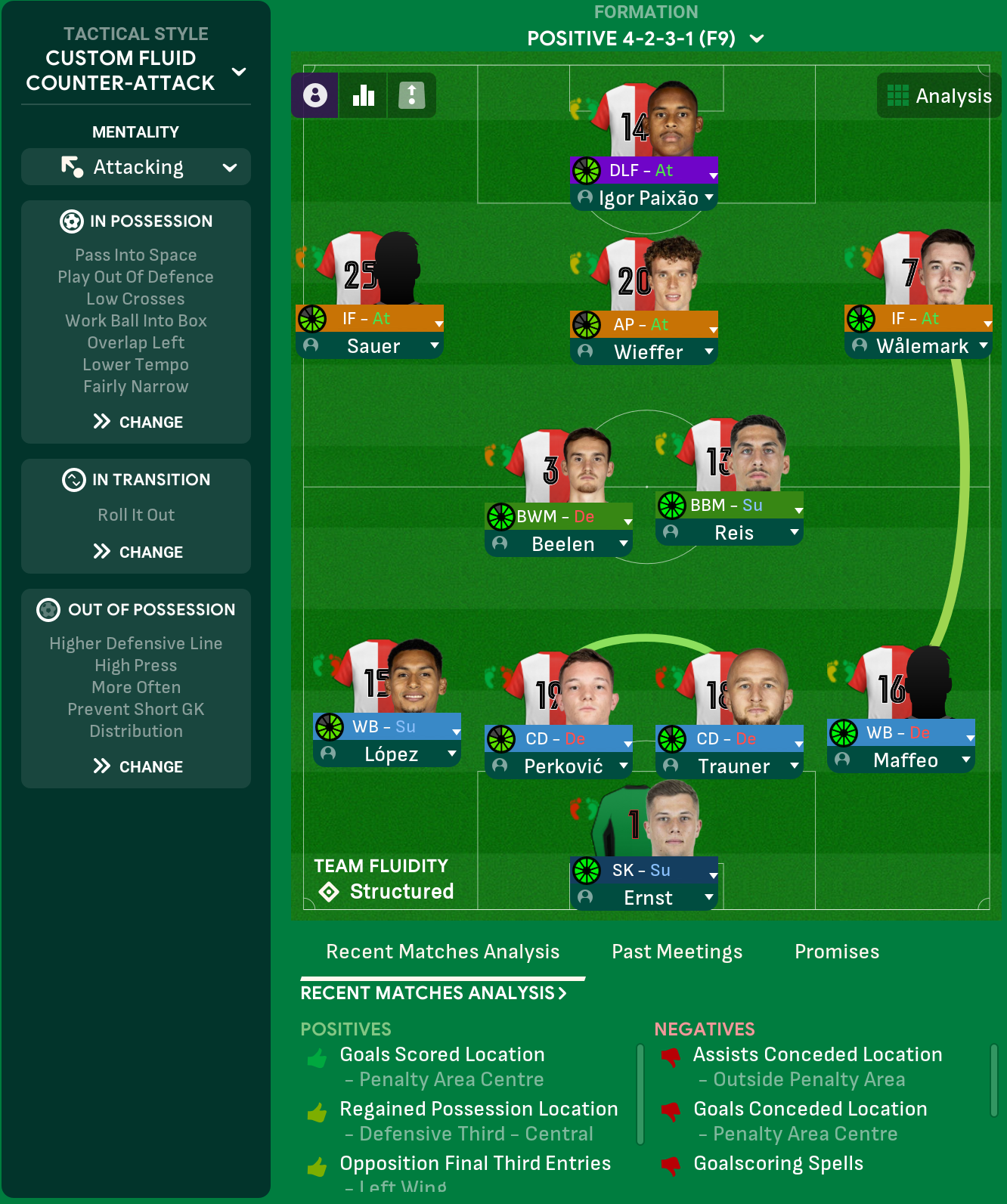
Guides for this formation
The tactical theory behind the 4-2-3-1 DM Wide: roles, instructions, and the trade-offs that decide whether the system holds up.
Player pairings
Midfield Pairs in 4-2-3-1 and 4-4-2
Double pivots and flat pairs in 4-2-3-1 and 4-4-2: when each pairing works, when it collapses, and the AMC unicorn that rescues both.
Read guide
Playing styles
Gegenpressing: A Full Guide
Klopp-style gegenpressing in FM, including squad profile, line-and-press pairing, sustainable workload, and the antipatterns to avoid.
Read guide