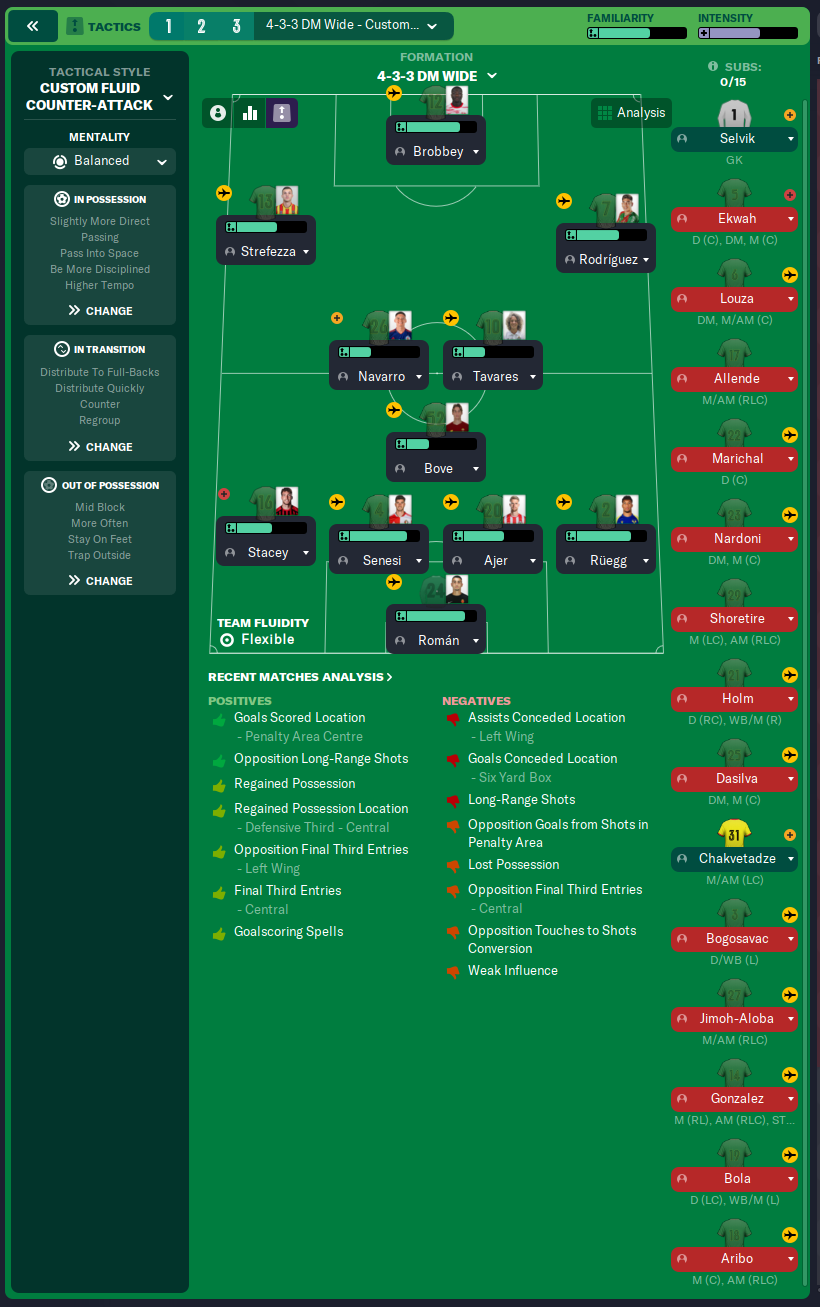
Uploaded Tactic
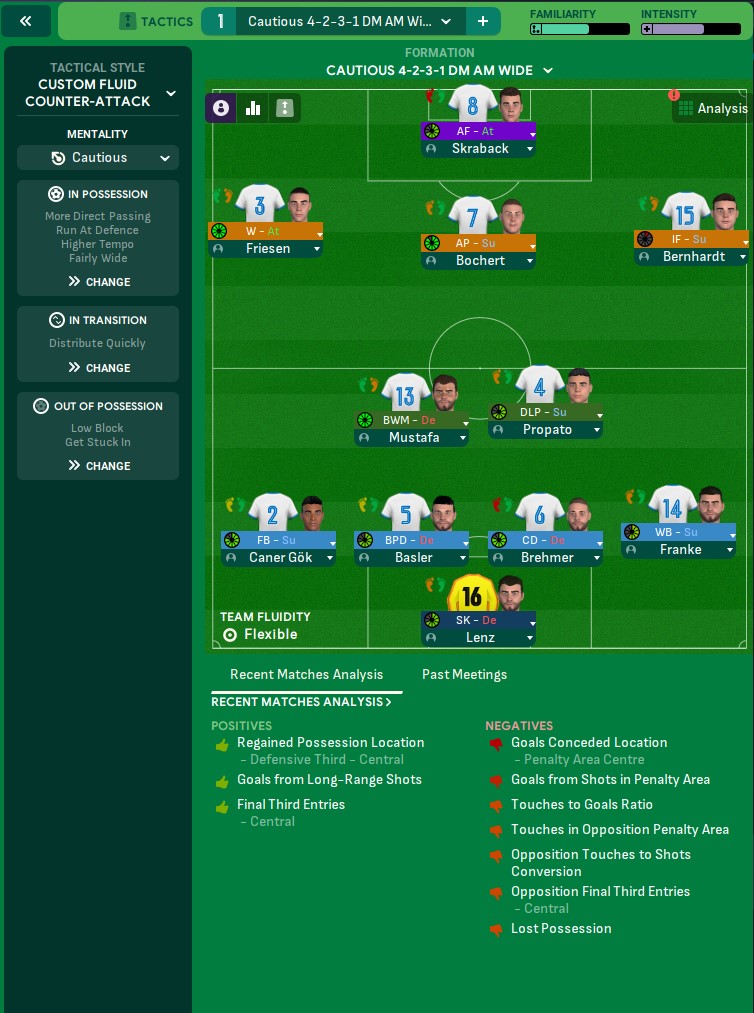
Formation & Style
Tactical Style:Custom Fluid Counter-Attack
Mentality:Cautious
Formation:4-2-3-1 DM Wide
Team Fluidity:Flexible
In Possession
More Direct Passing
Run At Defence
Higher Tempo
Fairly Wide
In Transition
Distribute Quickly
Out of Possession
Low Block
Get Stuck In
Team Shape Without Ball
Shape:4-2
Description:A solid low block with two defensive midfielders providing extra cover against counter-attacks.
Evidence:BWM-D at [3,3] and DLP-S at [4,3] helping to shield the defence.
Team Shape With Ball
Shape:4-3
Description:Fluid attacking setup with width provided by wingers and an advanced playmaker supporting the striker.
Evidence:W-A at [6,2], AP-S at [5,3] and IF-S at [5,4] creating varied attacking options.
Phase Description
Attacking Play
Focused on quick transitions, leveraging width and direct passing to exploit opposition gaps.
Defensive Transition
Quick recovery and organisation into a low block, prioritising compactness.
Main Focus
Capitalising on counter-attacks through swift forward movements and exploiting defensive mistakes.
Key Strengths
Effective Counter-Attacking
Fast transitions with direct passing lead to creating chances on the break.
Defensive Solidity
A low block with two defensive midfielders provides a strong foundation against opposing attacks.
Dynamic Wing Play
Wingers and an inside forward create width, stretching the opposition and creating shooting opportunities.
Conflicting Directions
Risk of Over-Reaction
Counter-attacking strategy may struggle against teams pressing high early in the game, losing possession.
Defensive Over-Commitment
Too many players in defence can leave the attacking unit isolated, limiting scoring chances.
Slow Transition from Defense to Attack
The cautious mentality may cause delays in transitioning to an attacking phase after regaining possession.
Tactical Suggestions
Increase Tempo During Counter-Attacks
Encourage quicker passing and movement after regaining possession to maximise attacking potential.
Consider Wide Play Enhancements
Encouraging overlapping runs from wing-backs may stretch the opposition further and create gaps.
Utilise Substitutions for Fresh Legs
Substituting tired players in the attacking line can maintain intensity and effectiveness in counter-attacks.
Ask Questions About Your Lineup
Related Tactics
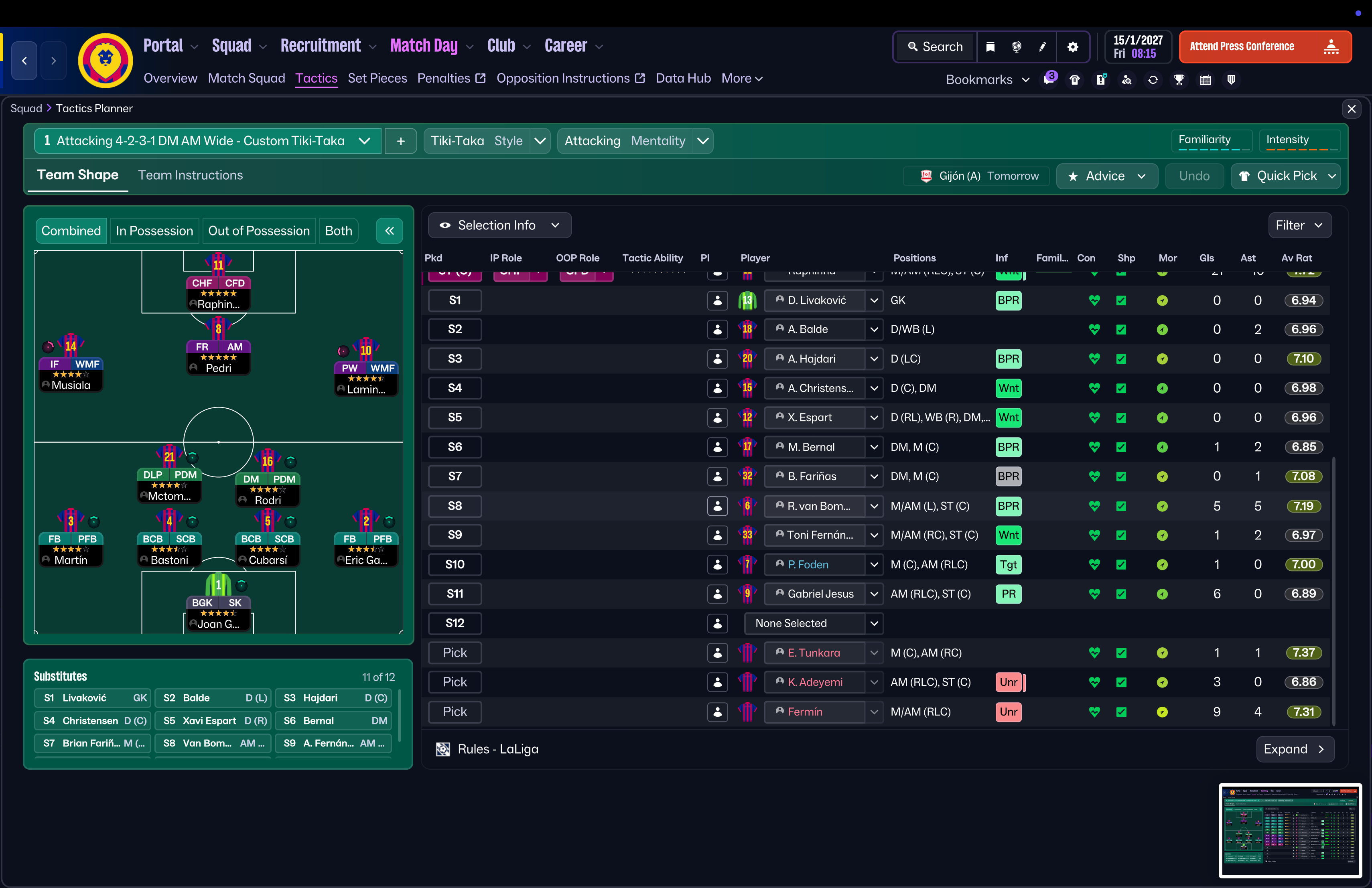
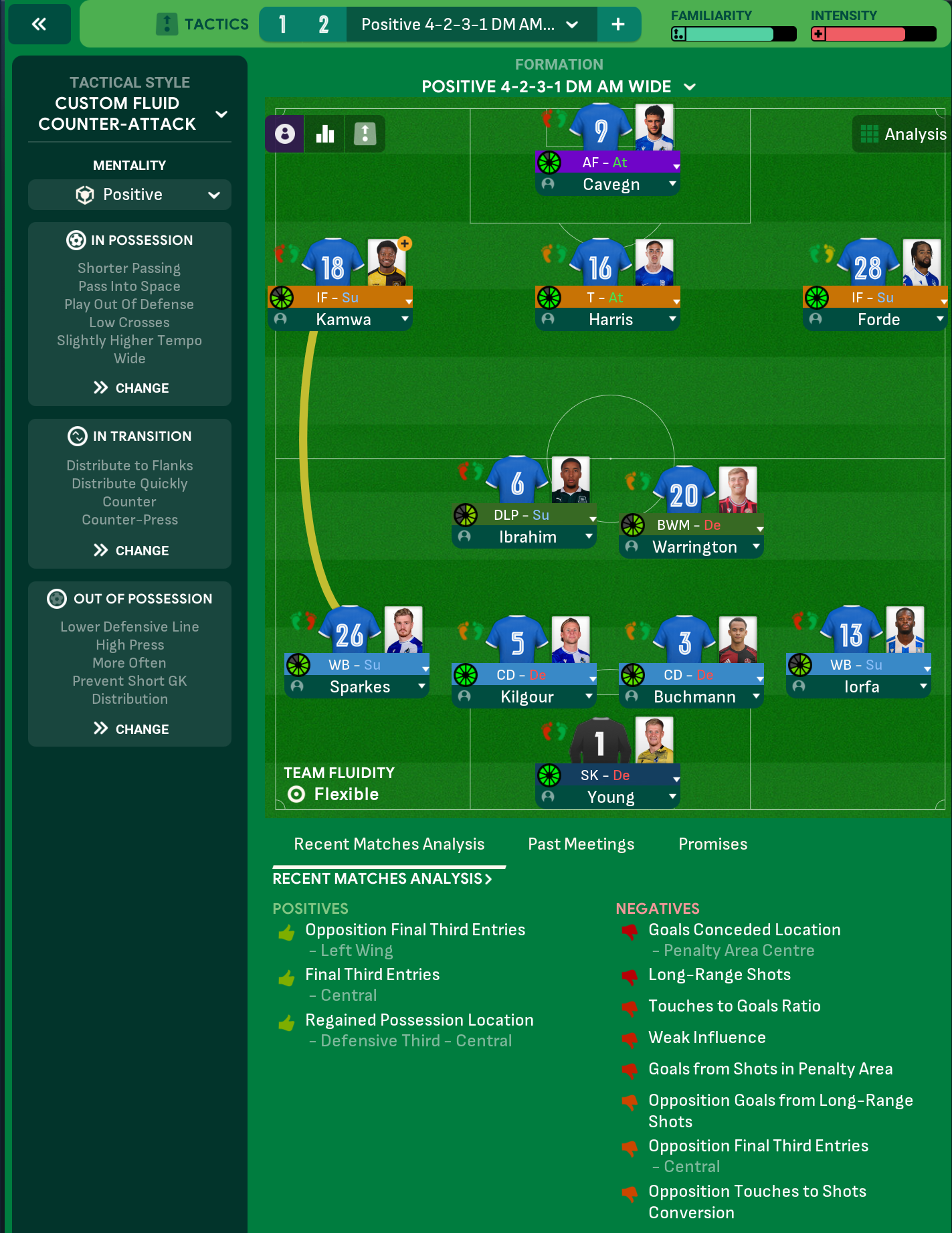
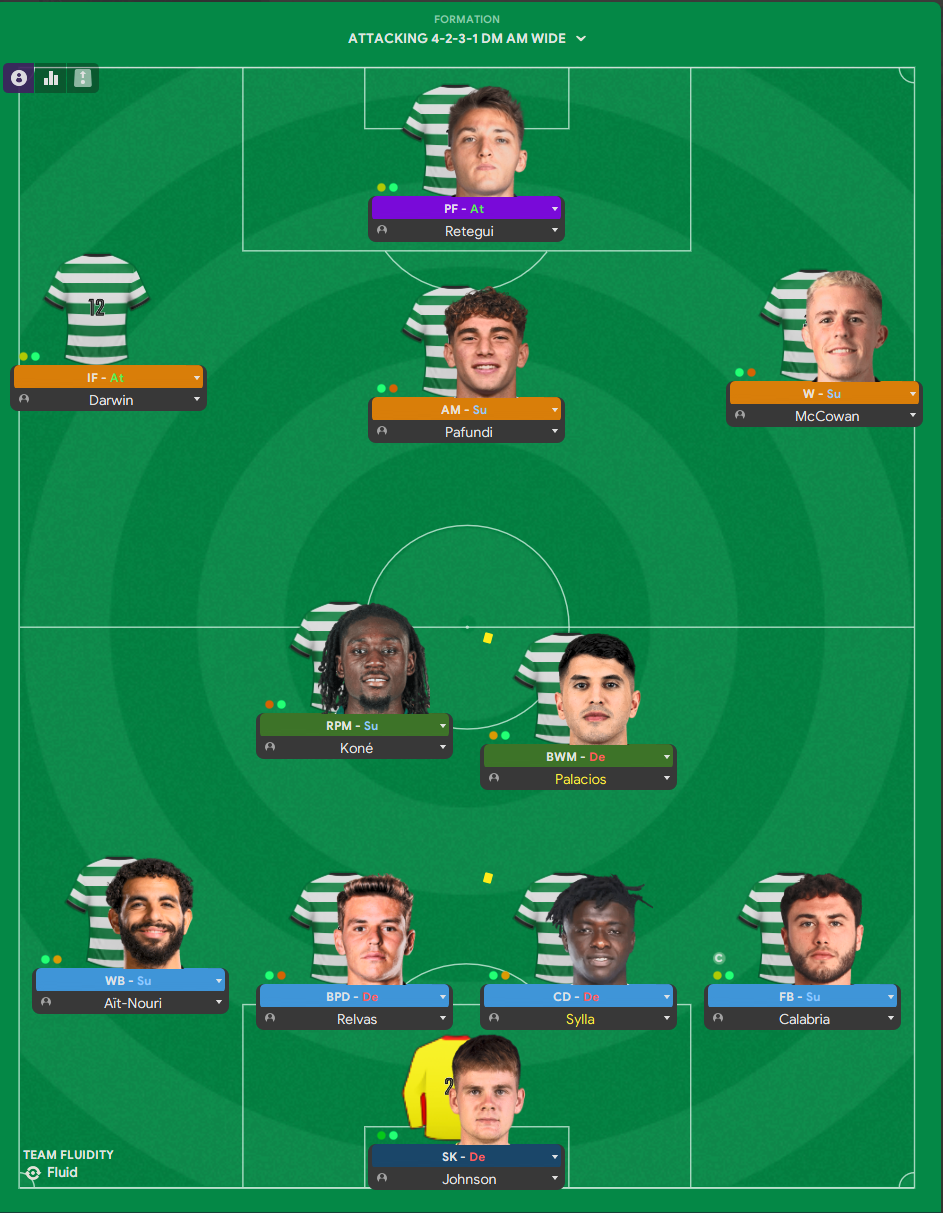
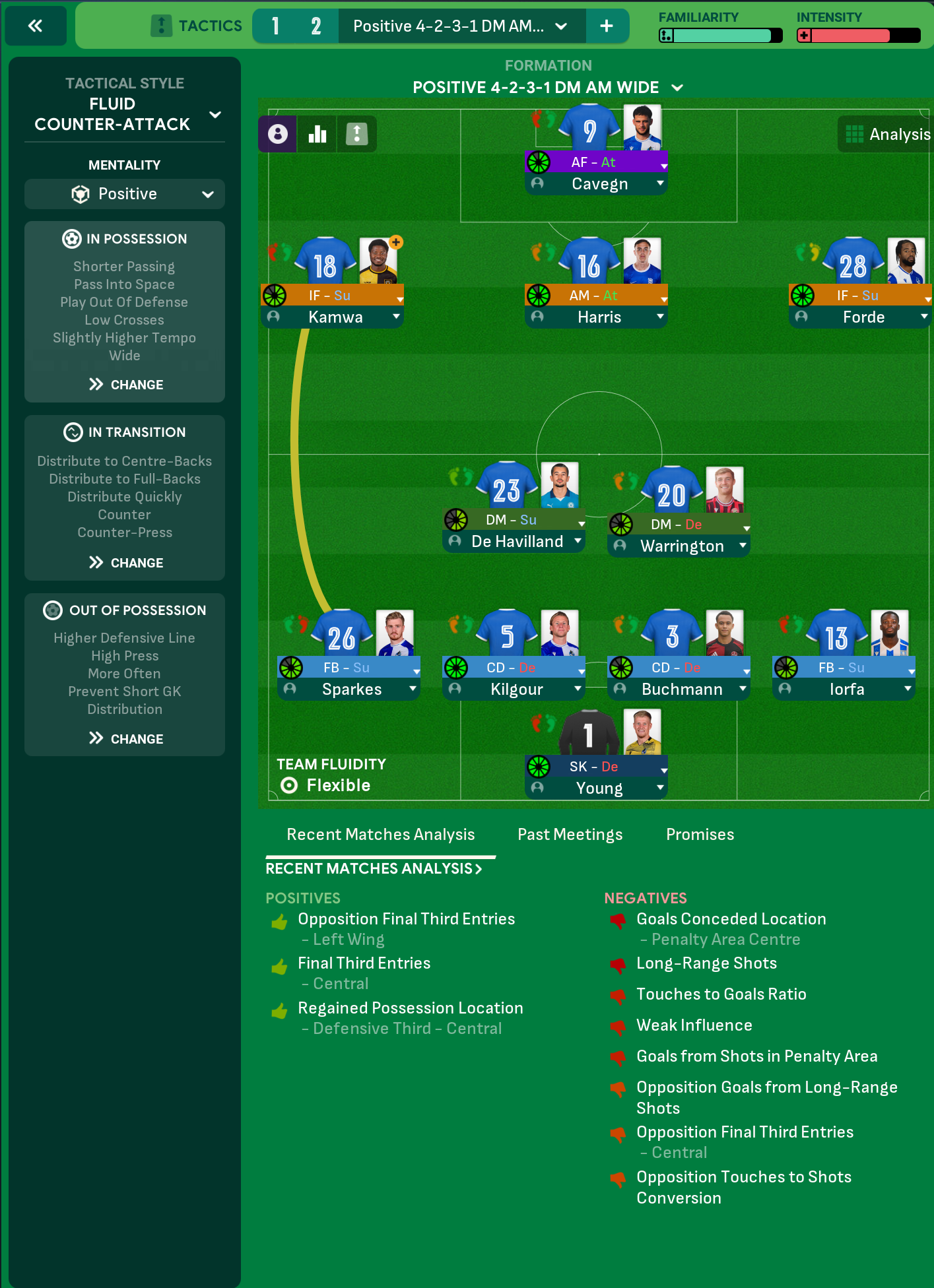
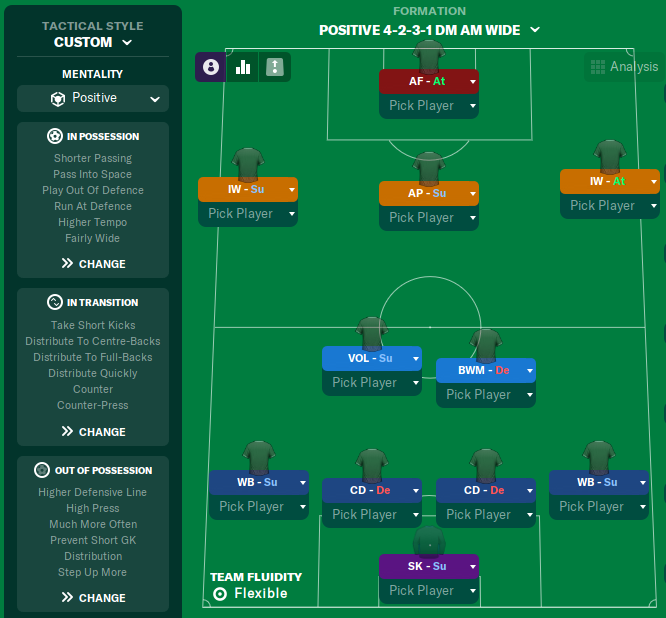
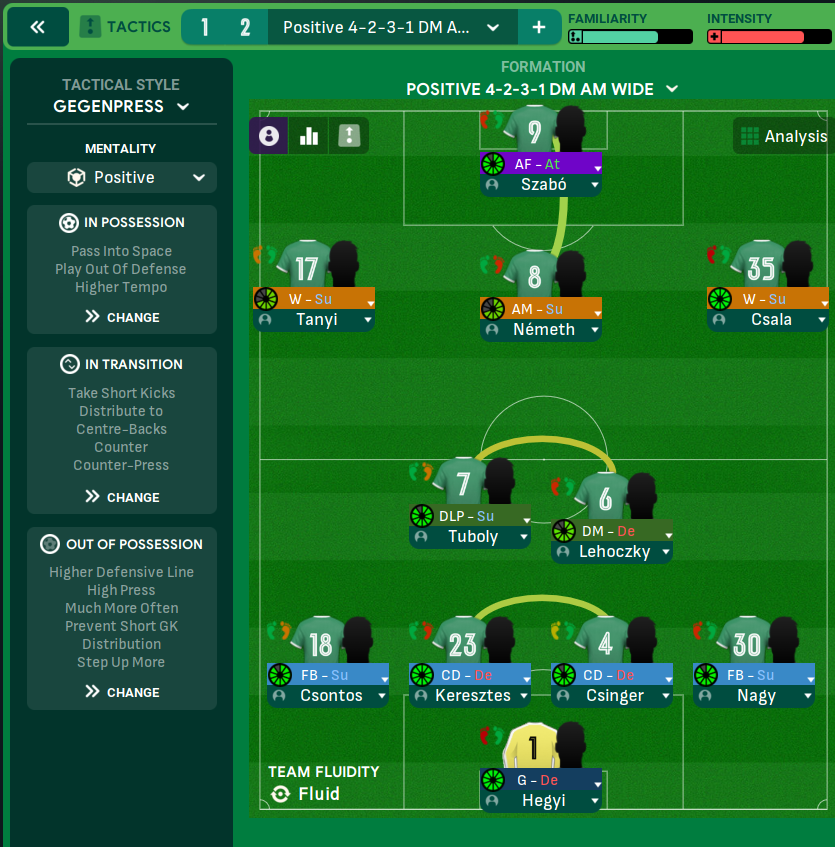
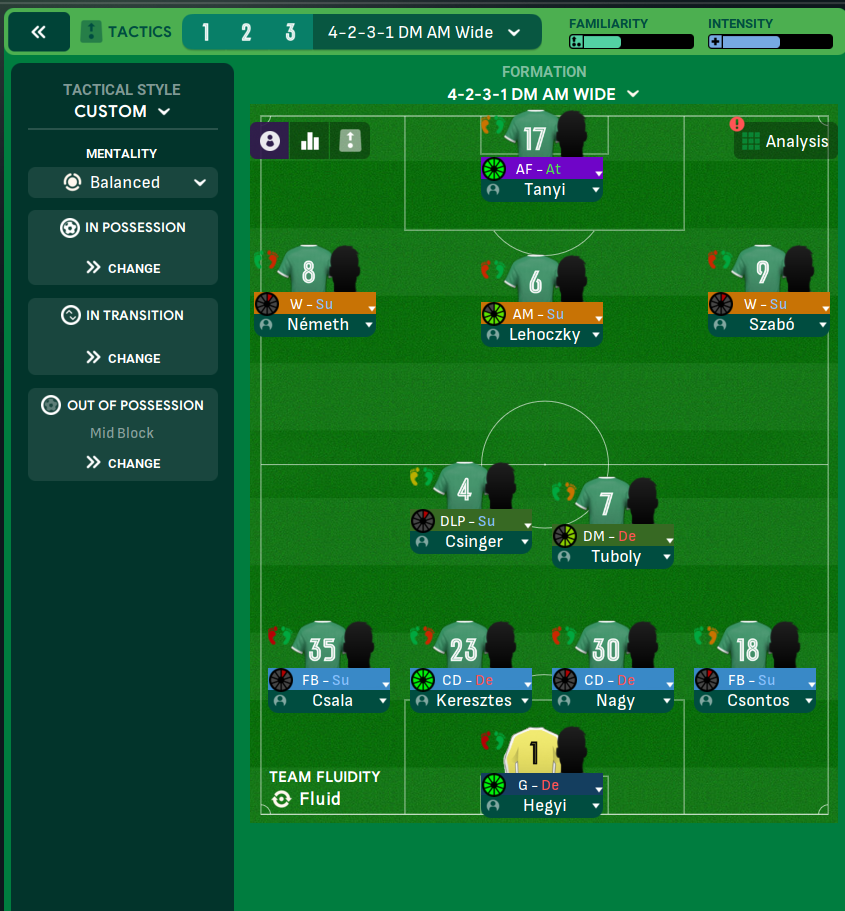
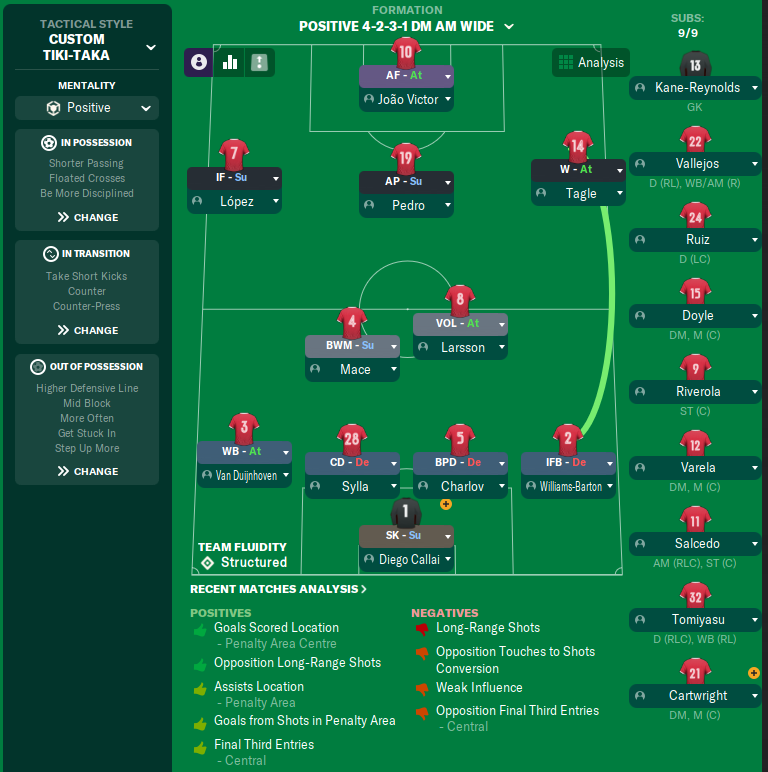
More Custom Fluid Counter-Attack tactics
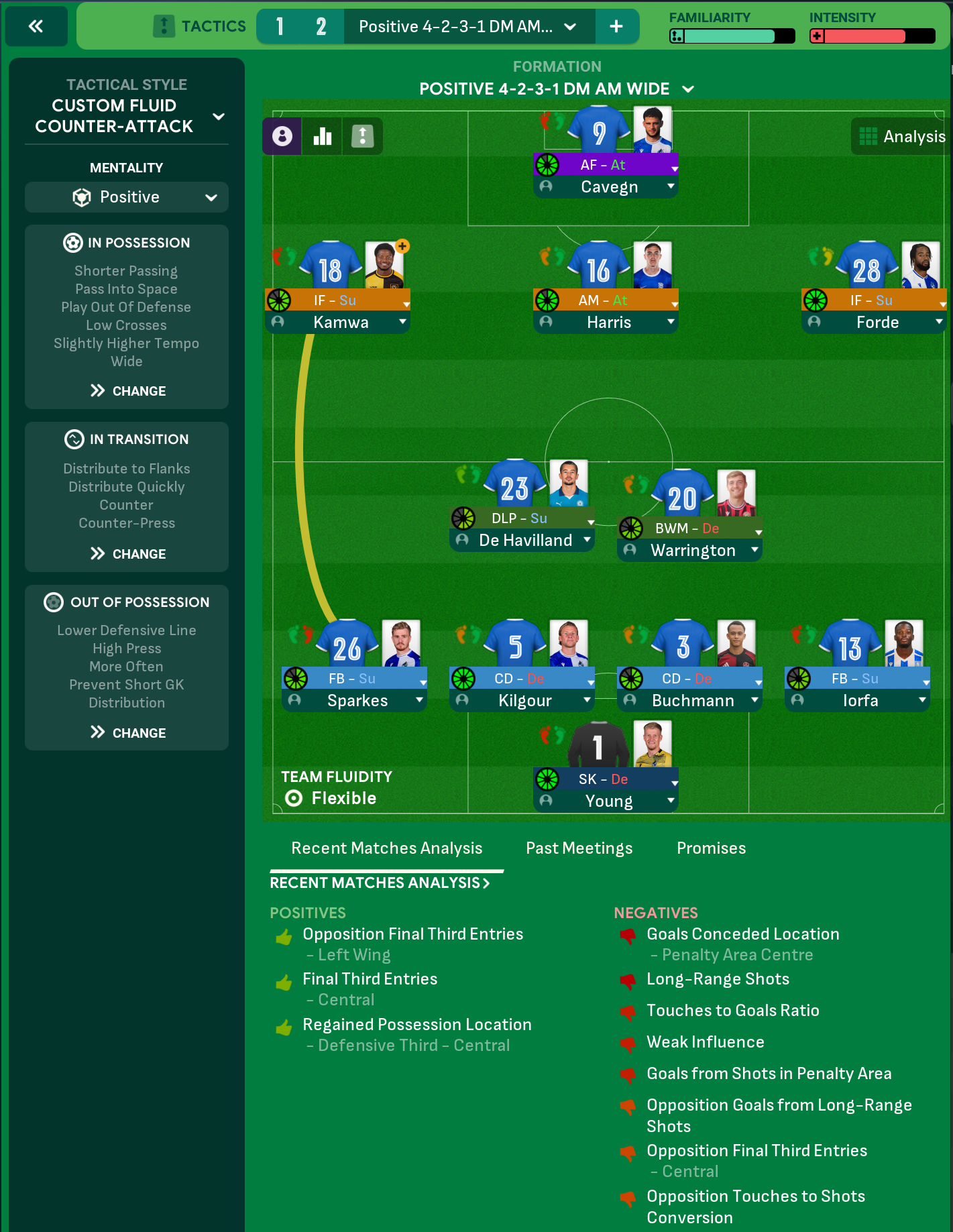
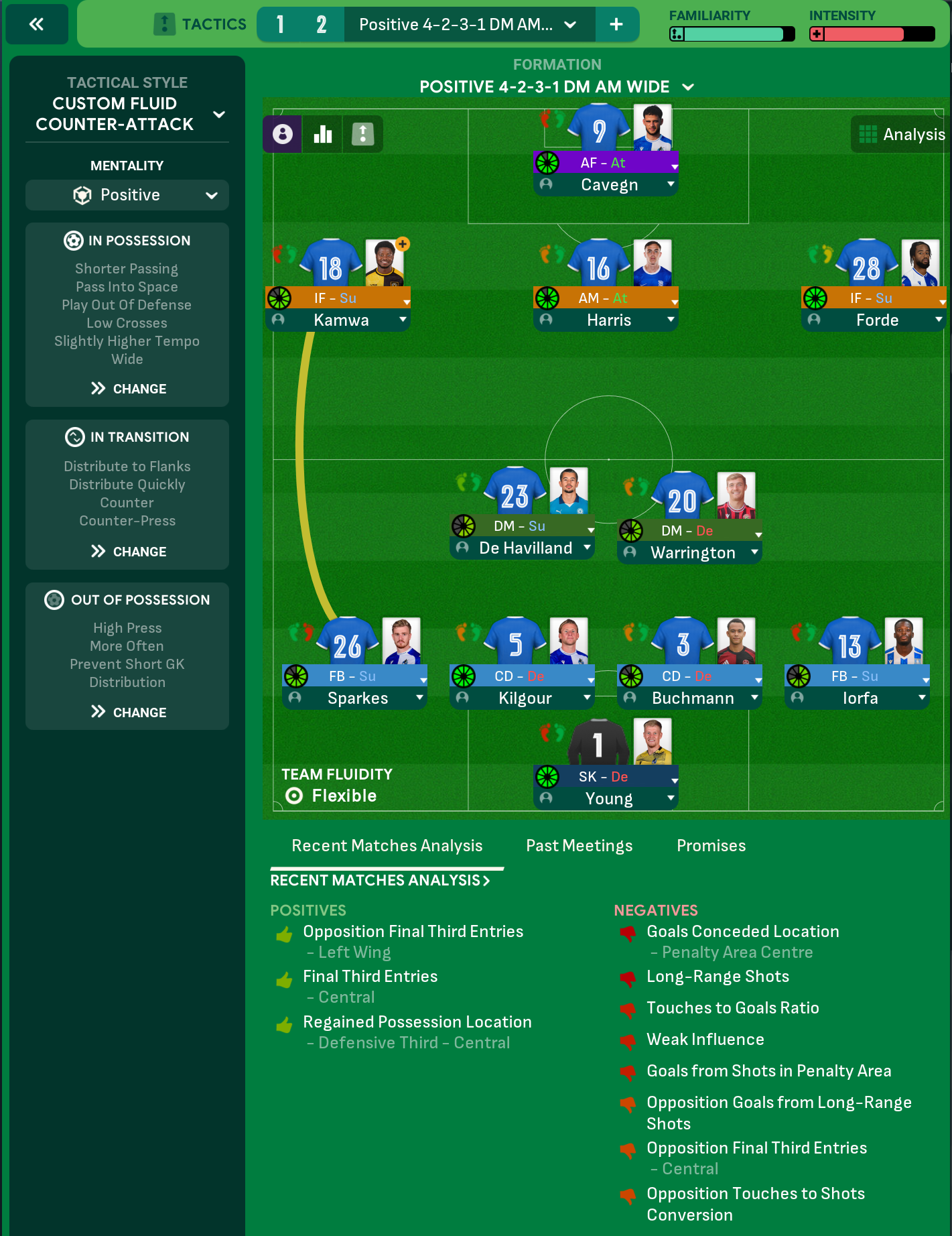
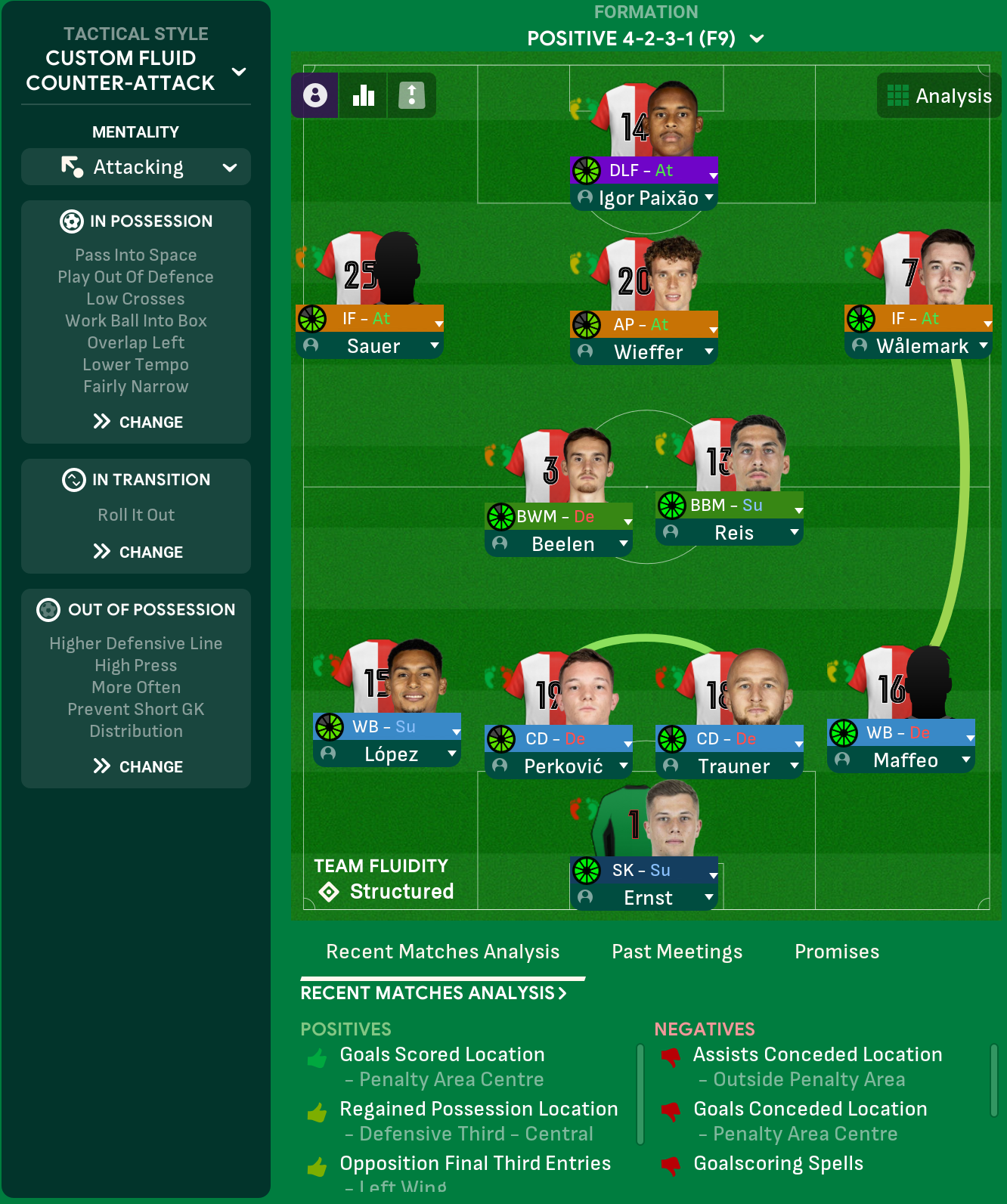
Guides for this formation
The tactical theory behind the 4-2-3-1 DM Wide: roles, instructions, and the trade-offs that decide whether the system holds up.
Player pairings
Midfield Pairs in 4-2-3-1 and 4-4-2
Double pivots and flat pairs in 4-2-3-1 and 4-4-2: when each pairing works, when it collapses, and the AMC unicorn that rescues both.
Read guide
Playing styles
Gegenpressing: A Full Guide
Klopp-style gegenpressing in FM, including squad profile, line-and-press pairing, sustainable workload, and the antipatterns to avoid.
Read guide