Uploaded Tactic
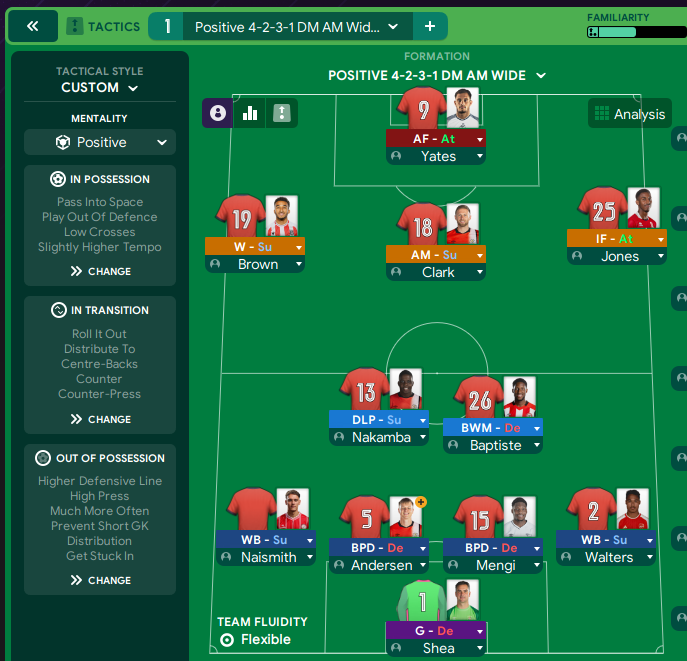
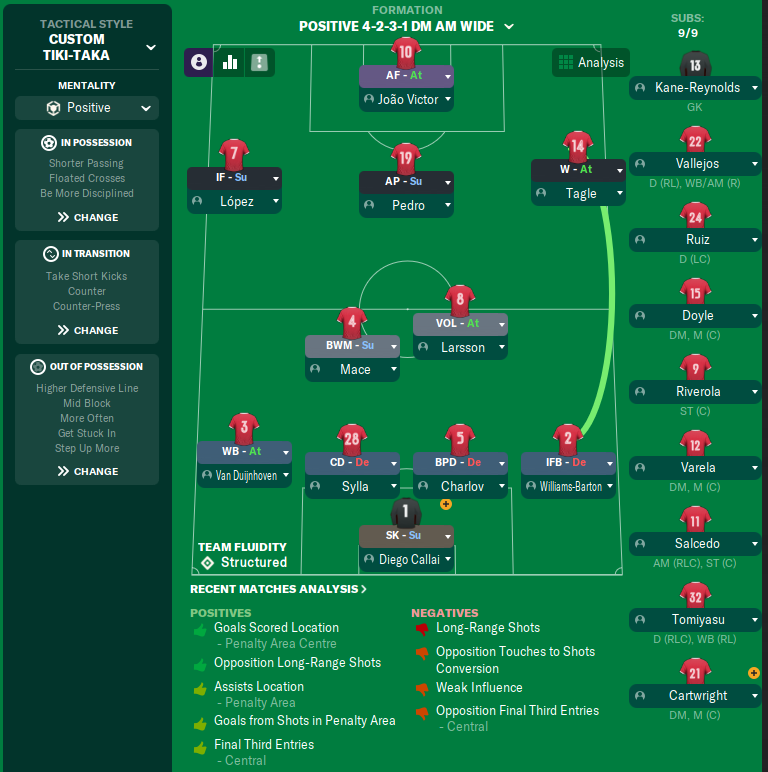
Formation & Style
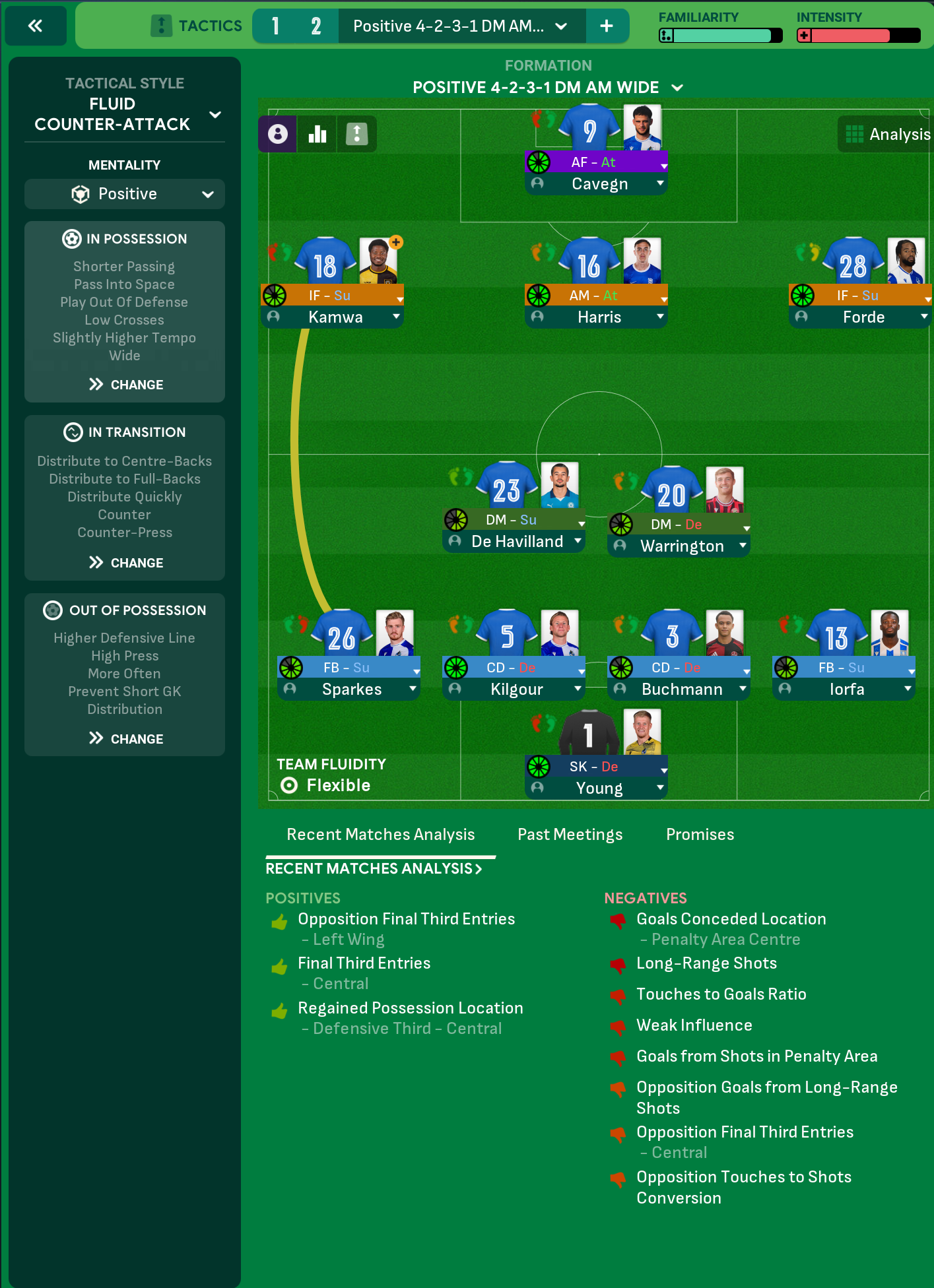
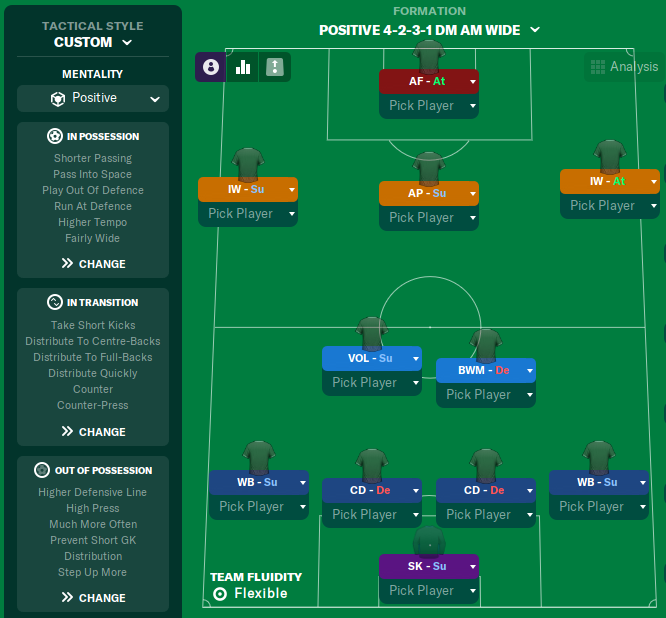
Tactical Style:Custom
Mentality:Positive
Formation:4-2-3-1 DM Wide
Team Fluidity:Flexible
In Possession
Pass Into Space
Play Out Of Defence
Low Crosses
Slightly Higher Tempo
In Transition
Roll It Out
Distribute To Centre-Backs
Counter-Press
Out of Possession
Higher Defensive Line
High Press
Much More Often Prevent Short GK Distribution
Get Stuck In
Team Shape Without Ball
Shape:Compact
Description:The higher defensive line allows for a compact team shape, pressuring opponents and condensing the space.
Evidence:Higher Defensive Line with High Pressing and Get Stuck In instructions.
Team Shape With Ball
Shape:Fluid Width
Description:Utilizing width through wingers and wing-backs allows for stretching the opposition's defense.
Evidence:Wide roles including Winger and Inside Forward alongside central attacks.
Phase Description
Attacking Play
The team looks to exploit spacing with low crosses and quick passing into space, supported by wide players and an advanced forward.
Defensive Transition
On losing possession, the team initiates a counter-press to quickly regain the ball.
Main Focus
Attacking through the wings while maintaining a solid midfield presence.
Key Strengths
Spatial Exploitation
Utilizes wide spaces effectively through wingers and wing-backs, creating overloads.
Midfield Control
Control over the midfield with a DLP and BWM allows for both creativity and solidity.
Dynamic Attack
Interchanging roles within the attack leads to unpredictability for defenses.
Conflicting Directions
Counter-Press vs. High Line
A high defensive line may be compromised if counter-pressing doesn't recover possession quickly.
Width vs. Central Play
While width is prioritized, a lack of central options may limit effectiveness in breaking down compact defenses.
Aggressive Tackling
Getting stuck in can lead to higher fouling, which may disrupt play and lead to yellow/red cards.
Tactical Suggestions
Adjust Defensive Line
Consider lowering the defensive line if facing faster opponents to avoid being exploited in behind.
Increase Central Presence
Incorporating a central midfielder or adjusting duties could enhance central control.
Balanced Pressing
Adjust pressing instructions based on opponent’s style to avoid fatigue.
Ask Questions About Your Lineup
Related Tactics
Guides for this formation
The tactical theory behind the 4-2-3-1 DM Wide: roles, instructions, and the trade-offs that decide whether the system holds up.
Player pairings
Midfield Pairs in 4-2-3-1 and 4-4-2
Double pivots and flat pairs in 4-2-3-1 and 4-4-2: when each pairing works, when it collapses, and the AMC unicorn that rescues both.
Read guide
Playing styles
Gegenpressing: A Full Guide
Klopp-style gegenpressing in FM, including squad profile, line-and-press pairing, sustainable workload, and the antipatterns to avoid.
Read guide