Uploaded Tactic
Formation & Style
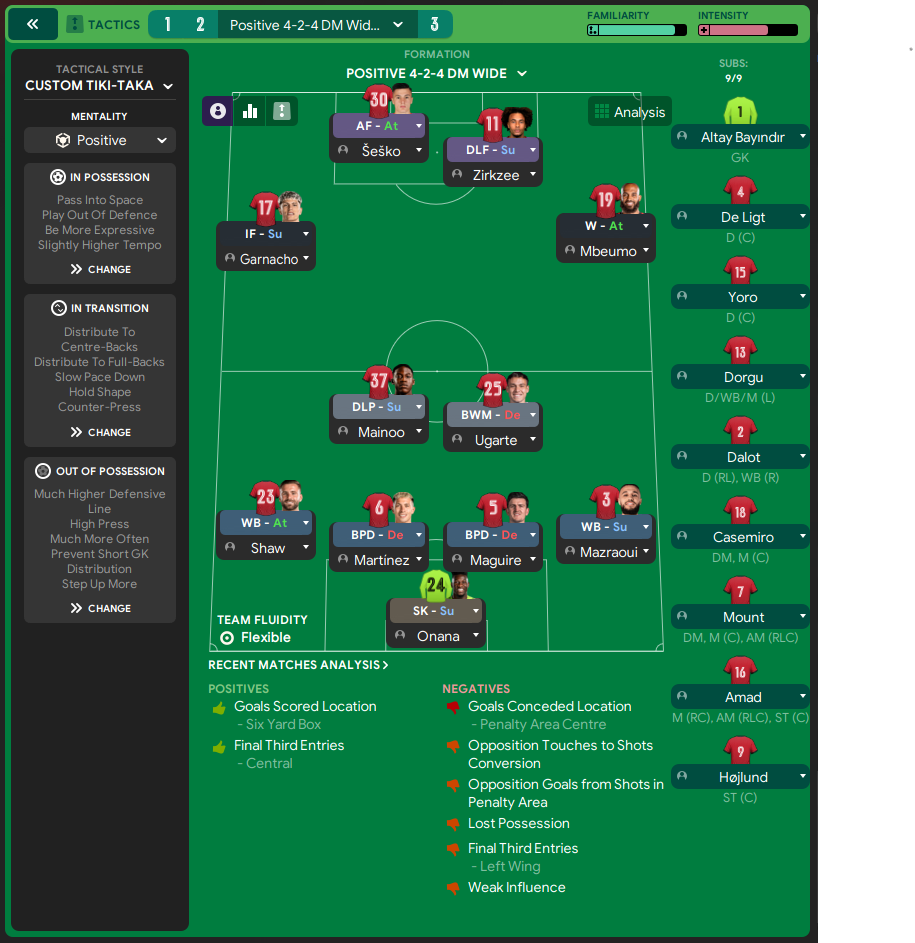
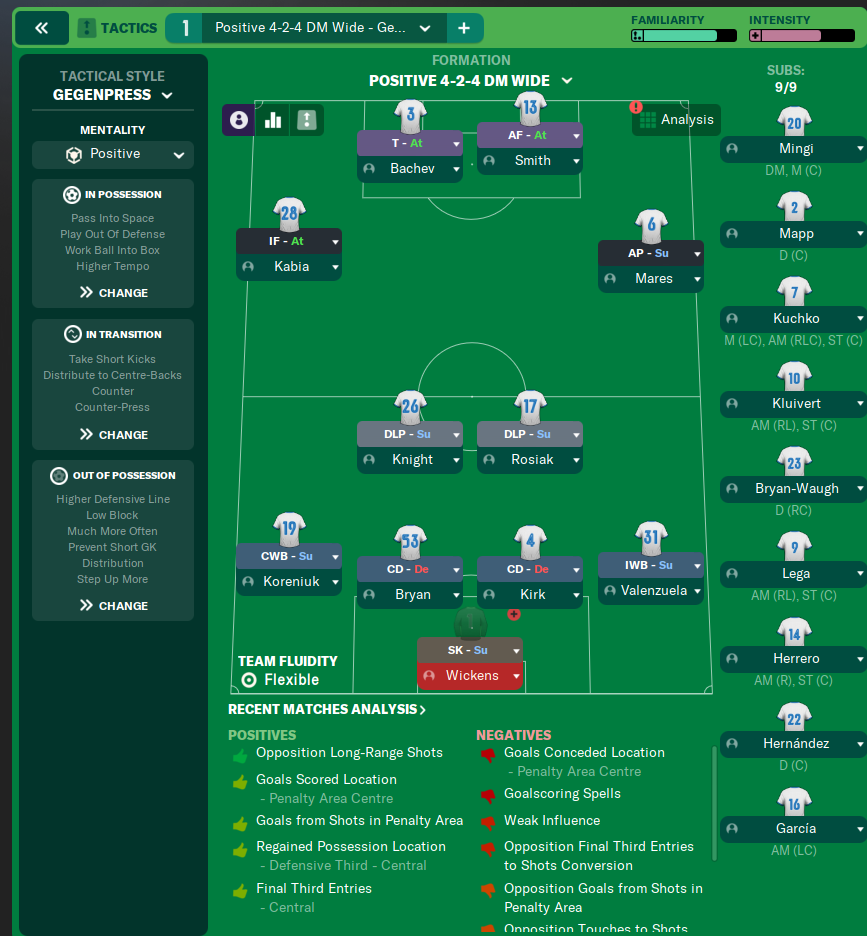
Tactical Style:Tiki-Taka
Mentality:Positive
Formation:4-2-4 DM Wide
Team Fluidity:Flexible
In Possession
Pass Into Space
Play Out Of Defence
Be More Expressive
Slightly Higher Tempo
In Transition
Distribute To Centre-Backs
Distribute To Full-Backs
Slow Pace Down
Hold Shape
Counter-Press
Out of Possession
Much Higher Defensive Line
High Press
Much More Often
Prevent Short GK Distribution
Step Up More
Team Shape Without Ball
No team shape without ball data available
Team Shape With Ball
No team shape with ball data available
Key Strengths
Attacking Width
The 4-2-4 DM Wide formation allows for effective use of width, stretching the opponent’s defense and creating space for inside forwards.
Ball Retention
The Tiki-Taka style promotes short, quick passing, enhancing ball retention and control in midfield.
High Press
A high press can disrupt the opposition's play, forcing errors in their defensive third and allowing quick recovery of possession.
Versatile Attackers
With versatile roles like the DLF and AF, the tactic effectively utilizes movement to create goal-scoring opportunities from different angles.
Conflicting Directions
Defensive Cohesion
A high defensive line may lead to exposed spaces behind, particularly if the midfield fails to provide adequate support.
Counter-Pressing vs. Slow Pace Down
The instruction to counter-press contradicts the decision to slow the pace down, which may lead to confusion during transitional phases.
Width vs. Central Play
While the formation is wide, the majority of attacking movements could become too central, potentially leading to a congested midfield.
Heightened Defensive Risk
A higher defensive line coupled with a high press creates vulnerabilities if opponents exploit quick counter-attacks.
Tactical Suggestions
Adjust Defensive Line
Consider lowering the defensive line to mitigate risks associated with counter-attacks, providing more cover for the back four.
More Balanced Midfield Roles
Adjusting the roles of the midfielders, particularly the DLP, to a more balanced approach can enhance both defensive stability and attacking support.
Utilize Width Effectively
Ensure that wing-backs are utilized effectively in attack to stretch defenses and create additional space for inside forwards.
Retain Defensive Shape
Instruct players to hold shape during transitions rather than pressing too early, ensuring defensive solidity regardless of possession status.
Ask Questions About Your Lineup
Related Tactics
More Tiki-Taka tactics
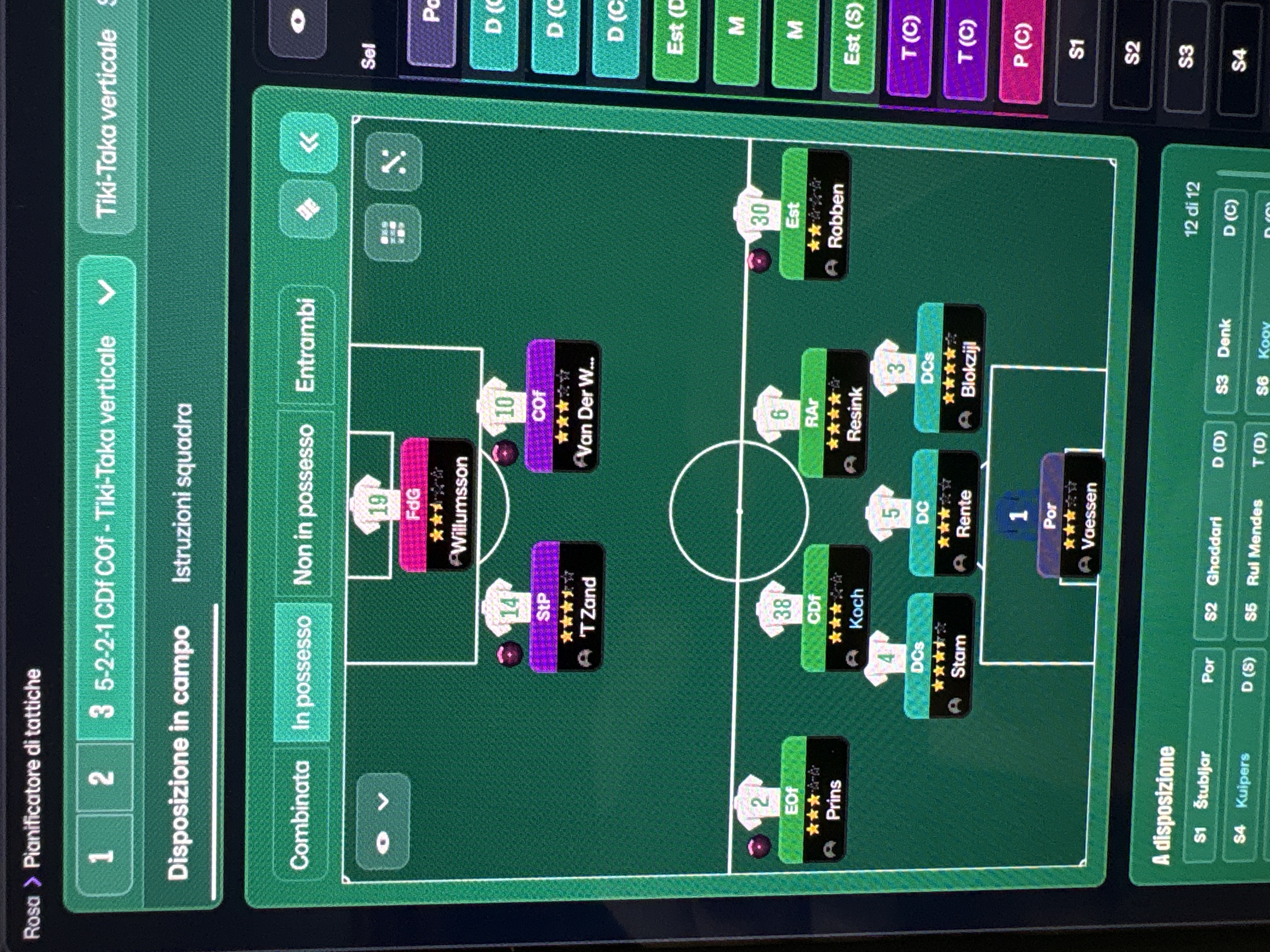
Guides for this formation
The tactical theory behind the 4-2-4 DM Wide: roles, instructions, and the trade-offs that decide whether the system holds up.