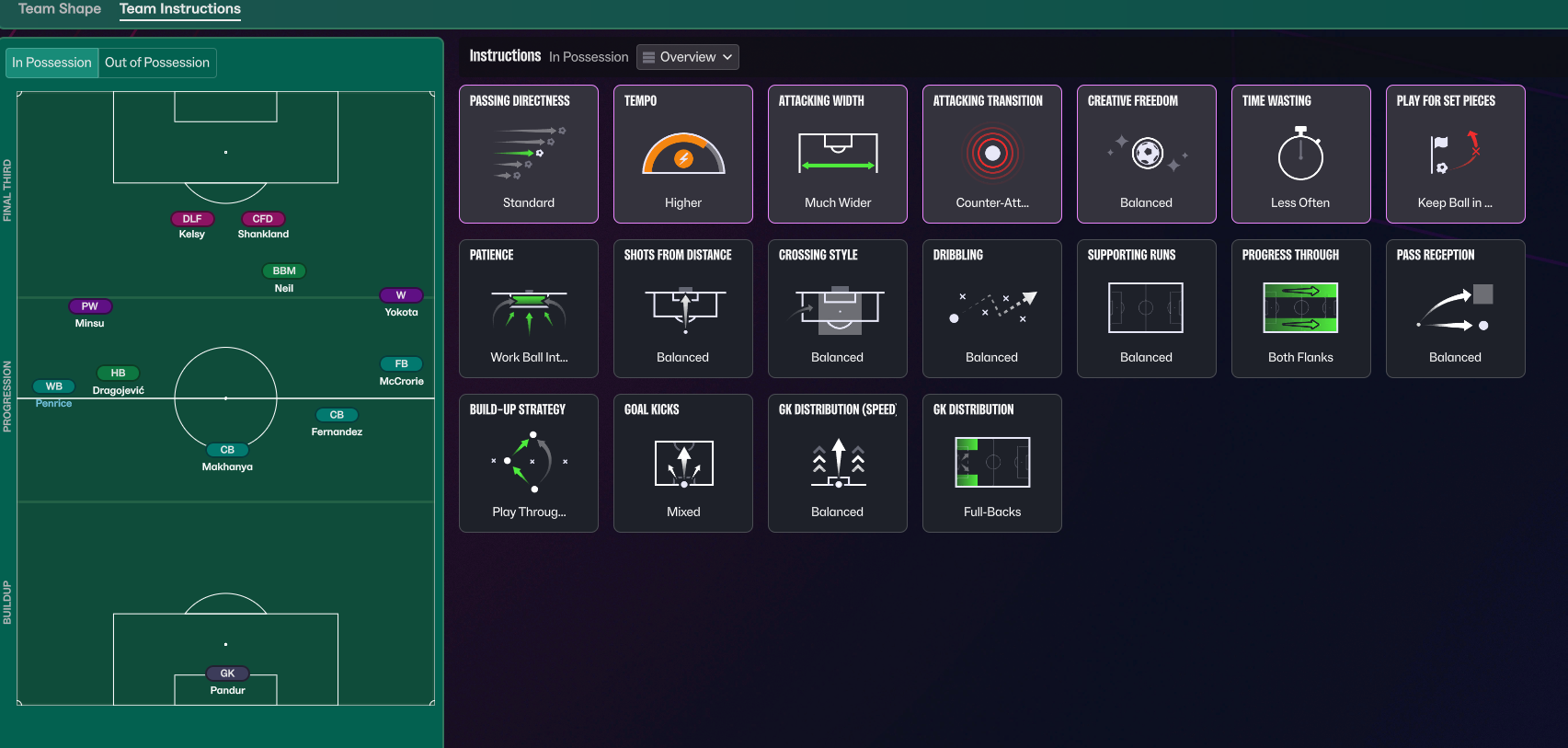
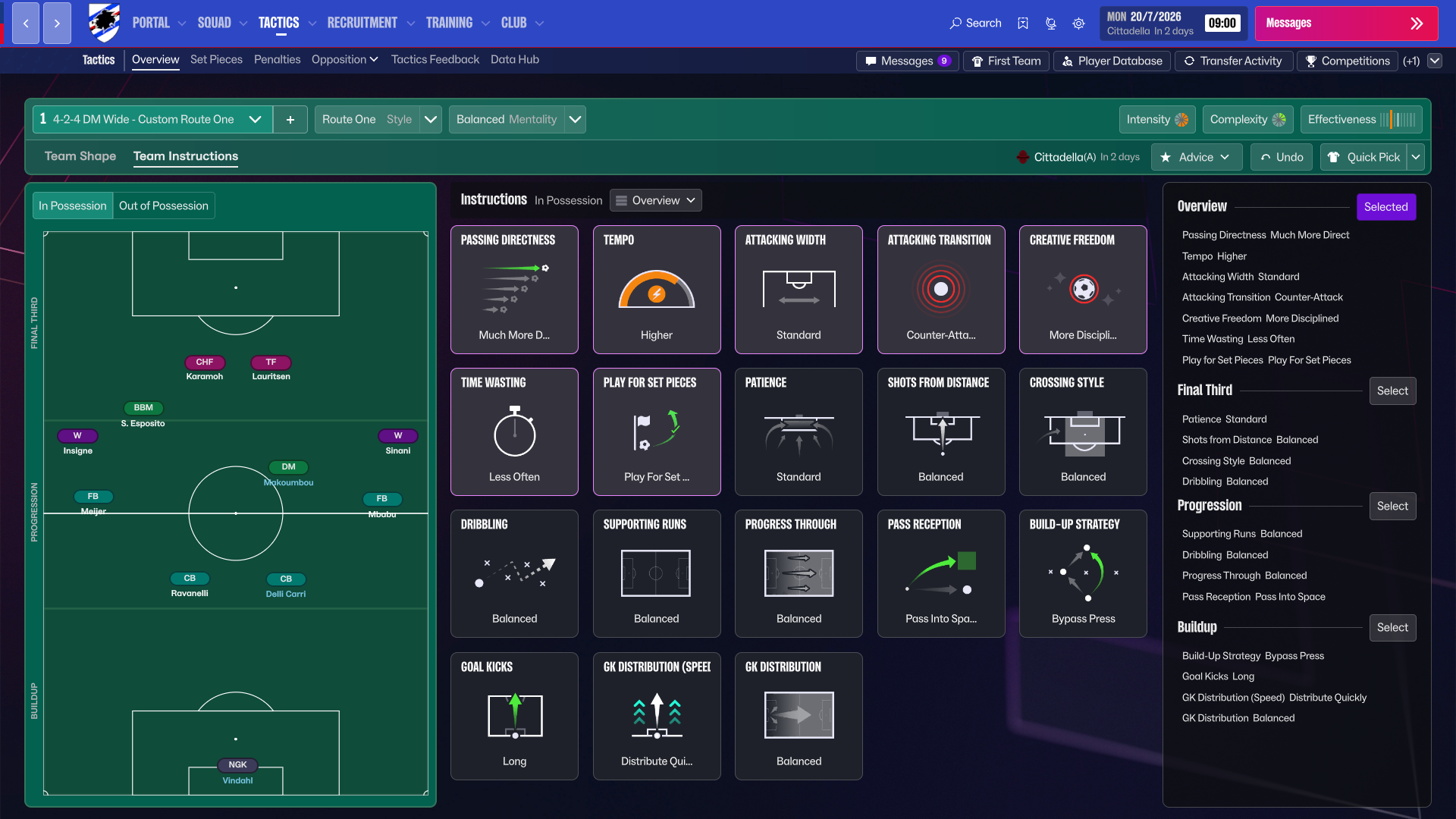
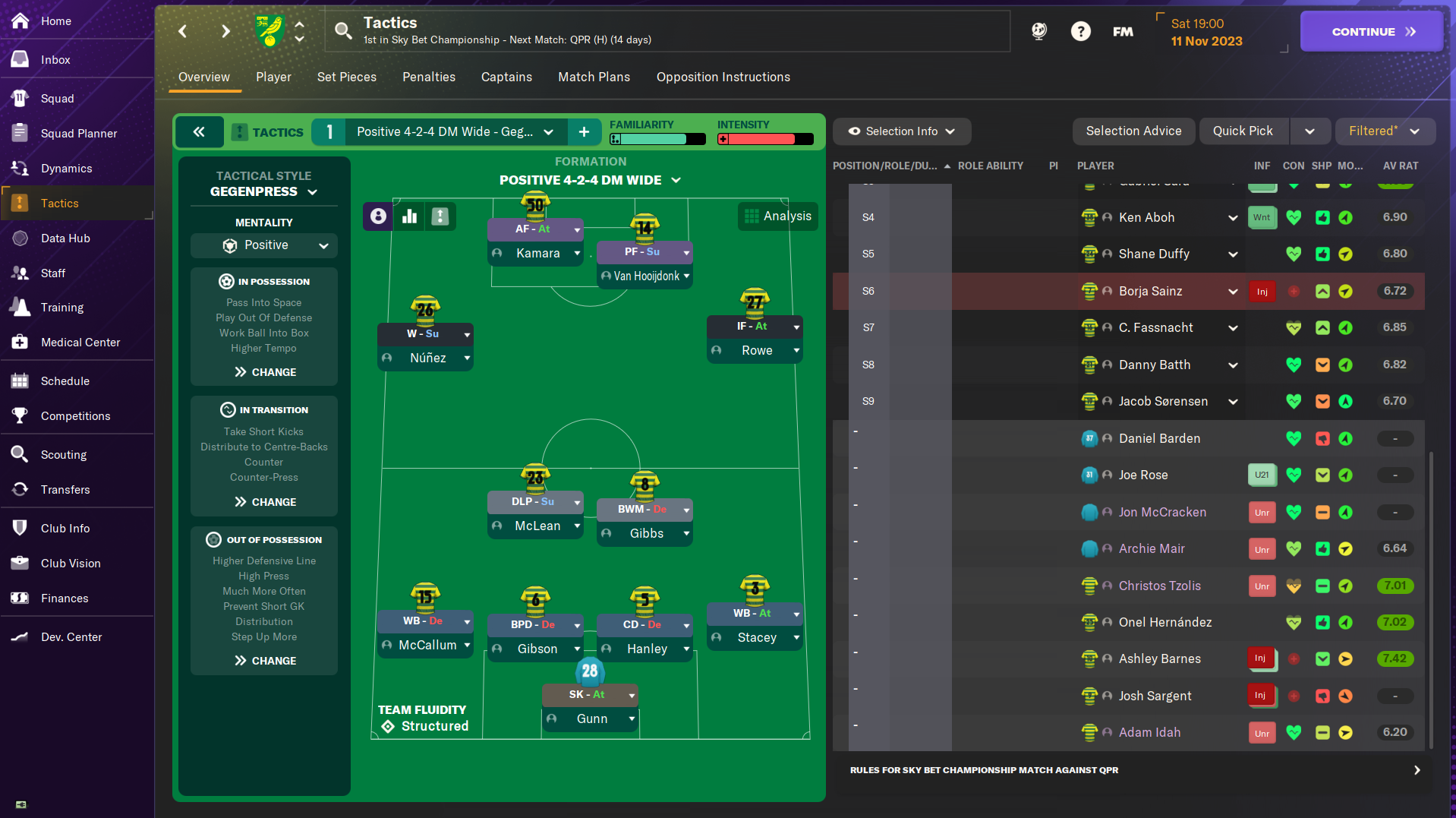
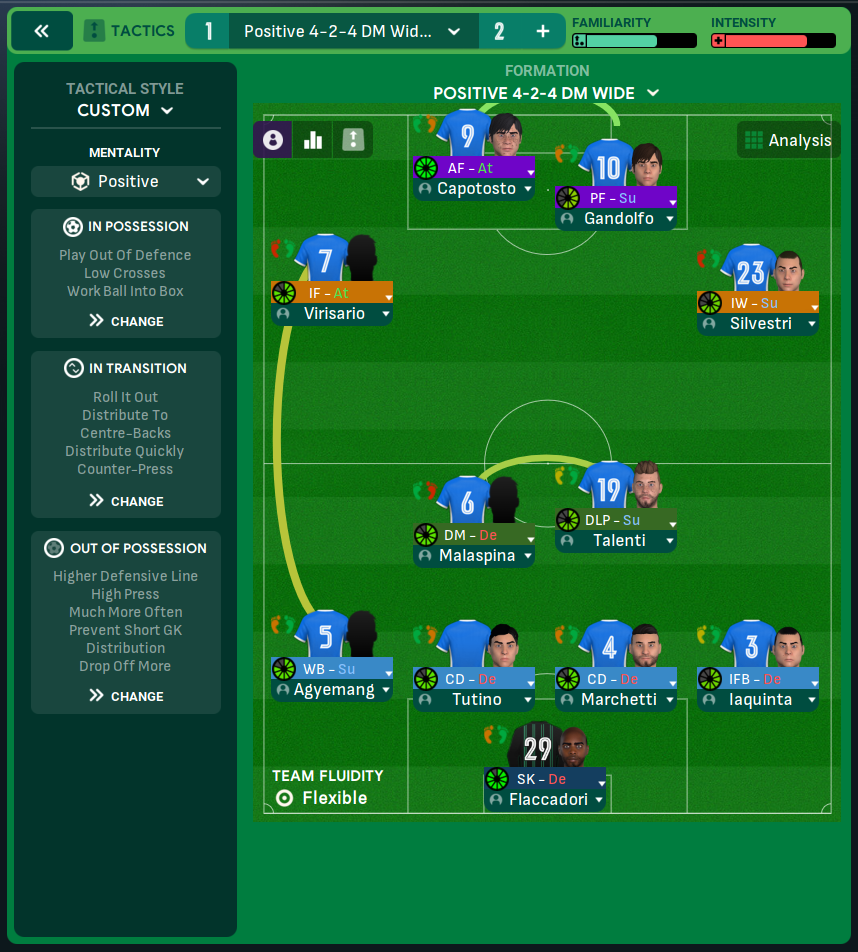
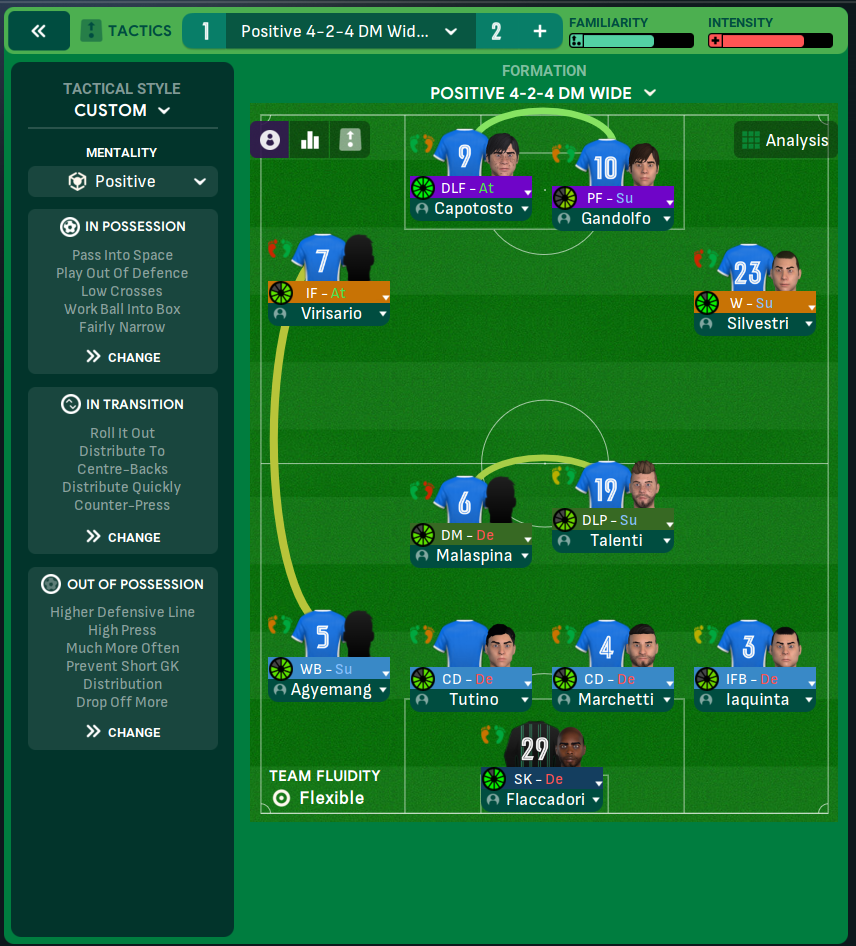
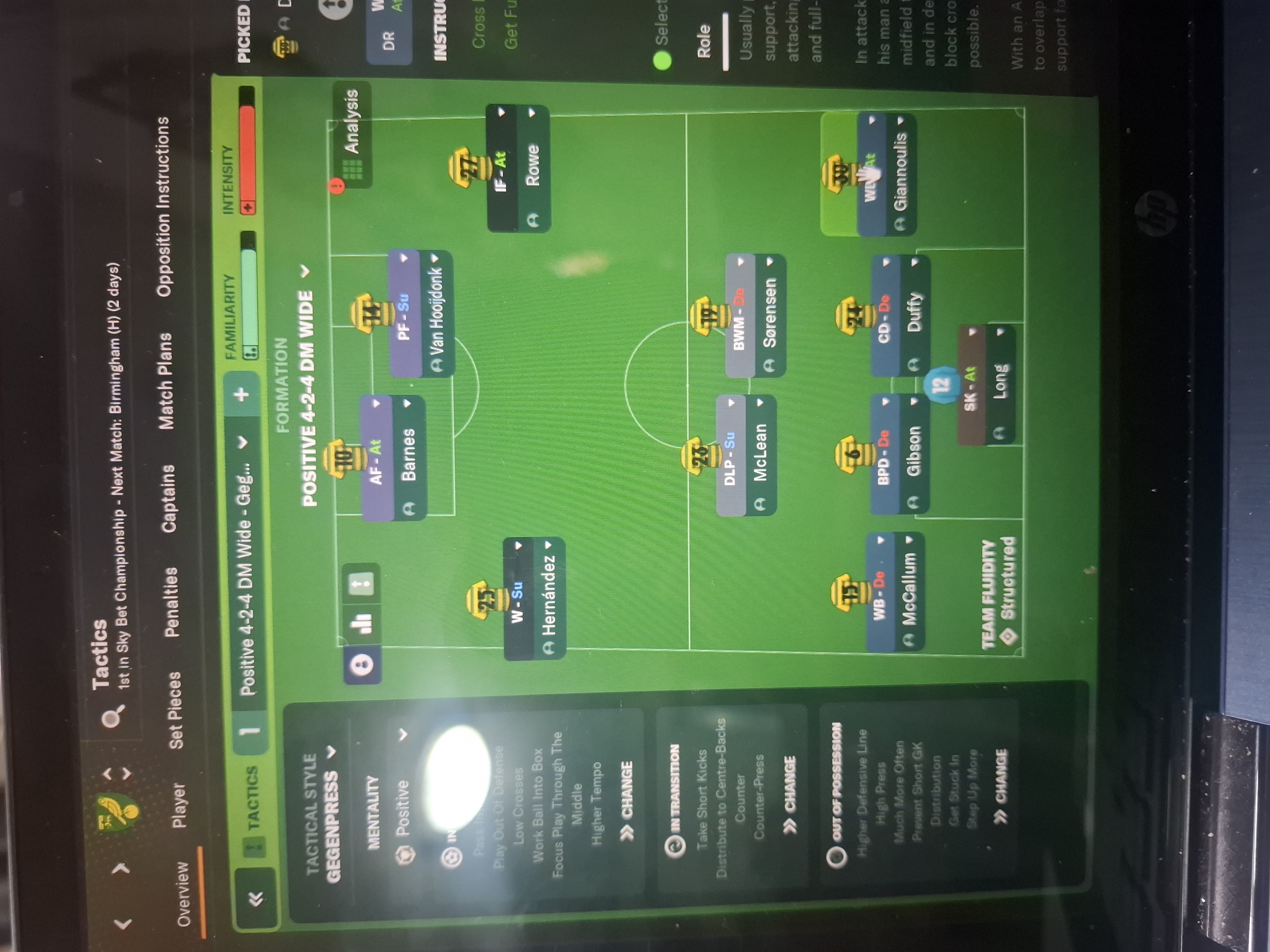
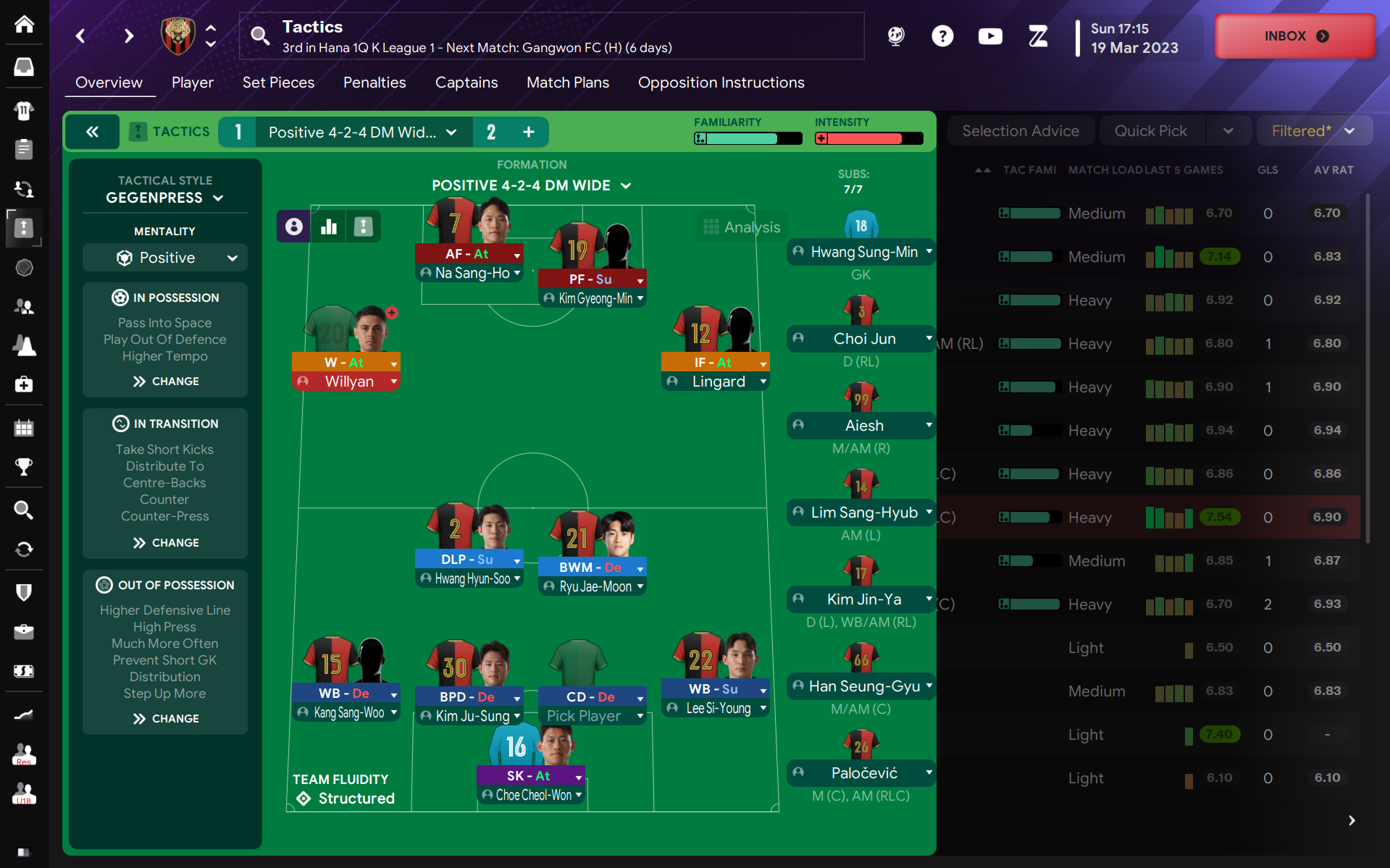
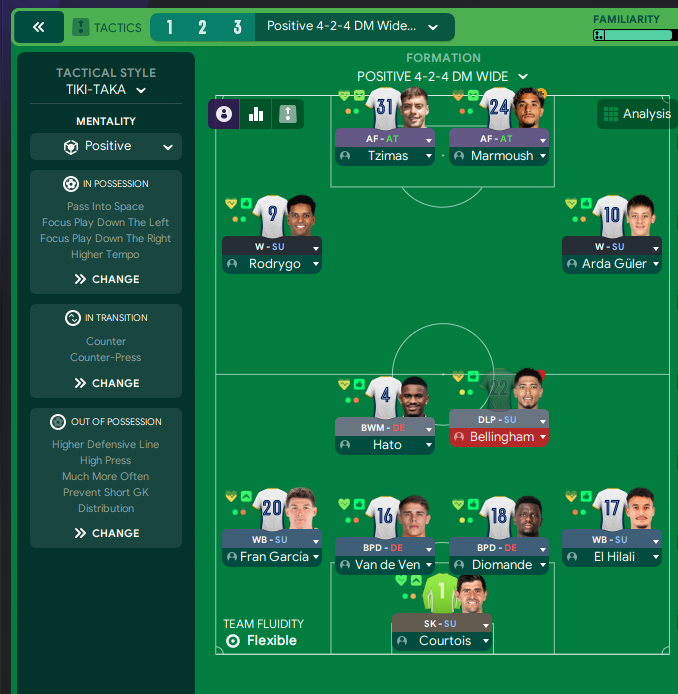
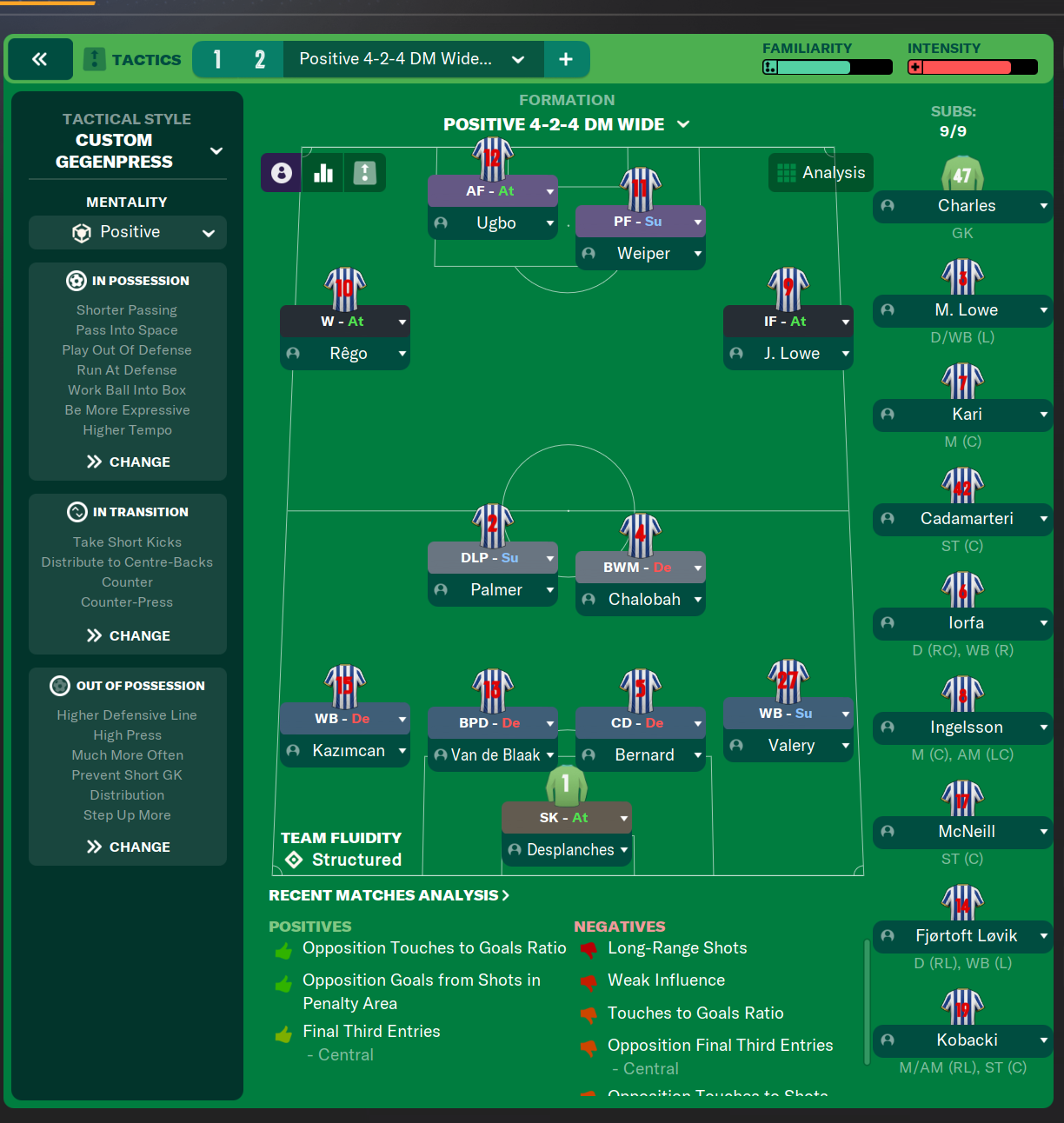
4-2-4 DM Wide
The 4-2-4 formation provides width and forward options, allowing for versatile attacking play.
Loading tactical analysis...
Gegenpress
Positive
4-2-4 DM Wide
Structured
Shorter Passing
Pass Into Space
Run At Defense
Be More Expressive
Higher Tempo
Take Short Kicks
Distribute to Centre-Backs
Counter
Counter-Press
Higher Defensive Line
Much More Often
Prevent Short GK Distribution
Step Up More
ST
Advanced Forward
Attack
ST
Pressing Forward
Support
W
Wide Attacker
Attack
IF
Inside Forward
Attack
CM
Deep-Lying Playmaker
Support
CM
Ball-Winning Midfielder
Defend
FB
Wing-Back
Defend
CB
Ball-Playing Defender
Support
CB
Central Defender
Defend
GK
Sweeper Keeper
Attack
The 4-2-4 formation provides width and forward options, allowing for versatile attacking play.
Gegenpress tactics enable the team to win the ball back quickly in enemy territory.
While a higher line helps to compress space, it can leave the defense vulnerable to quick counter-attacks.
The emphasis on shorter passing may conflict with the desire for a high tempo, potentially leading to turnovers.
How can we better exploit opposition weaknesses in the final third?
Are the players comfortable with the high pressing and counter-pressing systems?
Should we emphasize width or central dominance in our attacks?
What adjustments can be made if we face teams with swift counter-attacks?
Are our wing-backs contributing enough to the attacking phase?
How can we improve our long-range shooting capabilities?
The tactical theory behind the 4-2-4 DM Wide: roles, instructions, and the trade-offs that decide whether the system holds up.
Long-ball football done well in FM. When direct, vertical play is the right choice, and what the Direct Passing TI actually changes.
How Mentality, Duty, and Role interact in FM, why duty trumps mentality every time, and the role-on-top-of-duty composition rules.
Counter-Press, Regroup, Stand Off, Trigger Press: what each pressing instruction does in FM and how to pair them without contradicting.