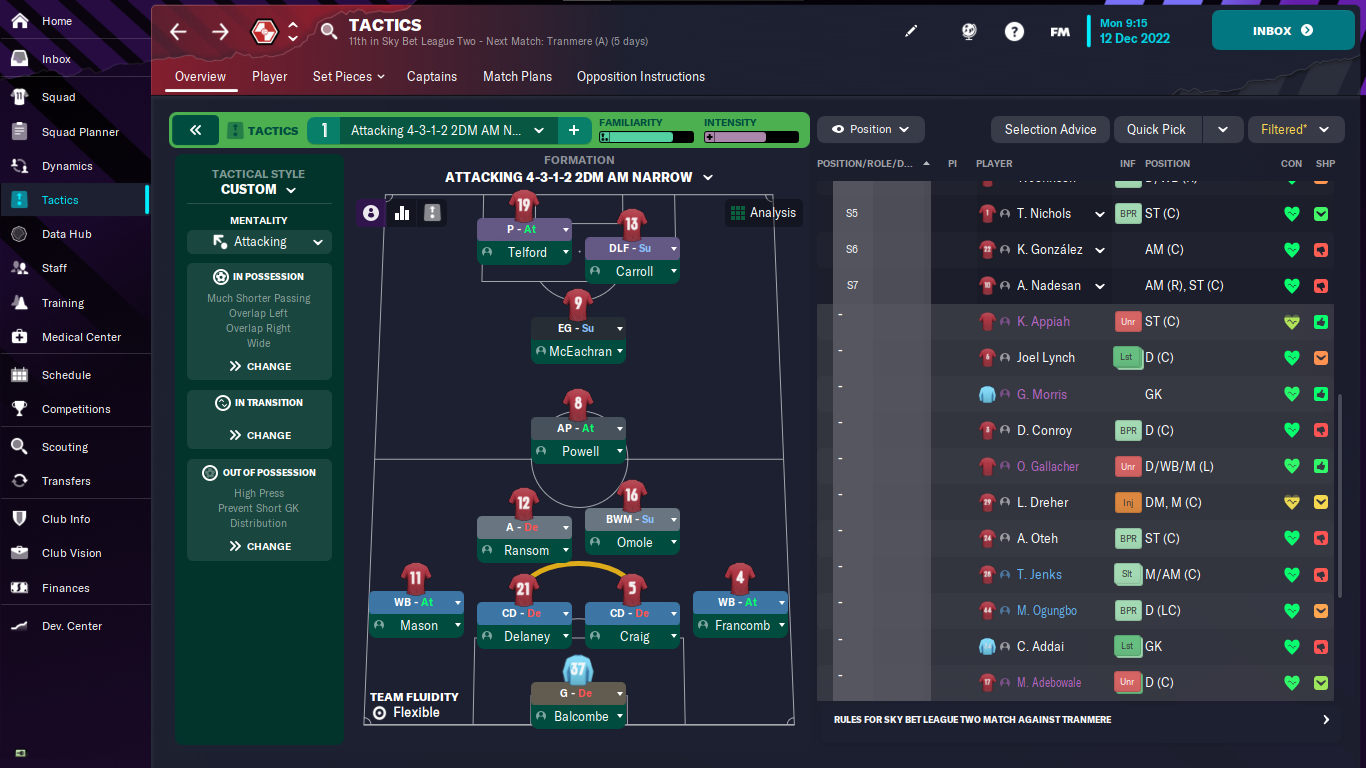
4-3-1-2 DM Narrow
The fluidity allows for seamless transitions between defense and attack, with midfielders supporting both lines.
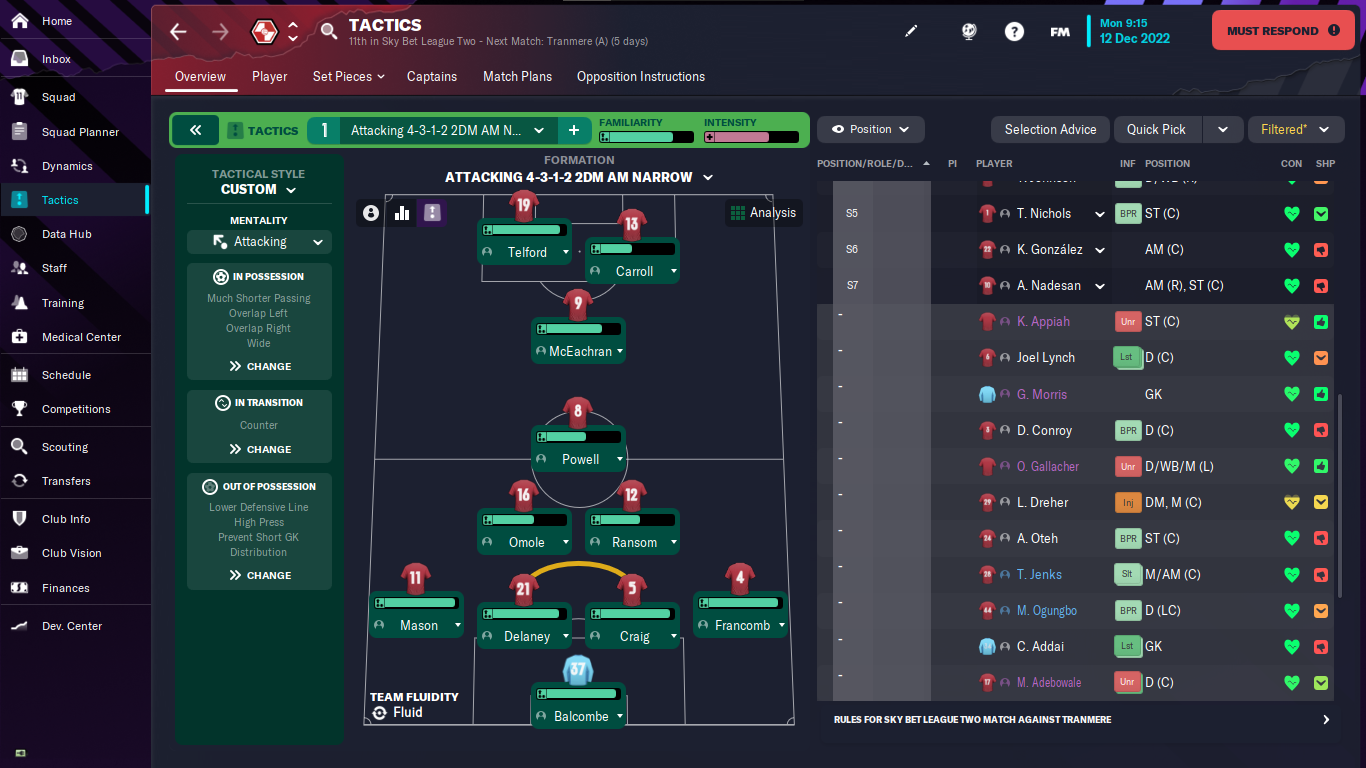
Loading tactical analysis...
Custom Attacking
Attacking
4-3-1-2 DM Narrow
Fluid
Much Shorter Passing
Overlap Left
Overlap Right Wide
Counter
Lower Defensive Line
High Press
Prevent Short GK Distribution
ST
Advanced Forward
Attack
AM
Attacking Midfielder
Attack
DM
Deep-Lying Playmaker
Support
The fluidity allows for seamless transitions between defense and attack, with midfielders supporting both lines.
Overlap and the narrower formation provides effective width, stretching the opposition and creating space in central areas.
A lower defensive line can create gaps when pressing high, leaving the back line susceptible to quick counter-attacks.
Narrow play and overloads may lead to congestion in central areas, limiting effective attacking options.
How can I effectively utilize my full-backs to support attacking play?
What adjustments can help balance the high press with defensive responsibilities?
How can I better define roles for players in attacking positions?
Should I adjust my passing style when transitioning to attack?
What tactics might counteract teams that exploit narrow formations?
How can I enhance creativity in the midfield areas?
The tactical theory behind the 4-3-1-2 DM Narrow: roles, instructions, and the trade-offs that decide whether the system holds up.
Counter-Press, Regroup, Stand Off, Trigger Press: what each pressing instruction does in FM and how to pair them without contradicting.
The pairing rule for Defensive Line and Line of Engagement, all 9 combinations, and the gap that costs goals.
What Higher Tempo, Wider, and Narrower actually do in FM, plus the dial contradictions and antipatterns players run into most often.