Uploaded Tactic
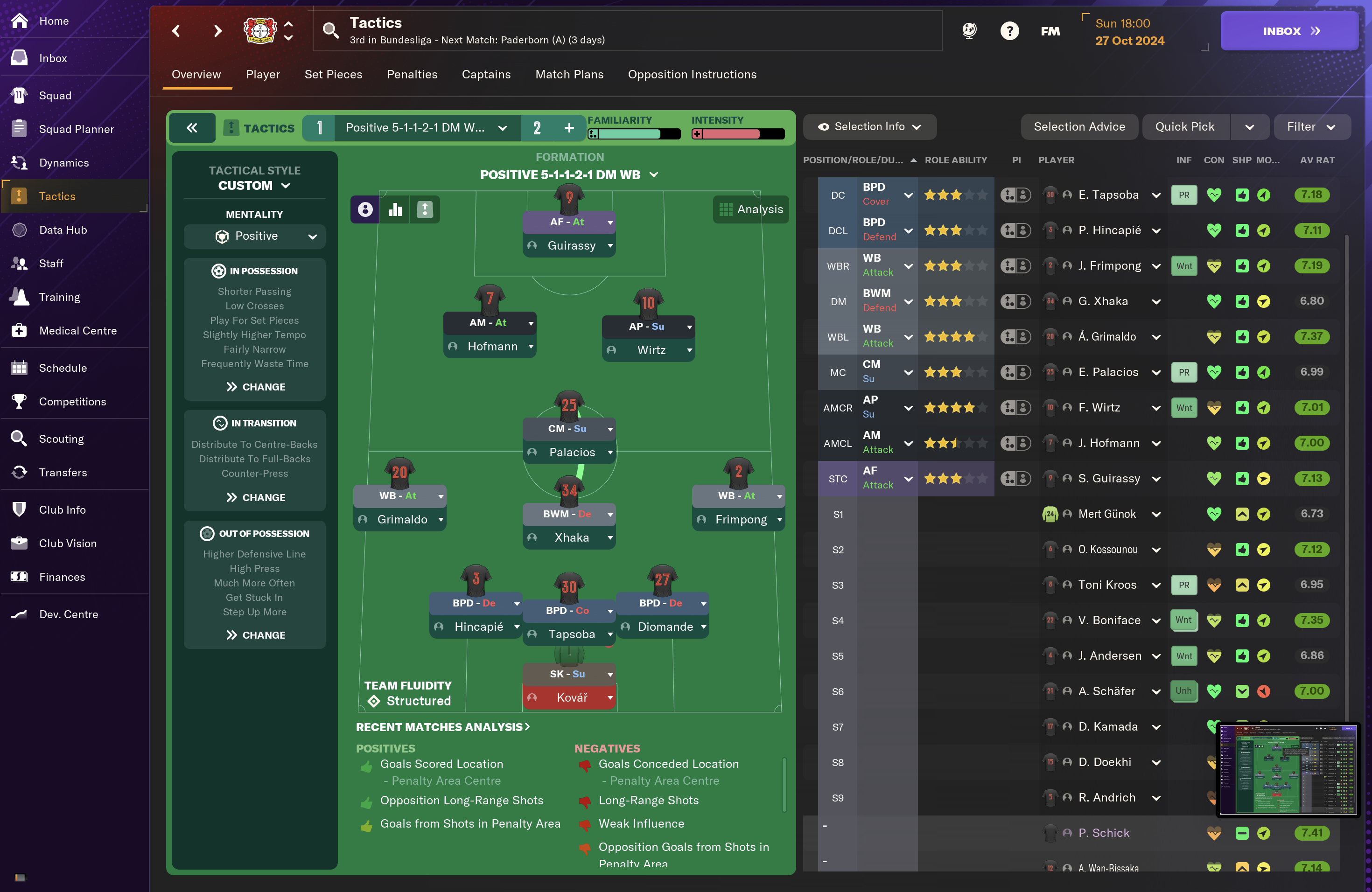
Formation & Style
Tactical Style:Custom
Mentality:Positive
Formation:5-1-2-1 DM Wide
Team Fluidity:Structured
In Possession
Shorter Passing
Play For Set Pieces
Slightly Higher Tempo
Fairly Narrow
Frequently Waste Time
In Transition
Distribute To Centre-Backs
Distribute To Full-Backs
Counter-Press
Out of Possession
Higher Defensive Line
High Press
Much More Often
Get Stuck In
Step Up More
Team Shape Without Ball
No team shape without ball data available
Team Shape With Ball
No team shape with ball data available
Key Strengths
Fluid Transition
The team effectively transitions from defense to attack using counter-pressing and quick distribution to full-backs.
Strong Midfield Presence
The combination of a Ball Winning Midfielder and a Central Midfielder provides solid control and support in the midfield.
Attacking Width
Wing Backs provide width and support to the front line, allowing for overlaps and stretching the opposition's defense.
Set-Piece Effectiveness
Focus on set-pieces means the team takes advantage of scoring opportunities from dead-ball situations.
Conflicting Directions
High Defensive Line vs Counter-Press
A higher defensive line can be vulnerable to counter-attacks, especially if the press is not effective.
Fluidity vs Structure
While the team structure aims for stability, player movements can become predictable without fluidity.
Overlapping Runs vs Defensive Duties
Wing Backs tasked with attacking roles may neglect defensive responsibilities, leading to gaps.
Frequent Waste Time vs High Tempo
A higher tempo combined with frequently wasting time can disrupt offensive fluidity and increase midfield congestion.
Tactical Suggestions
Adjust Defensive Line
Consider lowering the defensive line to reduce vulnerability to counter-attacks, especially against faster opponents.
Reevaluate Wing Back Duties
Assess if Wing Backs can maintain defensive responsibilities while supporting the attack; consider adjusting to a more defensive duty if needed.
Introduce More Attacking Options
Consider adding more players in advanced roles or changing the mentality to encourage broader attacking play.
Focus on Midfield Interchange
Encourage more fluidity in midfield positions to exploit spaces and create better passing lanes.
Ask Questions About Your Lineup
Guides for this formation
The tactical theory behind the 5-1-2-1 DM Wide: roles, instructions, and the trade-offs that decide whether the system holds up.