Uploaded Tactic
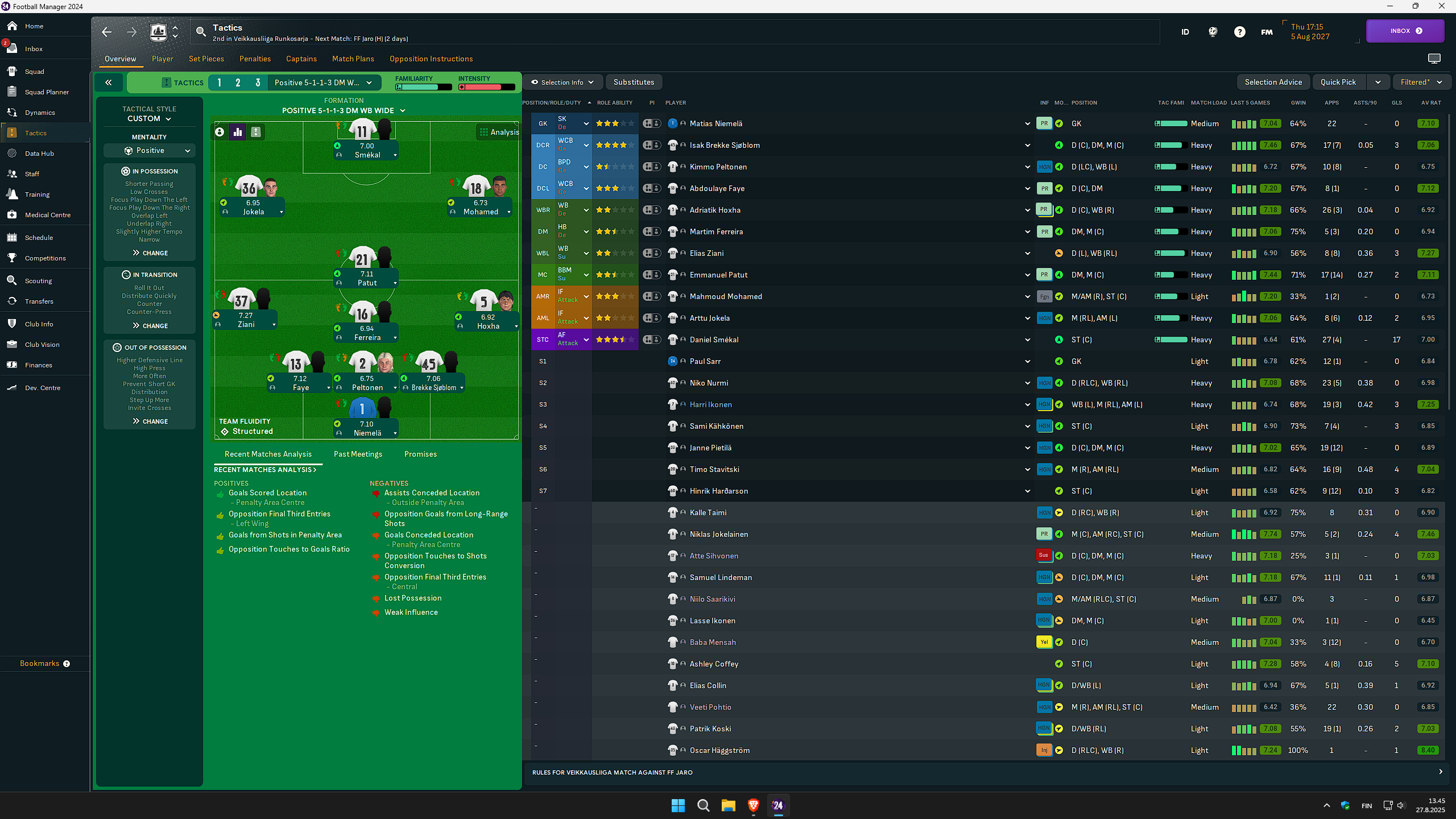
Formation & Style
Tactical Style:Positive
Mentality:Positive
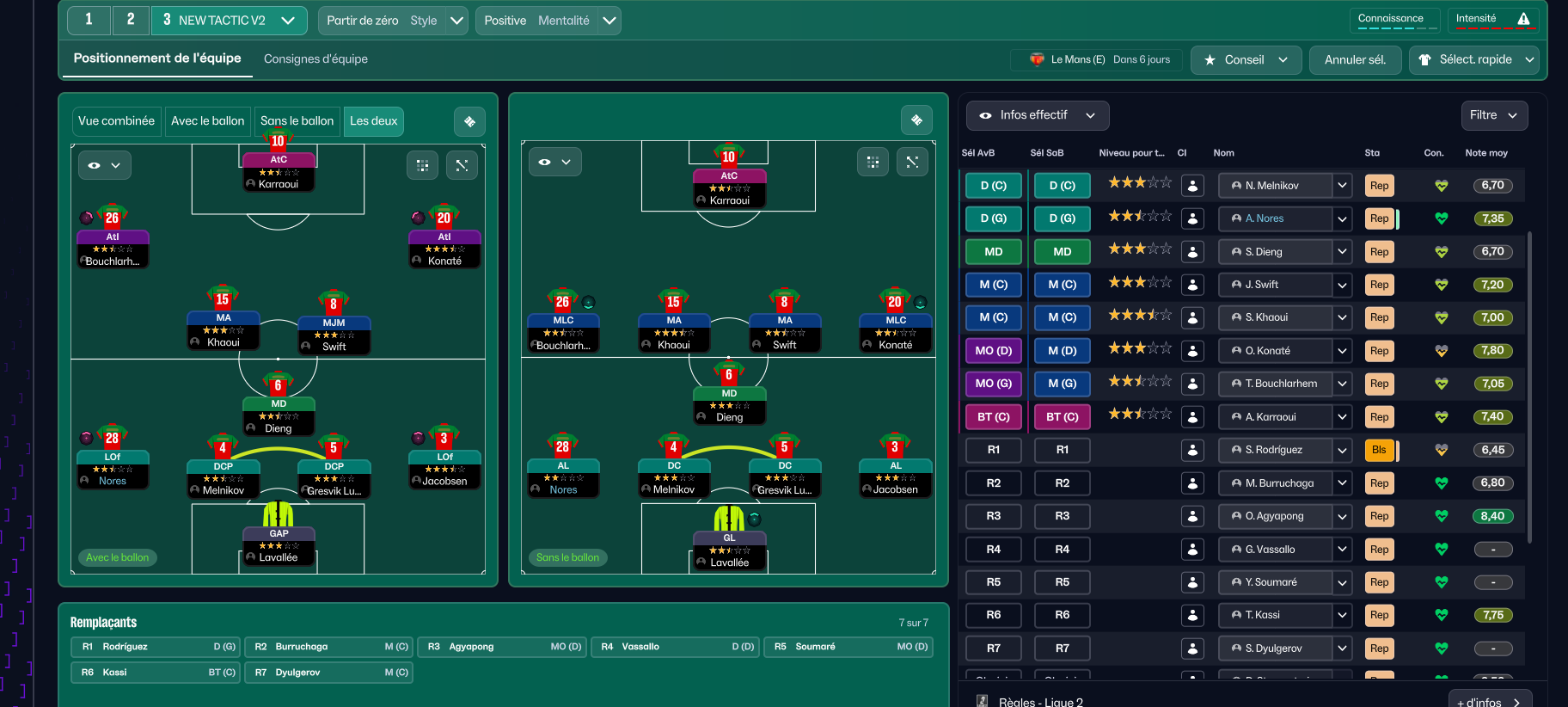
Formation:5-1-3-1 DM Wide
Team Fluidity:Structured
In Possession
Shorter Passing
Overlapping Wingbacks
Work Ball into Box
In Transition
Counter
Counter-Press
Out of Possession
Higher Defensive Line
Press More Urgently
Prevent Short GK Distribution
Team Shape Without Ball
No team shape without ball data available
Team Shape With Ball
No team shape with ball data available
Key Strengths
Defensive Solidity
The use of three center-backs provides a solid defensive foundation, minimizing gaps for opposing attackers.
Wing Play
The wing-backs allow for width in attack, creating space for the advanced playmaker and strikers.
Fluid Midfield
The combination of a defensive midfielder and an advanced playmaker facilitates versatility in both attack and defense.
Counter-Attacking Threat
Quick transitions from defense to attack can exploit space left by opponents when they commit numbers forward.
Conflicting Directions
Overlapping vs. Defensive Roles
While wing-backs overlap, they may leave the backline exposed if the defensive midfielder does not effectively cover gaps.
Pressing Strategy
Pressing more urgently can be risky given the structured team fluidity; this may lead to players being out of position.
Mentality Adjustment
A positive mentality may lead to overcommitting in attack, lacking defensive cover during counter-attacks.
Squad Depth
Limited substitutions may result in fitness issues for wing-backs if they are continuously tasked with overlapping.
Tactical Suggestions
Consider a More Balanced Mentality
Switching to a balanced mentality may offer more stability, particularly if your side struggles defensively.
Utilize a Half-Back Role
Employing a half-back instead of a standard defensive midfielder can provide additional cover for the center-backs during transitions.
Increase Direct Passing Options
Adding direct passing to some roles may utilize the pace of your forward players better during counter-attacks.
Adjust Player Duties as Needed
Experiment with changing the duties of wing-backs to support rather than attack if they are frequently caught out of position.
Ask Questions About Your Lineup
More Positive tactics
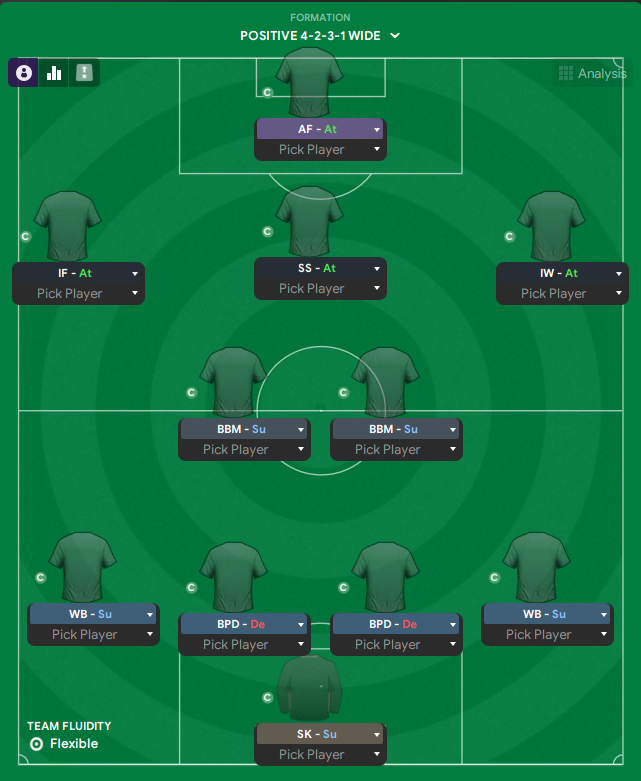
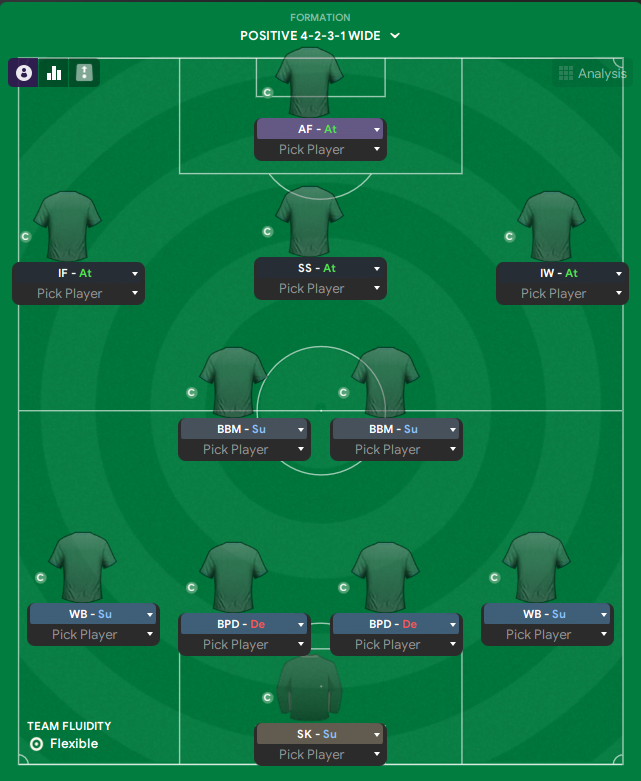
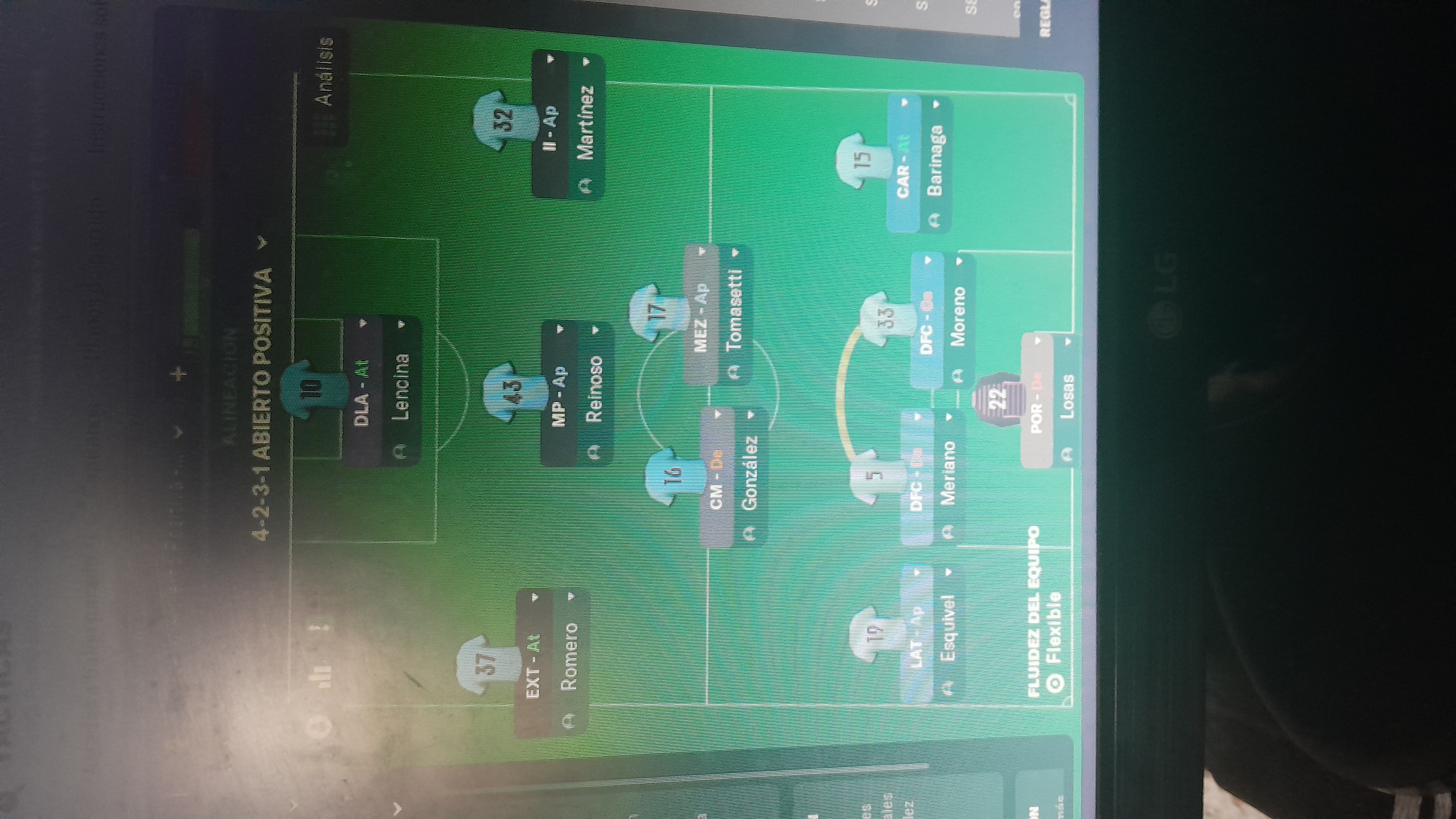
Guides for this formation
The tactical theory behind the 5-1-3-1 DM Wide: roles, instructions, and the trade-offs that decide whether the system holds up.