Uploaded Tactic
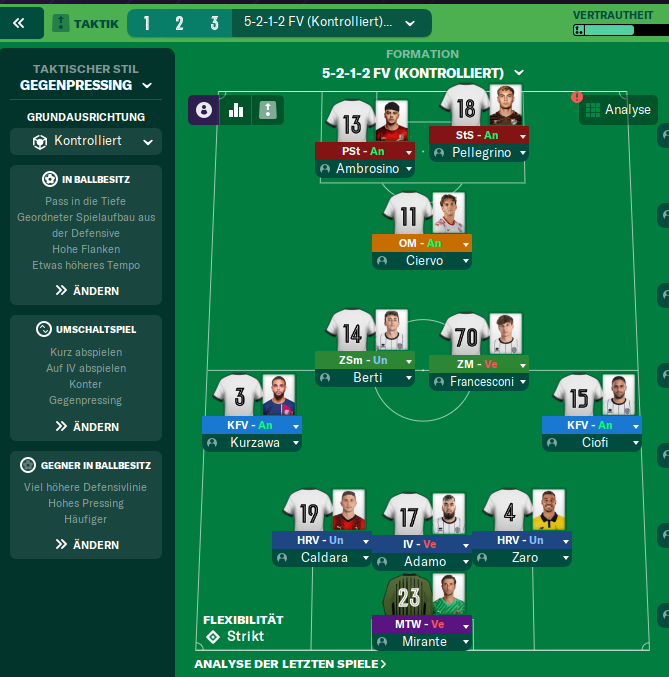
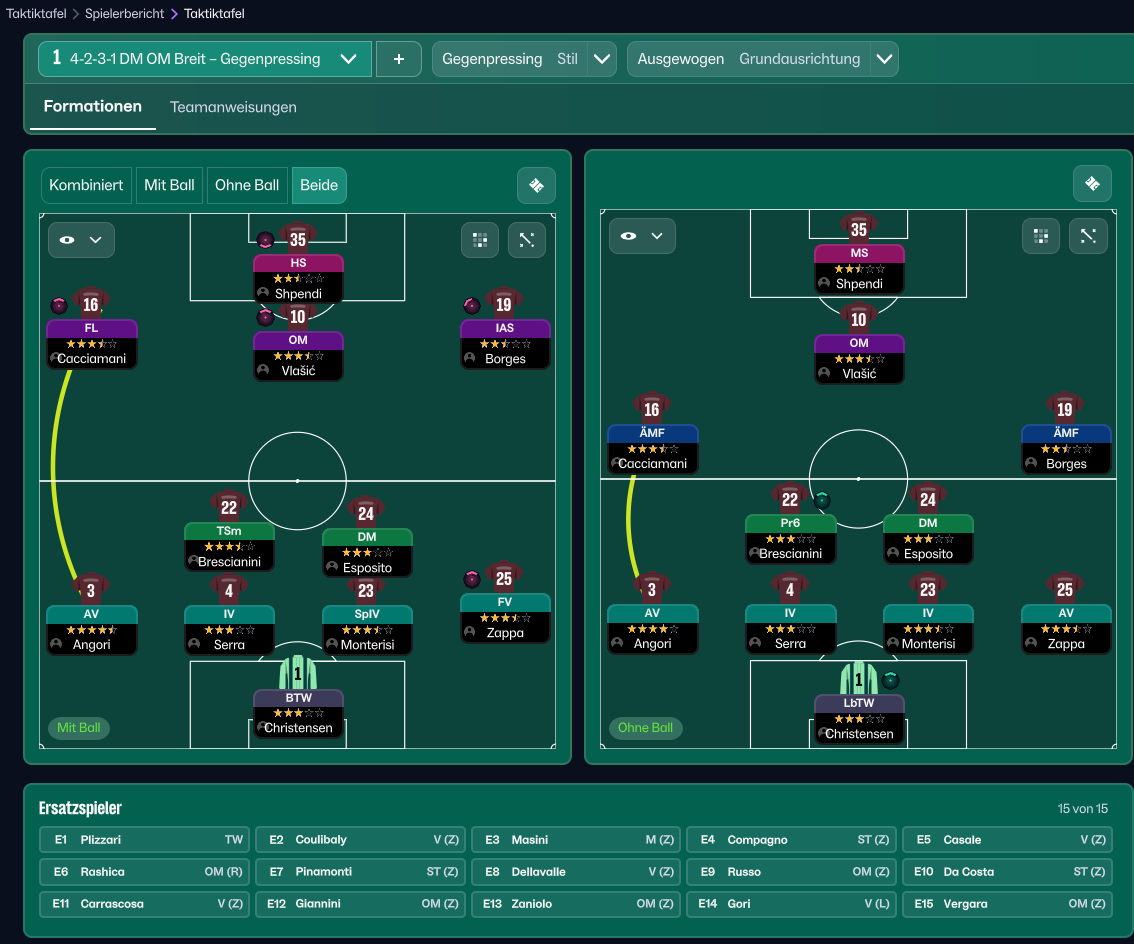
Formation & Style
Tactical Style:Gegenpressing
Mentality:Controlled
Formation:5-2-1-2 FV
Team Fluidity:Strict
In Possession
Pass into space
Structured build-up from defense
High tempo
Utilize width
In Transition
Counter-press
Quick transitions
Out of Possession
High defensive line
Increased pressing frequency
Team Shape Without Ball
No team shape without ball data available
Team Shape With Ball
No team shape with ball data available
Key Strengths
Defensive Solidity
The five-man defense provides a strong structure and depth, making it difficult for opponents to penetrate.
Dynamic Wing Play
Using wing backs effectively stretches the pitch, creating space for attackers and options for wide plays.
Counter-pressing Effectiveness
The gegenpressing style allows for immediate pressure on the ball, disrupting opponent plays quickly after losing possession.
High Tempo Attacks
The focus on high tempo in possession encourages rapid movement and quick transitions to catch defenses off guard.
Conflicting Directions
Role Overlap in Midfield
The combination of Box to Box and Deep Lying Playmaker could lead to positional conflicts, affecting overall midfield control.
High Line with Cautious Keepers
A goalkeeper with a defensive duty may struggle with a high defensive line, leading to vulnerabilities on counter-attacks.
Inflexibility with Counter-attacking
A strict mentality may limit the team’s adaptability in transitioning quickly during counter-attacks.
Over-reliance on Wing Backs
If opposing teams neutralize the wing backs, it may result in reduced attacking options and increased pressure on the central midfield.
Tactical Suggestions
Adjust Midfield Roles
Consider changing one midfield role to a more supportive duty to balance defensive responsibilities and maintain midfield presence.
Re-evaluate Goalkeeper Role
Switching the goalkeeper's duty to a more sweeping role could benefit the high defensive line's effectiveness.
Increase Tactical Flexibility
Allowing more flexibility in tactical instructions could enhance adaptability to opponents’ styles during matches.
Focus on Central Attacks
Encourage more central attacking plays to complement wing strategies, reducing dependency on wide formations.
Ask Questions About Your Lineup
More Gegenpressing tactics
Guides for this formation
The tactical theory behind the 5-2-1-2 FV: roles, instructions, and the trade-offs that decide whether the system holds up.