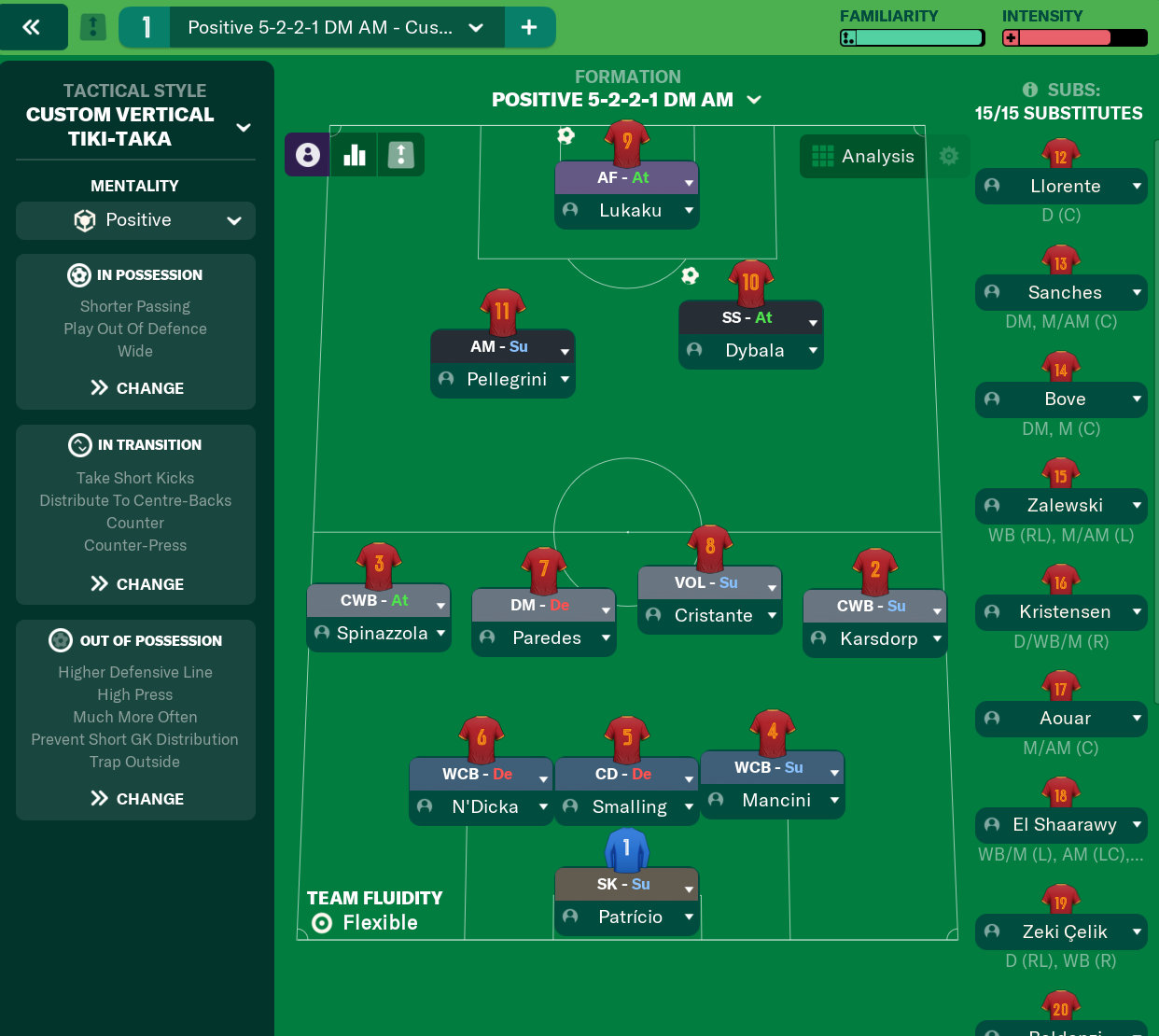
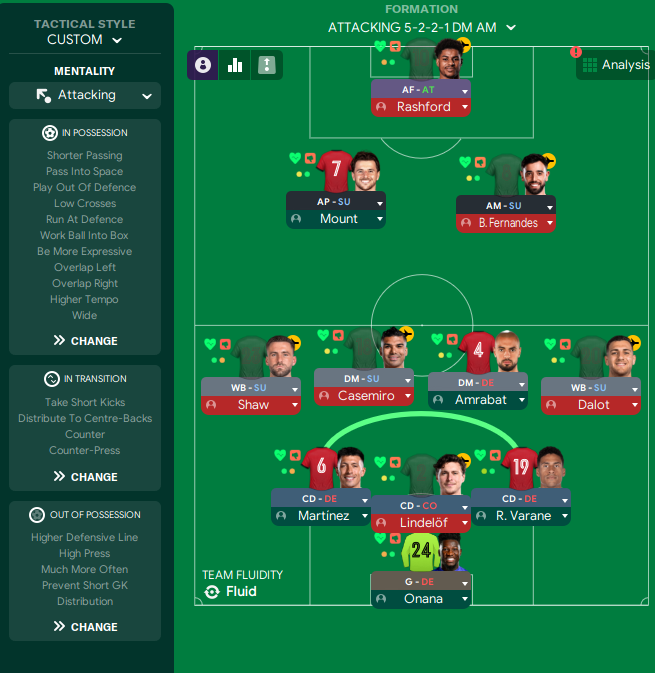
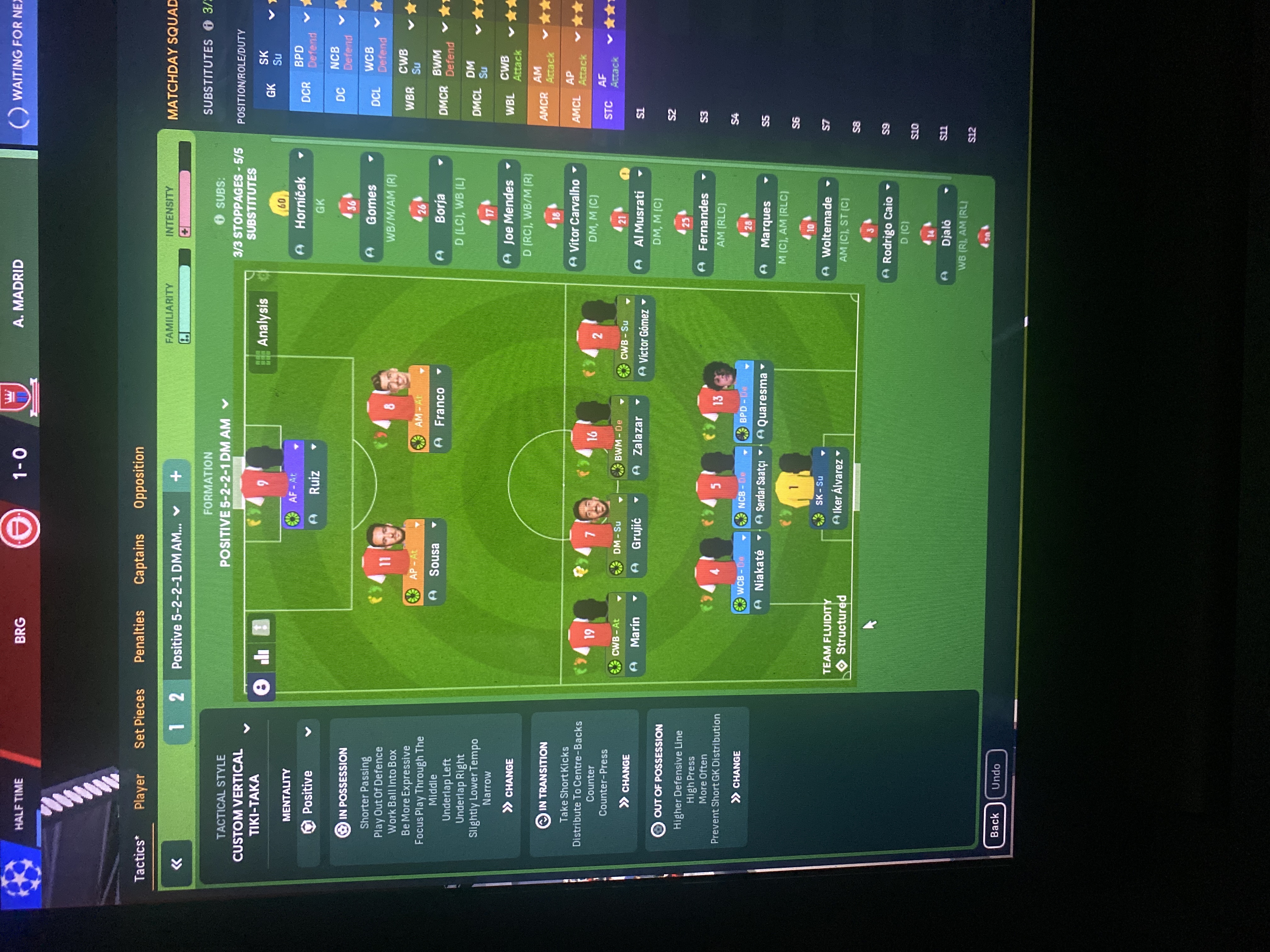
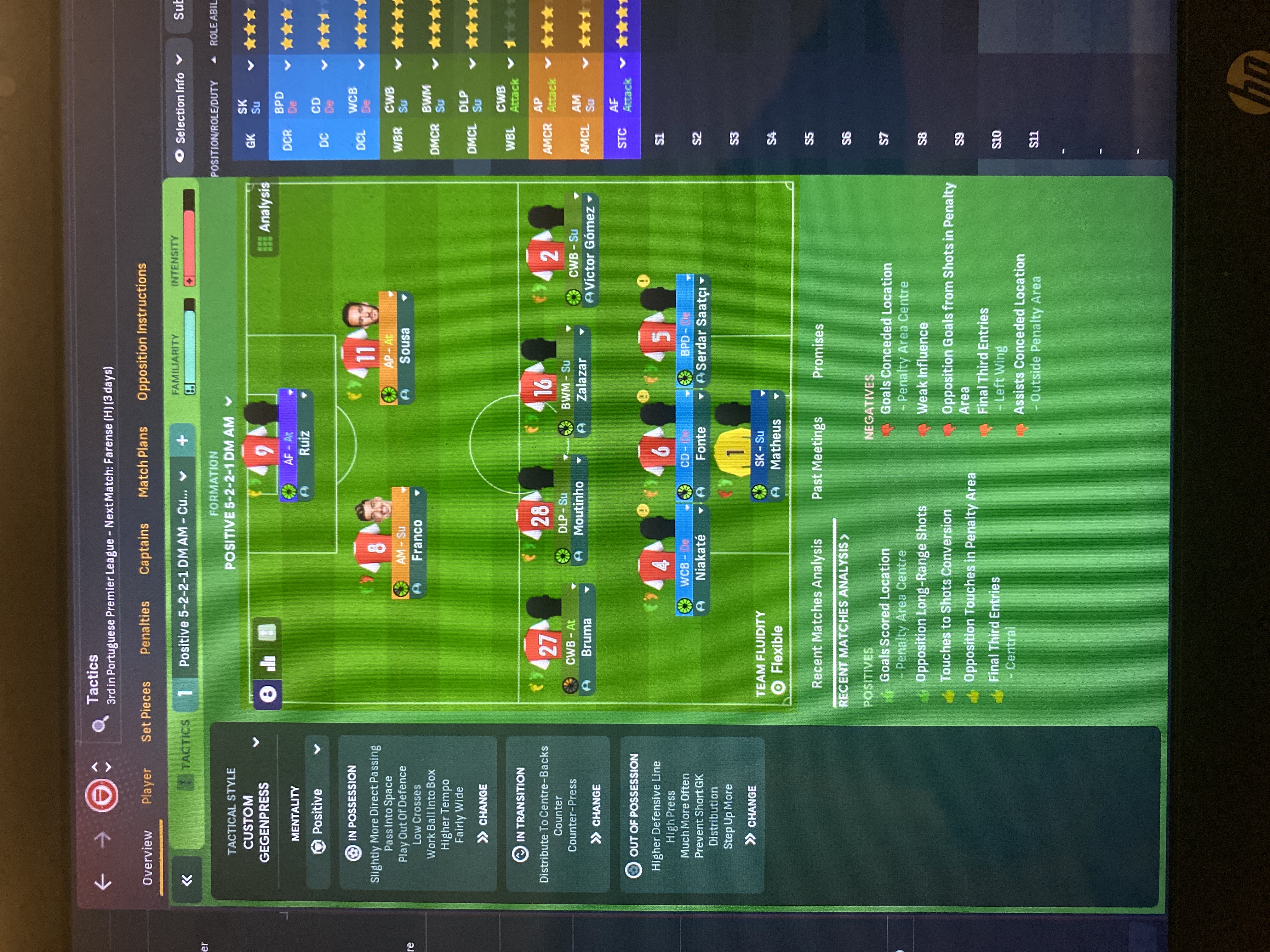
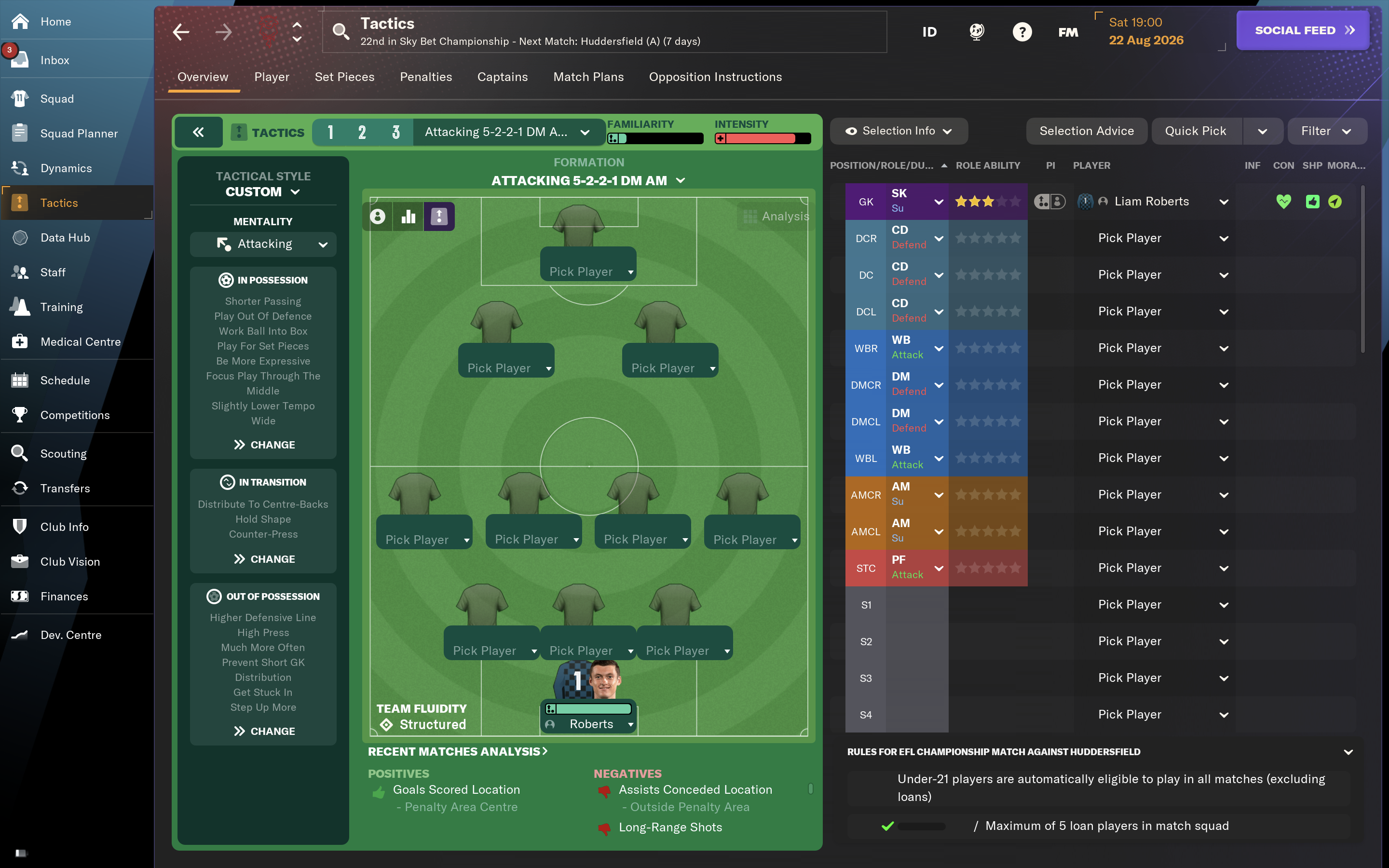
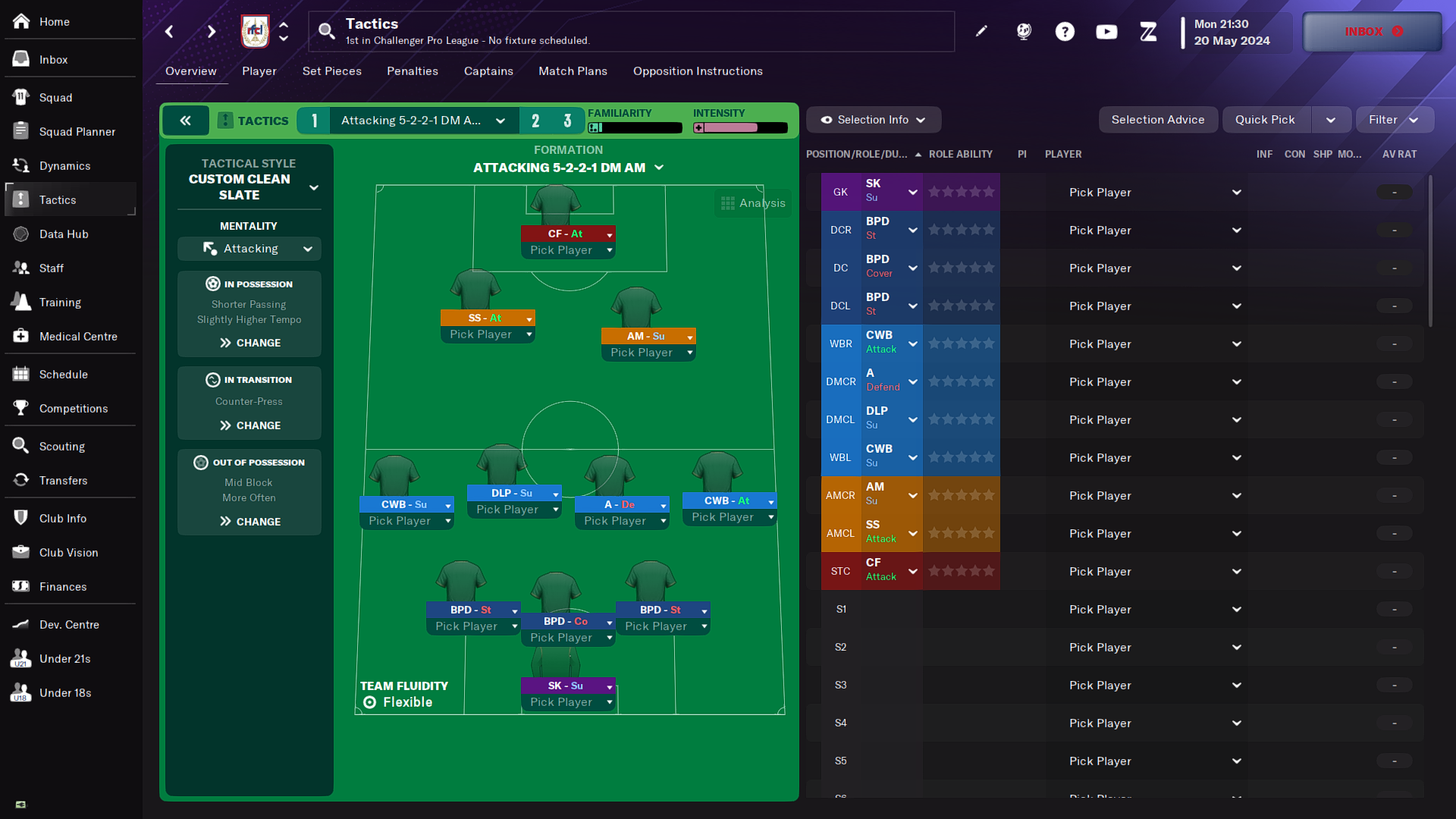
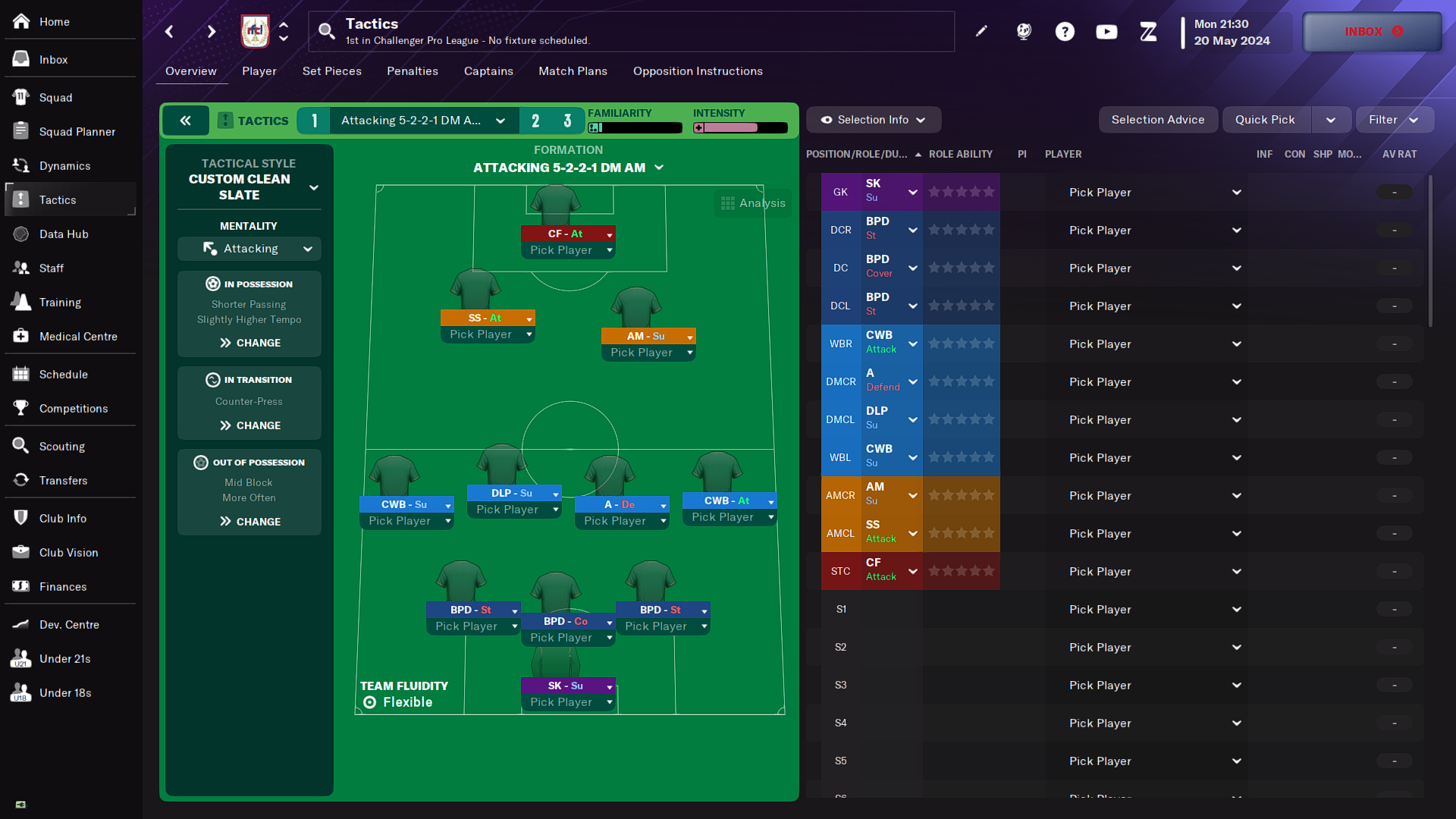
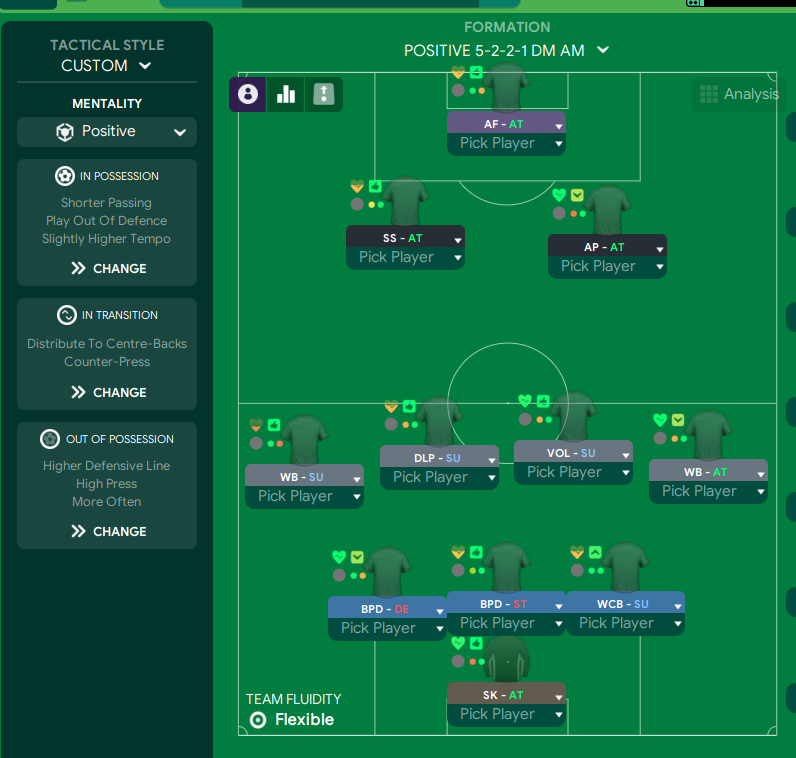
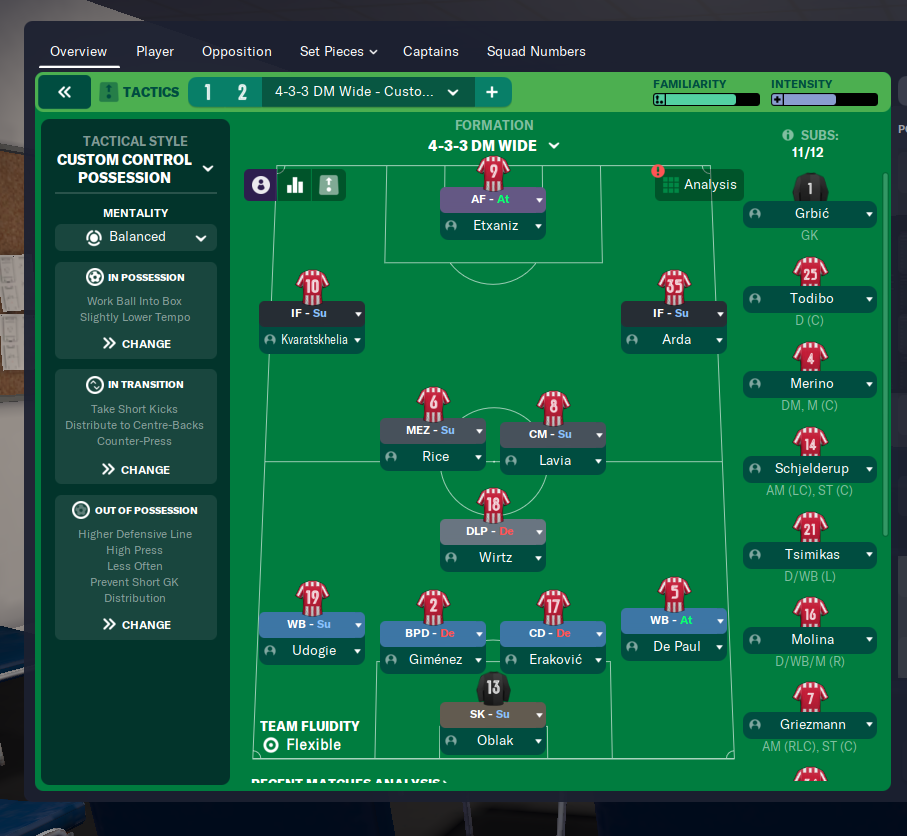
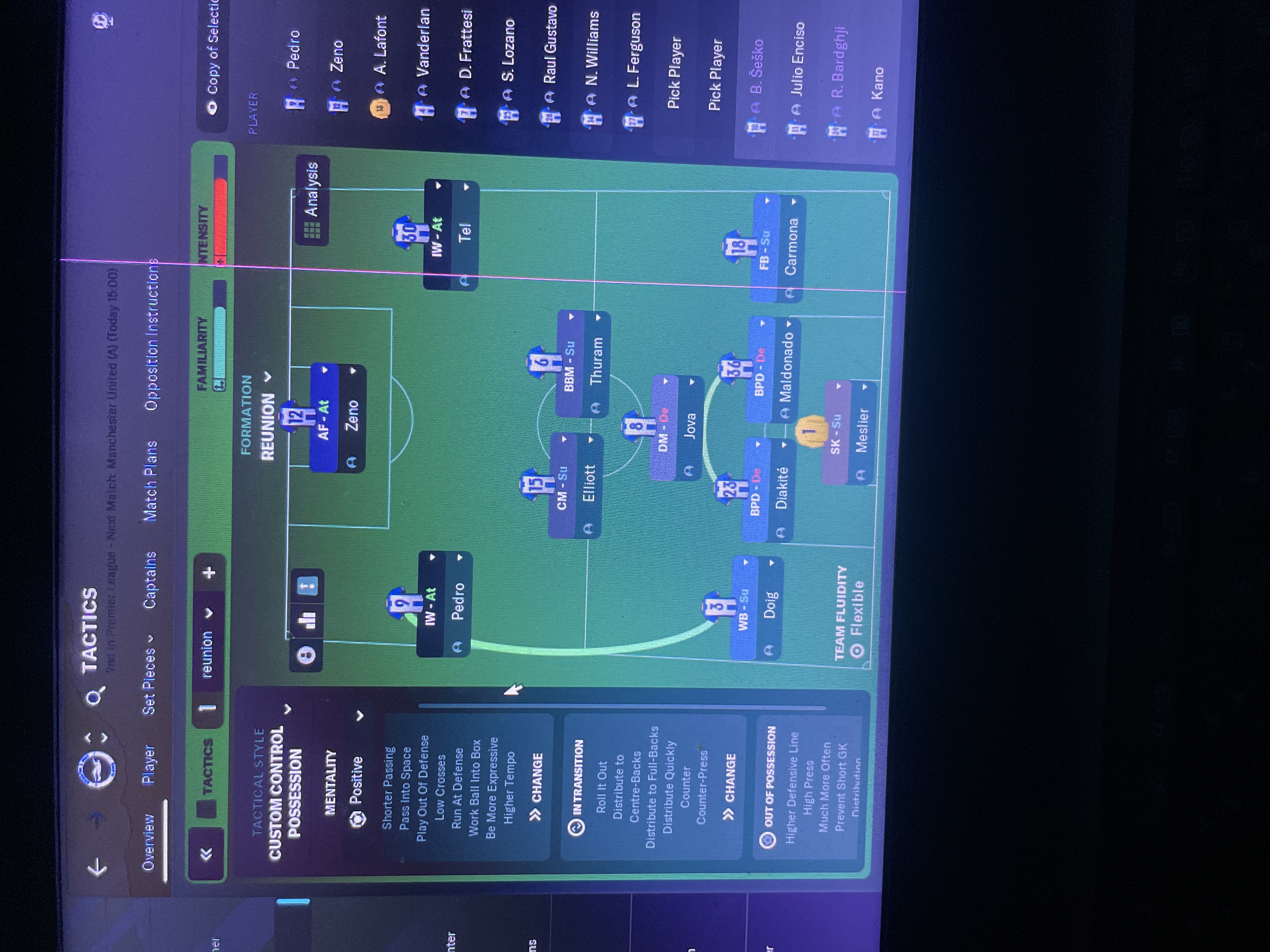
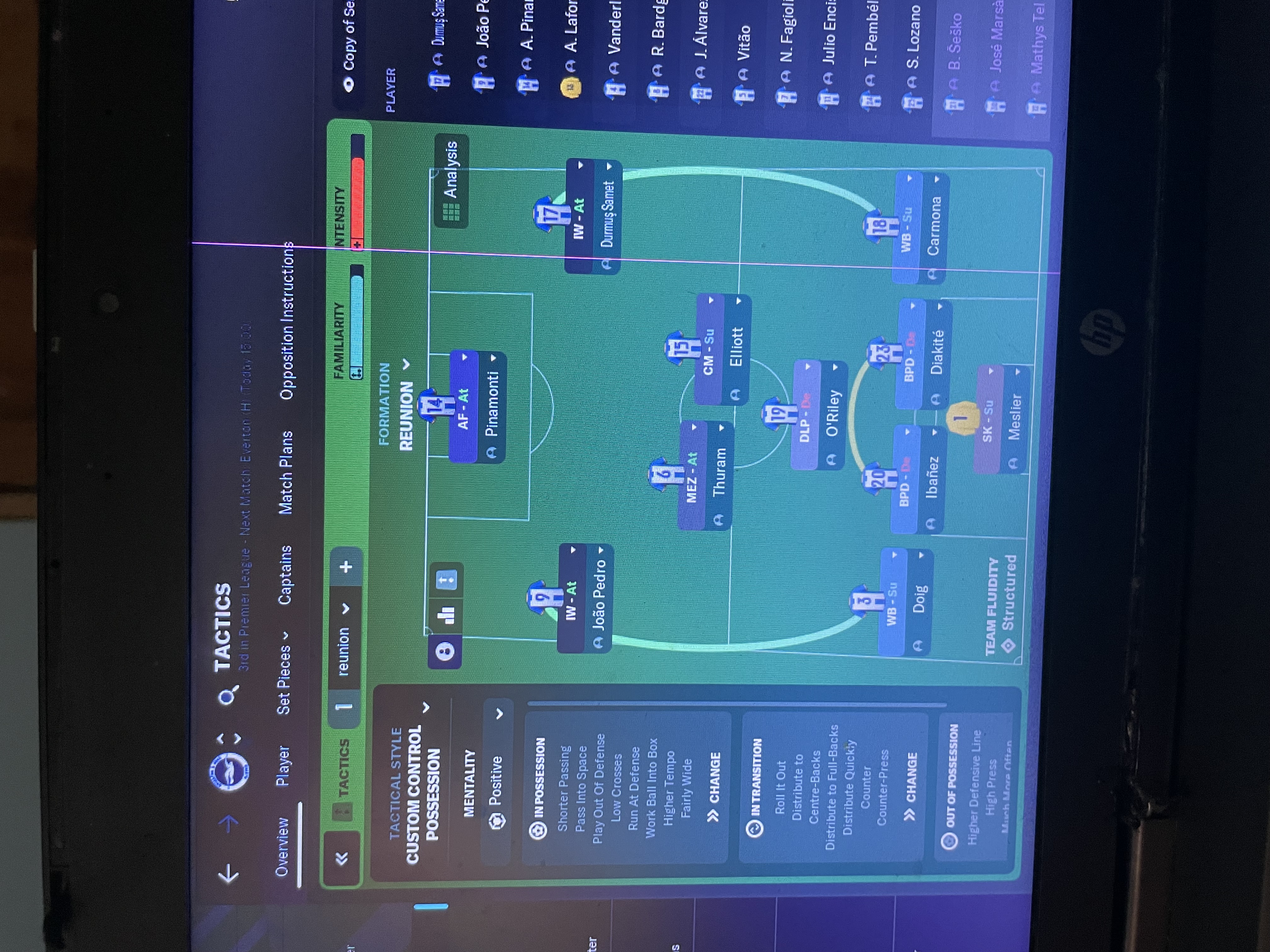
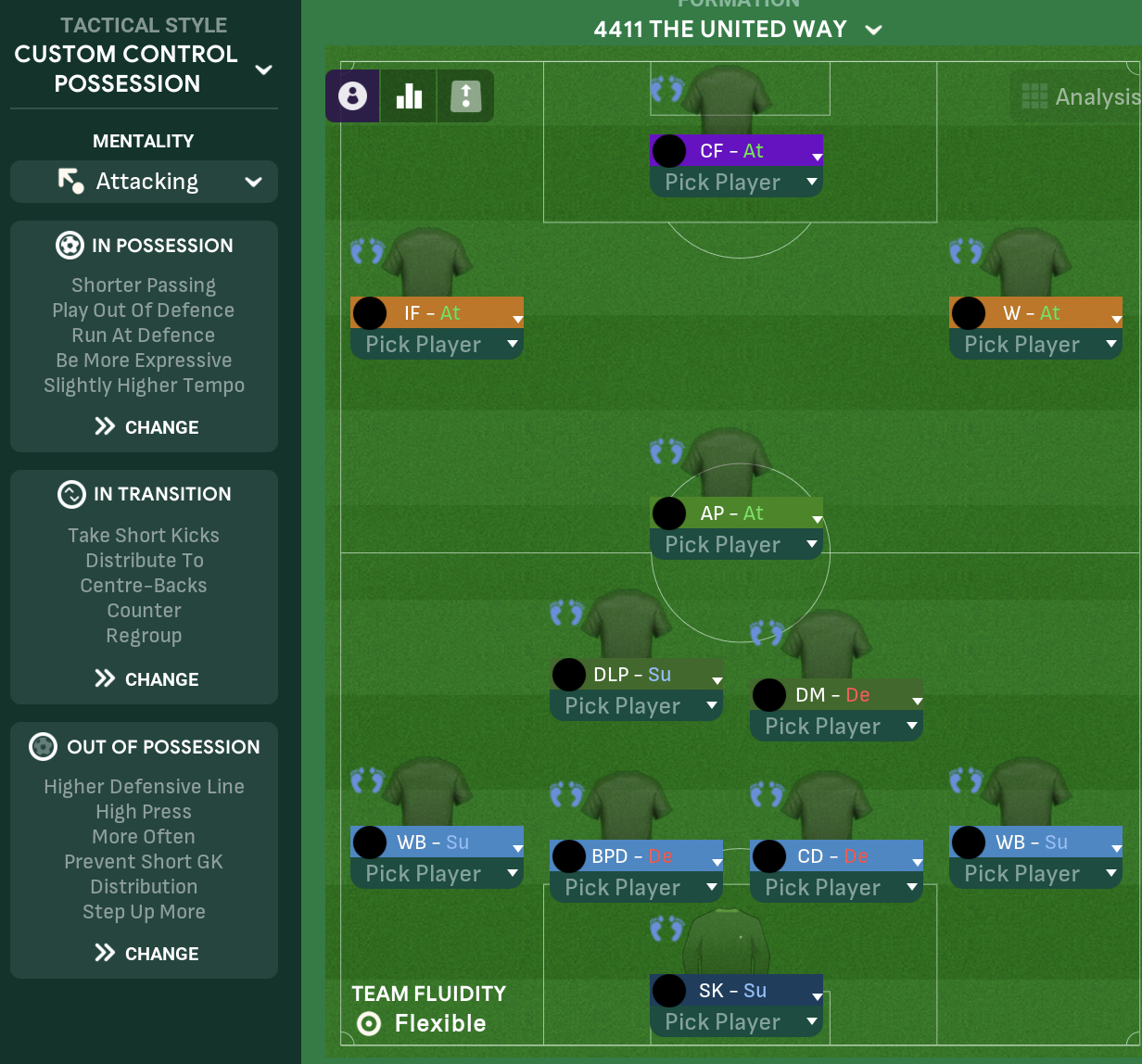
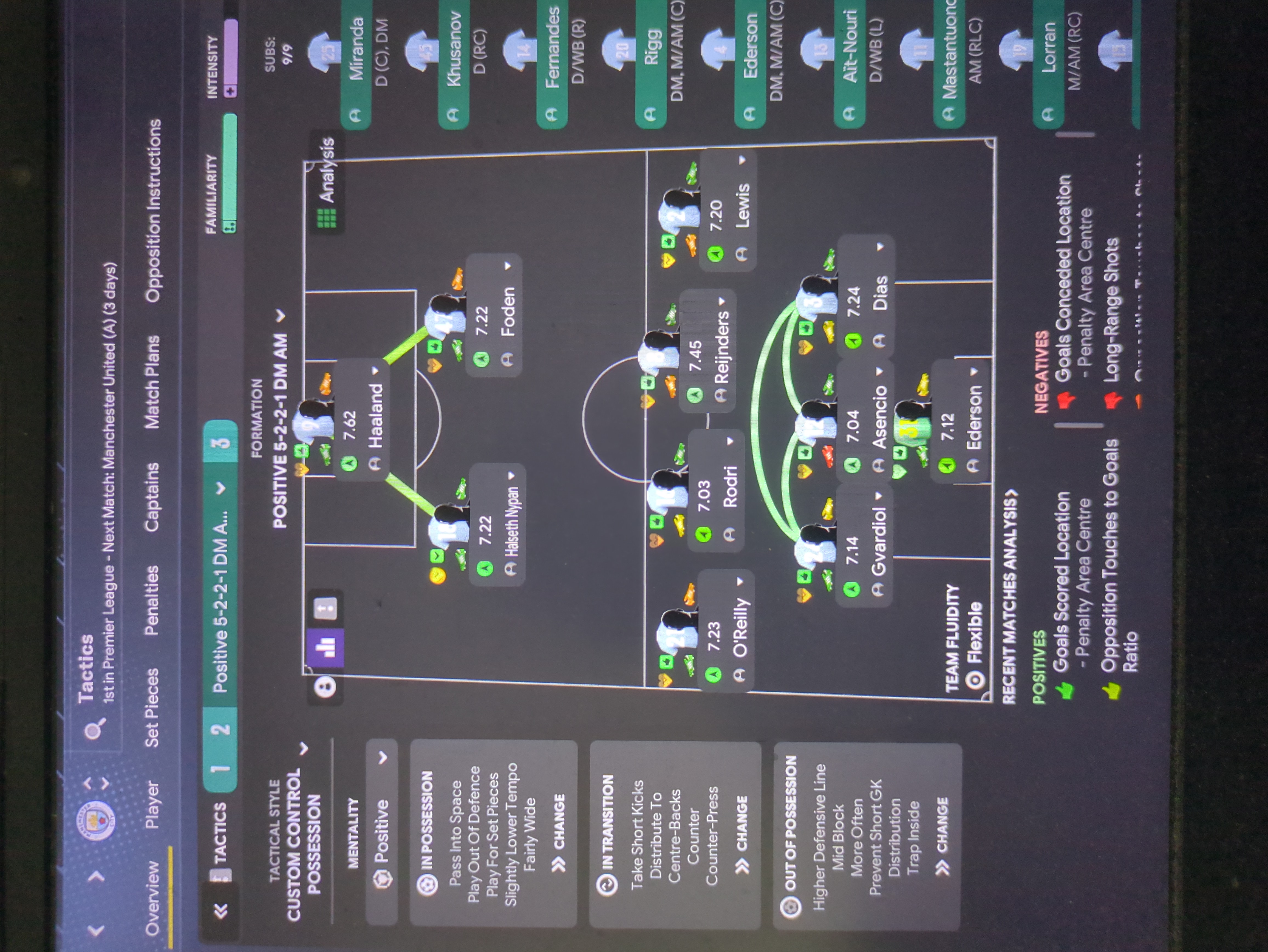
5-2-2-1 DM AM
The custom control possession style combined with the focus on playing out from the back allows for better ball retention and maintaining possession in…
Loading tactical analysis...
Custom Control Possession
Positive
5-2-2-1 DM AM
Flexible
Pass Into Space
Play Out Of Defence
Distribute To Centre-Backs
Slightly Lower Tempo
Counter
Counter-Press
Take Short Kicks
Higher Defensive Line
Mid Block
More Often Prevent Short GK Distribution
Trap Inside
ST
Advanced Forward
Attack
AMR
Inside Forward
Attack
AML
Inside Forward
Attack
CM
Deep-Lying Playmaker
Support
CM
Box-to-Box Midfielder
Support
CDM
Defensive Midfielder
Defend
CB
Ball Playing Defender
Defend
CB
Ball Playing Defender
Defend
FB
Wing Back
Support
FB
Wing Back
Support
GK
Goalkeeper
Defend
The custom control possession style combined with the focus on playing out from the back allows for better ball retention and maintaining possession in the opposition half.
The 5-2-2-1 formation offers options in attack through the inside forwards and the advanced forward. This creates multiple avenues for breaking down defenses.
While the high defensive line is effective for pressing, it can be vulnerable against quickcounter-attacks, especially from teams with pacey strikers.
A slightly lower tempo could conflict with high pressing strategies, potentially reducing the effectiveness of pressing when the ball is lost.
How can we adjust the tactical setup based on the opponent's formation?
Are the inside forwards effectively utilizing space, or do we need to change their roles?
Is our pressing strategy effective, or do we need to modify the defensive line?
How can we improve our conversion rate from possession into clear goal-scoring opportunities?
Should we consider a different mentality for away matches against stronger opponents?
Are the players comfortable with their assigned roles and duties, or do adjustments need to be made?
The tactical theory behind the 5-2-2-1 DM AM: roles, instructions, and the trade-offs that decide whether the system holds up.
The deliberate underdog tactic in FM: formation choices, duty distribution, and why Counter-Press is exactly wrong inside a low block.
FM27 keeps FM26's tactic system. Here is what stays the same, the small changes that can catch you out, and what the new Tactical Effectiveness system asks of you.
How Mentality, Duty, and Role interact in FM, why duty trumps mentality every time, and the role-on-top-of-duty composition rules.