Uploaded Tactic
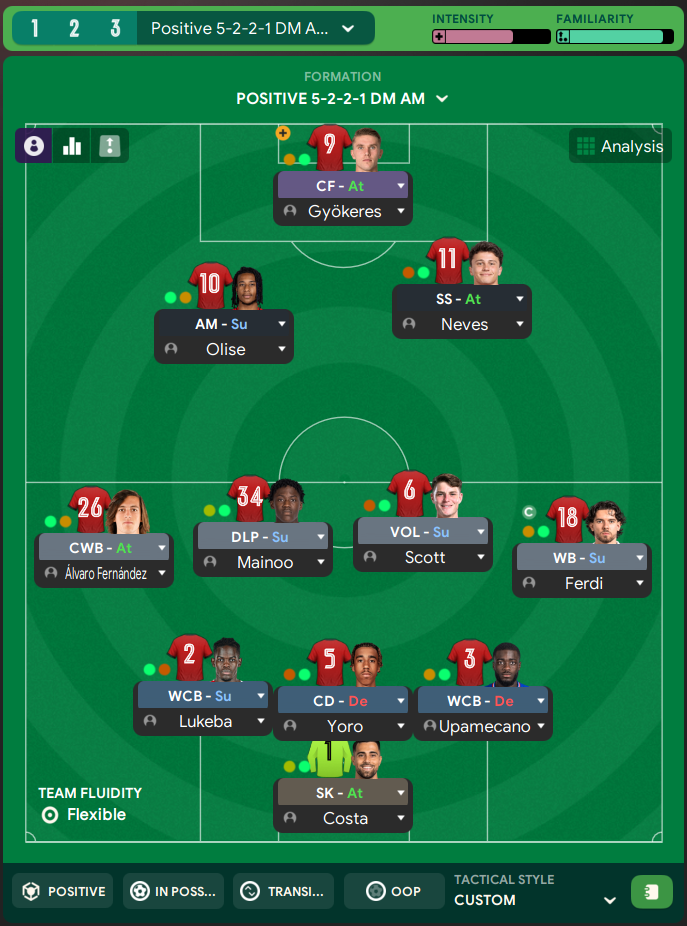
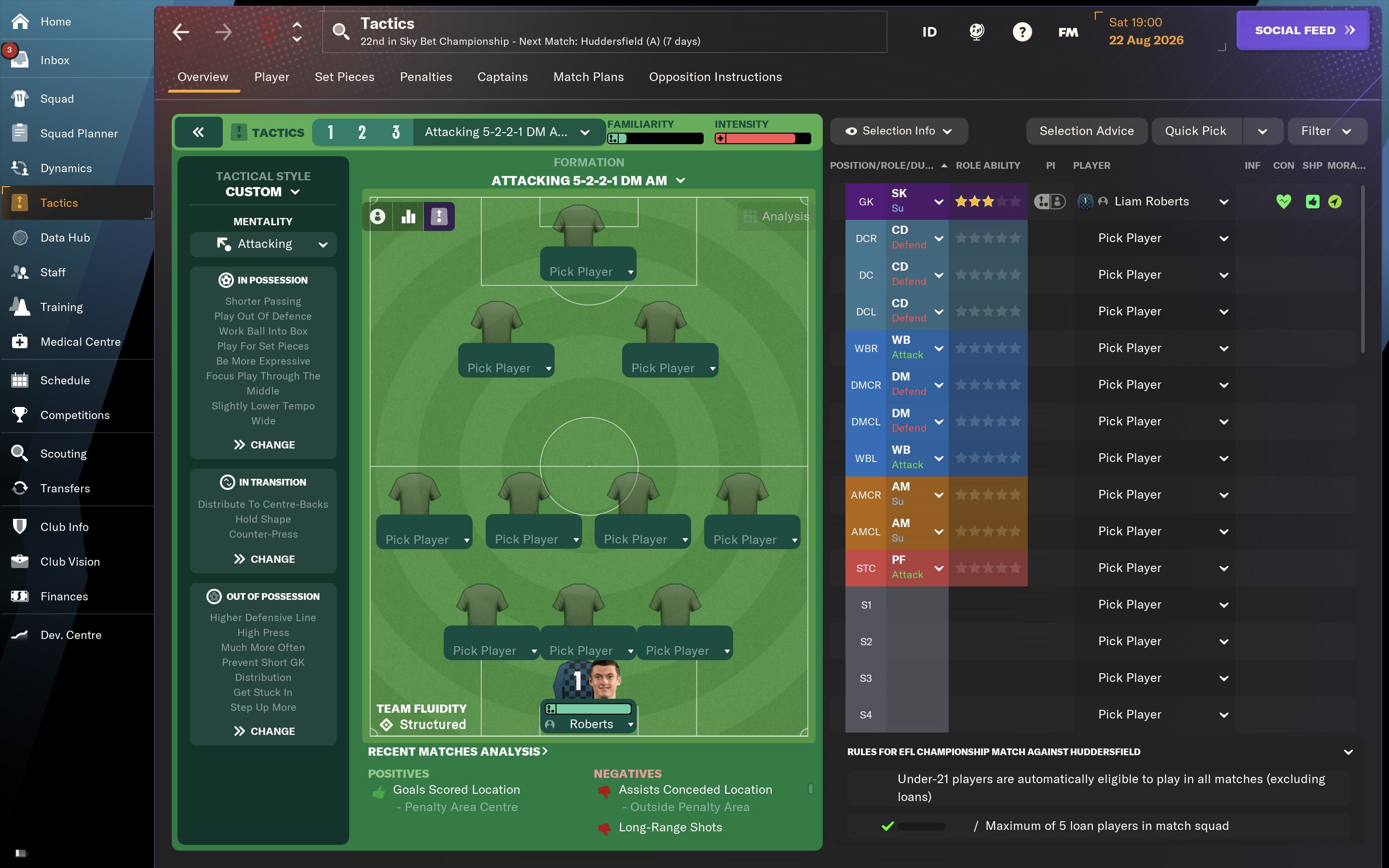
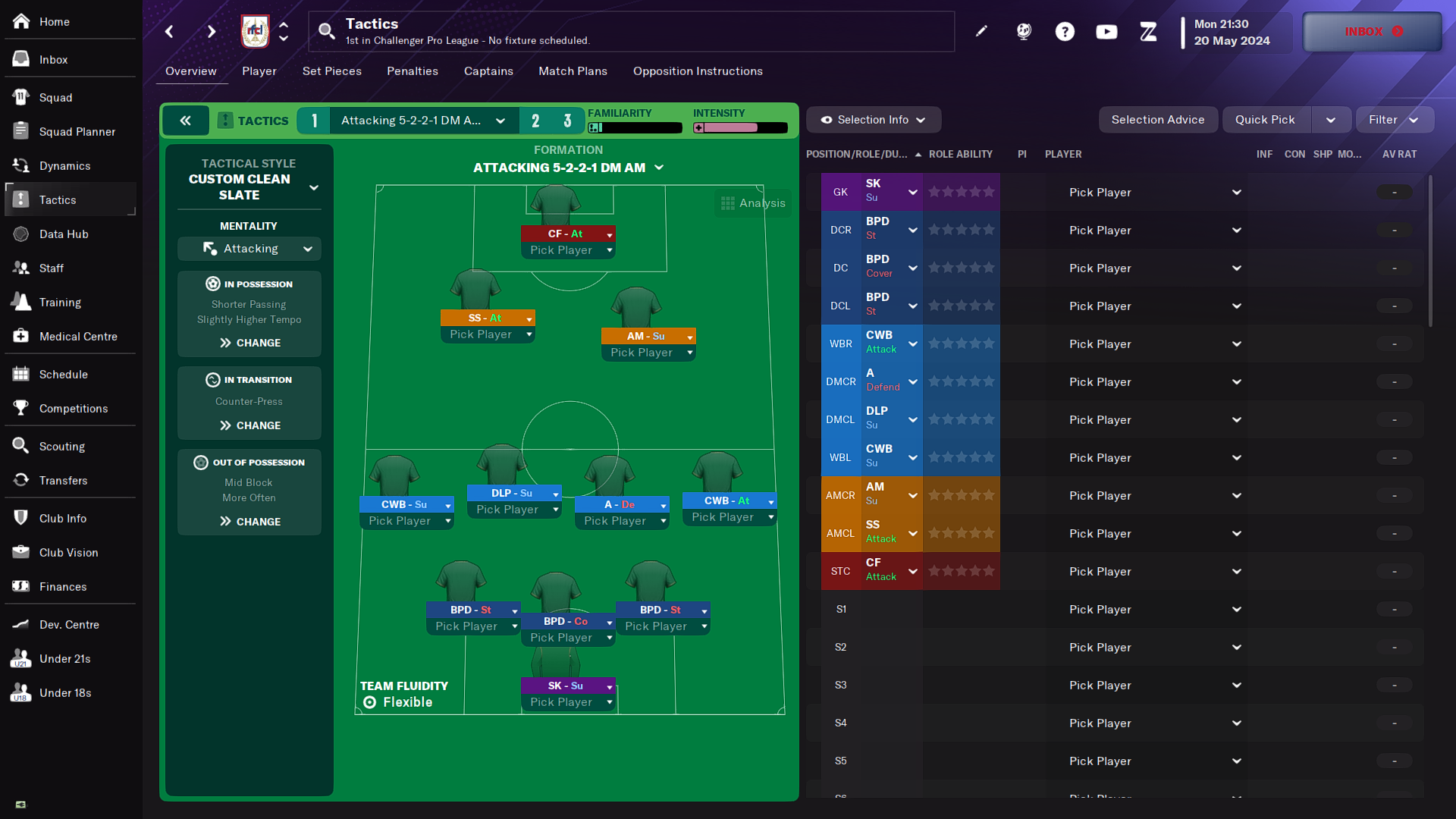
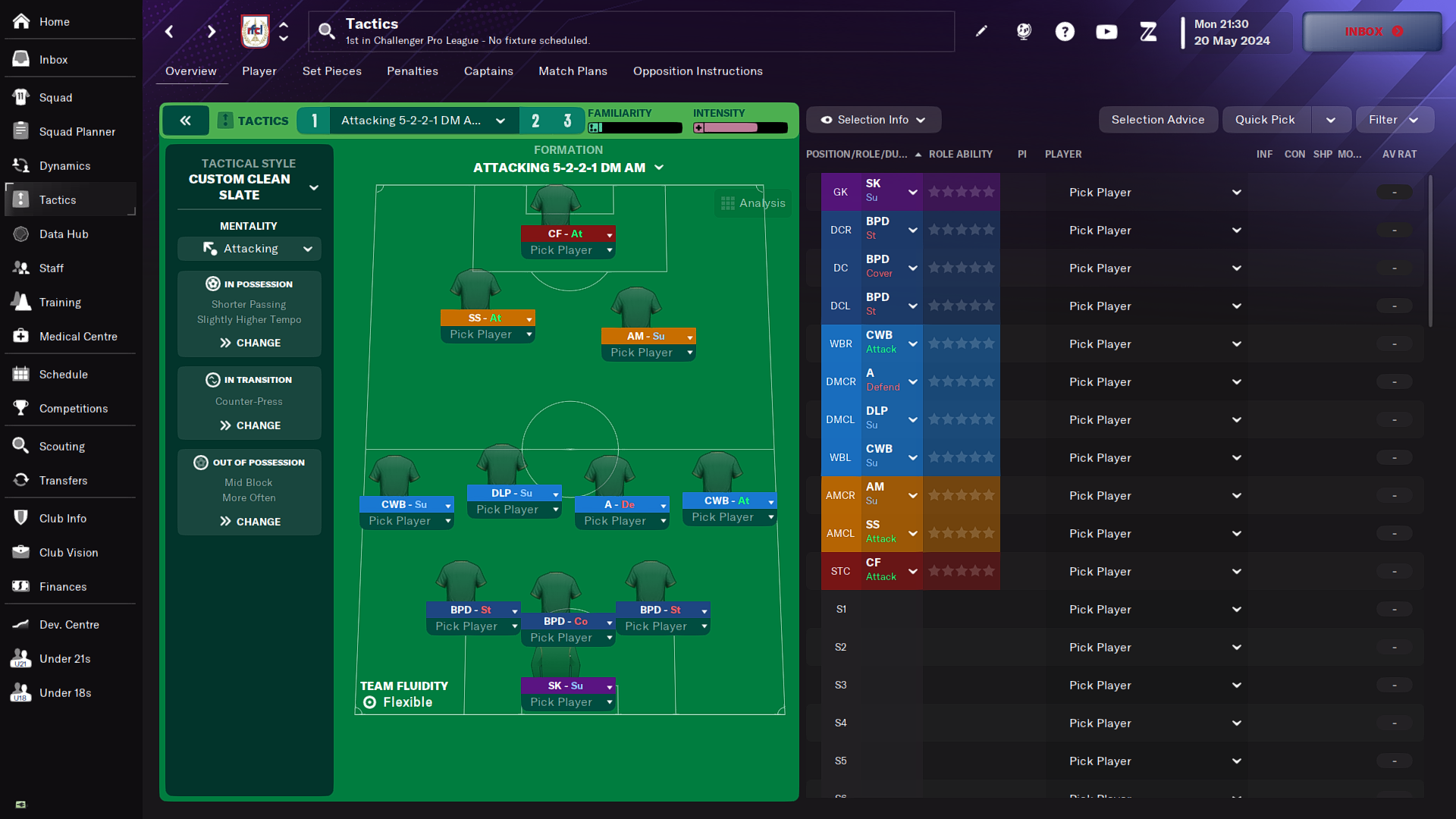
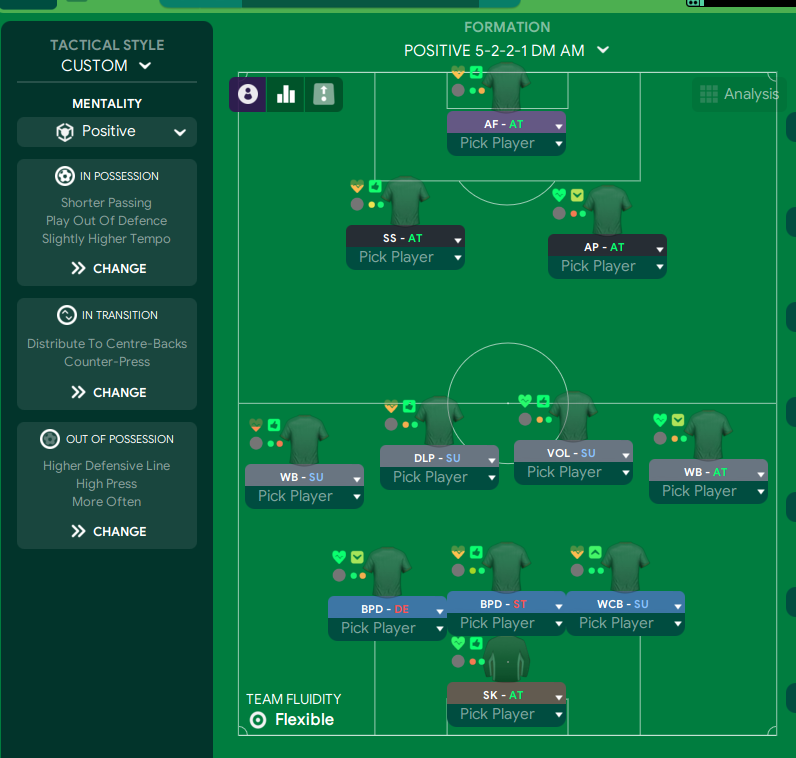
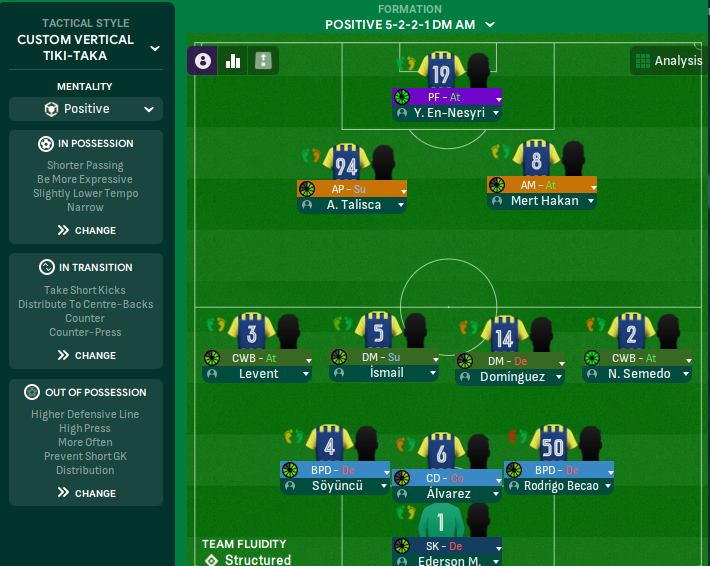
Formation & Style
Tactical Style:Custom
Mentality:Positive
Formation:5-2-2-1 DM AM
Team Fluidity:Flexible
In Possession
Use width through CWB and WB
Encourage overlapping runs from CWB and WB
Look for through balls to CF and AM
Maintain short passing to keep possession
In Transition
Counter-press immediately after losing the ball
Transition quickly to attack after gaining possession
Hold shape in defense while transitioning
Out of Possession
Utilize high defensive line
Press aggressively in the opposition half
Maintain compactness in midfield
Team Shape Without Ball
No team shape without ball data available
Team Shape With Ball
No team shape with ball data available
Key Strengths
Attacking Width
The formation effectively uses wing-backs and complete wing-backs to stretch the opposition, creating space for central players.
Pressing Ability
The high pressing approach, combined with aggressive transitions, allows for regaining possession high up the pitch.
Fluid Attack
The combination of an advanced forward and shadow striker creates a dynamic attacking threat, making it difficult for defenses to predict movements.
Midfield Control
The presence of a deep-lying playmaker and volante provides a strong midfield presence, allowing for controlled possession and play development.
Conflicting Directions
Defensive Balance
The aggressive pressing may leave gaps in defense if the midfielders don’t track back effectively, leading to potential vulnerabilities on the counter.
Overlap Risk
With the wide players instructed to attack, the defense could be exposed if wing-backs are caught out of position.
Role Synergy
The roles of the volante and deep-lying playmaker need to be managed to prevent overcrowding in midfield; they could overlap in duties.
Player Fitness
Maintaining a high-intensity game with a positive mentality might lead to fatigue, affecting performance in the latter stages of the match.
Tactical Suggestions
Adjust Defensive Duties
Consider changing the duties of some wide players to a more conservative role to maintain defensive stability during transitions.
Add a Second Forward
Introducing a second striker in place of the AM could provide more attacking options and alleviate the pressure on the lone CF.
Rotate Roles Based on Opposition
Utilize different player roles such as an inverted winger or a box-to-box midfielder against teams with a weak central defense.
Implement Set-Piece Strategies
Incorporate set-piece strategies to capitalize on the height advantage of players like Upamecano in both attacking and defensive phases.
Ask Questions About Your Lineup
Related Tactics
Guides for this formation
The tactical theory behind the 5-2-2-1 DM AM: roles, instructions, and the trade-offs that decide whether the system holds up.