Uploaded Tactic
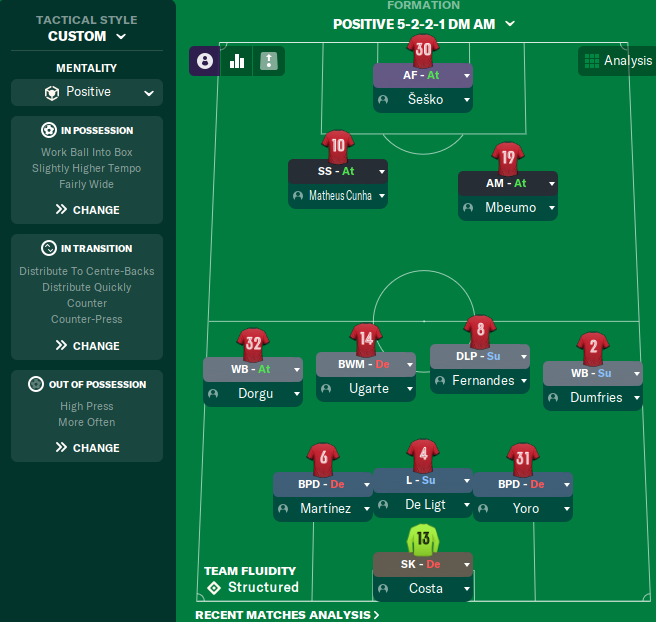
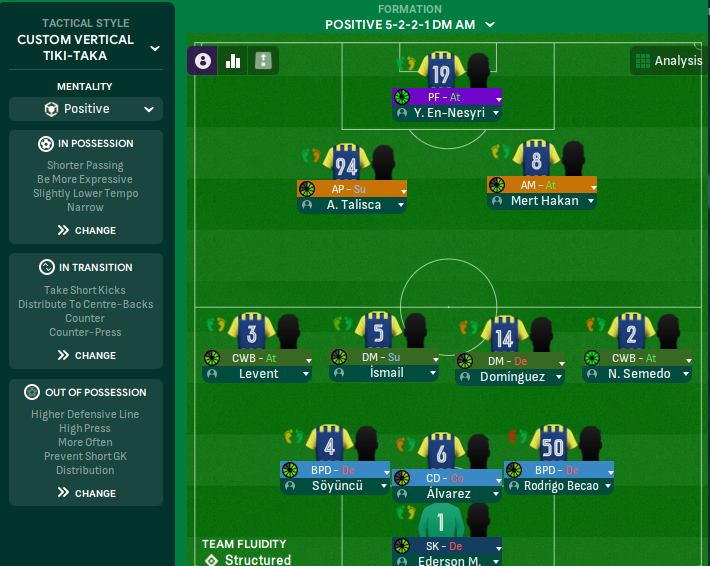
Formation & Style
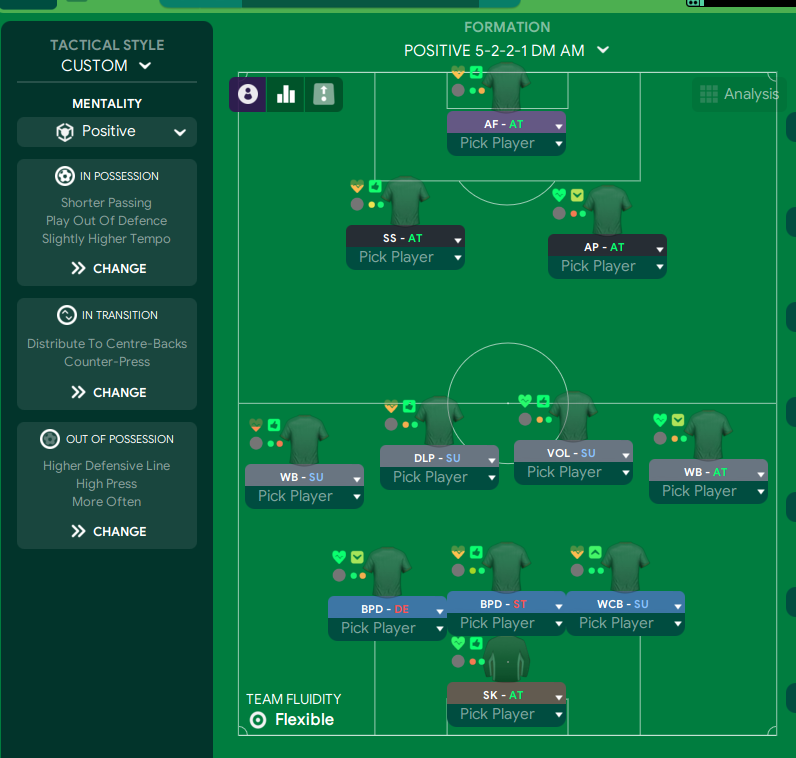
Tactical Style:Custom
Mentality:Positive
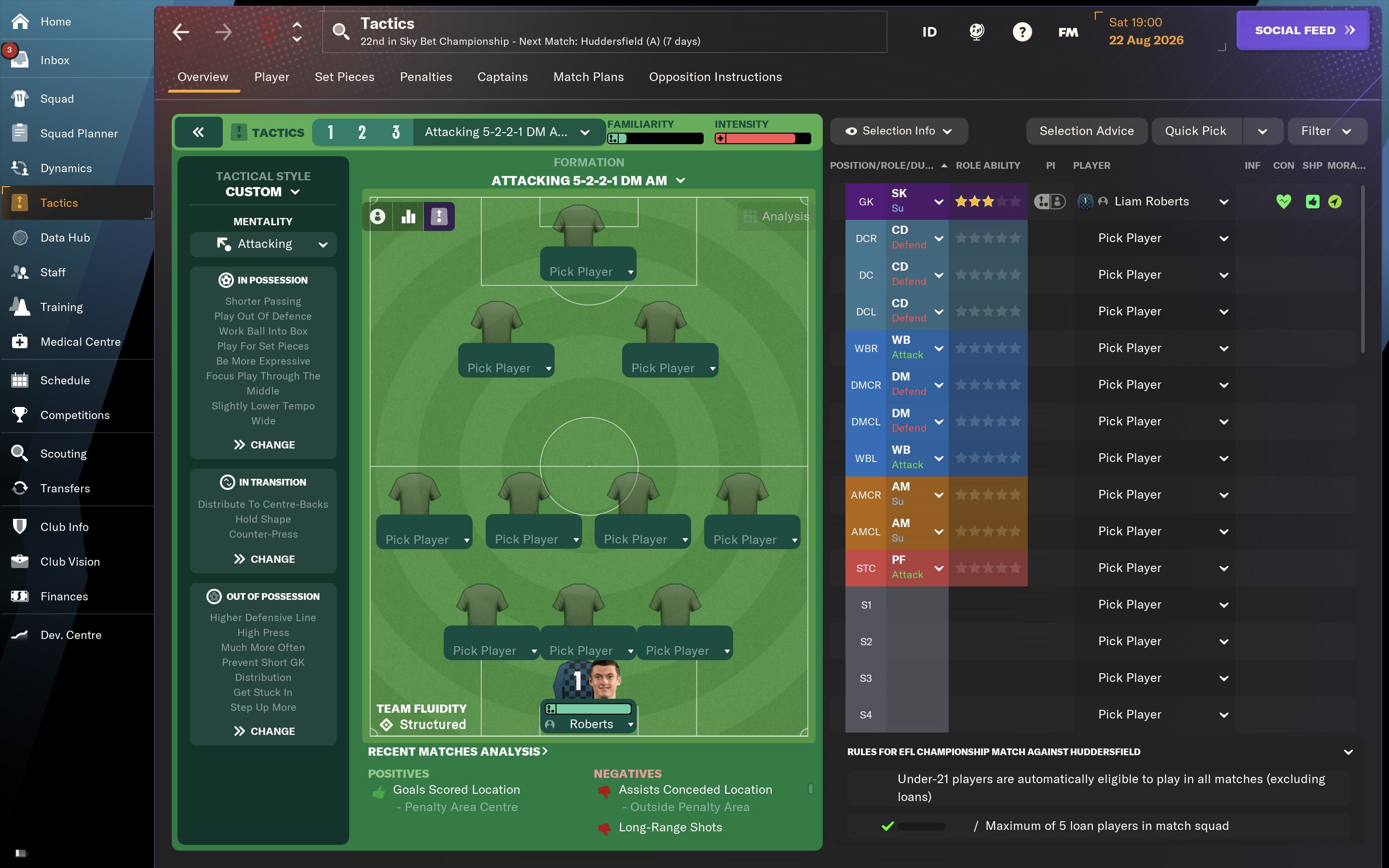
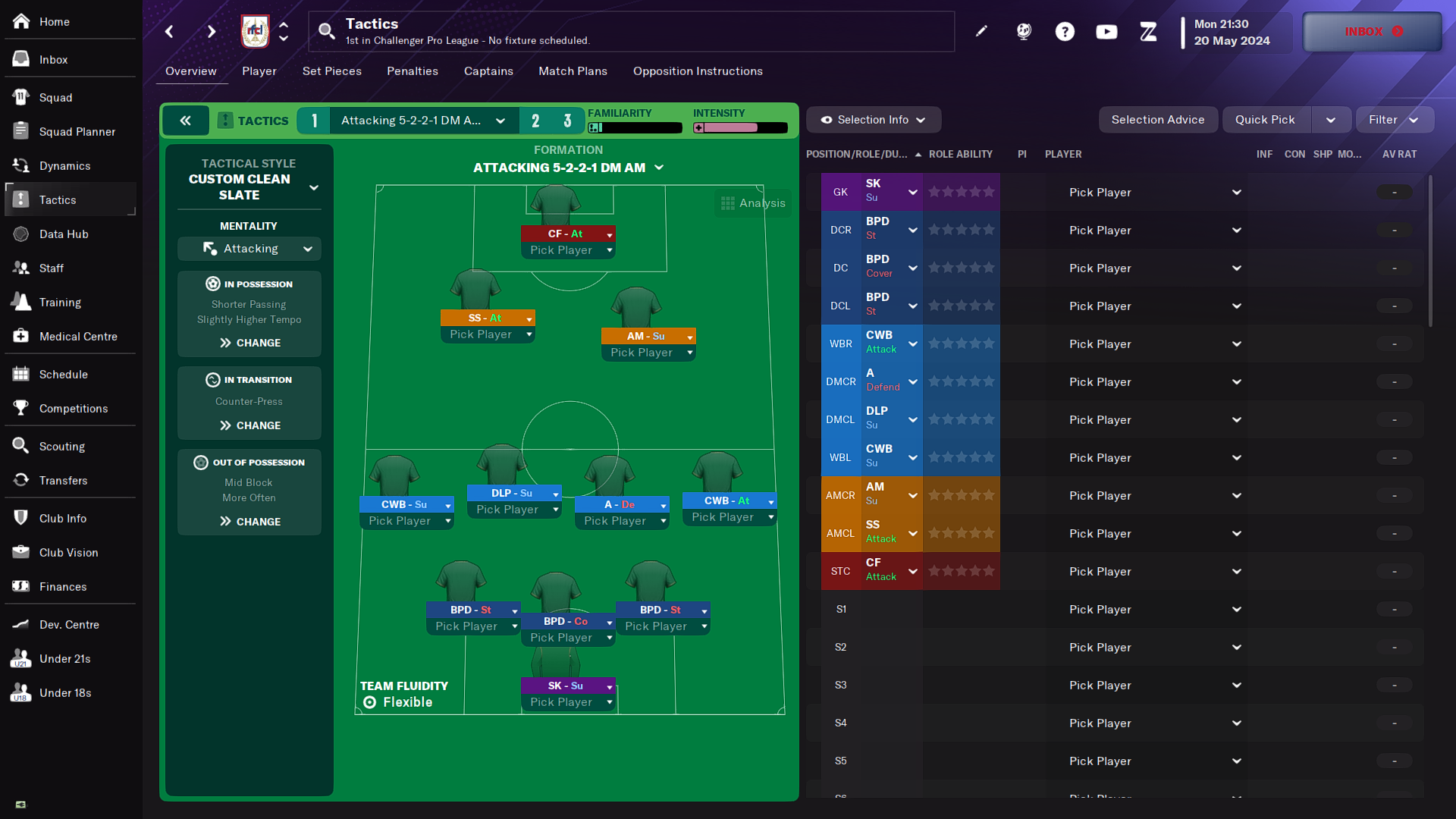
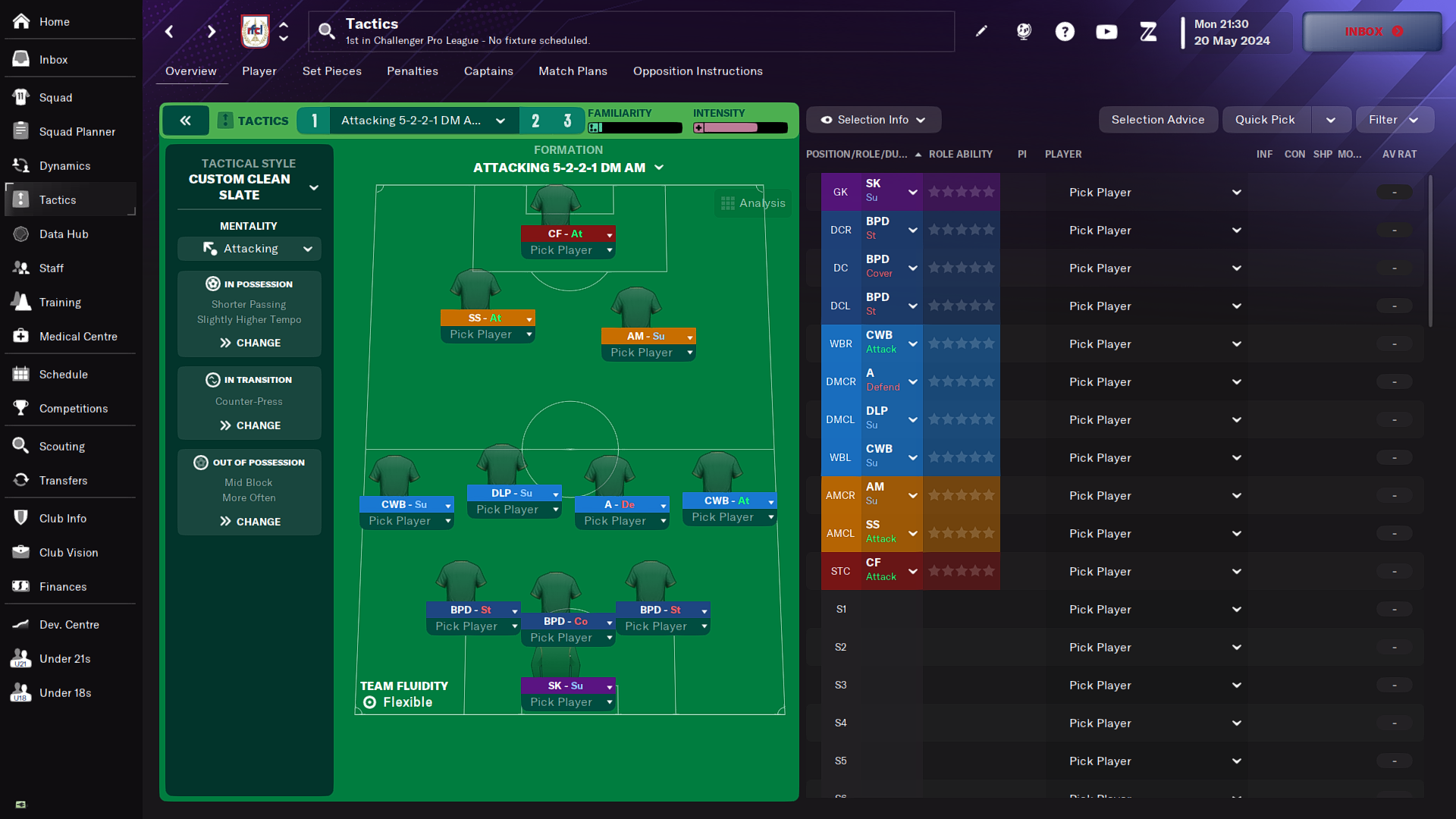
Formation:5-2-2-1 DM AM
Team Fluidity:Structured
In Possession
Work Ball Into Box
Slightly Higher Tempo
Fairly Wide
In Transition
Distribute To Centre-Backs
Distribute Quickly
Counter
Counter-Press
Out of Possession
High Press
Team Shape Without Ball
Shape:5-2
Description:Compact five-man defense with wing-backs contributing to both defense and attack.
Evidence:BPD-D at [2,3], Libero at [2,2], BPD-D at [2,4], BWM-D at [3,2], DLP-Su at [3,3]
Team Shape With Ball
Shape:3-3
Description:Dynamic front three provides multiple lanes for attacking options with ample movement.
Evidence:AM-A at [5,3], SS-A at [5,2], AF-A at [6,3]
Phase Description
Attacking Play
The team looks to control possession through short passes and creative movement, utilizing width and quick transitions to exploit defenses.
Defensive Transition
Upon losing possession, players quickly engage in counter-pressing to recover the ball, aiming for a rapid transition back to attacking play.
Main Focus
Creating goal-scoring opportunities through intricate build-up and utilizing overlaps from wing-backs.
Key Strengths
Strong Central Defense
The presence of three central defenders bolsters defensive stability.
Fluid Attack
The combination of WBs and AM maximizes width, creating opportunities for crosses and space in the middle.
Counter-Pressing Ability
With a high press when out of possession, the team effectively stifles opponent transitions.
Conflicting Directions
Structural Imbalance
While the team has a solid defensive structure, the reliance on wing-backs for width may expose the flanks if they are caught high.
Potential for Overcomitting
The emphasis on a high press combined with aggressive attacking roles may lead to counter opportunities for opponents.
Limited Central Control
The midfield setup with a DLP and BWM may lack fluidity against teams with strong central play.
Tactical Suggestions
Adjust Wing-Back Duties
Consider changing the 'Attack' duty to 'Support' for at least one wing-back to maintain defensive balance.
Additional Midfield Support
Introduce a third midfielder, such as a Box-to-Box Midfielder, to enhance control in midfield.
Restrict Pressing Intensity
Consider lowering the pressing intensity to prevent players from being caught out of position during counter attacks.
Ask Questions About Your Lineup
Related Tactics
Guides for this formation
The tactical theory behind the 5-2-2-1 DM AM: roles, instructions, and the trade-offs that decide whether the system holds up.