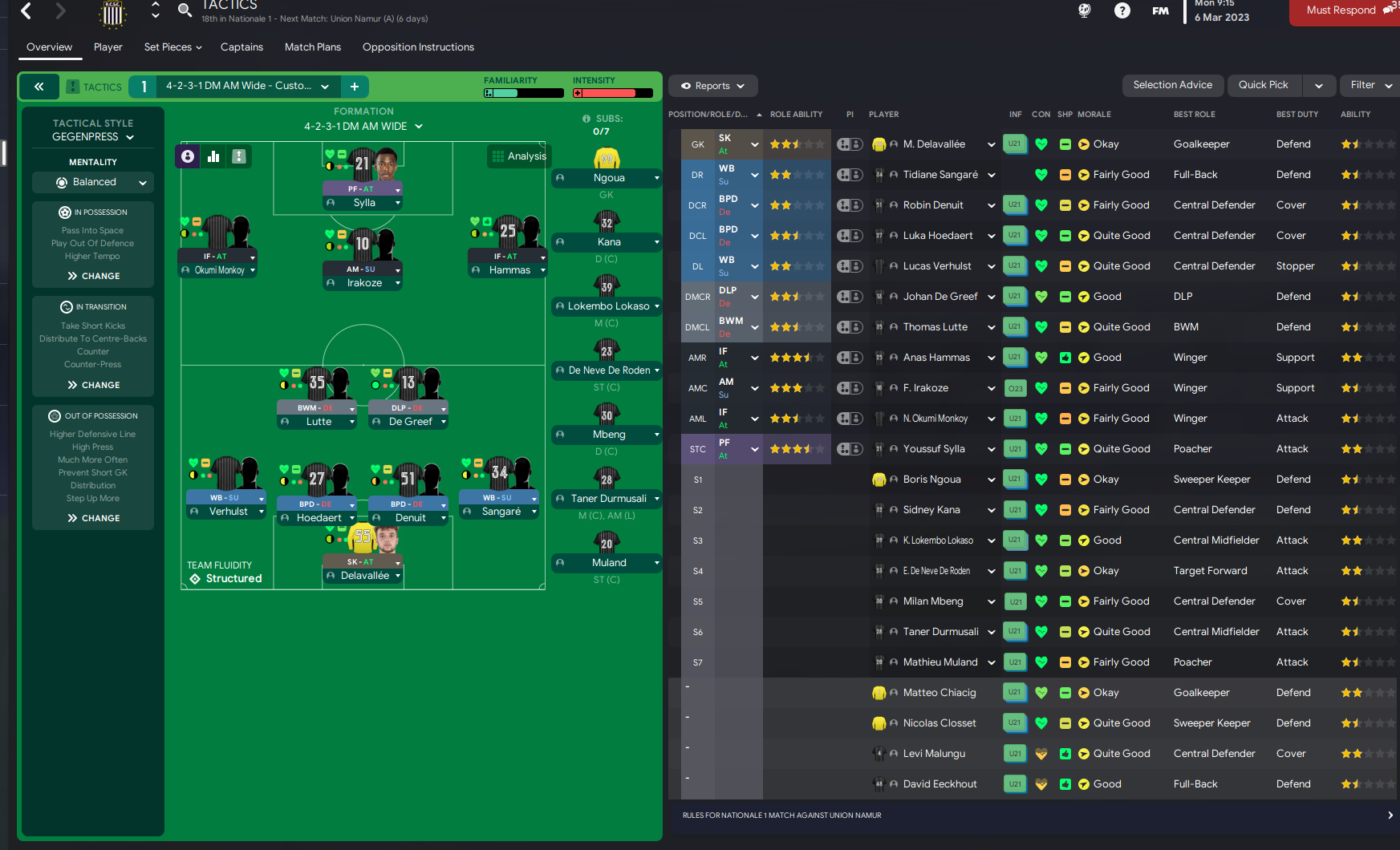
Uploaded Tactic
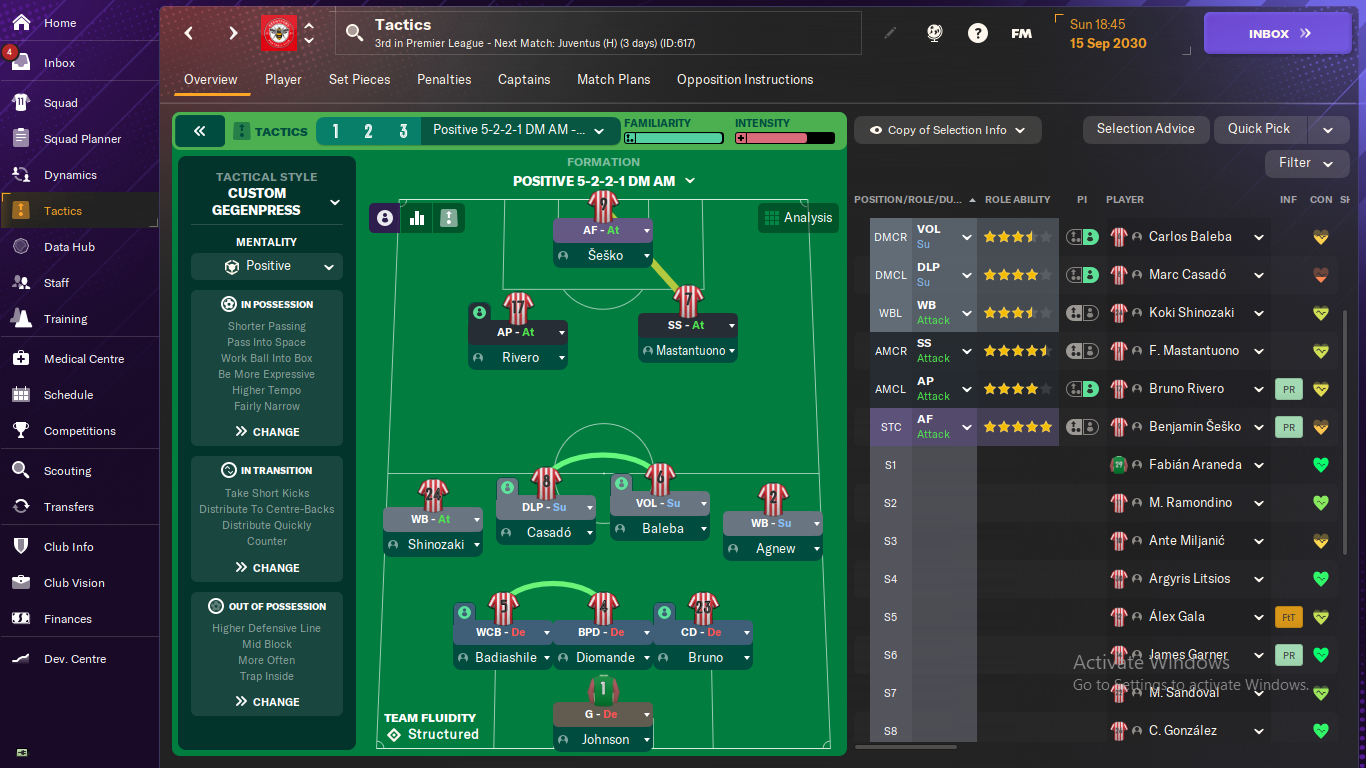
Formation & Style
Tactical Style:Gegenpress
Mentality:Positive
Formation:5-2-2-1 DM AM
Team Fluidity:Structured
In Possession
Shorter Passing
Pass Into Space
Work Ball Into Box
Be More Expressive
Higher Tempo
Fairly Narrow
In Transition
Take Short Kicks
Distribute Quickly
Counter
Out of Possession
Higher Defensive Line
Mid Block
More Often
Trap Inside
Team Shape Without Ball
No team shape without ball data available
Team Shape With Ball
No team shape with ball data available
Key Strengths
Attacking Versatility
The combination of an Advanced Forward supported by two attacking midfielders provides multiple pathways to goal.
Fluid Movement
Players are encouraged to interchange positions, creating unpredictable attacking scenarios for the opposition.
Width and Depth
Having wing-backs in attacking roles ensures width, allowing for crosses or cutbacks that can exploit defensive weaknesses.
Counter-Pressing
The gegenpressing style quickly regains possession after losing the ball, putting immediate pressure on the opponent.
Conflicting Directions
High Defensive Line with Counter-Pressing
A high defensive line can leave space behind, which might contradict the aim to press the opponent quickly. This can be risky against fast attackers.
Fairly Narrow Shape with Wing-Backs
The fairly narrow offensive structure might underutilize the wing-backs, who are pivotal in creating width.
Short Passing with High Tempo
A high tempo may lead to rushed passes that could result in turnovers, especially with a short passing instruction.
Trap Inside and Wing Play
Trapping inside negates the effectiveness of wide players and wing-backs, risking overcrowding in central areas.
Tactical Suggestions
Consider Lowering Defensive Line
A slightly lower defensive line could mitigate the risk of being exposed to fast counter-attacks.
Utilize Wing-Backs Effectively
Encouraging wing-backs to provide width can alleviate pressure on central playmakers and open up space.
Balanced Passing Style
Mixing short and direct passing may help maintain tempo while reducing the risk of turnovers.
Adjust Trap Inside Instruction
Consider altering the 'trap inside' to allow wing-backs more freedom to exploit the flanks.
Ask Questions About Your Lineup
Related Tactics
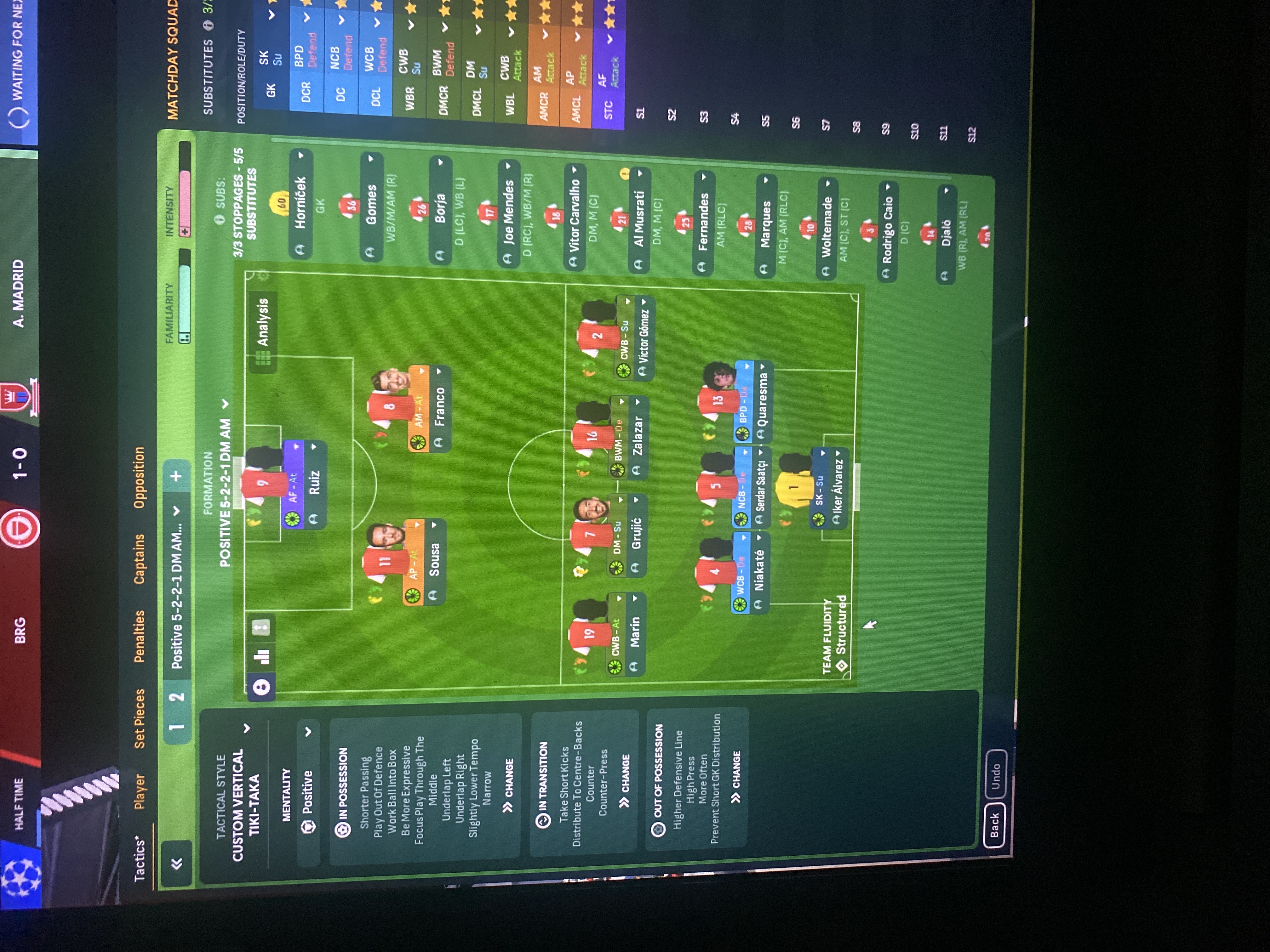
Tiki-Taka 5-2-2-1 DM AM
Tiki-Taka
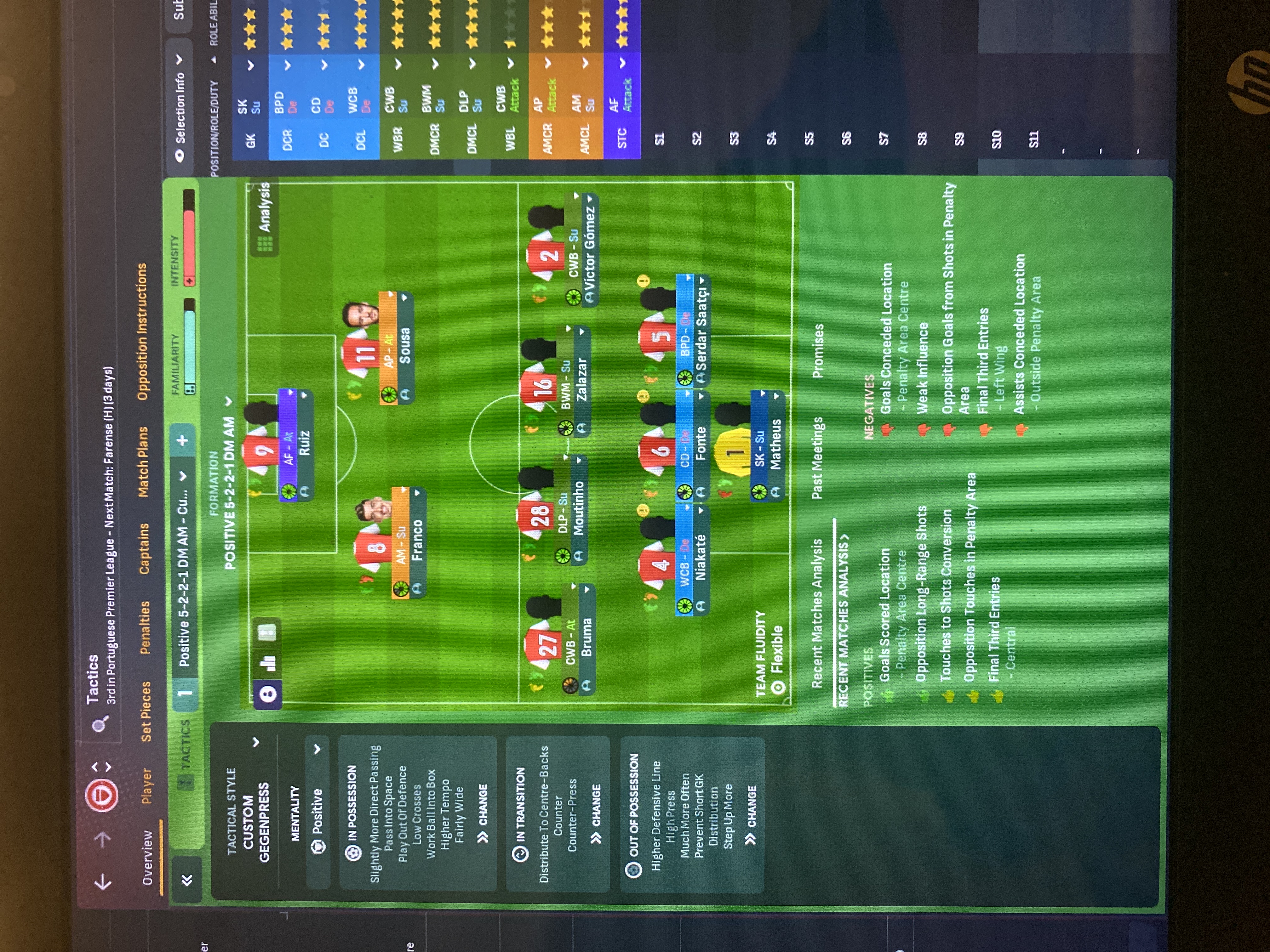
Gegenpress 5-2-2-1 DM AM
Gegenpress
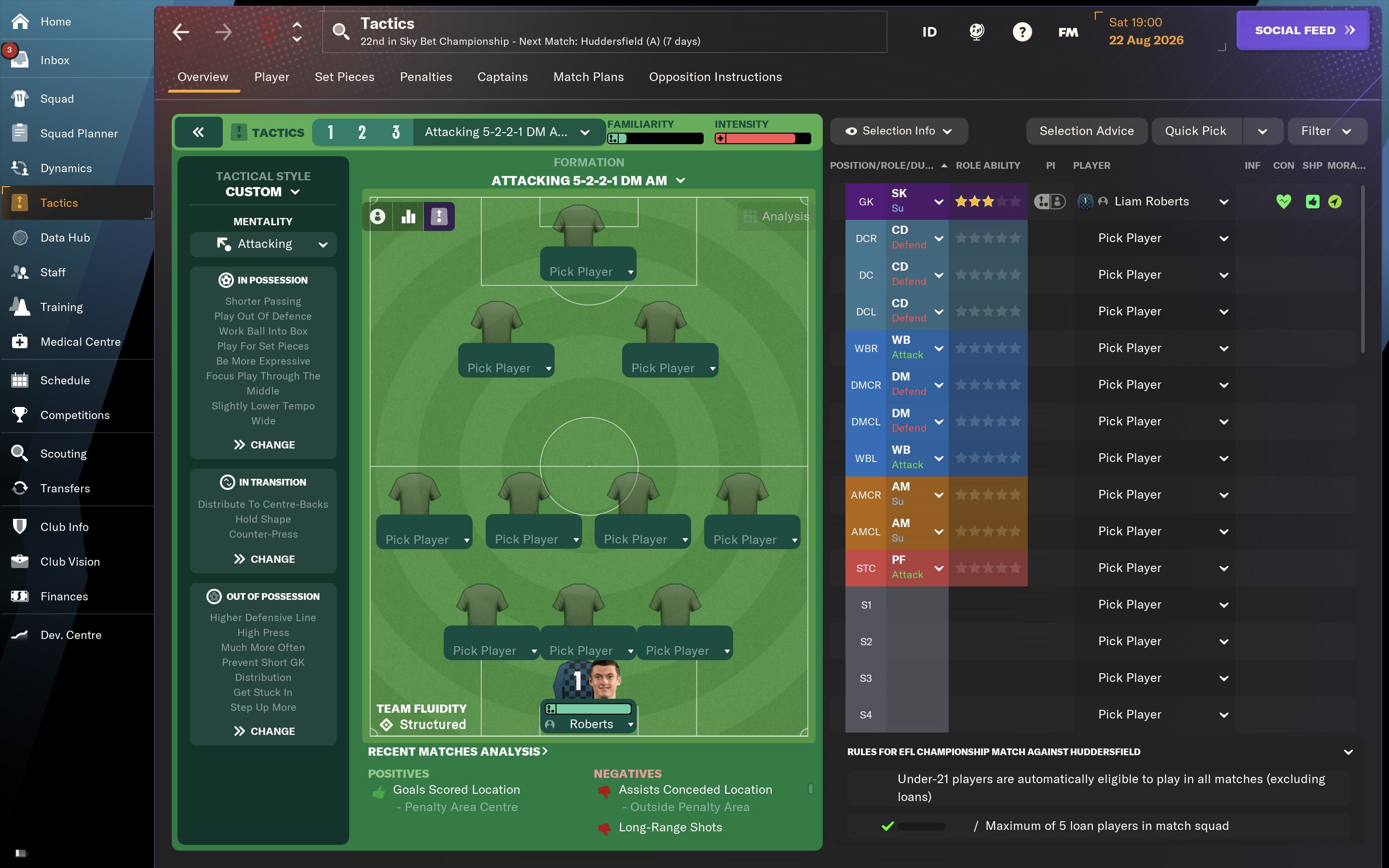
5-2-2-1 DM AM Formation
Custom
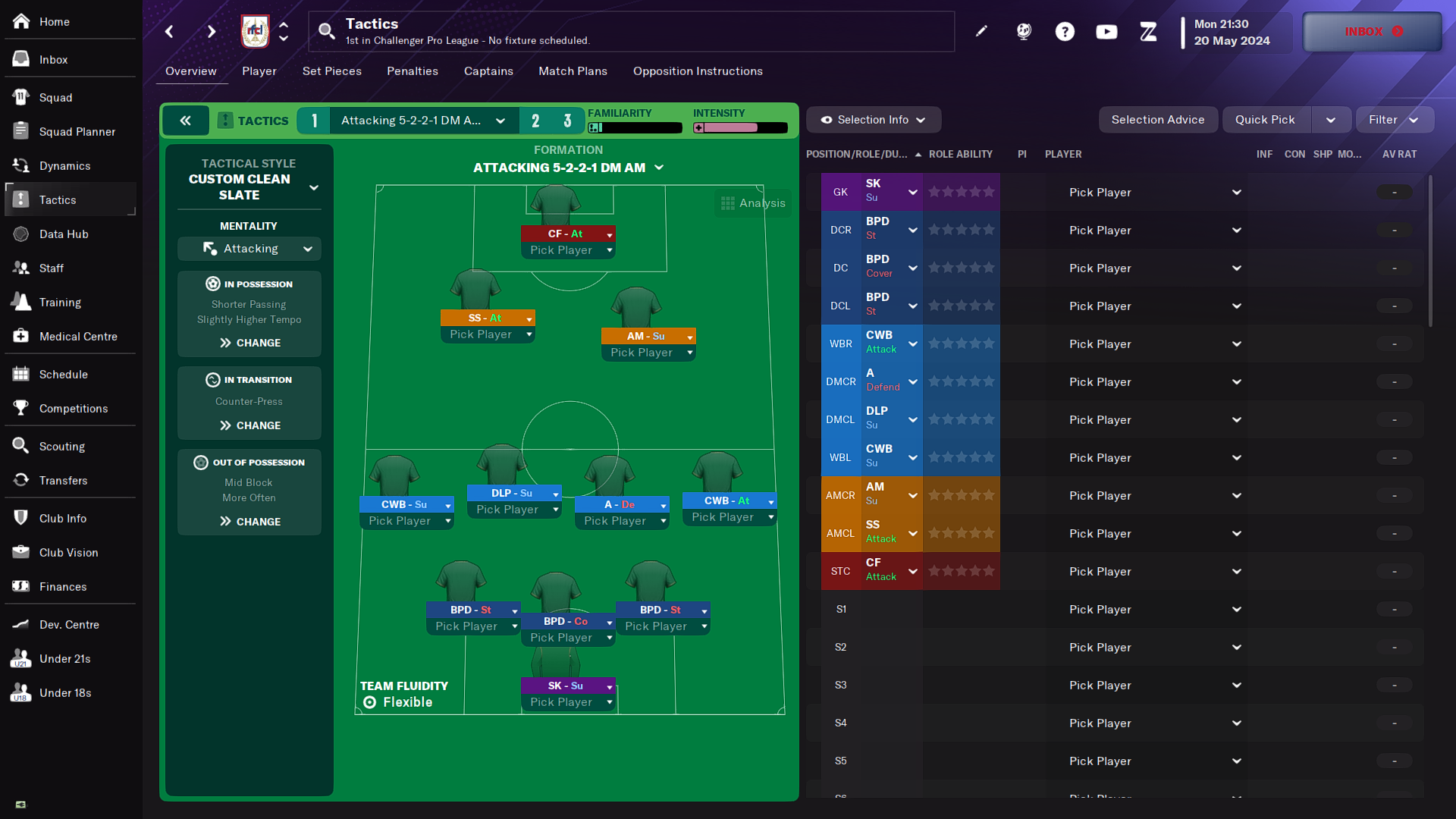
5-2-2-1 DM AM Formation
Custom Clean Slate
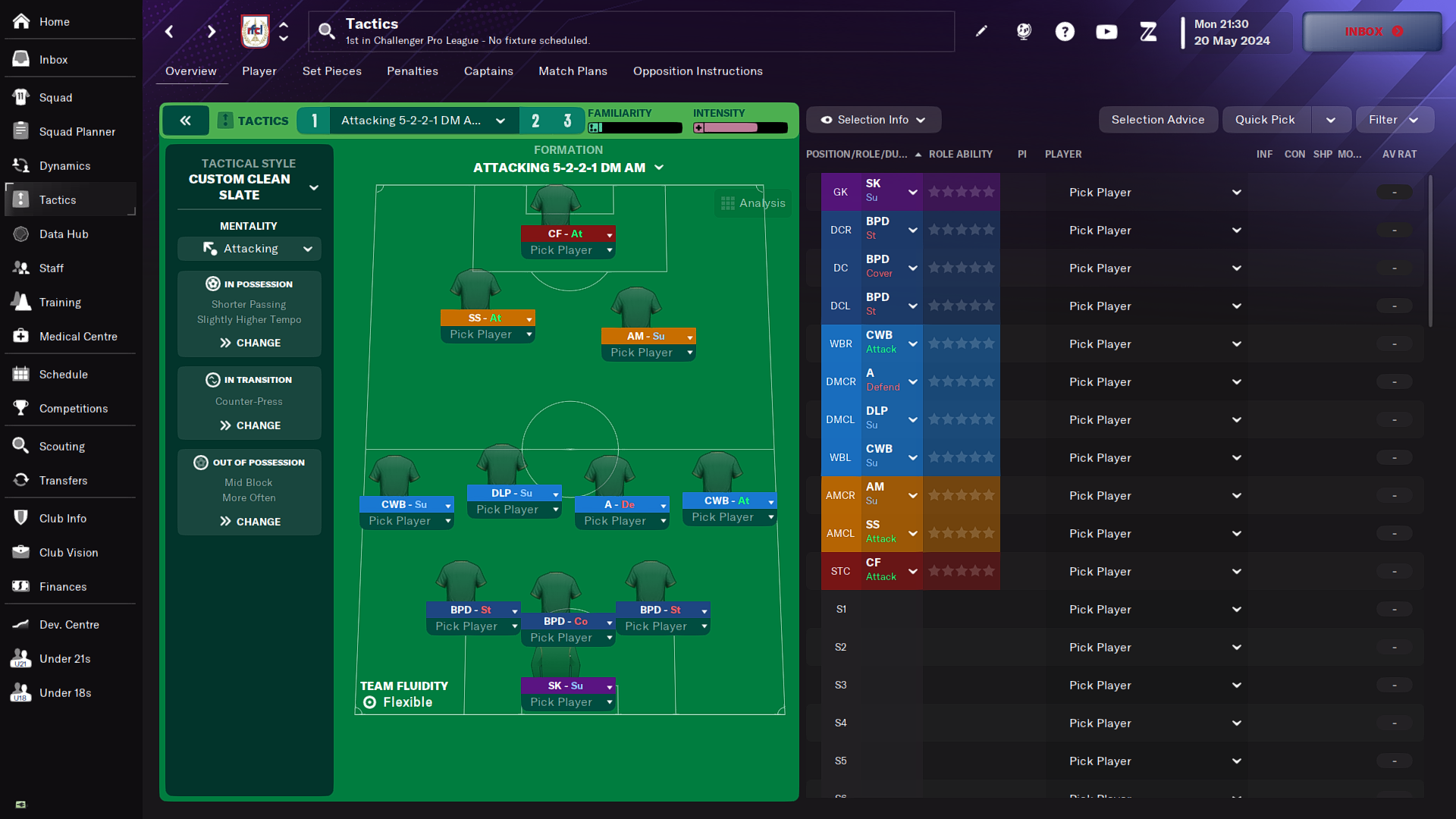
5-2-2-1 DM AM Formation
Custom Clean Slate
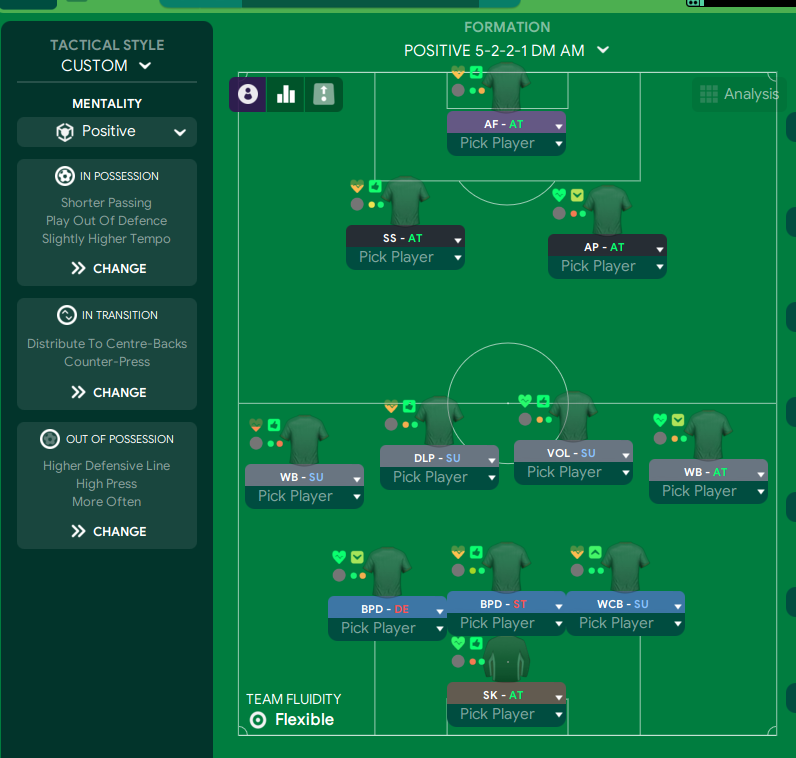
5-2-2-1 DM AM Formation
Custom
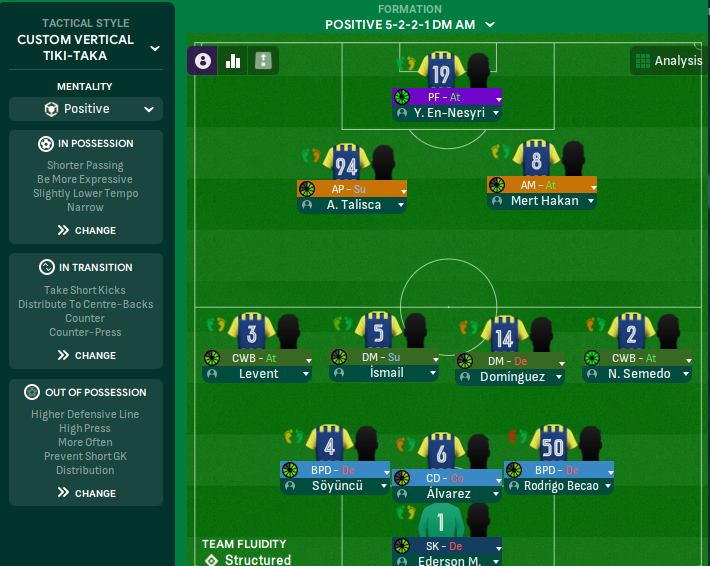
Vertical Tiki-Taka 5-2-2-1 DM AM
Custom Vertical Tiki-Taka
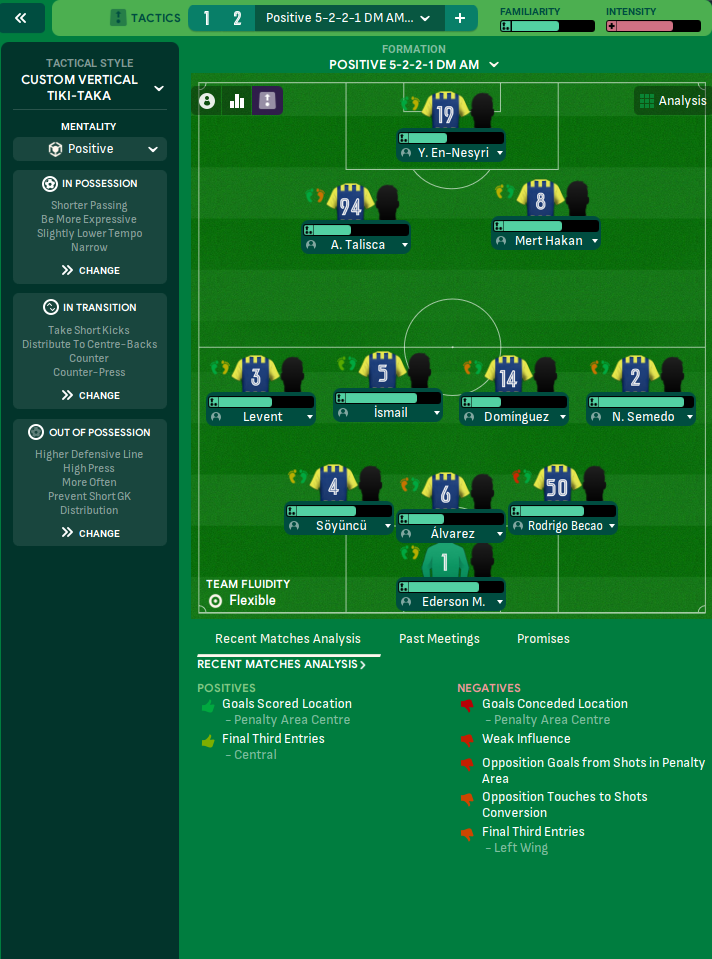
Vertical Tiki-Taka 5-2-2-1 DM AM
Custom Vertical Tiki-Taka
More Gegenpress tactics
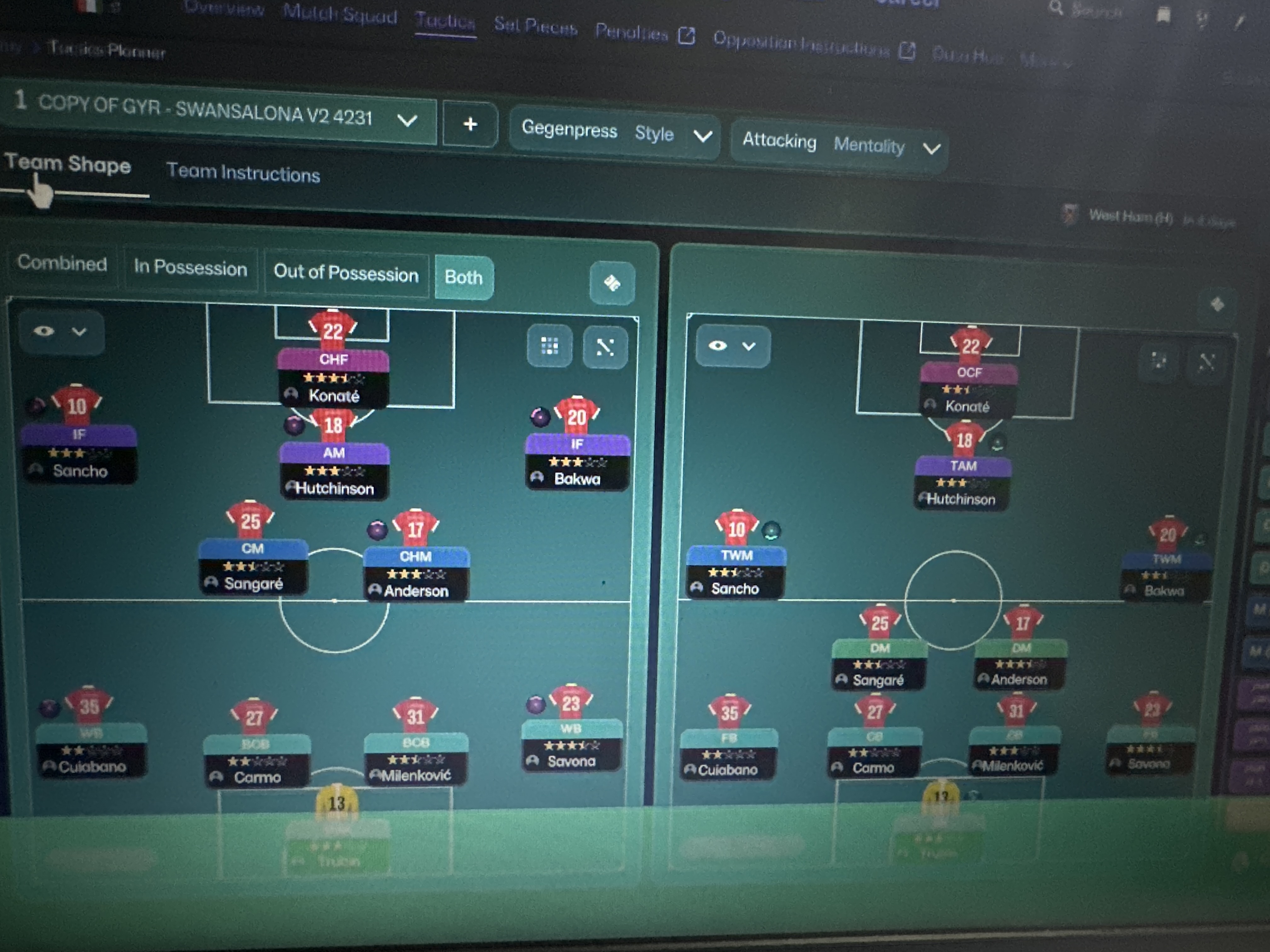
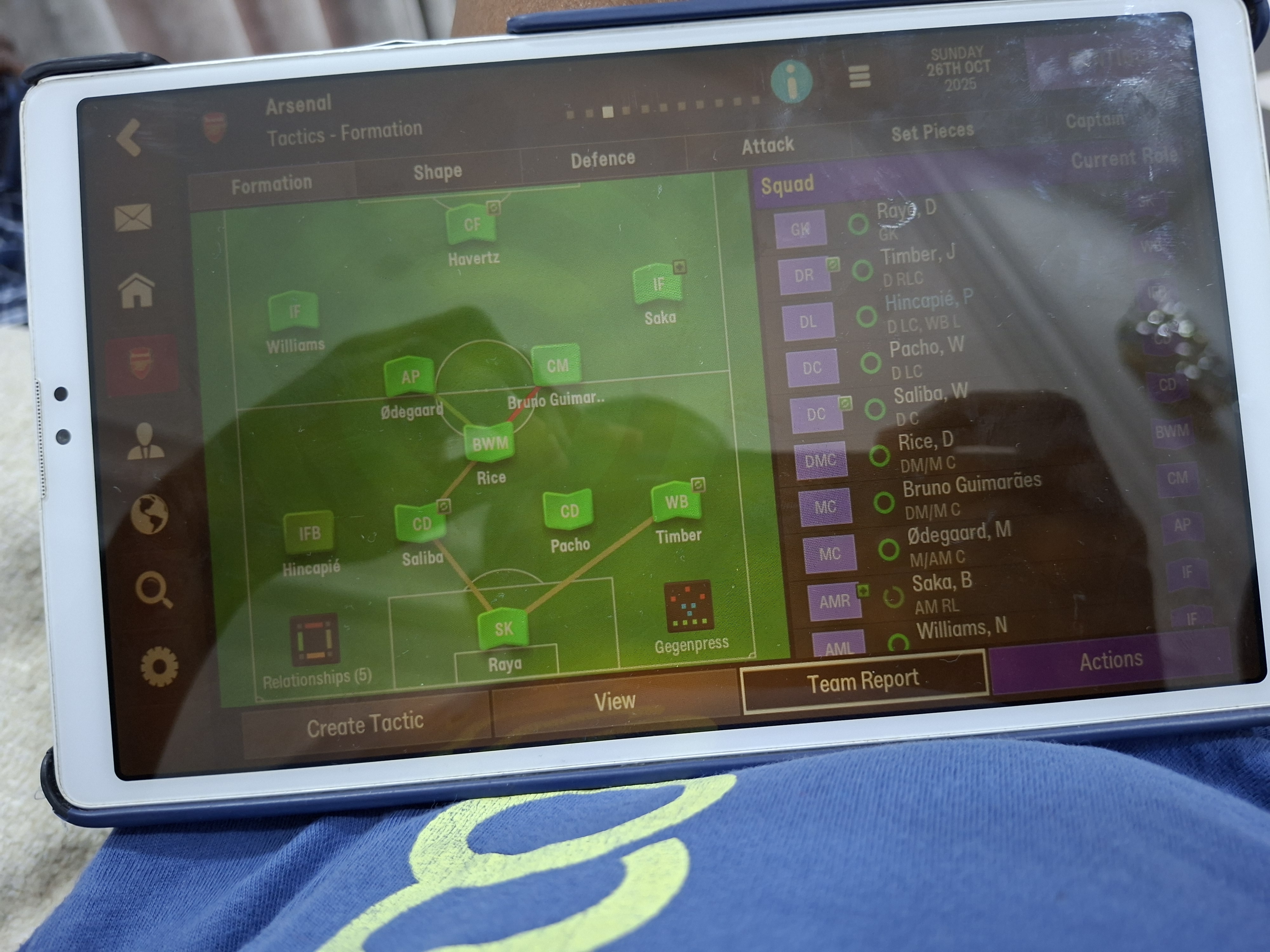
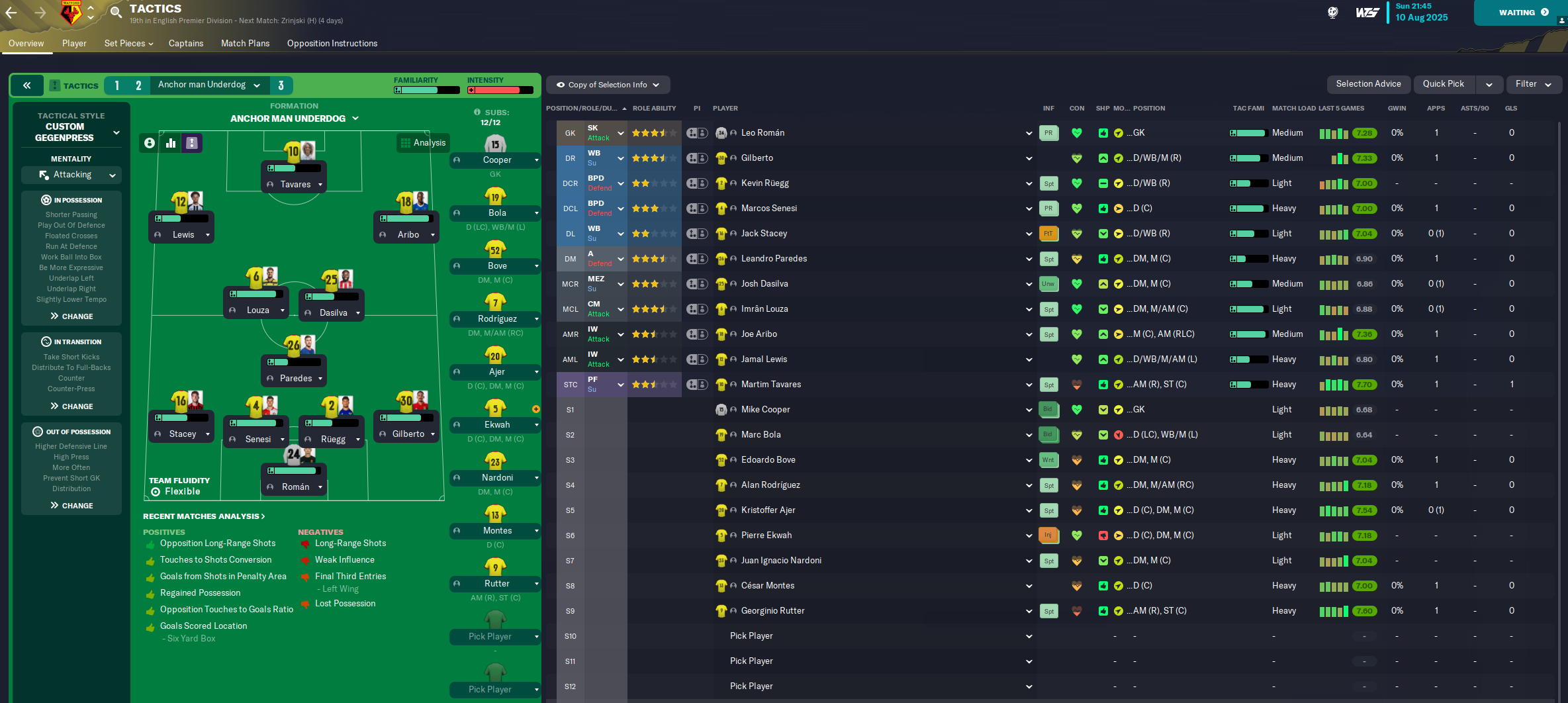
Guides for this formation
The tactical theory behind the 5-2-2-1 DM AM: roles, instructions, and the trade-offs that decide whether the system holds up.