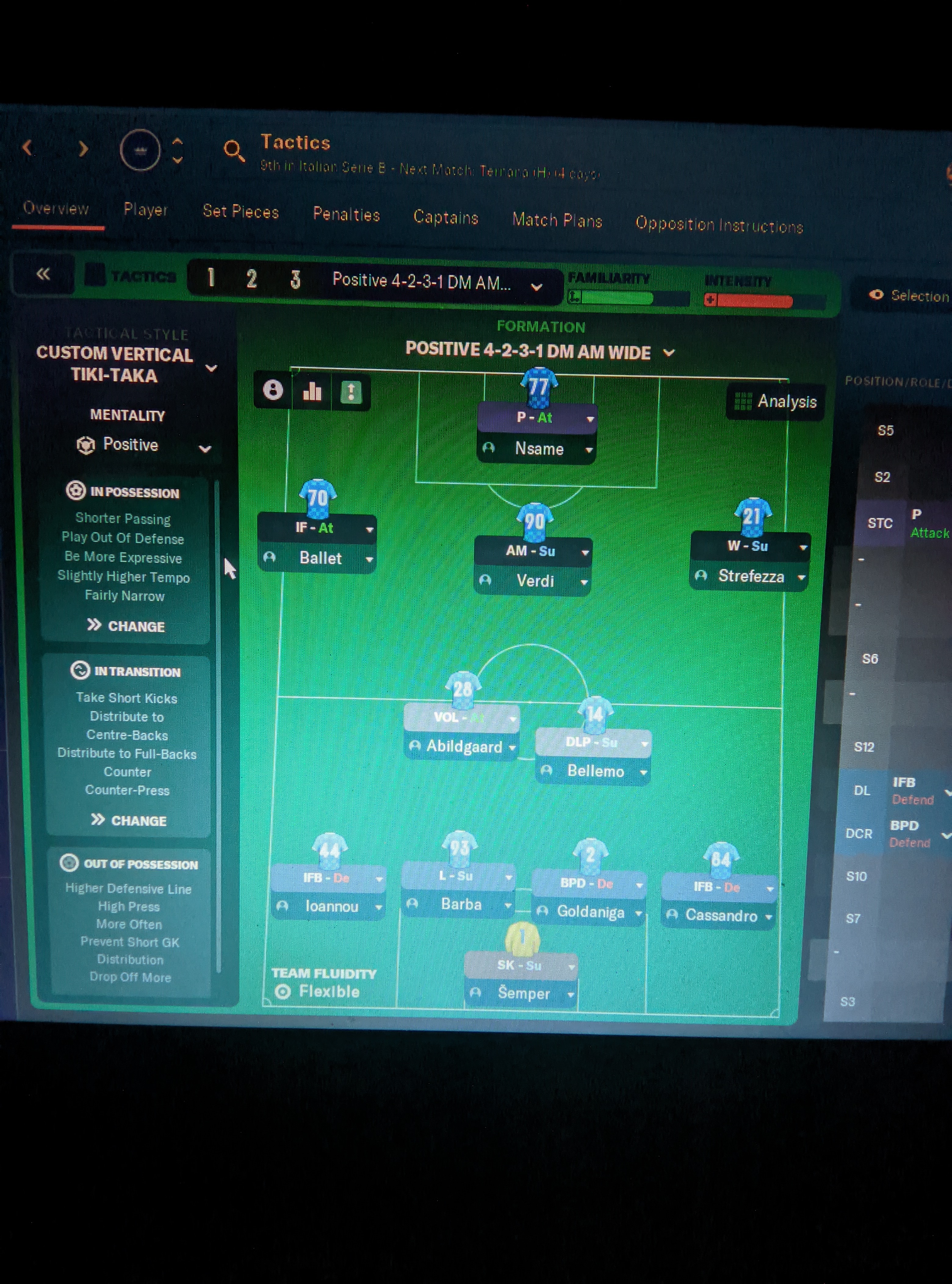
Uploaded Tactic
Formation & Style
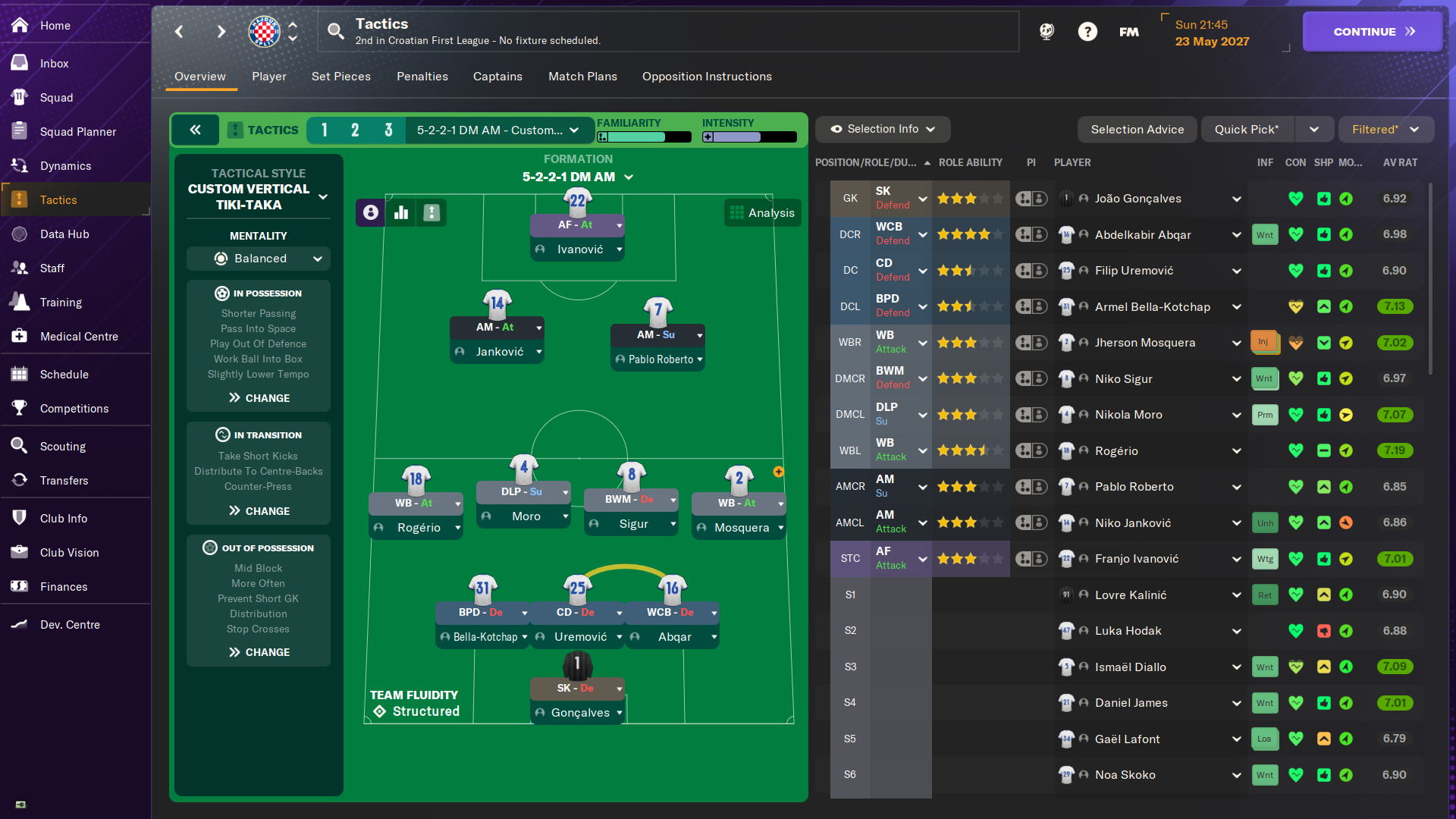
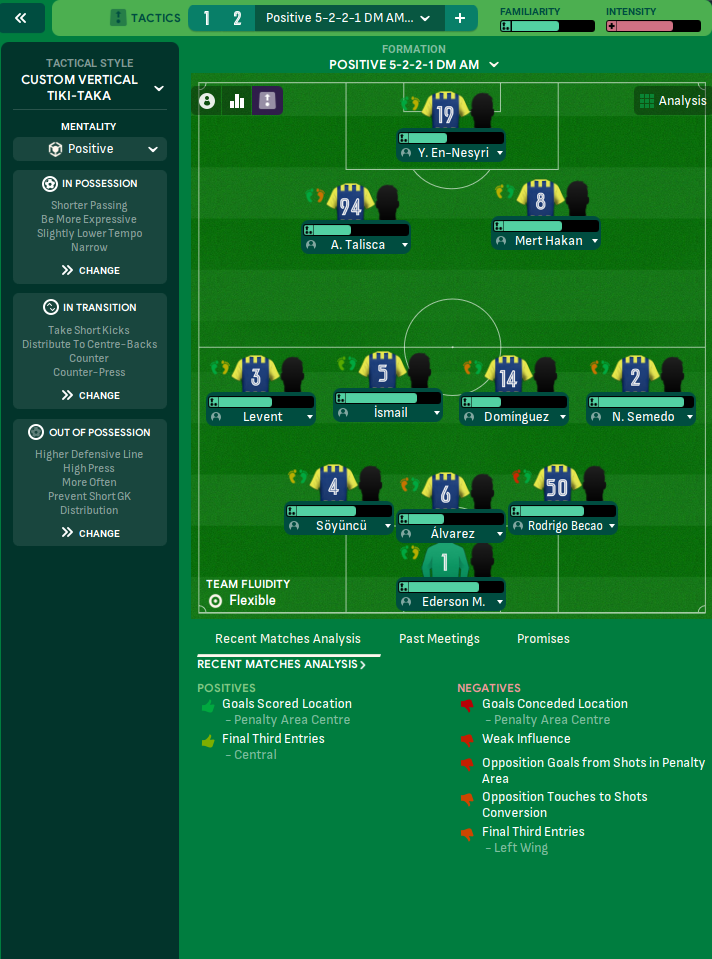
Tactical Style:Custom Vertical Tiki-Taka
Mentality:Balanced
Formation:5-2-2-1 DM AM
Team Fluidity:Structured
In Possession
Shorter Passing
Pass Into Space
Play Out Of Defence
Work Ball Into Box
Slightly Lower Tempo
In Transition
Take Short Kicks
Distribute To Centre-Backs
Counter-Press
Out of Possession
Mid Block
More Often
Prevent Short GK Distribution
Stop Crosses
Team Shape Without Ball
No team shape without ball data available
Team Shape With Ball
No team shape with ball data available
Key Strengths
Strong Defensive Shape
The 5-man defense provides stability and makes it difficult for the opposition to penetrate.
Fluid Attacking Movements
The combination of wing-backs and attacking midfielders allows for overlap and creative attacks from different angles.
Versatile Midfield Control
The DLP and BWM in midfield ensure control of the game, with options for both defensive coverage and progressive passing.
Counter-Pressing Ability
Ability to win the ball back quickly after losing it, putting immediate pressure on the opposition.
Conflicting Directions
Potential Overlap in Wing-Backs
With both wing-backs attacking, there might be times where the width is compromised, leading to gaps in defense.
Pressing vs. Defensive Stability
Counter-pressing can conflict with a structured defensive setup, risking players being out of position.
Midfield Balance
The balance between the BWM and DLP can be affected if teammates occupy the same spaces, leading to congestion in midfield.
Player Condition Management
Monitoring player fitness is crucial, especially for the wing-backs who might tire due to their dual roles.
Tactical Suggestions
Adjust Team Width
Consider adjusting the team width to avoid crowding in the middle and create better spacing for the attacking moves.
Consider a More Fluid Structure
Transitioning to a more fluid style could enhance attacking options and player interchange.
Rotation in Wing-Back Roles
Rotate the wing-backs through tactical substitutions to maintain fresh legs and provide dynamic play.
Increase Forward Runs
Encourage more forward runs from midfield to support the attack and create overloads in the final third.
Ask Questions About Your Lineup
Related Tactics
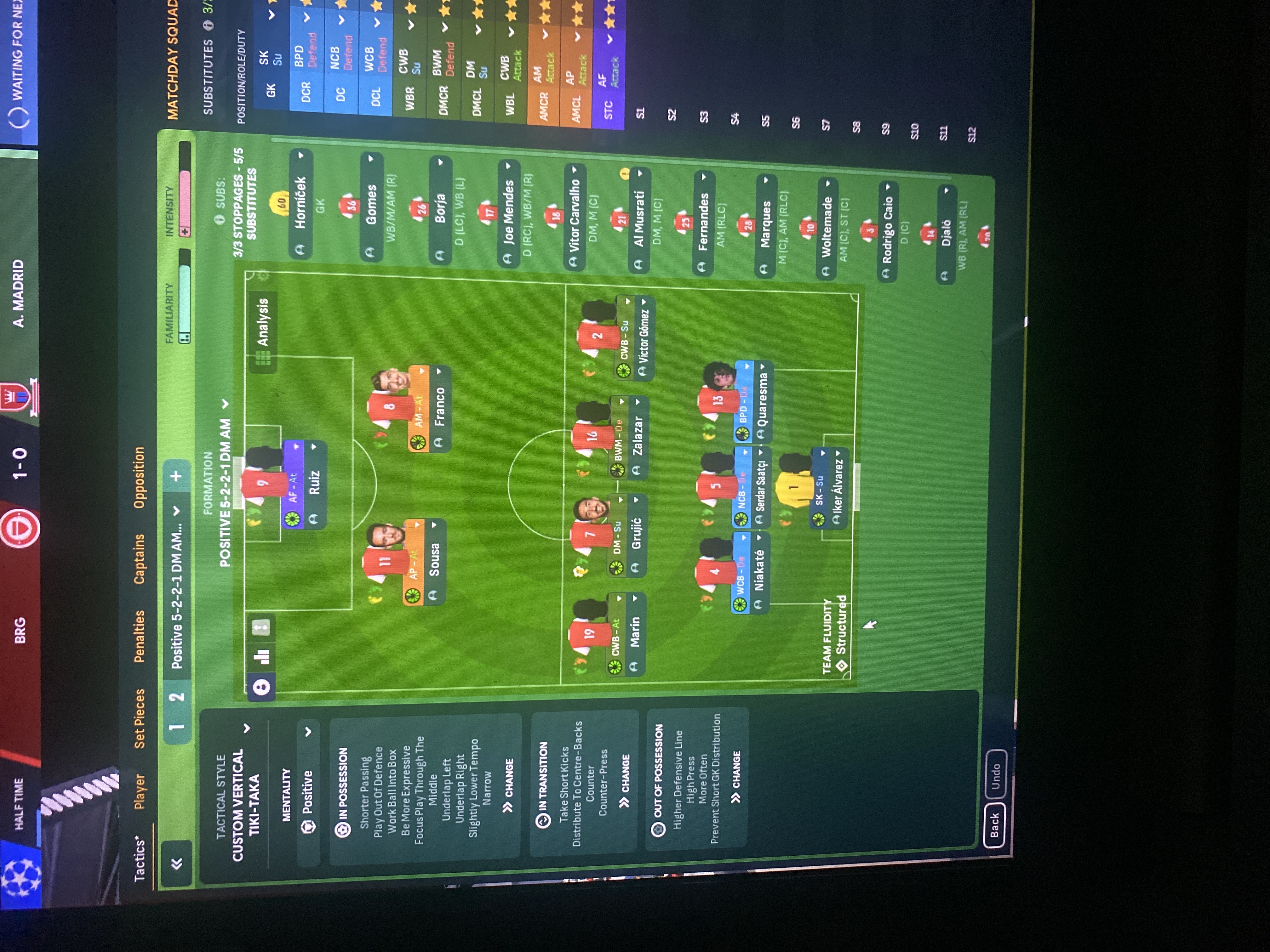
Tiki-Taka 5-2-2-1 DM AM
Tiki-Taka
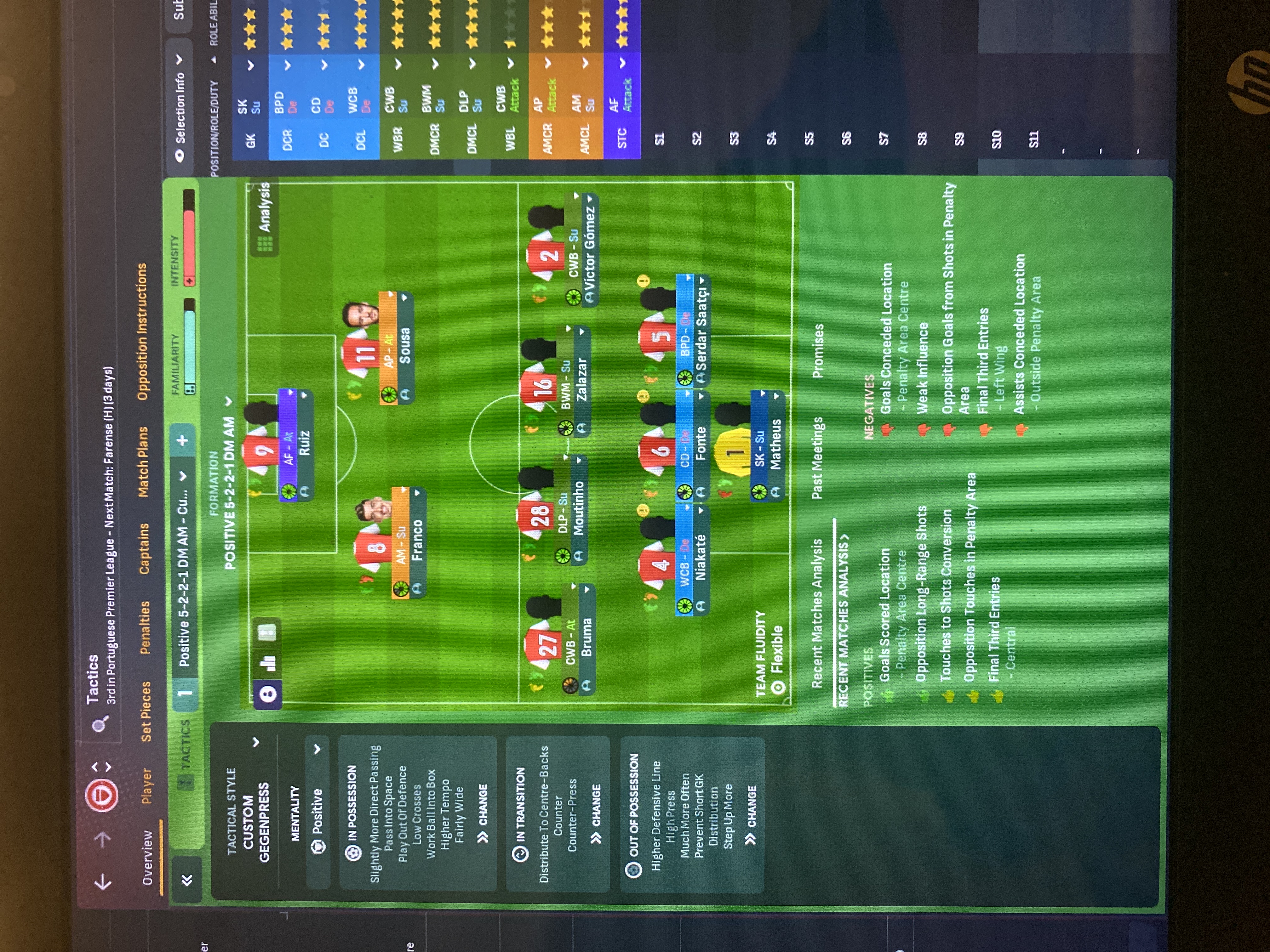
Gegenpress 5-2-2-1 DM AM
Gegenpress
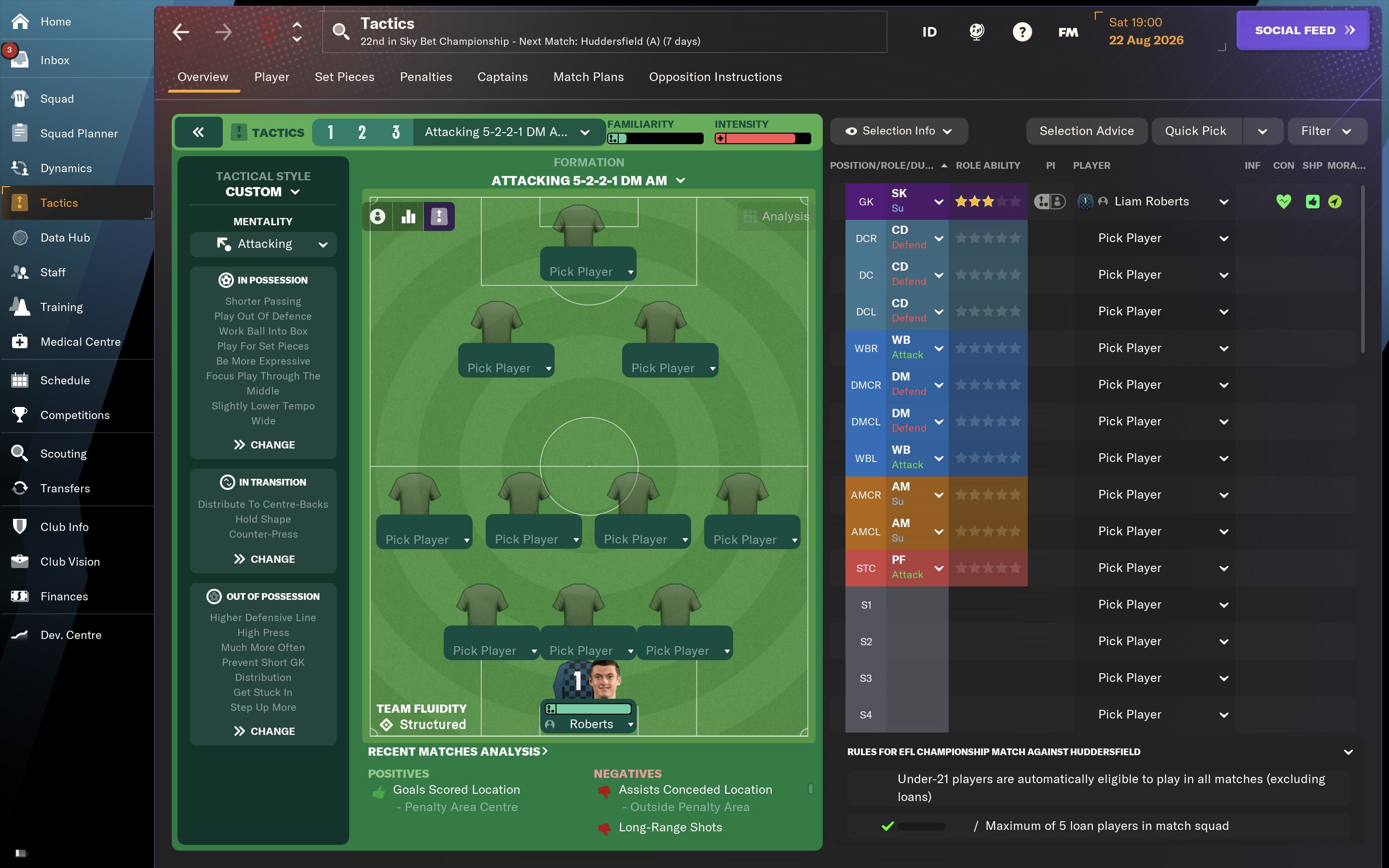
5-2-2-1 DM AM Formation
Custom
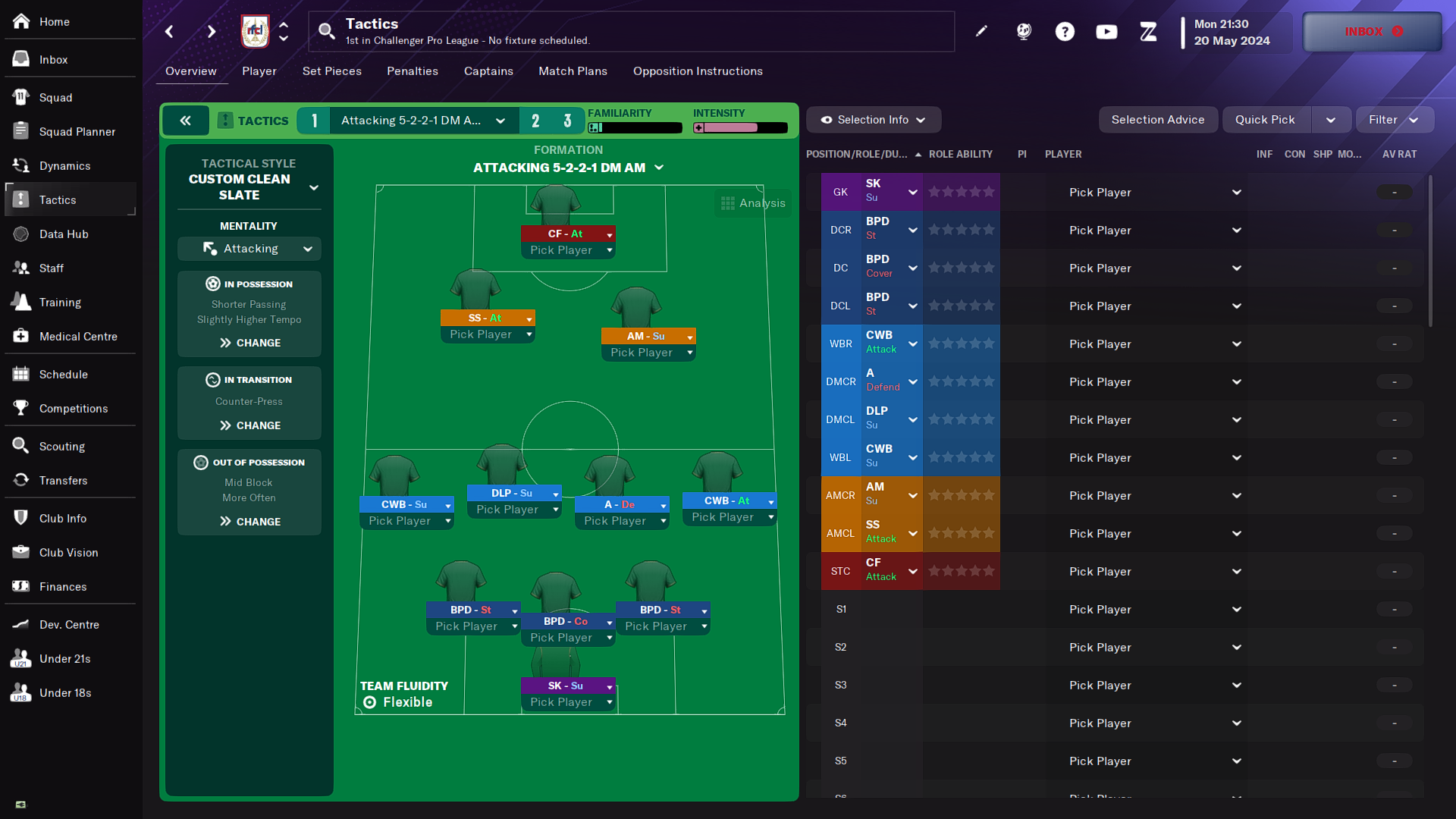
5-2-2-1 DM AM Formation
Custom Clean Slate
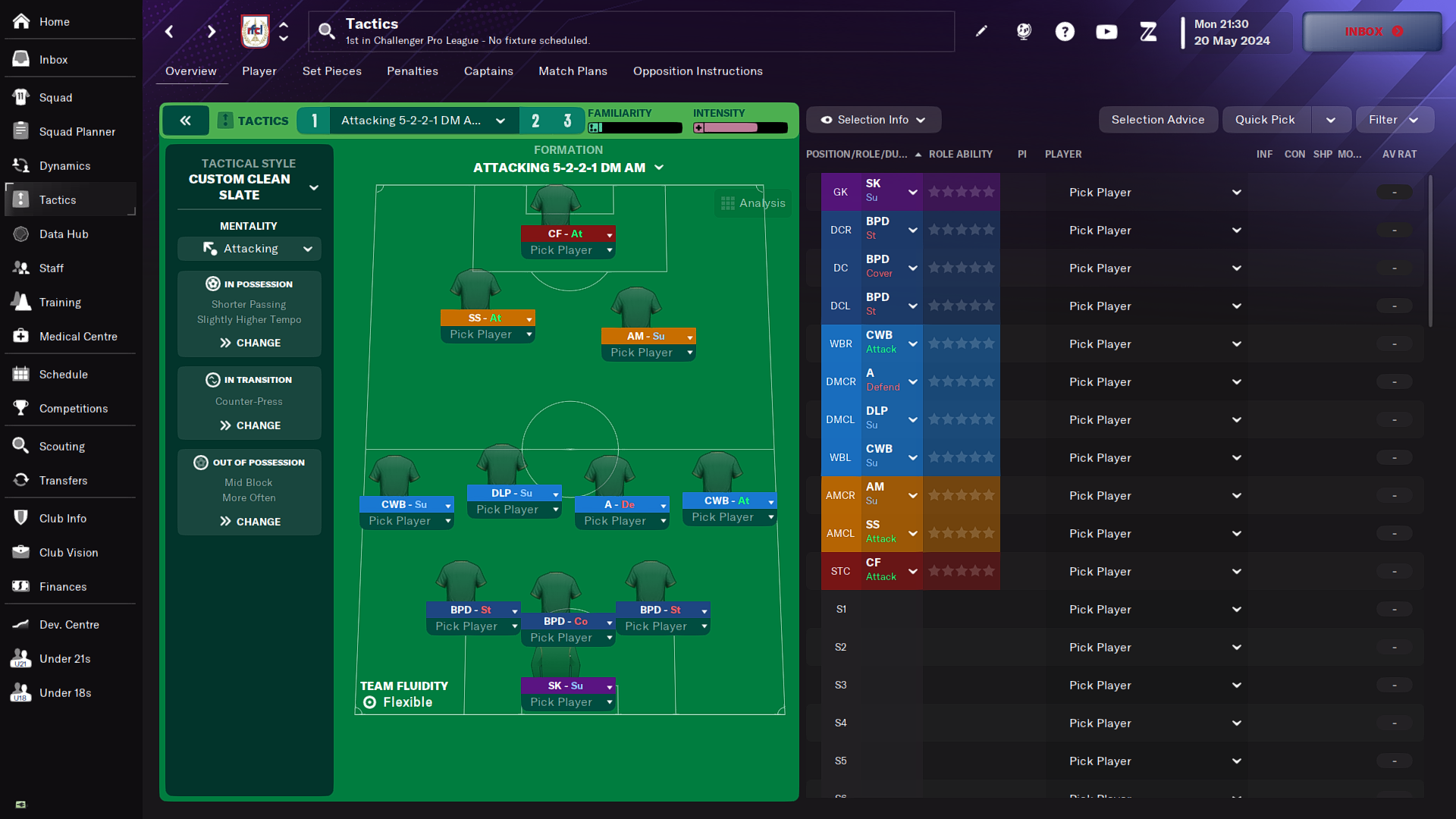
5-2-2-1 DM AM Formation
Custom Clean Slate
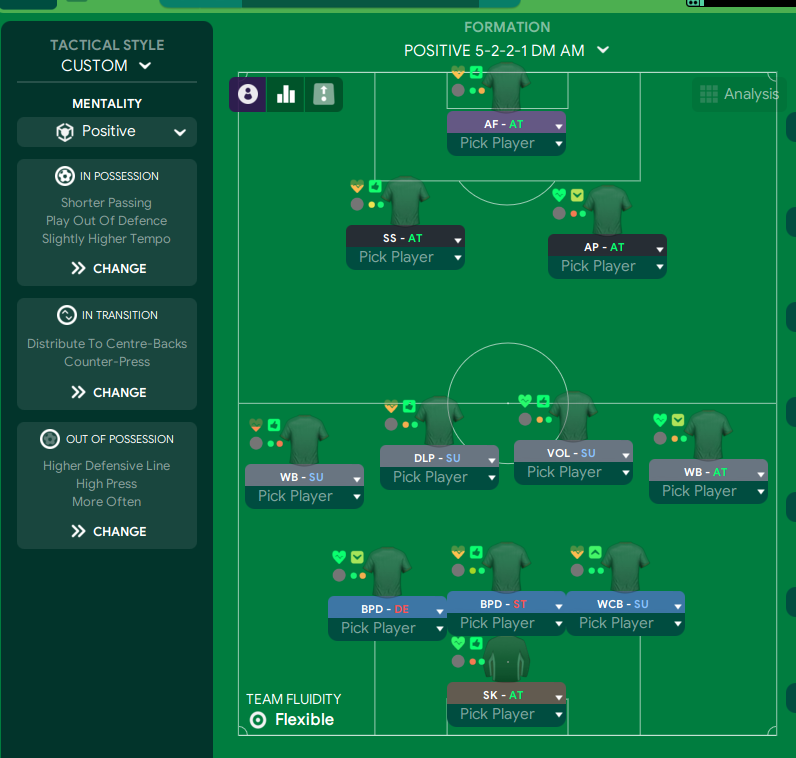
5-2-2-1 DM AM Formation
Custom
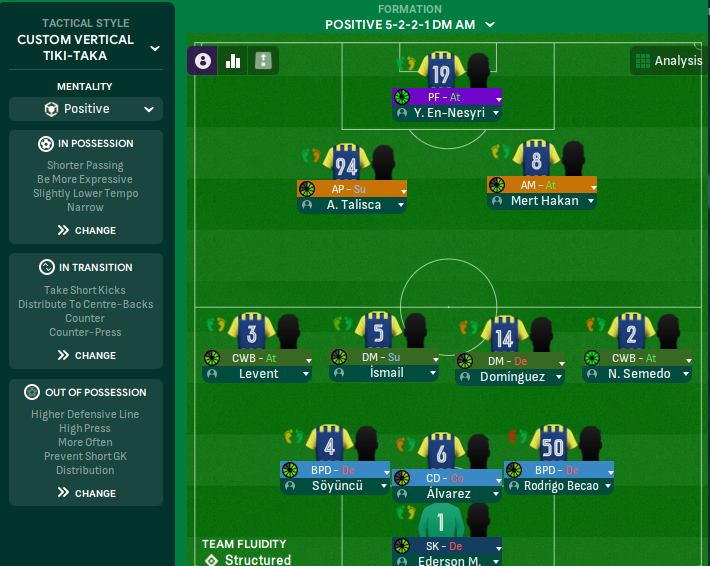
Vertical Tiki-Taka 5-2-2-1 DM AM
Custom Vertical Tiki-Taka
Vertical Tiki-Taka 5-2-2-1 DM AM
Custom Vertical Tiki-Taka
More Custom Vertical Tiki-Taka tactics
Guides for this formation
The tactical theory behind the 5-2-2-1 DM AM: roles, instructions, and the trade-offs that decide whether the system holds up.