Uploaded Tactic
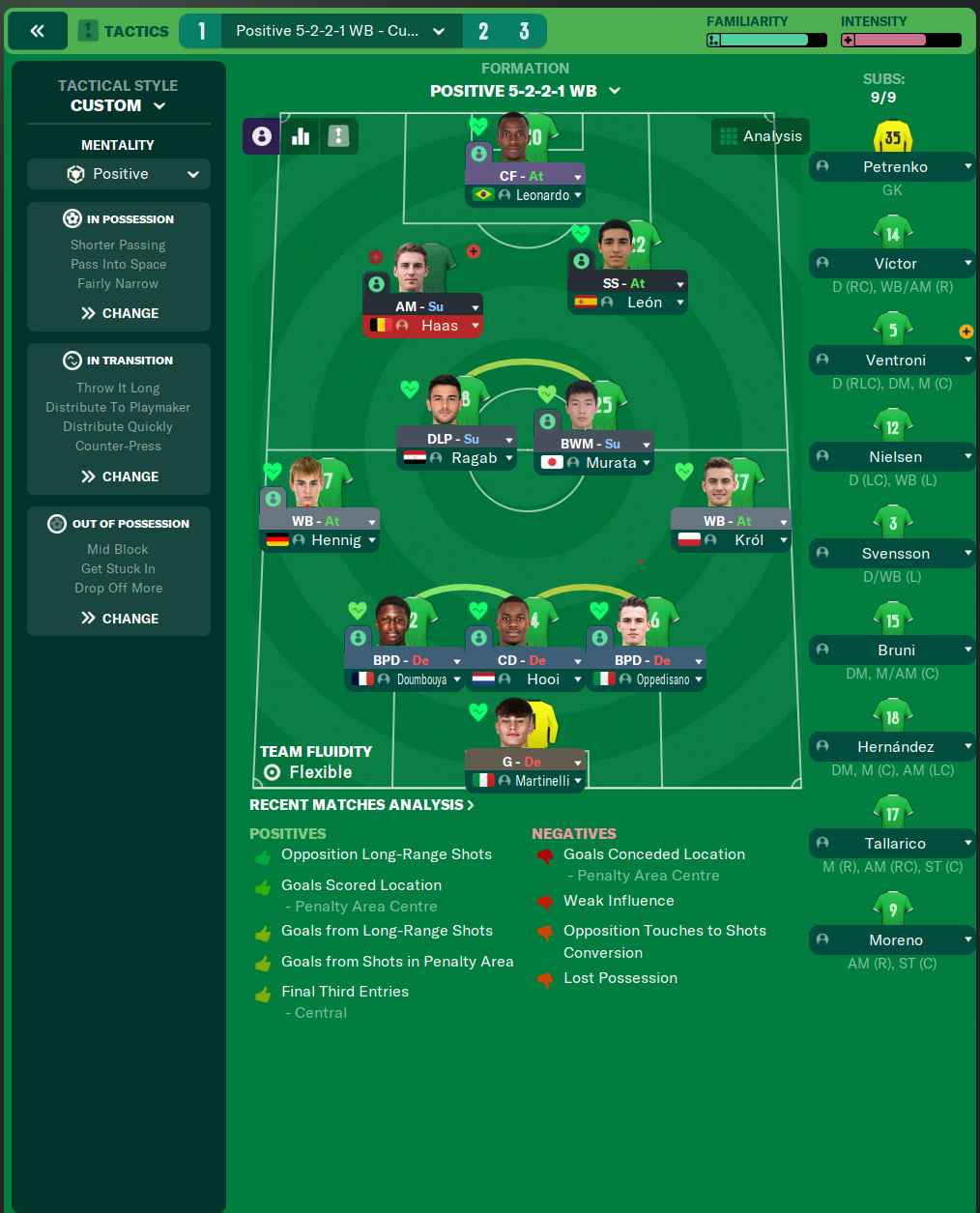
Formation & Style
Tactical Style:Custom
Mentality:Positive
Formation:5-2-2-1 WB
Team Fluidity:Flexible
In Possession
Shorter Passing
Pass Into Space
Fairly Narrow
In Transition
Throw It Long
Distribute To Playmaker
Distribute Quickly
Counter-Press
Out of Possession
Mid Block
Get Stuck In
Drop Off More
Team Shape Without Ball
Shape:Compact Mid Block
Description:The team maintains a compact shape, limiting space for opponents in the midfield and defensive zones.
Evidence:Mid Block with 'Get Stuck In' highlights a desire to engage the opposition.
Team Shape With Ball
Shape:Fluid Attack with Wing Play
Description:Using wing-backs to stretch the play, the attack becomes dynamic with various options for through-balls.
Evidence:WB-At roles suggest that the wing-backs are critical in both overlapping and providing width.
Phase Description
Attacking Play
The team relies on shorter passes and creating space for attacking runs, utilizing width provided by wing-backs.
Defensive Transition
Quick counter-pressing is employed to regain possession, with a focus on short distributions to the playmaker.
Main Focus
To control possession through the midfield and exploit spaces created by the attacking dynamics.
Key Strengths
Strong Central Play
The DLP and BWM provide control in midfield allowing for effective distribution and ball retention.
Attacking Versatility
Multiple attacking threats from various positions create unpredictable attacking movements.
Defensive Structure
Utilizing three central defenders provides solidity against counter-attacks.
Conflicting Directions
Issues with Penetrative Play
Fairly narrow attacking shape may reduce spaces exploited by attacking players.
Vulnerability to Wing Attacks
Wing-backs pushed high may create gaps in defence during transitions.
Inconsistency in Goals Conceded
Goals allowed from the penalty area indicate potential defensive lapses.
Tactical Suggestions
Increase Width in Attack
Employ wider attacking strategies to stretch rival defences.
Reconsider Defensive Stability
Consider adjusting roles of wing-backs to provide more cover during transitions.
Explore Greater Fluidity
Potentially shifting to a more fluid attacking style could enhance creativity.
Ask Questions About Your Lineup
Related Tactics
Guides for this formation
The tactical theory behind the 5-2-2-1 WB: roles, instructions, and the trade-offs that decide whether the system holds up.