Uploaded Tactic
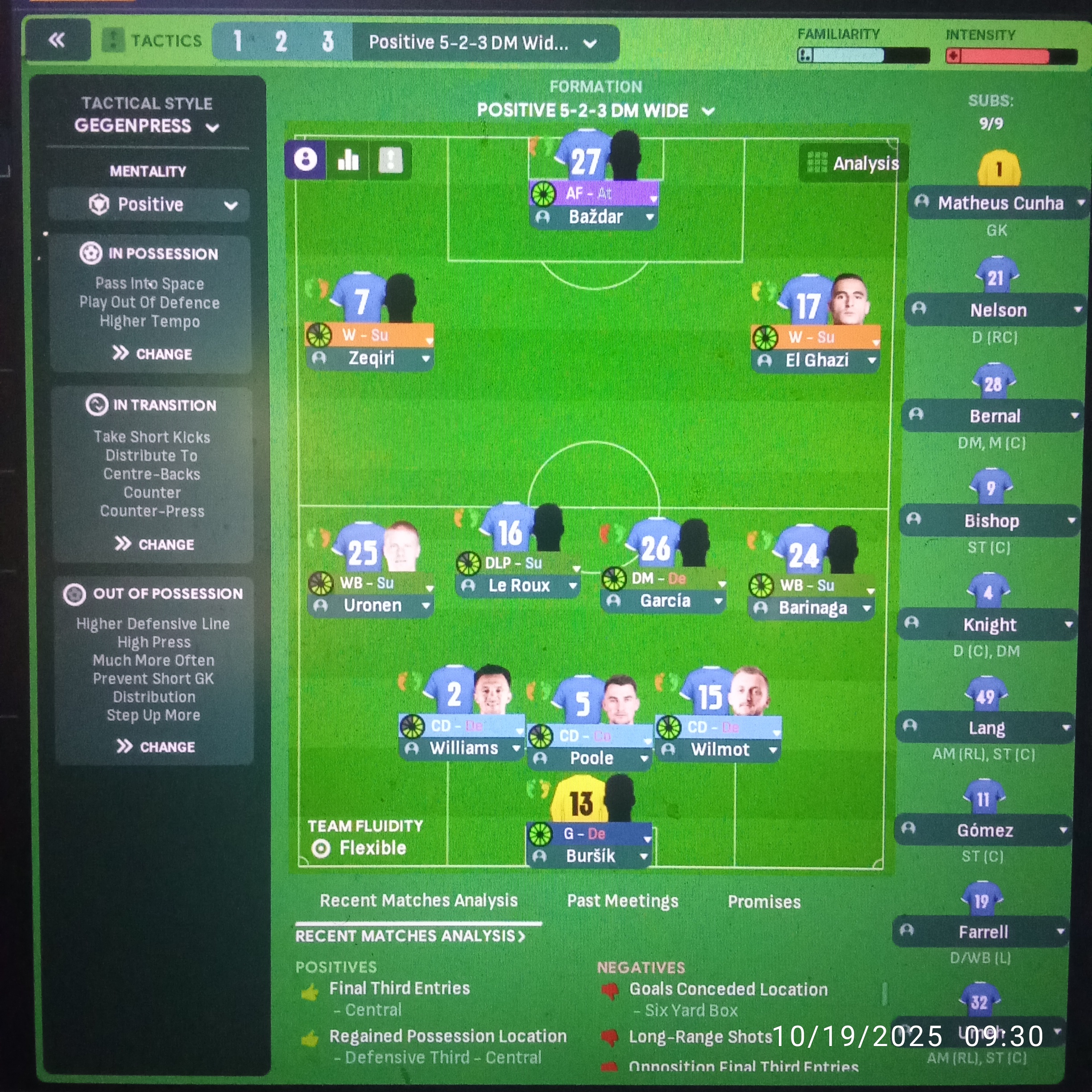
Formation & Style
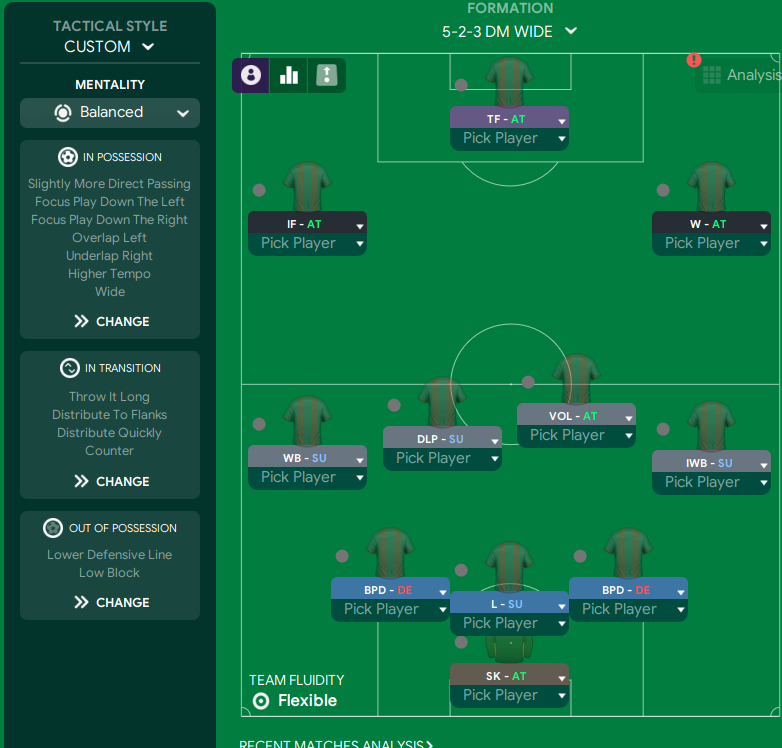
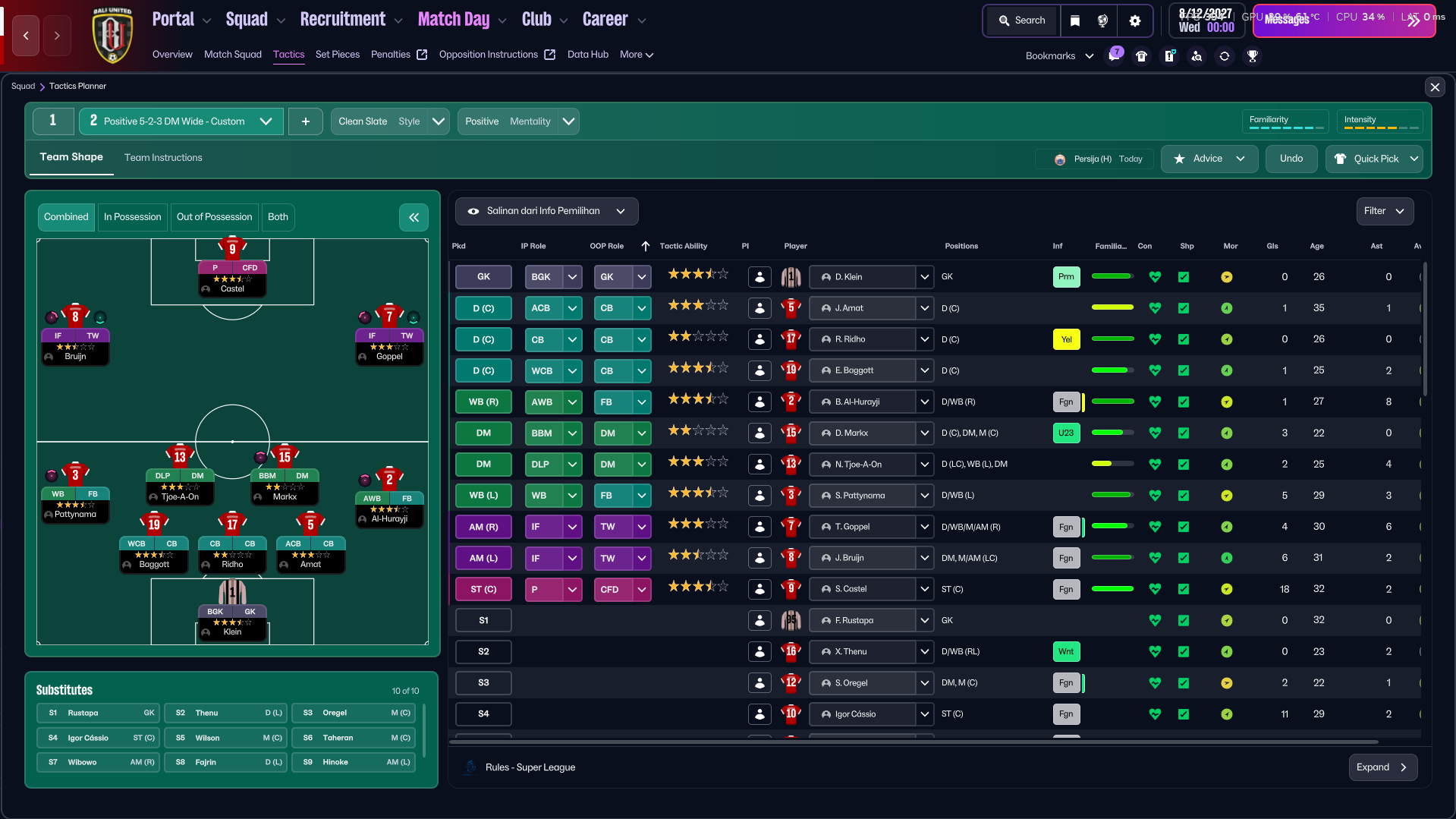
Tactical Style:Custom
Mentality:Balanced
Formation:5-2-3 DM Wide
Team Fluidity:Flexible
In Possession
Slightly More Direct Passing
Focus Play Down The Left
Focus Play Down The Right
Overlap Left
Underlap Right
Higher Tempo
Wide
In Transition
Throw It Long
Distribute To Flanks
Distribute Quickly
Counter
Out of Possession
Lower Defensive Line
Low Block
Team Shape Without Ball
No team shape without ball data available
Team Shape With Ball
No team shape with ball data available
Key Strengths
Versatile Attacking Options
The use of a target forward, inverted forward, and wingers provides varied attacking threats, making it hard for opponents to predict the play.
Solid Defensive Structure
With a back five, the formation maintains a strong defensive shape, allowing the team to absorb pressure effectively.
Fluid Midfield Dynamics
Roles like Volante and Deep-Lying Playmaker ensure fluid transitions between defense and attack, enhancing link-up play.
Width in Attack
Utilizing wingers and overlapping wing-backs stretches the opposition, creating space in central areas.
Conflicting Directions
Target Forward vs. Attacking Duties
While the Target Forward is meant to hold up play, having all attacking players around him also aiming to attack could lead to congestion in the final third.
Defensive Balance with High Tempo
A higher tempo can lead to rushed play, which may compromise the defensive shape established by the low block.
Inverted Wing Back vs. Wider Play
The inverted wing back generally requires more space to operate, conflicting with the emphasis on wider play.
Low Block with Quick Countering
Countering quickly from a low block may limit attacking numbers, potentially leading to missed goal-scoring opportunities.
Tactical Suggestions
Adjust Target Forward's Support Role
Consider changing the Target Forward role to a Support duty to better facilitate play progress, rather than focusing solely on finishing.
Consider a Central Attacking Midfielder
Incorporating a CAM can provide a greater central threat and enhance link-up play between midfield and attack.
Balance Defensive Line Height
Adjust the defensive line to a higher setting to match the tempo and attacking philosophy, which may put more pressure on opponents.
Experiment with Roles in Midfield
Using alternative roles like a box-to-box midfielder could enhance midfield dynamism and support both defense and attack more fluidly.
Ask Questions About Your Lineup
Related Tactics
Guides for this formation
The tactical theory behind the 5-2-3 DM Wide: roles, instructions, and the trade-offs that decide whether the system holds up.