Uploaded Tactic
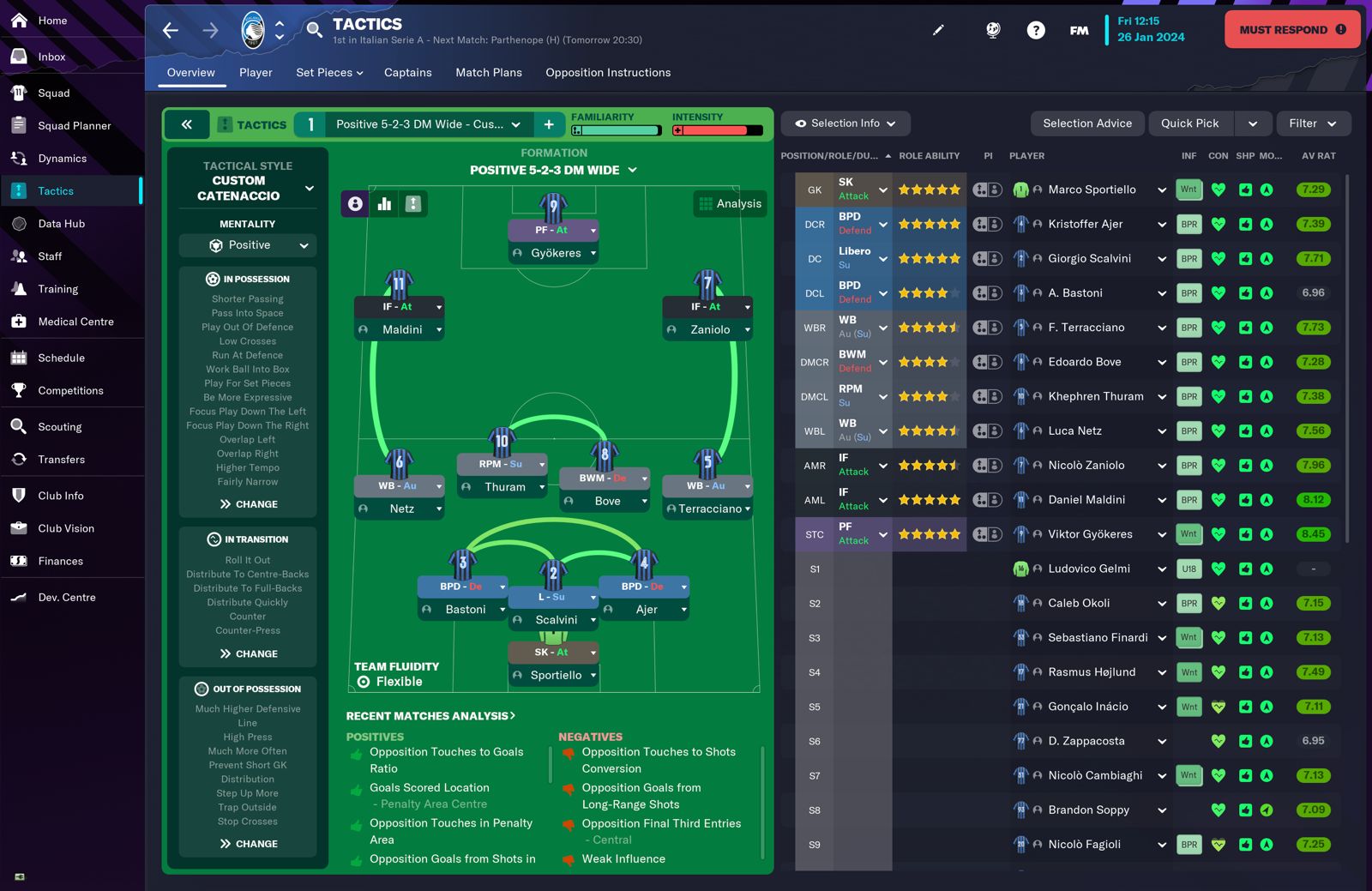
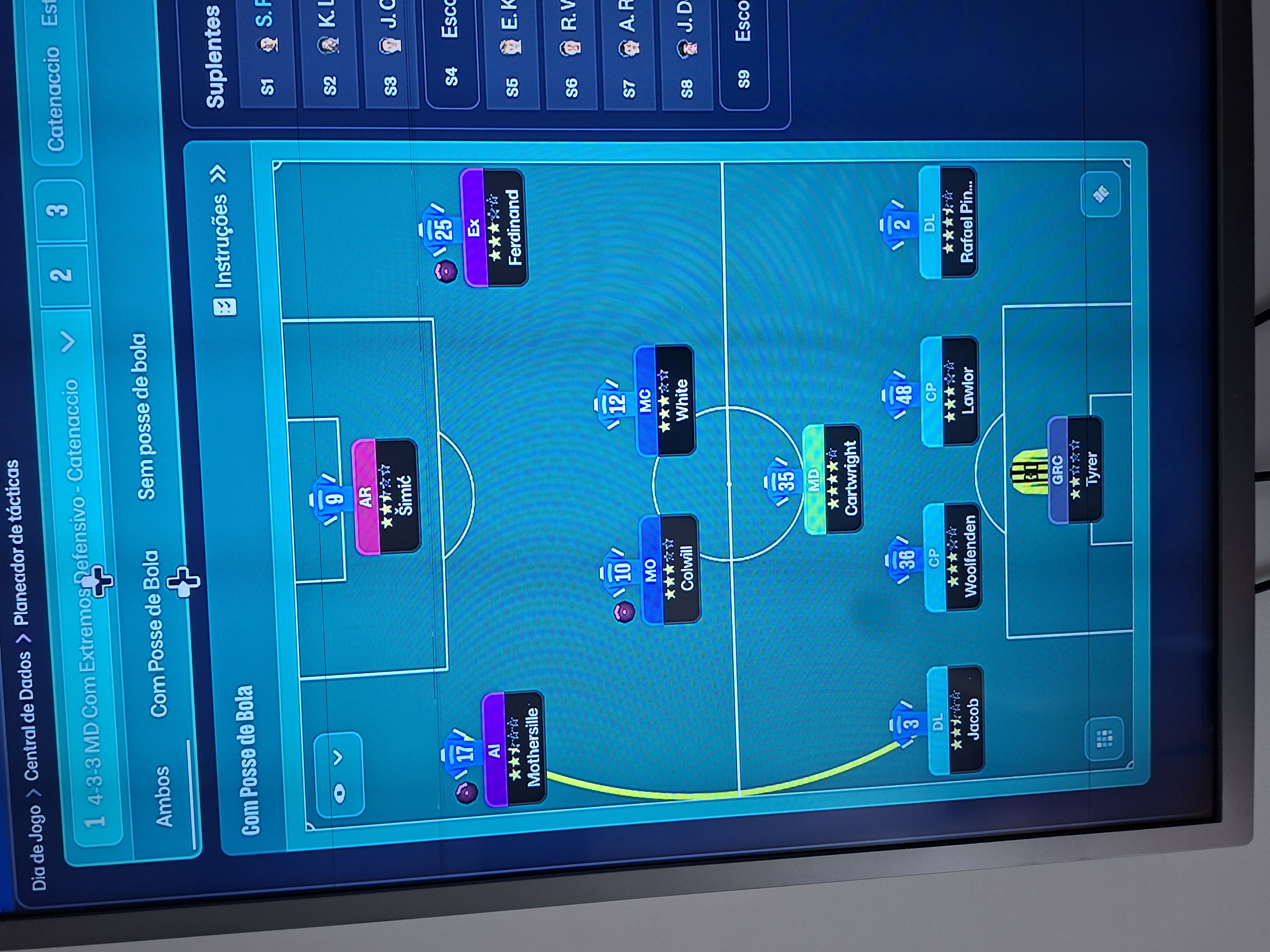
Formation & Style
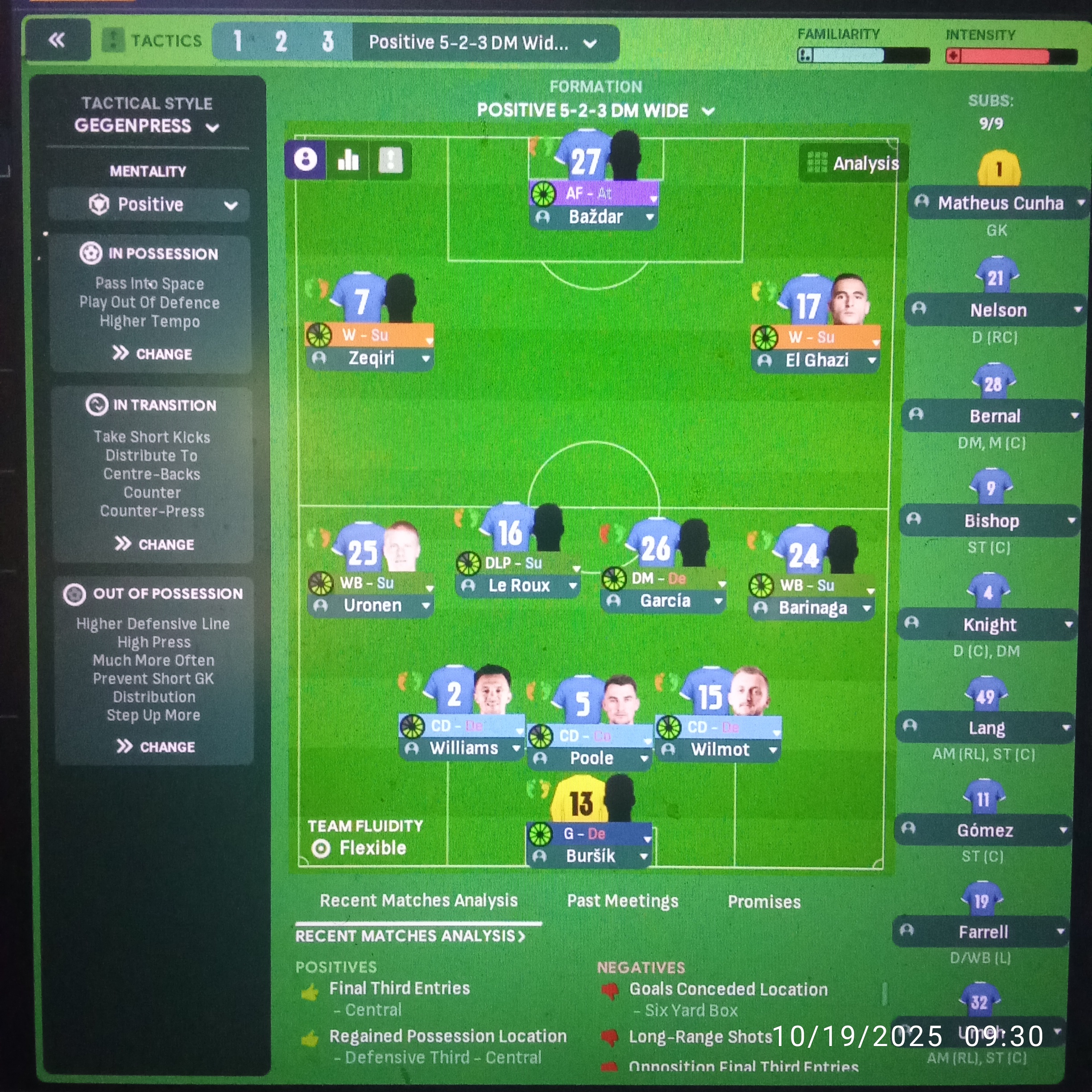
Tactical Style:Catenaccio
Mentality:Positive
Formation:5-2-3 DM Wide
Team Fluidity:Flexible
In Possession
Shorter Passing
Pass Into Space
Work Ball Into Box
Focus Play Down The Left
Higher Tempo
In Transition
Distribute To Centre-Backs
Counter
Out of Possession
Much Higher Defensive Line
Much More Often Prevent GK Distribute
Stop Crosses
Team Shape Without Ball
No team shape without ball data available
Team Shape With Ball
No team shape with ball data available
Key Strengths
Solid Defensive Structure
The Catenaccio style prioritizes defensive stability, leveraging a libero and ball-playing defenders to maintain a solid backline.
Flank Utilization
The wide wing backs combined with inside forwards create strong attacking options on the flanks, allowing for effective width in attack.
Versatile Midfield Roles
The inclusion of a regista and a ball-winning midfielder provides a balanced midfield capable of both controlling the game and breaking up opposition play.
Counter-Attacking Threat
The tactic encourages quick transitions to exploit spaces left by opponents, making it dangerous in counter-attacking scenarios.
Conflicting Directions
High Defensive Line vs. Catenaccio
A higher defensive line may contradict the Catenaccio style, which favors a more compact shape; this could lead to vulnerabilities against fast attackers.
Attacking Full-Backs vs. Defensive Stability
The attacking responsibilities of wing-backs could compromise defensive solidity, especially if opponents counter quickly.
Overlapping and Higher Tempo
While higher tempo increases attacking threat, it may also lead to rushing decisions, affecting possession control and defensive alignment.
Inside Forwards vs. Width
Using inside forwards could constrain width if wing-backs are overly aggressive, resulting in a lack of space for progression.
Tactical Suggestions
Adjust Defensive Line
Consider lowering the defensive line to maintain the compactness characteristic of Catenaccio, reducing vulnerability to fast breaks.
Reevaluate Wing-Back Duties
Assess the balance between attacking responsibilities and defensive duties for your wing-backs to ensure defensive solidity.
Introduce a Holding Midfielder
Adding a traditional holding midfielder can provide extra cover for the defense and enhance transition play.
Increase Focus on Counter-Pressing
Encouraging players to immediately press after losing possession will enhance the counter-pressing aspect, especially useful in a high-tempo game.
Ask Questions About Your Lineup
Related Tactics
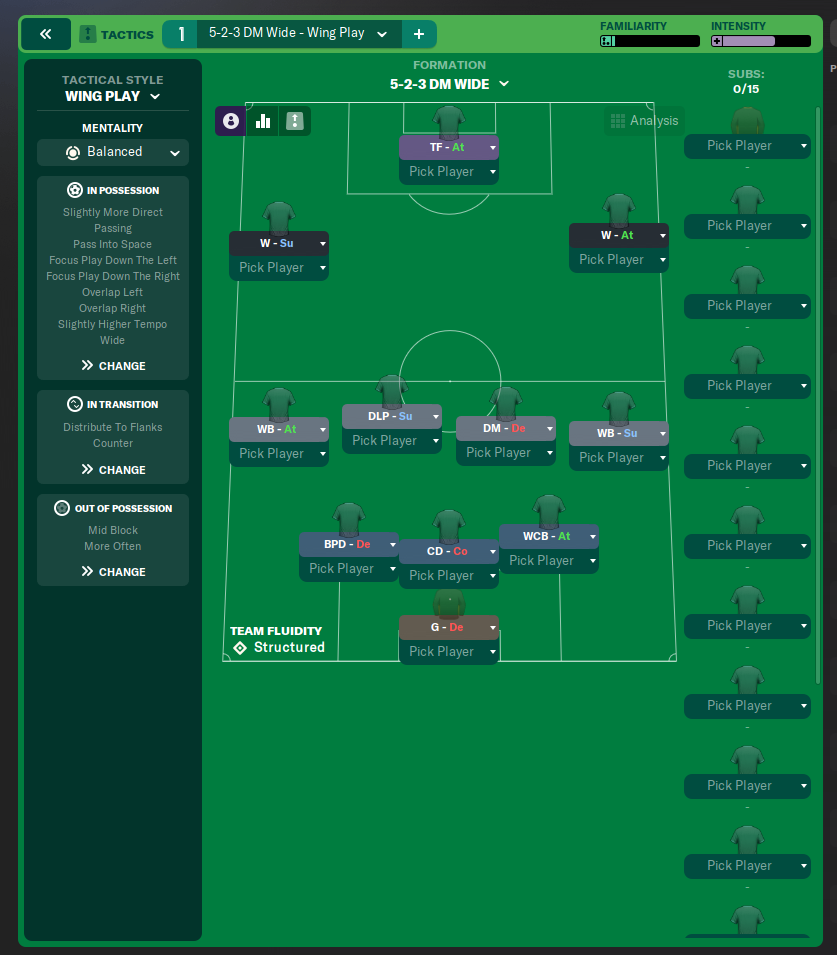
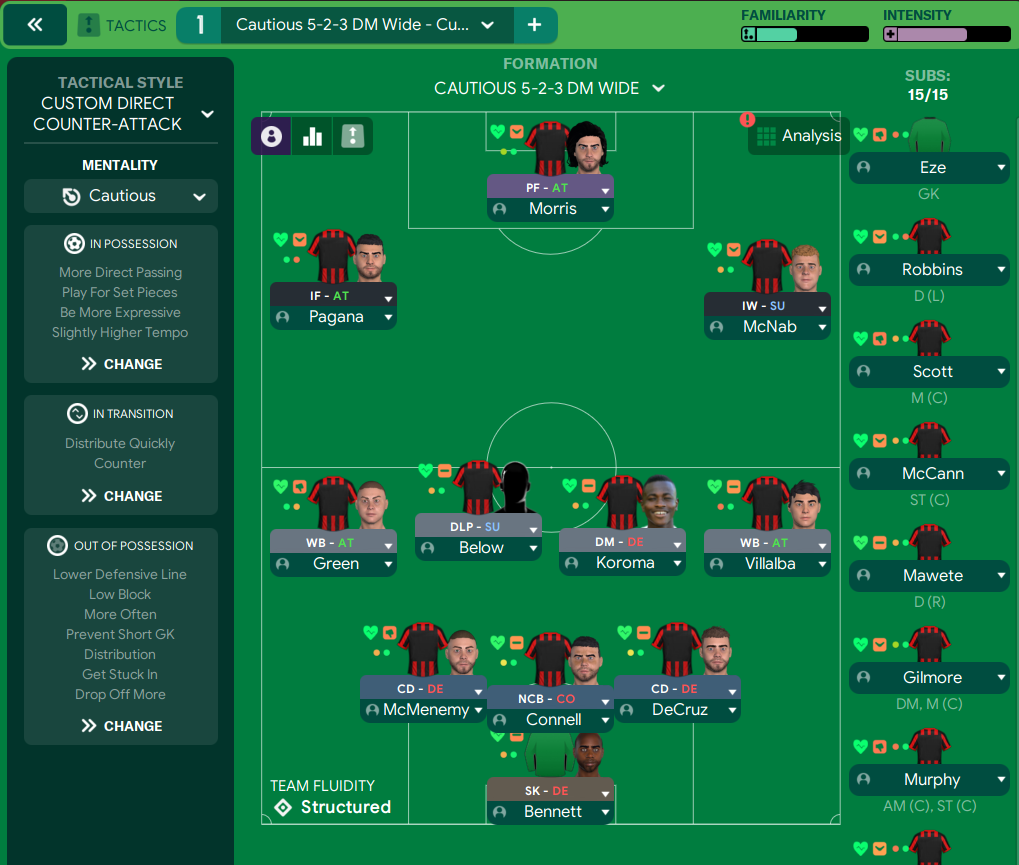
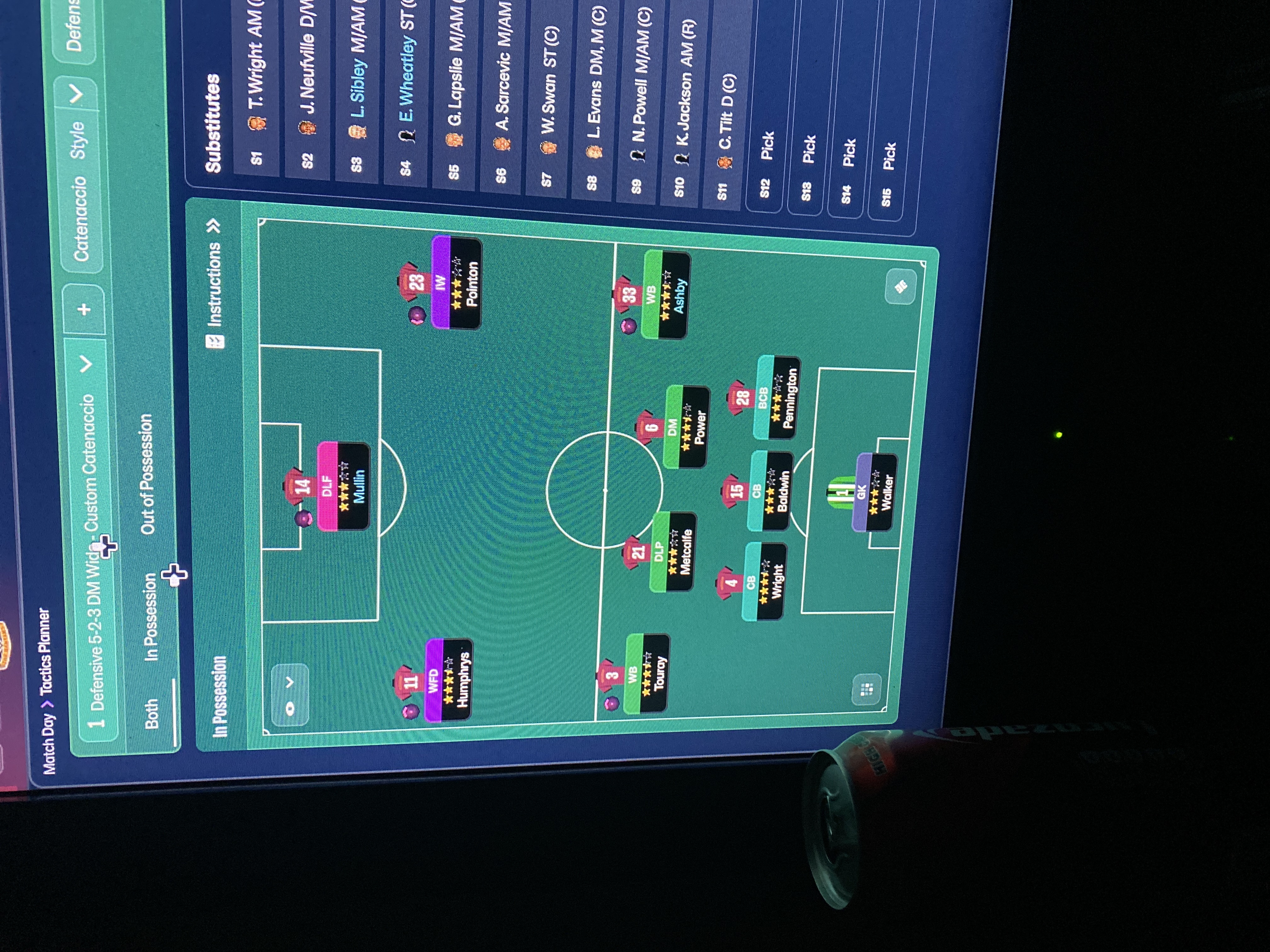
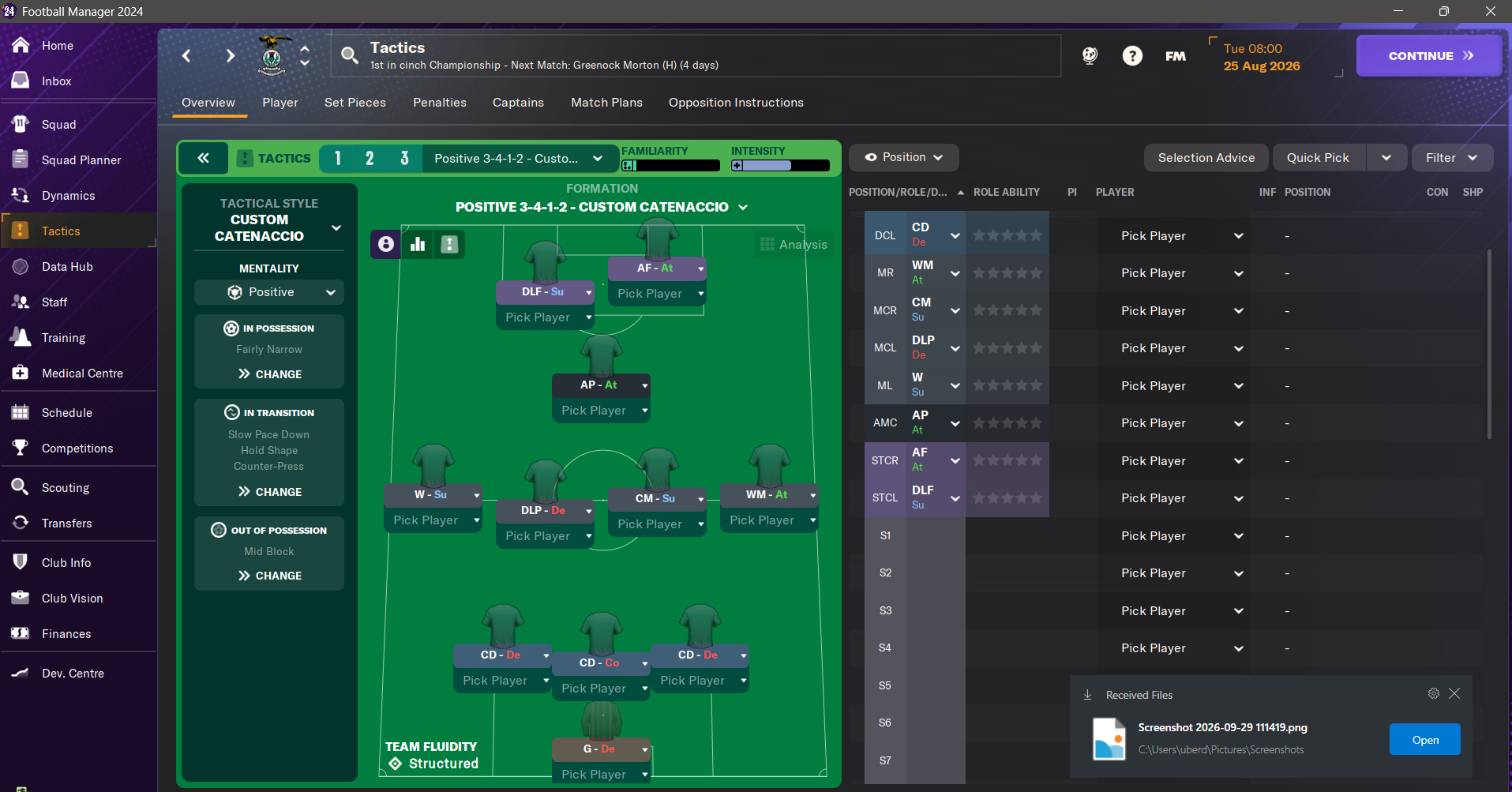
More Catenaccio tactics
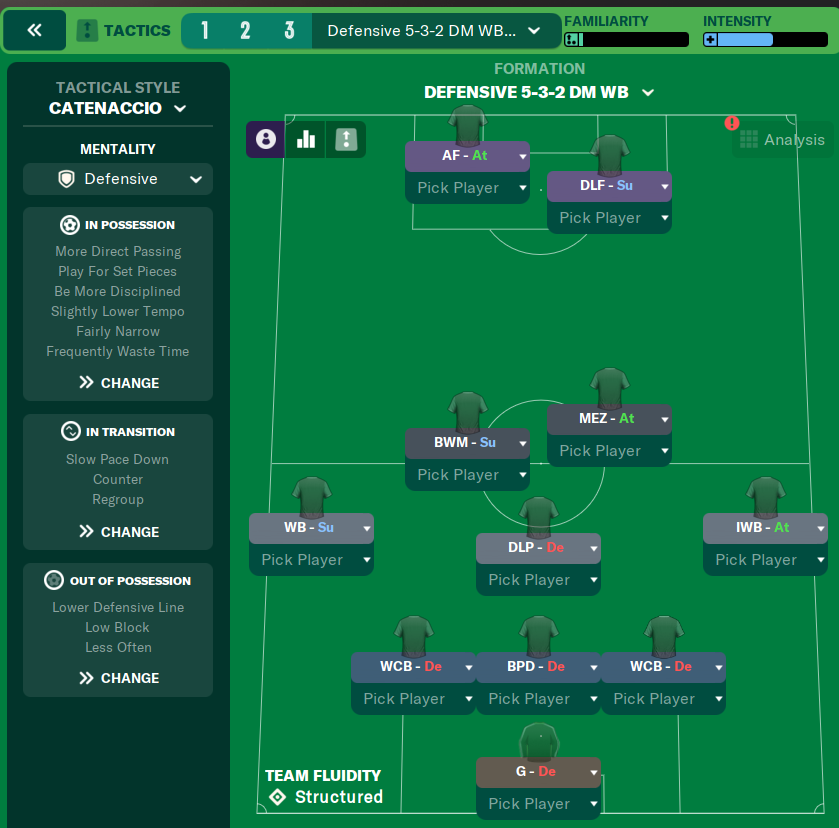
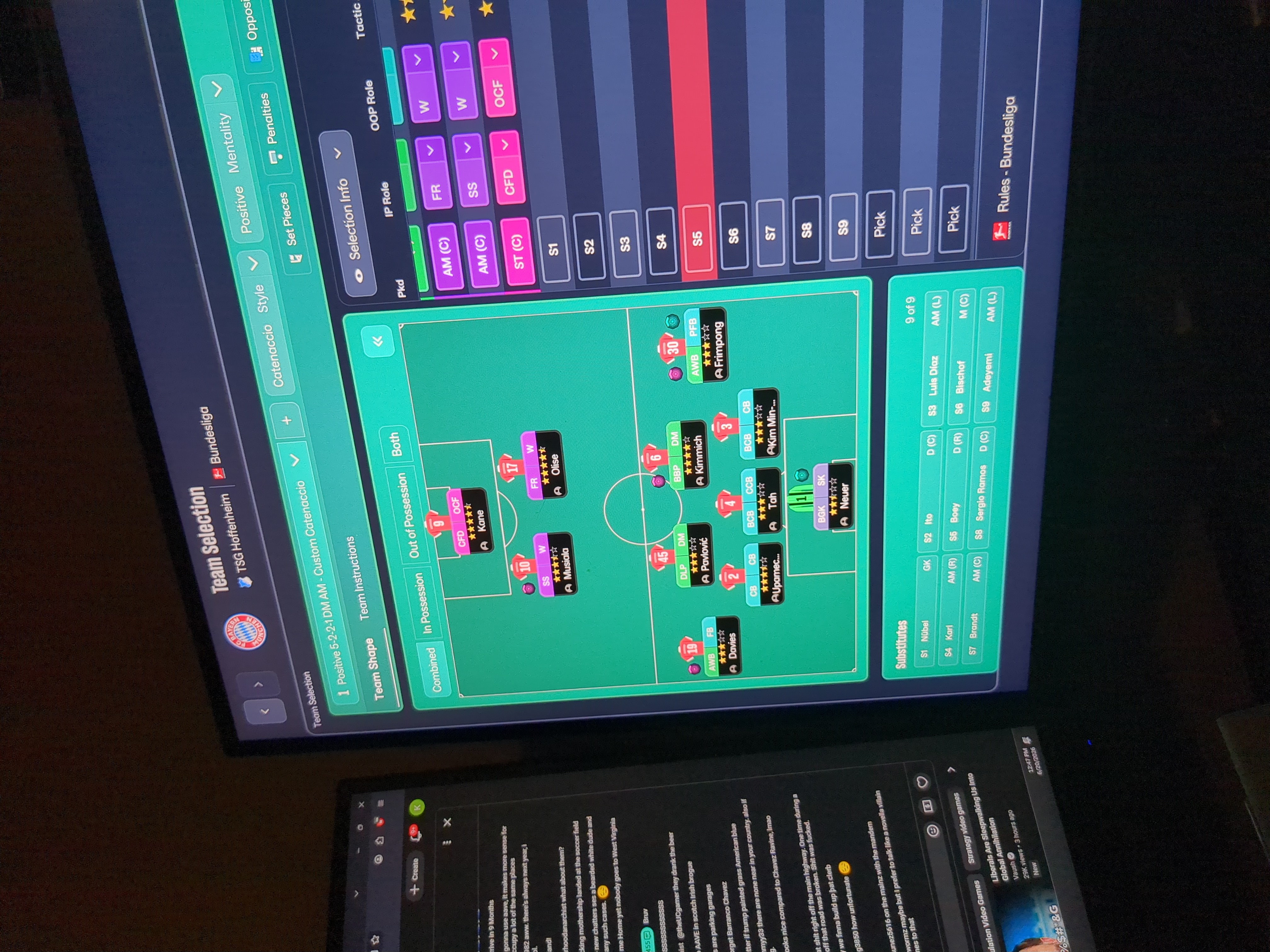
Guides for this formation
The tactical theory behind the 5-2-3 DM Wide: roles, instructions, and the trade-offs that decide whether the system holds up.