Uploaded Tactic
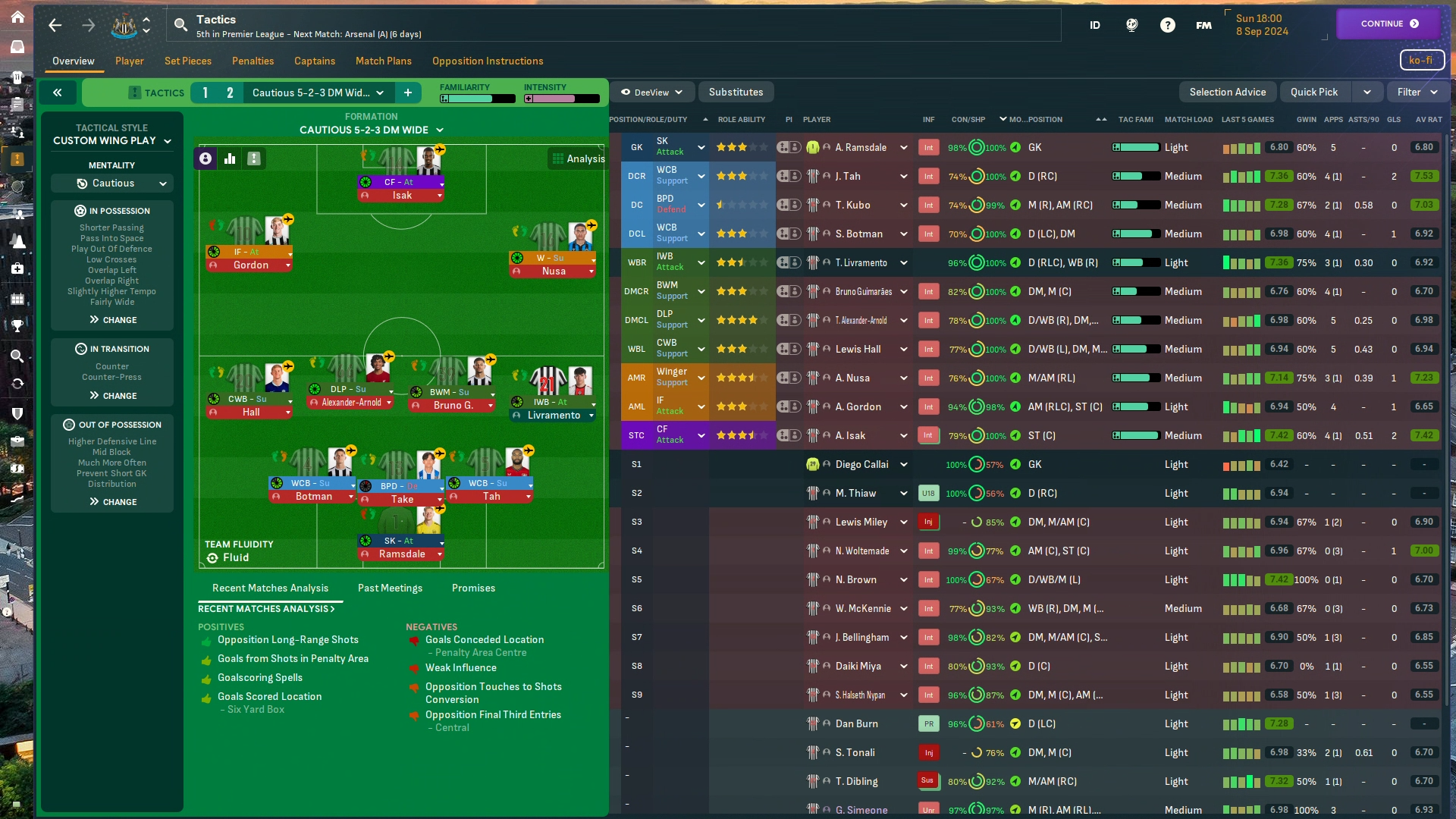
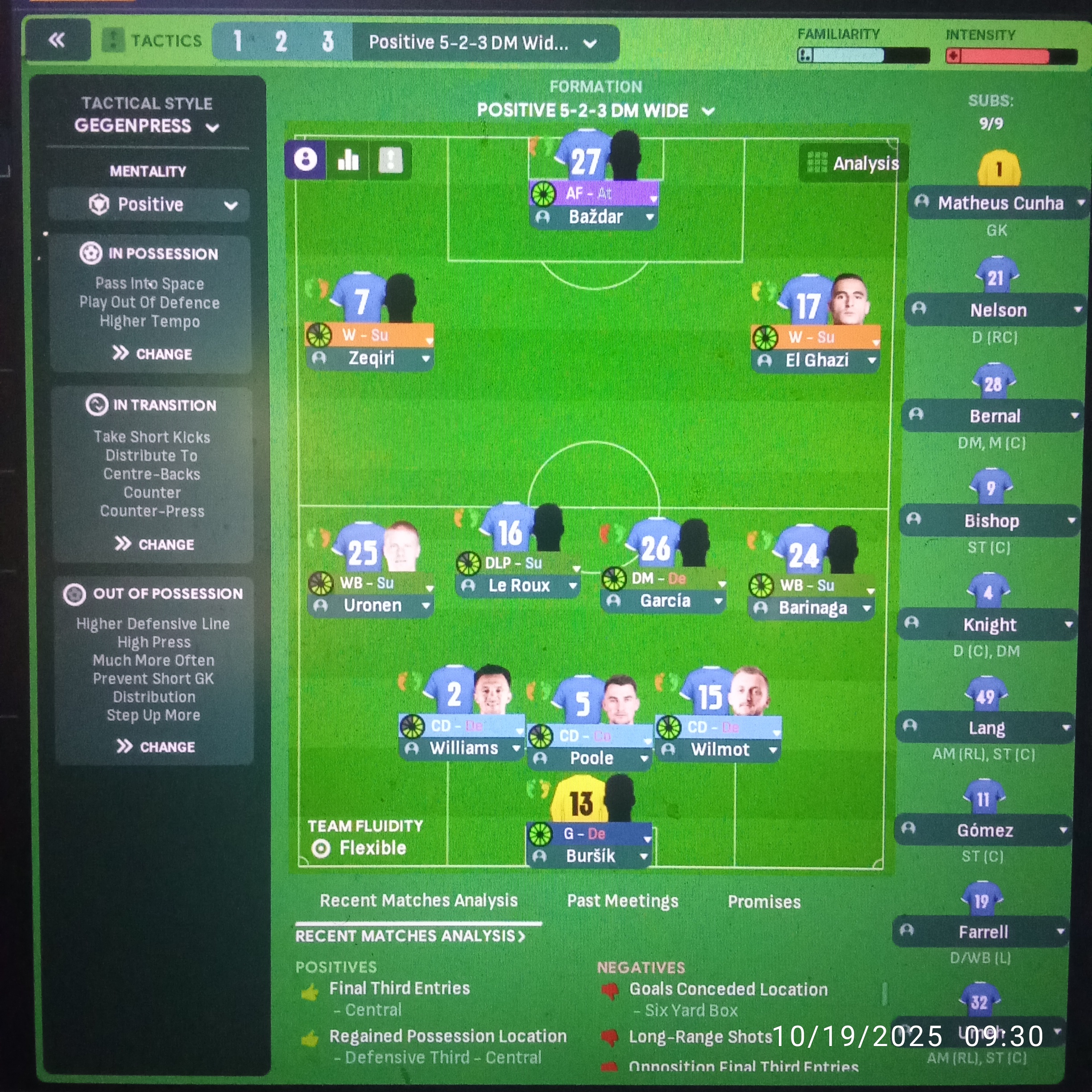
Formation & Style
Tactical Style:Cautious Wing Play
Mentality:Cautious
Formation:5-2-3 DM Wide
Team Fluidity:Fluid
In Possession
Shorter Passing
Pass Into Space
Play Out of Defence
Overlap Right
Slightly Higher Tempo
Fairly Wide
In Transition
Counter
Counter-Press
Out of Possession
Higher Defensive Line
Mid Block
Much More Often
Prevent Short GK Distribution
Team Shape Without Ball
No team shape without ball data available
Team Shape With Ball
No team shape with ball data available
Key Strengths
Width in Attack
The use of wing backs and inside forwards maximizes the width of the attack, providing options for crossing and creating space.
Defensive Stability
The 5-2-3 formation provides a solid defensive shape, making it hard for opponents to penetrate.
Quick Transitions
Utilizing counter-attacks allows for quick transitions from defense to attack, exploiting spaces left by opponents.
Balanced Midfield Presence
A combination of supportive and attacking roles in midfield offers both defensive cover and offensive support.
Conflicting Directions
Cautious Mentality vs. Wing Play
While a cautious mentality is generally more defensive, the wing play strategy may encourage more offensive behavior which can conflict.
Higher Defensive Line with Cautious Style
Adopting a high defensive line while maintaining a cautious approach may lead to vulnerabilities against fast counter-attacking teams.
Prevent Short GK Distribution
Preventing short goal-kick distribution may limit quick build-ups which contradicts the short passing strategy.
Overlapping Runs vs. Cautious Passing
Encouraging overlapping runs may not be fully effective if the overall passing style is too cautious.
Tactical Suggestions
Adjust Mentality to Balanced
Switching from a cautious mentality to balanced could better utilize the attacking potential of the wing play strategy.
Consider a Deep Block
If facing opposition with strong attacking players, a deeper defensive block might enhance defensive resilience.
Increase Tempo
Raising the tempo of passing could improve the effectiveness of quick transitions and counter-attacks.
Utilize Tighter Marking
Implementing tighter marking in the midfield could disrupt the opponent's play and regain possession effectively.
Ask Questions About Your Lineup
Related Tactics
Guides for this formation
The tactical theory behind the 5-2-3 DM Wide: roles, instructions, and the trade-offs that decide whether the system holds up.