Uploaded Tactic
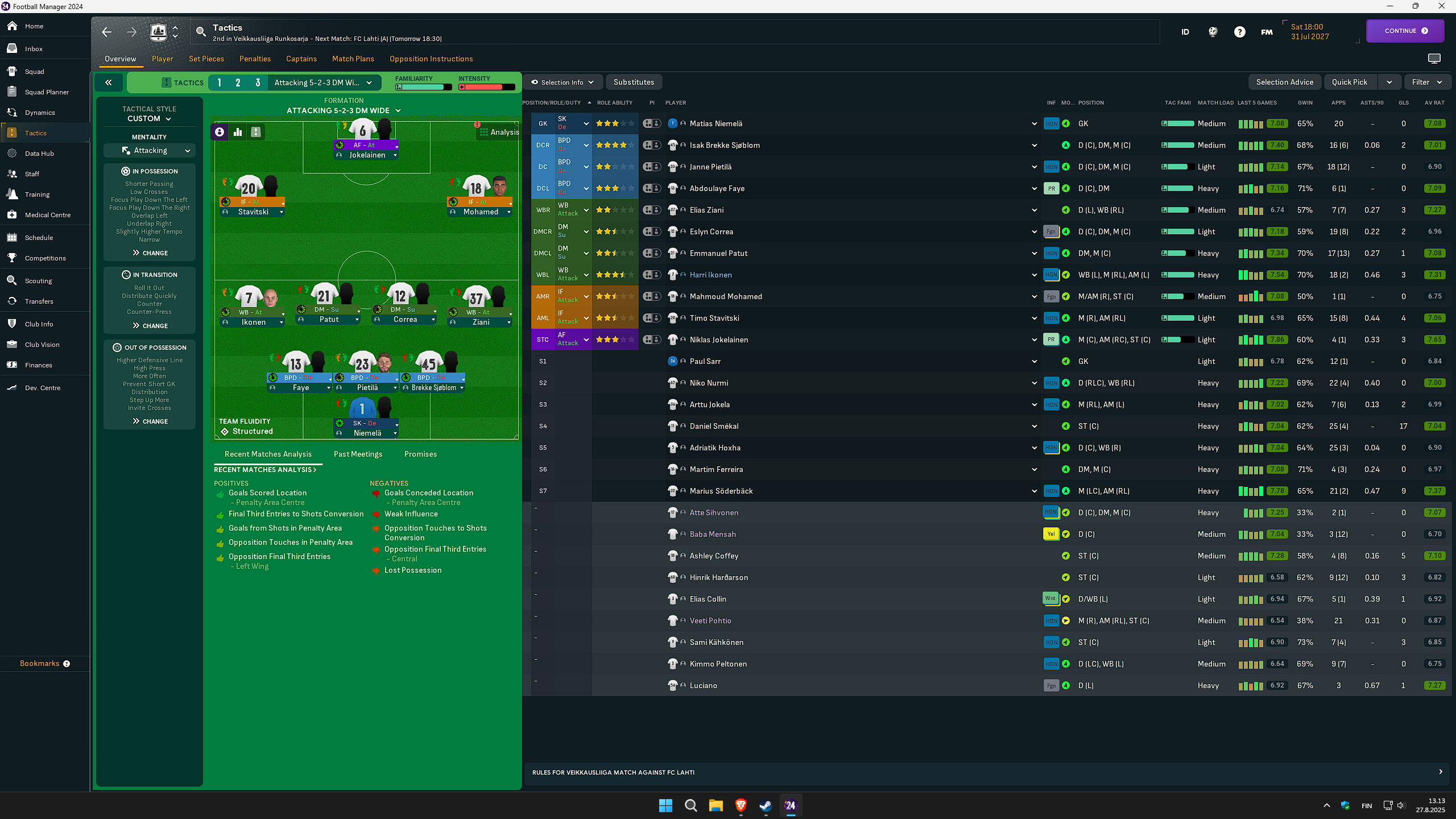
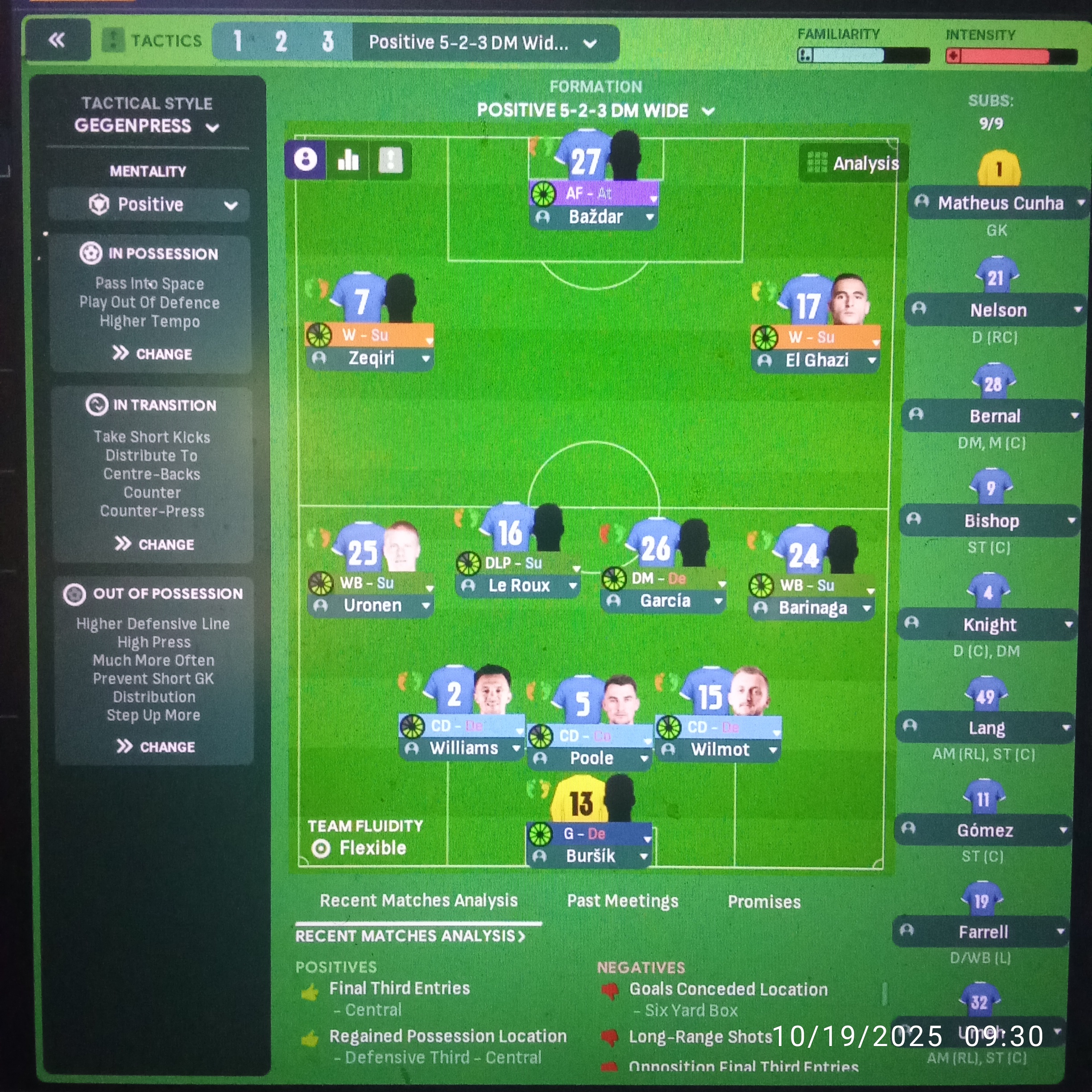
Formation & Style
Tactical Style:Attacking
Mentality:Attacking
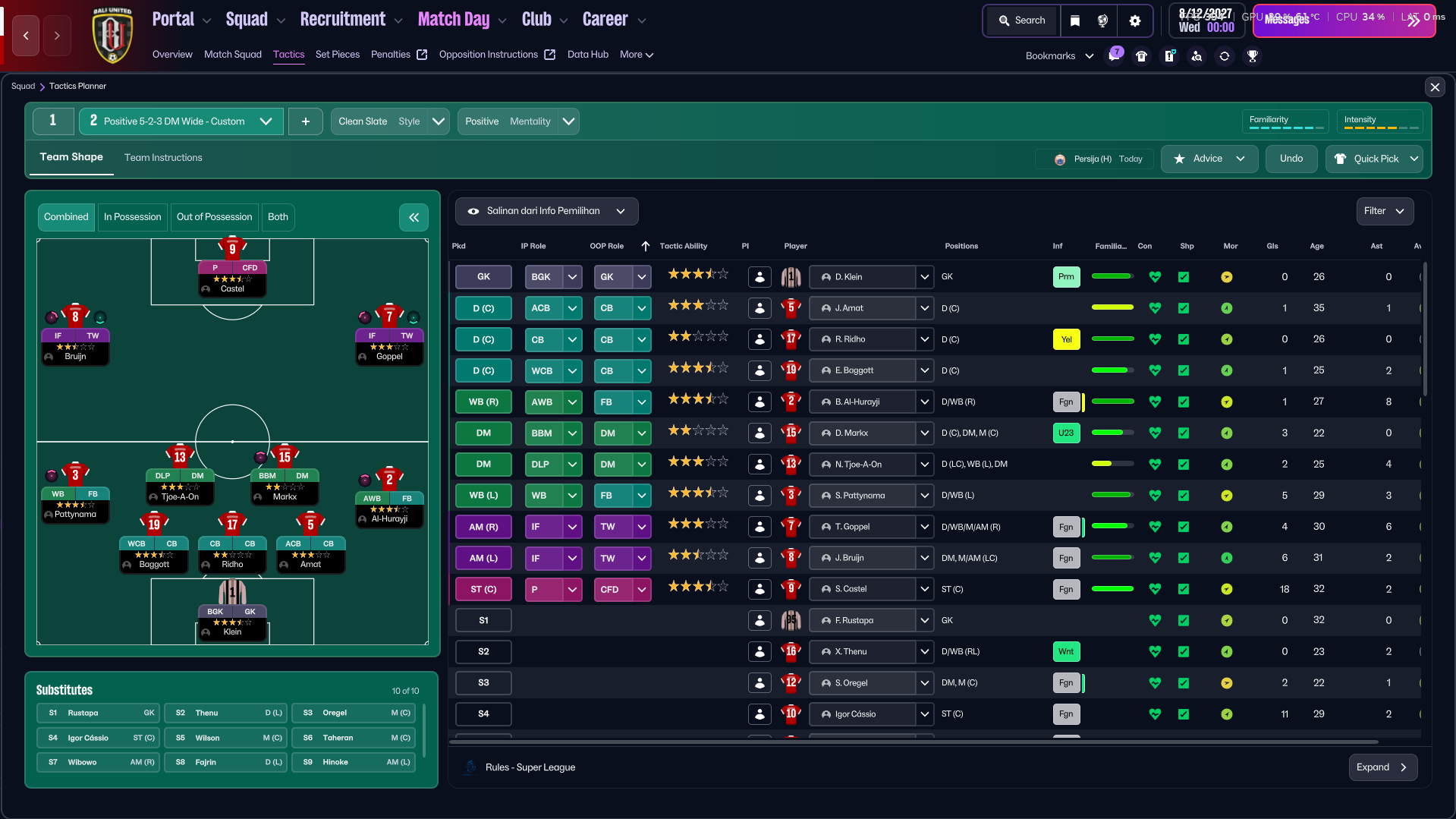
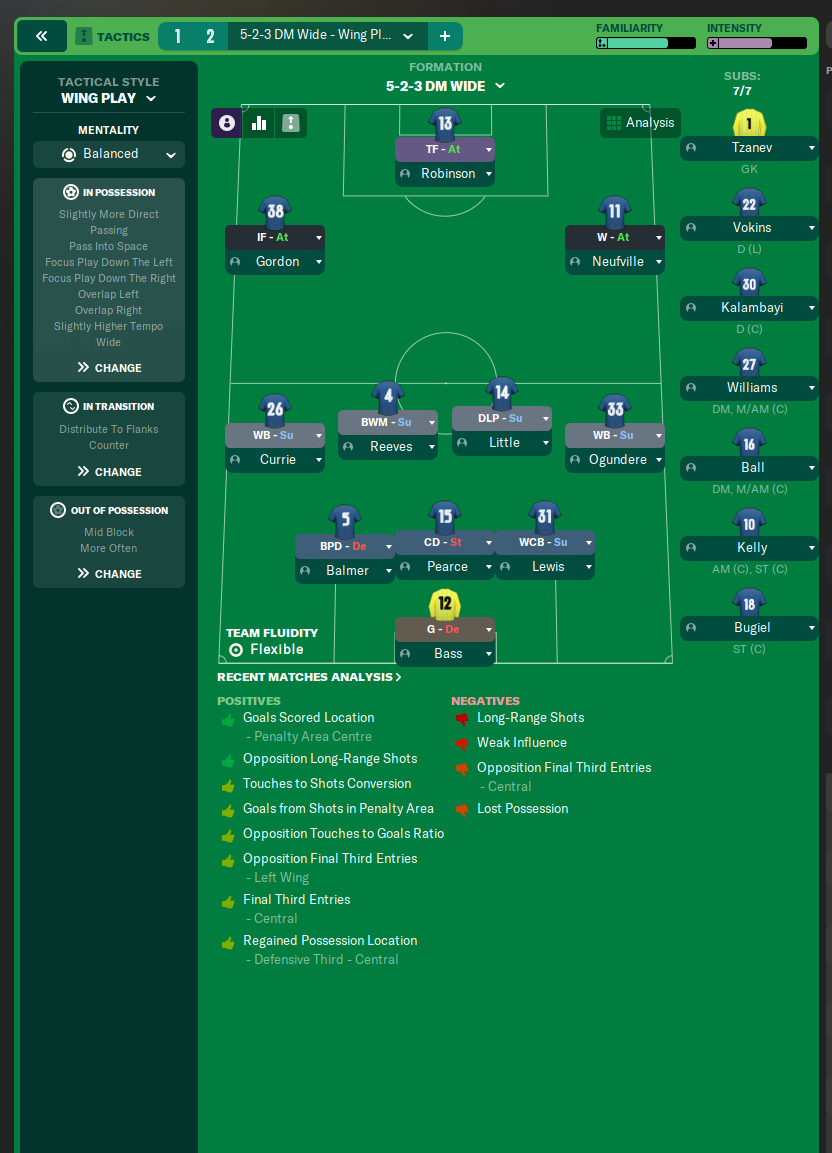
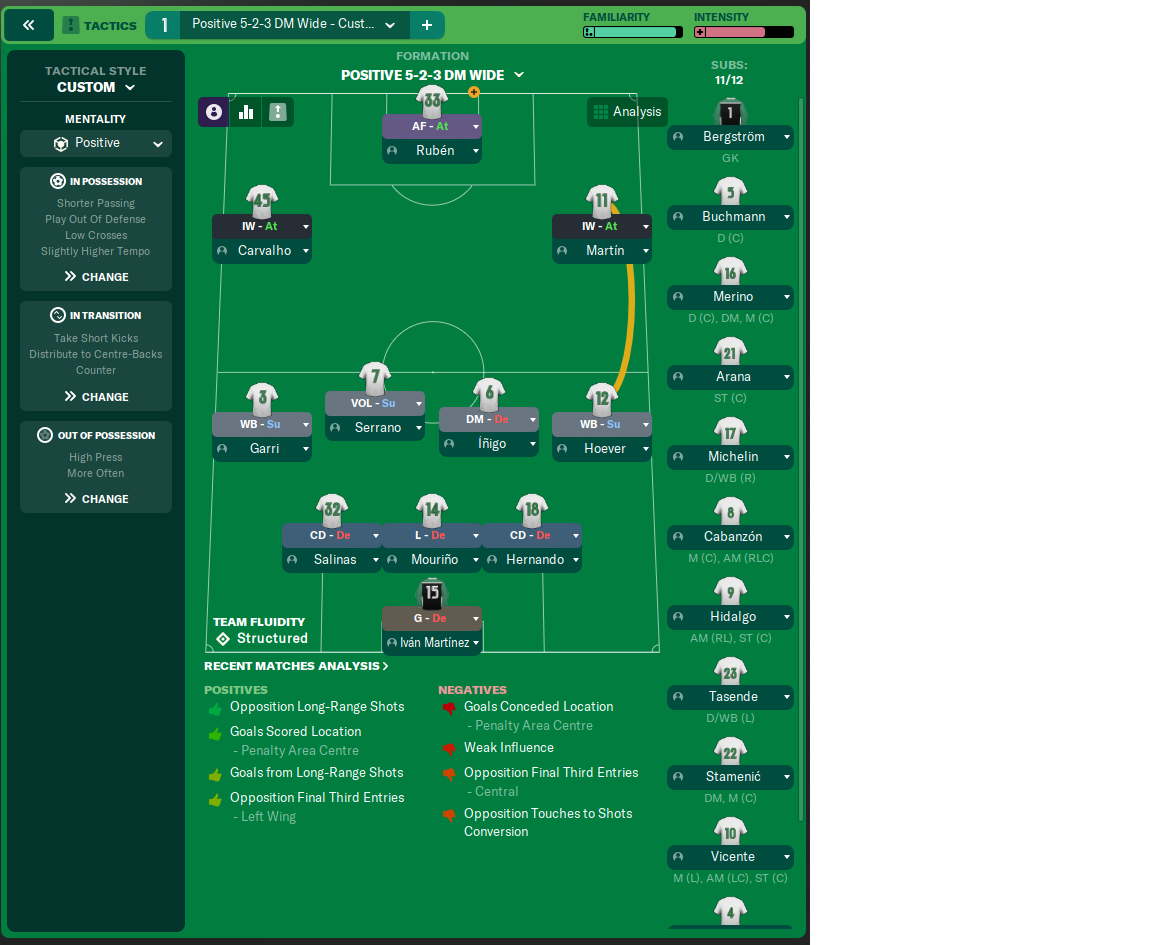
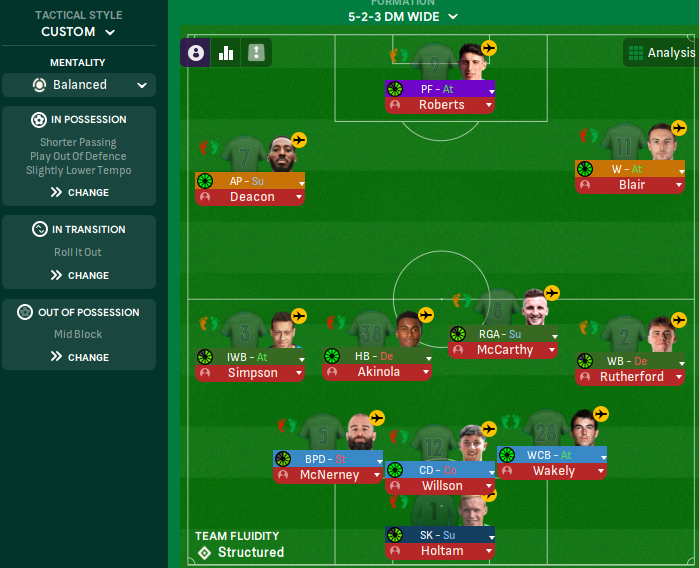
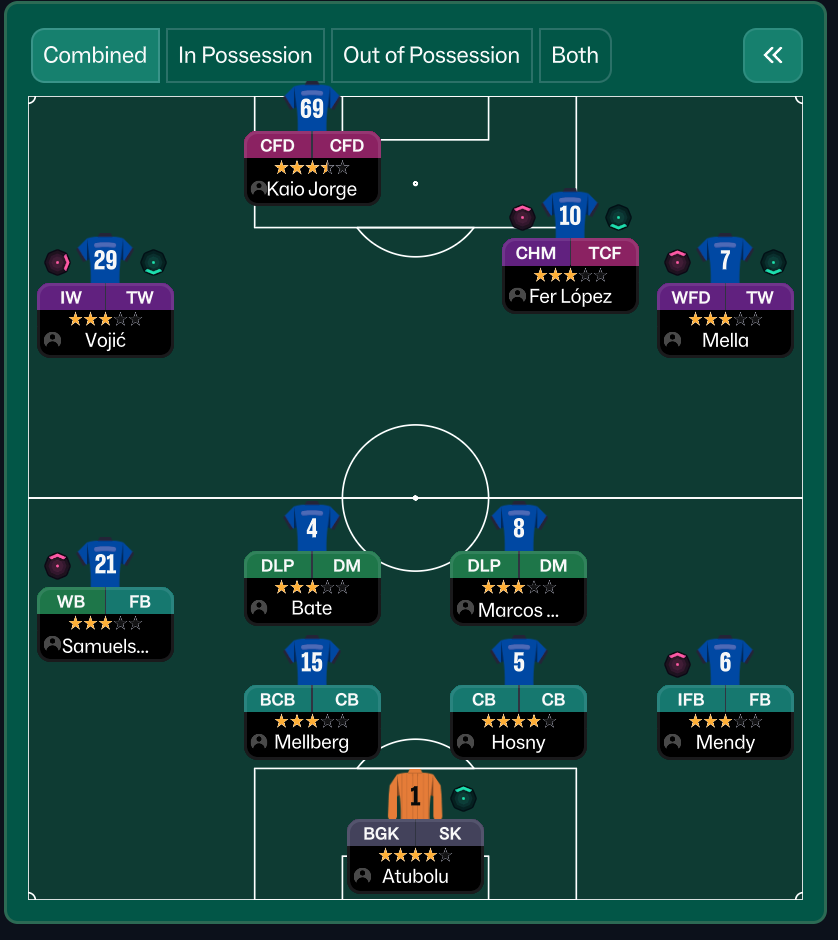
Formation:5-2-3 DM Wide
Team Fluidity:Structured
In Possession
Shorter Passing
Works Ball Into Box
Focus Play Down Both Flanks
In Transition
Counter Press
Counter
Out of Possession
Higher Defensive Line
Higher Line of Engagement
Use Offside Trap
Team Shape Without Ball
No team shape without ball data available
Team Shape With Ball
No team shape with ball data available
Key Strengths
Attacking Width
Utilizing wing-backs in an attacking role provides width, stretching opponents and creating space for forwards.
Pressing Game
Higher line of engagement allows swift pressing to retrieve possession, complementing the attacking mentality.
Fluid Movement
Flexible roles in attack enable players to interlink effectively, facilitating dynamic attacking play.
Control in Midfield
A Deep Lying Playmaker helps in controlling the tempo and distributing passes to maintain possession.
Conflicting Directions
High Line Risk
A higher defensive line may lead to vulnerabilities if not supported by quick recovery from attackers and midfielders.
Overlapping Full-Backs
Using wing-backs in attack could leave the defense exposed on the flanks if they are caught out of position.
Wing Play vs. Central Play
Focus play down both flanks may conflict with centralized movements from forwards and midfielders.
Counter Press Inefficiency
Depending on heavier pressing without sufficient stamina management can lead to fatigue and defensive lapses.
Tactical Suggestions
Consider Reducing Defensive Line
Adjusting the defensive line slightly lower can reduce vulnerability to fast breaks and balls over the top.
Implement Rotating Roles
Encouraging rotation among front three can enhance unpredictability, making it harder for defenders to mark.
Increase Midfield Support
Adding a third midfielder could help maintain possession and create overloads against opposing midfielders.
Rotate Wing-Backs
Including a more defensive role for one of the wing-backs on certain occasions can help maintain stability during counter-attacks.
Ask Questions About Your Lineup
Related Tactics
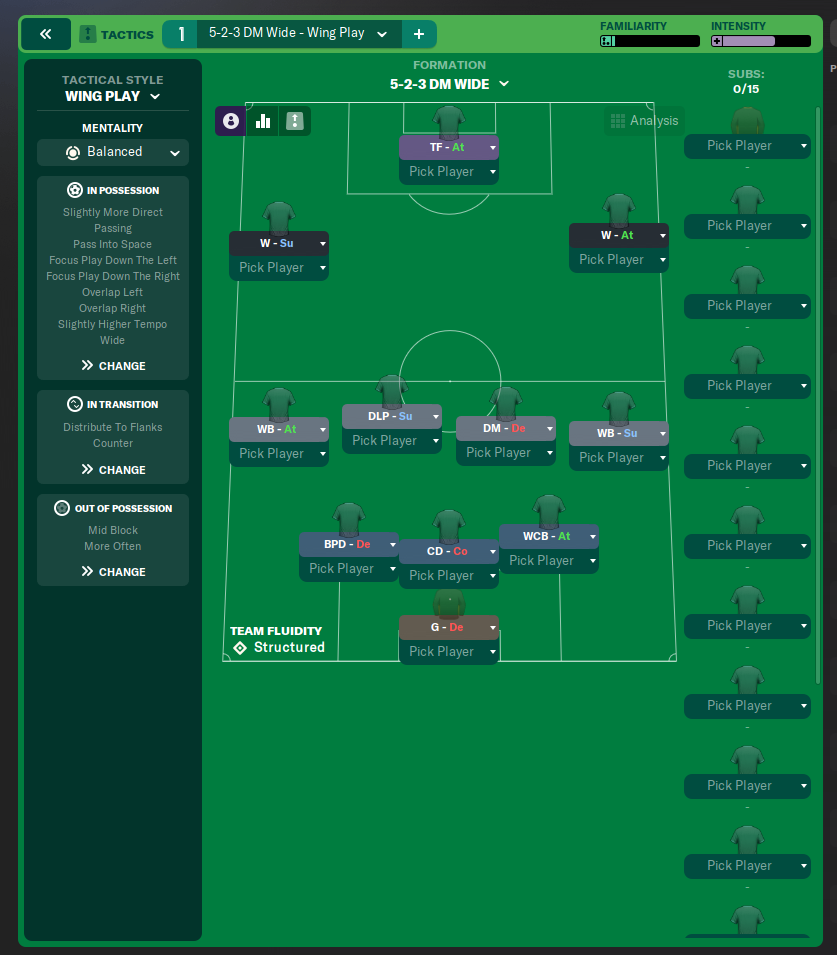
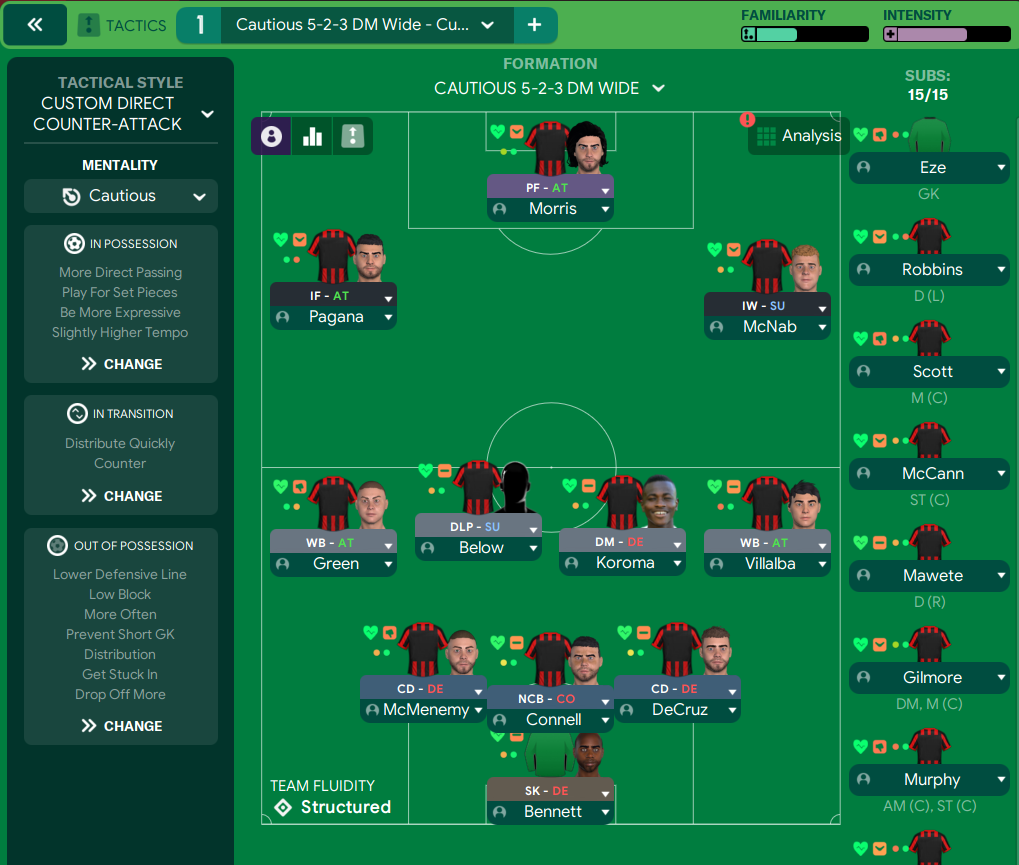
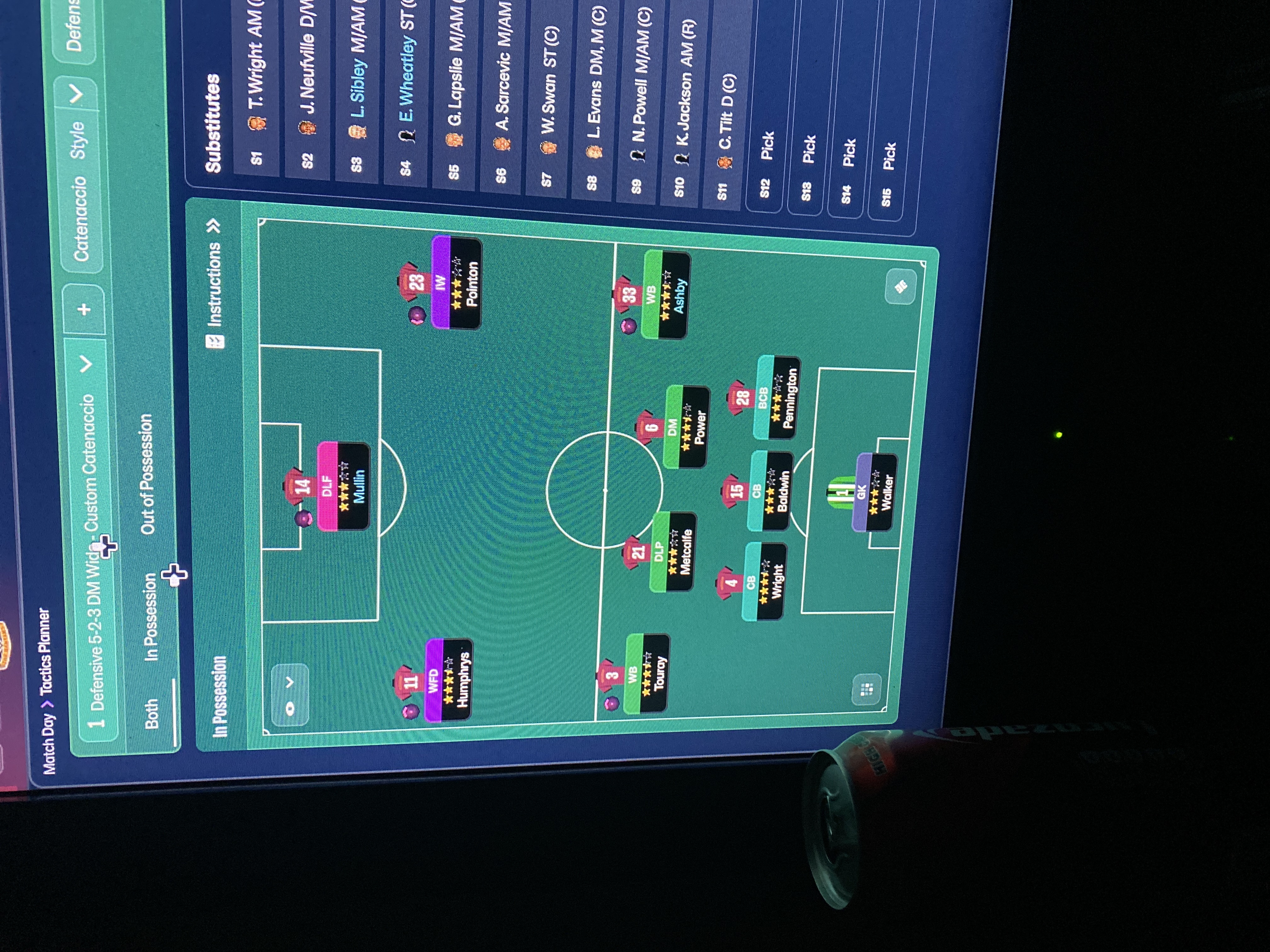
More Attacking tactics
Guides for this formation
The tactical theory behind the 5-2-3 DM Wide: roles, instructions, and the trade-offs that decide whether the system holds up.