Uploaded Tactic
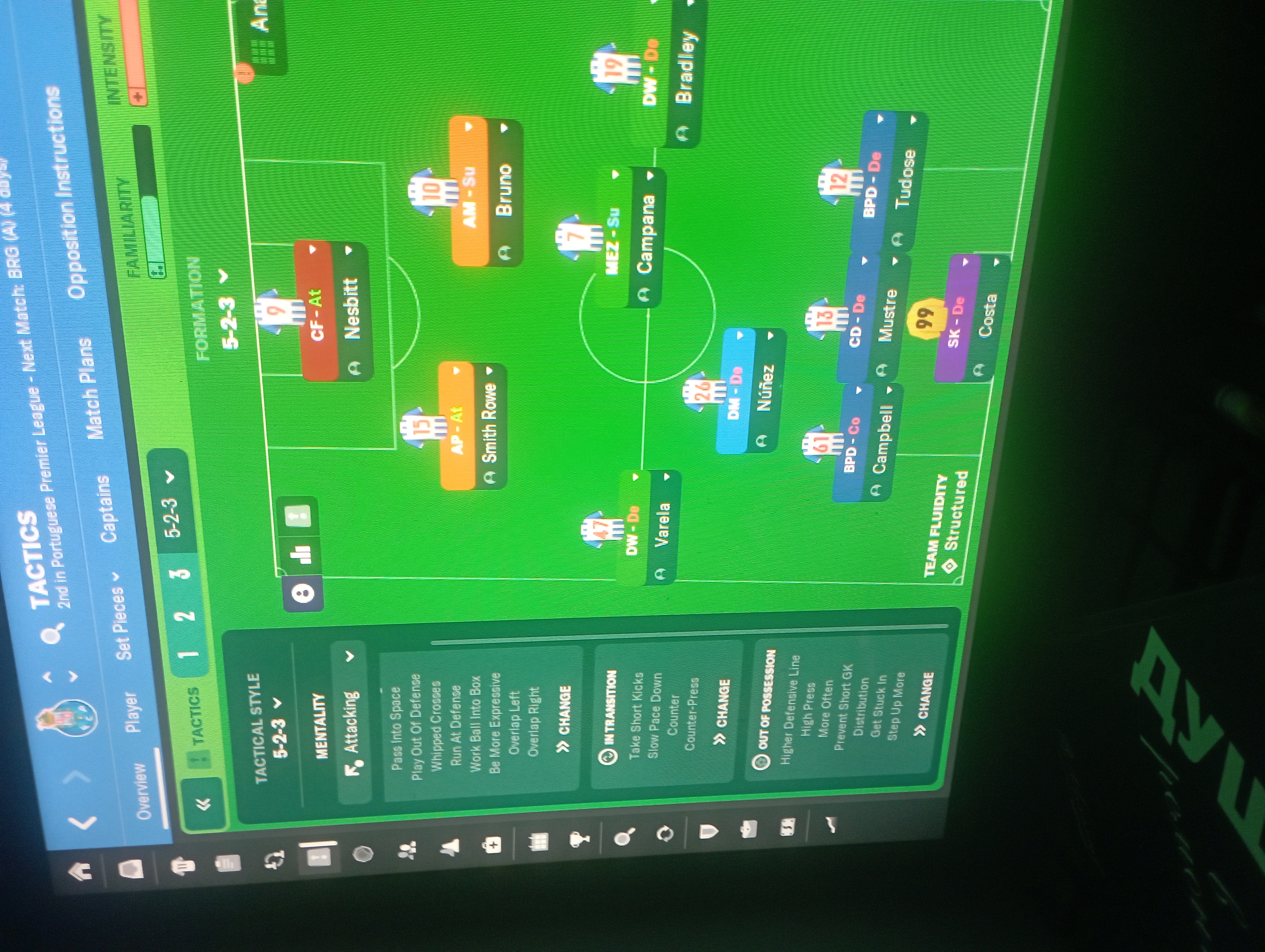
Formation & Style
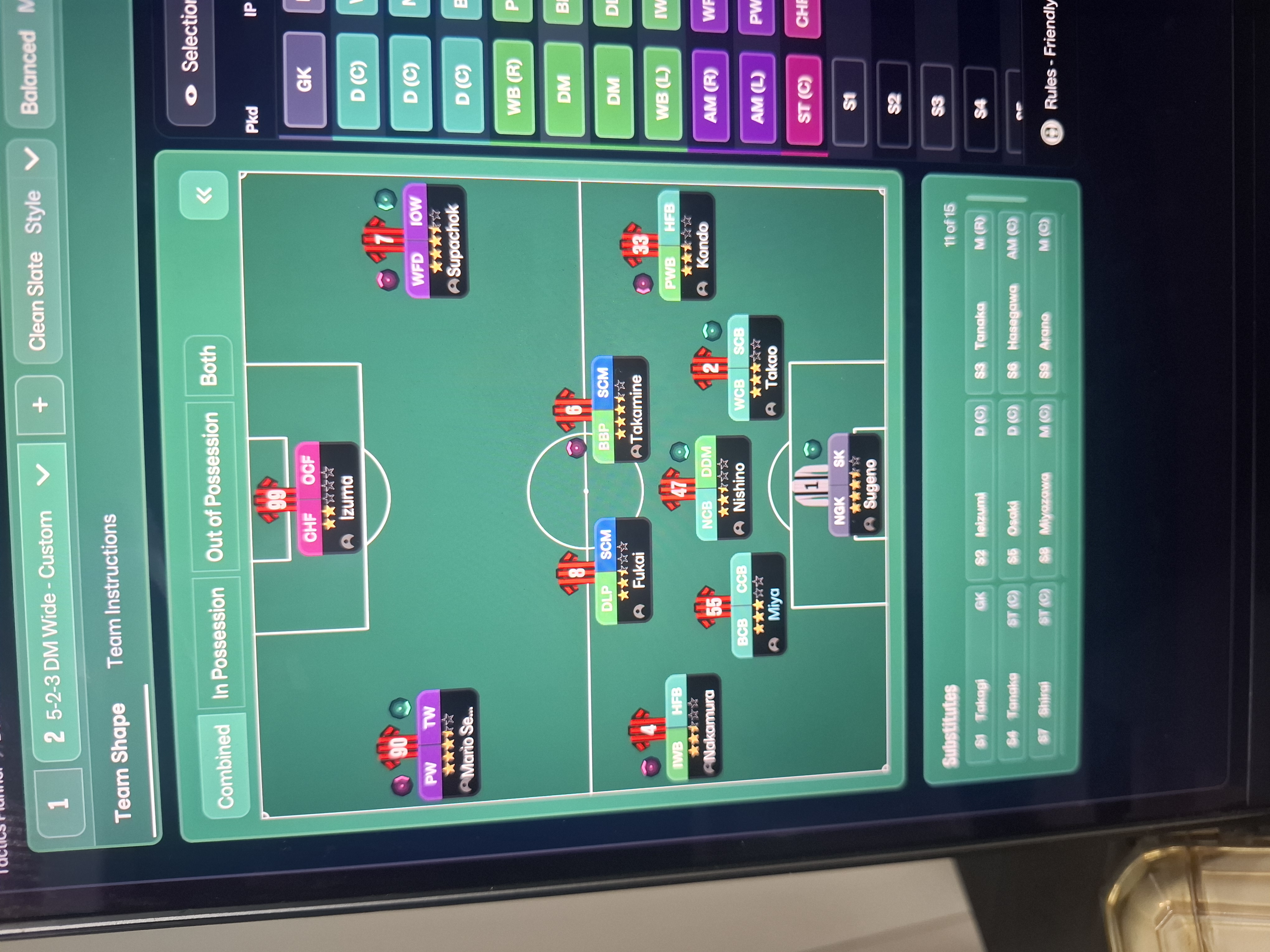
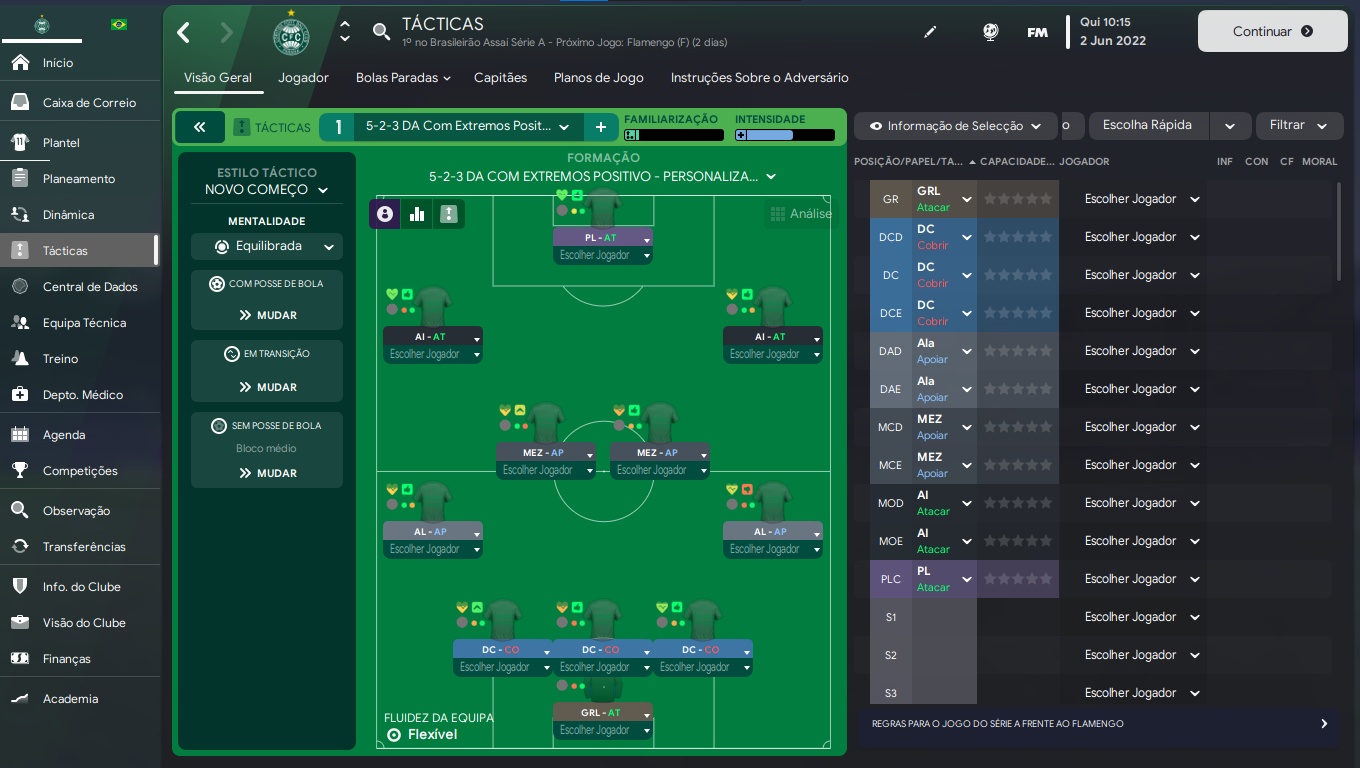
Tactical Style:5-2-3
Mentality:Attacking
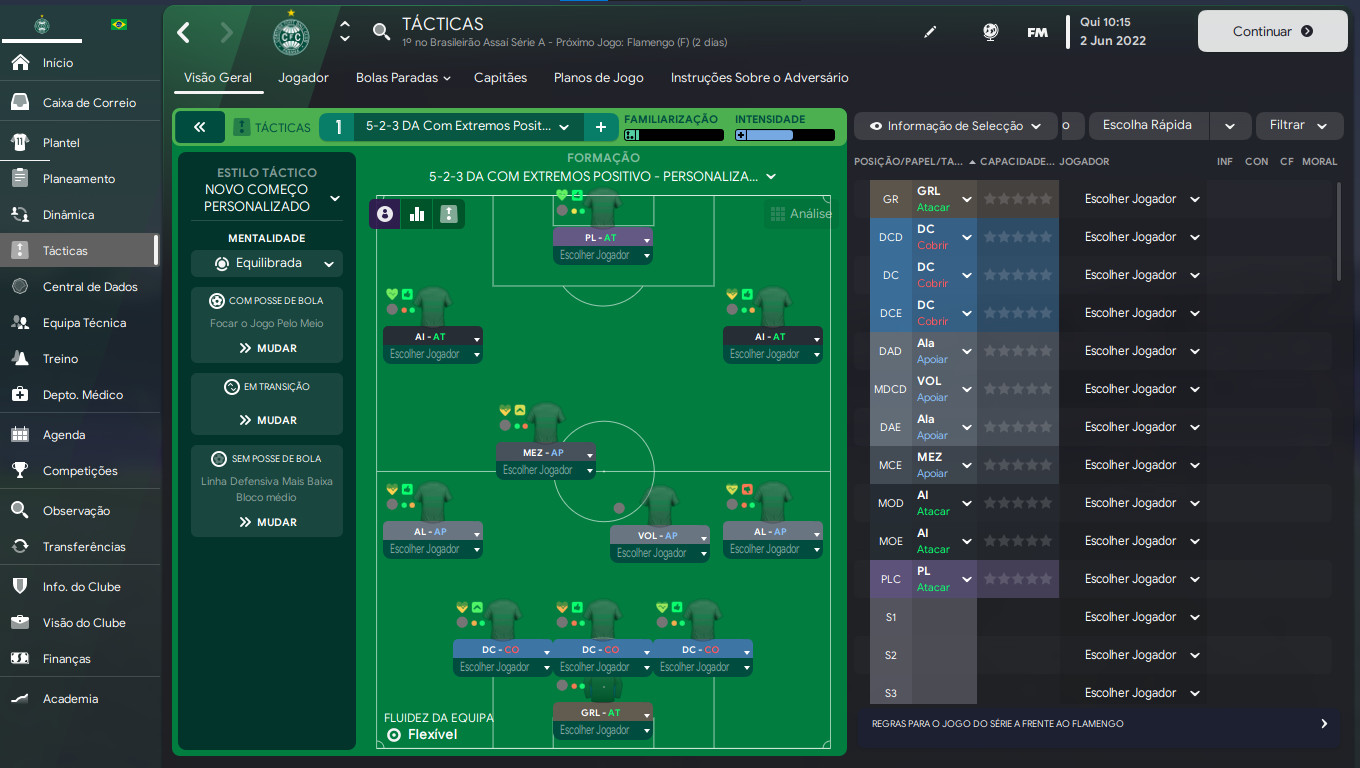
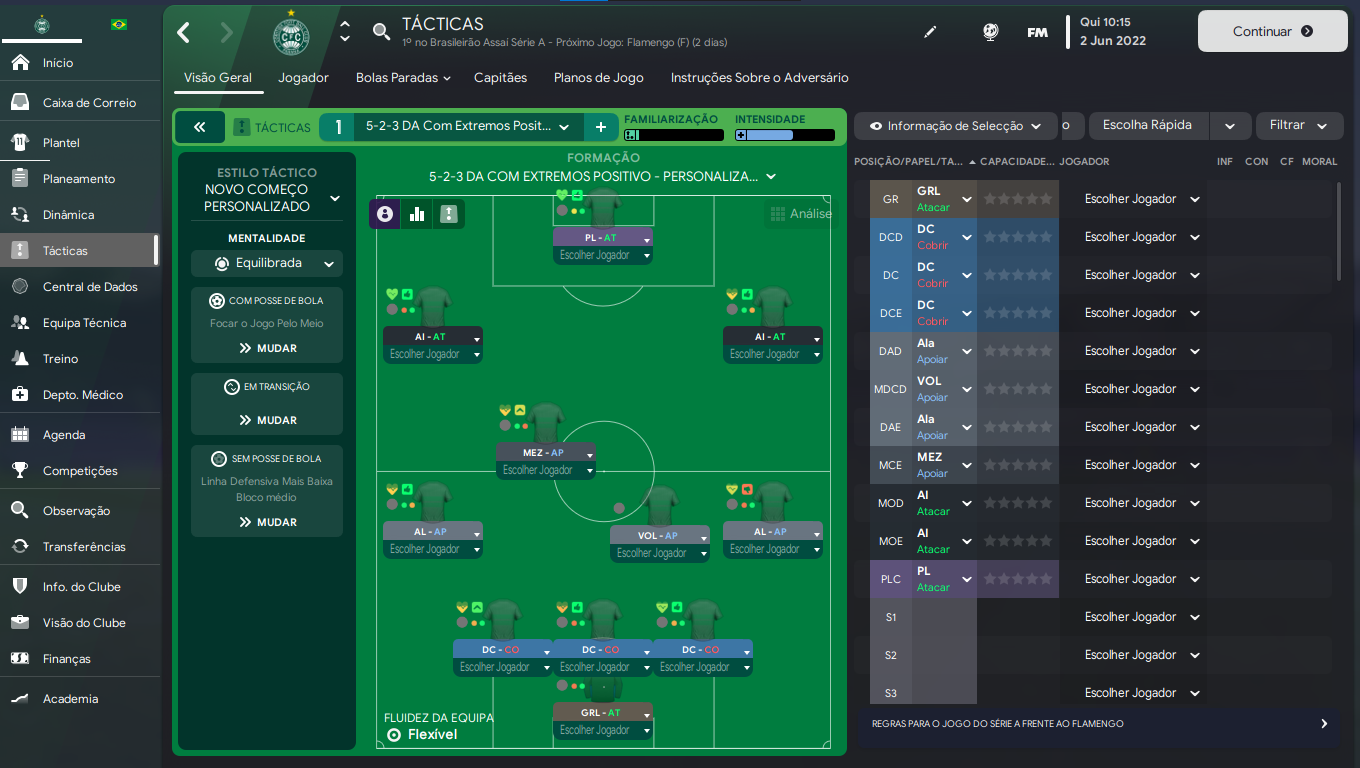
Formation:5-2-3
Team Fluidity:Structured
In Possession
Pass Into Space
Play Out Of Defence
Whipped Crosses
Run At Defence
Work Ball Into Box
Be More Expressive
Overlap Left
Overlap Right
In Transition
Counter
Out of Possession
Higher Defensive Line
More Often Prevent Short GK Distribution
Get Stuck In
Step Up More
Team Shape Without Ball
Shape:Compact 5-3-2
Description:The team forms a compact block while defending, ensuring defensive cover and limiting opposition options.
Evidence:The arrangement of three CBs and a DM allows for strong central control and a sturdy backline.
Team Shape With Ball
Shape:Fluid 3-4-3
Description:In attack, the team adopts a fluid shape that transitions into a three-man forward line supported by overlapping wing-backs.
Evidence:The involvement of Wingers and the Mezzala allows for dynamic forward play with width.
Phase Description
Attacking Play
The team focuses on quick transitions to exploit spaces through overlapping runs from full-backs and utilizing the attacking players' movement.
Defensive Transition
On losing possession, the team aims to press immediately, recovering positions quickly to regain control of the ball.
Main Focus
Creating width and space through wings whilst utilizing creative midfielders to link play.
Key Strengths
Strong Defensive Base
The use of three solid centre-backs provides a strong defensive organization and minimizes risks.
Dynamic Attacking Options
Various roles in the attack create opportunities and adapt to different defensive setups by opponents.
Width Creation
Utilizing the width from the wingers and overlapping full-backs allows for easy penetration into the final third.
Conflicting Directions
High Defensive Line vs. Quick Counterattack
A high defensive line can be vulnerable to quick counterattacks, especially against teams with fast strikers.
Overlapping Instructions vs. Central Control
While overlapping can create width, it might leave central areas exposed when the team loses possession.
Attacking Full-Backs vs. Defensive Stability
Pushing full-backs forward may compromise the team's defensive balance, especially when losing the ball.
Tactical Suggestions
Cautious Approach vs. High Lines
Consider lowering the defensive line against quick opposition to minimize counter vulnerabilities.
Introduce More Midfield Depth
Adding a third midfielder may help maintain better control in congested central areas.
Adjust Winger Roles
Consider tweaking the duties of wingers to balance between attacking support and defensive responsibilities.
Ask Questions About Your Lineup
Related Tactics
Guides for this formation
The tactical theory behind the 5-2-3: roles, instructions, and the trade-offs that decide whether the system holds up.