Uploaded Tactic
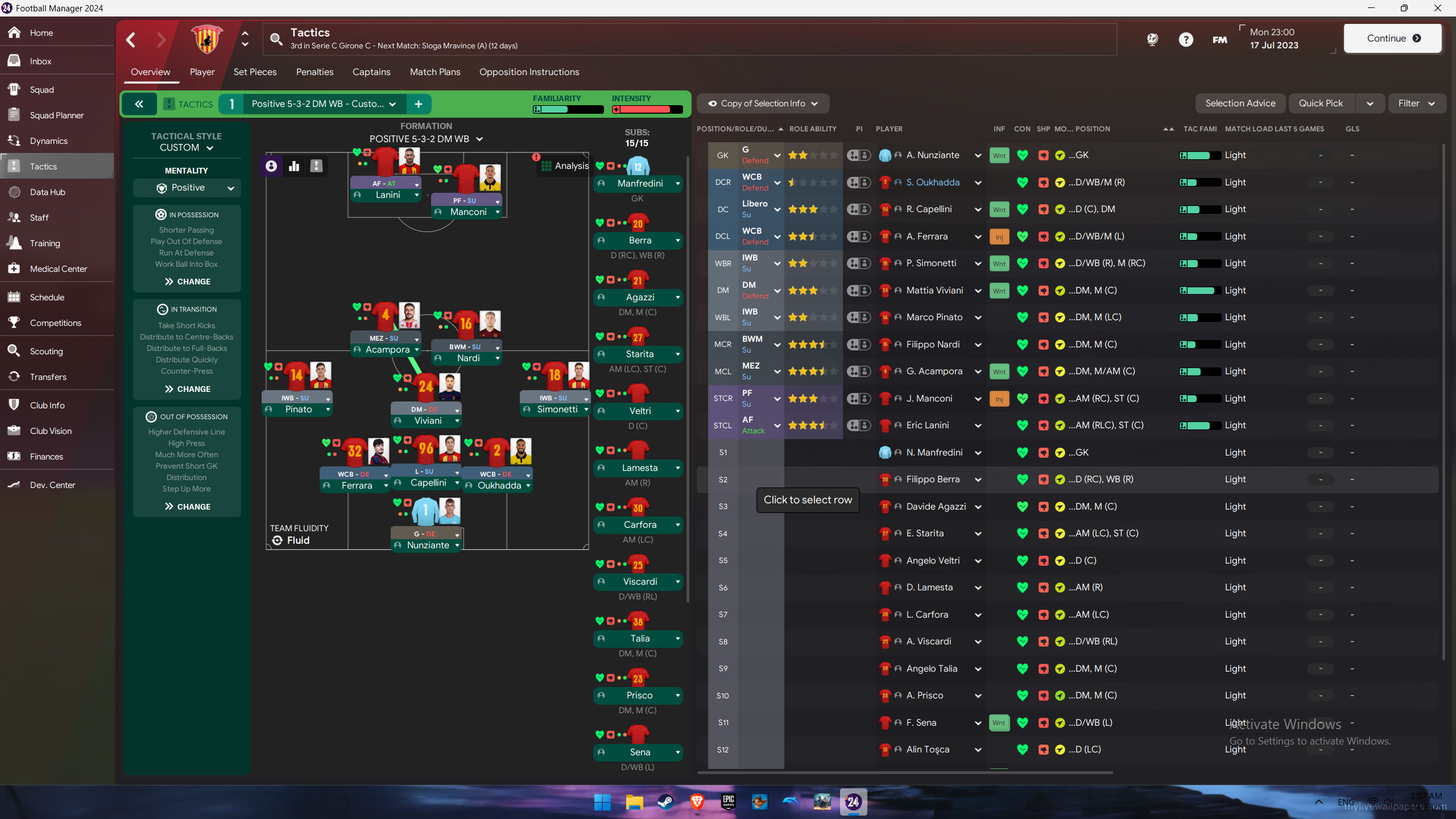
Formation & Style
Tactical Style:Custom
Mentality:Positive
Formation:5-3-2 DM WB
Team Fluidity:Fluid
In Possession
Short Passing
Play Out Of Defence
Run At Defence
Work Ball Into Box
In Transition
Take Short Kicks
Distribute To Centre-Backs
Distribute To Full-Backs
Counter-Press
Out of Possession
Higher Defensive Line
High Press
Much More Often Prevent Short GK Distribution
Step Up More
Team Shape Without Ball
Shape:Compact with High Line
Description:The team defends in a compact formation, with the defensive line pushed high to engage opponents early.
Evidence:High Press and Higher Defensive Line instructions combined with the 5-3-2 formation.
Team Shape With Ball
Shape:Fluid, width-utilizing
Description:The Use of Wing-Backs gives width and helps create space for central players; two strikers provide multiple attacking options.
Evidence:Short Passing and Work Ball Into Box instructions with the wing-backs positioned at [2,1] and [2,5].
Phase Description
Attacking Play
Focus on building from the back with short passing and creating overloads through the wide areas via the Wing-Backs.
Defensive Transition
Quickly counter-pressing to retain possession and disrupt opposition plays immediately after losing the ball.
Main Focus
Utilizing width and movement in the final third while maintaining solid defensive structure when out of possession.
Key Strengths
Defensive Solidity
The 5-3-2 formation provides strong defensive coverage against various attacking threats.
Width in Attack
The presence of two DWB allows for width, stretching opponents and creating spaces for midfielders and strikers.
Dynamic Midfield
A mix of roles offers flexible options, helping to control the midfield and transition quickly.
Conflicting Directions
High Defensive Line Risks
A high defensive line can be vulnerable to fast counter-attacks.
Over-reliance on Wing-Backs
Heavy usage of wing-backs can leave the team exposed if opponents counter-attack down the flanks.
Limited Central Play
Formation favors wing play which may restrict central attacking options.
Tactical Suggestions
Consider Lowering Defensive Line
Reducing the defensive line to provide more room for the defense to operate and reduce exposure to counters.
Add a Central Attacking Option
Include a more playmaking presence in the central attacking midfield to complement your strikers.
Utilize Substitutions Strategically
Make effective use of substitutions to refresh tired wing-backs, especially in high-intensity situations.
Ask Questions About Your Lineup
Related Tactics
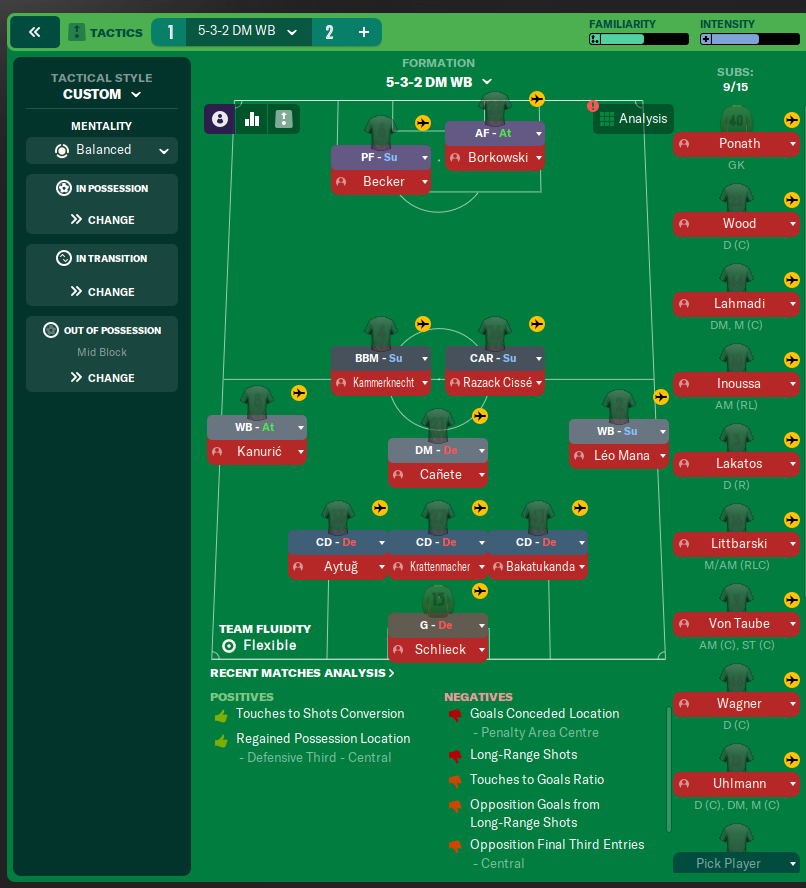
5-3-2 DM WB Formation
Custom
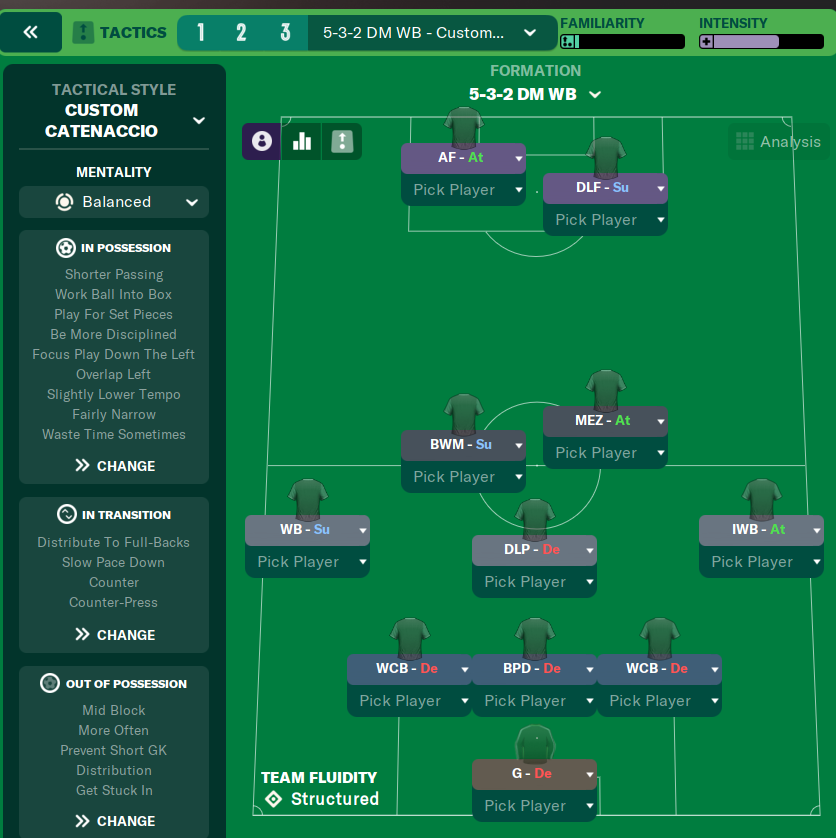
Catenaccio 5-3-2 DM WB
Custom Catenaccio
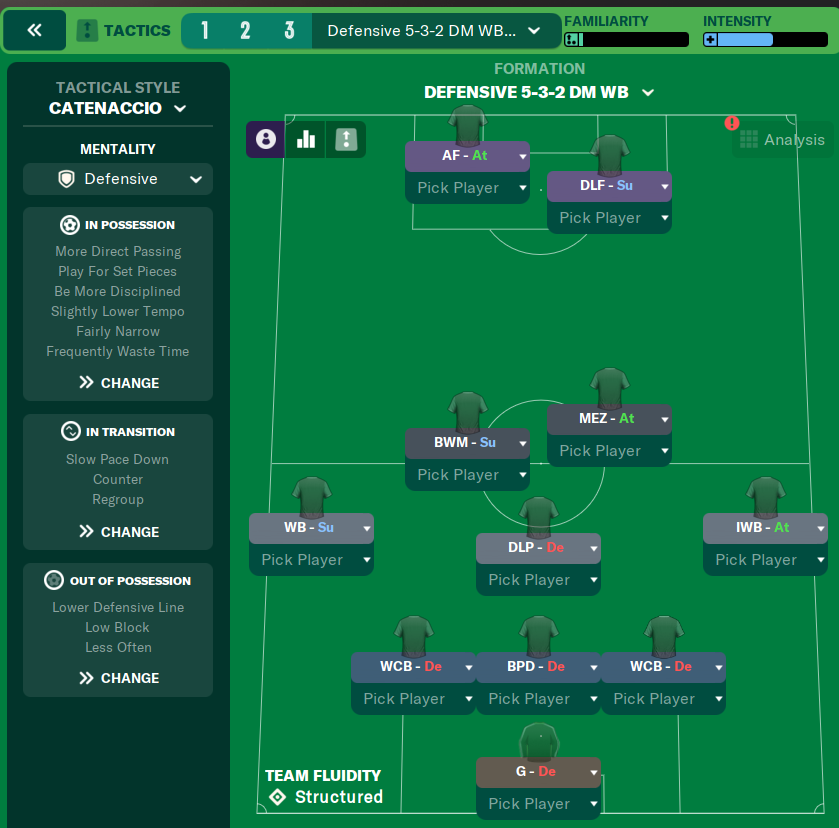
Catenaccio 5-3-2 DM WB
Catenaccio
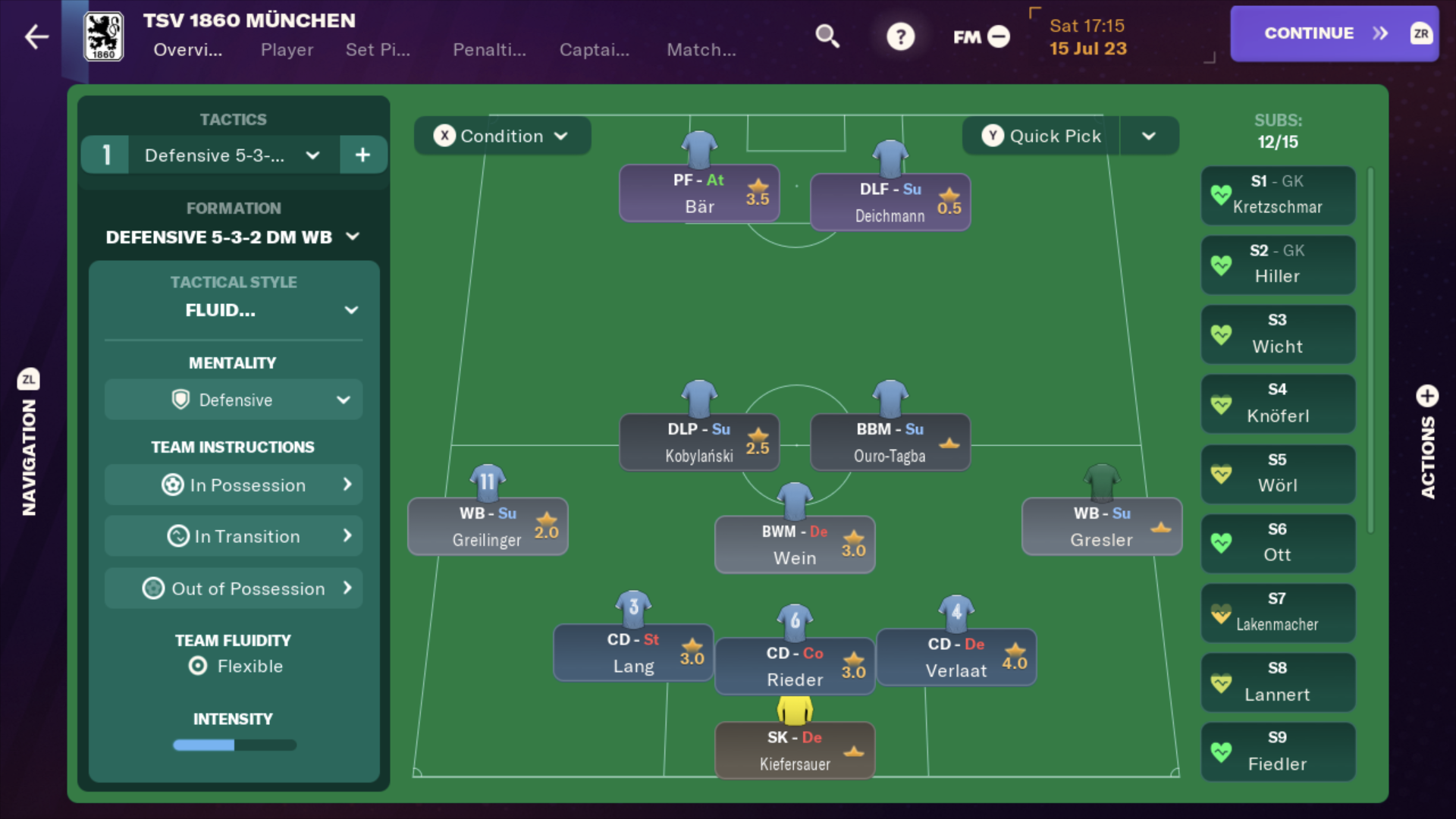
Fluid 5-3-2 DM WB
Fluid
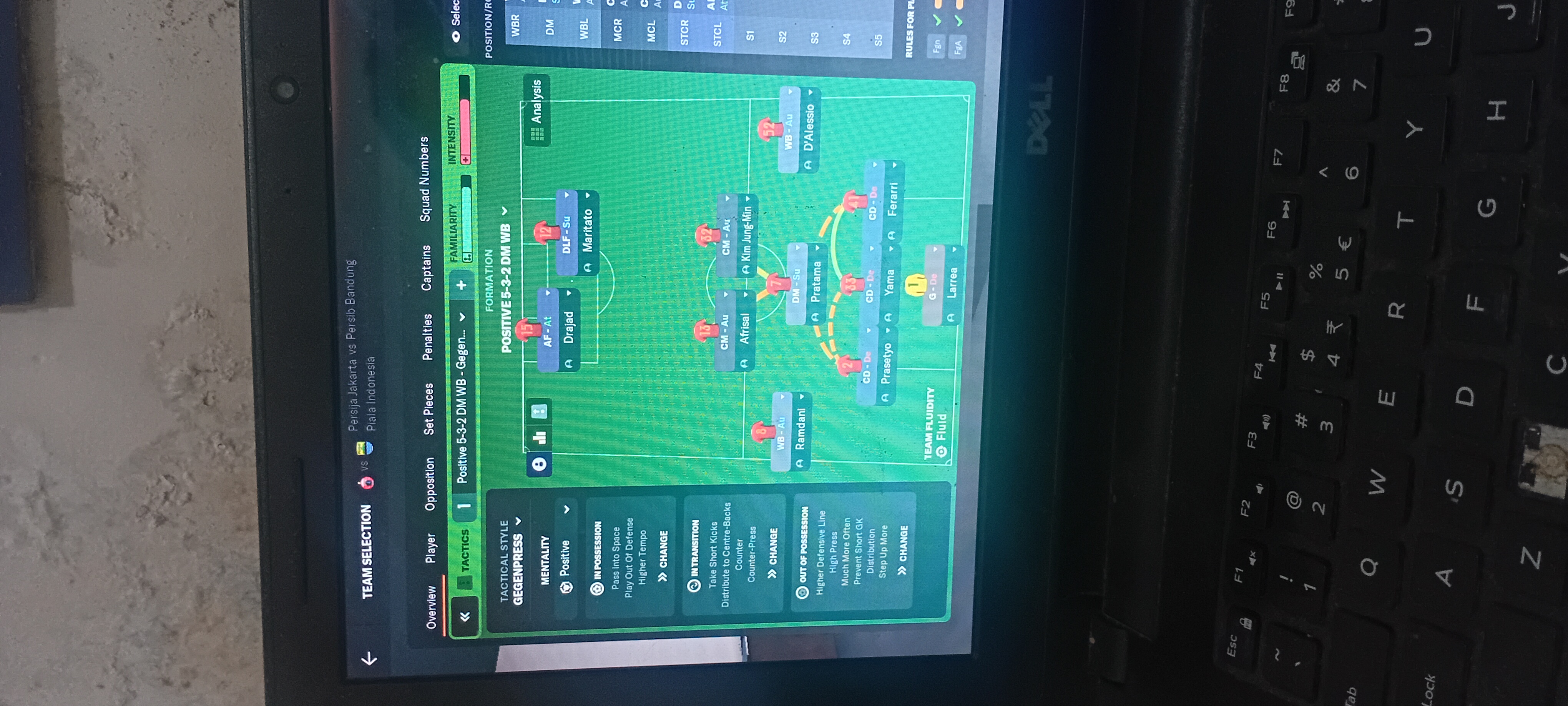
Gegenpress 5-3-2 DM WB
Gegenpress
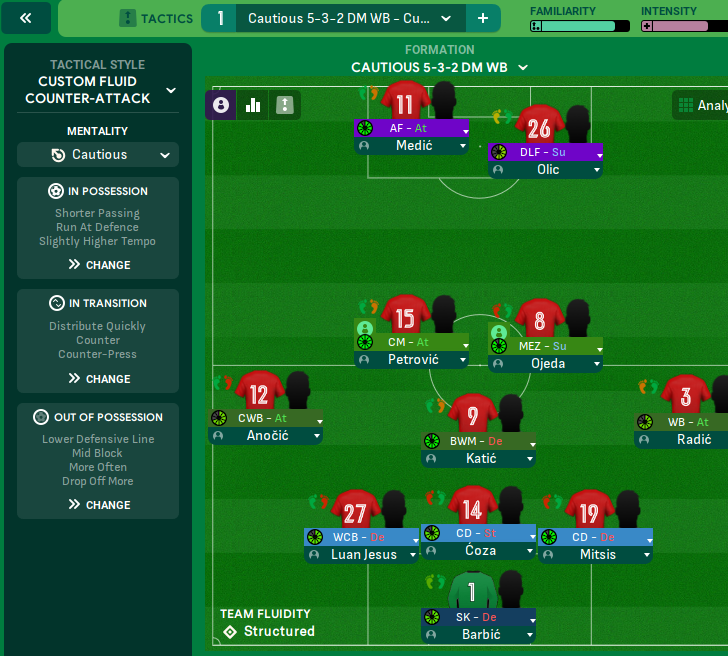
Fluid Counter-Attack 5-3-2 DM WB
Custom Fluid Counter-Attack
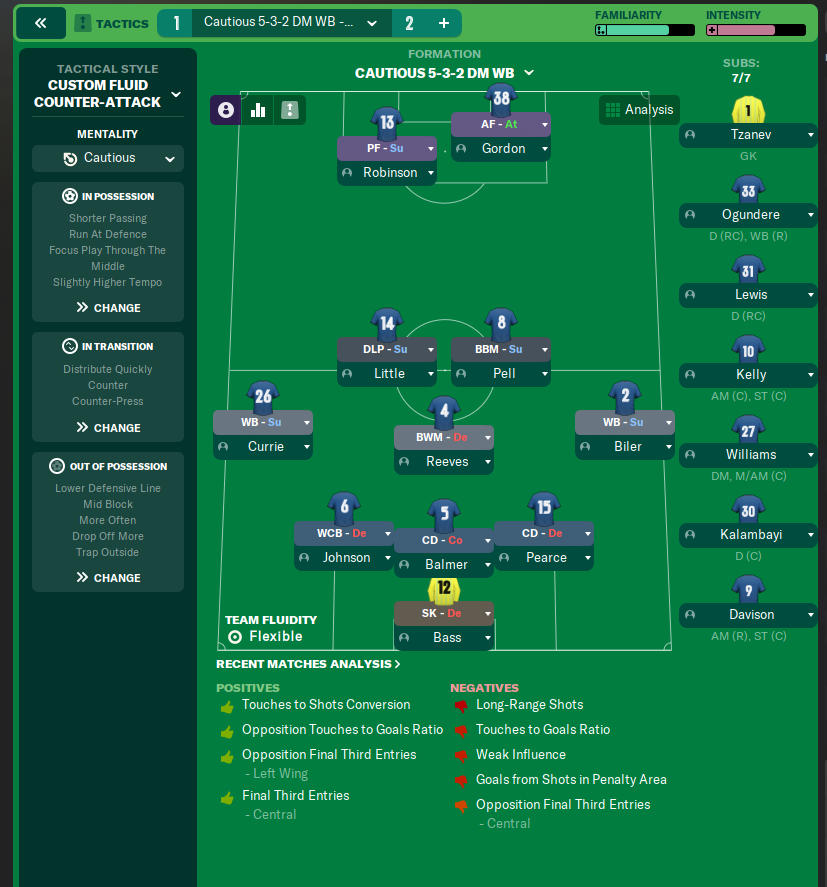
Fluid Counter-Attack 5-3-2 DM WB
Custom Fluid Counter-Attack
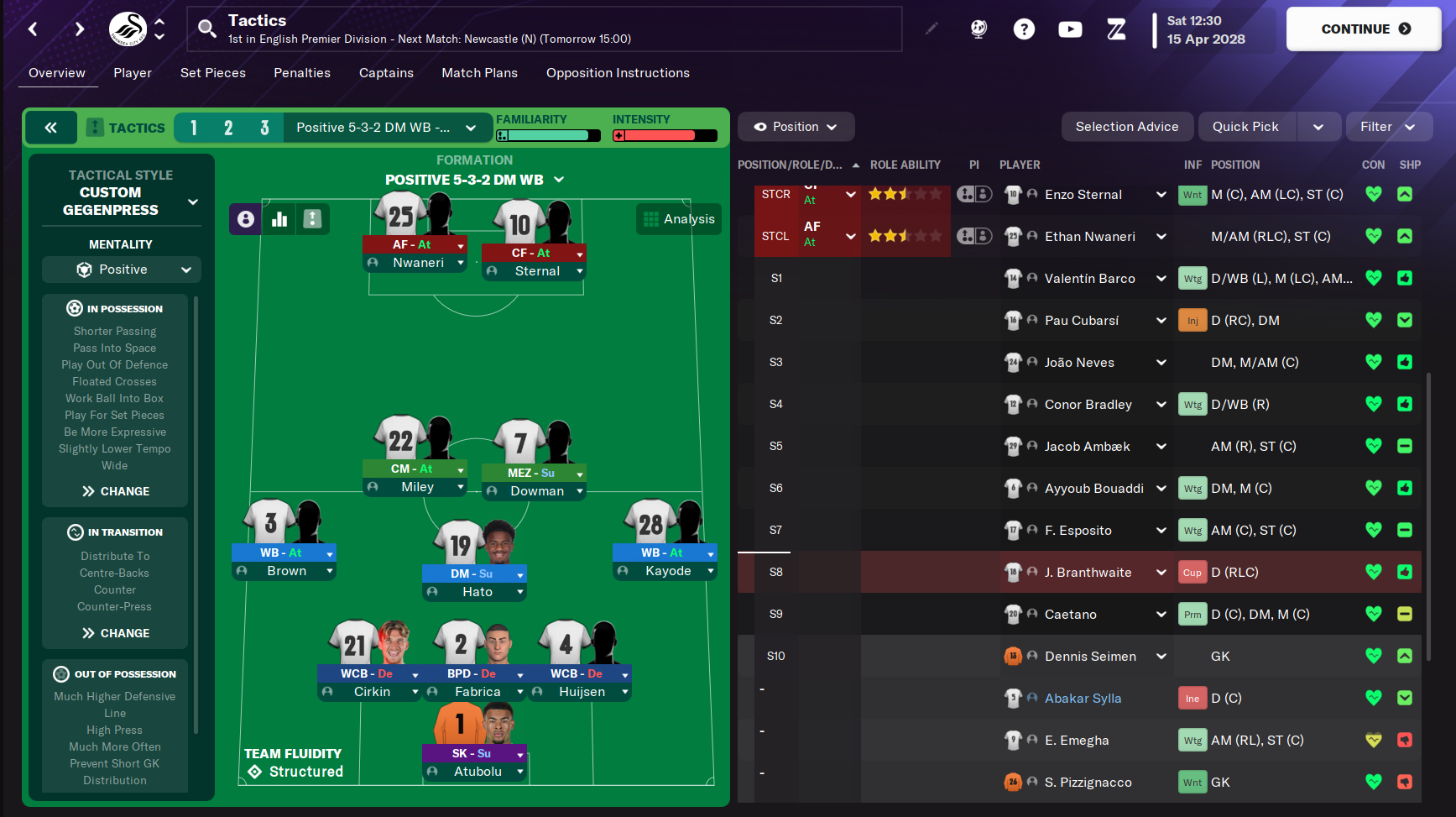
Gegenpress 5-3-2 DM WB
Gegenpress
Guides for this formation
The tactical theory behind the 5-3-2 DM WB: roles, instructions, and the trade-offs that decide whether the system holds up.