Uploaded Tactic
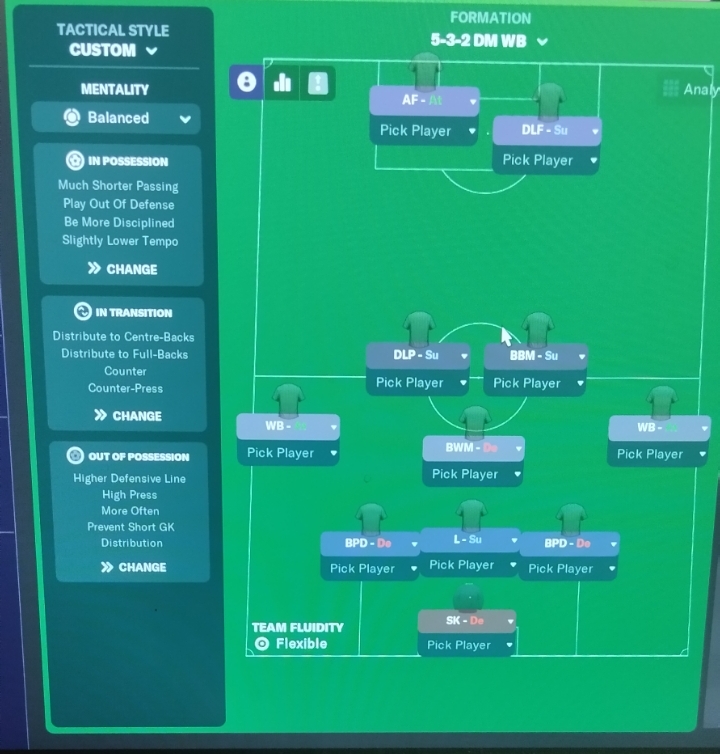
Formation & Style
Tactical Style:Custom
Mentality:Balanced
Formation:5-3-2 DM WB
Team Fluidity:Flexible
In Possession
Much Shorter Passing
Play Out Of Defense
Be More Disciplined
Slightly Lower Tempo
In Transition
Distribute to Centre-Backs
Distribute to Full-Backs
Counter
Counter-Press
Out of Possession
Higher Defensive Line
High Press
Prevent Short GK Distribution
Be More Aggressive
Team Shape Without Ball
No team shape without ball data available
Team Shape With Ball
No team shape with ball data available
Key Strengths
Compact Defense
The 5-3-2 formation provides a solid defensive structure, making it difficult for opponents to penetrate.
Supportive Midfield
With a Box to Box Midfielder and a Deep Lying Playmaker, the midfield can effectively support both defense and attack.
Width from Wing Backs
The attacking Wing Backs can stretch the play, providing width and contributing to both offensive and defensive phases.
Counter-Attacking Potential
Utilizing a counter-attacking strategy allows for quick transitions to exploit the opponent's defensive gaps.
Conflicting Directions
High Press vs. Defensive Shape
While the high press can create turnovers, it may leave gaps in defense if players are caught out of position.
Disciplined Play vs. Tempo
A disciplined approach might conflict with slightly lower tempo, potentially leading to slower buildup play.
Wing Back Duties
Both Wing Backs on attacking duties may lead to vulnerabilities in defense if the team is caught in transition.
Balance of Midfield Roles
The combination of three different midfield roles could lead to confusion in defensive responsibilities if not properly managed.
Tactical Suggestions
Adjust Wing Back Roles
Consider using one Wing Back on support and the other on attack to balance offensive output and defensive security.
Change Mentality for Transition Phases
Adjusting to a more attacking mentality during counter phases can help the team capitalize on turnovers.
Instruct Midfielders to Track Back
Ensure the Box to Box Midfielder and Ball Winning Midfielder track back effectively to maintain defensive shape.
Utilize More Dynamic Passing
Increase the passing range for the Deep Lying Playmaker to enable quick transitions and catch opponents off-guard.
Ask Questions About Your Lineup
Related Tactics
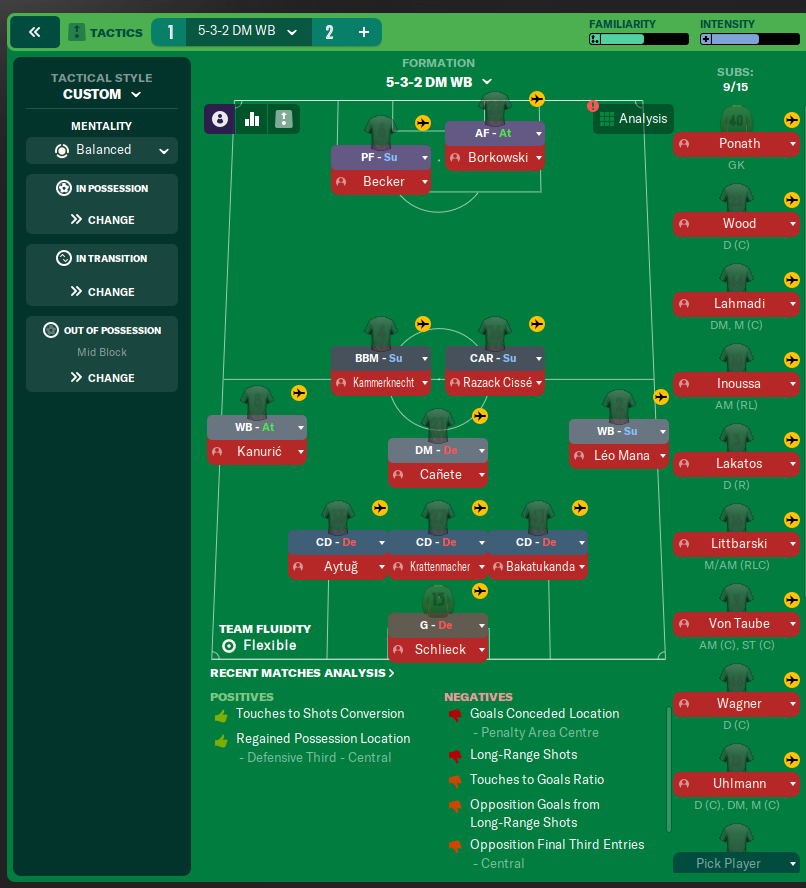
5-3-2 DM WB Formation
Custom
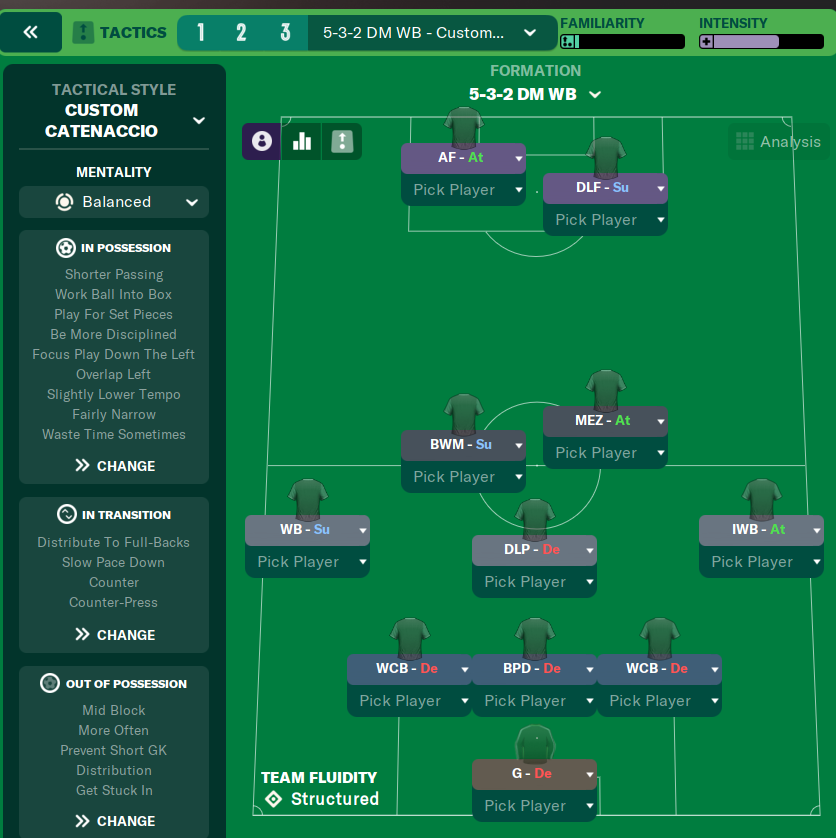
Catenaccio 5-3-2 DM WB
Custom Catenaccio
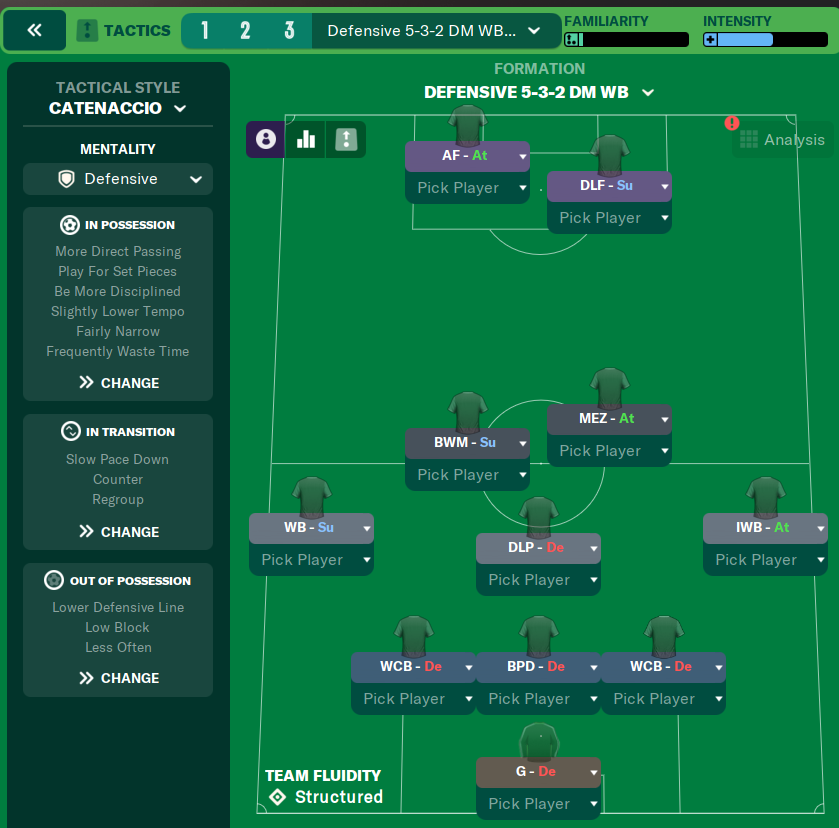
Catenaccio 5-3-2 DM WB
Catenaccio
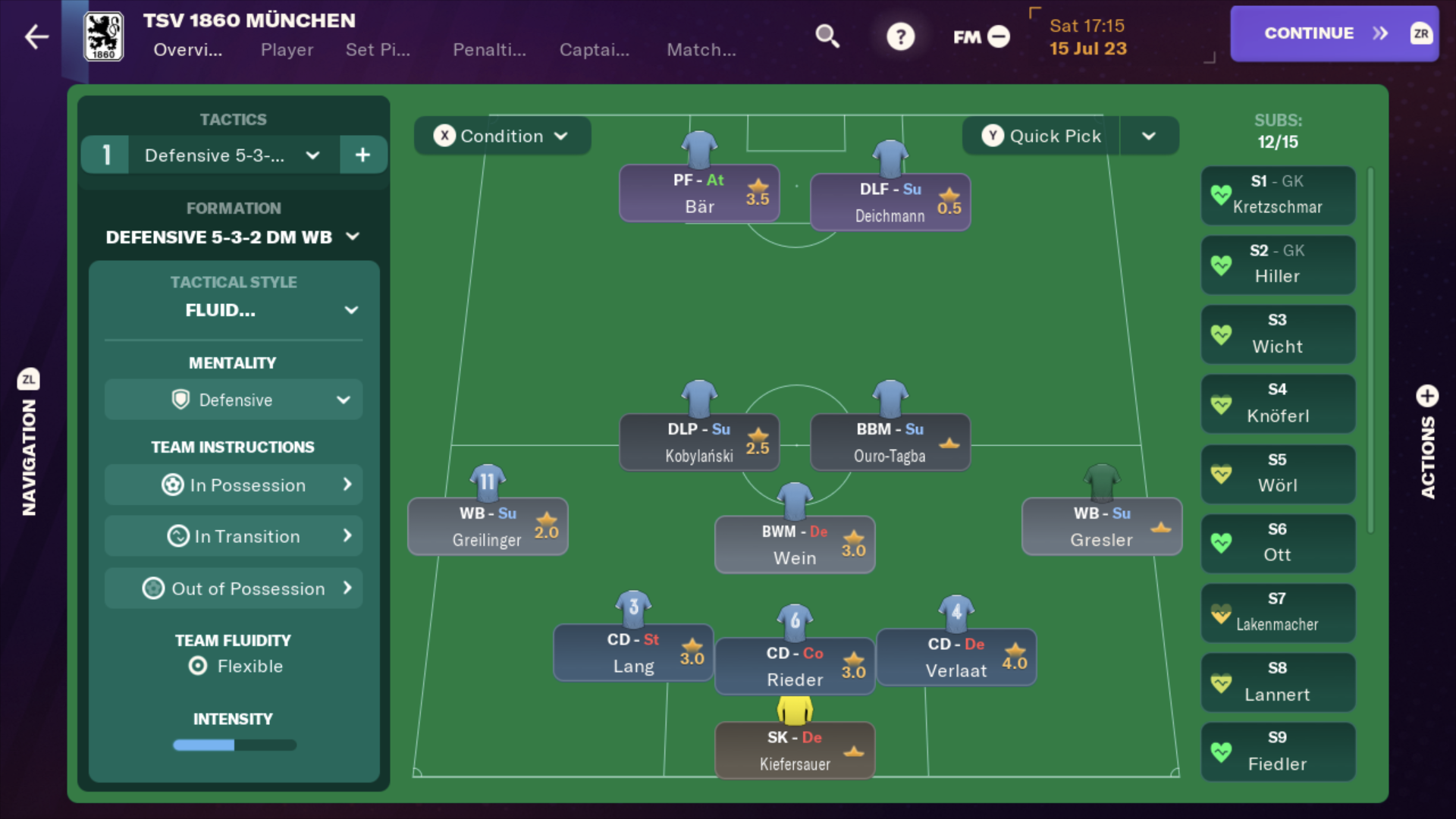
Fluid 5-3-2 DM WB
Fluid
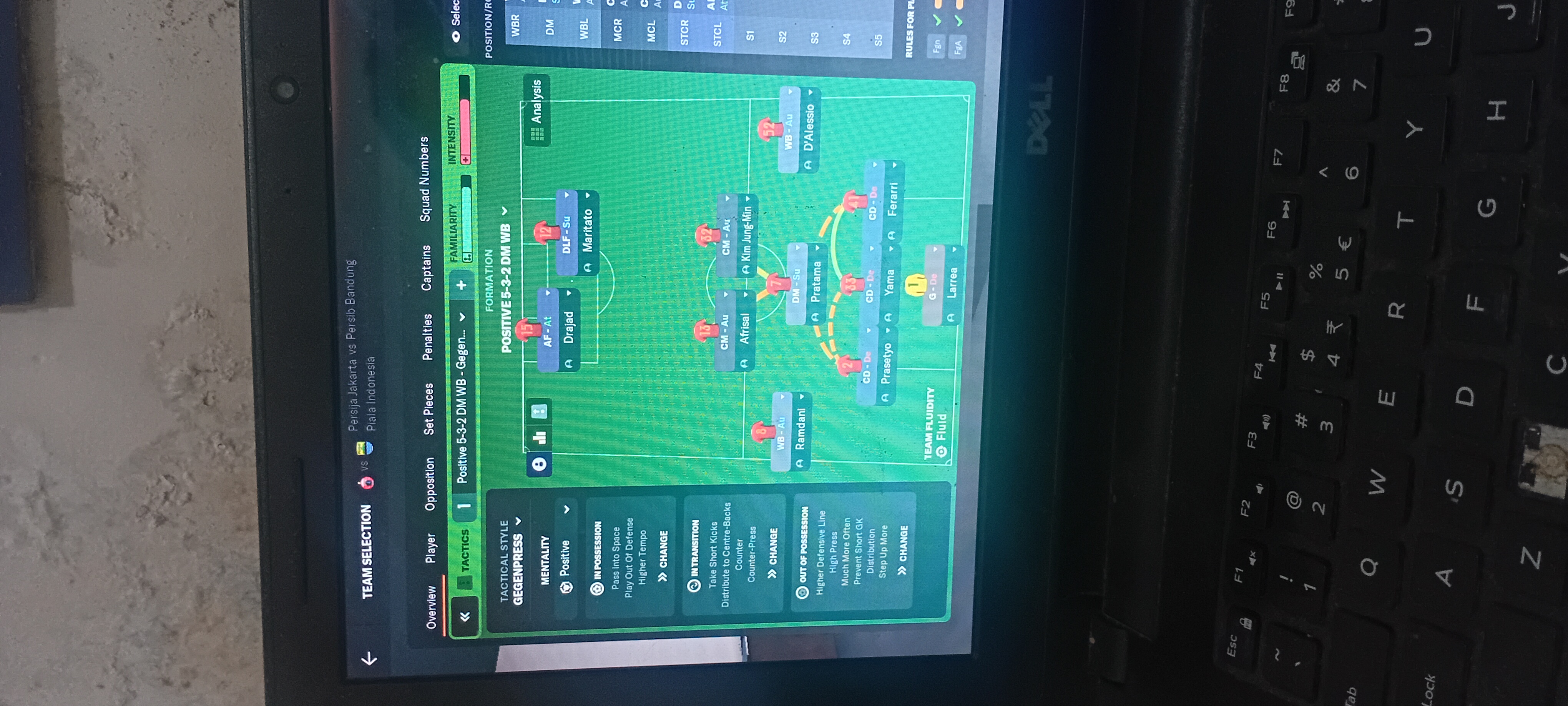
Gegenpress 5-3-2 DM WB
Gegenpress
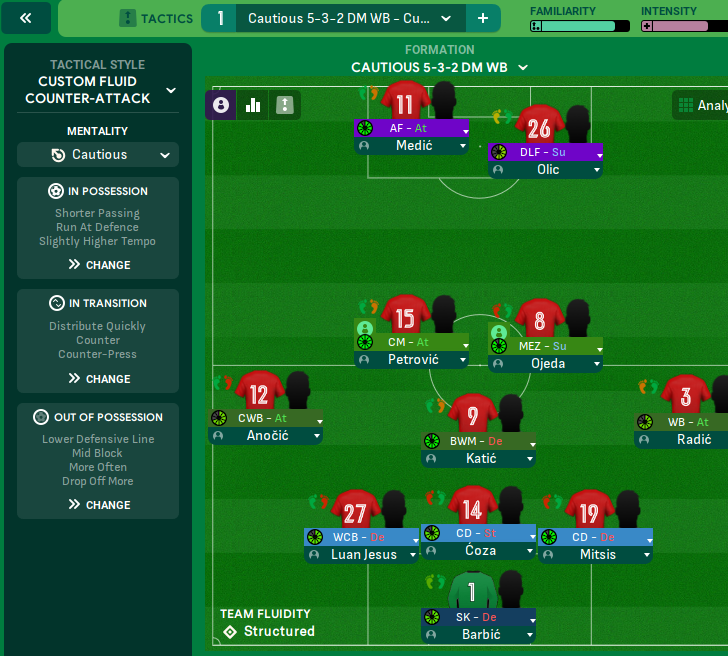
Fluid Counter-Attack 5-3-2 DM WB
Custom Fluid Counter-Attack
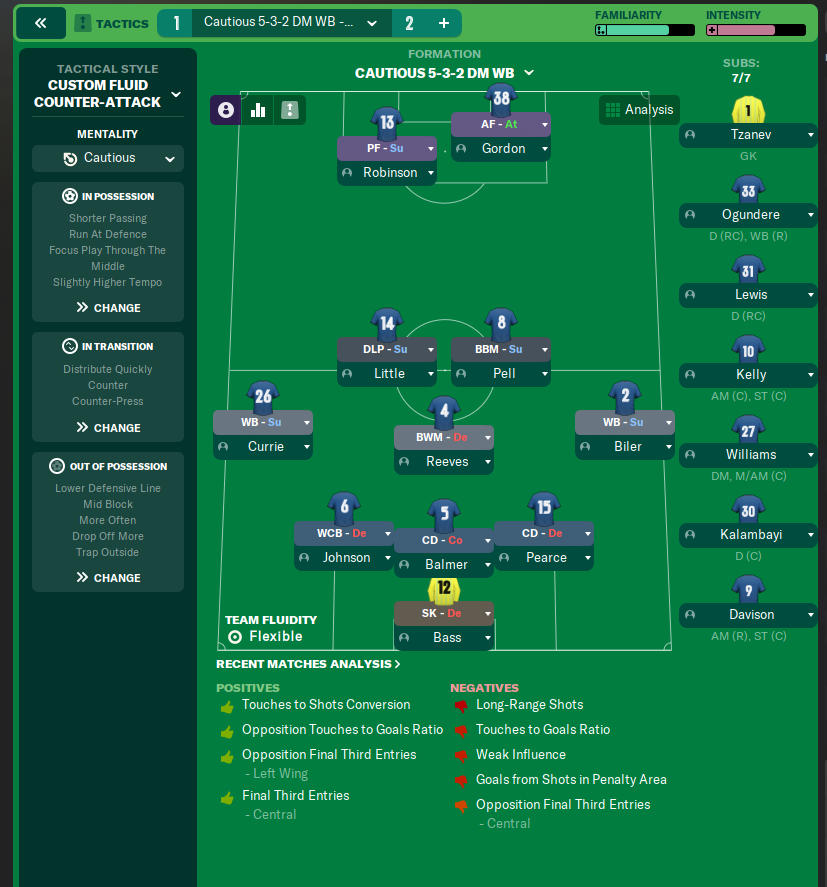
Fluid Counter-Attack 5-3-2 DM WB
Custom Fluid Counter-Attack
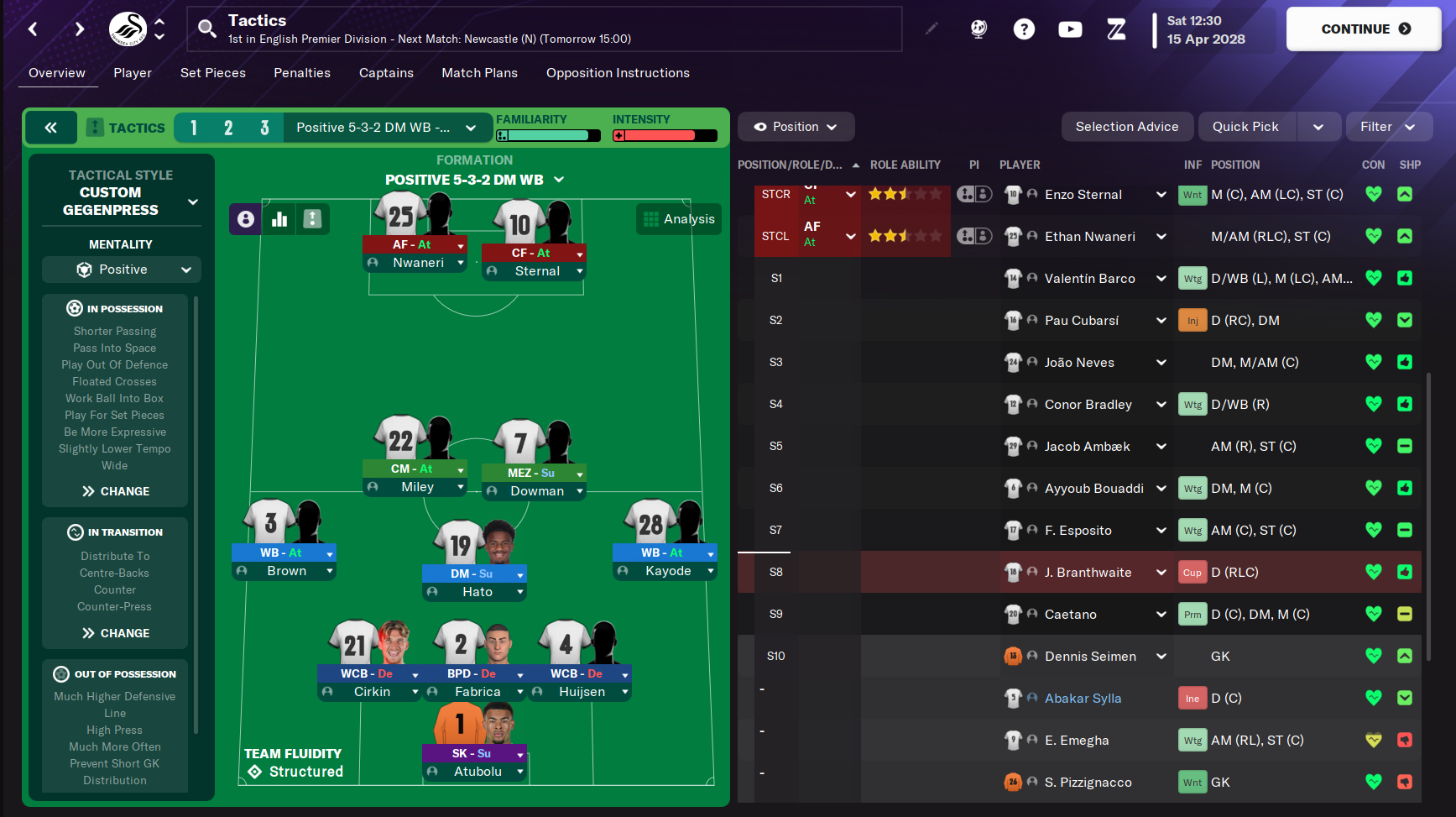
Gegenpress 5-3-2 DM WB
Gegenpress
Guides for this formation
The tactical theory behind the 5-3-2 DM WB: roles, instructions, and the trade-offs that decide whether the system holds up.