Uploaded Tactic
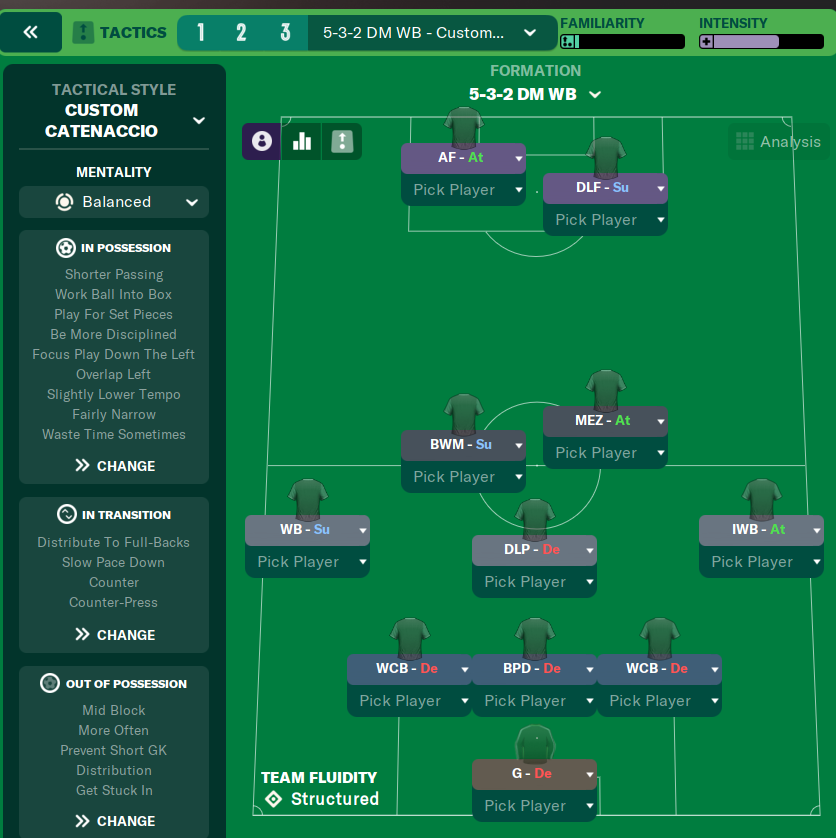
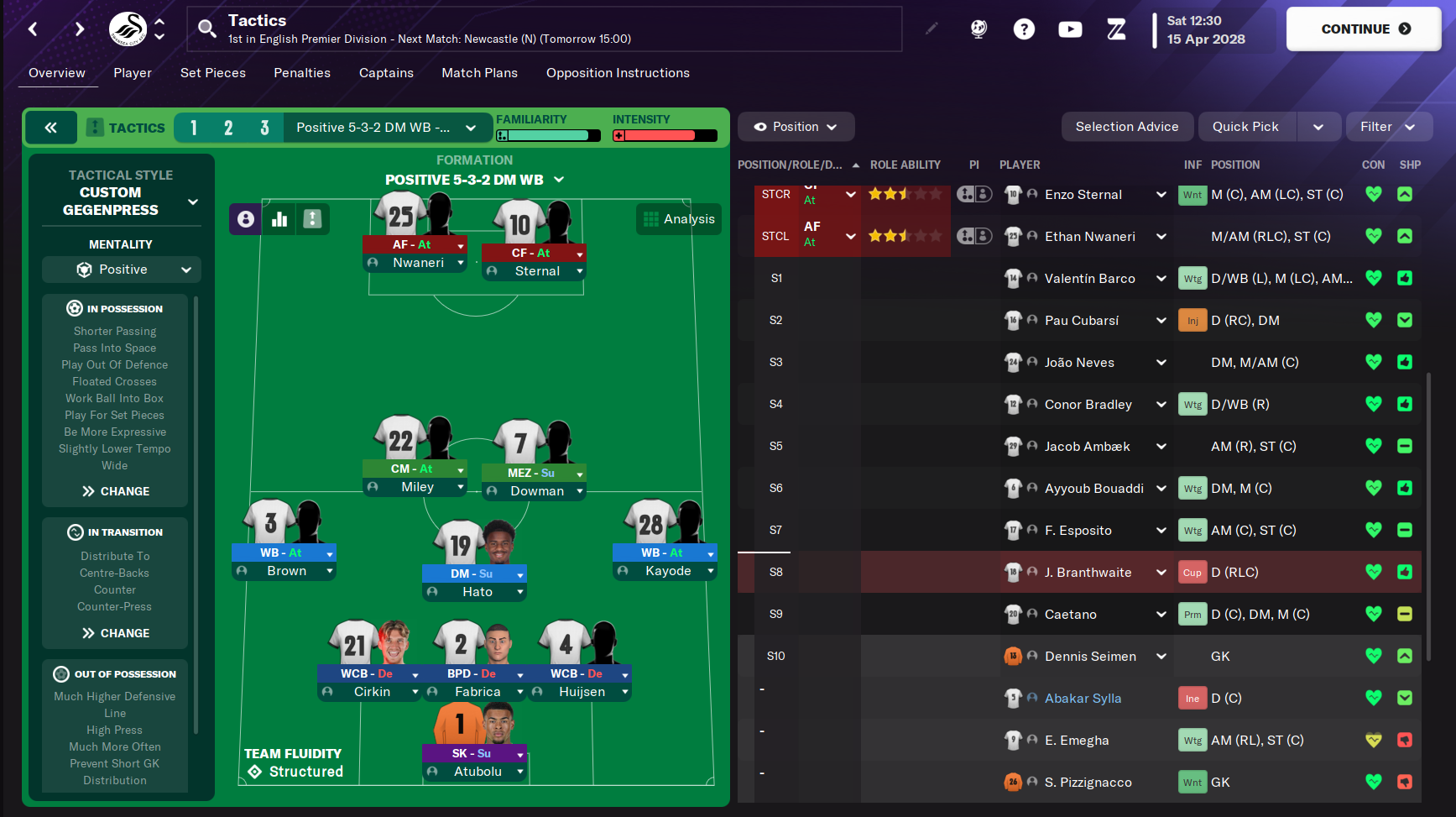
Formation & Style
Tactical Style:Custom Catenaccio
Mentality:Balanced
Formation:5-3-2 DM WB
Team Fluidity:Structured
In Possession
Shorter Passing
Work Ball Into Box
Play For Set Pieces
Be More Disciplined
Focus Play Down The Left
Slightly Lower Tempo
Fairly Narrow
Waste Time Sometimes
In Transition
Distribute To Full-Backs
Slow Pace Down
Counter
Counter-Press
Out of Possession
Mid Block
Prevent Short GK Distribution
Get Stuck In
Team Shape Without Ball
Shape:5-3-2
Description:Defensive solidity with two banks of five and three, allowing for a compact and organized shape.
Evidence:5 defenders with WCBs and a BPD ensuring strength and distribution from the back.
Team Shape With Ball
Shape:5-3-2
Description:Utilizing wing-backs to stretch the opposition while maintaining a two-pronged attack.
Evidence:The forwards are supported by the attacking wing-backs and a Mez in central areas.
Phase Description
Attacking Play
The team focuses on building play from the back, using the width provided by wing-backs and looking to create opportunities through disciplined passing.
Defensive Transition
Upon losing the ball, the team quickly shifts to a counter-pressing style, looking to regain possession.
Main Focus
Utilizing the width of the pitch while maintaining a solid defensive structure.
Key Strengths
Defensive Solidity
With a back five, there is excellent coverage and protection against opposition attacks.
Width and Depth in Attack
The use of wing-backs allows for width in the attacking phase, stretching opponent defenses.
Midfield Control
The inclusion of a DLP and BWM ensures control in midfield with defensive stability.
Conflicting Directions
Overreliance on Flanks
While focusing on play down the left, there may be vulnerability on the right side.
Potential for Counterattack Vulnerability
Counter-attacking strategies can lead to exposure if the team commits too many players forward.
Lack of Pressing
The tactical structure might lack aggression in pressing the opponent, reducing chances to win the ball back.
Tactical Suggestions
Consider Adjusting Width
Adjusting the tactical width could help prevent predictability in attacking plays and open up the right flank.
Increase Defensive Pressure
Implementing a higher pressing approach could enhance winning back possession quickly.
Promote Wing-Back Support
Encouraging wing-backs to join the attack more frequently could improve the offensive output.
Ask Questions About Your Lineup
Related Tactics
Guides for this formation
The tactical theory behind the 5-3-2 DM WB: roles, instructions, and the trade-offs that decide whether the system holds up.