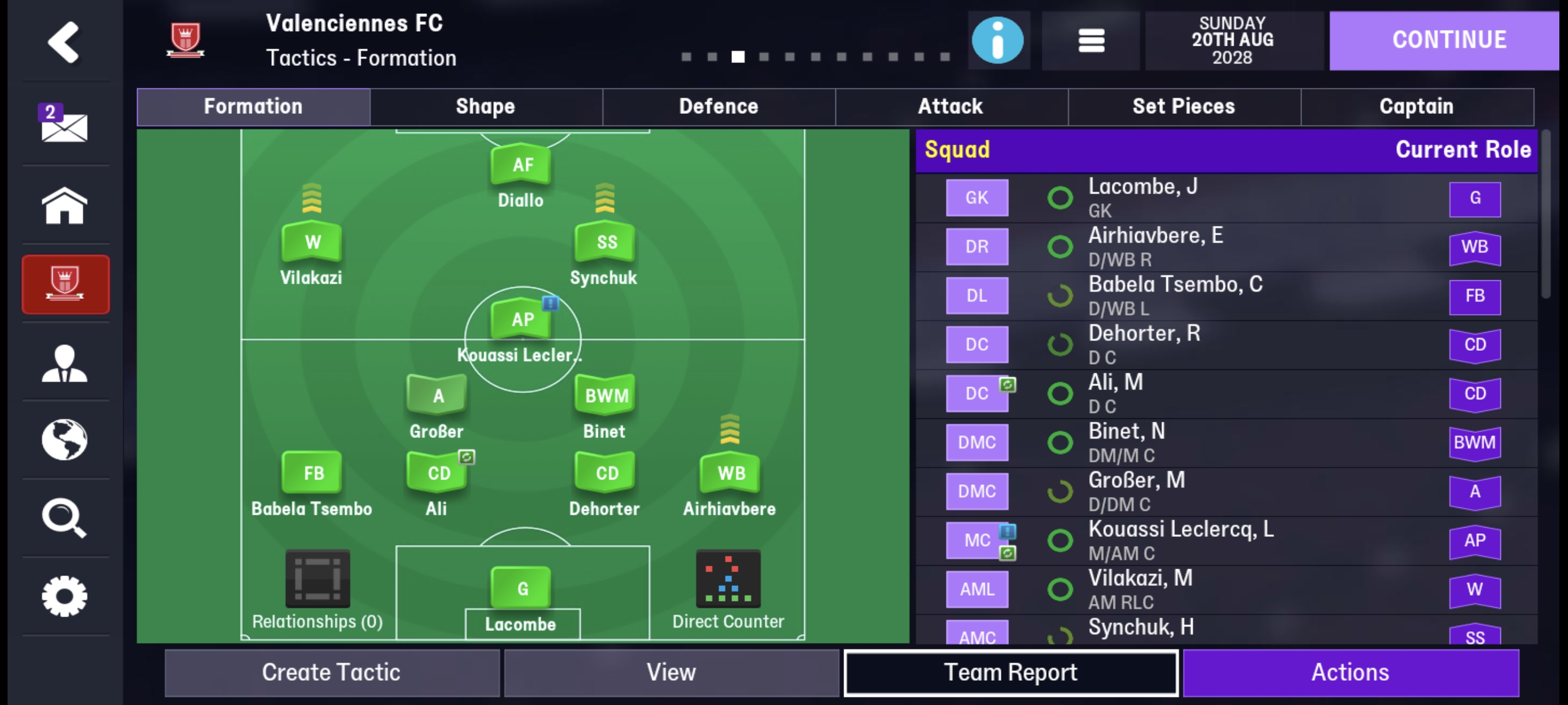
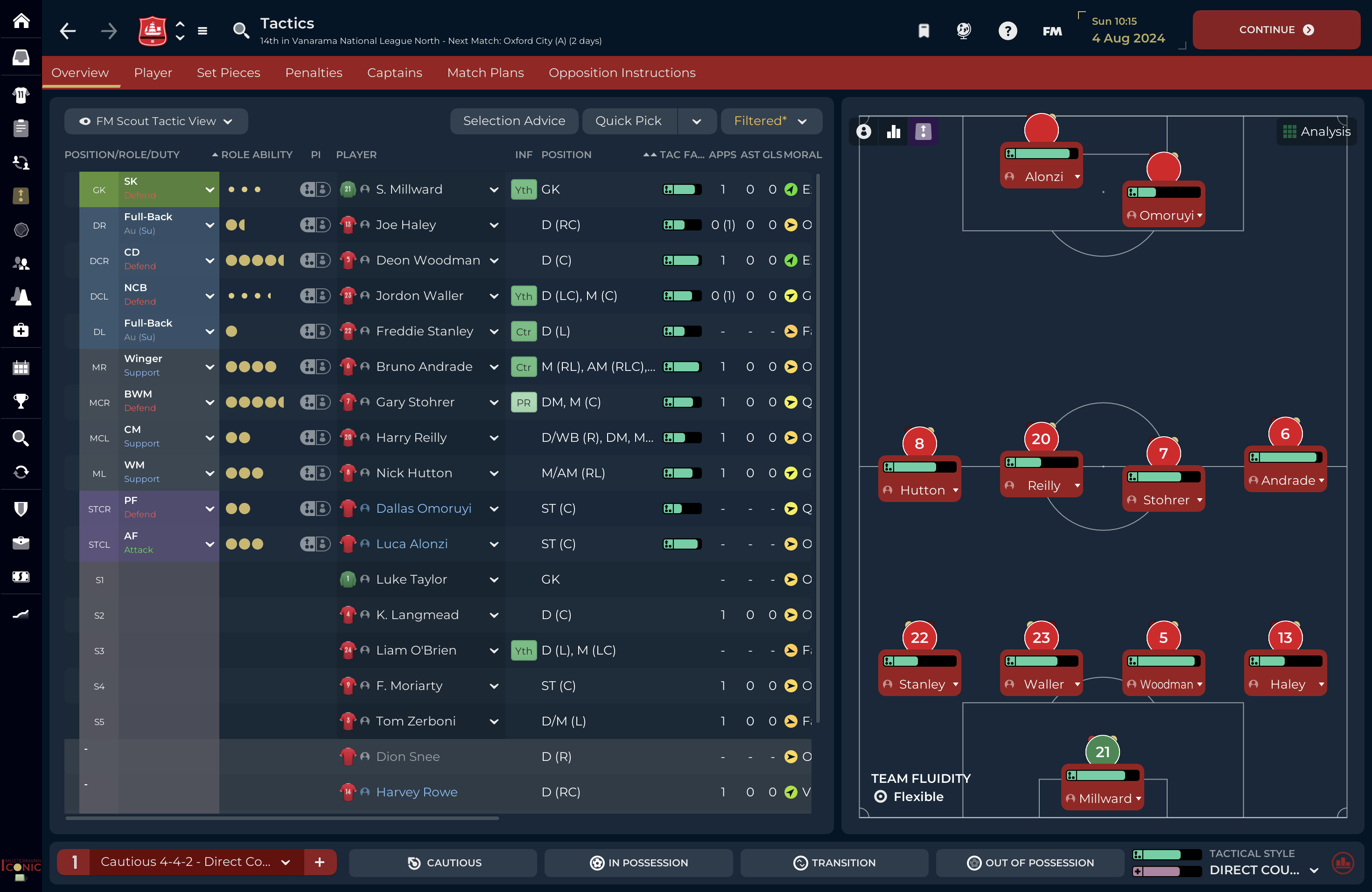
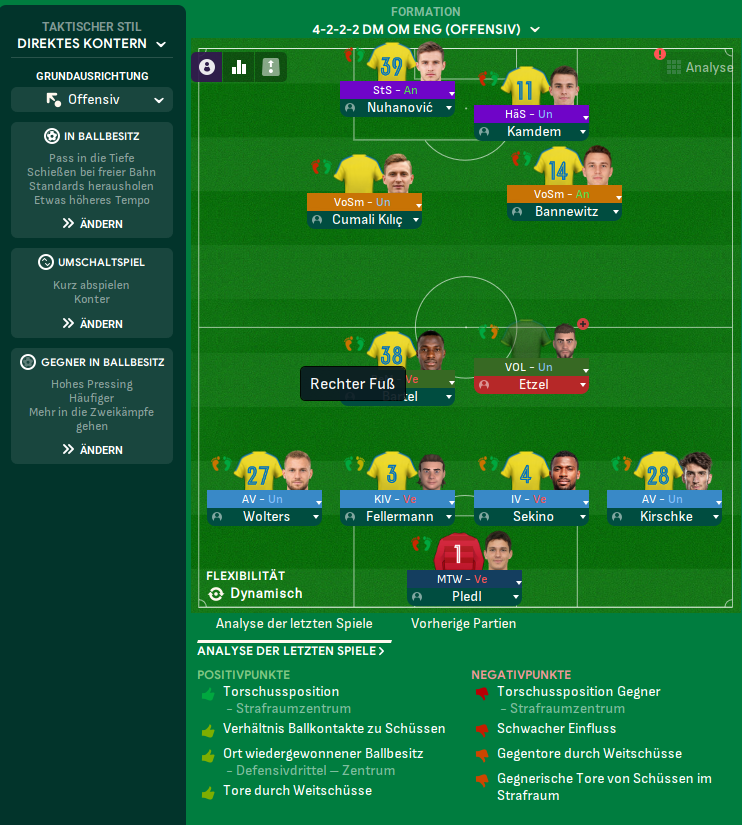
Uploaded Tactic
Formation & Style
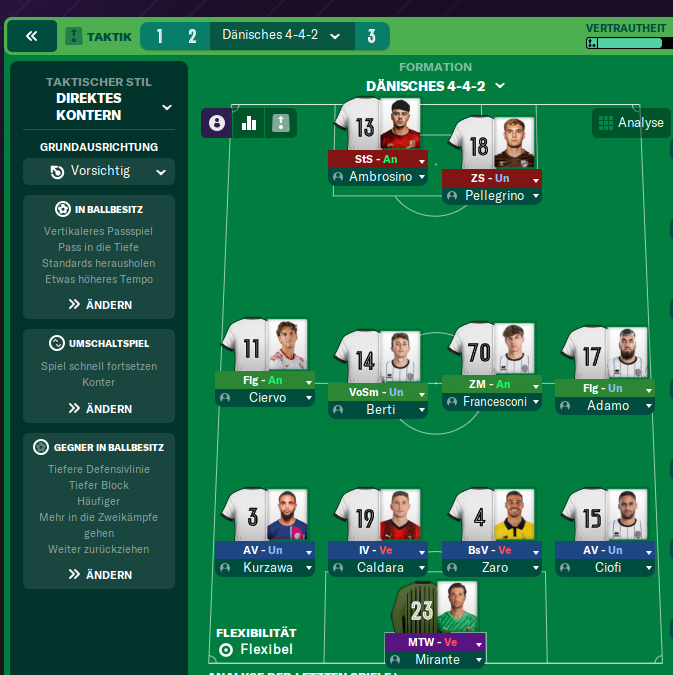
Tactical Style:Direct Counter
Mentality:Cautious
Formation:Danish 4-4-2
Team Fluidity:Flexible
In Possession
Vertical passing
Pass into space
Standards focus
Slightly increased tempo
In Transition
Counter-attack quickly
Out of Possession
Lower defensive line
Deep defending
More commitment in duels
Sit back more
Team Shape Without Ball
No team shape without ball data available
Team Shape With Ball
No team shape with ball data available
Key Strengths
Solid Defensive Structure
The compact formation provides a strong defensive line which is difficult for opponents to break down.
Effective Counter-Attacking
Utilizing direct counter tactics, the team can exploit opposition mistakes quickly with forward players.
Versatile Midfield Roles
The use of both attacking and supporting duties in midfield allows for various attacking options and flexibility.
Wide Play Opportunities
Wing forwards and wide midfielders create space on the flanks, providing crossing opportunities for strikers.
Conflicting Directions
Aggressive Pressing vs. Cautious Mentality
While a cautious mentality suggests a deep block, aggressive pressing can leave gaps; balancing the two is essential.
Attacking Roles in Defensive Set-Up
Having an Advanced Forward and Wing Forward might create an imbalance if the team needs to defend deeply.
Fluidity vs. Rigid Formation
Flexibility in strategy can conflict with the rigid formation, requiring adjustments based on opponent tactics.
Player Roles and Responsibilities
It's crucial to ensure that players understand their specific roles to avoid tactical confusion on the pitch.
Tactical Suggestions
Adjust Mentality Based on Opposition
Consider changing to a more positive mentality against weaker opponents to enhance attacking potential.
Utilize Substitutes Wisely for Fresh Legs
In tight matches, tactical substitutions can provide a boost, especially in wide positions to maintain tempo.
Tweak Player Instructions for Wider Play
Encouraging wide midfielders and wing forwards to stay wide can stretch the opponent's defense, creating more space.
Experiment with Fluidity Adjustment
Testing different levels of fluidity can help to find a balance between defensive stability and attacking prowess.