Uploaded Tactic
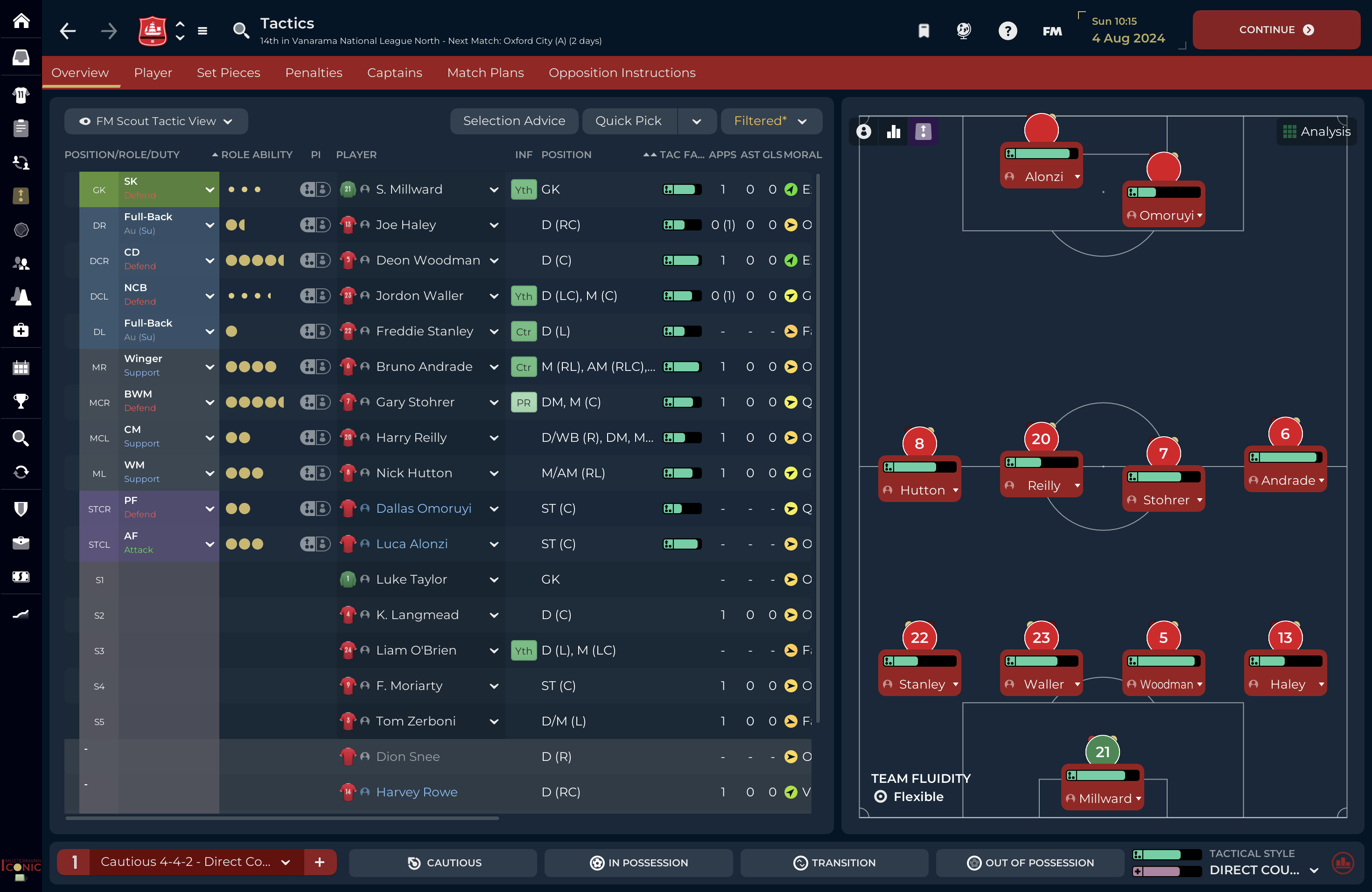
Formation & Style
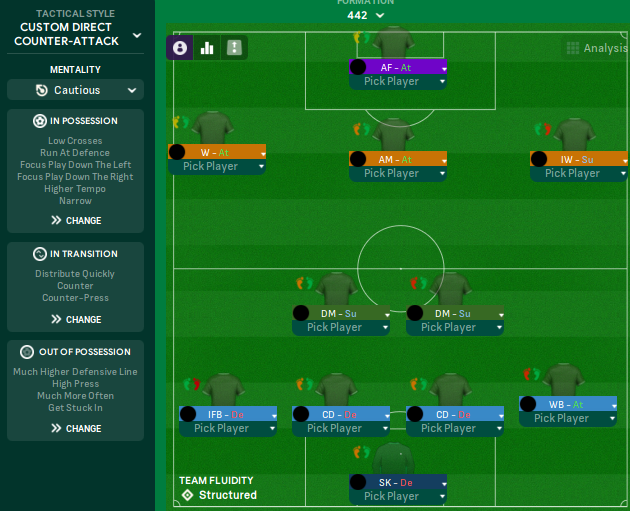
Tactical Style:Direct Counter
Mentality:Cautious
Formation:4-4-2
Team Fluidity:Flexible
In Possession
Play direct passes
Focus on wide play
Utilize wing support
In Transition
Counter quickly after gaining possession
Be cautious during defensive transitions
Out of Possession
Maintain a compact shape
Press opponents when they are in the middle third
Use a low block
Team Shape Without Ball
Shape:Compact Formation
Description:Team retains a compact shape to limit space for the opposition.
Evidence:The presence of the BWM at [3,2] bolsters the defensive effort and allows the full-backs to support without losing shape.
Team Shape With Ball
Shape:Wide Play
Description:Utilizing width effectively through the wingers to create crossing opportunities for strikers.
Evidence:Wingers at [6,1] and [6,5] provide width, allowing the advanced forward to make runs in behind.
Phase Description
Attacking Play
Utilize wings through wide play while looking for quick transitions; the strikers are well-positioned to exploit space.
Defensive Transition
Maintain shape and be cautious, focusing on regaining possession quickly.
Main Focus
Get the ball to wide areas and cross into the box for attacking opportunities.
Key Strengths
Defensive Solidity
The inclusion of a BWM provides additional support in winning the ball back, while the full-backs can provide width.
Wide Attacking Options
Wingers bring pace and width, crucial for stretching the opposition's defence.
Counter-Attacking Focus
The tactical setup allows for quick breaks following defensive recovery, taking advantage of pace in transition.
Conflicting Directions
Over-Reliance on Wingers
Excessive focus on play from the wings may lead to predictability.
Low Pressing Intensity
Cautious mentality might limit pressing effectiveness, allowing opponents time on the ball.
Striker Isolation
Without midfield support, the Advanced Forward may find it challenging to receive the ball.
Tactical Suggestions
Increase Midfield Support
Consider adjusting player roles to allow more overlap, especially for the attacking midfielder role.
Incorporate More Fluidity
Adjusting team fluidity from Flexible to Fluid could enhance player movement and synergy.
Higher Pressing Strategy
Introducing a more aggressive pressing approach could prevent opponent build-up.
Ask Questions About Your Lineup
Related Tactics
More Direct Counter tactics
Guides for this formation
The tactical theory behind the 4-4-2: roles, instructions, and the trade-offs that decide whether the system holds up.
Player pairings
Midfield Pairs in 4-2-3-1 and 4-4-2
Double pivots and flat pairs in 4-2-3-1 and 4-4-2: when each pairing works, when it collapses, and the AMC unicorn that rescues both.
Read guide
Playing styles
Direct, Vertical Football
Long-ball football done well in FM. When direct, vertical play is the right choice, and what the Direct Passing TI actually changes.
Read guide
Playing styles
Counter-Attacking Excellence
Sit deep, win the ball, and break in three passes. The roles, instructions, and squad profile that make it work.
Read guide