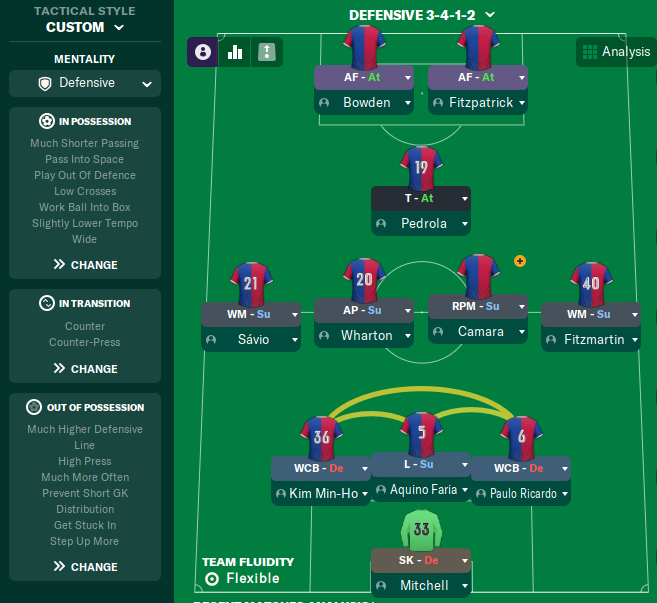
Defensive 5-4-1 (Defensive) Tactic
5-4-1
Prevent the opposition from creating clear chances. The formation provides a solid defensive structure with three centre-backs.
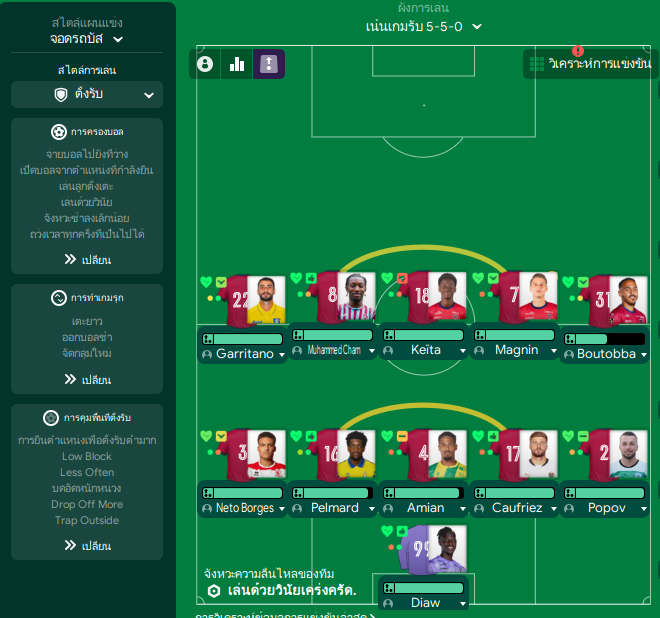
Loading tactical analysis...
Formation and style
Defensive
Defensive
5-4-1
Structured
In possession
Look for overlaps
Work ball into the box
Shorter passing
In transition
Drop Off More Often
Counter
Out of possession
Low Block
Much Higher Line of Engagement
Trigger Press Less Often
Player roles
GK
Goalkeeper
Defend
CB
No-Nonsense Centre-Back
Defend
CB
No-Nonsense Centre-Back
Defend
CB
No-Nonsense Centre-Back
Defend
WB
Wing-Back
Support
WB
Wing-Back
Support
CM
Ball-Winning Midfielder
Defend
CM
Central Midfielder
Support
CM
Central Midfielder
Support
ST
Pressing Forward
Attack
Phase description
Focus on retaining possession through short passes and utilizing wing-backs for width.
Quickly drop back into a compact shape when possession is lost.
Prevent the opposition from creating clear chances.
Team shape defence
5-4-1
Defends with five at the back, prioritizing structural integrity.
5 defenders at [2,1], [2,2], [2,3], [2,4], [2,5] with defensive duties.
Team shape attack
5-4-1
Primarily a counter-attacking shape relying on the wings.
Utilizes wing-backs at [2,4] and [2,5] to provide width while the lone striker at [6,3] attacks.
Key strengths
Defensive Solidity
The formation provides a solid defensive structure with three centre-backs.
Three No-Nonsense Centre-Backs at [2,2], [2,3], and [2,4] ensure resilience.
Compactness
The 5-4-1 setup makes it difficult for opponents to break through.
The compact midfield of three supports the back line and reinforces defense.
Conflicting tactics
High Pressing Style
This tactic may not suit the current setup which focuses on a low-block approach.
Instruction to 'Trigger Press Less Often' contradicts a high-press strategy.
Possession-Based Play
The defensive mentality and formation conflict with a possession play strategy.
Team shape indicates a focus on compact defense rather than ball retention.
Risk exposures
Risk Exposures
Items
Flanks
With wing-backs frequently advancing, they may leave space for counter-attacks.
Wing-backs at [2,4] and [2,5] may create vulnerabilities when not supported.
Central Midfield
A lack of defensive cover could expose the midfield to quick counters.
With three central midfielders, a sudden transition may leave them vulnerable.
Role synergies
Role Synergies
Items
Wing-Back + Pressing Forward
Wing-backs can provide width and support for the lone forward.
Wing-Backs at [2,4] and [2,5] working with the Pressing Forward at [6,3].
No-Nonsense Centre-Back + Ball-Winning Midfielder
Defensive solidity from centre-backs supports the BWM's role to break up opposition play.
Defensive roles at back strengthened by a Ball-Winning Midfielder at [3,3].
Suggested questions
How can we optimize our attack with a single striker?
What adjustments can we make to improve midfield control?
Are there specific match scenarios where we should adapt our approach?
Related Tactics


More Defensive tactics
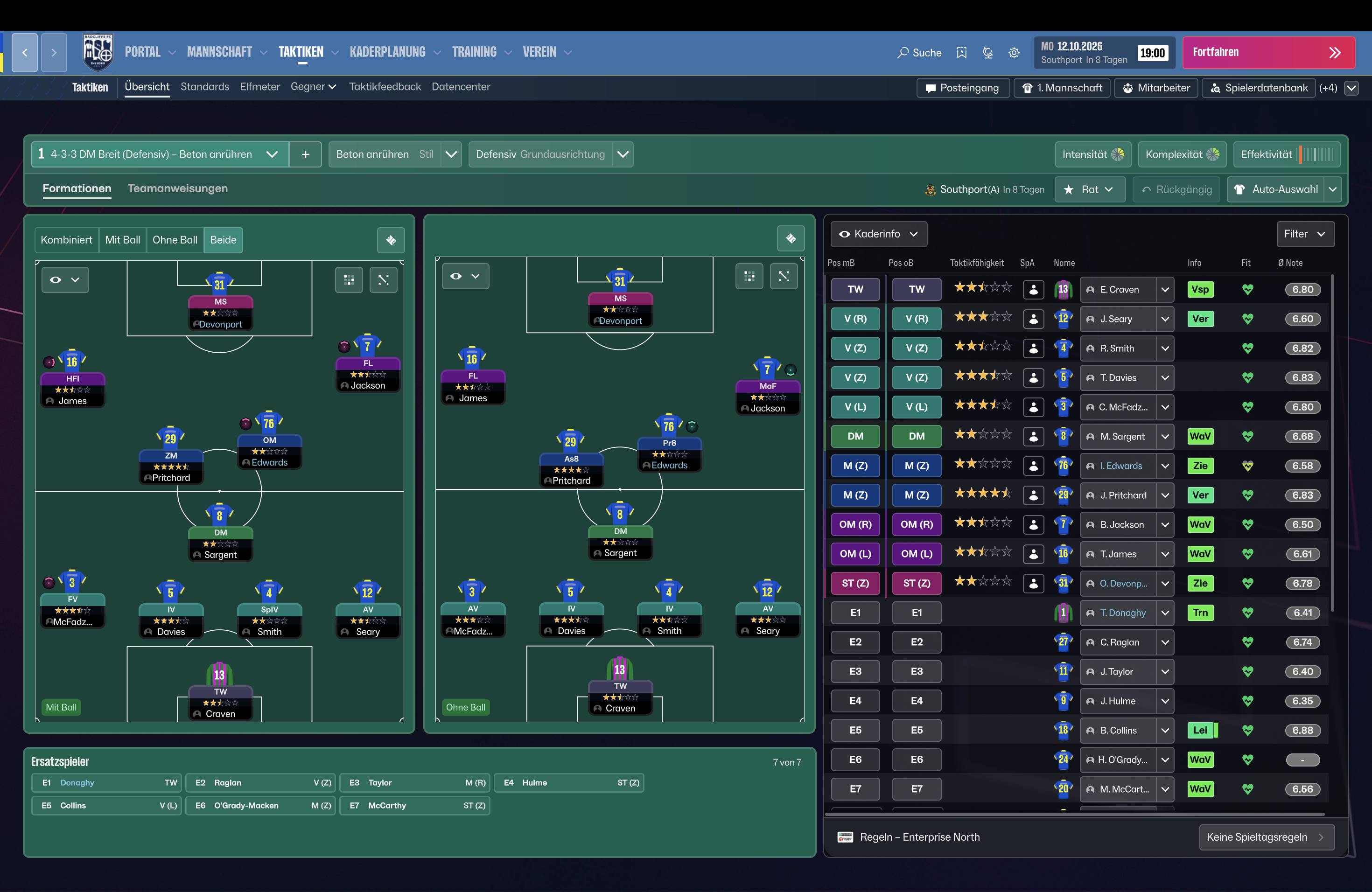
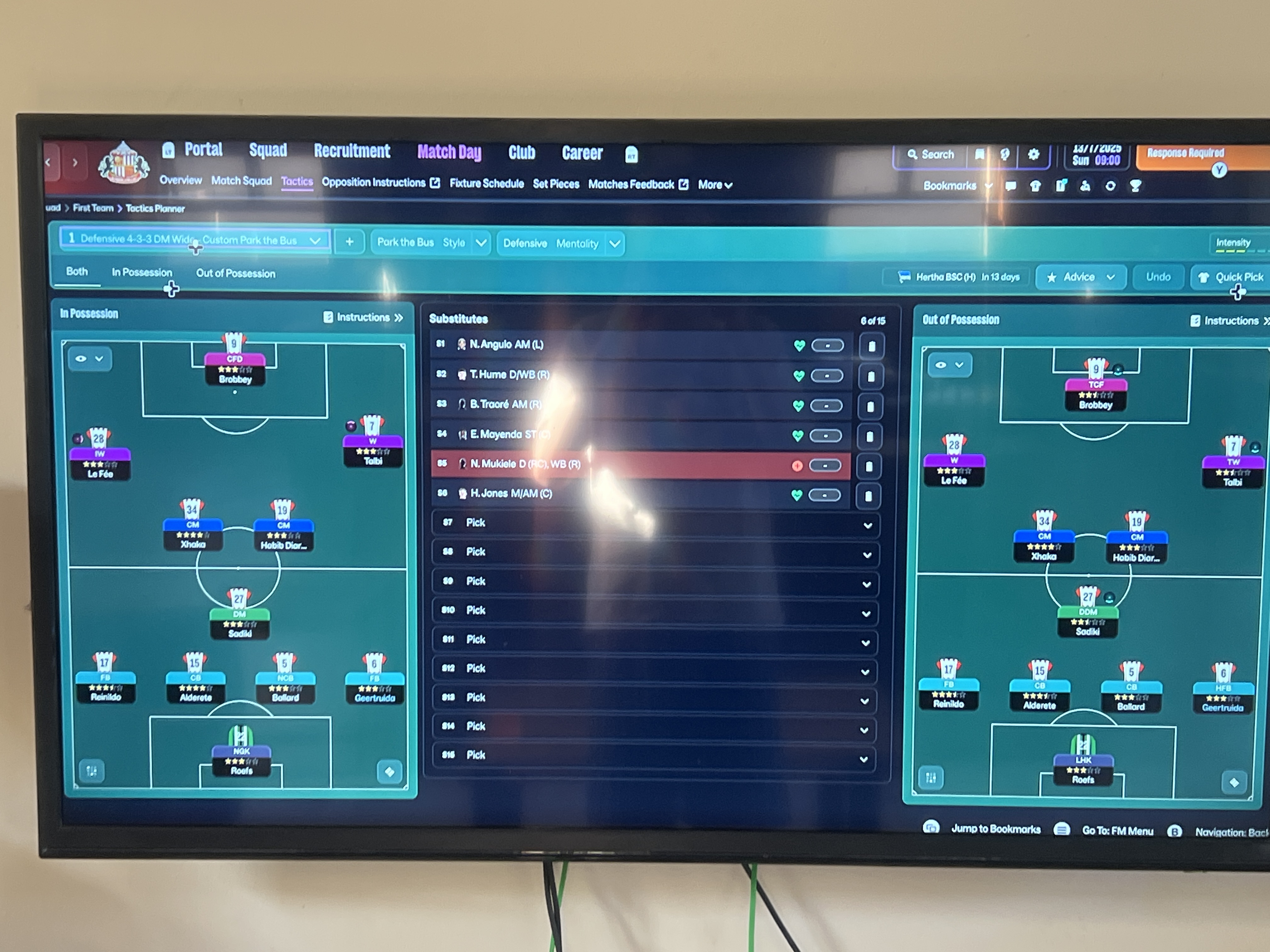
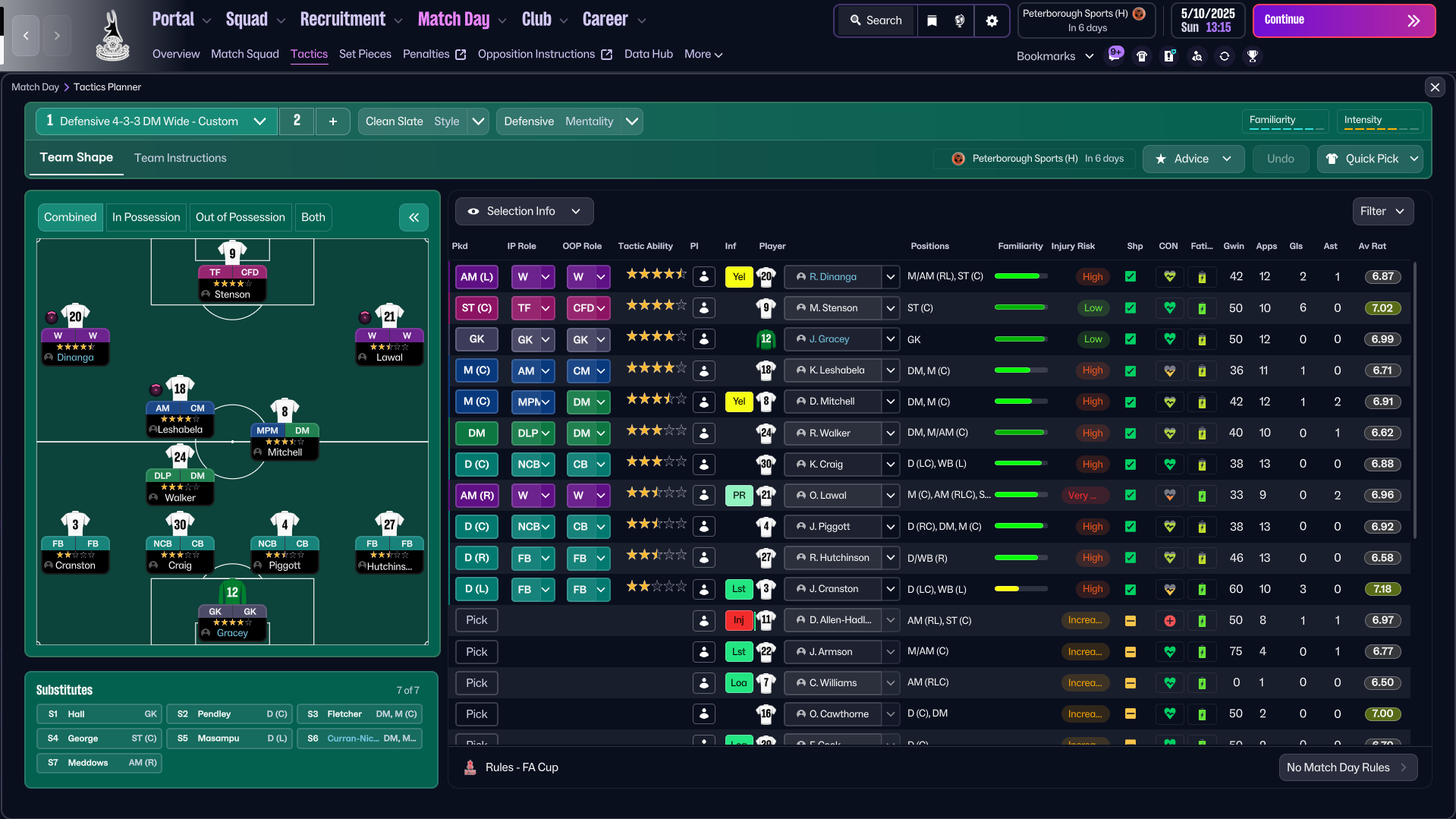
Guides for this tactic
The tactical theory behind the 5-4-1: roles, instructions, and the trade-offs that decide whether the system holds up.
Playing styles
Low Block: Park the Bus
The deliberate underdog tactic in FM: formation choices, duty distribution, and why Counter-Press is exactly wrong inside a low block.
Read guide
Match preparation
Game-State Tactics
Protect a 1-0, chase a 1-0, hold a draw away. How to manage game state in FM through duties and roles, not by lurching to Defensive.
Read guide
Match preparation
In-Match Tactical Changes
Mentality, duty, role, instruction, sub. The change hierarchy from lightest to heaviest intervention, and 60th-minute patterns by game state.
Read guide