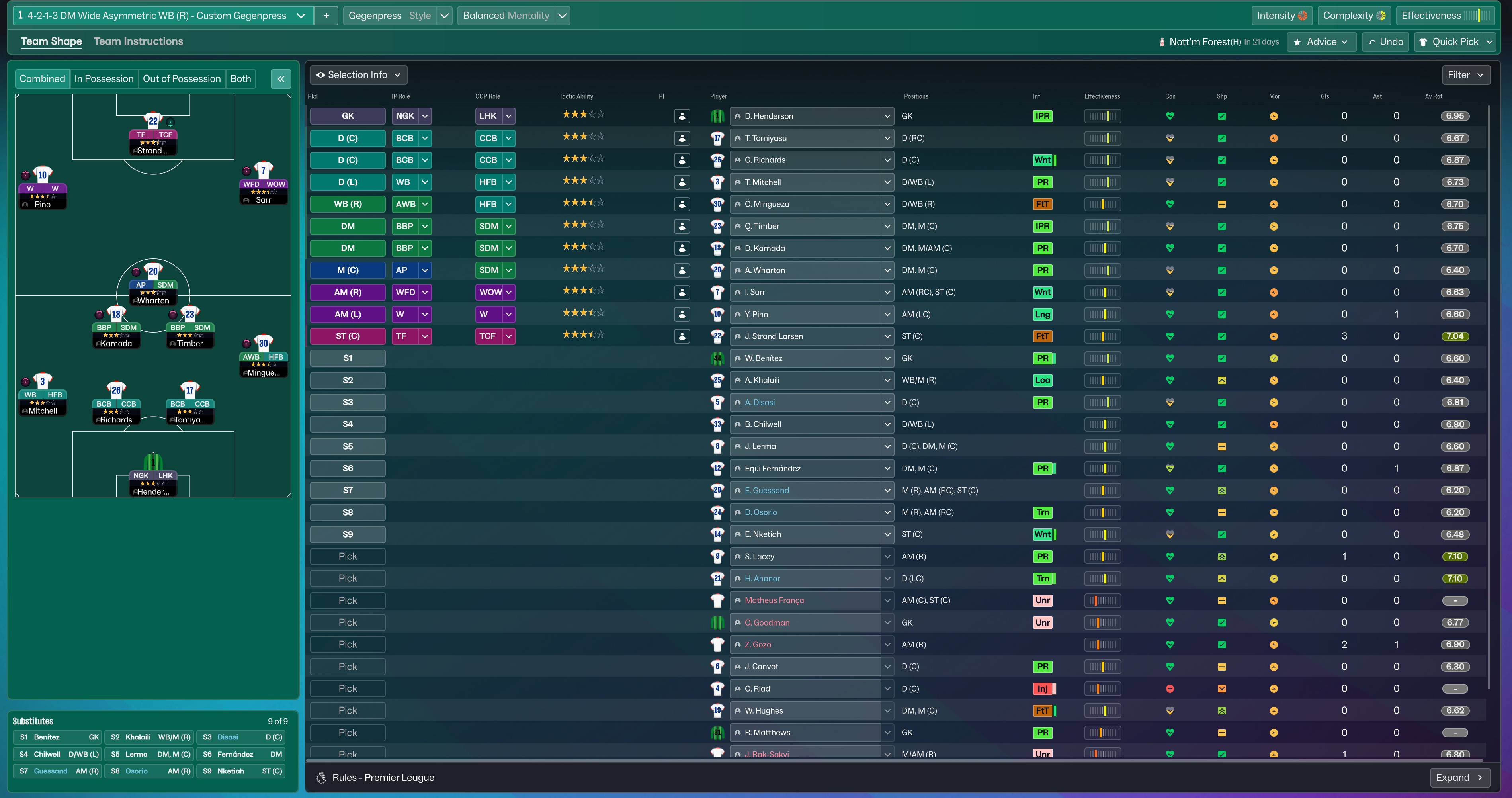
Gegenpress 4-2-1-3 (Balanced) Tactic
4-2-1-3
Utilize pace on the wings and central attacking midfield for quick transitions. Wing-backs contribute to attacking width and create crossing opportunities.
Loading tactical analysis...
Formation and style
Gegenpress
Balanced
4-2-1-3
Asymmetric
In possession
Work Ball Into Box
Play Out Of Defence
Overlap Left
Overlap Right
In transition
Counter-Press
Counter
Distribute to Centre Backs
Out of possession
Higher Defensive Line
Much Higher Line of Engagement
Prevent Short GK Distribution
Player roles
GK
G
DC (C)
CB
De
DC (L)
CB
De
DC (R)
CB
De
WB (L)
WB
At
WB (R)
WB
At
DM (C)
BBM
De
DM (C)
BBM
De
AM (C)
AP
Su
AM (R)
W
At
AM (L)
W
At
ST (C)
TF
At
ST (C)
TCF
At
Phase description
Focus on width through overlapping wing-backs while maintaining possession.
Counter-press immediately after losing possession to regain control.
Utilize pace on the wings and central attacking midfield for quick transitions.
Team shape defence
4-2
A compact shape with two holding midfielders providing additional cover.
DM (C) BBM-De at [3,3] and [3,4] providing a solid block.
Team shape attack
4-3
Utilizing width from wing-backs and interchangeable roles in attacking midfield.
AM (C) AP-Su at [5,3] flanked by W at [5,2] and [5,4].
Key strengths
Overlapping Wing-Backs
Wing-backs contribute to attacking width and create crossing opportunities.
WB (L) at [2,1] and WB (R) at [2,5] with overlaps.
Counter-Pressing Ability
Strong counter-press to recover possession quickly.
Counter-Press instruction.
Conflicting tactics
Weakness Against High Press
Vulnerable to aggressive pressing due to a lack of quick passing options.
WB roles could lead to losing possession under pressure.
Defensive Fragility
Potential gaps between defence and midfield may be exploited.
High line and engagement may leave space behind.
Risk exposures
Risk Exposures
Items
Defensive Depth
Gaps may arise due to high line and expansive shape.
Higher Defensive Line and Much Higher Line of Engagement could be too aggressive.
Counter-attack Vulnerability
Wing-backs may be caught out of position during counter-attacks.
WB (L) and WB (R) aggressively pushing forward.
Role synergies
Role Synergies
Items
Wing-Backs and Wingers
Wing-backs providing width allows wingers to cut inside effectively.
WB (L) and WB (R) with W roles on the flanks.
BBM and AP
Box-to-Box midfielders supporting an Advanced Playmaker creates attacking depth.
BBM at [3,3] and AP at [5,3].
Suggested questions
How do you plan to adapt when facing teams that press aggressively?
Have you considered an alternative defensive setup against counter-attacks?
What is your strategy for balancing attacking flair and defensive stability?
Related Tactics
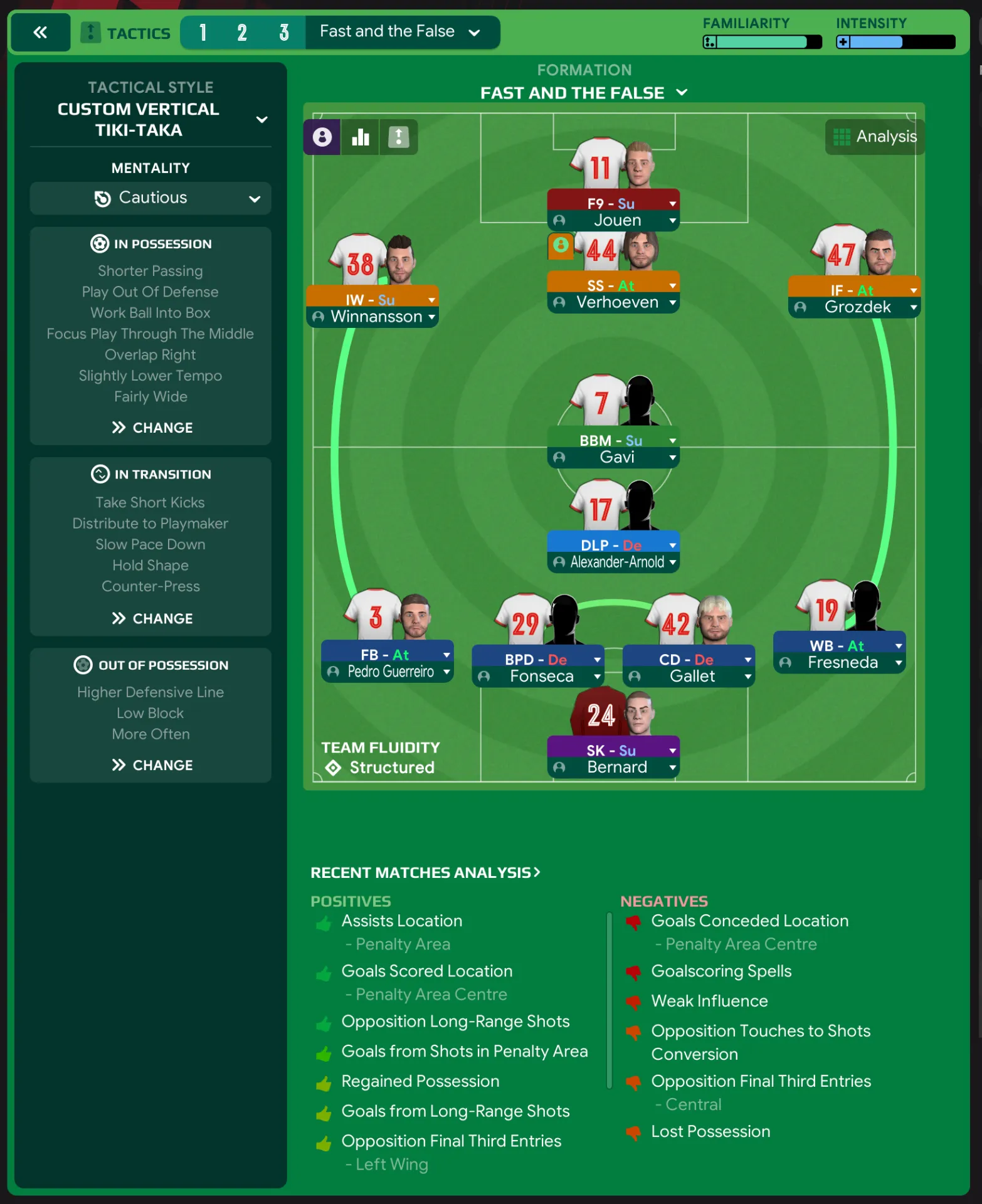


More Gegenpress tactics
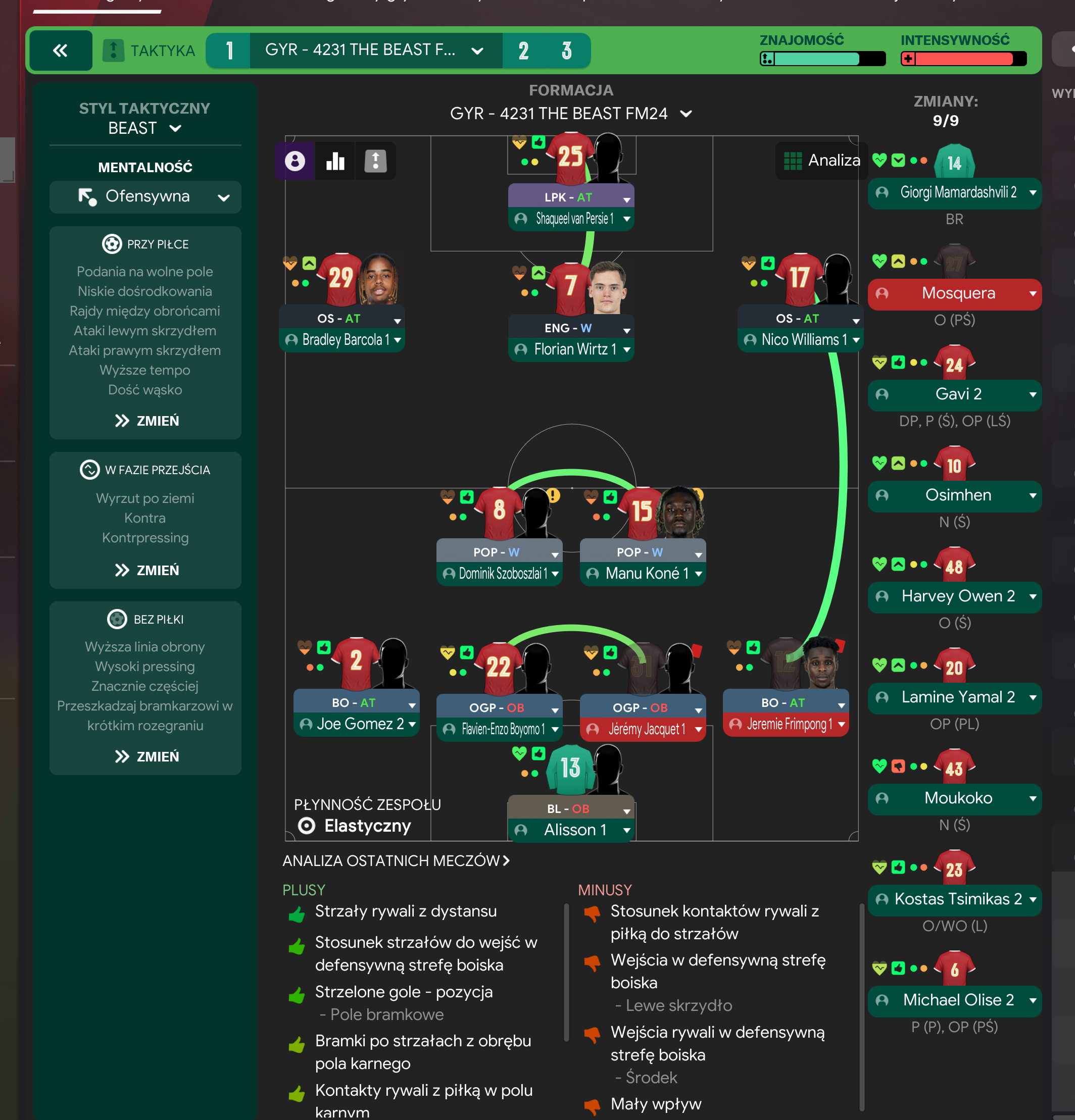
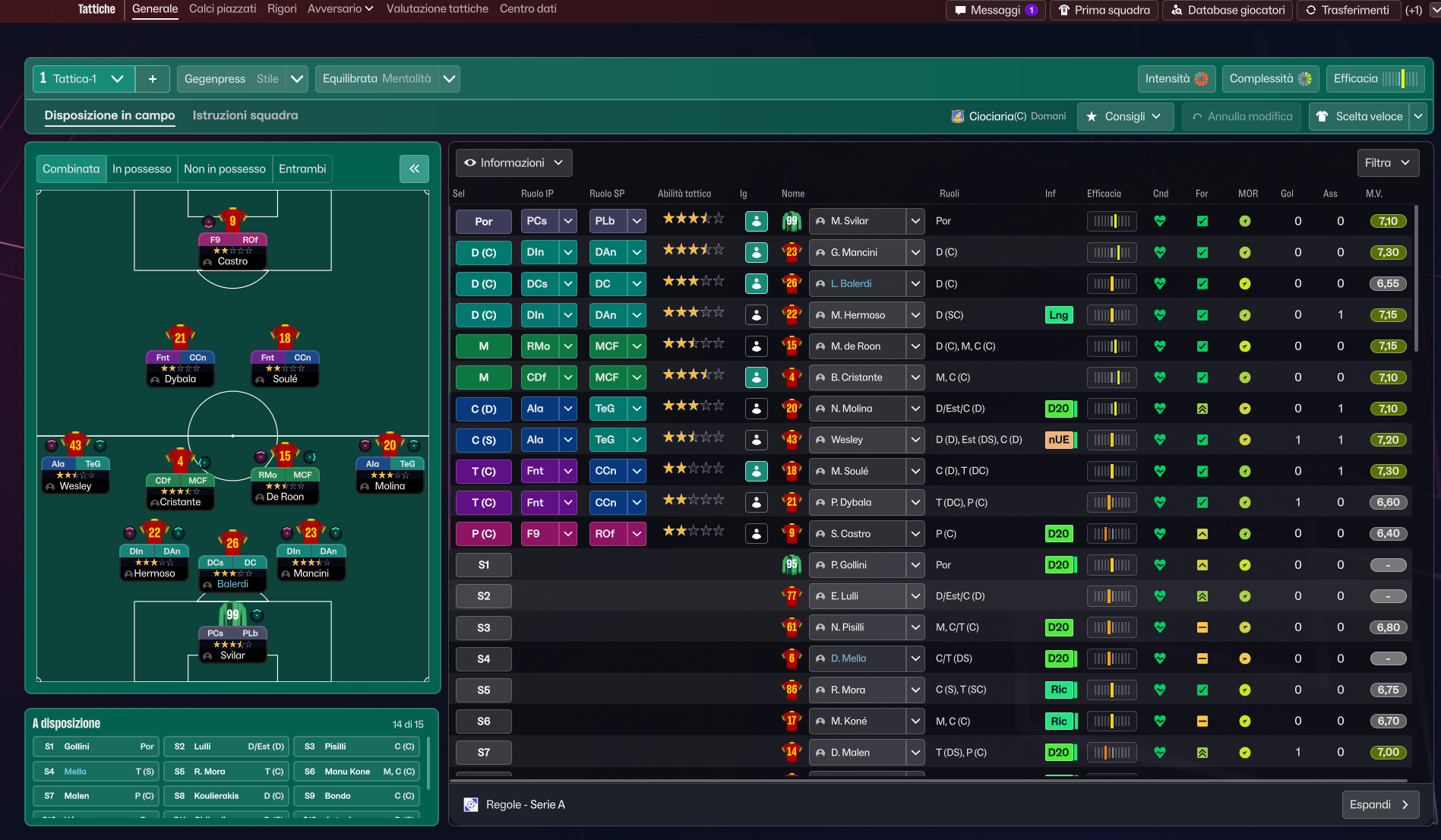
Guides for this tactic
The tactical theory behind the 4-2-1-3: roles, instructions, and the trade-offs that decide whether the system holds up.
Match preparation
In-Match Tactical Changes
Mentality, duty, role, instruction, sub. The change hierarchy from lightest to heaviest intervention, and 60th-minute patterns by game state.
Read guide
Match preparation
Reading the Match Tablet
Pass map, average position, xG, possession by zone: what each tablet panel tells you in FM and the tactical change it should trigger.
Read guide
Foundations
FM27 Tactics: What Changed from FM26
FM27 keeps FM26's tactic system. Here is what stays the same, the small changes that can catch you out, and what the new Tactical Effectiveness system asks of you.
Read guide