Uploaded Tactic
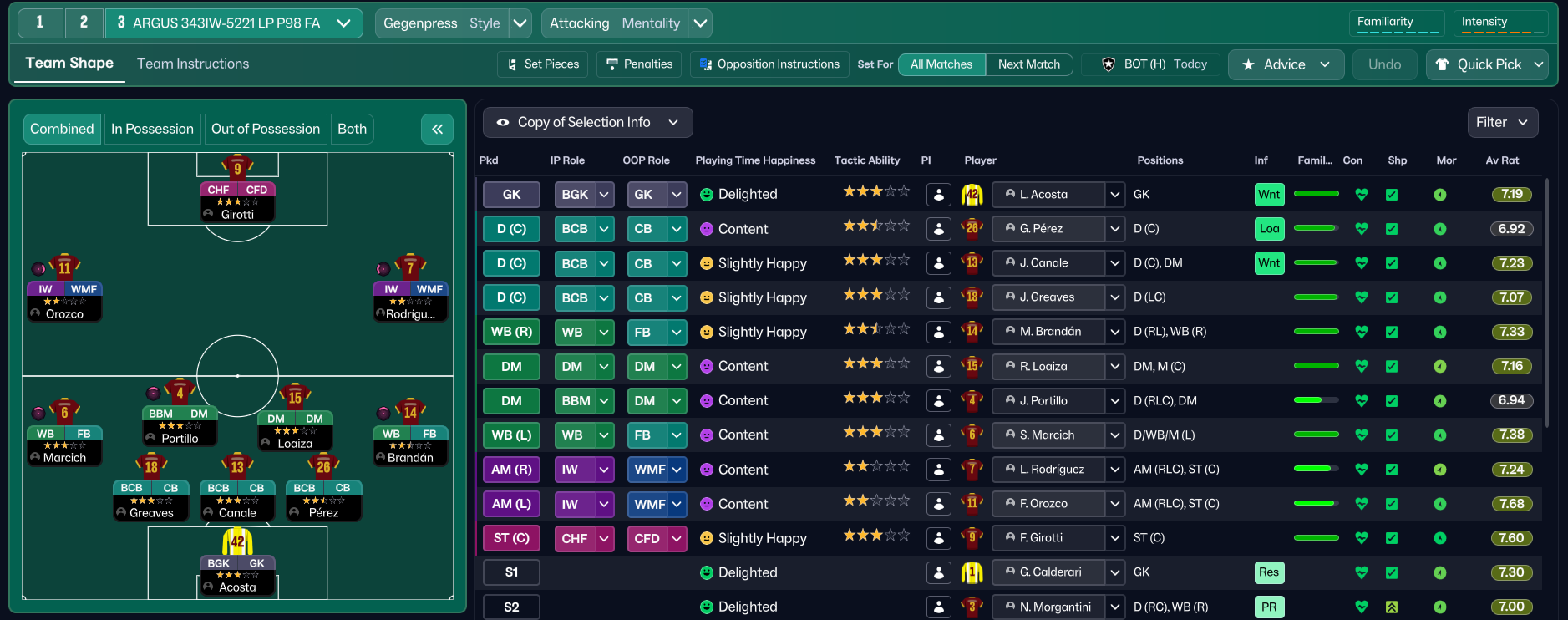
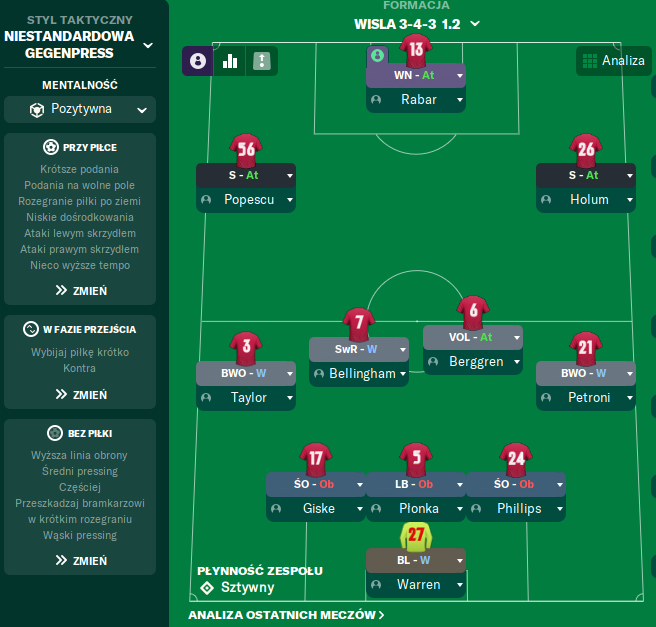
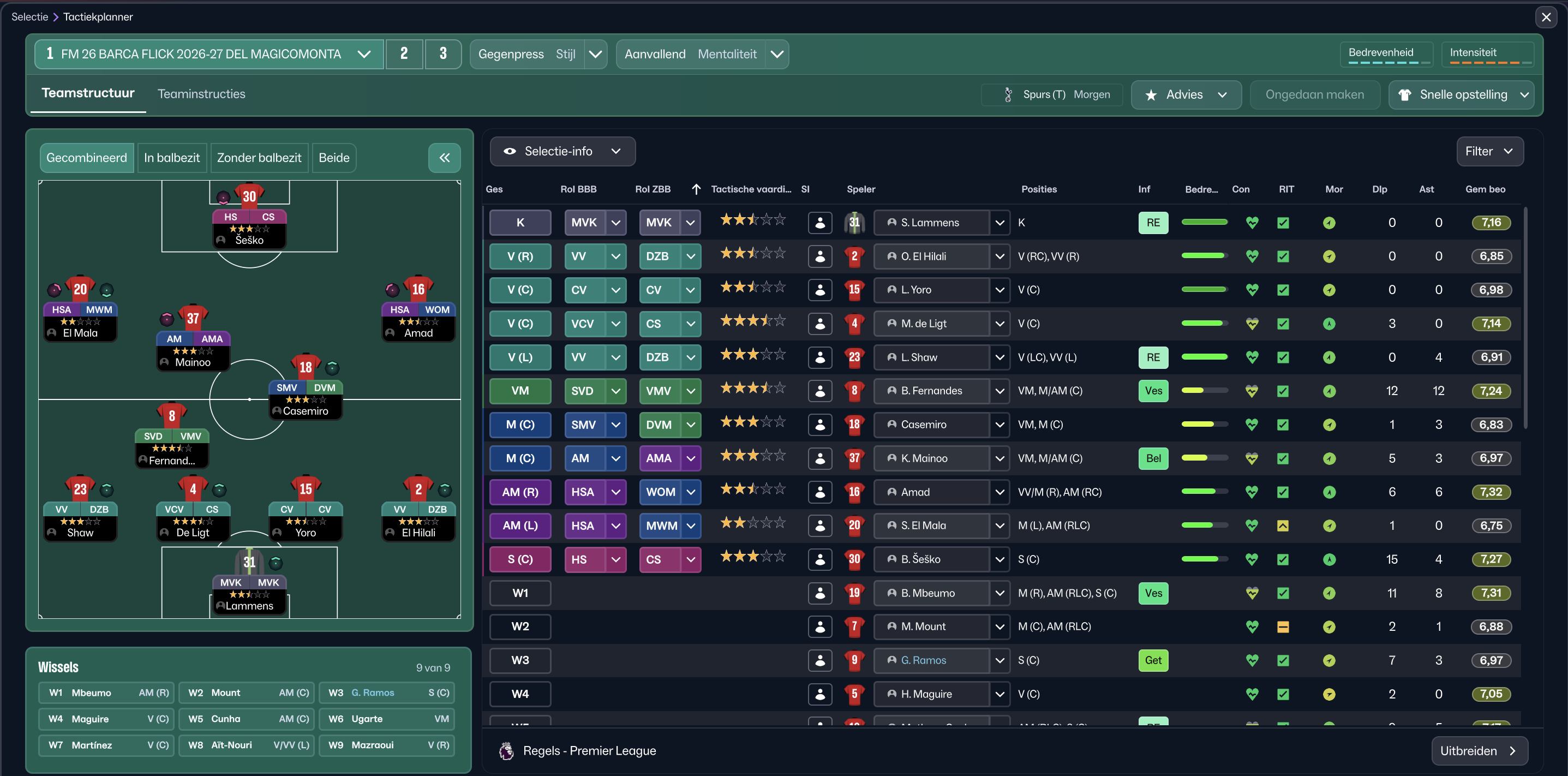
Formation & Style
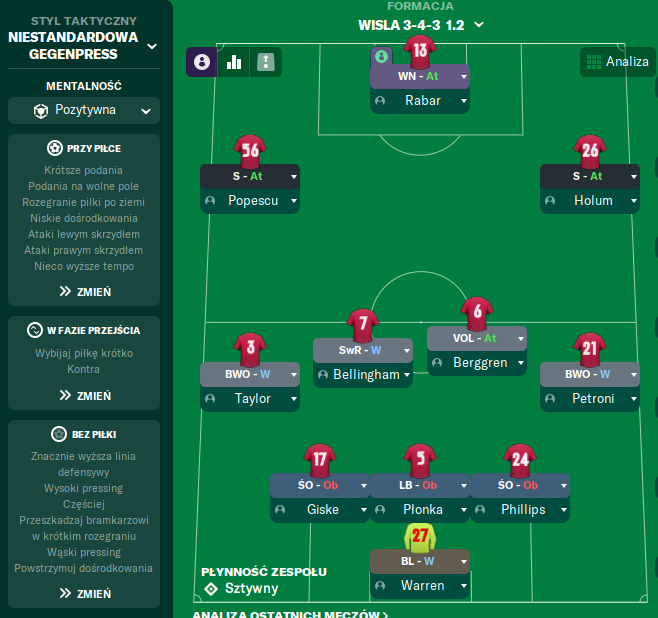
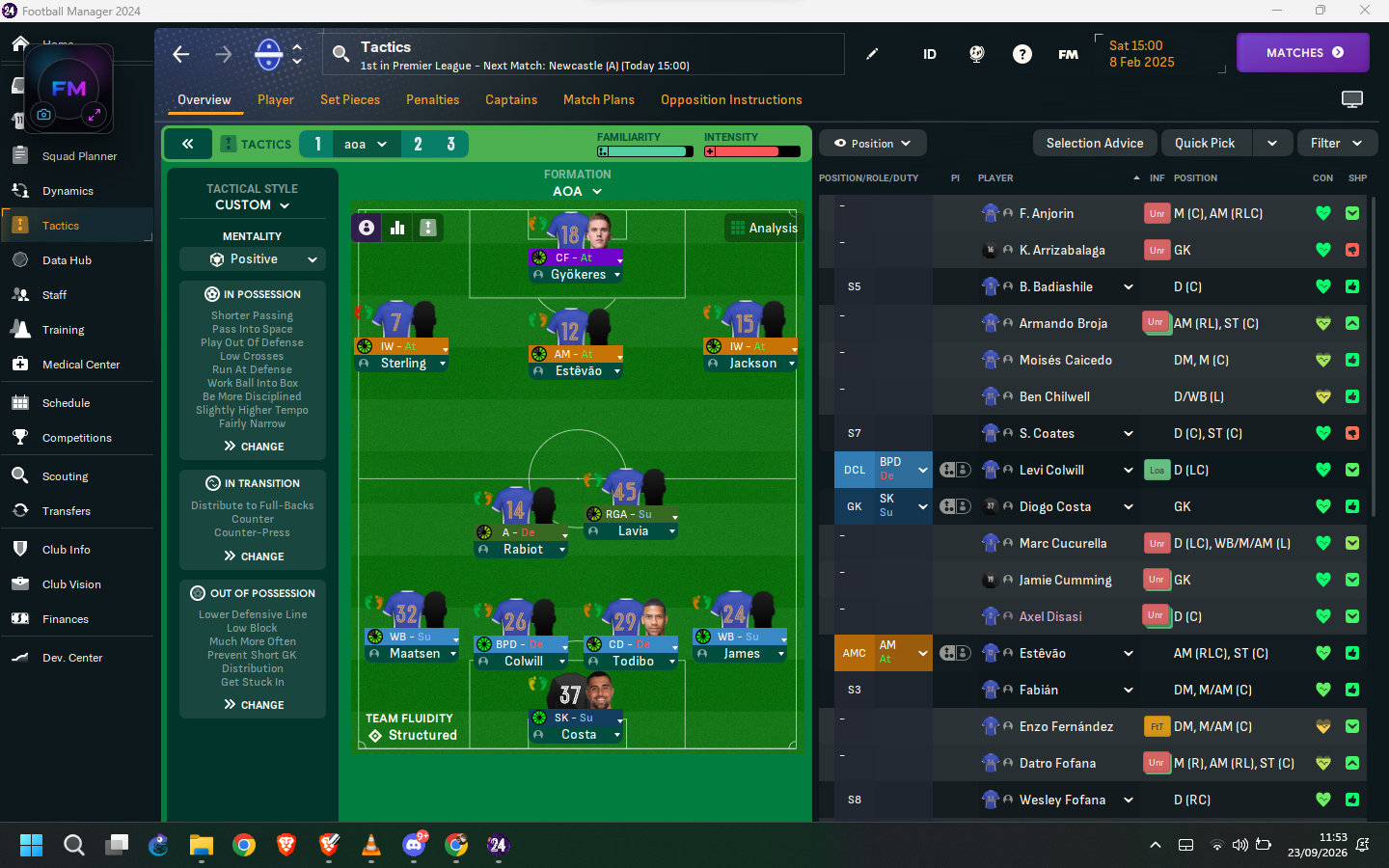
Tactical Style:Gegenpress
Mentality:Attacking
Formation:3-4-3
Team Fluidity:Structured
In Possession
Work Ball Into Box
Focus Play Down Left
Focus Play Down Right
Play Out of Defence
In Transition
Counter-Press
Counter
Out of Possession
Higher Defensive Line
Higher Line of Engagement
Prevent Short GK Distribution
Trigger Press More Often
Team Shape Without Ball
Shape:3-4-3
Description:A compact formation that allows for pressure on the ball with three central defenders covering wide areas when engaged.
Evidence:Three central defenders ensure defensive stability with wing-backs providing width while pressing high.
Team Shape With Ball
Shape:3-4-3
Description:The formation allows for quick transitions and combinations in attacking phases, with emphasis on wing play.
Evidence:Wing-backs push high, creating numerical superiority in wide areas while the front three exploit central openings.
Phase Description
Attacking Play
Focus on creating overloads in wide areas using wing-backs and inside forwards, aiming for quick combinations to penetrate defenses.
Defensive Transition
Quickly shift into a counter-pressing style to regain possession and minimize opponent threats immediately after losing the ball.
Main Focus
Utilizing wing-backs to provide width and create crossing opportunities while maintaining a solid midfield presence.
Key Strengths
Wing-Back Contribution
Strong wing-back roles create crossing opportunities and stretch opposition defenses.
Ball Retention and Transition
Utilizing a Ball-Winning Midfielder and Deep-Lying Playmaker in midfield aids in both retaining possession and transitioning quickly.
High Pressing Defense
The team employs high pressing effectively to regain possession quickly, leveraging tactical instructions.
Conflicting Directions
Wide Overload vs Central Play
The focus on wing-play may lead to underutilization of central attacking options.
Defensive Vulnerability
With high pressing and higher defensive line, the team risks leaving spaces behind the defense.
Overreliance on Wing-Backs
If wing-backs are not performing, the attack can become predictable and structured.
Tactical Suggestions
Adjust Defensive Width
Consider adjusting the defensive width to avoid exposure on the wings, especially against teams with strong wingers.
Rotational Play in Midfield
Encourage rotation between DM roles to create more options and flexibility in build-up.
Utilize Central Playmakers
Incorporate an attacking midfielder or another central playmaker to provide more variety during attacks.
Ask Questions About Your Lineup
Related Tactics
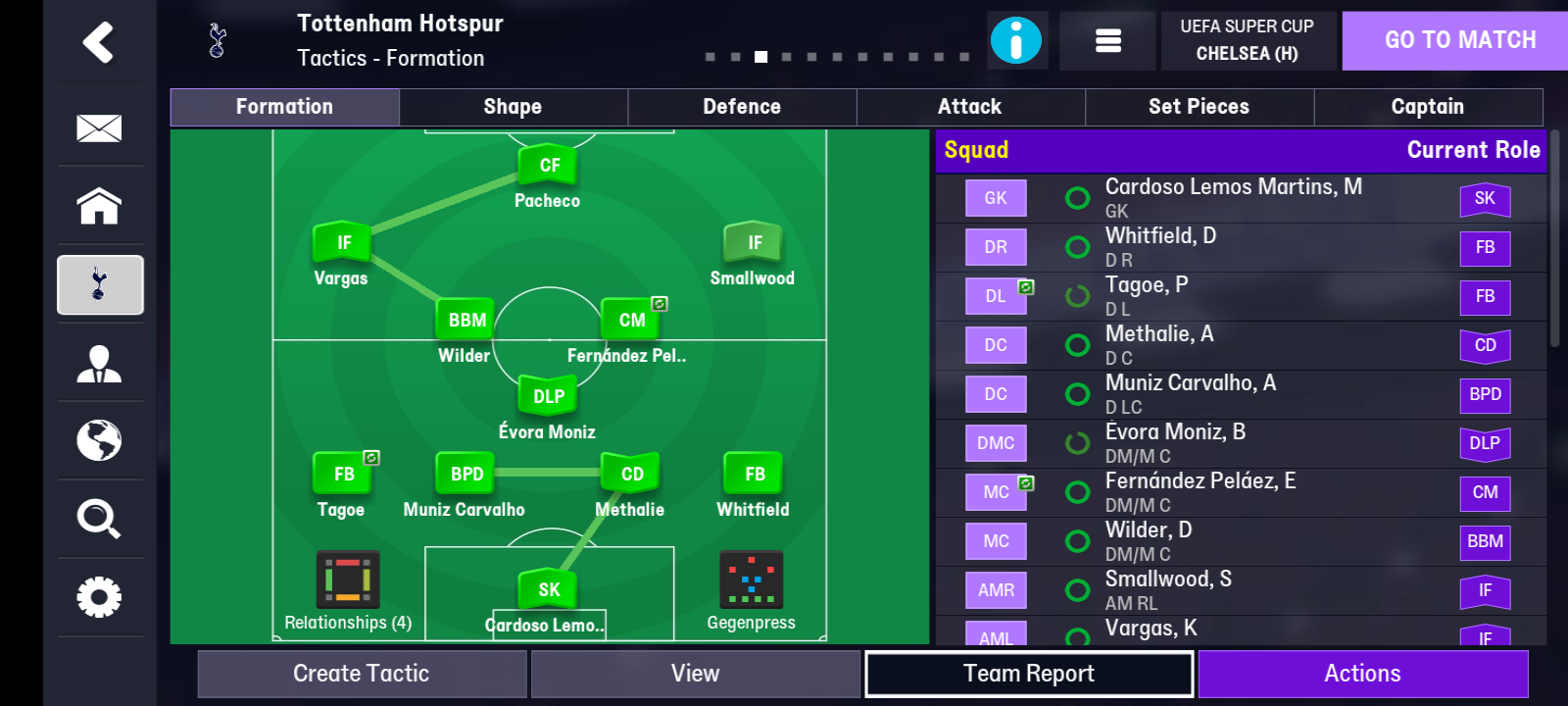
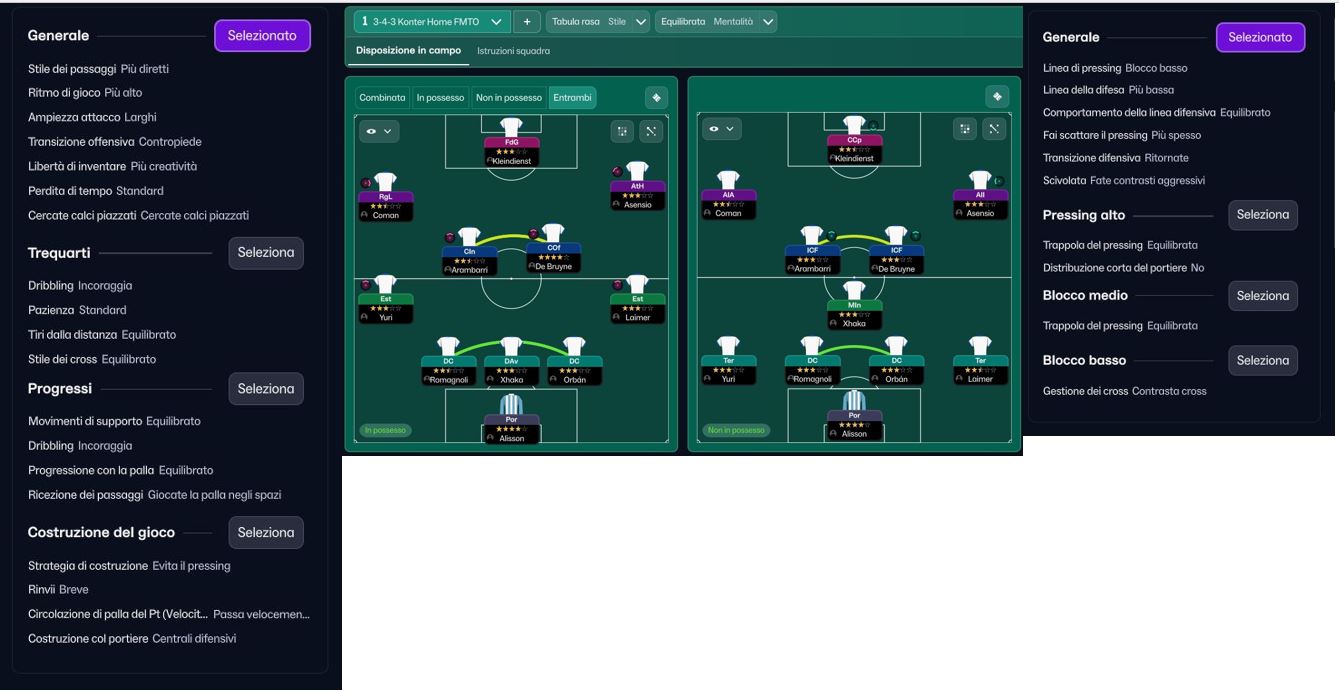
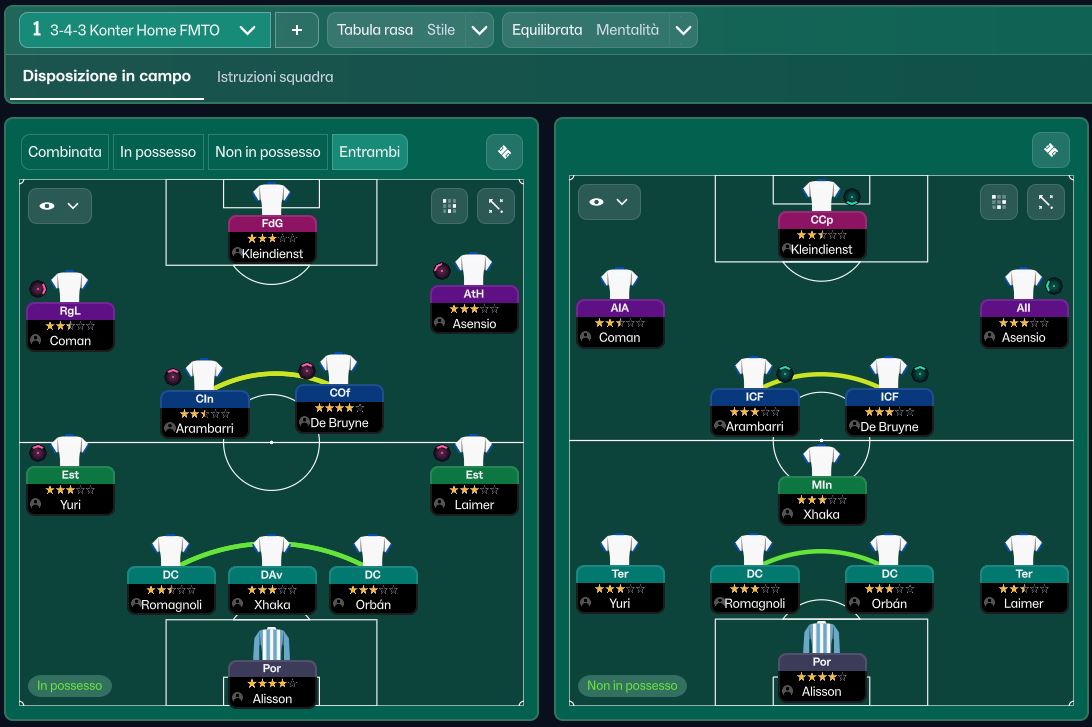
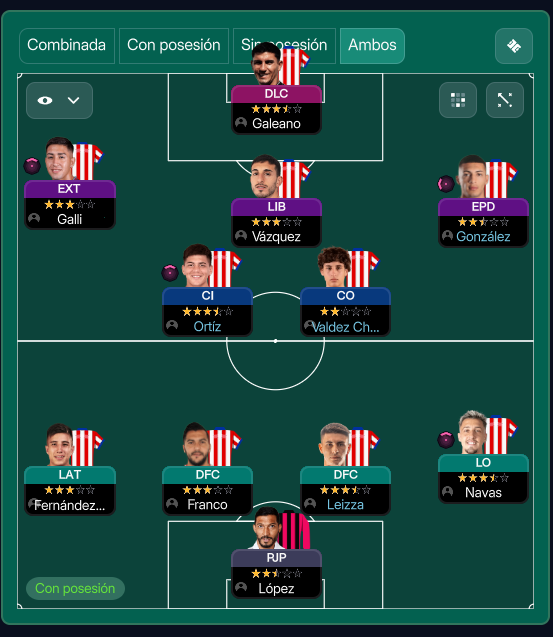
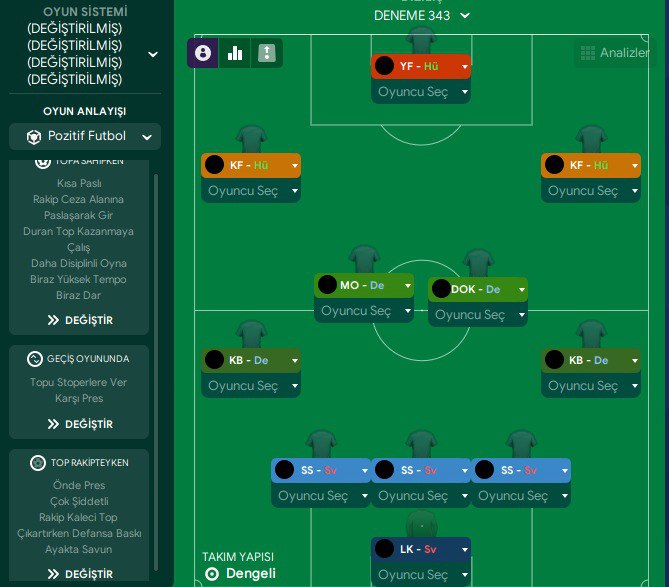
More Gegenpress tactics
Guides for this formation
The tactical theory behind the 3-4-3: roles, instructions, and the trade-offs that decide whether the system holds up.
Playing styles
Direct, Vertical Football
Long-ball football done well in FM. When direct, vertical play is the right choice, and what the Direct Passing TI actually changes.
Read guide
Playing styles
Possession-Based Tactics in Football Manager
Build the patient, control-the-tempo style without watching your opponents counter through the gaps you leave behind.
Read guide