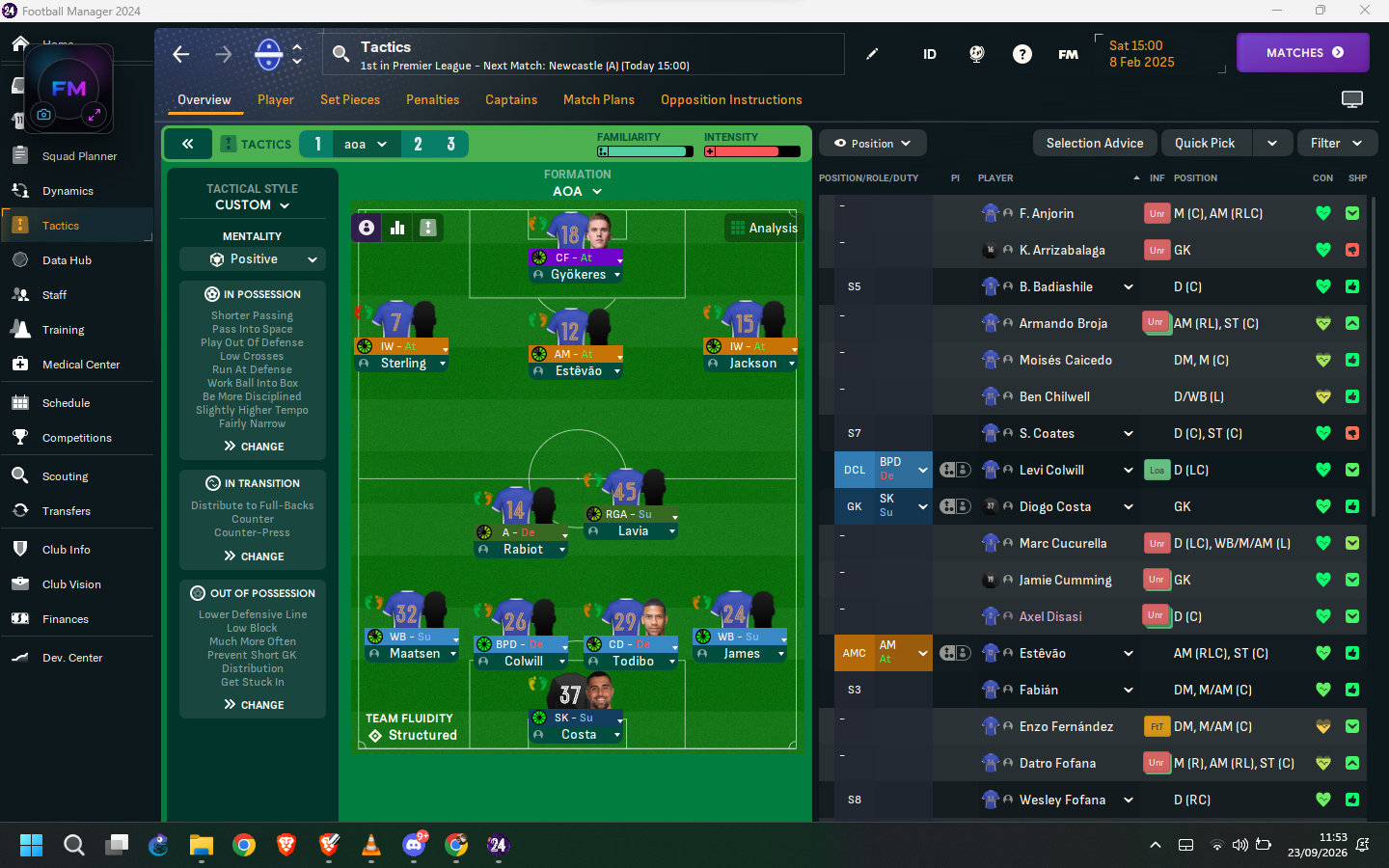
Uploaded Tactic
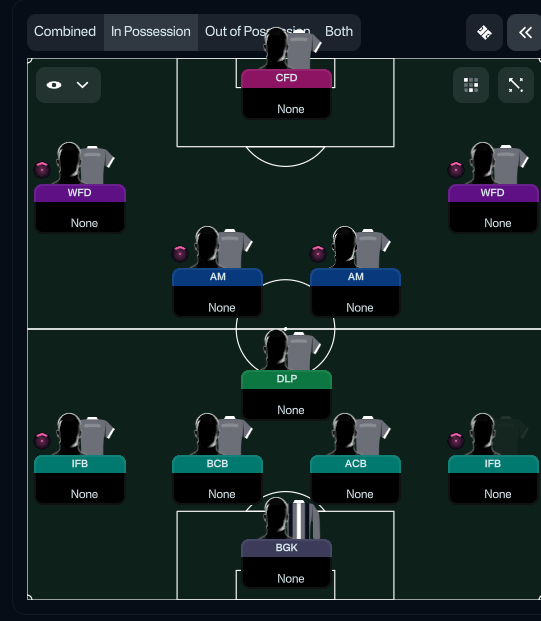
Formation & Style
Tactical Style:Balanced
Mentality:Positive
Formation:3-4-3
Team Fluidity:Structured
In Possession
Build-up Play:Short Passing
Tempo:Higher
Width:Fairly Wide
Creative Freedom:Be More Expressive
In Transition
Counter-Attack:Enabled
Counter-Press:Immediate
Goalkeeper Distribution:Short
Throw-ins:Quick
Out of Possession
Defensive Line:Higher
Line of Engagement:Higher
Pressing Intensity:More Urgent
Offside Trap:Yes
Team Shape Without Ball
Shape:Compact backline
Description:The defensive line has three centre-backs and two wing-backs who can drop back, creating numerical superiority in defense.
Evidence:BCB and ACB at [2,2] and [2,3] with IFB at [2,1] and [2,5].
Team Shape With Ball
Shape:Wide and deep
Description:The team can spread the field with wide forwards while the attacking midfielders support the central striker, keeping the opposition stretched.
Evidence:WFD and WFD at [6,1] and [6,5] with AM at [5,3].
Phase Description
Attacking Play
The team can transition quickly into attack with wide forwards and attacking midfielders supporting the striker.
Defensive Transition
When possession is lost, the midfield needs to work quickly to regain control and support the defense.
Main Focus
Utilizing width and positioning to stretch the opposition.
Key Strengths
Wide Play
The presence of two wide forwards allows for effective stretching of the defense, creating space centrally.
Flexibility
The use of Inverted Full-Backs allows the team to adapt their formation in possession, supporting midfield and attack.
Strong Central Midfield
The Deep-Lying Playmaker can control the tempo and distribution from the midfield.
Conflicting Directions
Insufficient Width in Defense
While the formation has central strength, it could be exposed on the flanks if the wing-backs are caught upfield.
Vulnerability in Transition
Transitioning back to defense may leave gaps, particularly with advanced midfielders pushing forward.
Reliance on Individual Quality
The success of attacking play heavily depends on the effectiveness of individual players in wide areas.
Tactical Suggestions
Balance Wing-Backs
Consider making one wing-back a traditional full-back to provide better balance and defensive coverage.
Reinforce Midfield
Adding a Ball-Winning Midfielder could enhance defensive stability.
Encourage Higher Pressing
Implement higher pressing strategies to utilize the offensive potential of the forward line.
Ask Questions About Your Lineup
Related Tactics
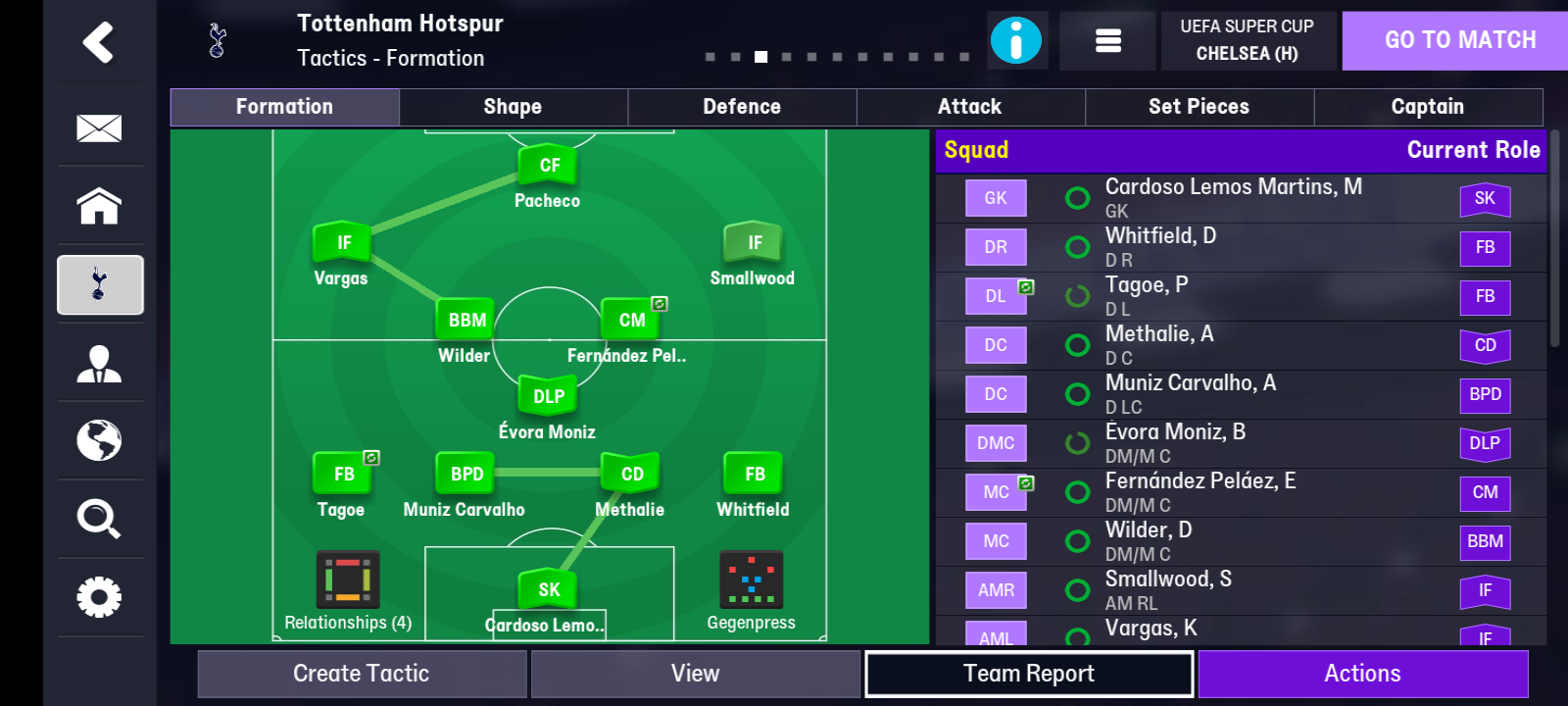
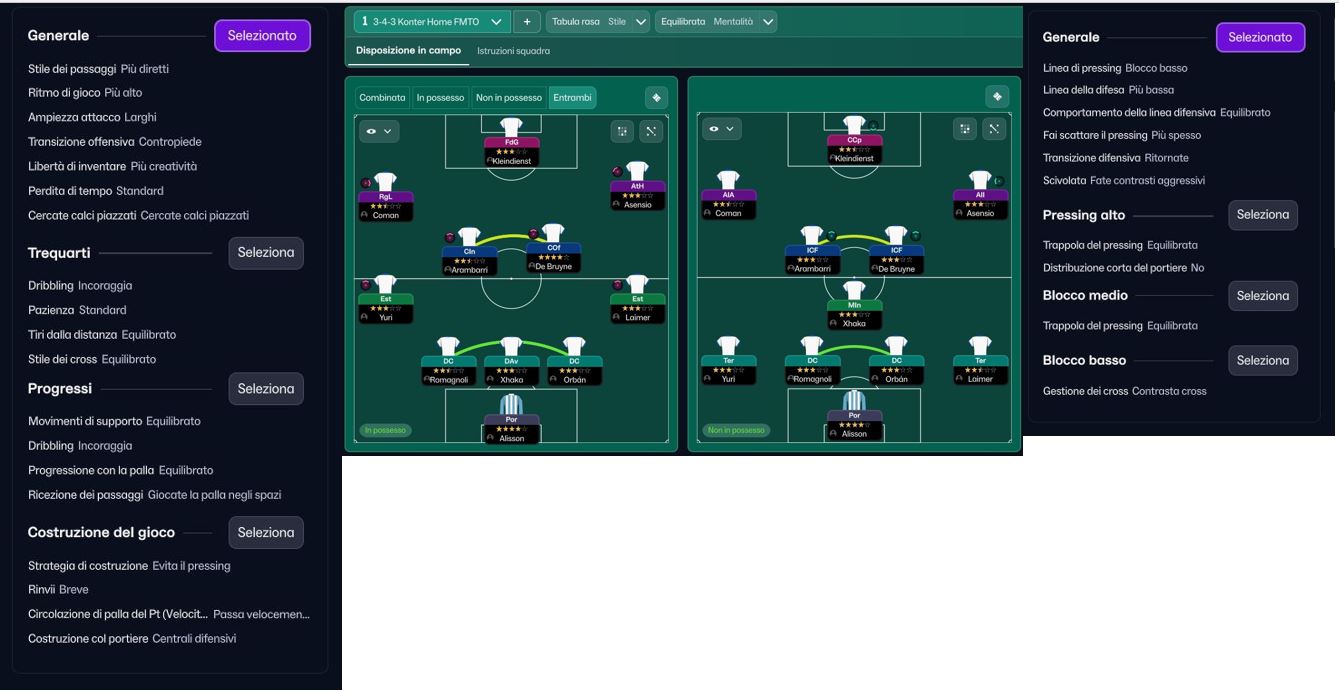
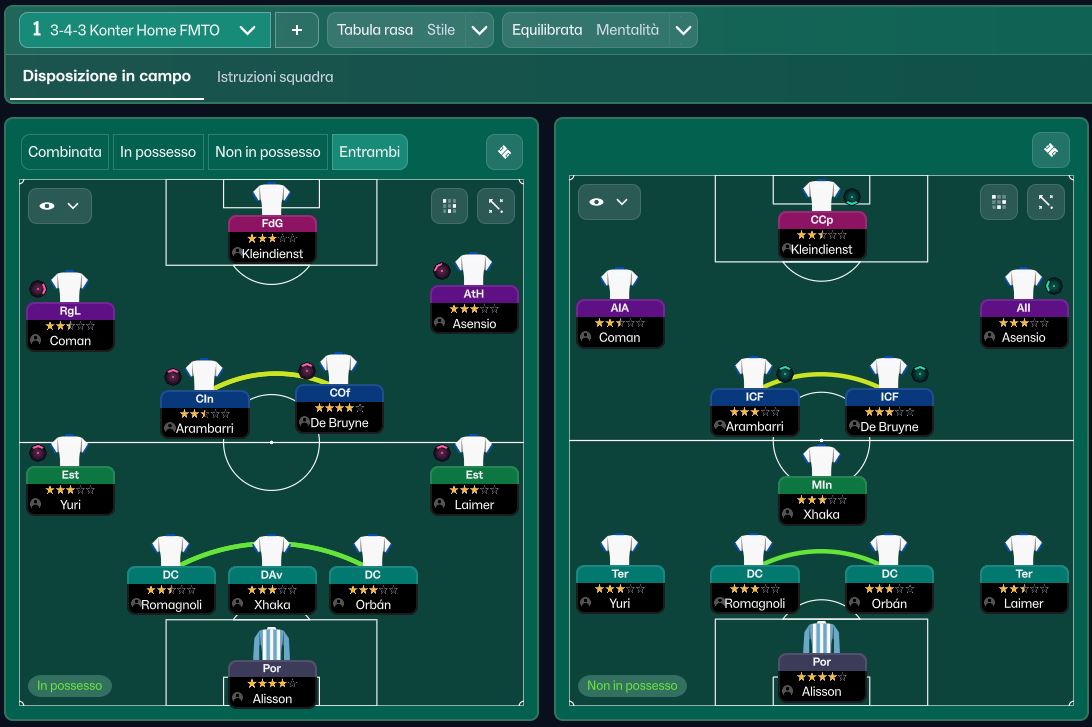
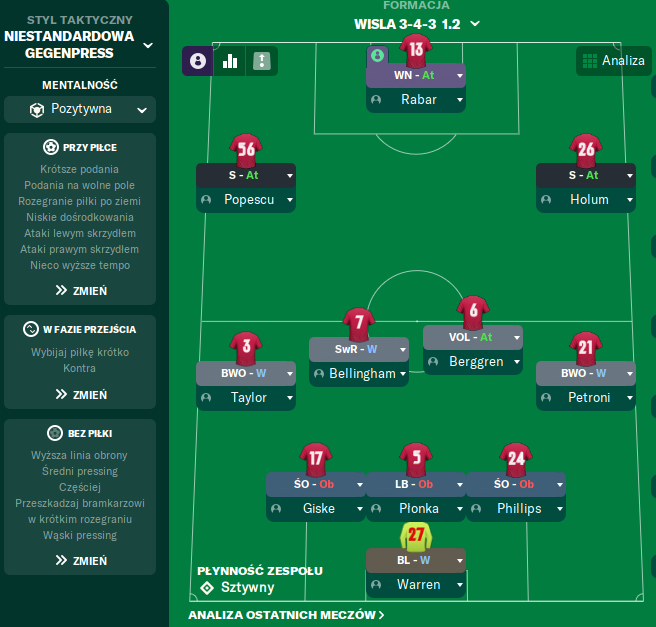
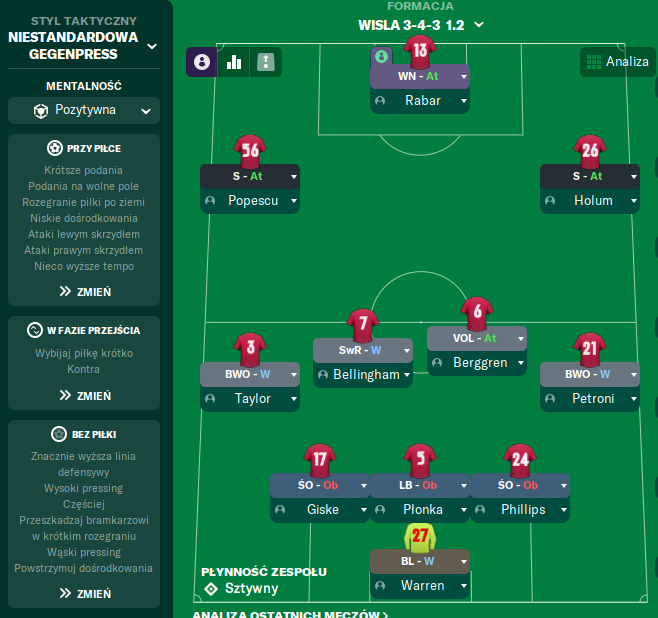
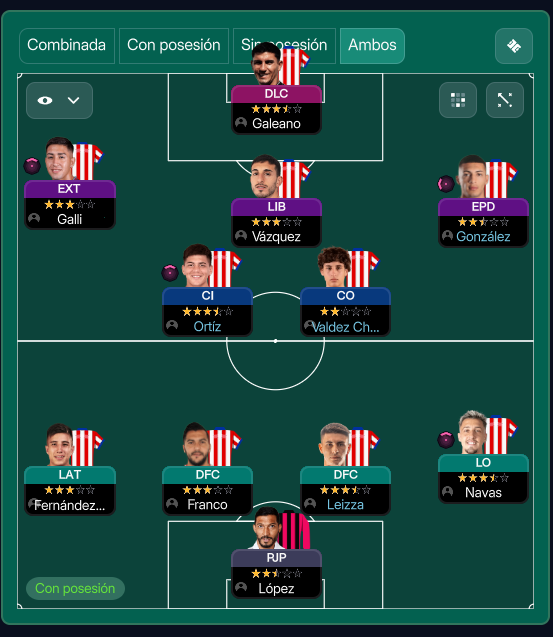
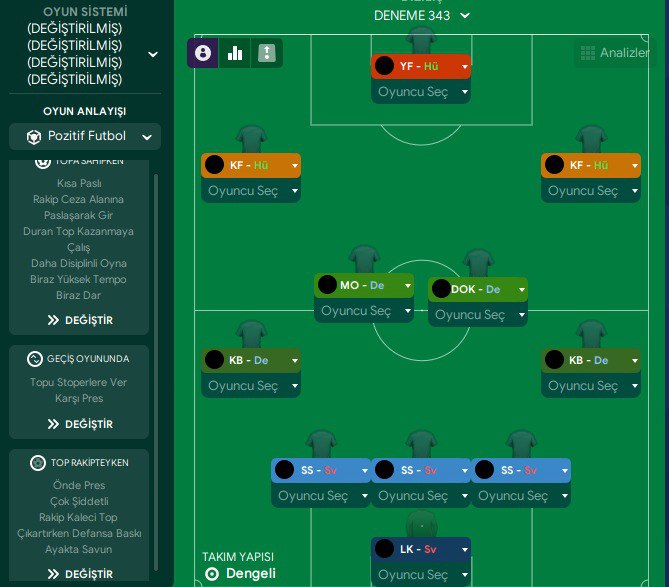
Guides for this formation
The tactical theory behind the 3-4-3: roles, instructions, and the trade-offs that decide whether the system holds up.
Playing styles
Direct, Vertical Football
Long-ball football done well in FM. When direct, vertical play is the right choice, and what the Direct Passing TI actually changes.
Read guide
Playing styles
Possession-Based Tactics in Football Manager
Build the patient, control-the-tempo style without watching your opponents counter through the gaps you leave behind.
Read guide