Uploaded Tactic
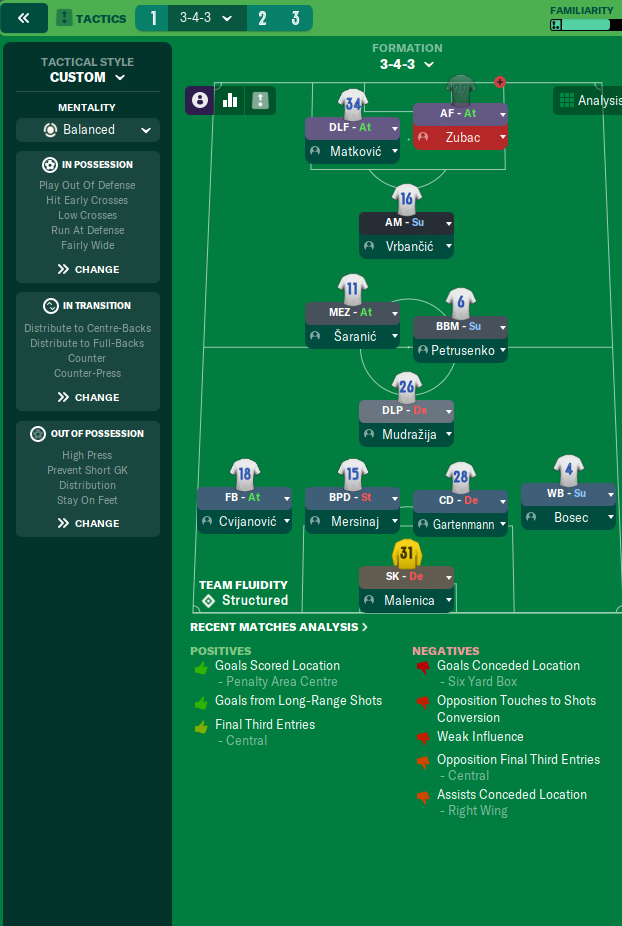
Formation & Style
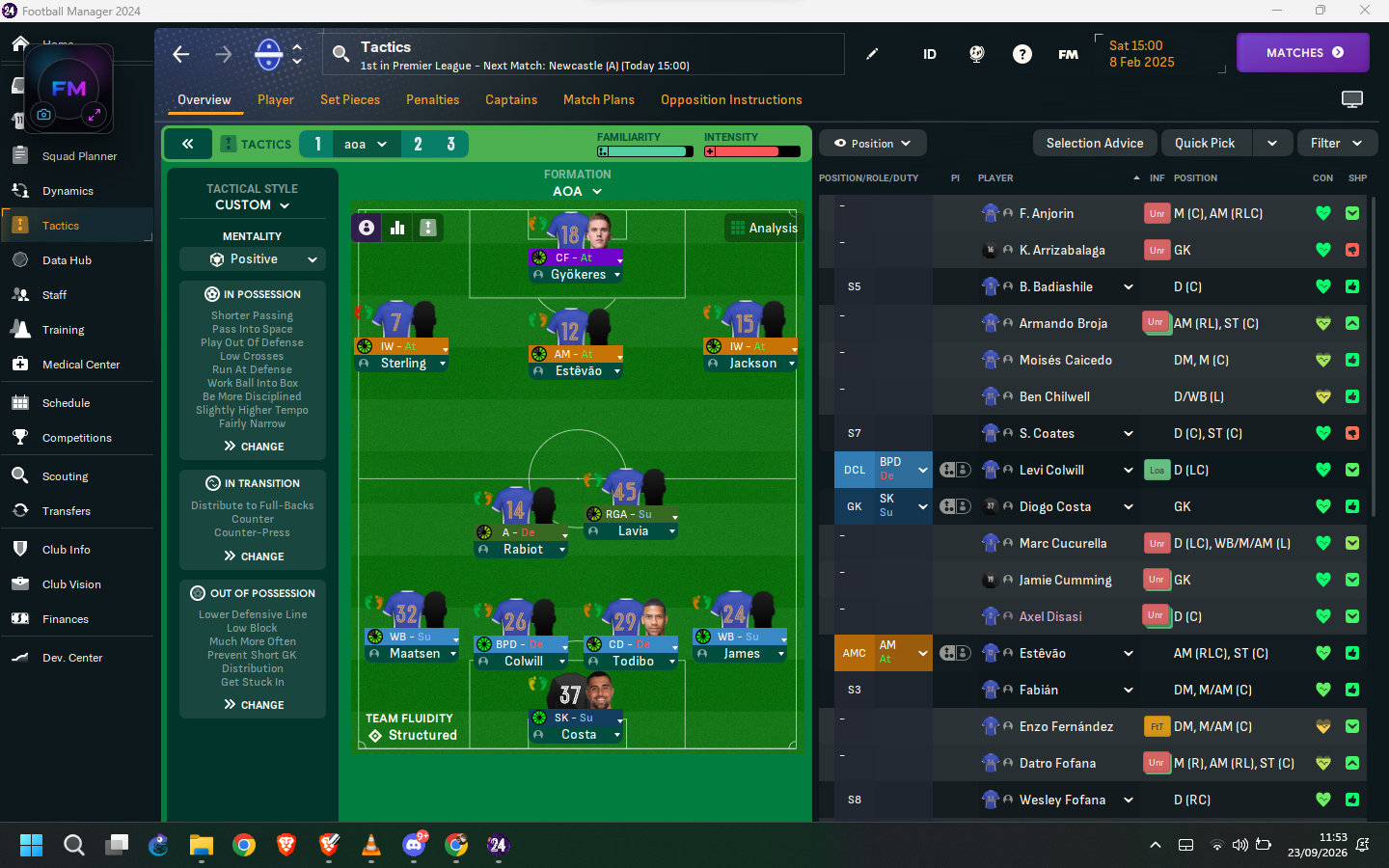
Tactical Style:Custom
Mentality:Balanced
Formation:3-4-3
Team Fluidity:Structured
In Possession
Play Out Of Defence
Hit Early Crosses
Low Crosses
Run At Defence
Fairly Wide
In Transition
Distribute to Centre-Backs
Distribute to Full-Backs
Counter
Counter-Press
Out of Possession
High Press
Prevent Short GK Distribution
Stay On Feet
Team Shape Without Ball
Shape:3-4-3
Description:The team maintains a three-man defensive line supported by two full-backs, creating a solid base with the midfielders dropping back to offer assistance.
Evidence:FB-A at [2,1] provides width while BPD-D at [2,2] ensures ball progression.
Team Shape With Ball
Shape:3-4-3
Description:A fluid attacking shape with attacking full-backs and a diverse front line that can interchange positions.
Evidence:DLP-D at [3,3] to support attack while the AF-A at [6,3] and DLF-A at [6,2] create movement for goal-scoring opportunities.
Phase Description
Attacking Play
Utilizing width and quick transitions to exploit spaces with overlapping full-backs and quick interplay amongst the forwards.
Defensive Transition
Press high to regain possession quickly, with a structured defensive shape to limit opponent progress.
Main Focus
Attacking through the center while maintaining defensive discipline.
Key Strengths
Width in Attack
Utilizing full-backs effectively to stretch the play and create more options in the attacking phase.
Central Midfield Control
A mix of roles enables control in the midfield, allowing for cohesive ball retention and creative output.
High Pressing Ability
The team can press high due to the front three and midfield support, winning balls higher up the pitch.
Conflicting Directions
Defensive Vulnerability on the Flanks
With two attacking full-backs, there may be gaps left defensively leading to counter-attacks down the wings.
Reliance on Individual Brilliance
The attacking setup may become predictable if key players are marked out, leading to a lack of effective chances.
Transition Excessiveness
Quick transitions can occasionally lead to unstructured play, risking loss of possession.
Tactical Suggestions
Utilize Inverted Full-Backs
This adjustment could help maintain defensive shape and provide cover against counters while still supporting attacks.
Incorporate Additional Defensive Cover
Tweaking player roles, particularly in the midfield to add an extra defensive midfielder could shore up the back line.
Focus on Set Pieces
Enhancing set-piece strategies could leverage the height and strength of players like BPD-D at [2,2].
Ask Questions About Your Lineup
Related Tactics
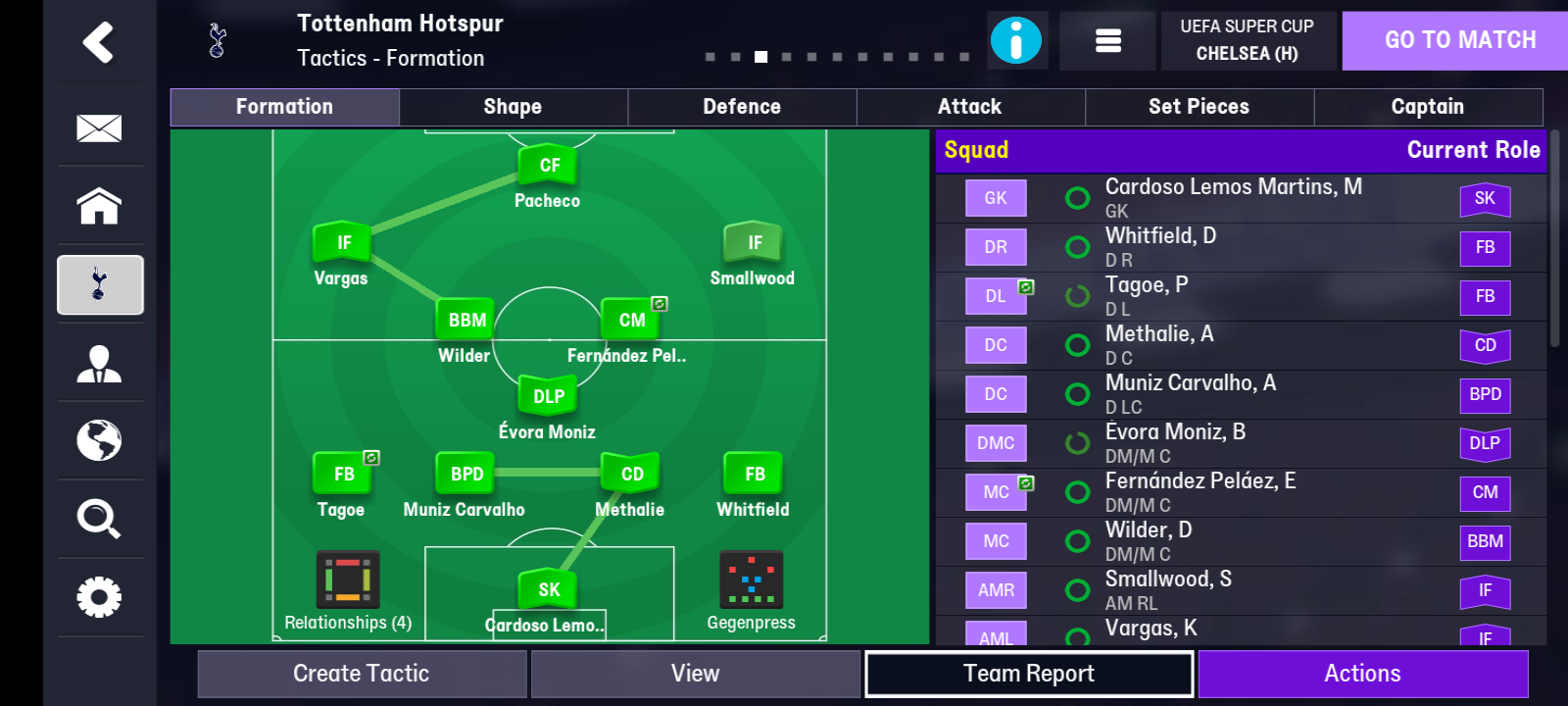
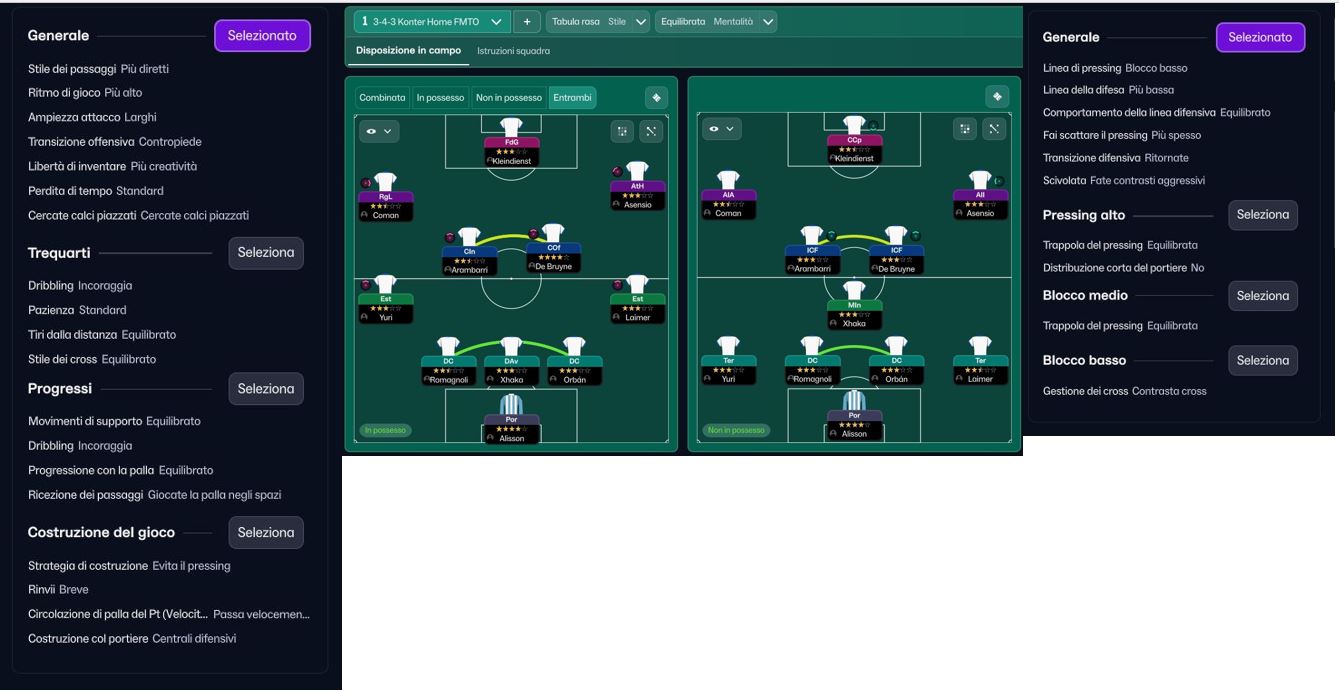
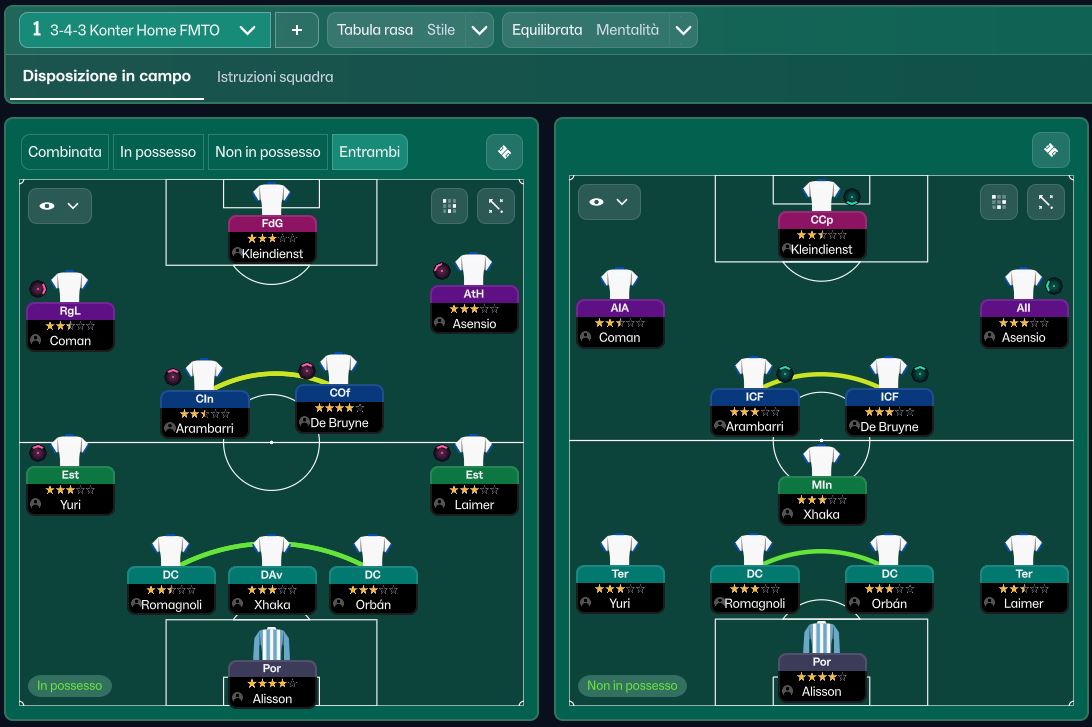
Guides for this formation
The tactical theory behind the 3-4-3: roles, instructions, and the trade-offs that decide whether the system holds up.
Playing styles
Direct, Vertical Football
Long-ball football done well in FM. When direct, vertical play is the right choice, and what the Direct Passing TI actually changes.
Read guide
Playing styles
Possession-Based Tactics in Football Manager
Build the patient, control-the-tempo style without watching your opponents counter through the gaps you leave behind.
Read guide