Uploaded Tactic
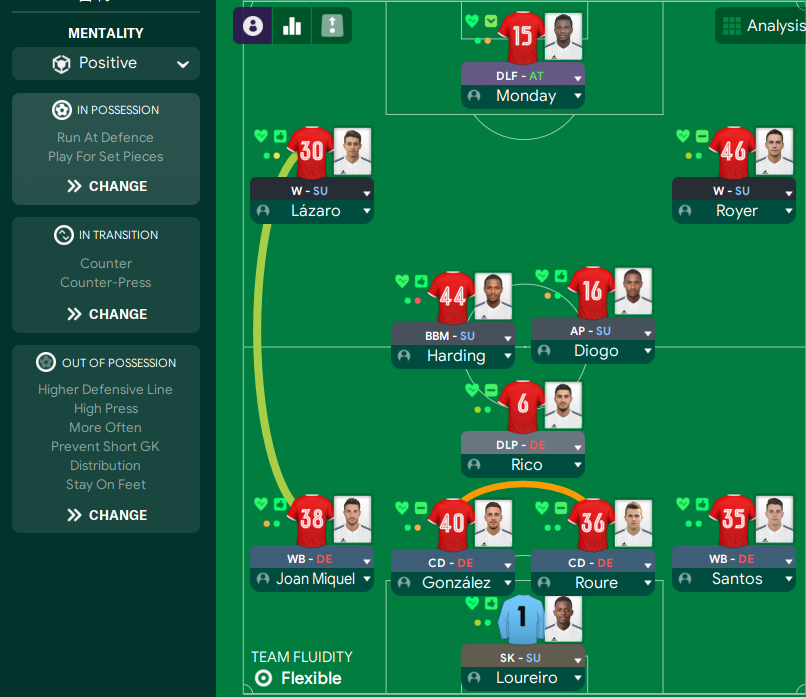
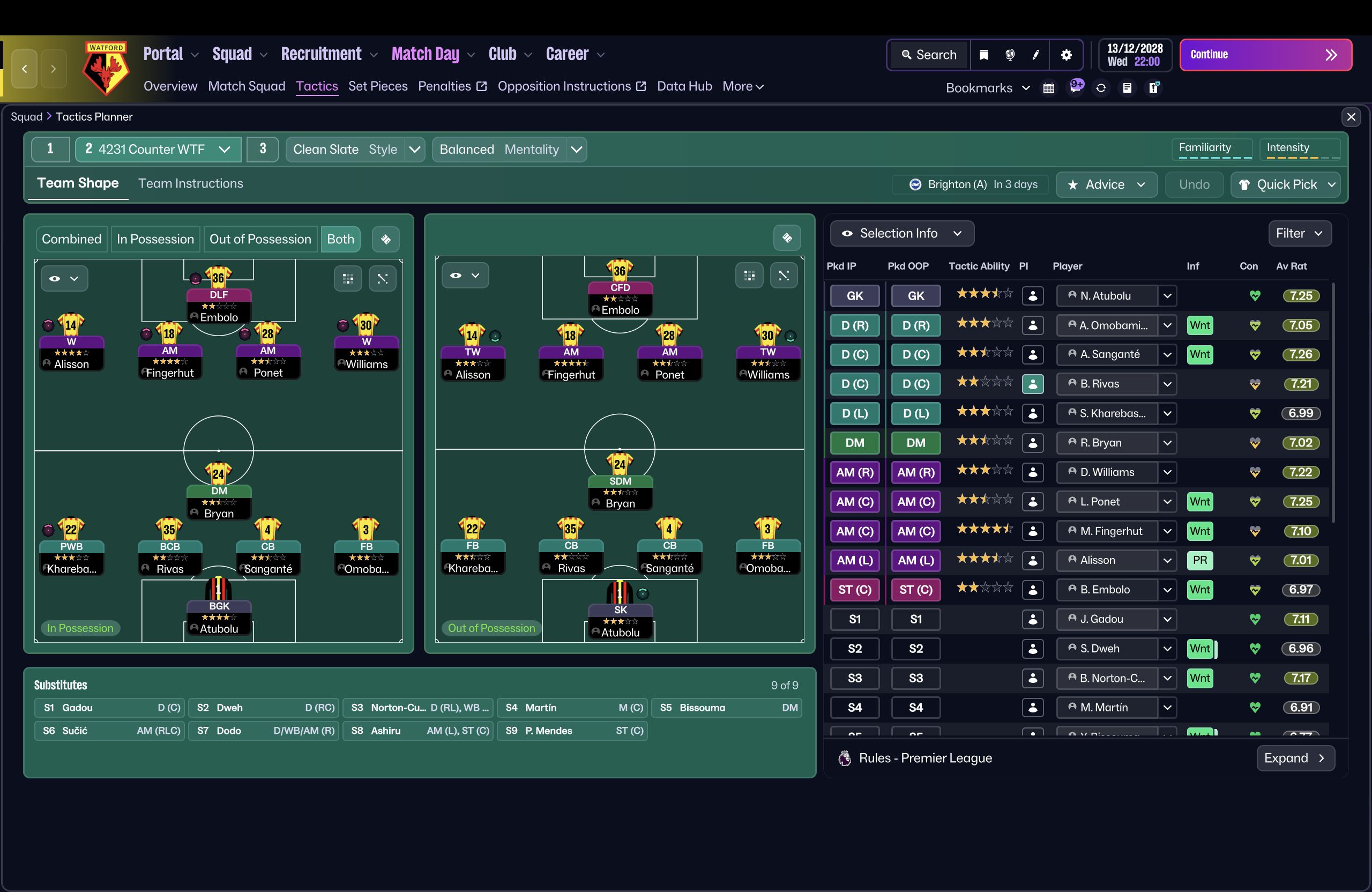
Formation & Style
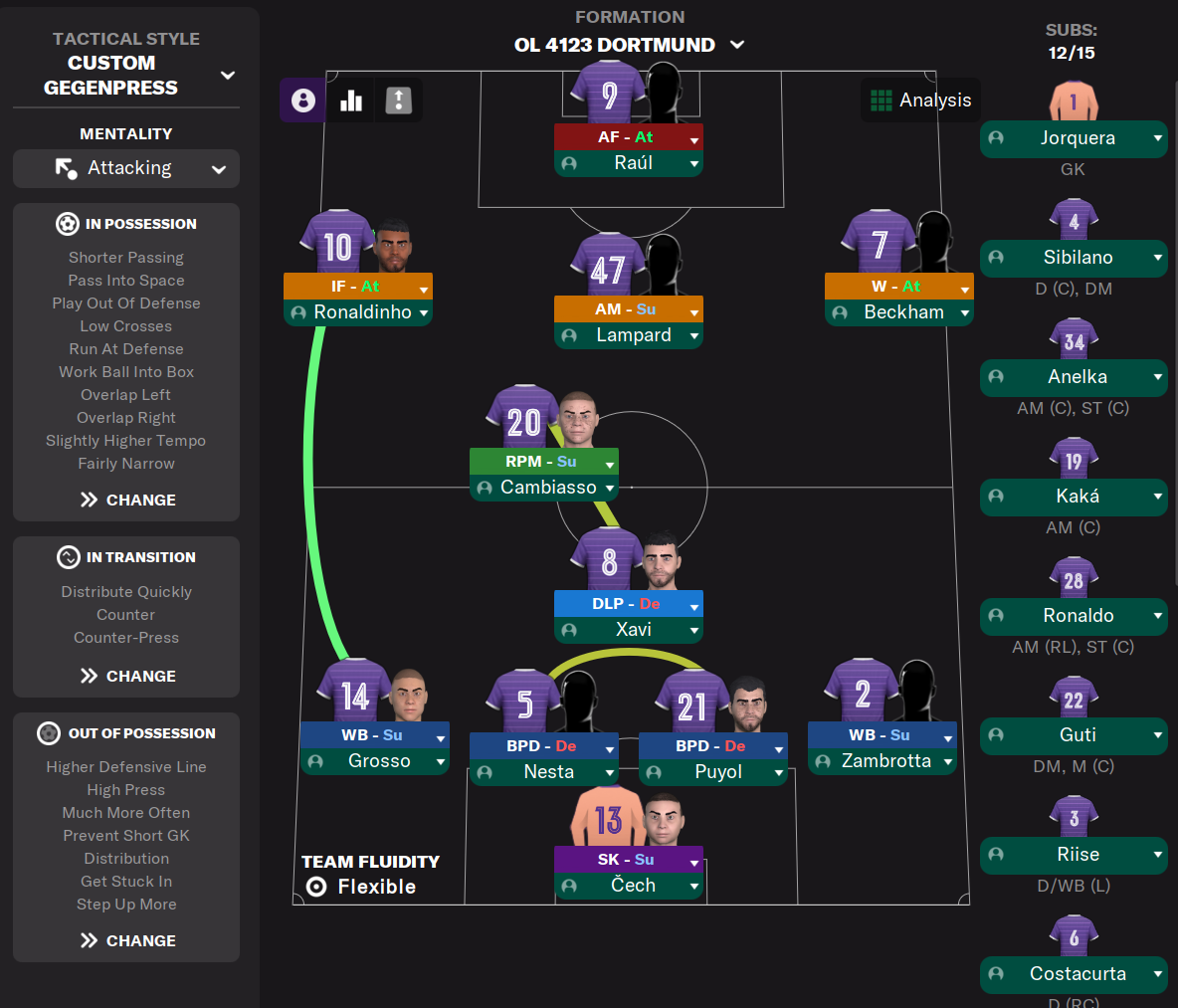
Tactical Style:Counter
Mentality:Positive
Formation:4-1-2-3
Team Fluidity:Flexible
In Possession
Run At Defence
Play For Set Pieces
In Transition
Counter
Counter-Press
Out of Possession
Higher Defensive Line
High Press
More Often Prevent Short GK Distribution
Stay On Feet
Team Shape Without Ball
Shape:4-1
Description:Compact defensive structure allowing control of the midfield while maintaining defensive stability.
Evidence:CD-D at [2,2]/[2,3] and DLP-D at [3,3] provide a shield to the backline.
Team Shape With Ball
Shape:4-3
Description:Fluid attacking shape with Wingers providing width and a combination of central support from the midfield.
Evidence:W-S at [5,1]/[5,5] and DLF-A at [6,3] enabling penetration and goal threats.
Phase Description
Attacking Play
Utilizes width from Wing-Backs and Wingers to stretch opposition, with a focus on quick transitions to exploit gaps.
Defensive Transition
Immediate counter-pressing with a high line to regain possession quickly.
Main Focus
Maximizing space with quick ball movement and creating goal-scoring opportunities through overloads.
Key Strengths
Dynamic Midfield Support
The combination of BBM-S and AP-S allows for effective transitions between defensive and attacking phases.
Wide Playmaking
Wingers stretching the play creates space for central attackers and enhances crossing opportunities.
High Pressing Potential
The high defensive line and counter-pressing can overwhelm opposing teams in transition.
Conflicting Directions
Overcommitment in Attack
The attack's emphasis on pressing can lead to vulnerabilities when losing possession.
Defensive Vulnerability on Flanks
Relying heavily on Wing-Backs risks leaving spaces that could be exploited by fast wingers.
Lack of Defensive Midfielders
A single DLP may struggle to shield the defence effectively in high-pressure scenarios.
Tactical Suggestions
Adjust Pressing Intensity
Consider reducing pressing intensity to ensure defensive balance while transitioning.
Add a Secondary Defensive Midfielder
Incorporating another midfielder could stabilize the midfield against quicker opponents.
Utilize Slash and Dash Tactics
Encouraging direct runs from midfielders can exploit space left by the opposition.
Ask Questions About Your Lineup
Related Tactics
More Counter tactics
Guides for this formation
The tactical theory behind the 4-1-2-3: roles, instructions, and the trade-offs that decide whether the system holds up.