Uploaded Tactic
Formation & Style
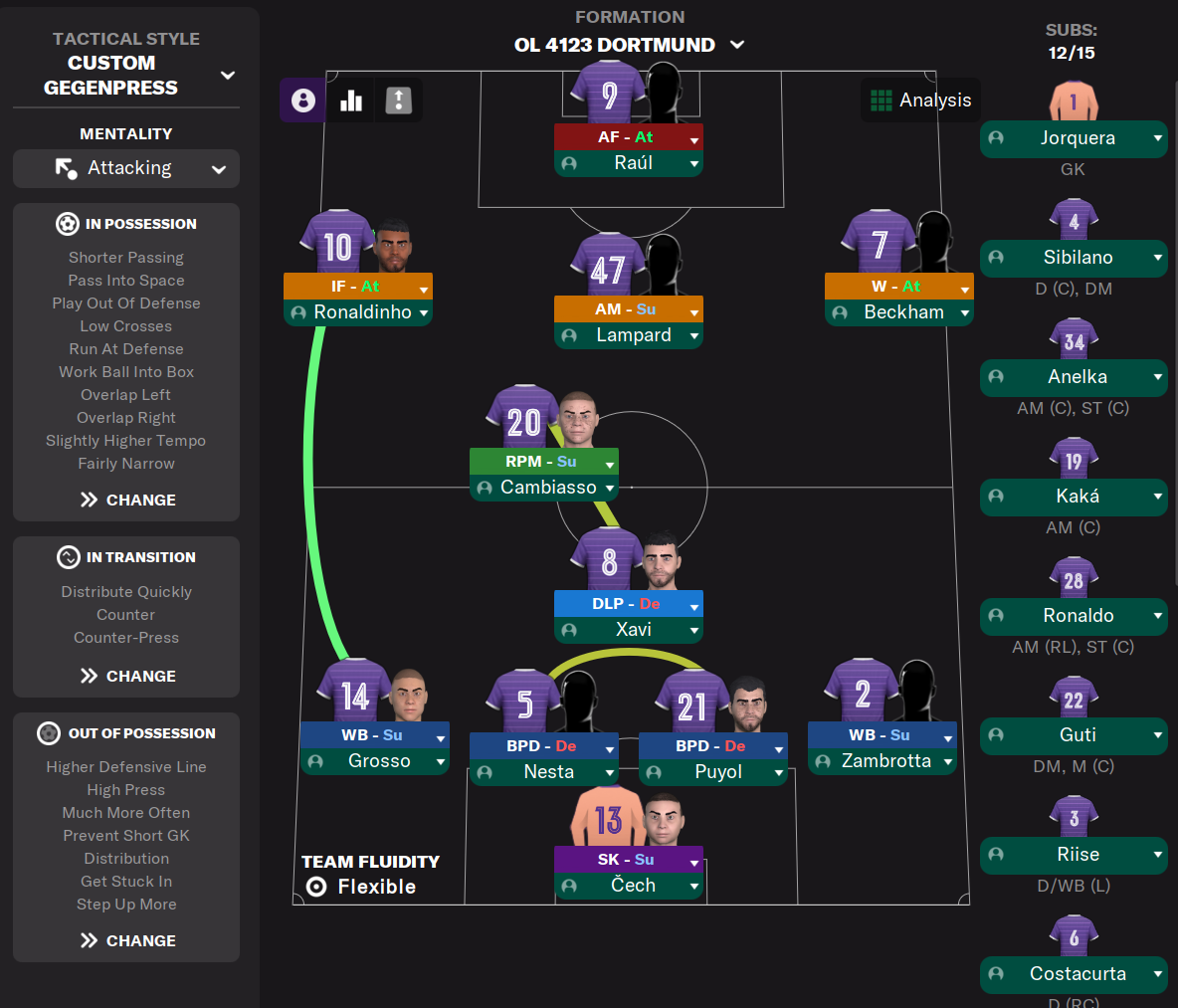
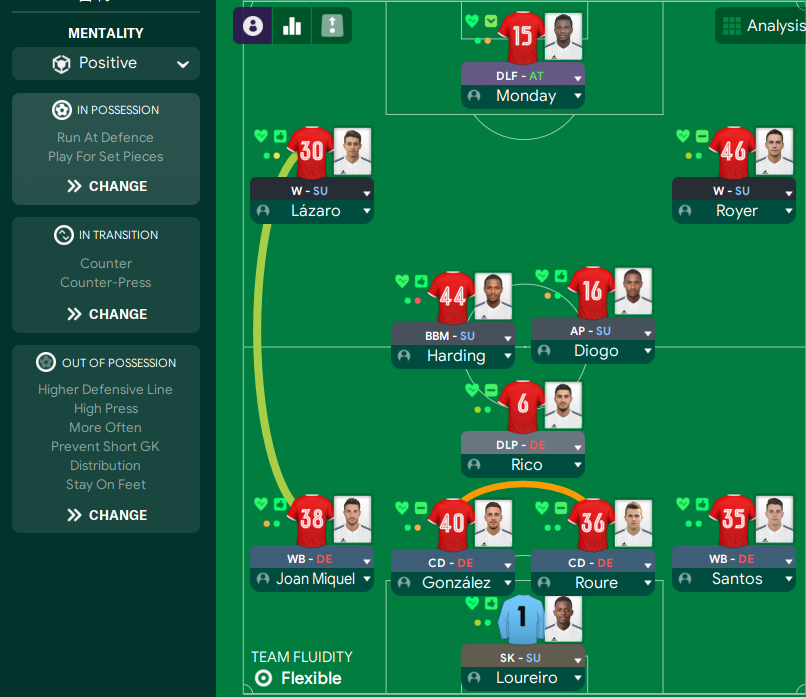
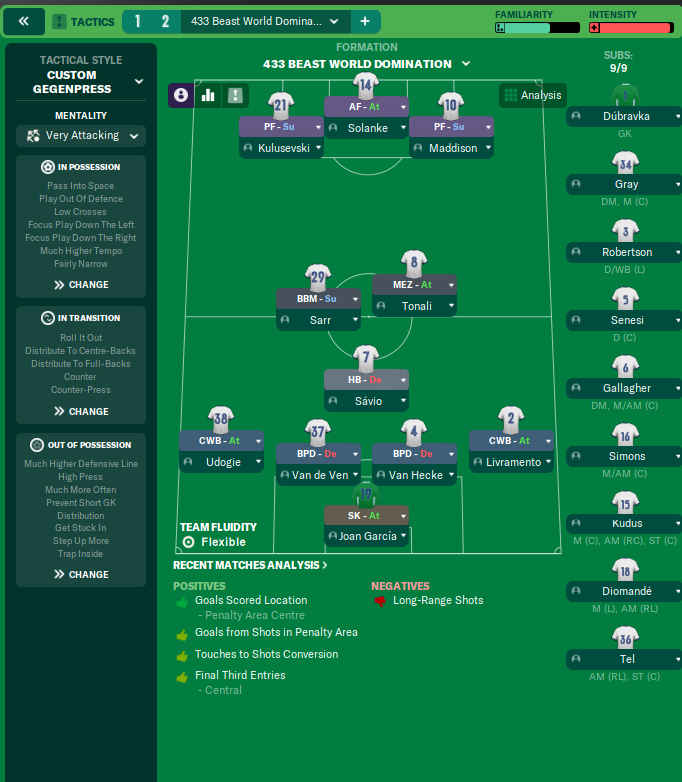
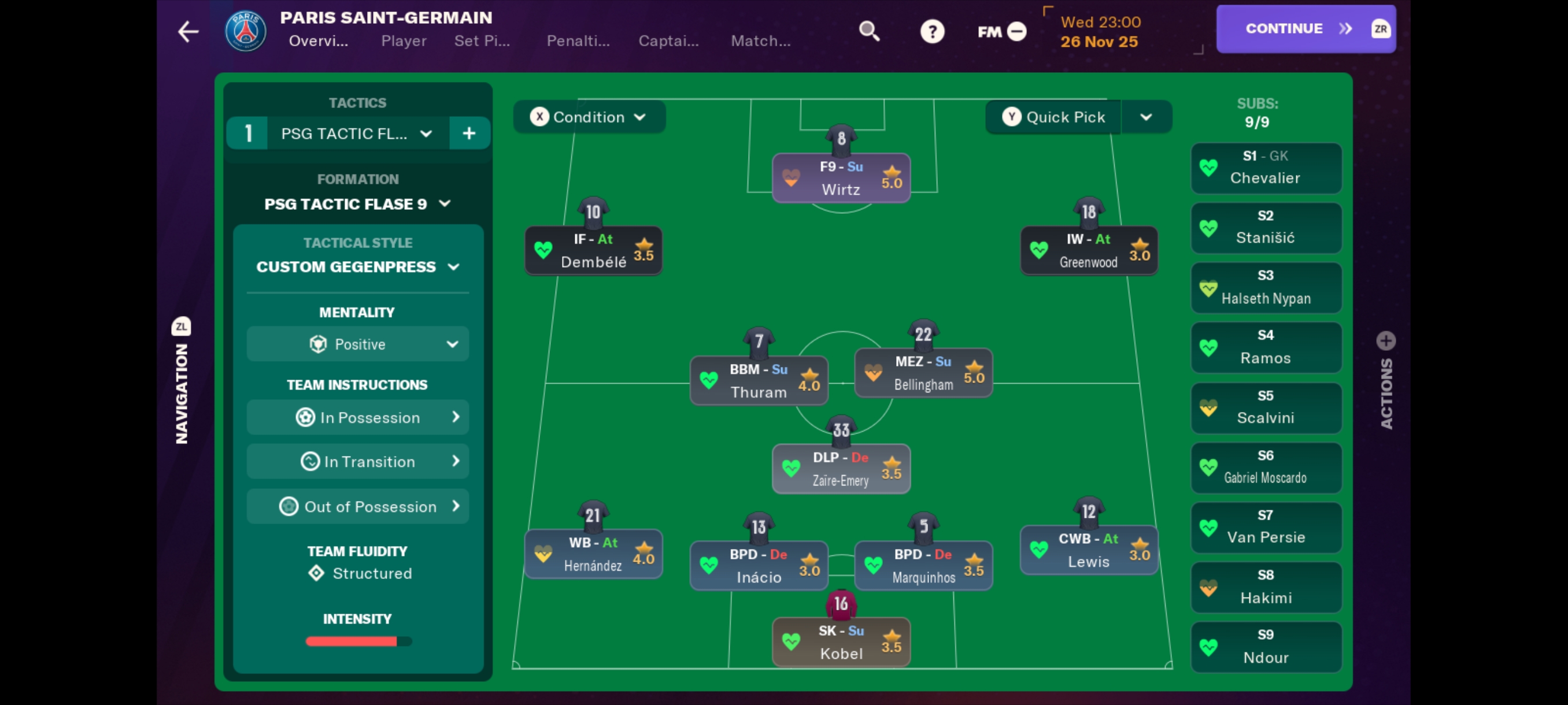
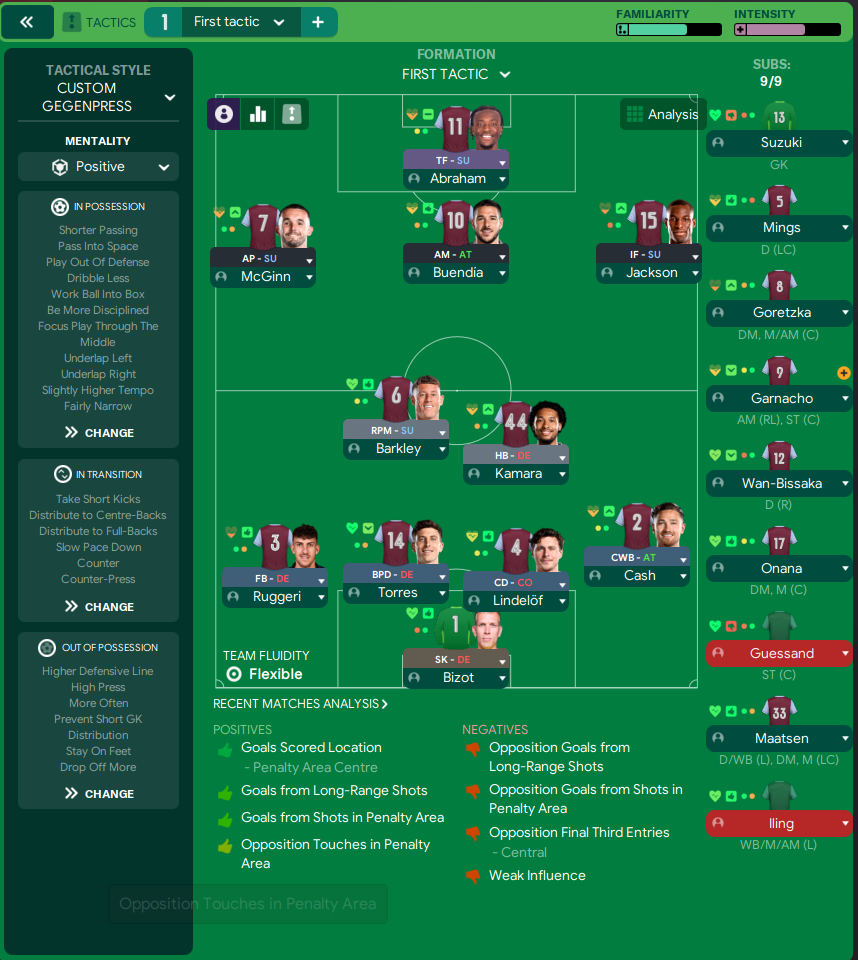
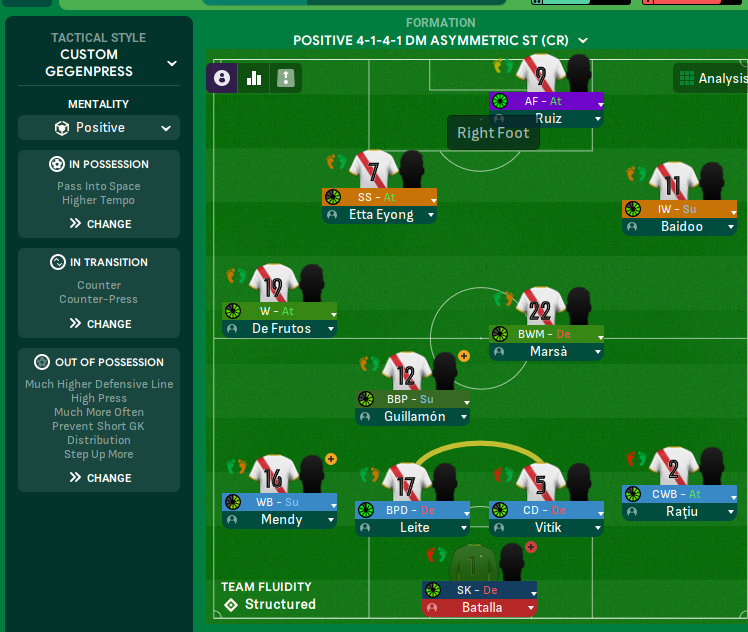
Tactical Style:Custom Gegenpress
Mentality:Attacking
Formation:4-1-2-3
Team Fluidity:Flexible
In Possession
Shorter Passing
Play Out Of Defense
Run At Defense
Work Ball Into Box
Overlapping Left
Slightly Higher Tempo
In Transition
Distribute Quickly
Counter
Counter-Press
Out of Possession
Higher Defensive Line
High Press
Much More Often Prevent Short GK Distribution
Get Stuck In
Team Shape Without Ball
Shape:High Defensive Line with Pressing
Description:The team aims to keep a high line while pressing opponents aggressively, minimizing room for counter-attacks.
Evidence:High Press instruction and Higher Defensive Line setting.
Team Shape With Ball
Shape:Fluid and Attacking Shape
Description:The players interchange positions, creating fluid movements in the final third, maximizing chances on goal.
Evidence:Utilizing Inside Forward and Advanced Playmaker roles to break defenses.
Phase Description
Attacking Play
Quick ball movement with an emphasis on exploiting space and generating goal-scoring opportunities through direct runs and overlaps.
Defensive Transition
Rapid recovery to a high press, aiming to regain possession quickly across the pitch.
Main Focus
Utilizing the width of the pitch with overlapping wing-backs and dynamic interplay between forwards.
Key Strengths
Dynamic Attack
The presence of an Inside Forward (Ronaldinho at [6,1]) and an Advanced Forward (Raúl at [6,3]) allows for a versatile attacking front.
Solid Midfield Control
Both the Deep-Lying Playmaker (Xavi at [3,3]) and Roaming Playmaker (Cambiaso at [4,2]) ensure midfield dominance and ball retention.
Effective Width Use
With Wing-Backs operating in support (Grosso and Zambrotta), the team can stretch defenses and create crossing opportunities.
Conflicting Directions
Defensive Transition Vulnerability
High press may leave some defensive gaps if possession is lost swiftly.
Dependence on Overlaps
The attacking strategy is heavily reliant on wing-backs providing width, which could be countered if marked effectively.
Space in Central Areas
With attacking players spread out, there may be too much space centrally when defending.
Tactical Suggestions
Adjust Defensive Line
Consider lowering the defensive line to reduce susceptibility to counter-attacks.
Increase Midfield Press
Utilize more aggressive midfield pressing to regain possession in central areas.
Flexibility in Wing Strategies
Alternating the focus of wing-play through in-game adjustments can disrupt opposing defenses.
Ask Questions About Your Lineup
Related Tactics
More Custom Gegenpress tactics
Guides for this formation
The tactical theory behind the 4-1-2-3: roles, instructions, and the trade-offs that decide whether the system holds up.