Uploaded Tactic
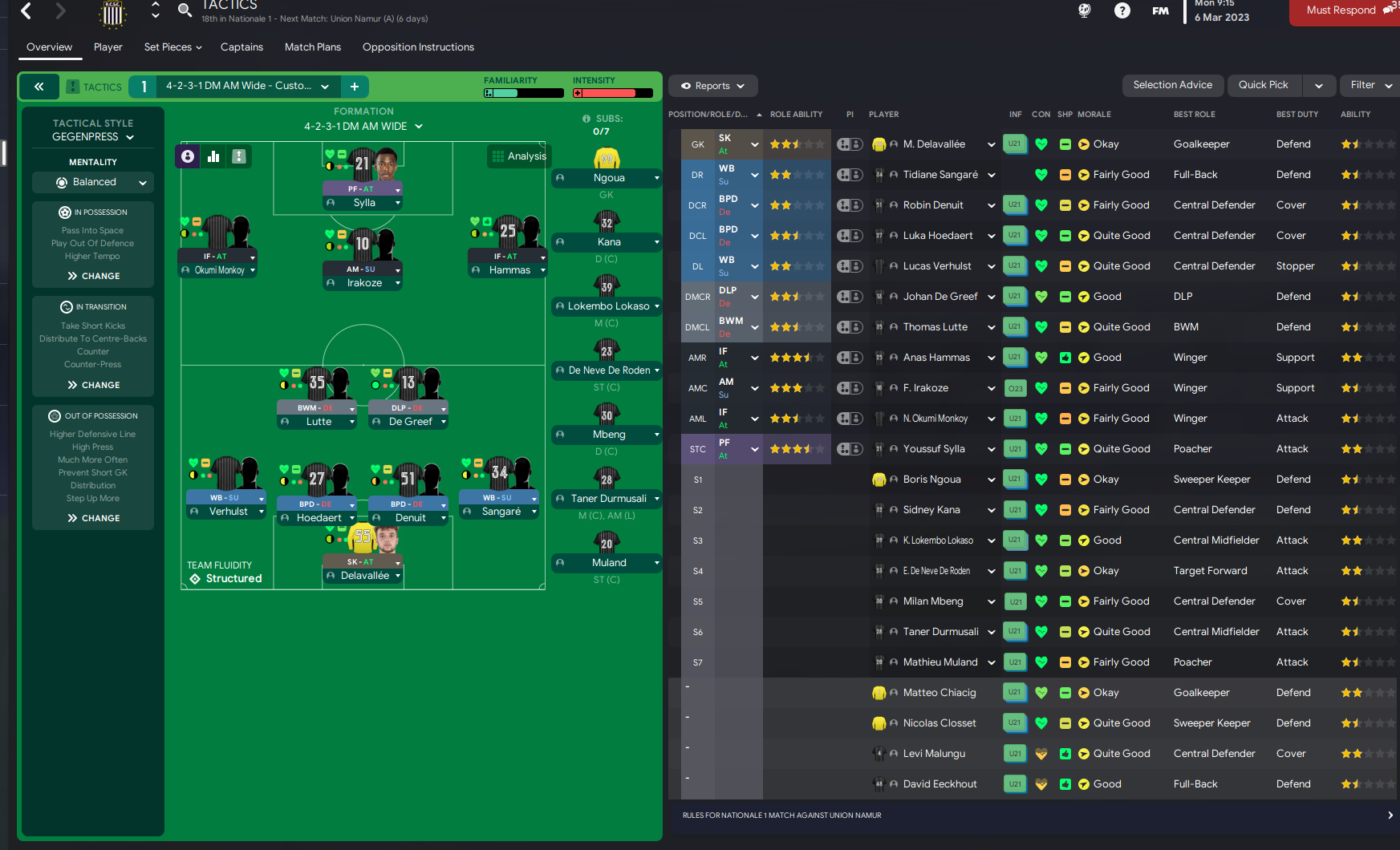
Formation & Style
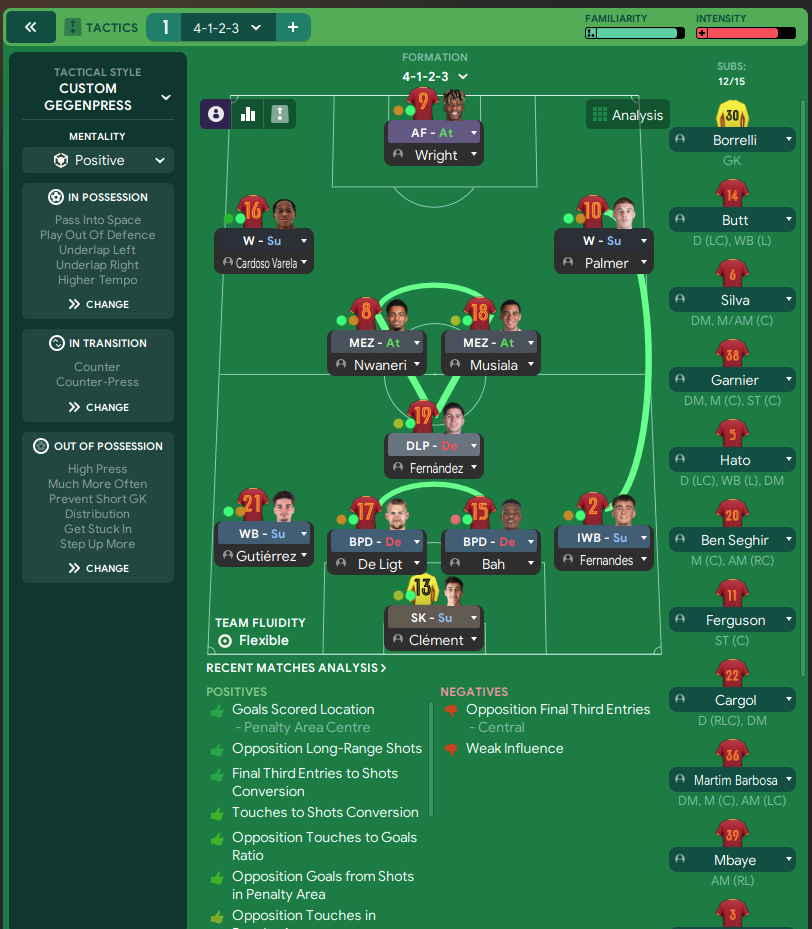
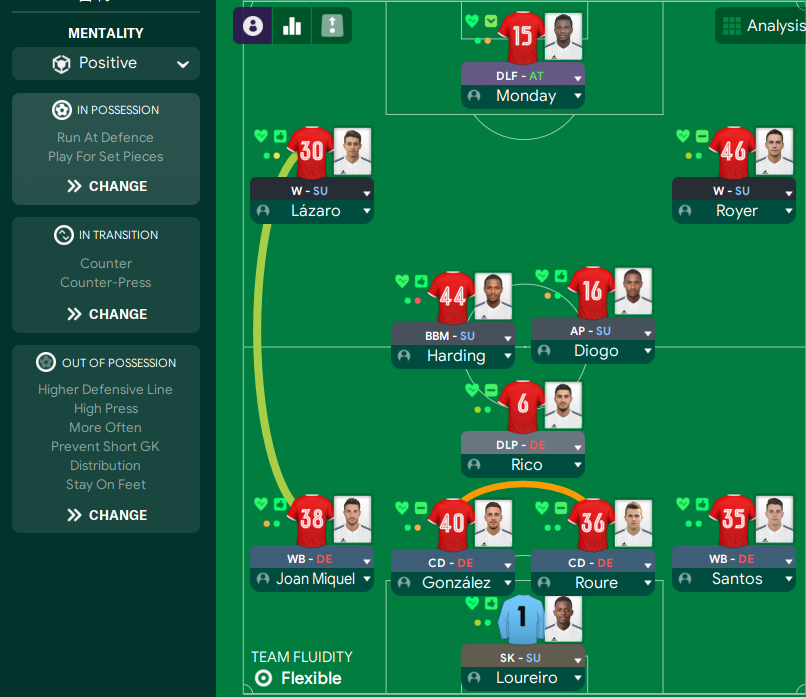
Tactical Style:Gegenpress
Mentality:Positive
Formation:4-1-2-3
Team Fluidity:Flexible
In Possession
Pass Into Space
Play Out of Defence
Underlap Left
Underlap Right
Higher Tempo
In Transition
Counter
Counter-Press
Out of Possession
High Press
Much More Often
Prevent Short GK Distribution
Get Stuck In
Step Up More
Team Shape Without Ball
No team shape without ball data available
Team Shape With Ball
No team shape with ball data available
Key Strengths
Dynamic Attack
The combination of Advanced Forward and Mezzala roles provides fluid attacking movements, creating space and opportunities.
High Pressing Game
The high pressing and counter-pressing tactics aim to regain possession quickly, disrupting the opponent's play.
Versatile Wing Play
With Wingers and Inverted Wing Backs, the tactic maximizes width while allowing for interchanging positions to confuse defenses.
Ball Retention
Using a Deep-Lying Playmaker allows for effective ball distribution from deeper areas, maintaining possession under pressure.
Conflicting Directions
Defensive Vulnerability
High pressing can leave gaps in defense if the team fails to recover possession quickly, risking counter-attacks.
Wide Player Roles
Wingers and Inverted Wing Backs together can result in overcrowding in wide areas, limiting attacking options.
Counter-Press Effectiveness
While attempting to counter-press, the formation may lack numerical superiority in central areas, making it difficult to win back the ball.
Fluidity vs. Structure
High team fluidity may lead players to drift out of designated positions, impacting defensive organization.
Tactical Suggestions
Narrowing the Formation
Consider adjusting the width of the Wingers or using Inside Forwards to maintain attacking width while being more compact defensively.
Adjusting Mentality
Switching to a 'Balanced' mentality during tougher matches may enhance defensive solidity without sacrificing attacking intent.
Utilizing More Structured Roles
Introduce more structured roles in midfield to ensure better control and cohesion, reducing reliance on fluidity.
Covering Defensive Transitions
Arranging a midfielder as a more defensive role when transitioning to defend can help cover spaces when pressing fails.
Ask Questions About Your Lineup
Related Tactics
More Gegenpress tactics
Guides for this formation
The tactical theory behind the 4-1-2-3: roles, instructions, and the trade-offs that decide whether the system holds up.