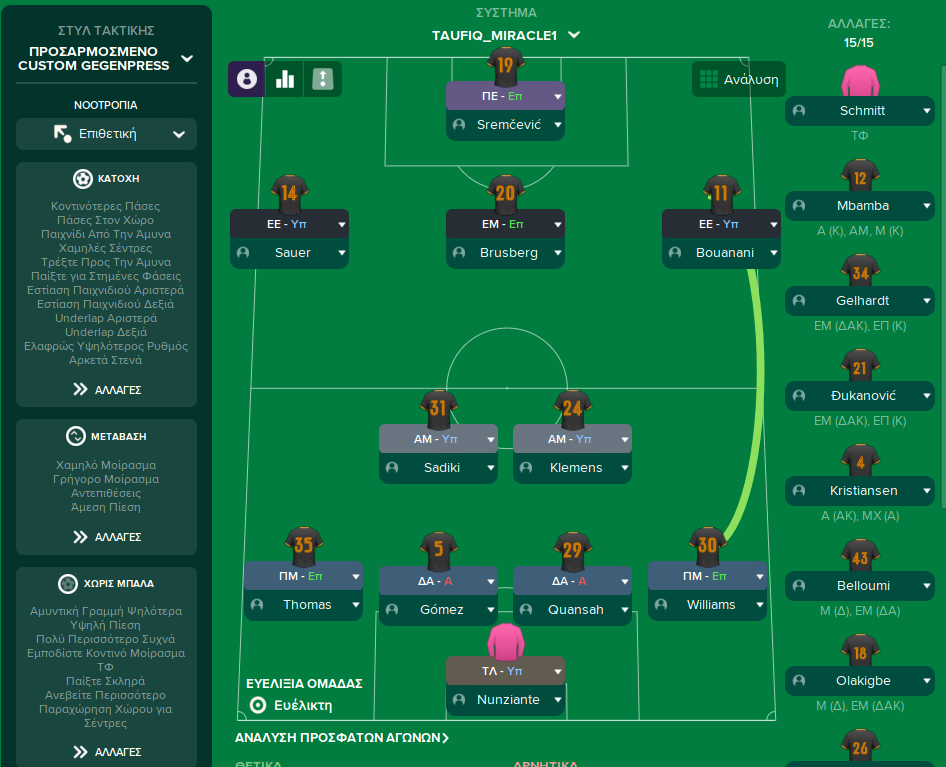
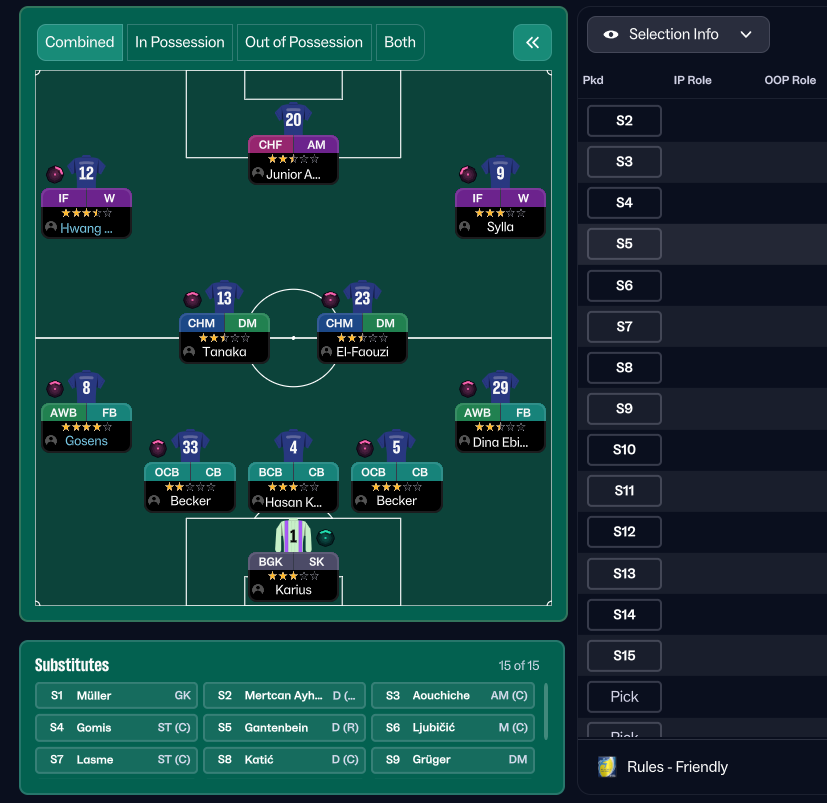
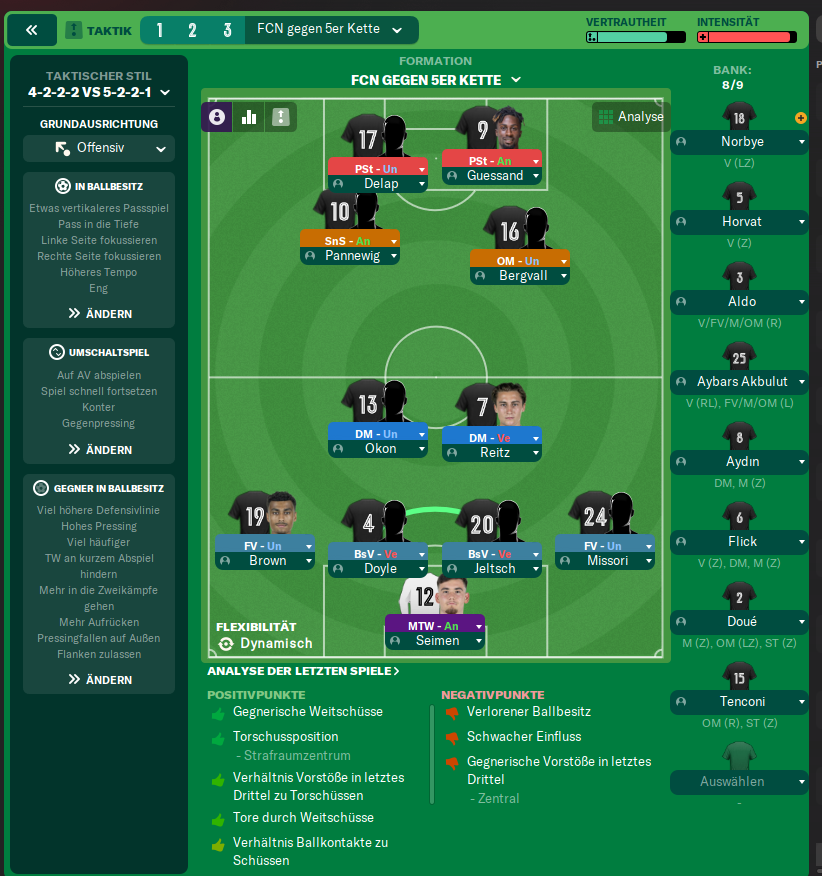
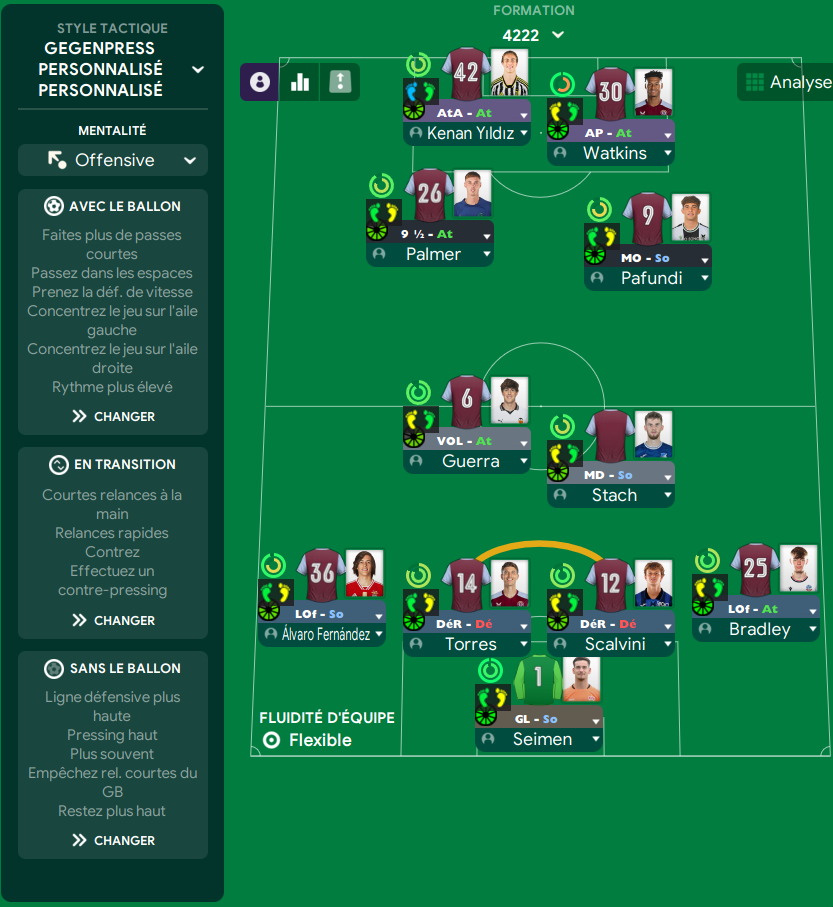
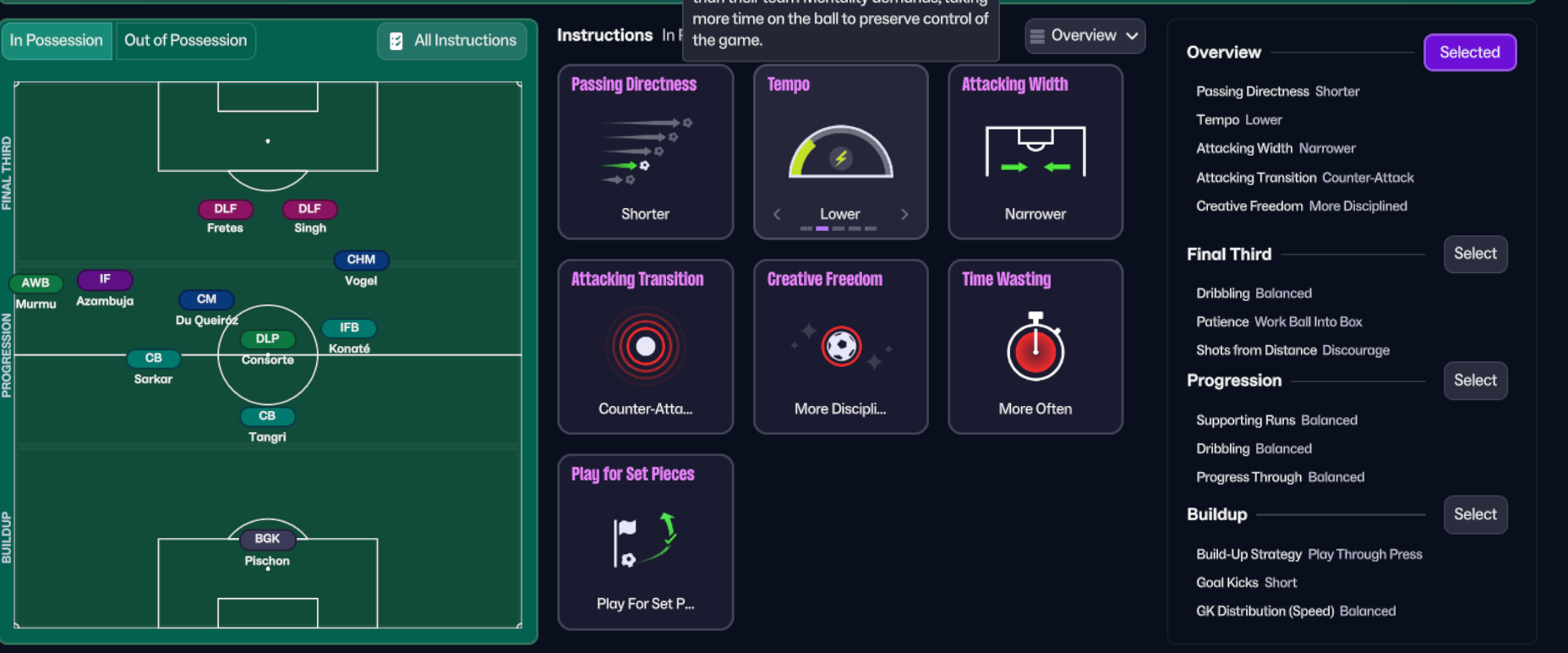
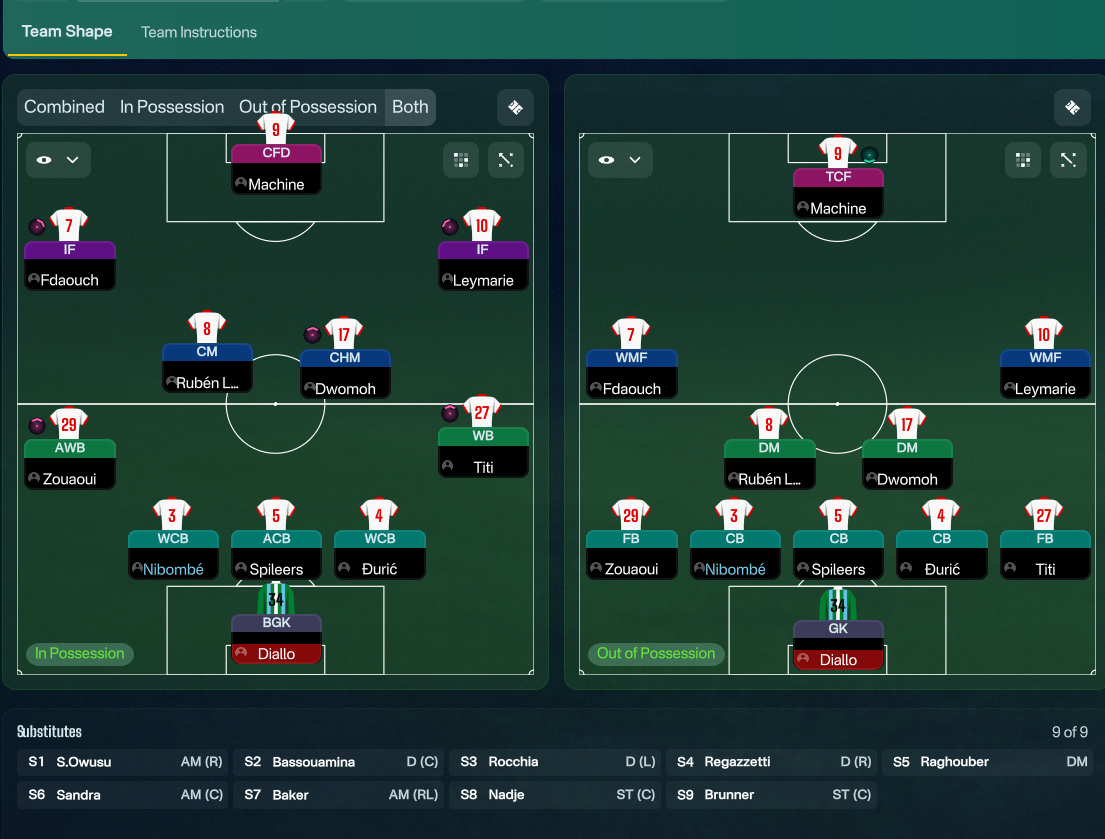
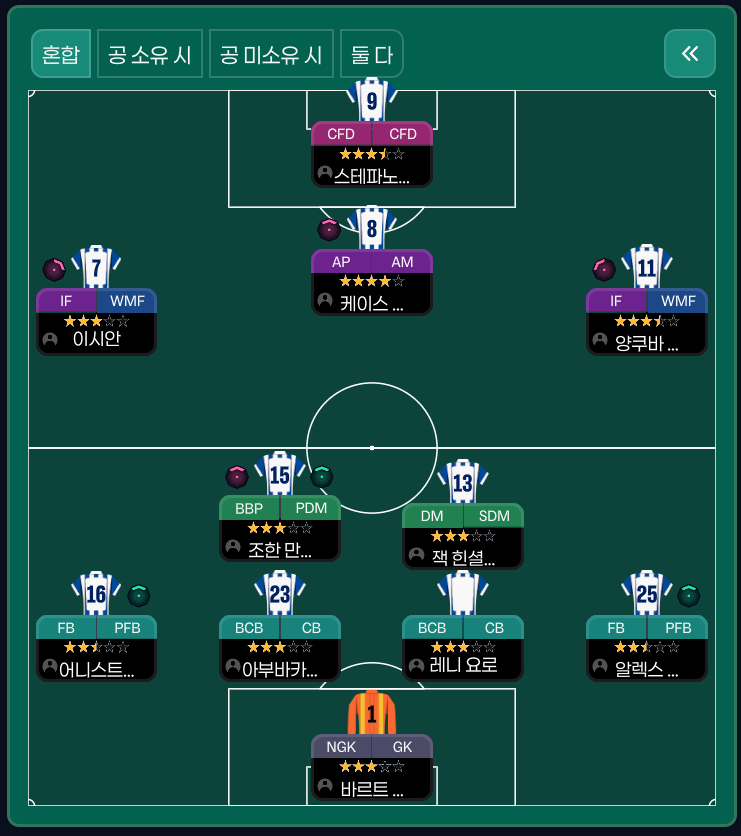
4-2-2-2
Utilizing wing play and quick passing to exploit defensive gaps. The use of a back four coupled with a BCB enhances defensive resilience.
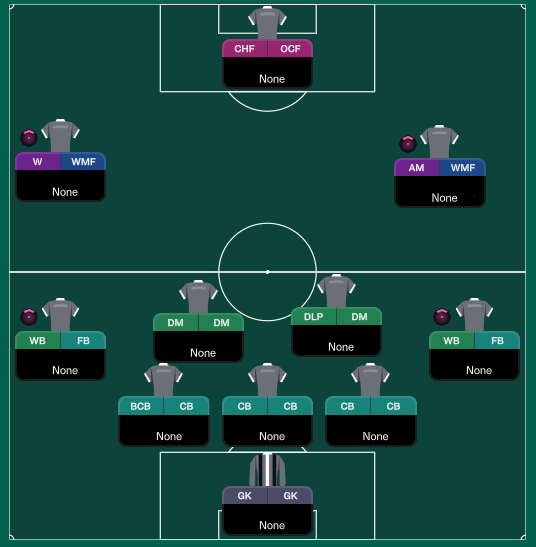
Loading tactical analysis...
4-2-2-2
Play Out of Defence
Focus Play Down Both Flanks
Pass Into Space
Counter-Press
Counter
Higher Defensive Line
Higher Line of Engagement
Prevent Short GK Distribution
GK
GK
CB
CB
CB
CB
CB
CB
CB
BCB
FB
FB
Support
WB
WB
Attack
DM
DM
DM
DM
DLP
DLP
Support
AM
WMF
Support
CHF
CHF
At
OCF
OCF
At
W
W
Support
WMF
WMF
Support
Focuses on width and quick transitions with wingers and a combined forward threat.
Immediate pressing after losing possession to regain control quickly.
Utilizing wing play and quick passing to exploit defensive gaps.
Compact
Defensive line holds well with sufficient cover in midfield to protect the back line.
DMs screen the defence effectively while BCB provides good passing options.
Width with Central Overlap
Wingers stretch the opponent while forwards attract central defenders, creating space.
WMF and W utilize the flanks creating passing lanes into the CHF and OCF.
The use of a back four coupled with a BCB enhances defensive resilience.
BCB at [2,1] with DMs at [3,2] and [3,3] ensures compactness.
Two wingers combined with overlapping full-backs can stretch opponents.
W at [6,1] and WMF at [6,2] support wing attacks.
Reliance on wing play may leave central areas underutilized.
OCF and CHF are static without sufficient support from AM.
Counter-pressing without adequate cover may leave team exposed.
Higher Line of Engagement with high forwards could lead to gaps.
Central Midfield
Potential for overloads in the central area due to lack of midfield presence.
DLP-S at [3,3] is key without additional support.
Defensive Counter
High pressing may leave gaps for counter-attacks through central lanes.
Higher Defensive Line with higher pressing could be risky.
DLP-S with DM-D
DLP can distribute effectively while DMs offer protection.
DLP at [3,3] paired with two DMs at [3,2] and [3,4].
W with FB
W creates width, allowing FB to overlap for attacks.
W at [6,1] supports FB at [2,1] during attacking phases.
How can we incorporate more central midfielders into the setup?
Are the pressing triggers balanced to maintain structure?
What adjustments can be made for improved goal scoring?
The tactical theory behind the 4-2-2-2: roles, instructions, and the trade-offs that decide whether the system holds up.
Mentality, duty, role, instruction, sub. The change hierarchy from lightest to heaviest intervention, and 60th-minute patterns by game state.
Pass map, average position, xG, possession by zone: what each tablet panel tells you in FM and the tactical change it should trigger.
FM27 keeps FM26's tactic system. Here is what stays the same, the small changes that can catch you out, and what the new Tactical Effectiveness system asks of you.