Uploaded Tactic
Formation & Style
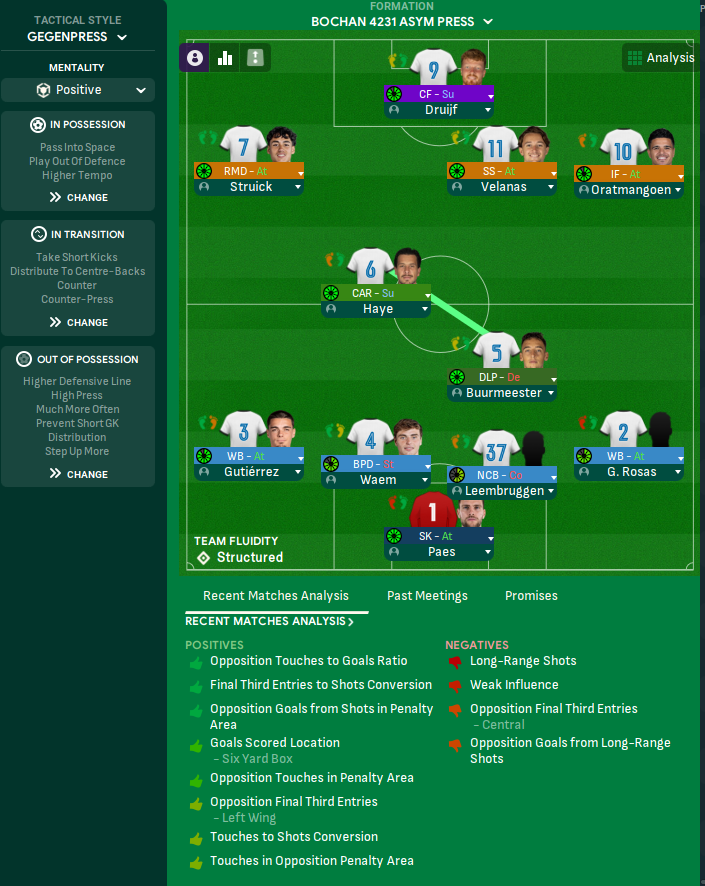
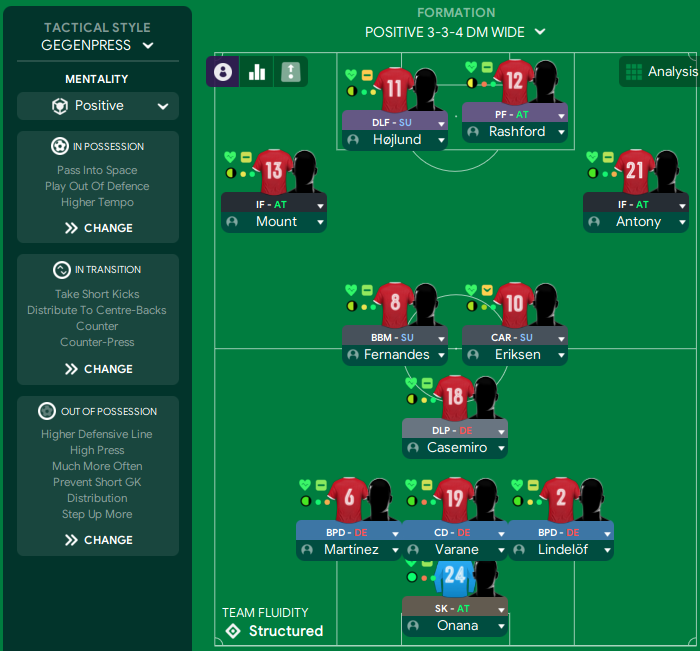
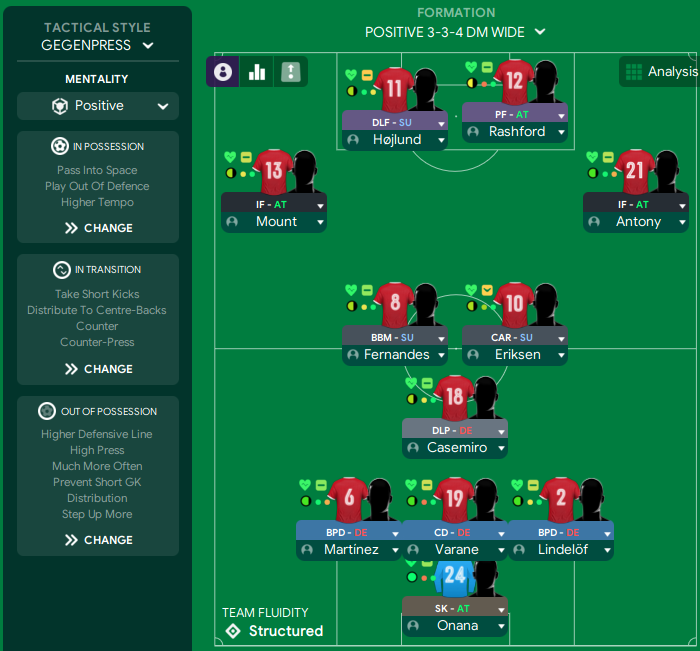
Tactical Style:Gegenpress
Mentality:Positive
Formation:4-2-3-1 Asymmetrical
Team Fluidity:Structured
In Possession
Pass Into Space
Play Out Of Defence
Higher Tempo
In Transition
Take Short Kicks
Distribute To Centre-Backs
Counter-Press
Out of Possession
Higher Defensive Line
High Press
Much More Often Prevent Short GK Distribution
Step Up More
Team Shape Without Ball
Shape:4-2
Description:A compact and organized shape that forces opposition to the flanks.
Evidence:NNCB at [2,2] and BPD at [2,3] help in maintaining a balanced line.
Team Shape With Ball
Shape:4-3
Description:An asymmetrical shape created by the attacking movement of wing-backs and inside forwards.
Evidence:WB-A at [2,1] and [2,5] combined with RMD-A at [6,1] and SS-A at [6,2] provide width and penetration.
Phase Description
Attacking Play
Quick transitions from defense to attack, utilizing wide areas and space to stretch opposition.
Defensive Transition
Immediate counter-press to regain possession high up the pitch.
Main Focus
Creating overloaded situations on the flanks and exploiting spaces.
Key Strengths
Dynamic Attackers
The attacking midfield trio can interchange fluidly and create goal-scoring opportunities.
Solid Defensive Structure
Strong defensive organization with a solid back four, supported by a disciplined midfield.
Effective Pressing
High pressing scheme leads to quick recoveries of possession and creates scoring chances.
Conflicting Directions
Vulnerability to Long-Range Shots
The defensive line's high positioning exposes the team to shots from distance.
Weak Influence in Central Areas
The shape may struggle to control central zones, especially during defensive transitions.
Reliance on Wing Play
Excessive focus on wing overloads might leave central attackers isolated.
Tactical Suggestions
Enhance Central Midfield Control
Consider adapting one central midfielder's role to provide better support and cover.
Adjust Defensive Line Height
Lowering the defensive line may reduce vulnerability to long-range shots.
Encourage Overlapping Runs from Wing-Backs
Implement instructions for wing-backs to overlap and support wide forwards more effectively.
Ask Questions About Your Lineup
Related Tactics
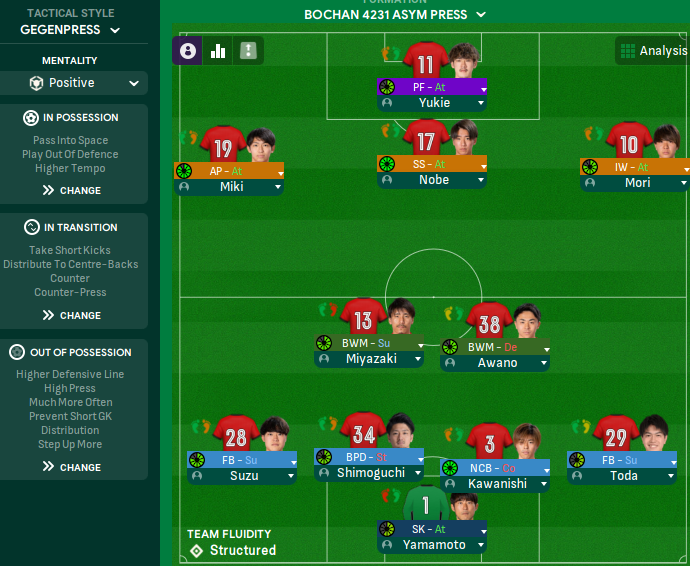
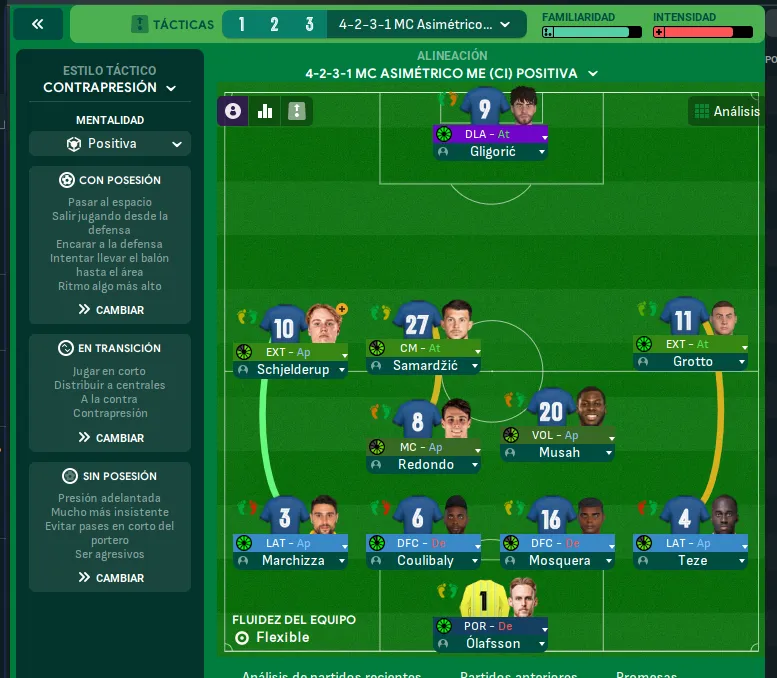
More Gegenpress tactics
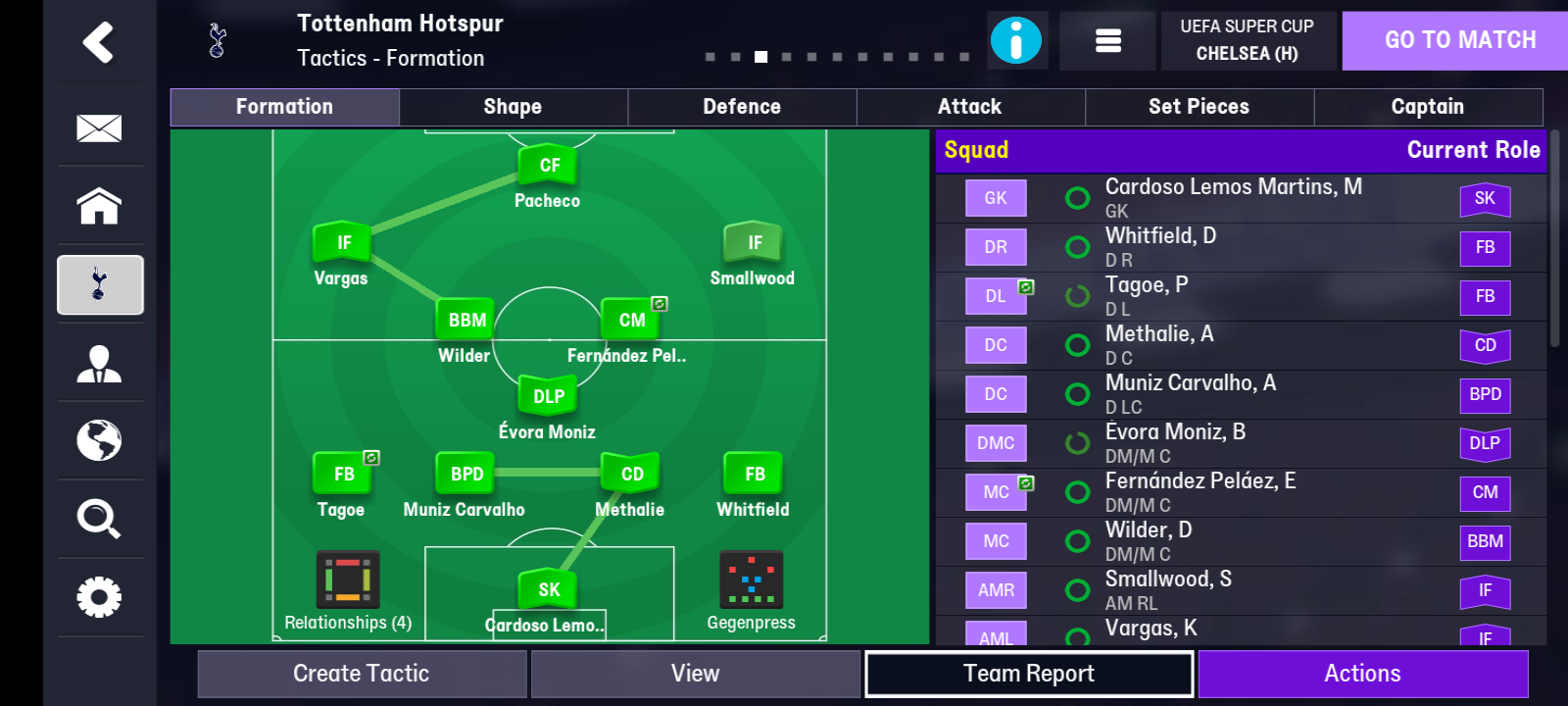
Guides for this formation
The tactical theory behind the 4-2-3-1 Asymmetrical: roles, instructions, and the trade-offs that decide whether the system holds up.
Player pairings
Midfield Pairs in 4-2-3-1 and 4-4-2
Double pivots and flat pairs in 4-2-3-1 and 4-4-2: when each pairing works, when it collapses, and the AMC unicorn that rescues both.
Read guide
Playing styles
Gegenpressing: A Full Guide
Klopp-style gegenpressing in FM, including squad profile, line-and-press pairing, sustainable workload, and the antipatterns to avoid.
Read guide