Uploaded Tactic
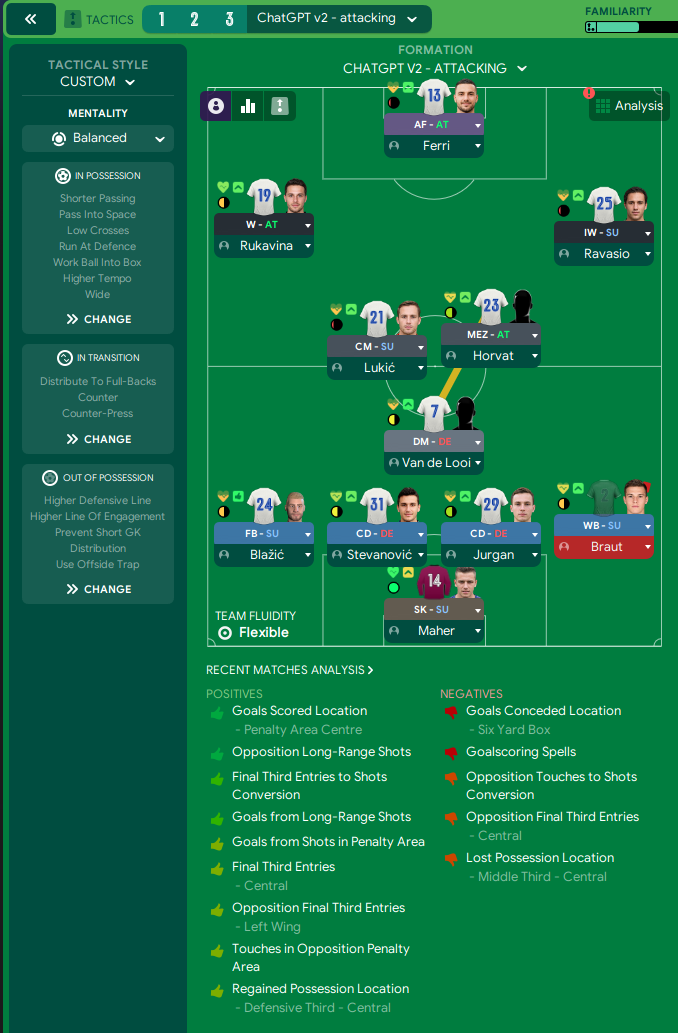
Formation & Style
Tactical Style:Custom
Mentality:Balanced
Formation:4-2-3-1 Attacking
Team Fluidity:Flexible
In Possession
Shorter Passing
Pass Into Space
Low Crosses
Work Ball Into Box
Higher Tempo
Wide
In Transition
Distribute To Full-Backs
Counter
Counter-Press
Out of Possession
Higher Defensive Line
Higher Line Of Engagement
Prevent Short GK Distribution
Use Offside Trap
Team Shape Without Ball
No team shape without ball data available
Team Shape With Ball
No team shape with ball data available
Key Strengths
Attacking Width
Utilizing wingers and inside forwards creates width, stretching the opposition defense.
Fluid Movement
Flexible team fluidity allows players to interchange positions, creating confusions for defenders.
Counter-Attacking Threat
Quick transitions supported by counter-pressing can capitalize on opposition mistakes.
Control in Midfield
Combination of a defensively minded DM and an attacking MZ helps in maintaining possession.
Conflicting Directions
Defensive Line vs High Pressure
A high defensive line may leave gaps if the team fails to counter-press effectively during transitions.
Full-Back Support vs Defensive Stability
Forward-supporting full-backs might compromise defensive solidity, inviting counter-attacks.
Balanced Mentality with Attacking Roles
Having attacking roles on the pitch can lead to an imbalance if the mentality is set as balanced.
Shorter Passing vs High Tempo
Higher tempo may lead to hurried passes, countering the benefit of shorter passing style.
Tactical Suggestions
Adjust Defensive Line
Consider lowering the defensive line to mitigate vulnerability against quick opposition attacks.
Optimize Full-Back Roles
Changing full-backs to a more balanced duty (like defend) could enhance defensive stability.
Enhance Offensive Width
Consider instructing wingers to also cut inside or play as inside forwards to add variation to attacks.
Modify Team Mentality
Switch to a more offensive mentality to better utilize the attacking talent in key positions.
Ask Questions About Your Lineup
Guides for this formation
The tactical theory behind the 4-2-3-1 Attacking: roles, instructions, and the trade-offs that decide whether the system holds up.
Player pairings
Midfield Pairs in 4-2-3-1 and 4-4-2
Double pivots and flat pairs in 4-2-3-1 and 4-4-2: when each pairing works, when it collapses, and the AMC unicorn that rescues both.
Read guide
Playing styles
Gegenpressing: A Full Guide
Klopp-style gegenpressing in FM, including squad profile, line-and-press pairing, sustainable workload, and the antipatterns to avoid.
Read guide