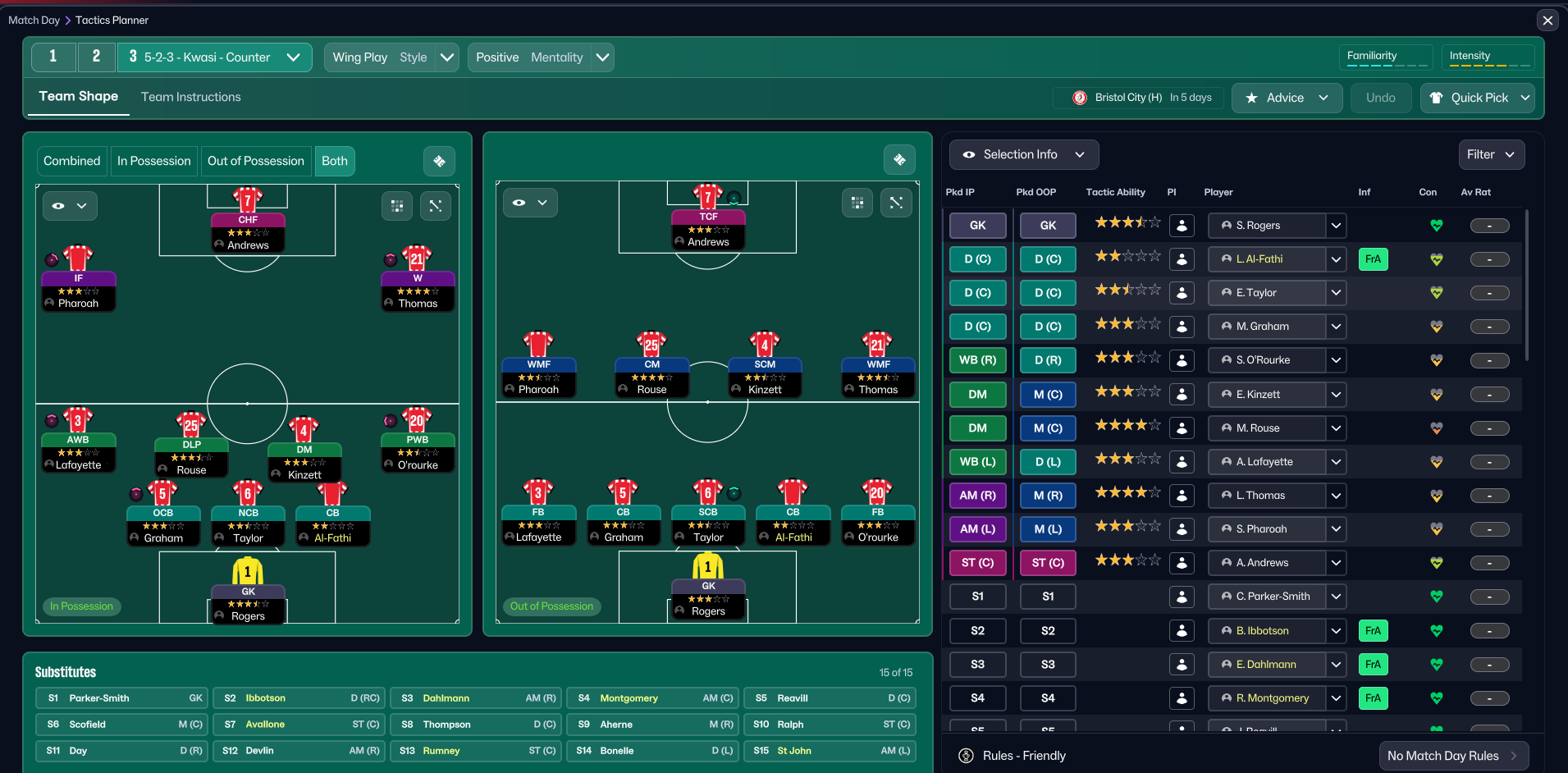
Uploaded Tactic
Formation & Style
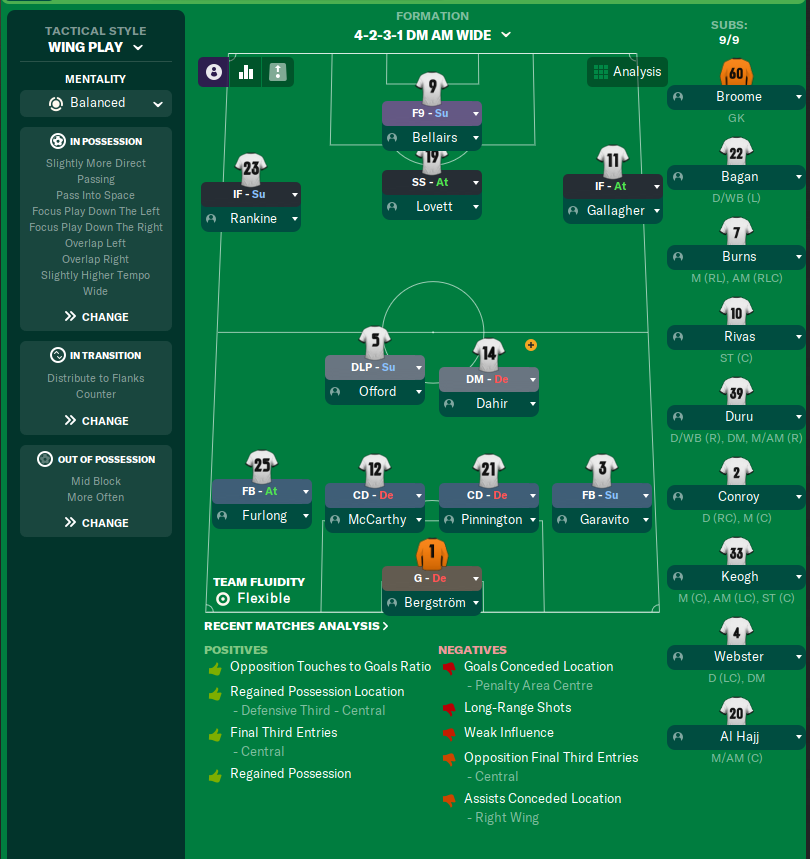
Tactical Style:Wing Play
Mentality:Balanced
Formation:4-2-3-1 DM AM Wide
Team Fluidity:Flexible
In Possession
Slightly More Direct Passing
Focus Play Down The Left
Focus Play Down The Right
Overlap Left
Overlap Right
Slightly Higher Tempo
In Transition
Distribute to Flanks Counter
Out of Possession
Mid Block
More Often
Team Shape Without Ball
Shape:4-2
Description:Solid two-line structure providing both coverage and a compact base to counter opposition attacks.
Evidence:DM (De) at [3,3] helps shield the backline.
Team Shape With Ball
Shape:4-3
Description:Dynamic shape promoting wing play with central forwards drawing defenders wide.
Evidence:IF-A at [6,2] and SS at [5,3] maximize goal-scoring threats.
Phase Description
Attacking Play
Utilizes width and overlap to create space for the forwards, maximizing crossing opportunities and utilizing direct passing.
Defensive Transition
Focuses on regaining possession quickly by countering directly to the flanks.
Main Focus
Exploiting the wide areas and using overlapping full-backs in tandem with attackers.
Key Strengths
Effective Wide Play
Inverted wingers in wide areas stretch the opposition and create space centrally.
Ball Retention
Strong midfield presence allows for better control when transitioning and recirculating the ball.
Direct Attacking Threat
Utilizing a forward who drops deep offers multiple routes for attack.
Conflicting Directions
Defensive Vulnerability
Higher pressing might leave the team exposed if they fail to win the ball back quickly.
Long-Ranged Shots Exposure
Compact midfield may invite long shots if the defensive lines are bypassed.
Right Wing Assistance
Inadequate coverage on the right may lead to opposing attacks being favored down that side.
Tactical Suggestions
Reassess Right Flank Defence
Improve defensive cover on the right side to limit opposition entries.
Increase Central Pressure
More intensity in the central areas during the defensive phase could prevent opposition from entering the final third.
Balance Full-Back Responsibilities
Ensure that full-backs do not get caught upfield too often, maintaining some defensive solidity.
Ask Questions About Your Lineup
Related Tactics
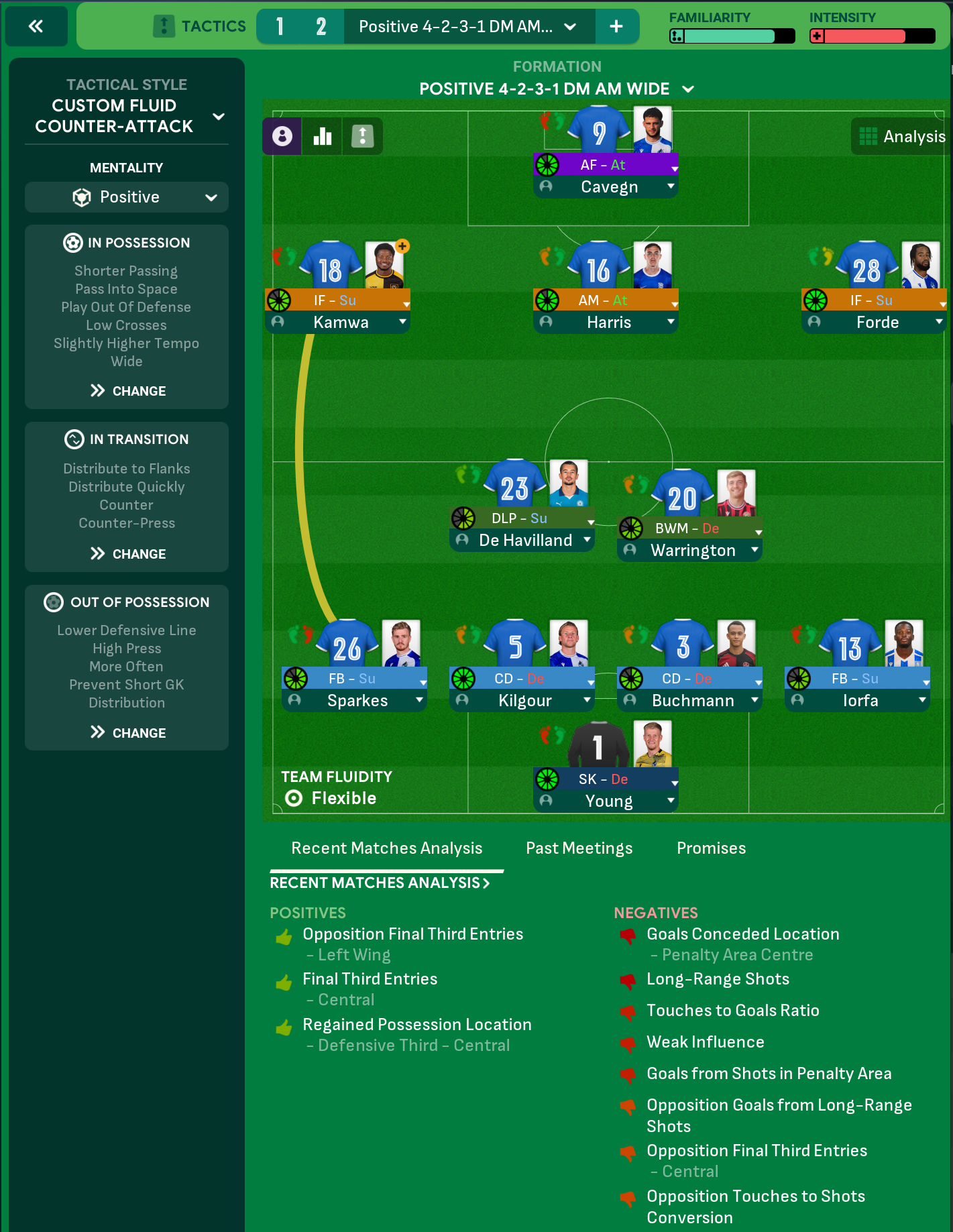
Fluid Counter-Attack 4-2-3-1 DM AM Wide
Custom Fluid Counter-Attack
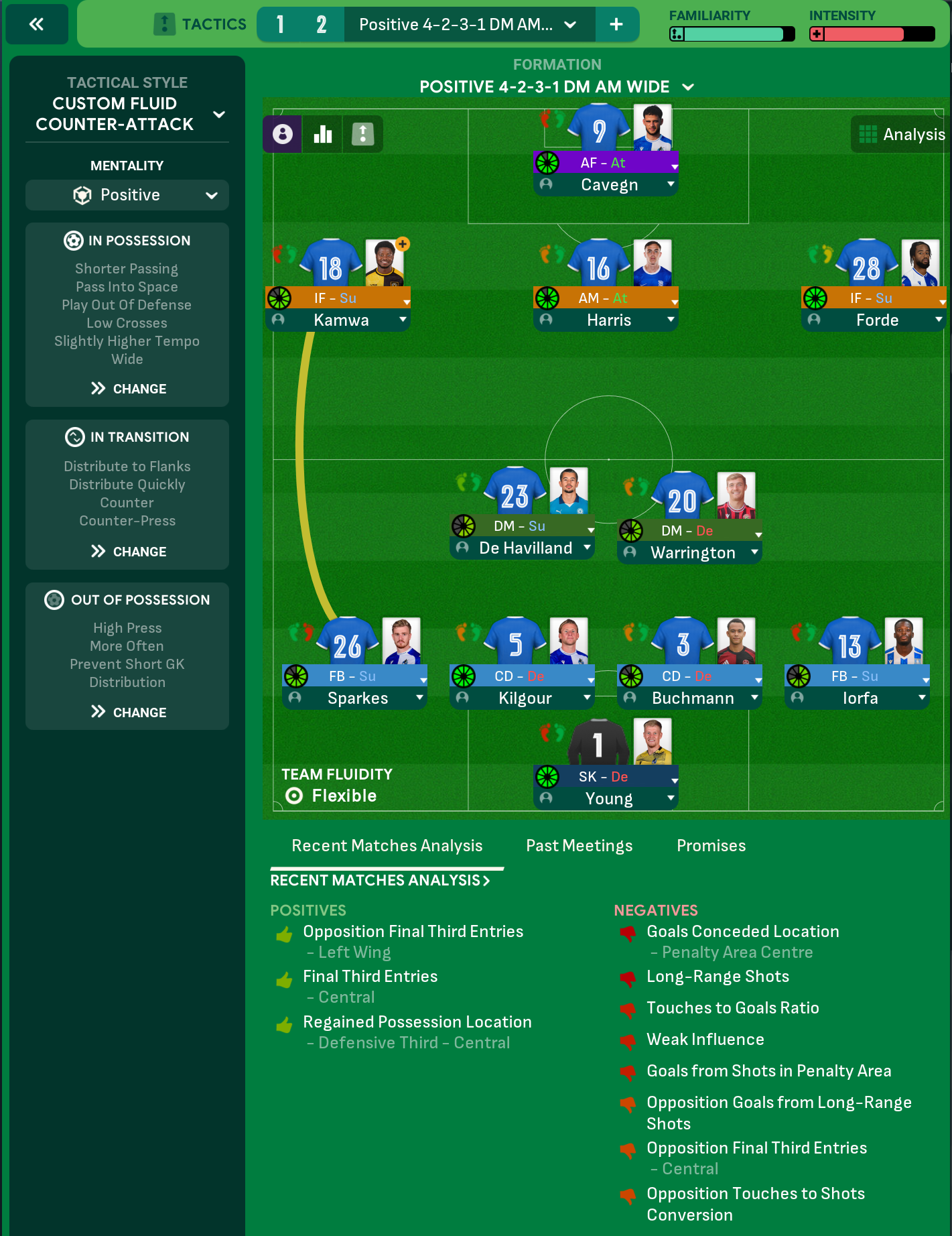
Fluid Counter-Attack 4-2-3-1 DM AM Wide
Custom Fluid Counter-Attack
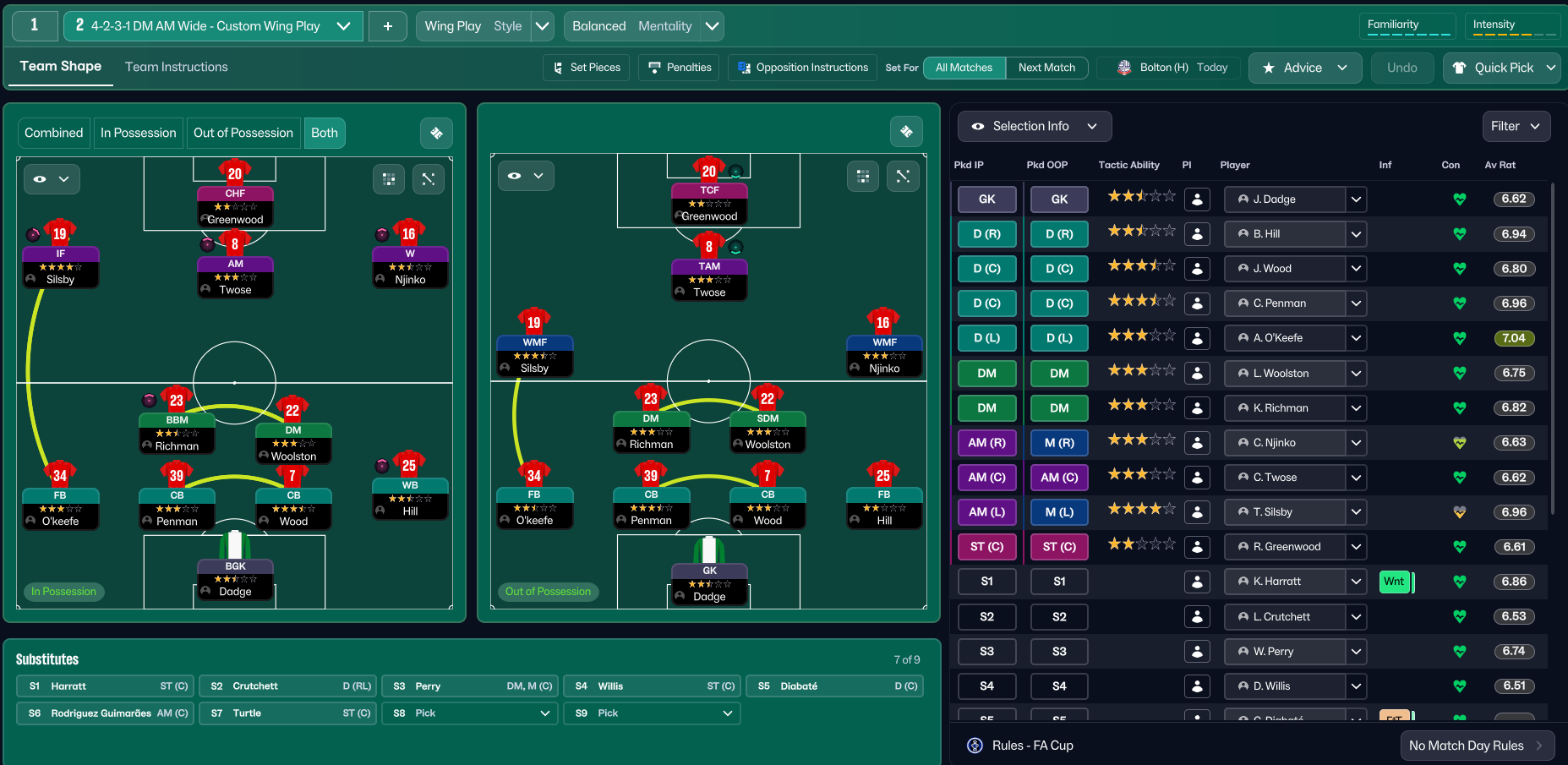
Wing Play 4-2-3-1 DM AM Wide
Wing Play
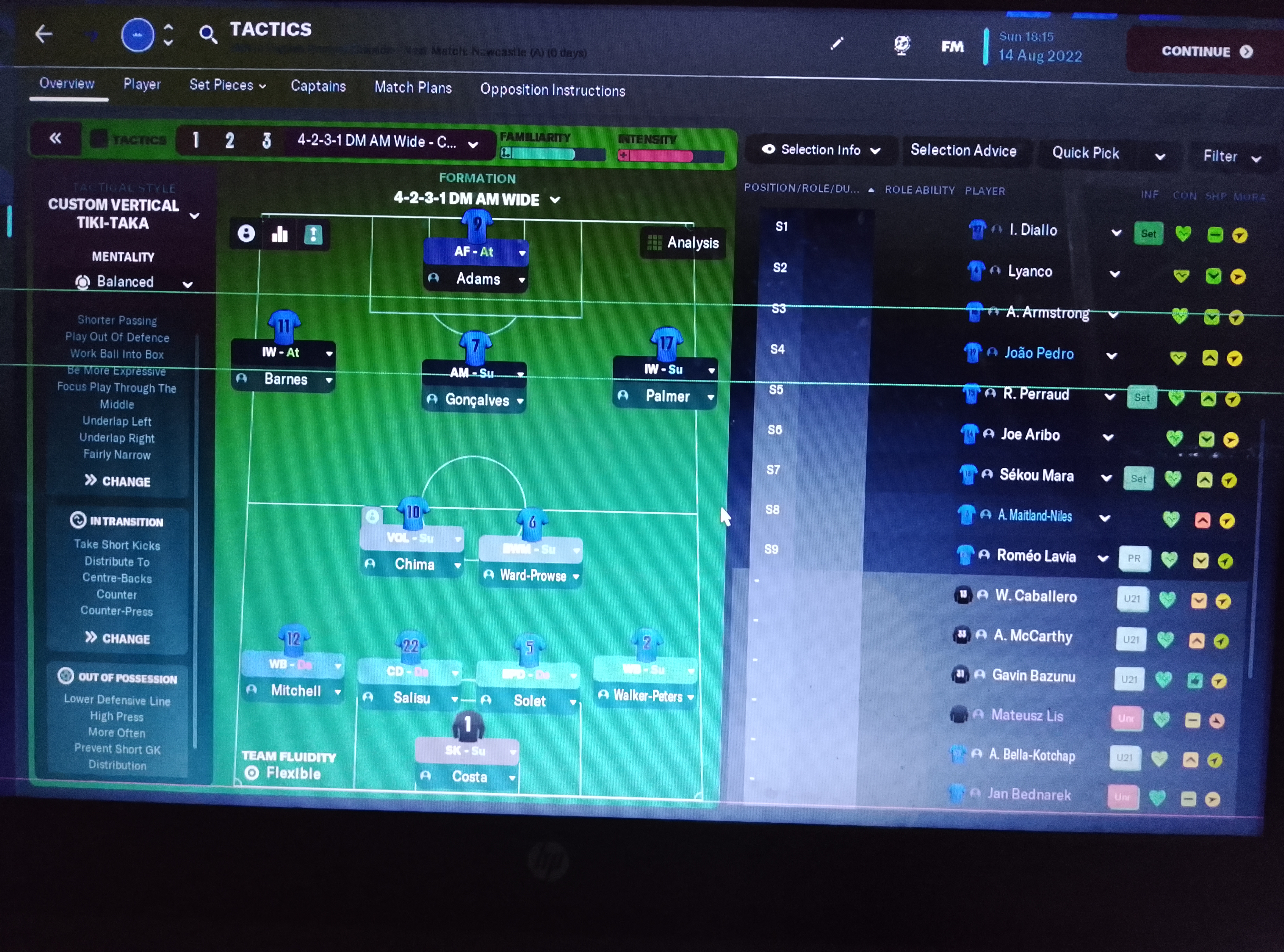
Vertical Tiki-Taka 4-2-3-1 DM AM Wide
Custom Vertical Tiki-Taka
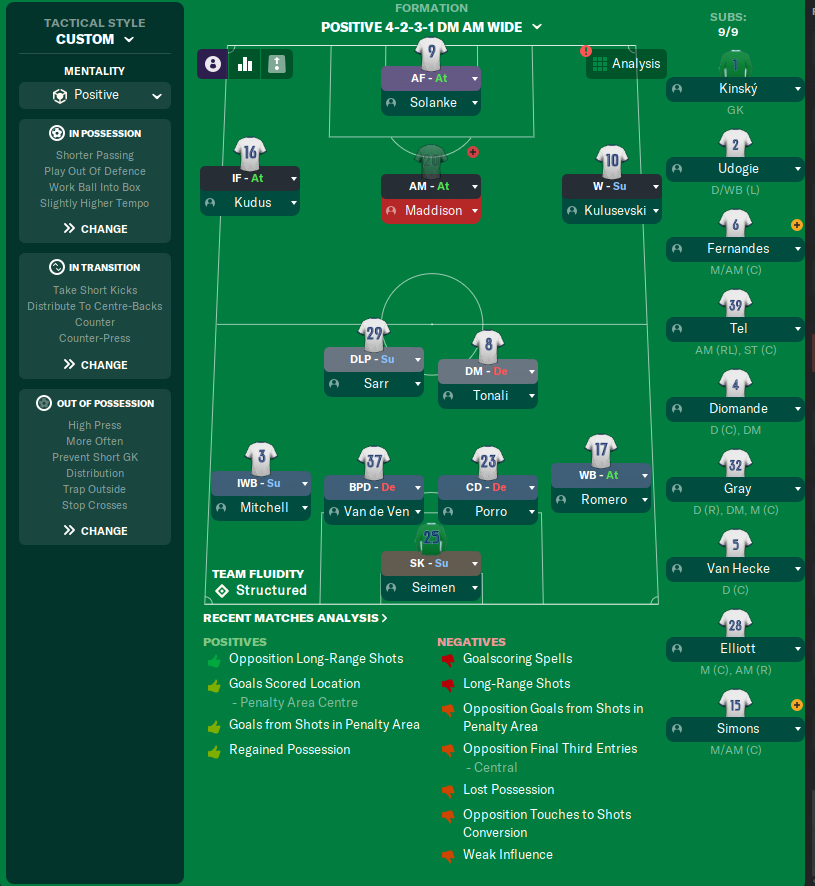
4-2-3-1 DM AM Wide Formation
Custom
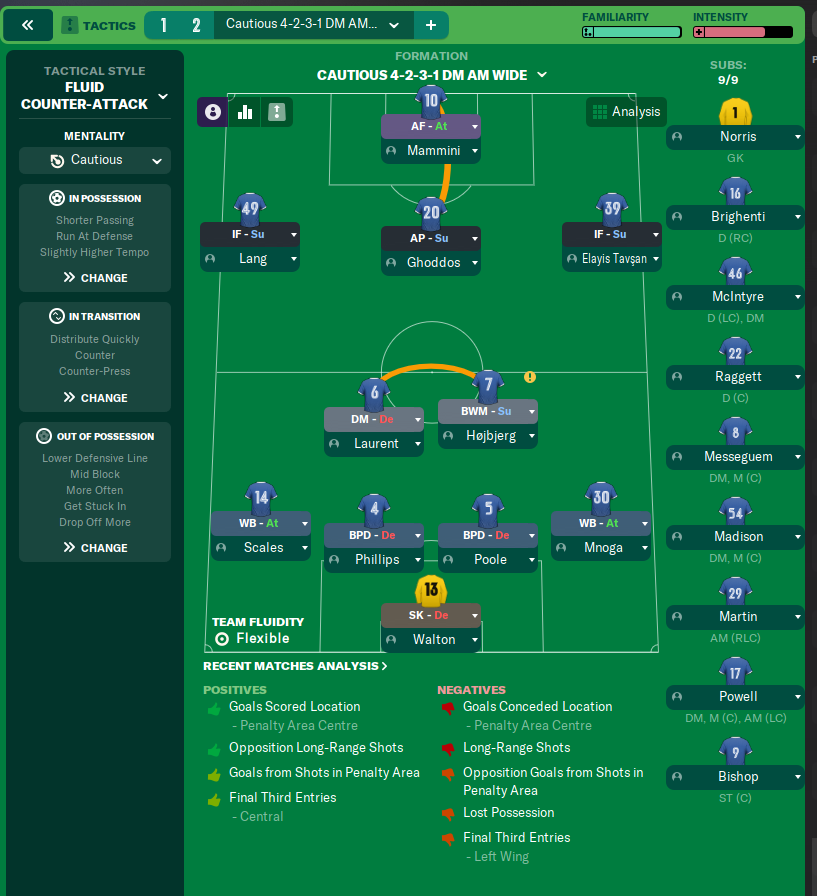
Fluid 4-2-3-1 DM AM Wide
Fluid
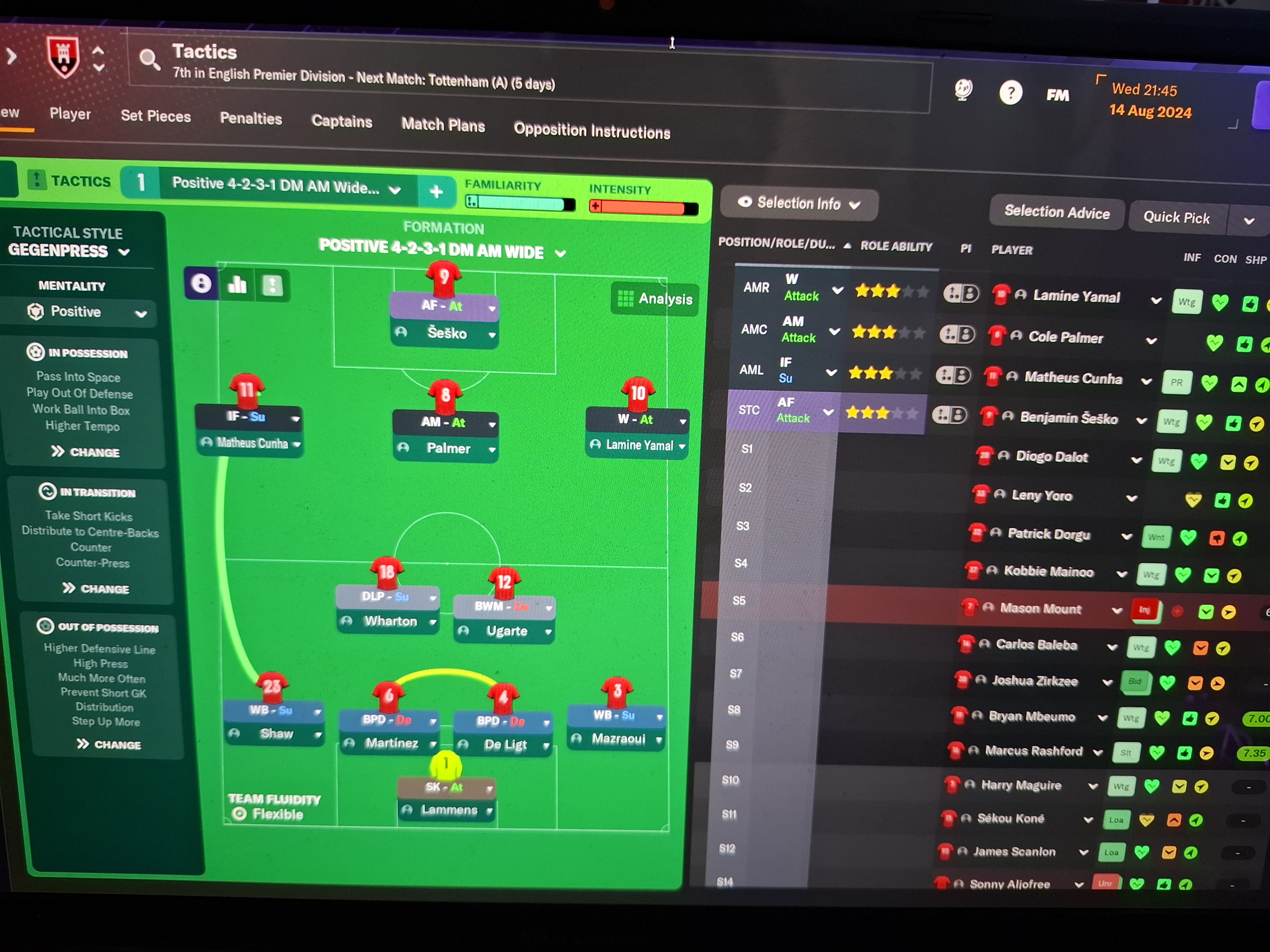
Gegenpress 4-2-3-1 DM AM Wide
Gegenpress
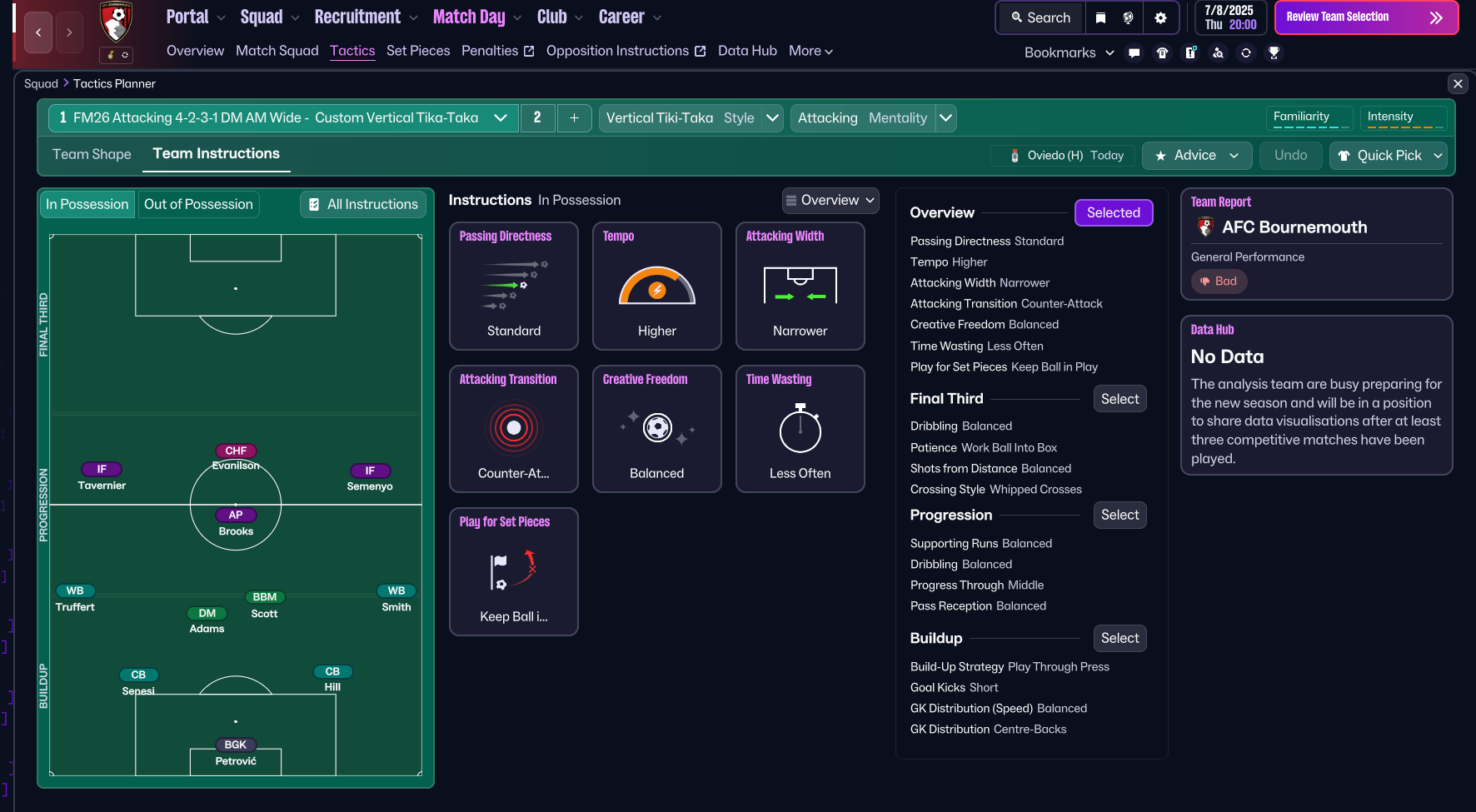
Vertical Tiki-Taka 4-2-3-1 DM AM Wide
Vertical Tiki-Taka
More Wing Play tactics
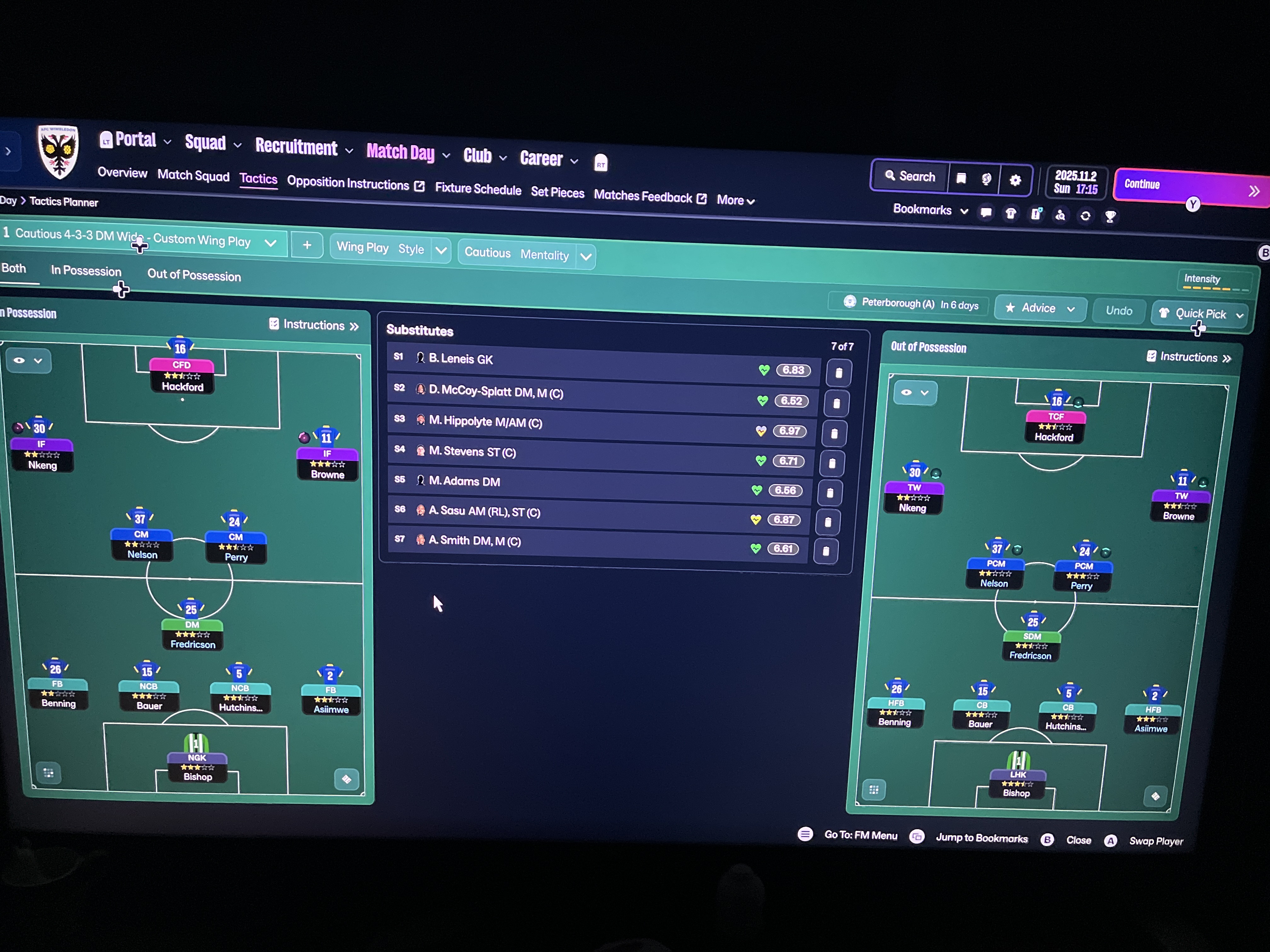
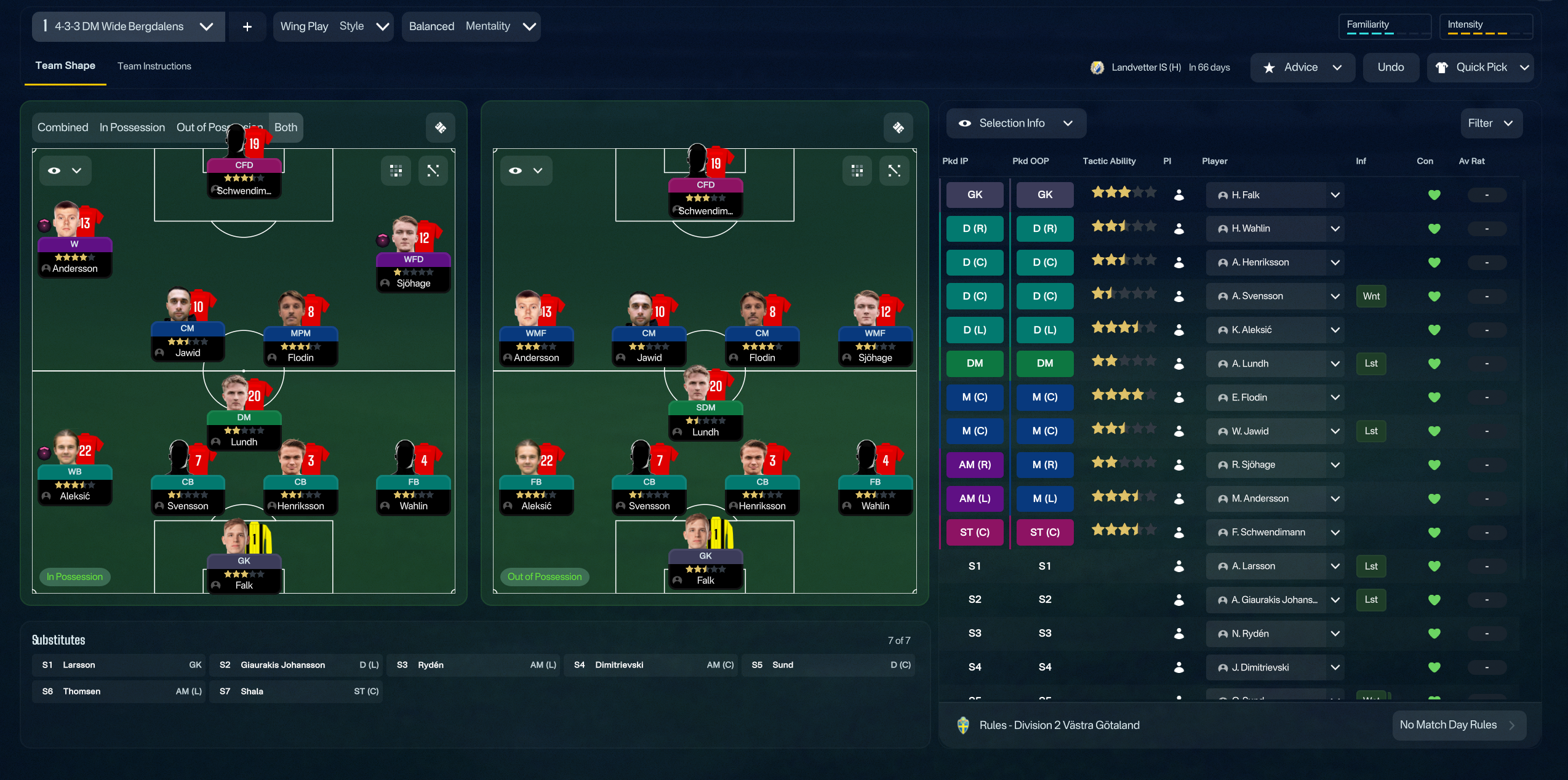
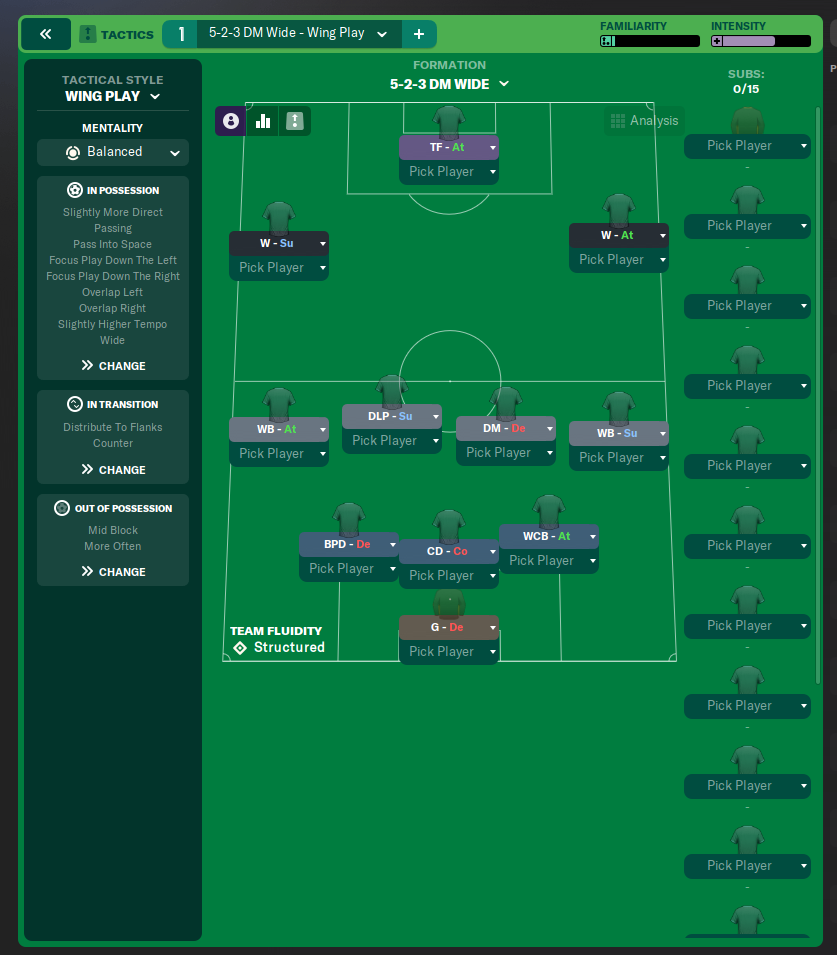
Guides for this formation
The tactical theory behind the 4-2-3-1 DM AM Wide: roles, instructions, and the trade-offs that decide whether the system holds up.
Player pairings
Midfield Pairs in 4-2-3-1 and 4-4-2
Double pivots and flat pairs in 4-2-3-1 and 4-4-2: when each pairing works, when it collapses, and the AMC unicorn that rescues both.
Read guide
Playing styles
Gegenpressing: A Full Guide
Klopp-style gegenpressing in FM, including squad profile, line-and-press pairing, sustainable workload, and the antipatterns to avoid.
Read guide