Uploaded Tactic
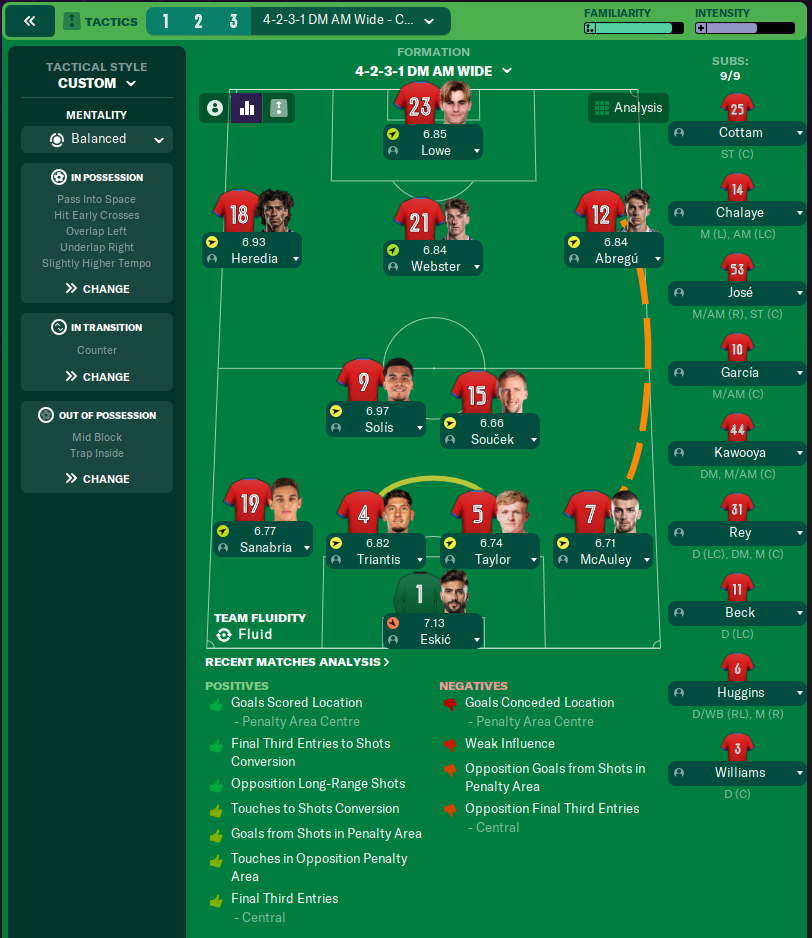
Formation & Style
Tactical Style:Custom
Mentality:Balanced
Formation:4-2-3-1 DM AM Wide
Team Fluidity:Fluid
In Possession
Pass Into Space
Hit Early Crosses
Overlap Left
Underlap Right
Slightly Higher Tempo
In Transition
Counter
Out of Possession
Mid Block
Trap Inside
Team Shape Without Ball
Shape:Mid Block
Description:The team defends in a mid-block structure, pressing opponents as they approach the final third.
Evidence:Mid Block instruction combined with BWM-D at [3,1] and DLP-S at [3,2]
Team Shape With Ball
Shape:Wide and Fluid
Description:The attack spreads wide, making use of overlapping wing-backs and support from the midfield.
Evidence:Overlap Left instruction combined with WMs at [5,1] and [5,3]
Phase Description
Attacking Play
Utilizes width and quick transitions to exploit opponent spaces.
Defensive Transition
Focuses on reorganizing quickly to a mid block, aiming to win the ball back efficiently.
Main Focus
Creating goal-scoring opportunities via overlaps and through balls.
Key Strengths
Width in Attack
Utilizes width effectively to stretch opponents and create crossing opportunities.
Midfield Control
The double pivot provides both defensive stability and support for transitions.
Flexibility
Players are capable of interchanging roles, making the team difficult to predict.
Conflicting Directions
Defensive Weaknesses
Concedes from central areas means focusing defensive efforts there could be more prudent.
Counter-attacking Vulnerability
In transitioning to counter, the team may be left exposed if possession is lost.
Central Penetration
The focus on overlapping and width may leave central lanes unguarded.
Tactical Suggestions
Adjust Defensive Shape
Consider reinforcing the central areas of your defense to mitigate goals conceded in that zone.
Improve Transition Strategy
Encourage more disciplined positioning when losing the ball to stay compact.
Increase Pressing Efficiency
Enhance pressure on opponents during defensive phases, particularly when they are in possession of the ball.
Ask Questions About Your Lineup
Related Tactics
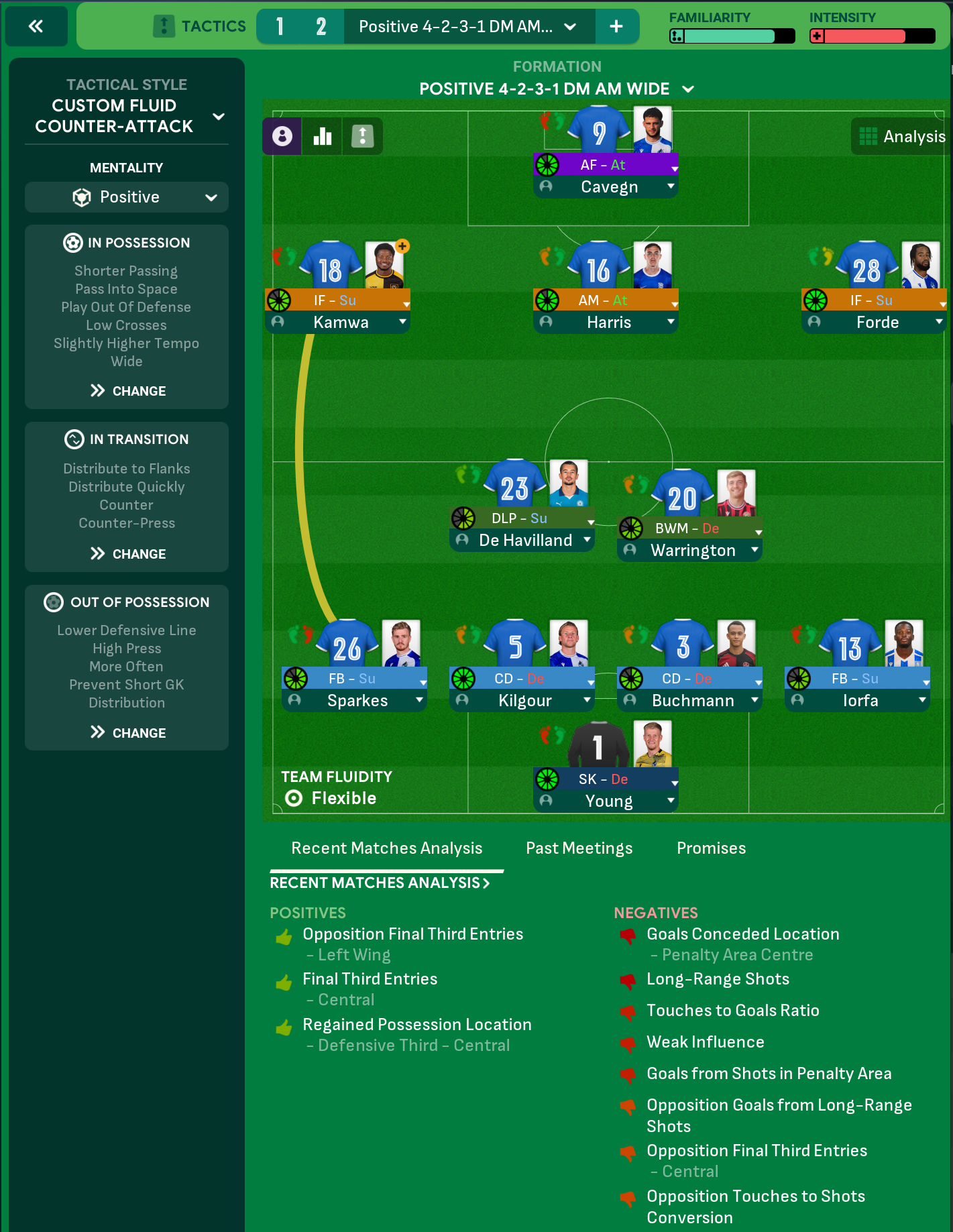
Fluid Counter-Attack 4-2-3-1 DM AM Wide
Custom Fluid Counter-Attack
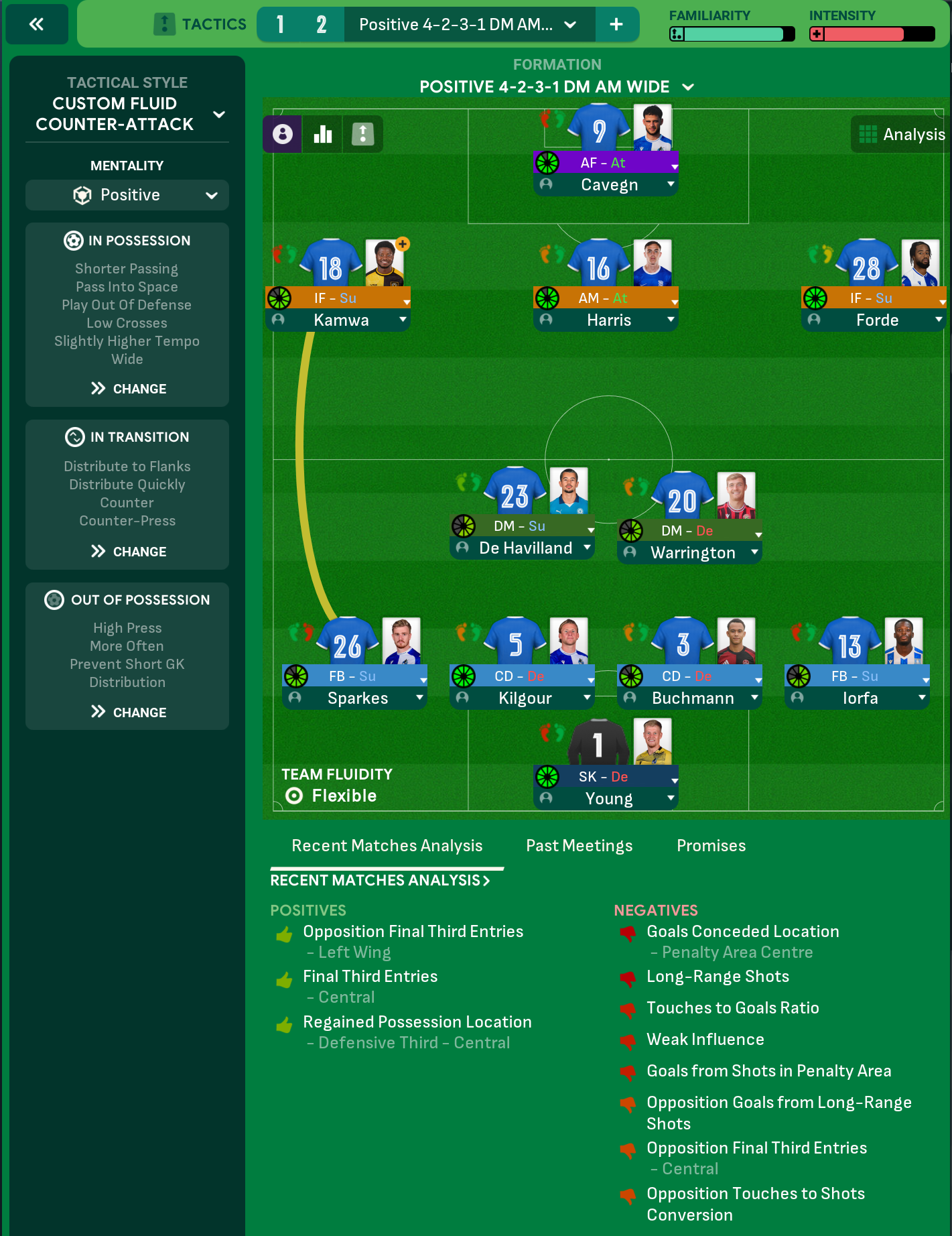
Fluid Counter-Attack 4-2-3-1 DM AM Wide
Custom Fluid Counter-Attack
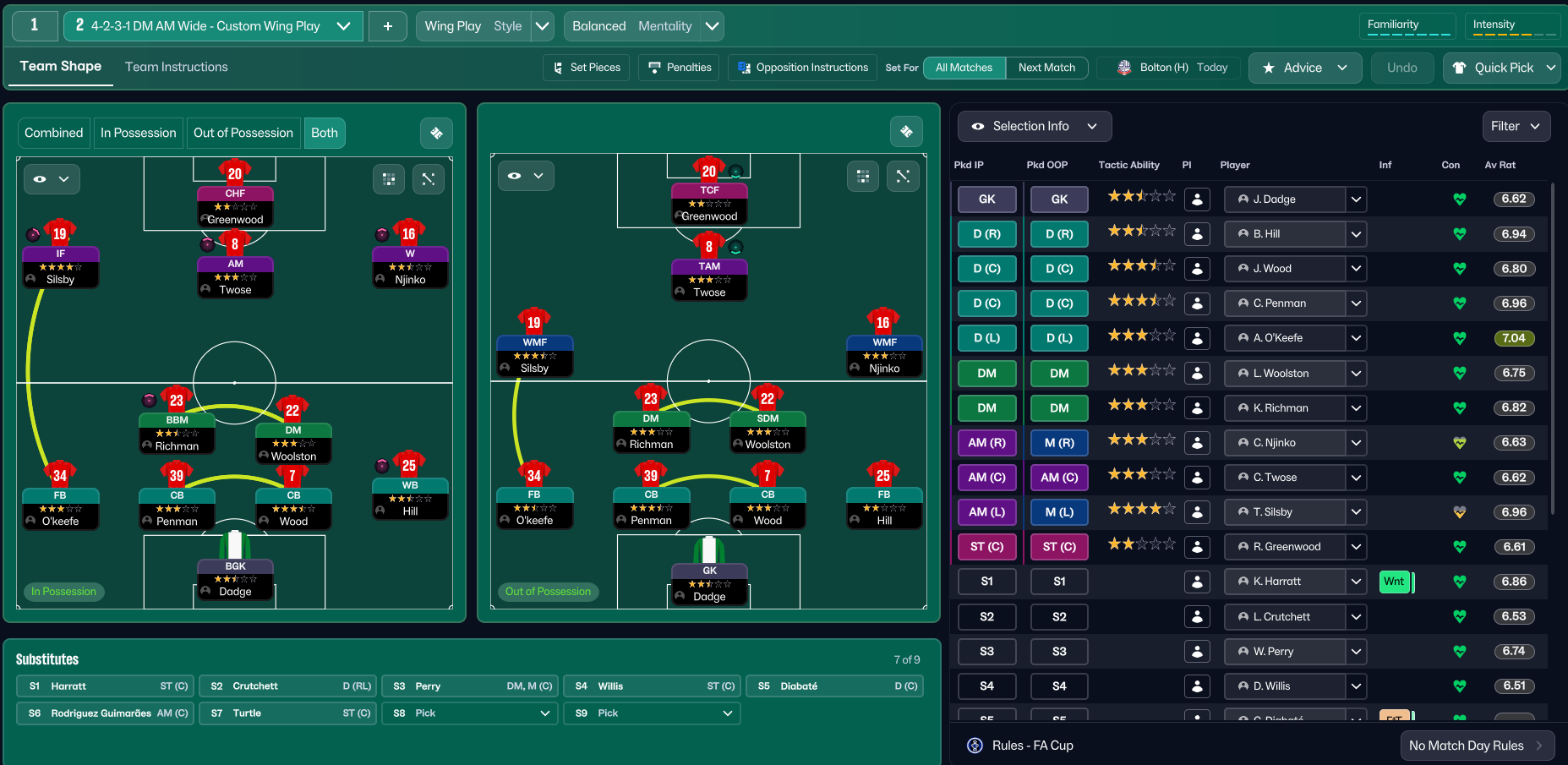
Wing Play 4-2-3-1 DM AM Wide
Wing Play
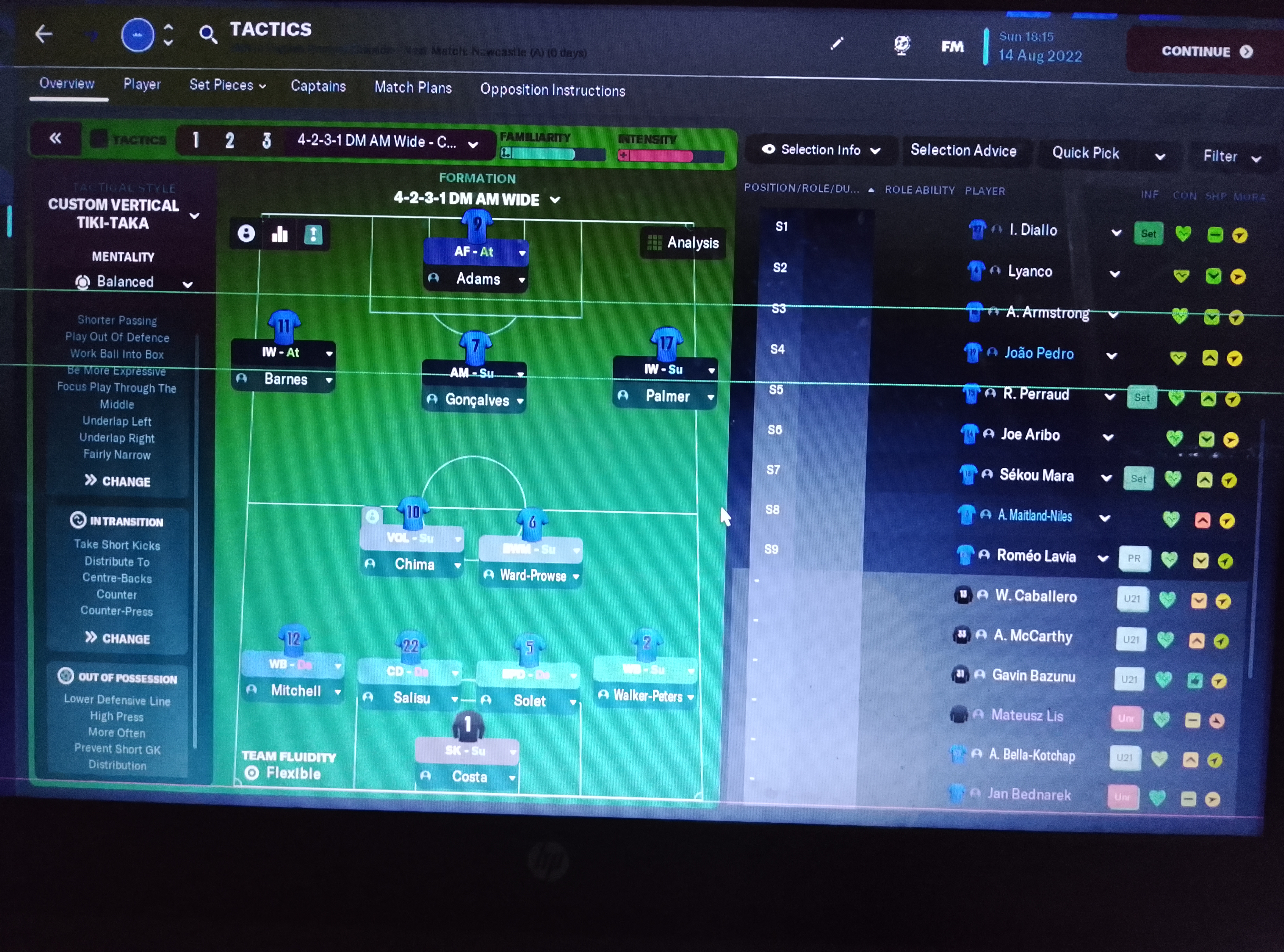
Vertical Tiki-Taka 4-2-3-1 DM AM Wide
Custom Vertical Tiki-Taka
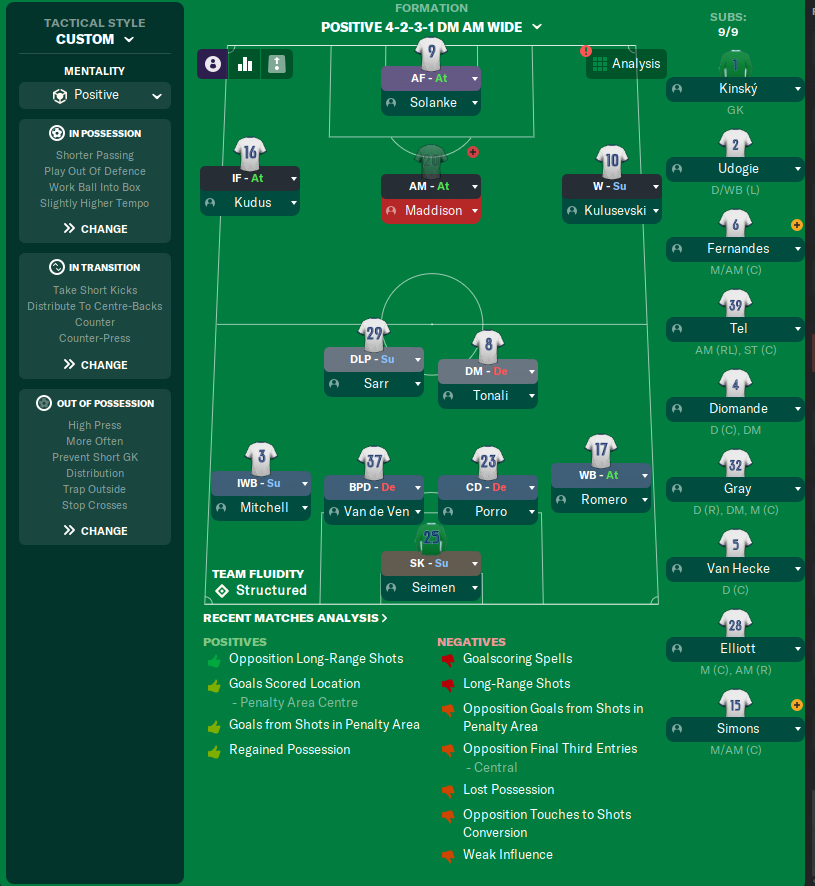
4-2-3-1 DM AM Wide Formation
Custom
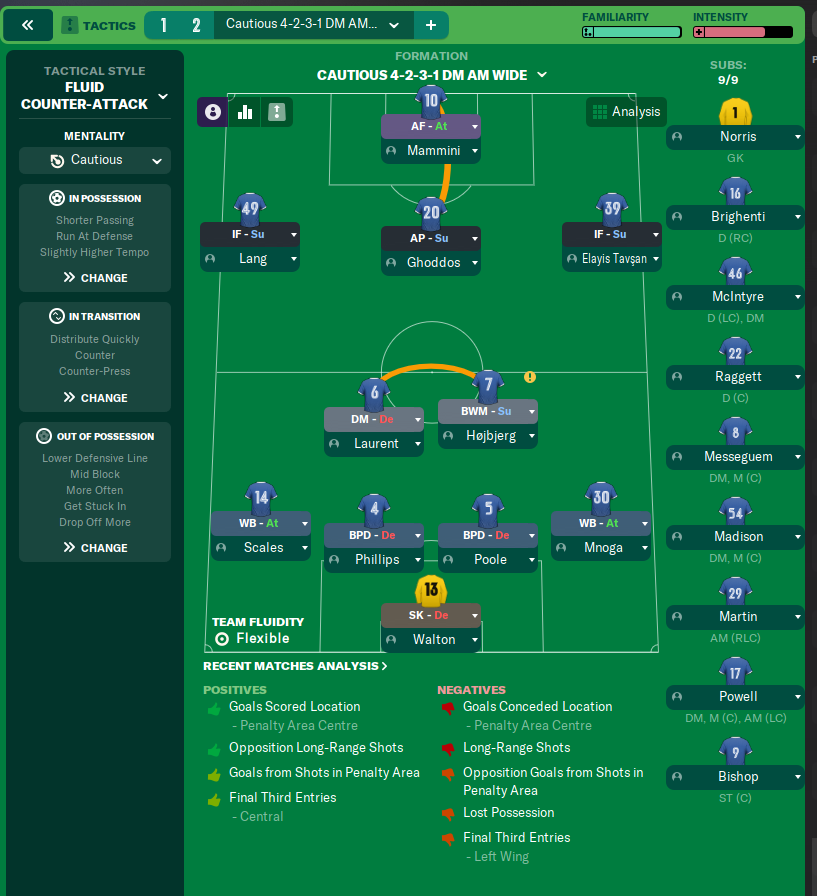
Fluid 4-2-3-1 DM AM Wide
Fluid
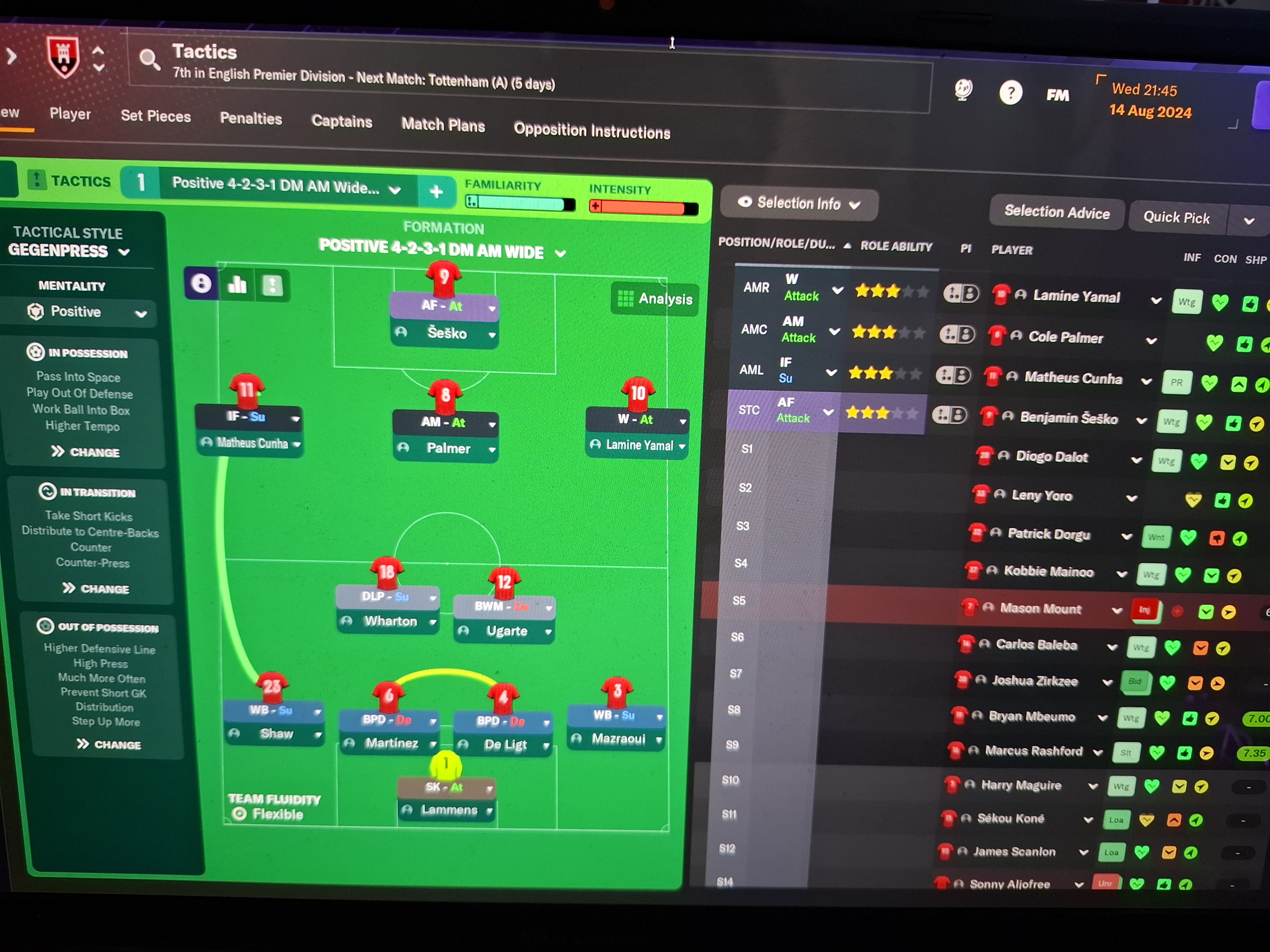
Gegenpress 4-2-3-1 DM AM Wide
Gegenpress
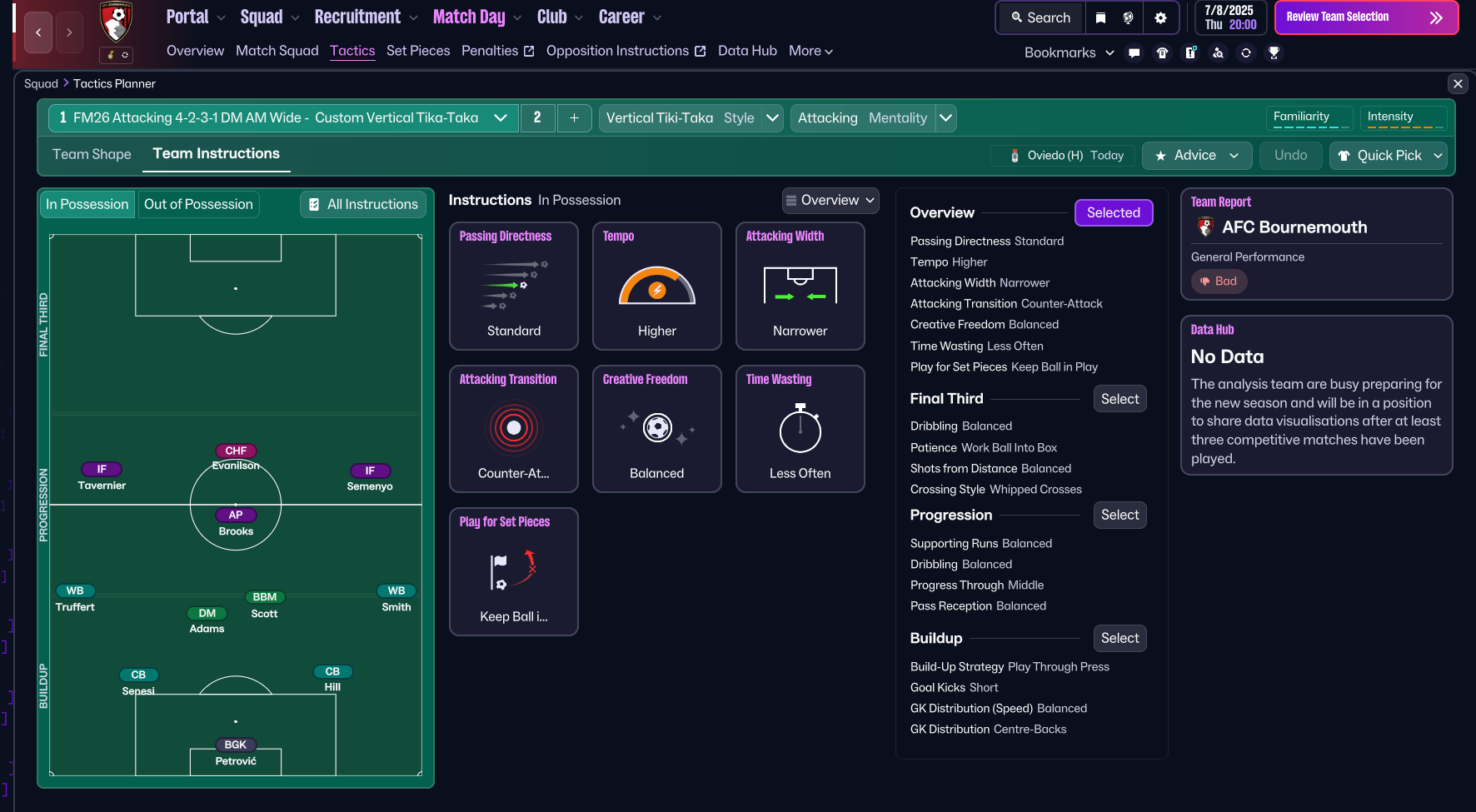
Vertical Tiki-Taka 4-2-3-1 DM AM Wide
Vertical Tiki-Taka
Guides for this formation
The tactical theory behind the 4-2-3-1 DM AM Wide: roles, instructions, and the trade-offs that decide whether the system holds up.
Player pairings
Midfield Pairs in 4-2-3-1 and 4-4-2
Double pivots and flat pairs in 4-2-3-1 and 4-4-2: when each pairing works, when it collapses, and the AMC unicorn that rescues both.
Read guide
Playing styles
Gegenpressing: A Full Guide
Klopp-style gegenpressing in FM, including squad profile, line-and-press pairing, sustainable workload, and the antipatterns to avoid.
Read guide