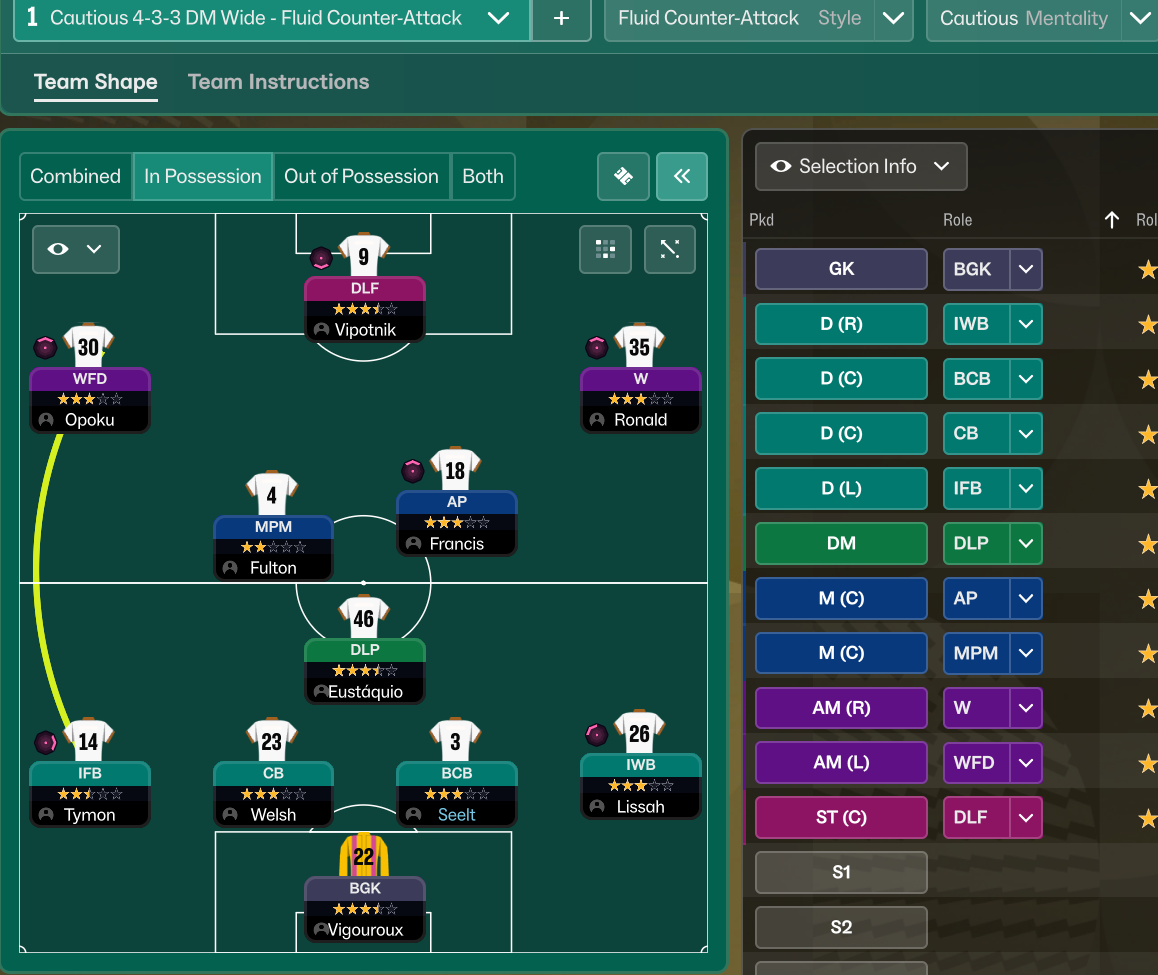
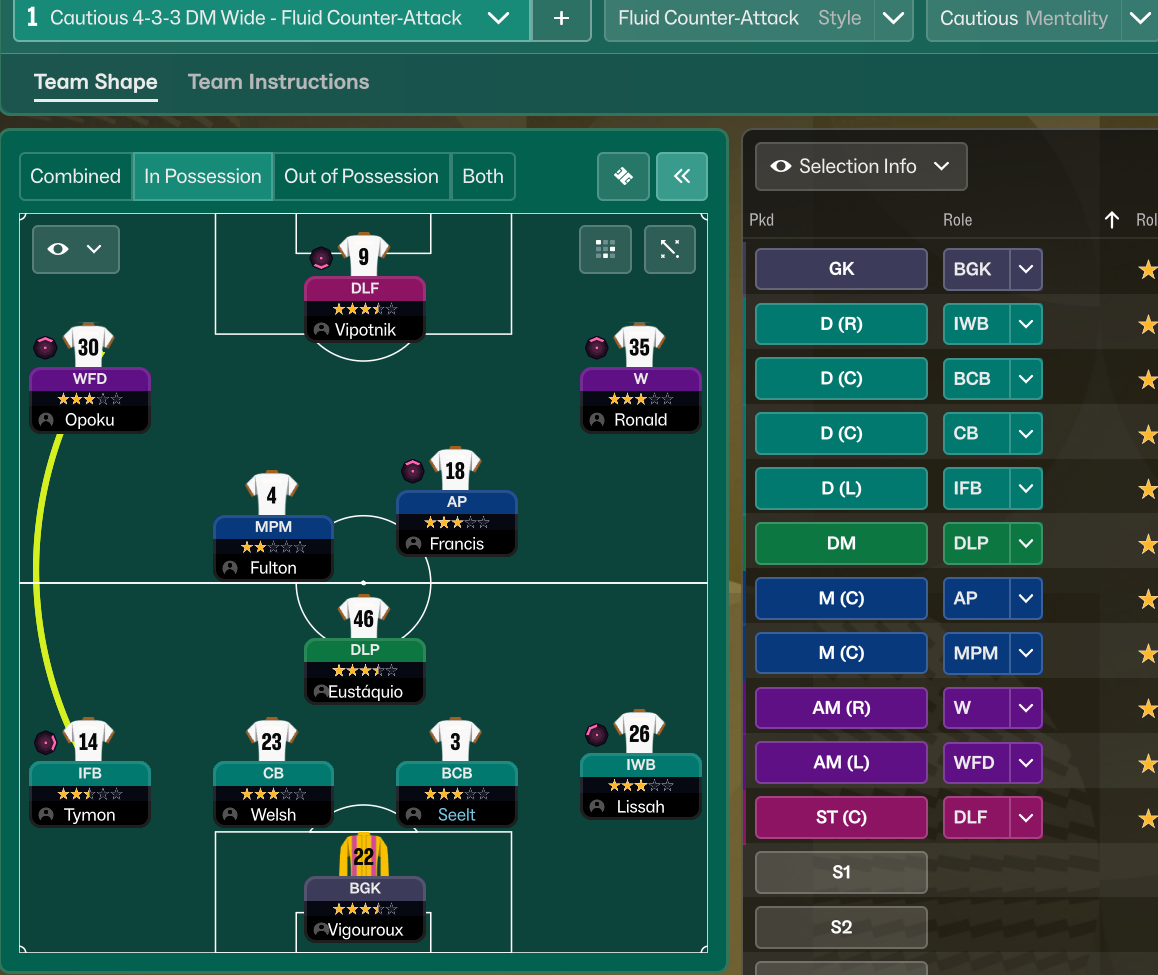
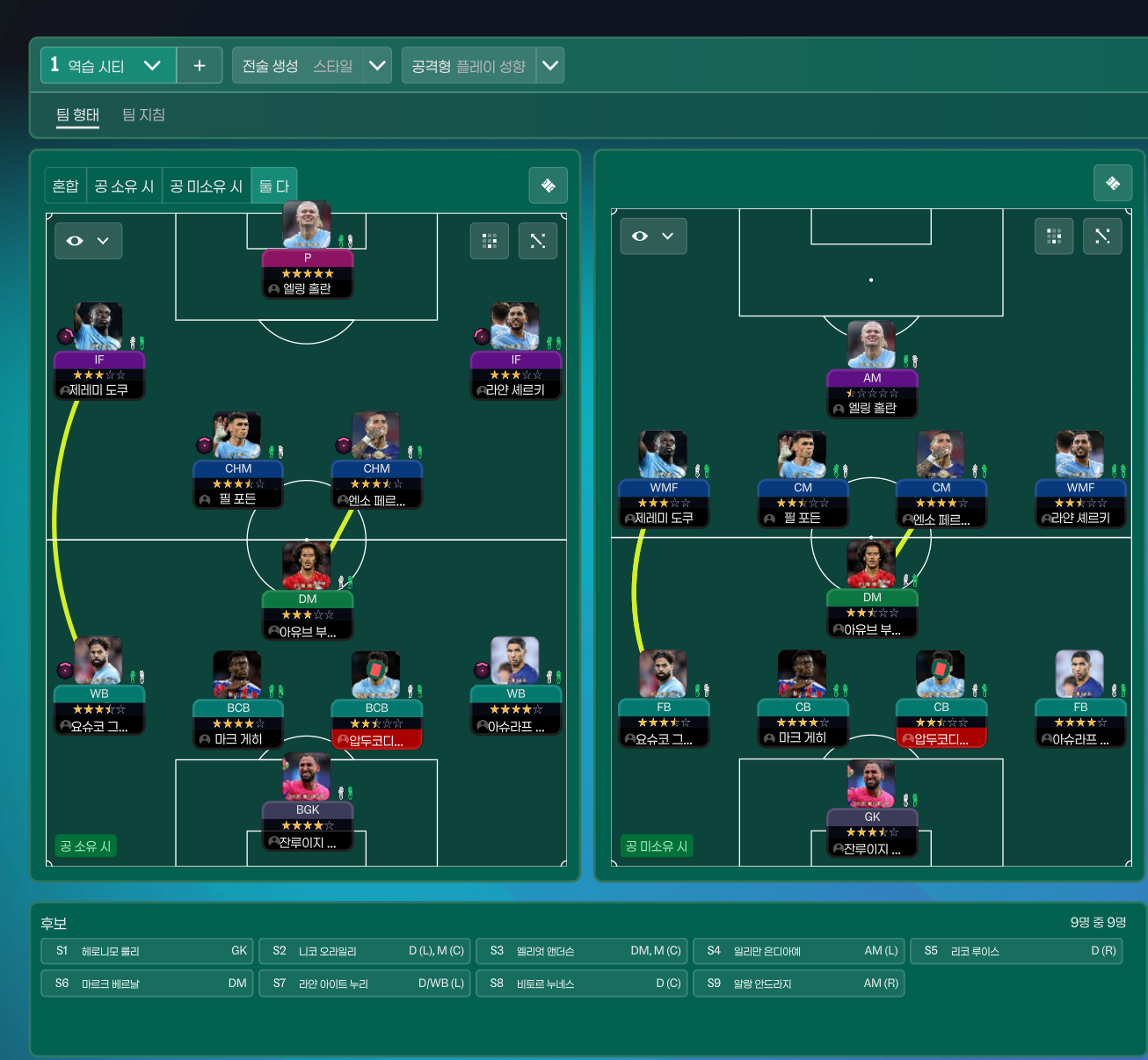
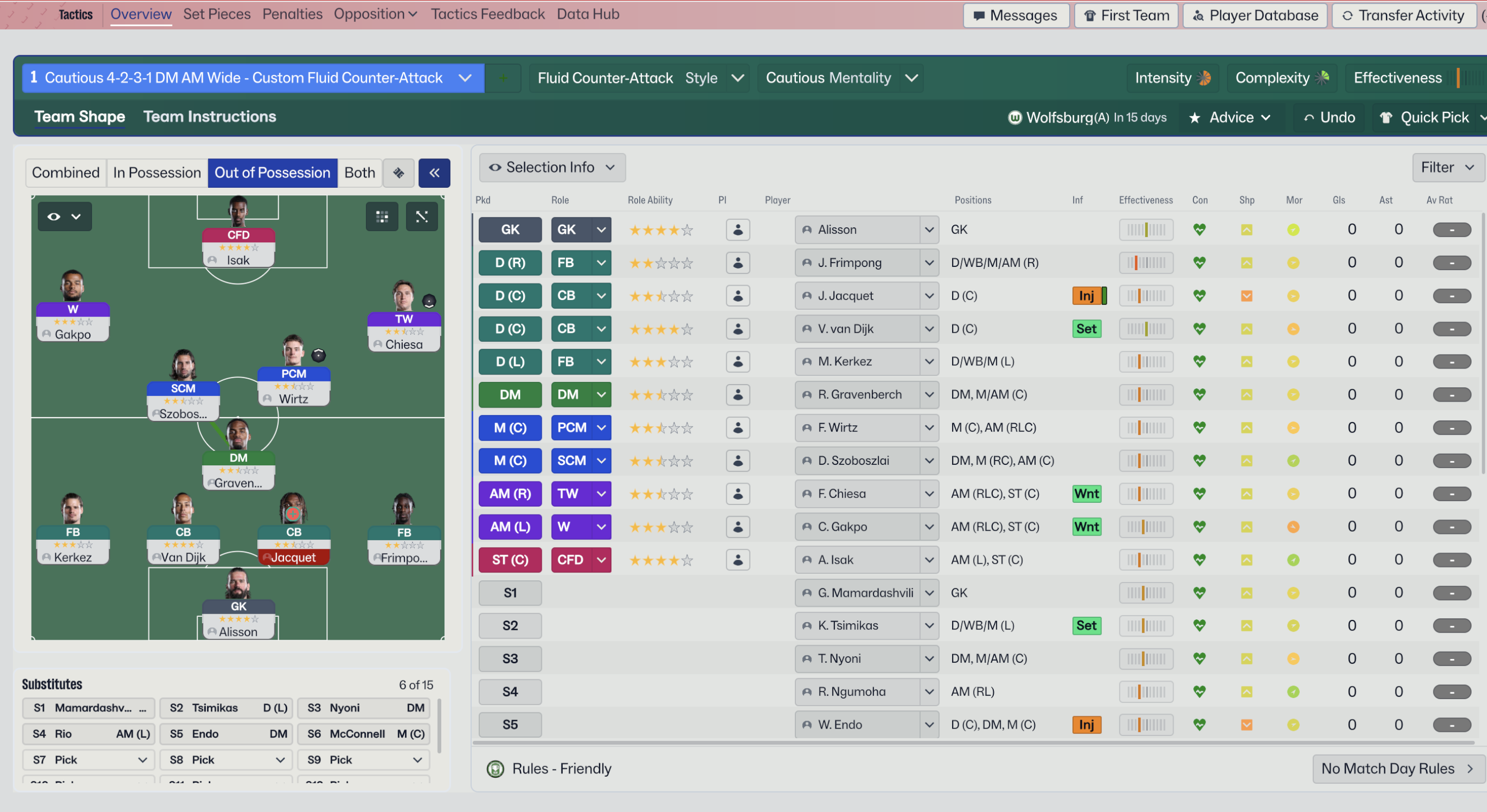
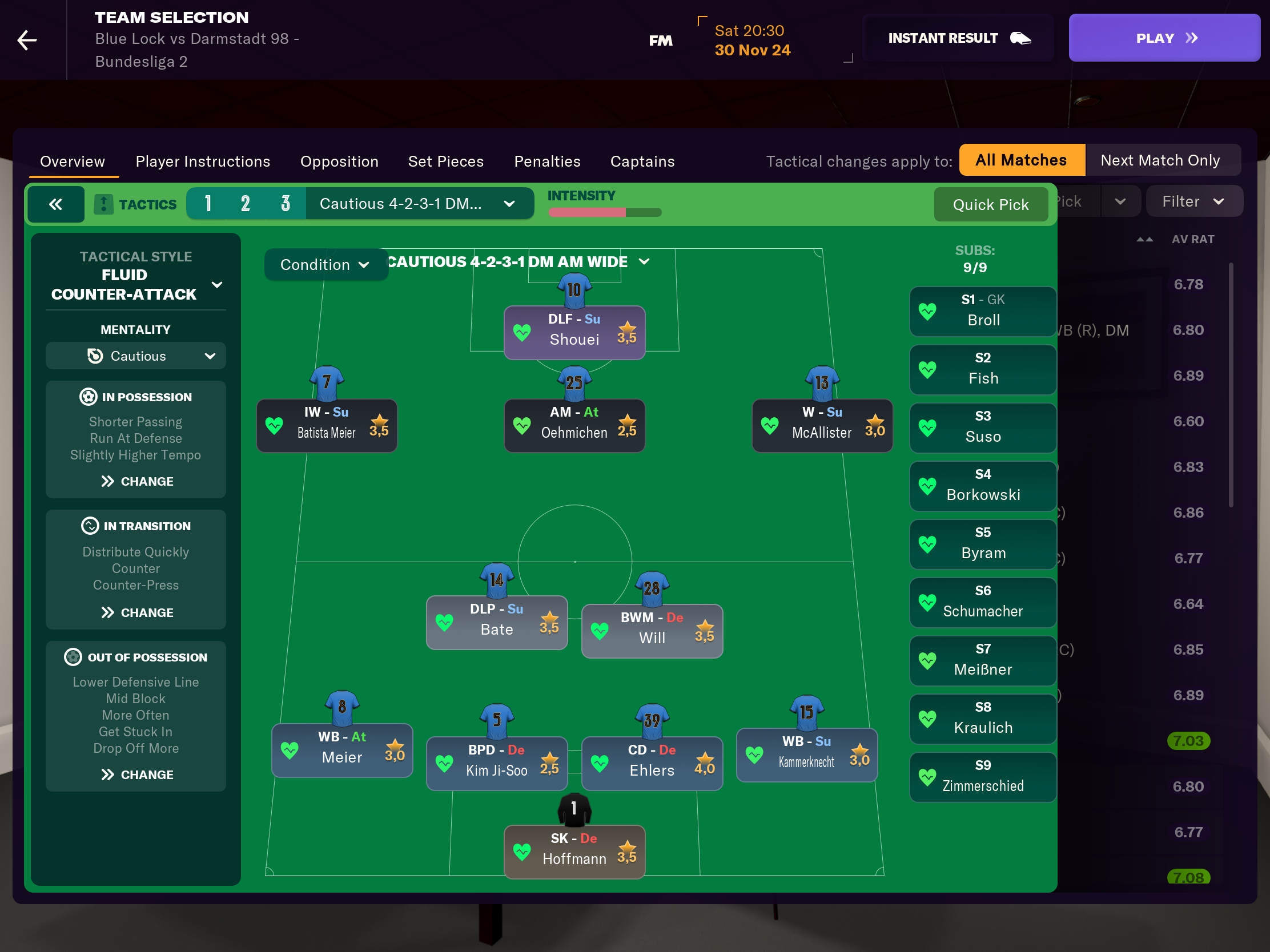
4-2-3-1 DM Wide
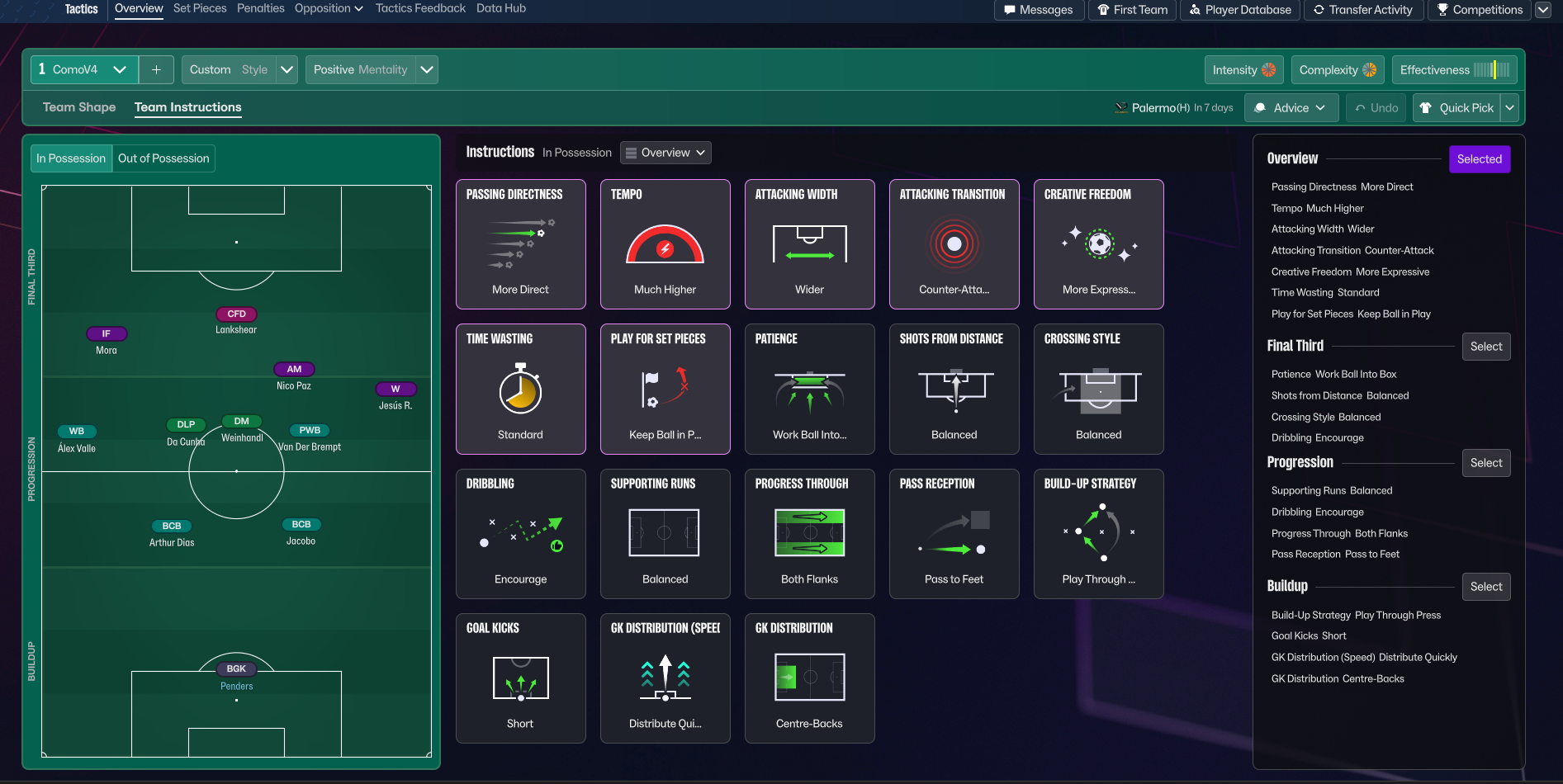
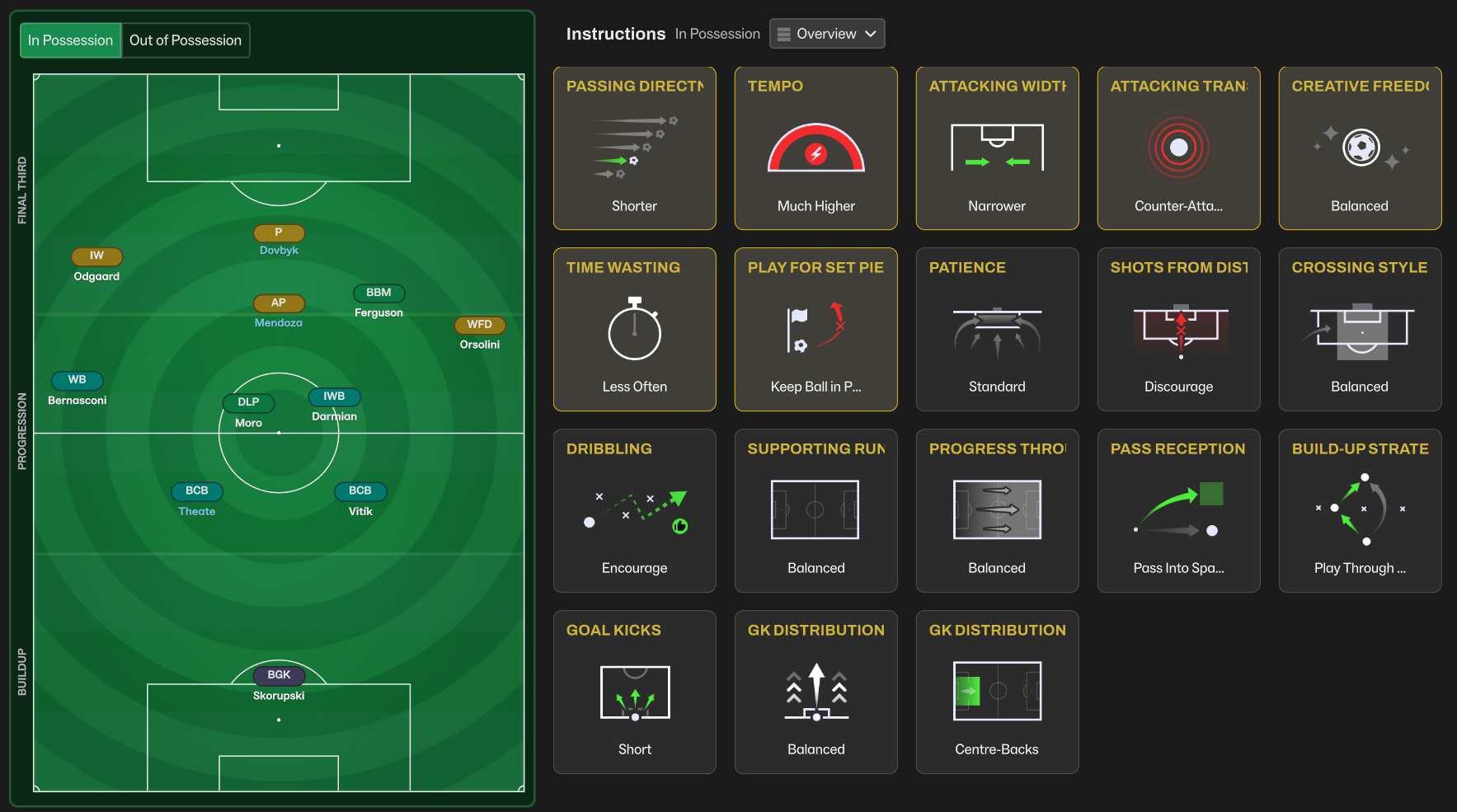
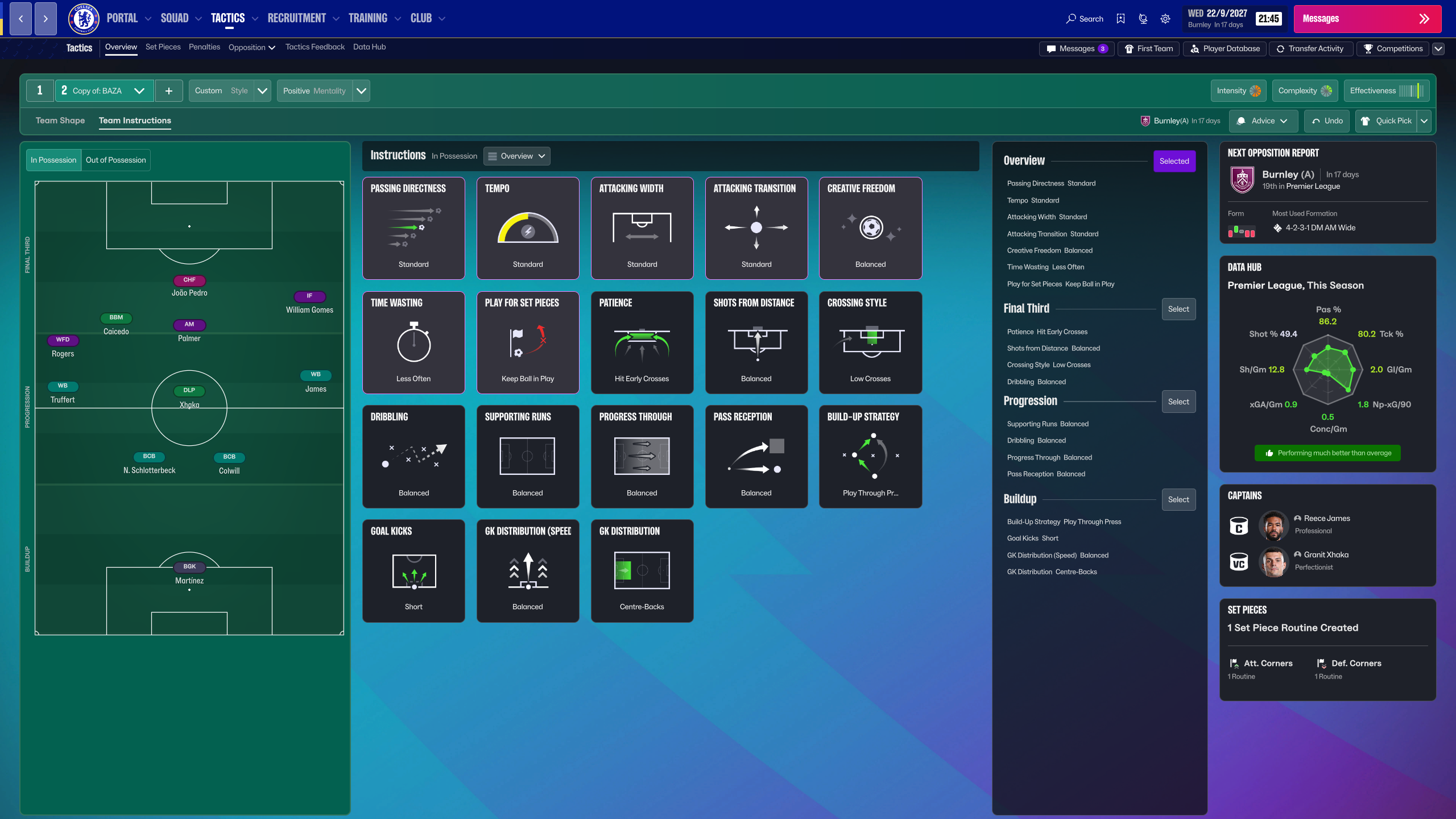
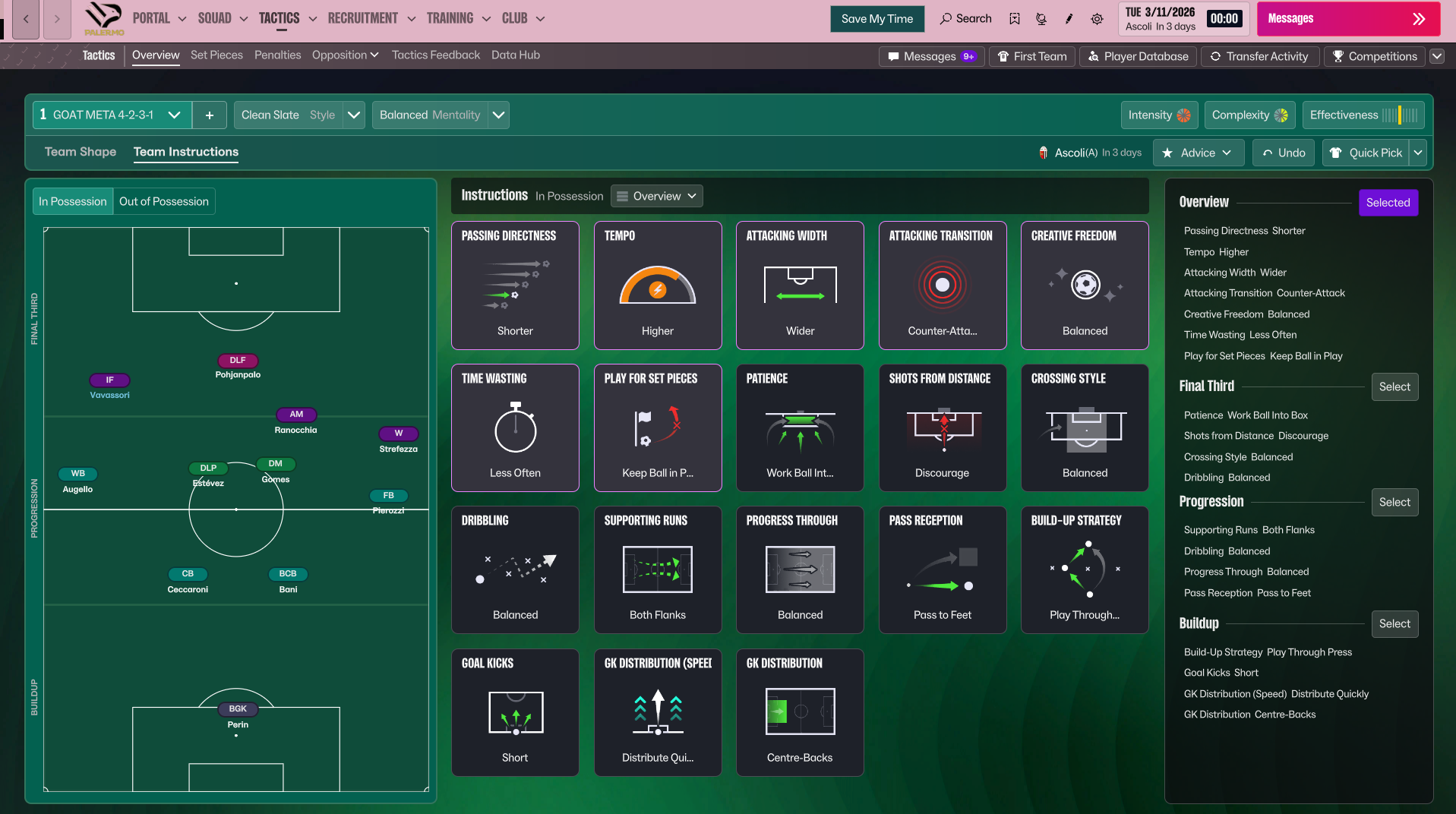
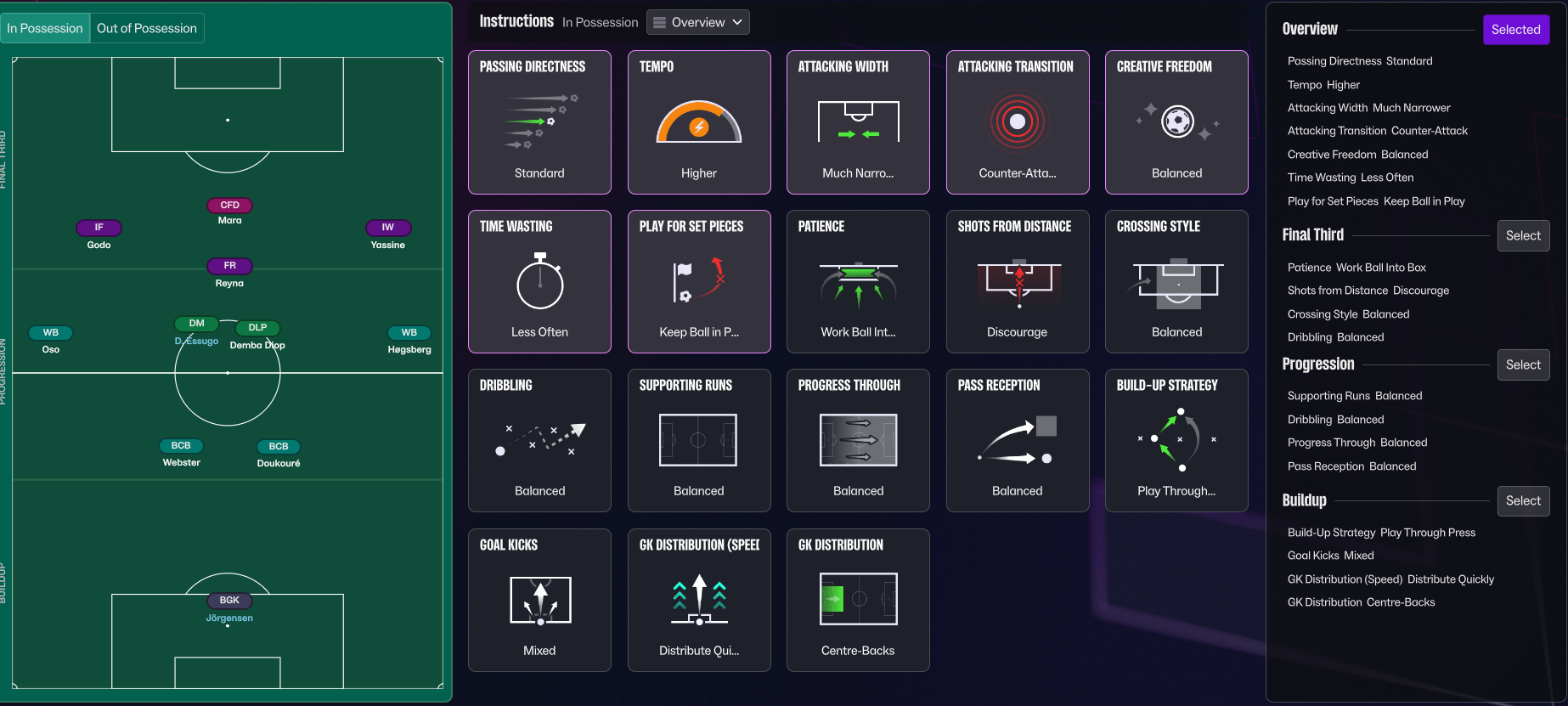
The setup efficiently transitions from defense to attack, utilizing fast-moving players to exploit opponent weaknesses.
Loading tactical analysis...
Fluid Counter-Attack
Cautious
4-2-3-1 DM Wide
Fluid
Shorter Passing
Run At Defense
Slightly Higher Tempo
Distribute Quickly
Counter
Counter-Press
Lower Defensive Line
Mid Block
Get Stuck In
Drop Off More
DLF
Support
Support
IW
Support
Support
AM
Attack
Attack
BPD
Defend
Defend
WB
Attack
Attack
The setup efficiently transitions from defense to attack, utilizing fast-moving players to exploit opponent weaknesses.
With a lower defensive line and a mid block, the tactic retains structure while also allowing for quick recovery after losing possession.
A low defensive line may conflict with high pressing strategies, as the team might struggle to regain possession quickly.
The cautious mentality may not fully leverage the slightly higher tempo; adjusting one or the other could create more effective transitions.
How can player fitness affect the effectiveness of the counter-press?
Would switching to a more aggressive mentality benefit the current squad?
How effectively are the wing-backs supporting the attack?
Is there a need for a more rigid structure in midfield during defensive phases?
Can player instructions be tailored to enhance individual strengths within the tactical setup?
What are the potential weaknesses of this tactic against teams that dominate possession?
clean slate
clean slate
control possession
clean slate
gegenpress
clean slate
clean slate
clean slate
The tactical theory behind the 4-2-3-1 DM Wide: roles, instructions, and the trade-offs that decide whether the system holds up.
Klopp-style gegenpressing in FM, including squad profile, line-and-press pairing, sustainable workload, and the antipatterns to avoid.
Double pivots and flat pairs in 4-2-3-1 and 4-4-2: when each pairing works, when it collapses, and the AMC unicorn that rescues both.
The five seconds after losing the ball decide most matches. Counter-press, drop-and-recover, and how to know which one you should be doing.