Uploaded Tactic
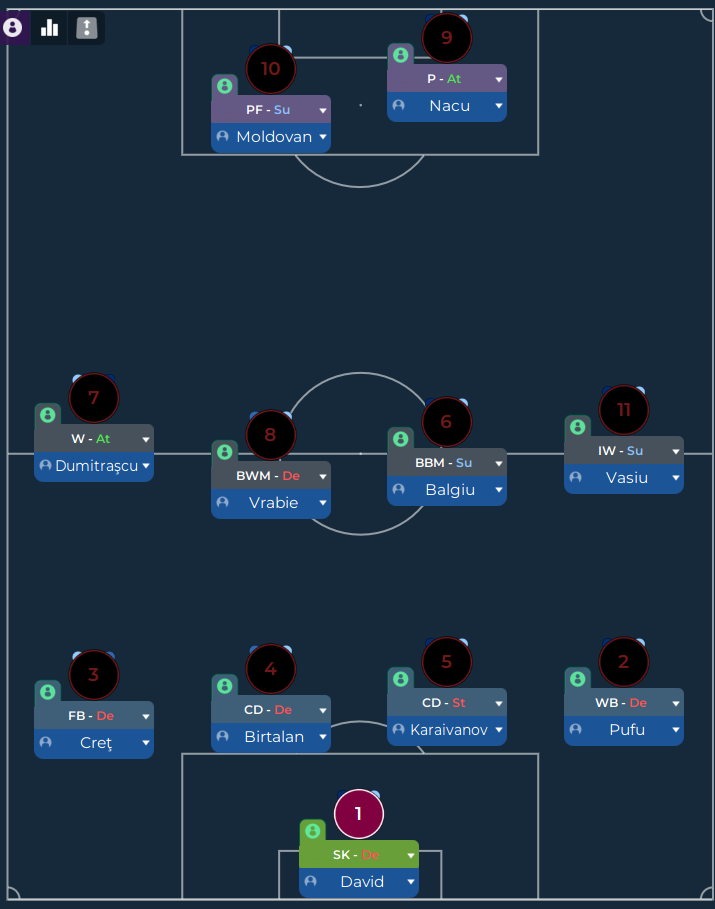
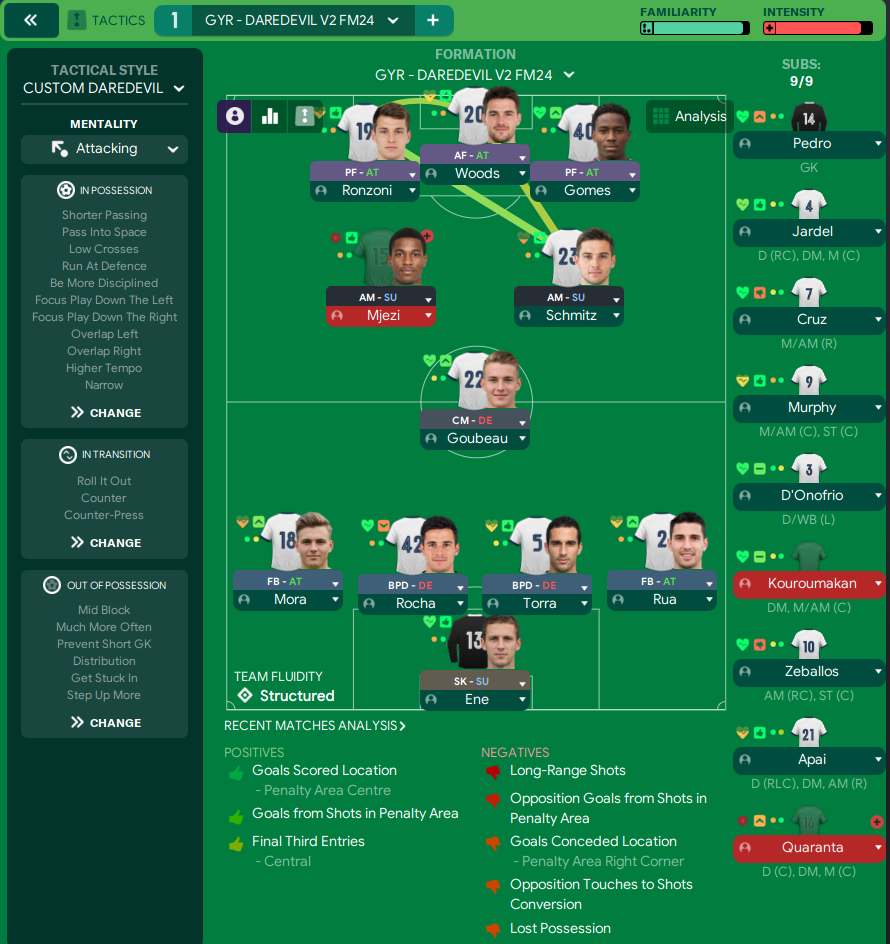
Formation & Style
Tactical Style:Balanced
Mentality:Positive
Formation:4-2-3-1
Team Fluidity:Structured
In Possession
Play out of defence
Work the ball into the box
Focus play through the middle
In Transition
Counter
Counter-press
Out of Possession
Higher defensive line
More urgent pressing
Team Shape Without Ball
Shape:Compact
Description:The team looks to maintain a compact shape when defending, closing spaces for the opposition.
Evidence:Use of higher defensive line and more urgent pressing to keep opponents from penetrating the defensive areas.
Team Shape With Ball
Shape:Attacking Triad
Description:The team frequently seeks to exploit flanks with dynamic interplay among the front four players.
Evidence:The roles of the Winger and Inside Forward combined with the Advanced Playmaker create multi-dimensional attacking threats.
Phase Description
Attacking Play
Focus on utilizing the wings through individual skills of the Winger and Inside Forward, combined with the support from the Advanced Playmaker.
Defensive Transition
Quick recovery of shape as the team transitions into defensive mode, aiming to regain possession swiftly.
Main Focus
High pressing to initiate counter-attacks and quick ball recovery.
Key Strengths
High Pressing Game
The setup fosters a strong pressing system that can create immediate pressure on the opposition.
Balanced Midfield Dynamics
The combination of BWM and BBM provides a solid foundation for both defensive stability and offensive support.
Wide Attack Options
Utilizing Winger and Inside Forward creates wide threats that stretch the opponent's defense.
Conflicting Directions
Potential Overreliance on Flanks
While width can be strong, too much reliance might negate central midfield effectiveness.
Risk of Counterattack Vulnerability
High pressing and a higher defensive line can leave spaces for quick counterattacks.
Lack of Depth in Attacking Midfield
Advanced Playmaker in a support role may not capitalize on goal-scoring opportunities.
Tactical Suggestions
Increase Max Width
Expanding the pitch coverage could open more options in attack and alleviate central congestion.
Reassess Defensive Shape
Consider adjusting the defensive shape when out of possession to add more compactness.
Utilize a Secondary Playmaker
Integrate a second player capable of creating plays to support the Advanced Playmaker.
Ask Questions About Your Lineup
Related Tactics
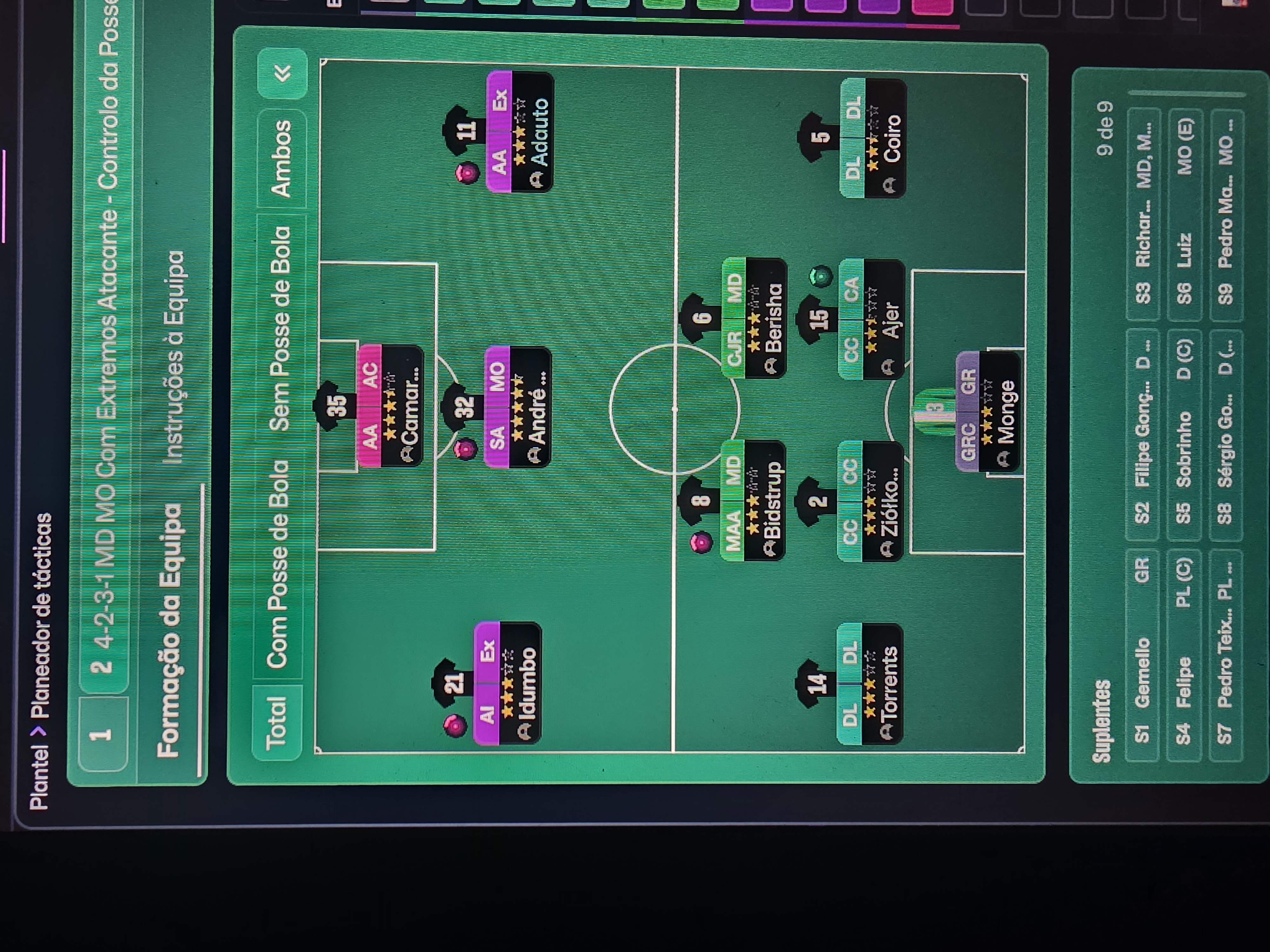
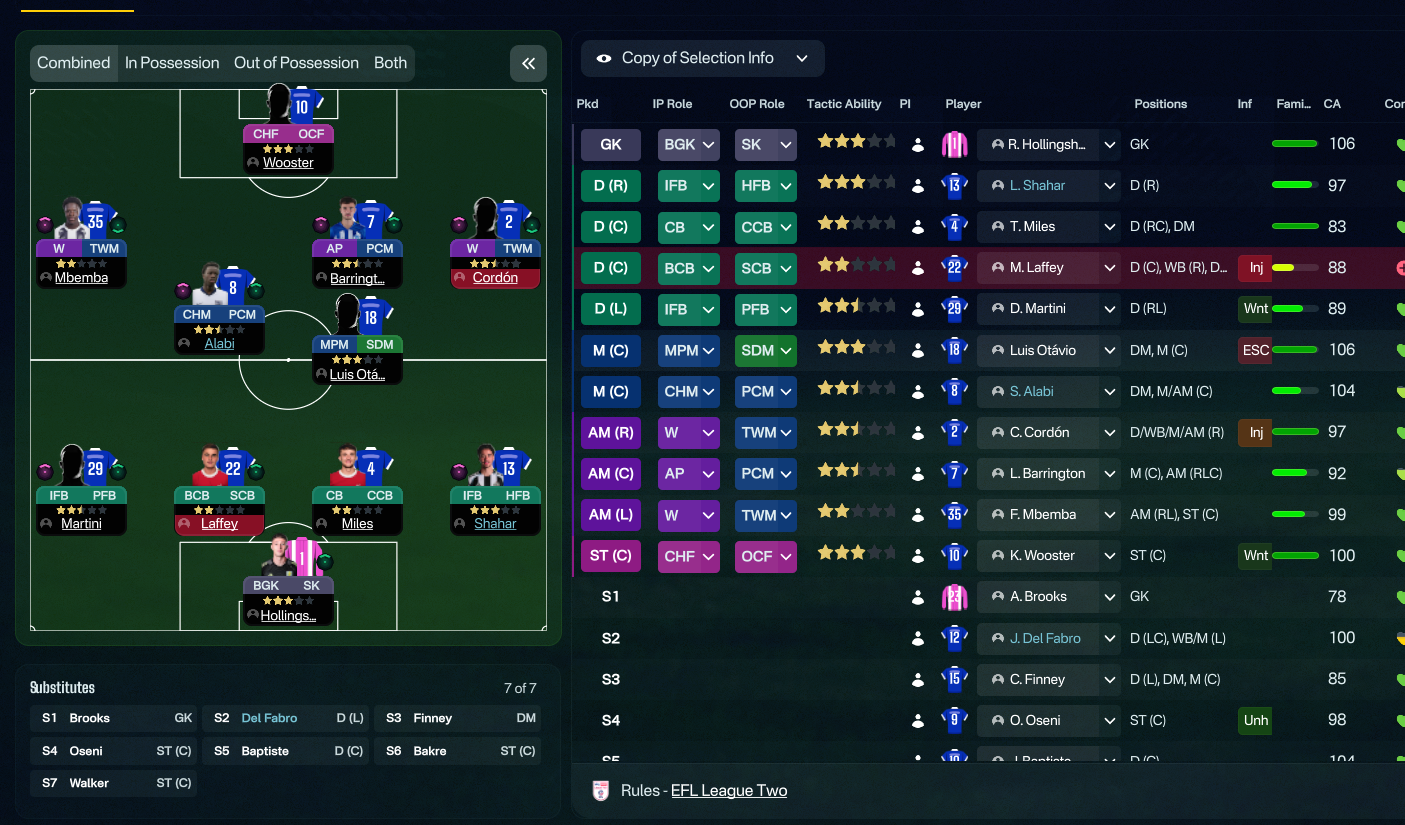
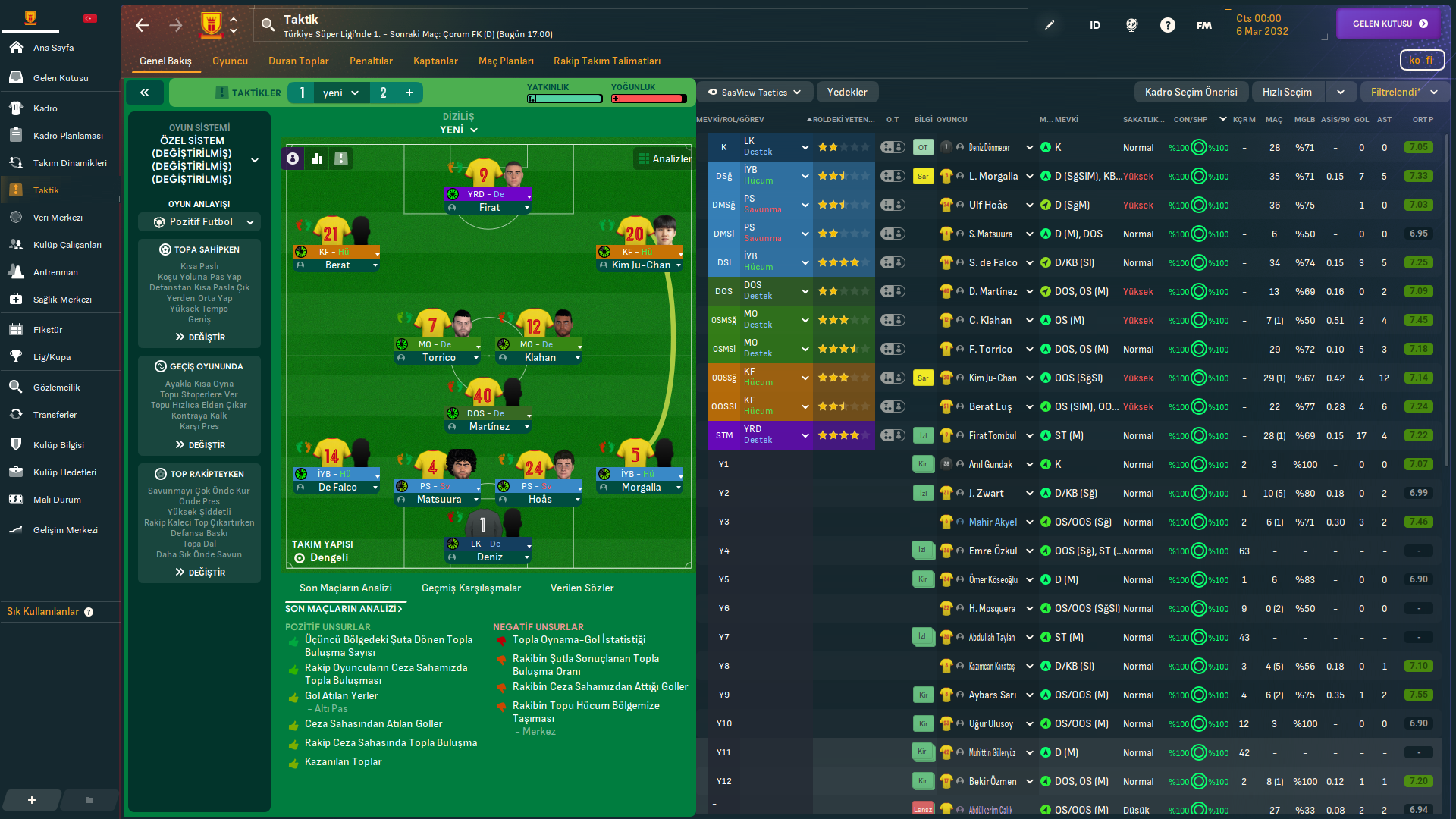
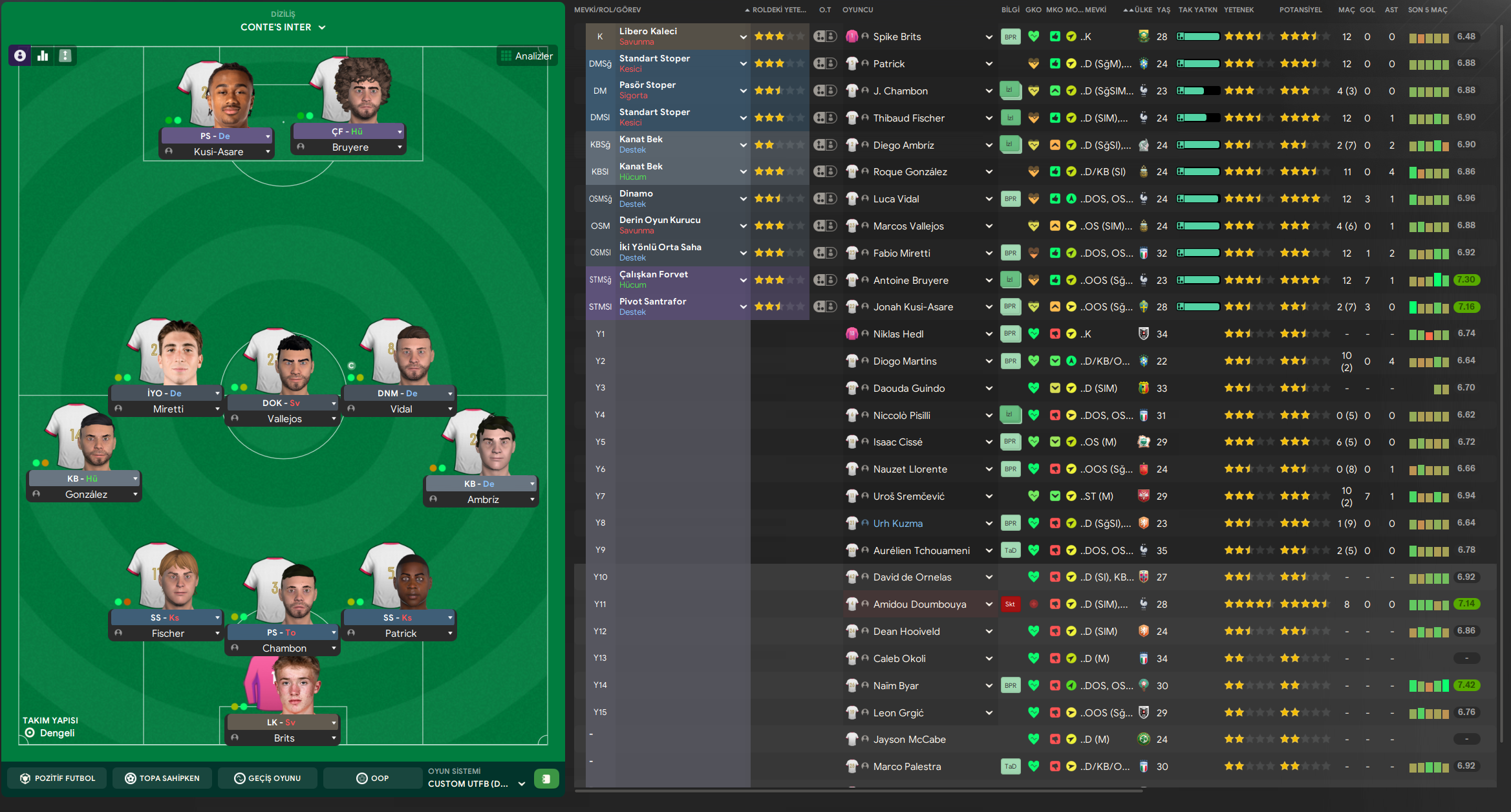
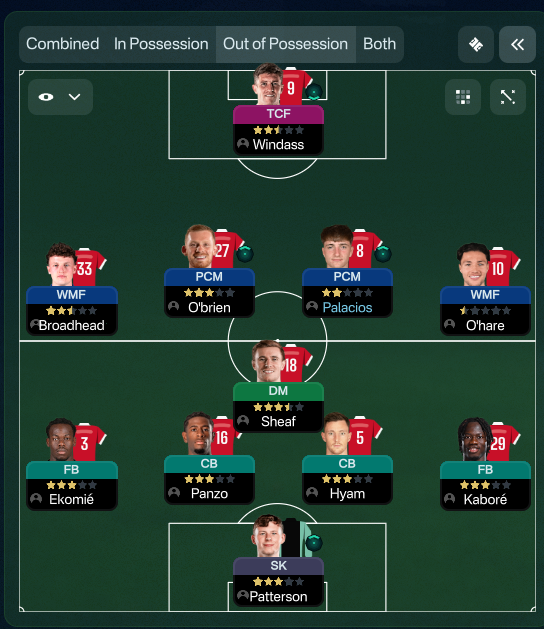
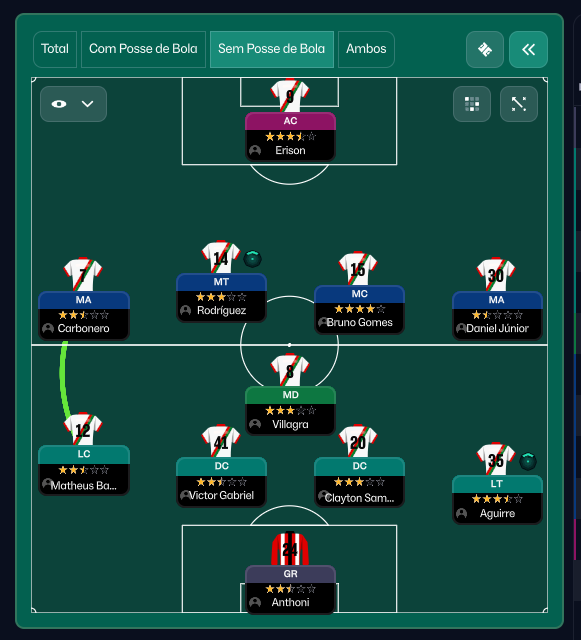
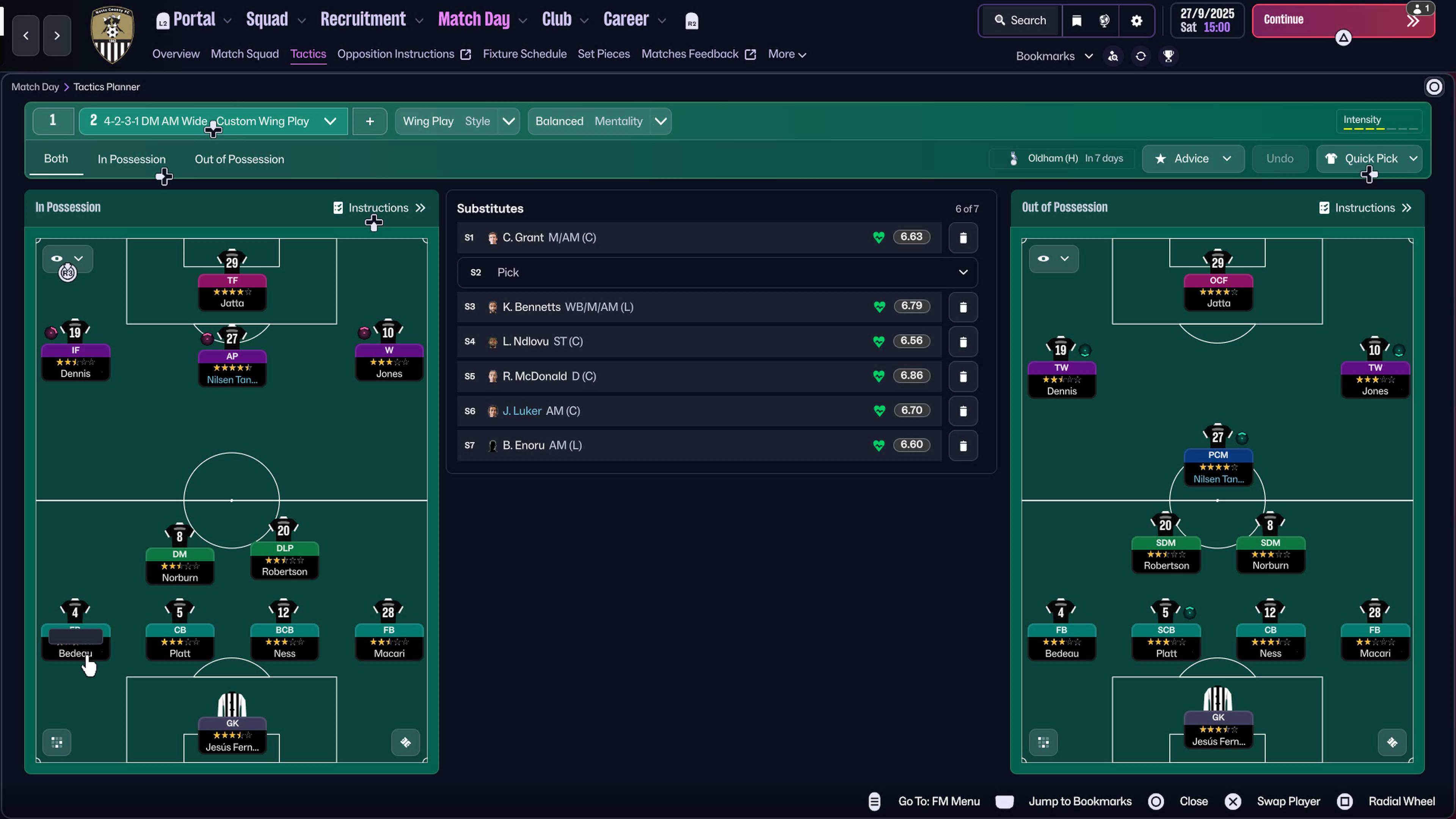
Guides for this formation
The tactical theory behind the 4-2-3-1: roles, instructions, and the trade-offs that decide whether the system holds up.
Player pairings
Midfield Pairs in 4-2-3-1 and 4-4-2
Double pivots and flat pairs in 4-2-3-1 and 4-4-2: when each pairing works, when it collapses, and the AMC unicorn that rescues both.
Read guide
Playing styles
Gegenpressing: A Full Guide
Klopp-style gegenpressing in FM, including squad profile, line-and-press pairing, sustainable workload, and the antipatterns to avoid.
Read guide