Uploaded Tactic

Formation & Style
Tactical Style:Vertical Tiki-Taka
Mentality:Positive
Formation:4-2-3-1
Team Fluidity:Structured
In Possession
Shorter Passing
Focus Play Down The Left
Run At Defence
In Transition
Counter-Press
Counter
Distribute To Full-Backs
Out of Possession
Higher Defensive Line
Much More Often Prevent Short GK Distribution
Team Shape Without Ball
Shape:Compact and High
Description:Defensives are compact with a higher line against the opposition.
Evidence:Higher Defensive Line + BPD at [2,2] for play initiation.
Team Shape With Ball
Shape:Fluid and Dynamic
Description:Wide players stretch the play while central players create frequent attacking triangles.
Evidence:Winger at [6,1] and Inside Forward at [6,3] combined with AP at [5,2].
Phase Description
Attacking Play
Focus on short passes and maintaining possession, utilizing the width provided by the wing-backs.
Defensive Transition
Aim to win the ball back quickly with a counter-press strategy upon losing possession.
Main Focus
Combine short passing to create chances while using the pace of Inside Forward and Winger.
Key Strengths
Wide Attacking Threat
Utilizing wing-backs and wingers creates space for central attackers.
Creative Midfield Play
Combination of Advanced Playmaker and Deep-Lying Playmaker fuels creative transitions.
Defensive Solidity
BPD and CD provide stability while contributing to build-up play.
Conflicting Directions
Risk of Overcommitment
High attacking duties may leave the team exposed on counter-attacks.
Reliance on Wing Play
Dependence on width could be neutralized by teams with strong central defensive setups.
Potential Midfield Gaps
Double pivot may be susceptible to faster counter-attacks if not well-coordinated.
Tactical Suggestions
Increase Width in Build-Up
Encourage wider play to pull defenders out of position.
Adjust Counter-Press Strategy
Consider modulating pressing intensity to prevent fatigue.
Reassess Defensive Responsibilities
Incorporate more defensive duties for wide players to ensure balance.
Ask Questions About Your Lineup
Related Tactics
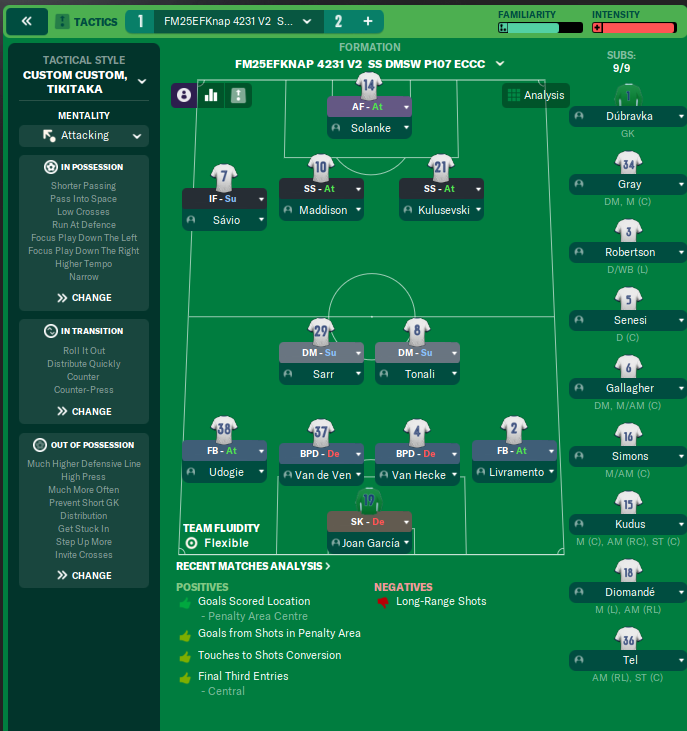
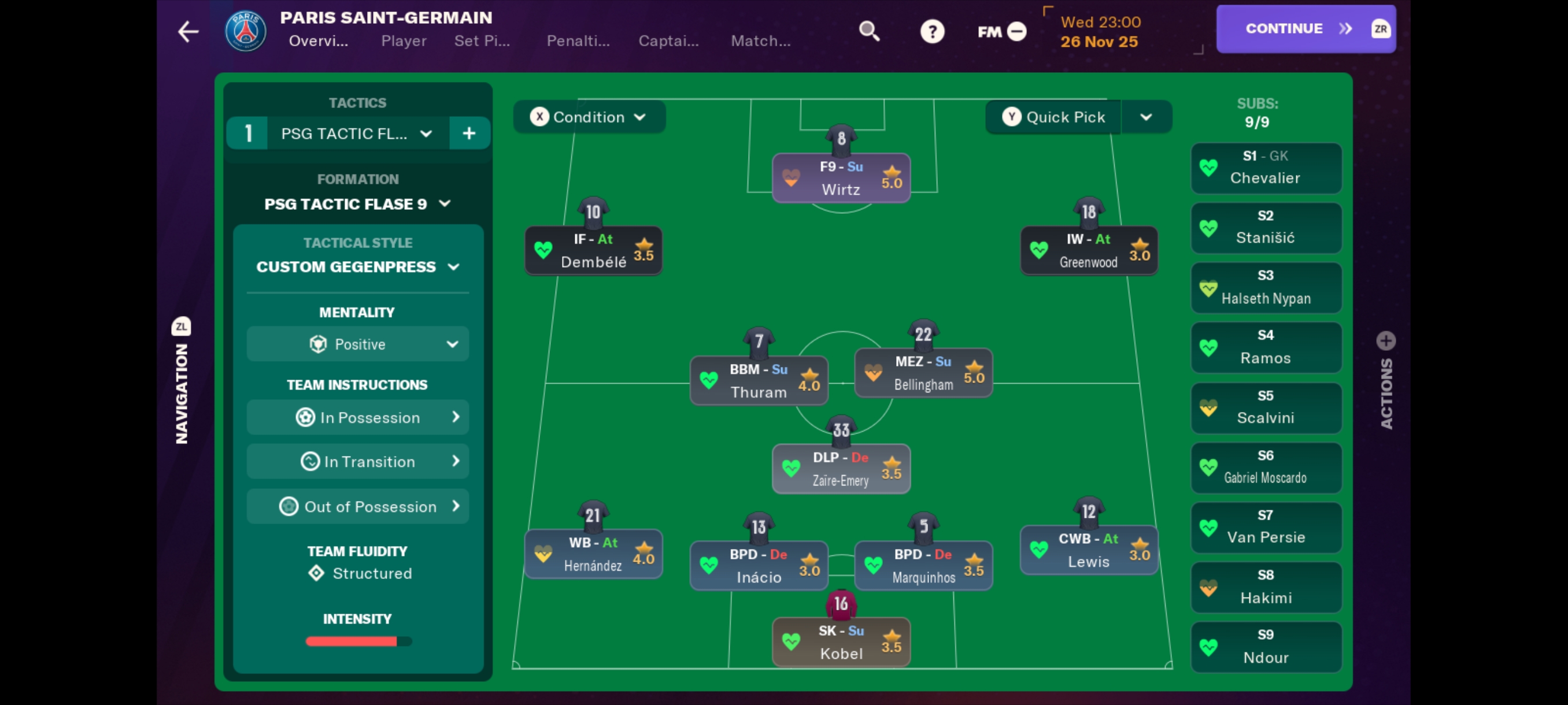
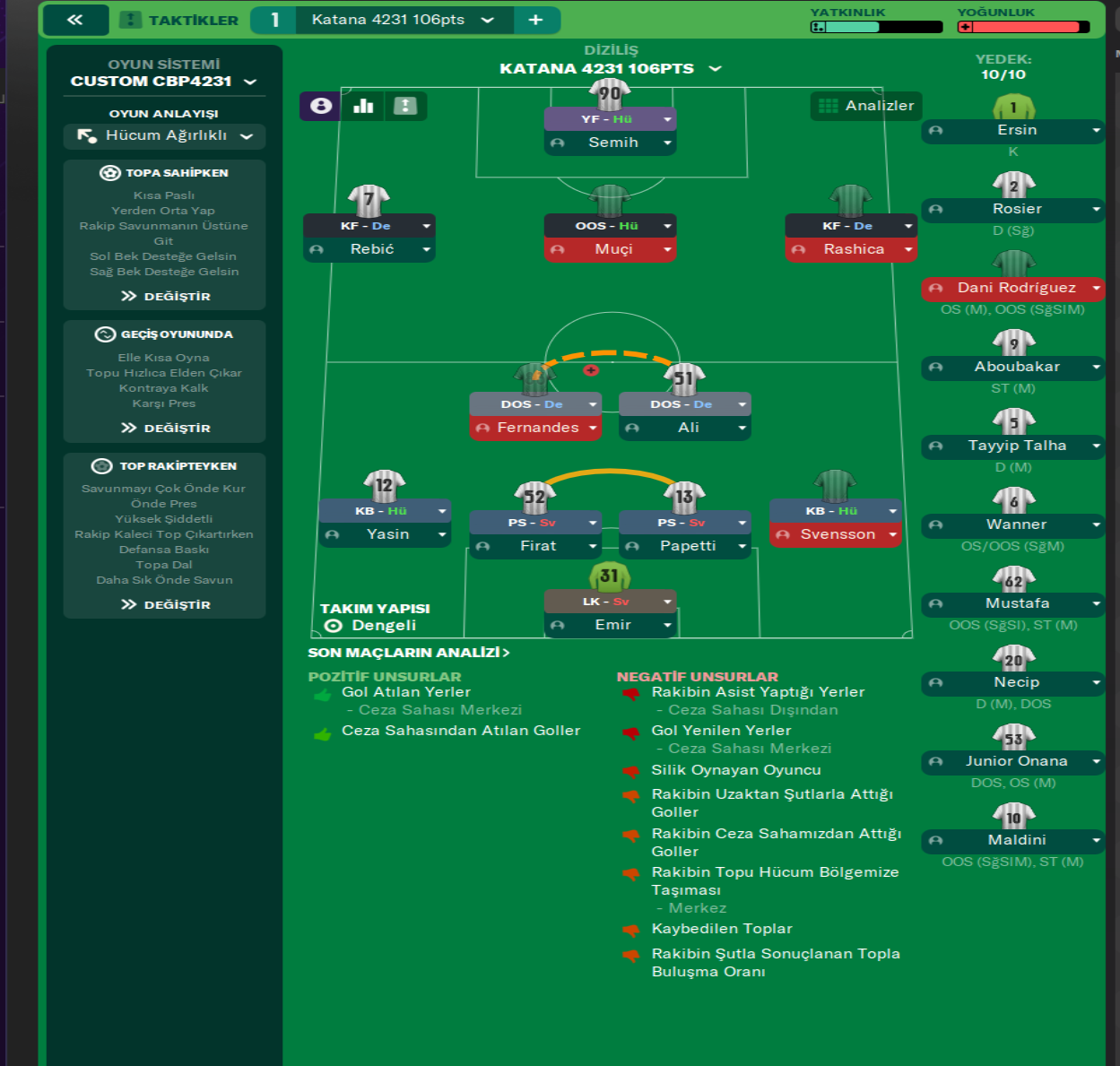
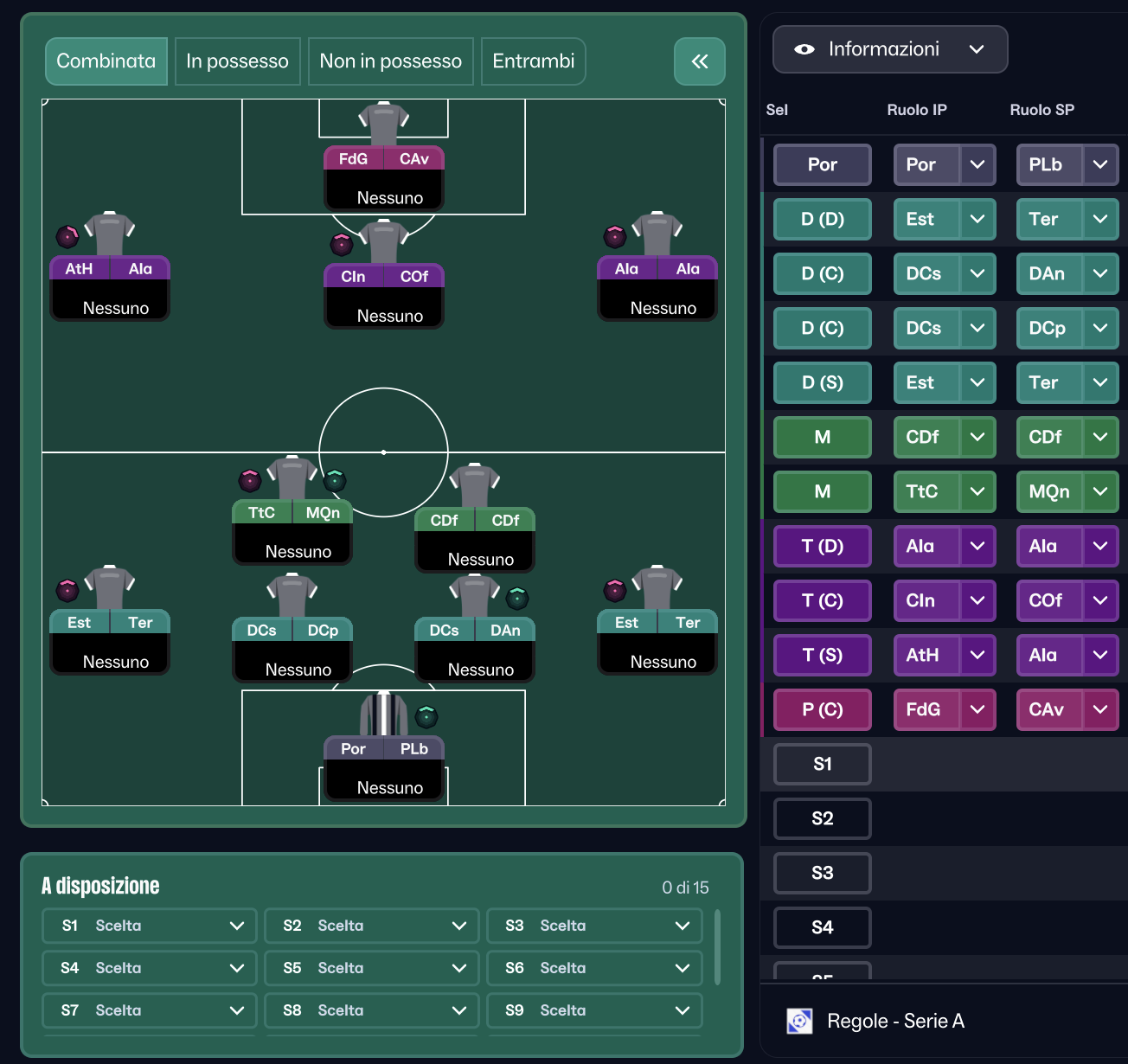
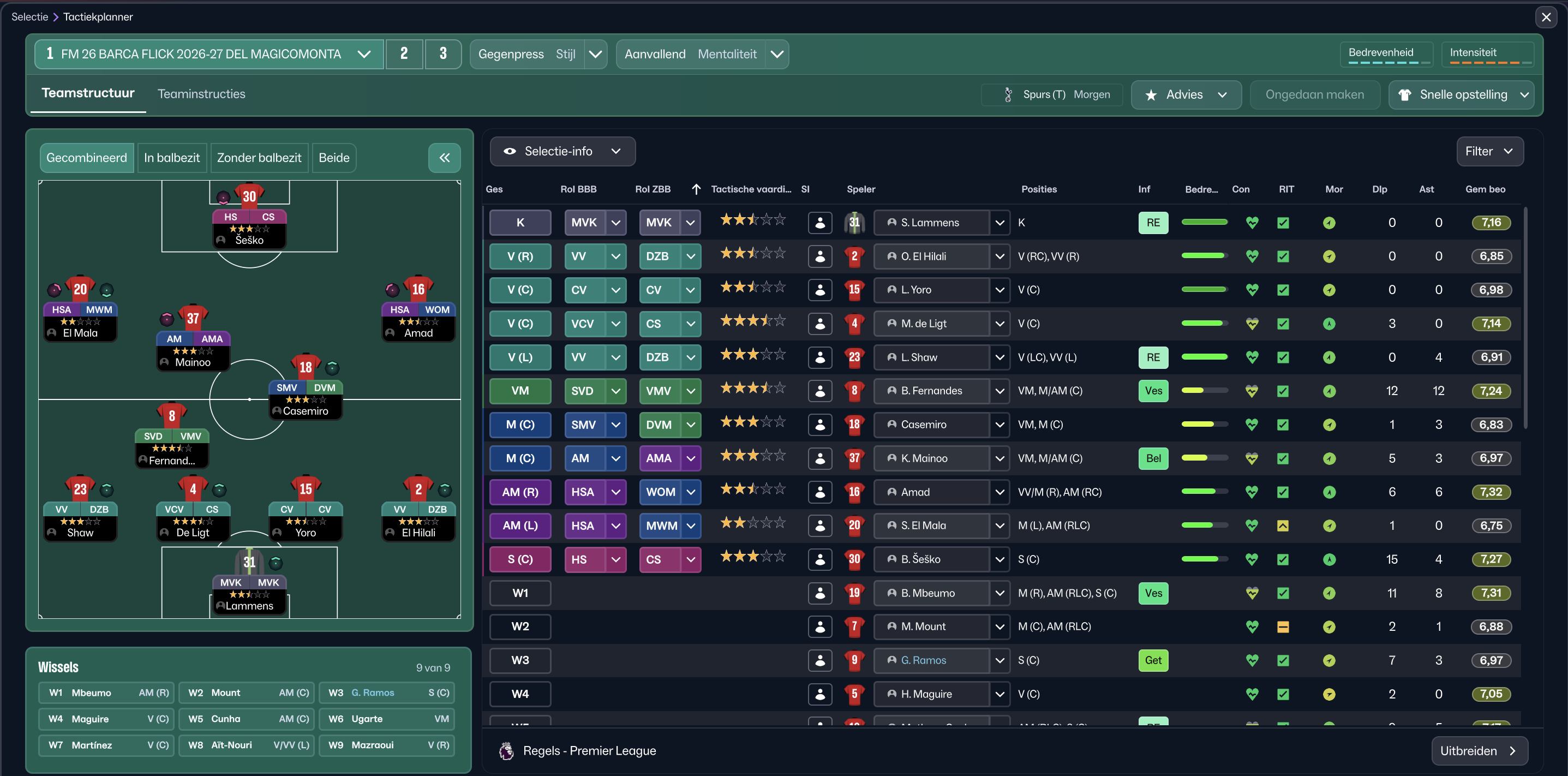
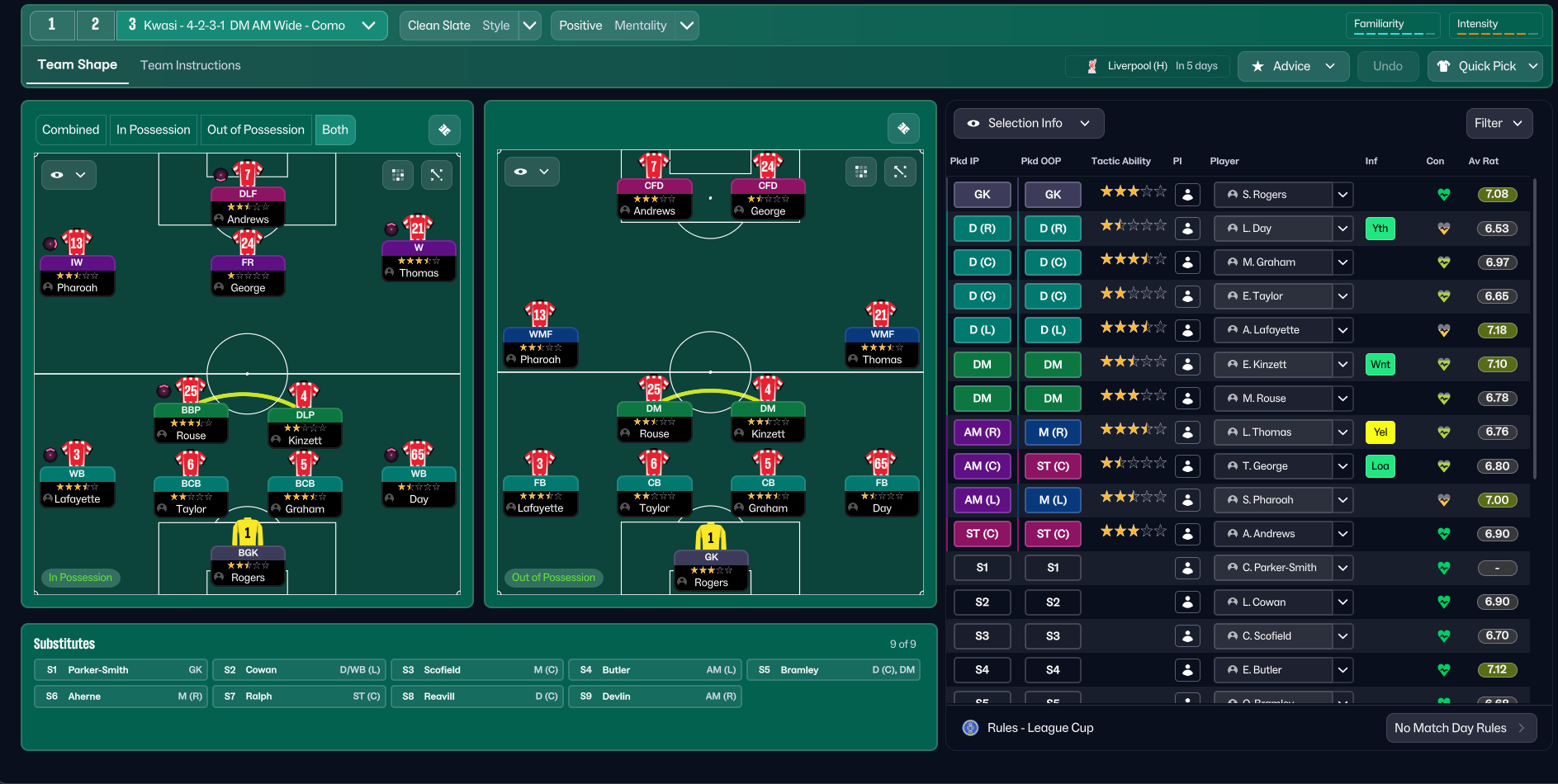
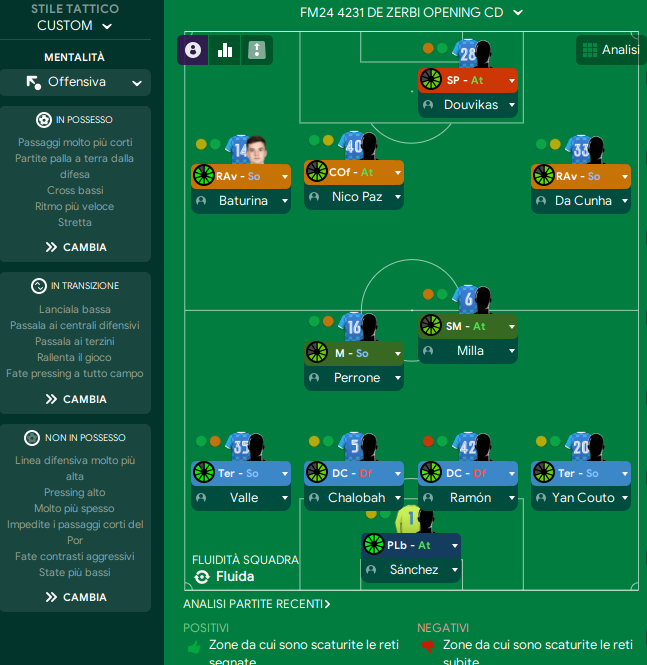
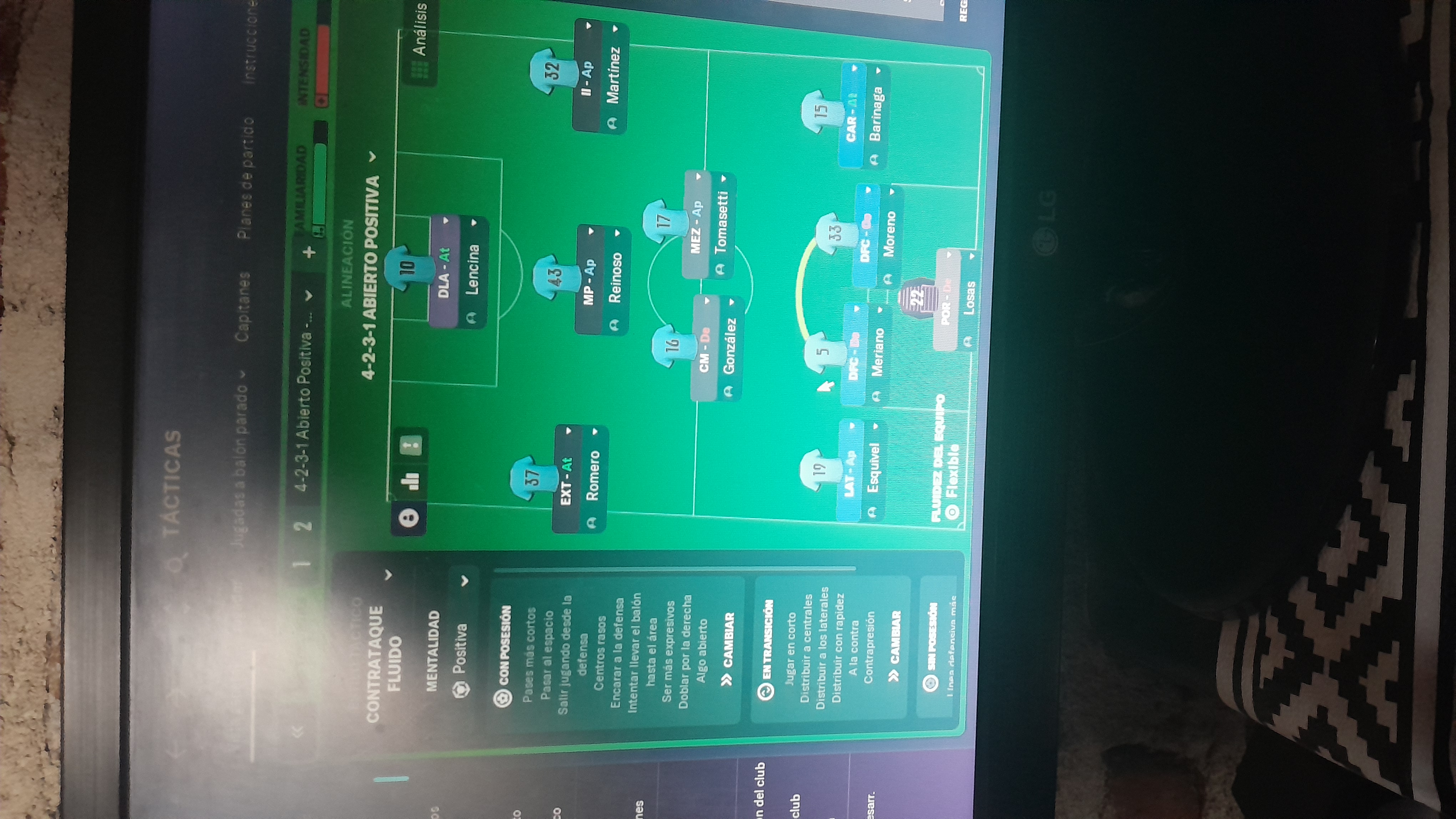
More Vertical Tiki-Taka tactics
Guides for this formation
The tactical theory behind the 4-2-3-1: roles, instructions, and the trade-offs that decide whether the system holds up.
Player pairings
Midfield Pairs in 4-2-3-1 and 4-4-2
Double pivots and flat pairs in 4-2-3-1 and 4-4-2: when each pairing works, when it collapses, and the AMC unicorn that rescues both.
Read guide
Playing styles
Gegenpressing: A Full Guide
Klopp-style gegenpressing in FM, including squad profile, line-and-press pairing, sustainable workload, and the antipatterns to avoid.
Read guide