Uploaded Tactic
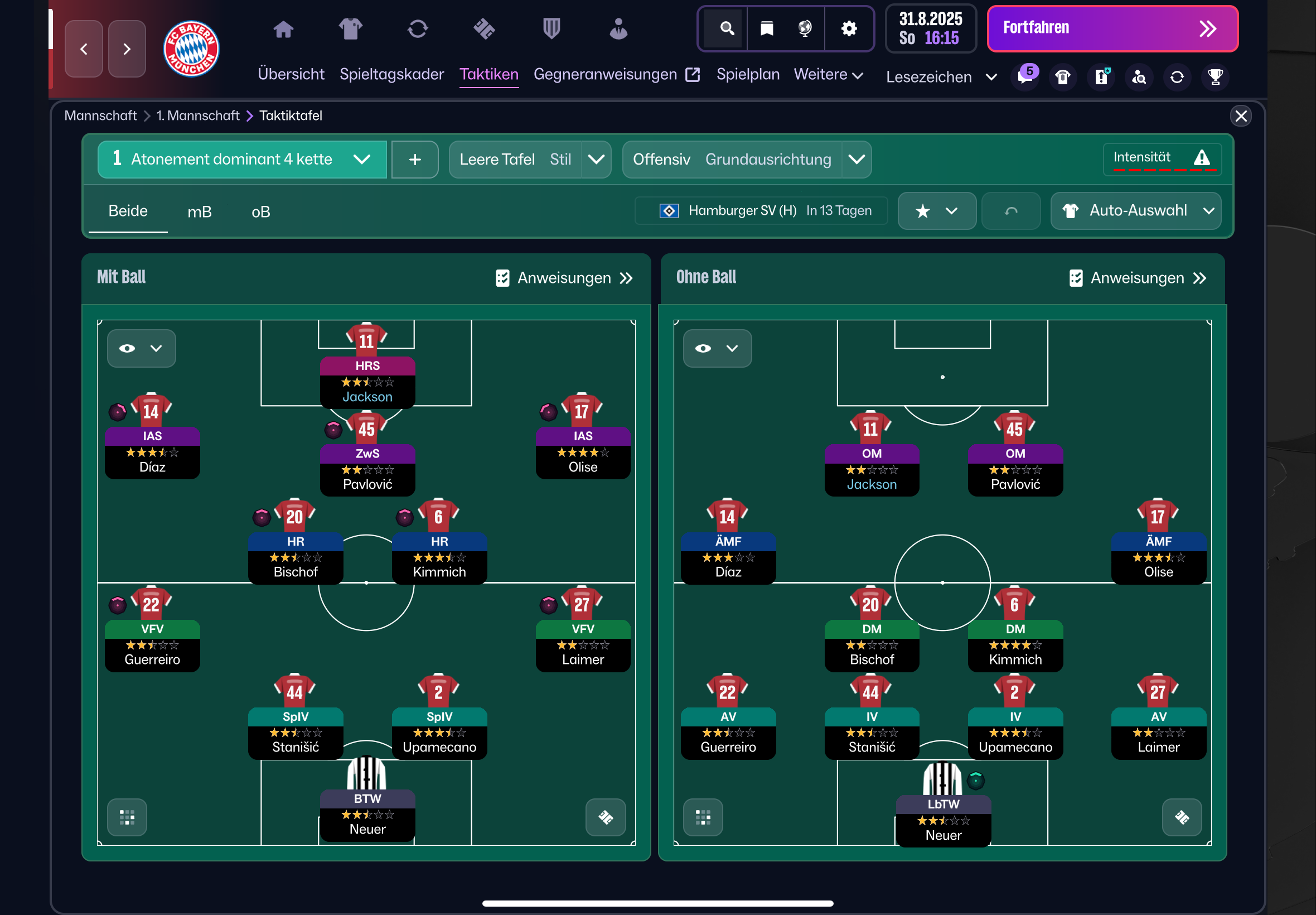
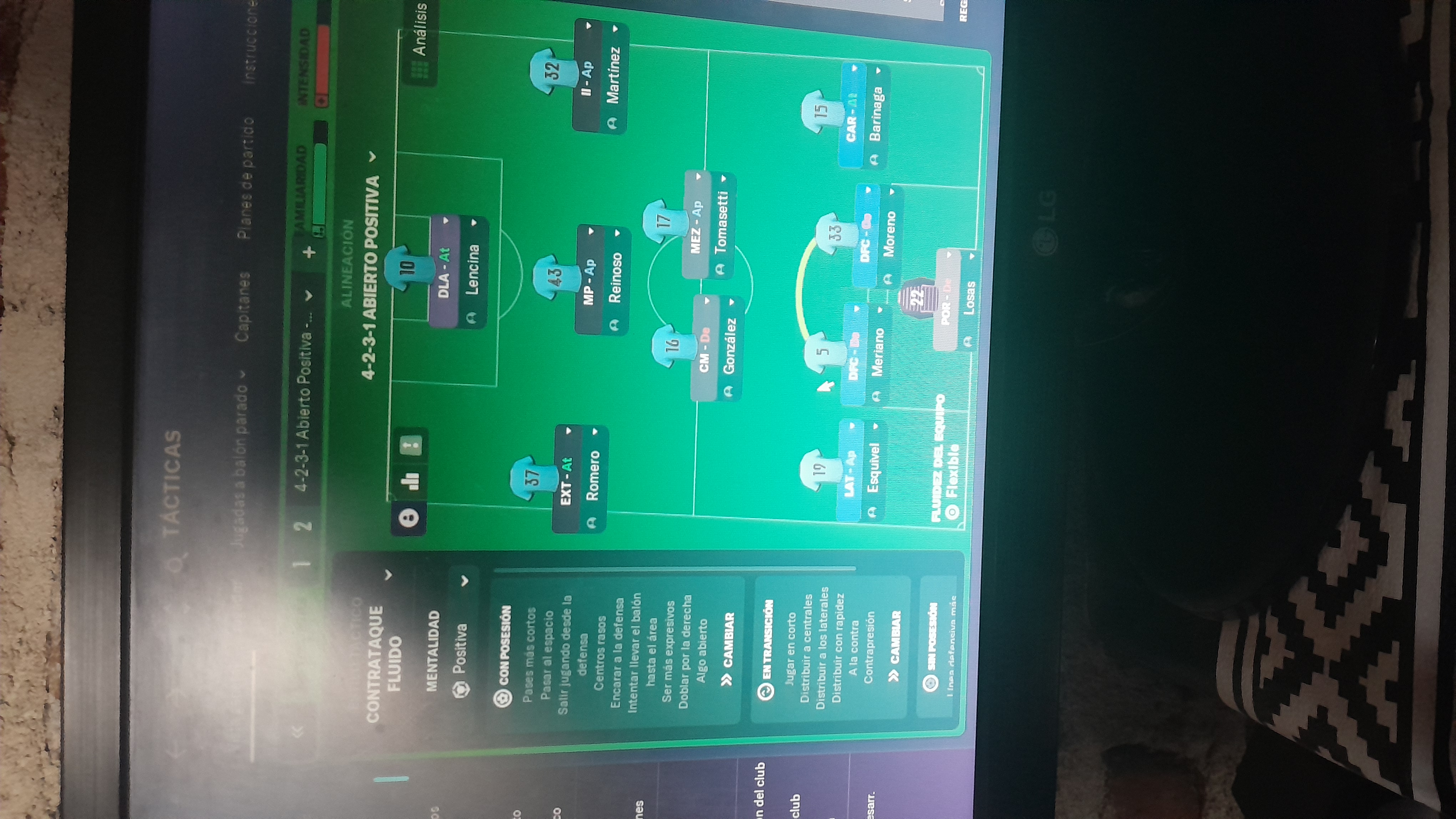
Formation & Style
Tactical Style:Dominant
Mentality:Attacking
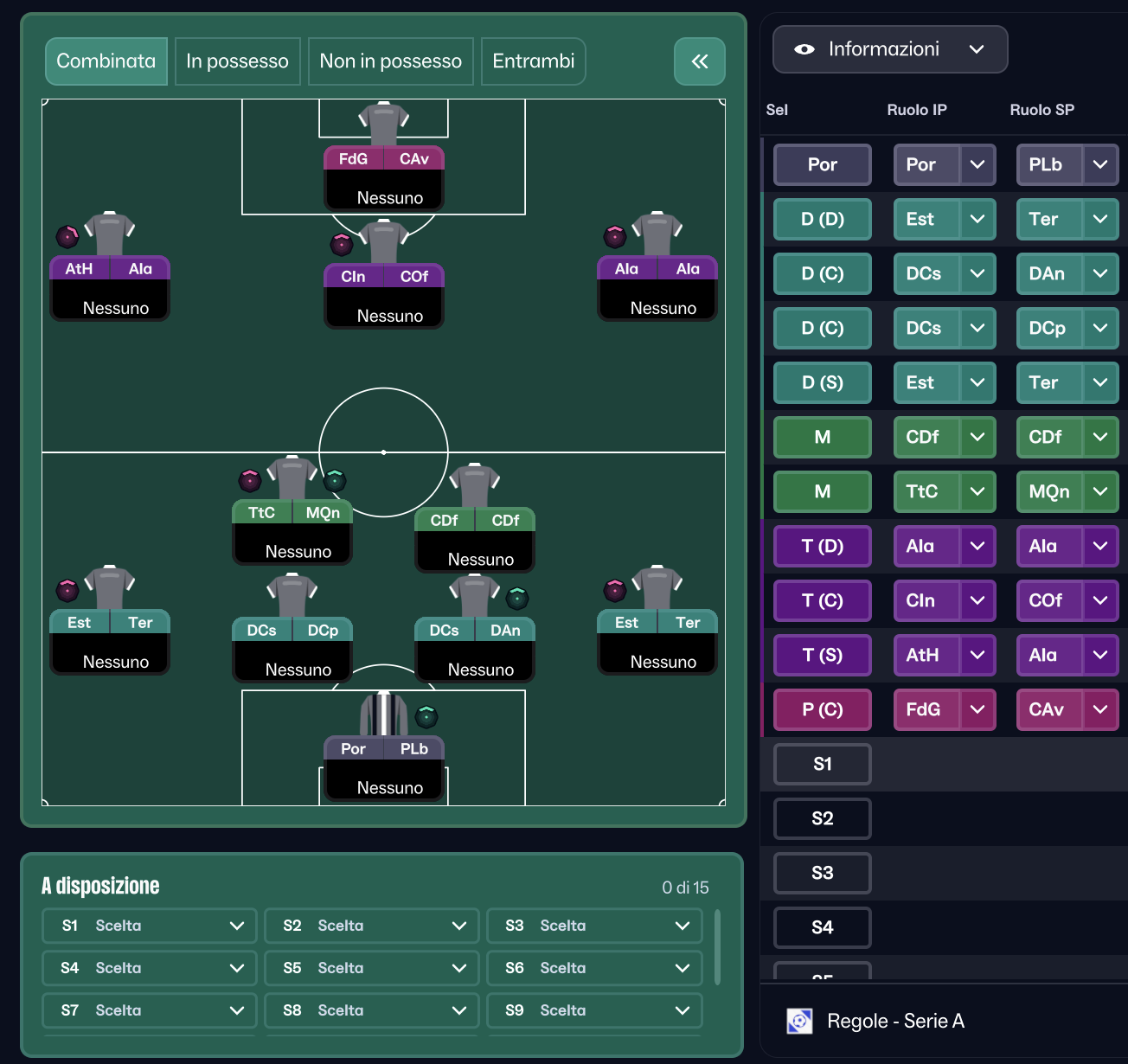
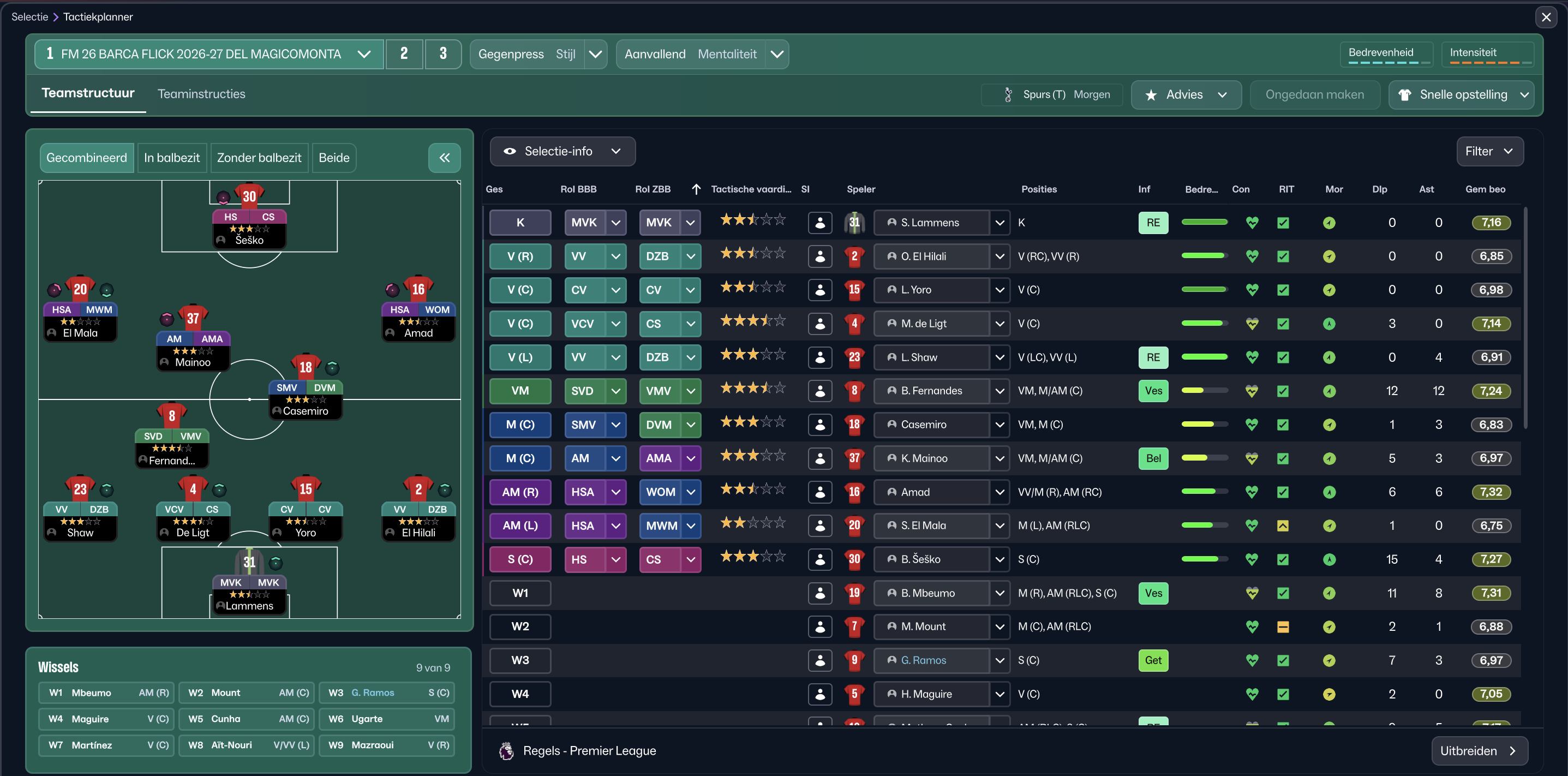
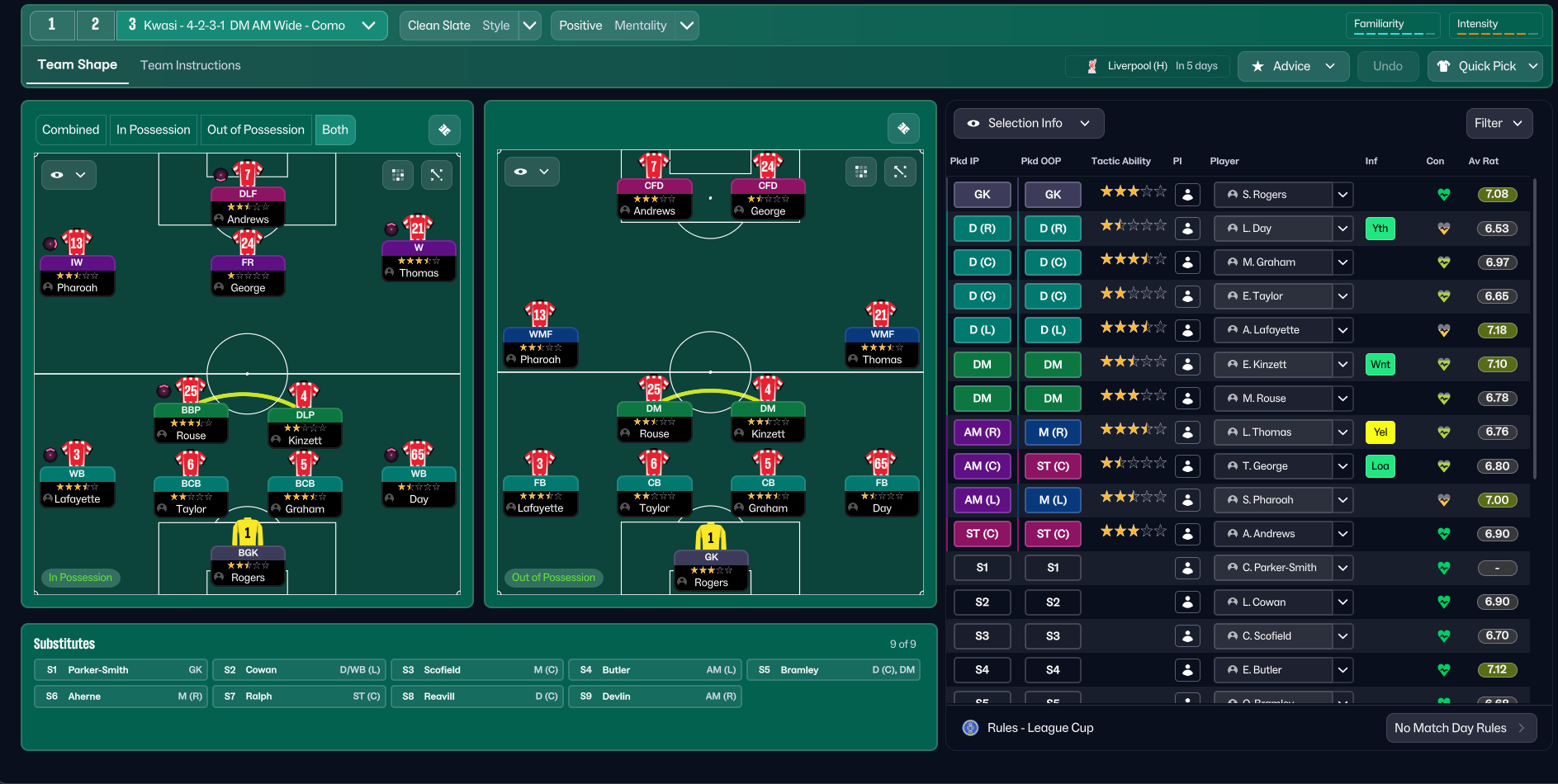
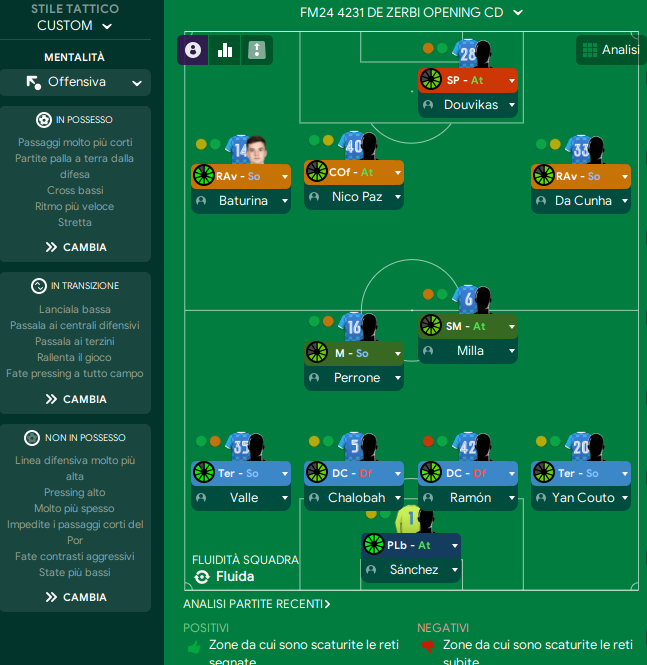
Formation:4-2-3-1
Team Fluidity:Fluid
In Possession
Play Out of Defence
Work Ball into Box
Focus Play down the Middle
In Transition
Counter
Counter Press
Out of Possession
Higher Defensive Line
Higher Line of Engagement
Prevent Short GK Distribution
Team Shape Without Ball
Shape:4-2-3-1
Description:Solid and reliable defensive structure with width provided by full-backs.
Evidence:CBs positioned at [2,2] and [2,3] ensuring strength at the back.
Team Shape With Ball
Shape:Fluid
Description:Attacking players rotating positions to confuse opposition markers.
Evidence:Inside Forward at [6,3] facilitates dynamic positioning with Am at [5,2].
Phase Description
Attacking Play
The team maintains a dominant possession style, looking to penetrate through the middle.
Defensive Transition
Quick regrouping to ensure pressing initiates immediately after losing possession.
Main Focus
Utilizing wing-backs to create width while supporting central attacking players.
Key Strengths
Fluid Transition
The team's ability to switch from defense to attack rapidly enhances potency.
Strong Midfield Partnership
Midfield allows for both defensive cover and offensive support.
Dynamic Wide Play
The interplay between wing-backs and wide forwards creates constant threats down the flanks.
Conflicting Directions
Defensive Vulnerability to Fast Breaks
High defensive line may be exposed to counter-attacks.
Over-reliance on Wing Play
Heavy focus on wing play may become predictable and easier to defend against.
Lack of Physical Presence
Insufficient height in attack might struggle against stronger defenses.
Tactical Suggestions
Adjust Defensive Line
Lower the defensive line to reduce vulnerability to counters.
Introduce a Target Man
Adding a physical presence could diversify attacking options.
Increase Width in Attack
Encourage wingers to stretch play more to create space centrally.
Ask Questions About Your Lineup
Related Tactics
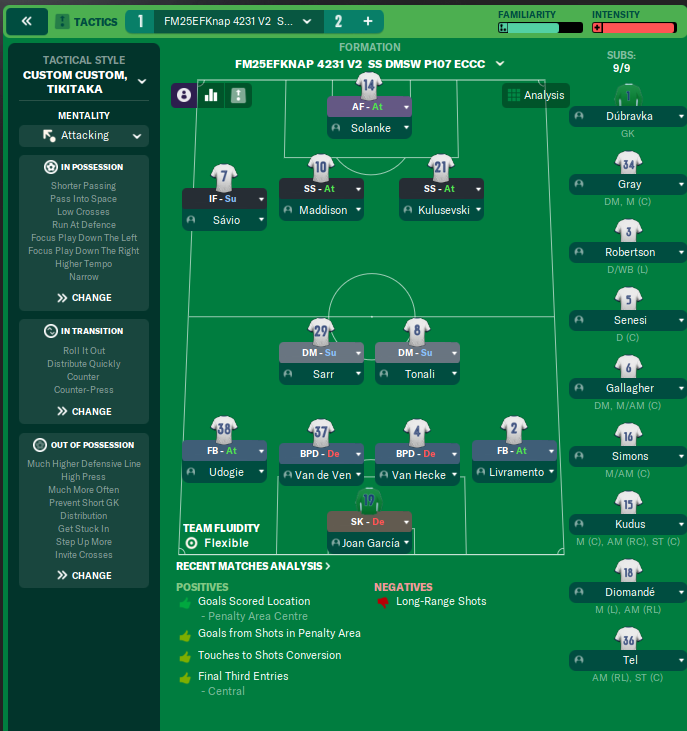
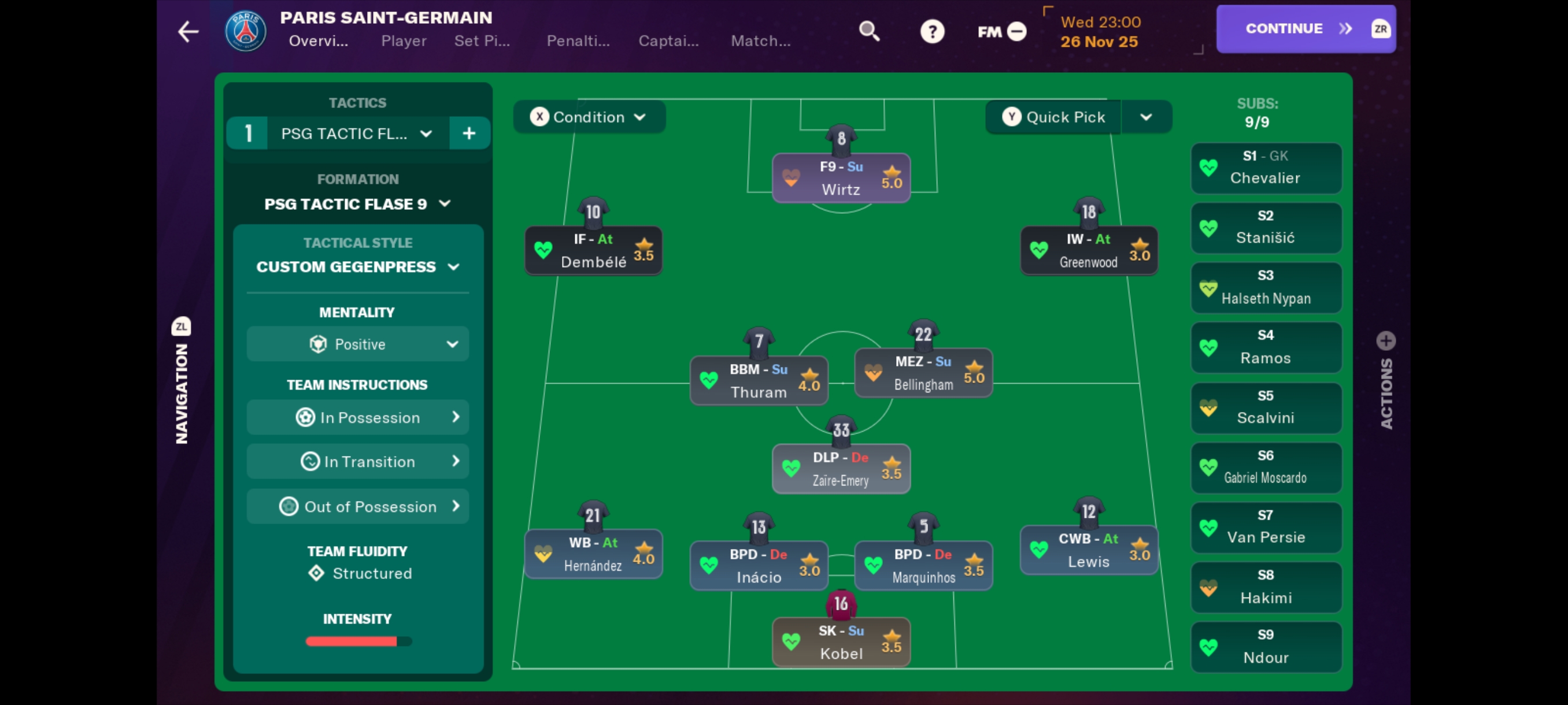
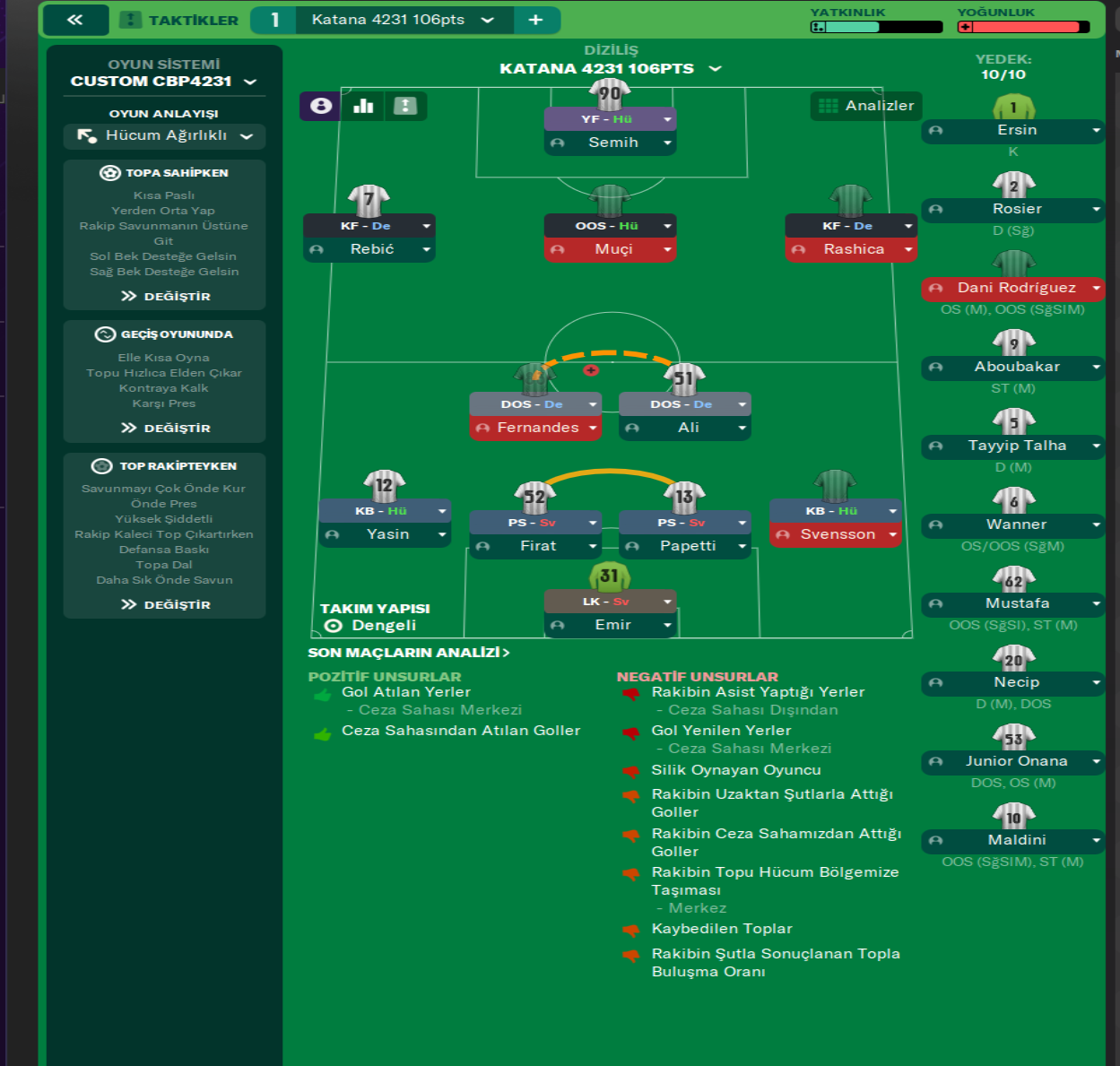
Guides for this formation
The tactical theory behind the 4-2-3-1: roles, instructions, and the trade-offs that decide whether the system holds up.
Player pairings
Midfield Pairs in 4-2-3-1 and 4-4-2
Double pivots and flat pairs in 4-2-3-1 and 4-4-2: when each pairing works, when it collapses, and the AMC unicorn that rescues both.
Read guide
Playing styles
Gegenpressing: A Full Guide
Klopp-style gegenpressing in FM, including squad profile, line-and-press pairing, sustainable workload, and the antipatterns to avoid.
Read guide