Uploaded Tactic
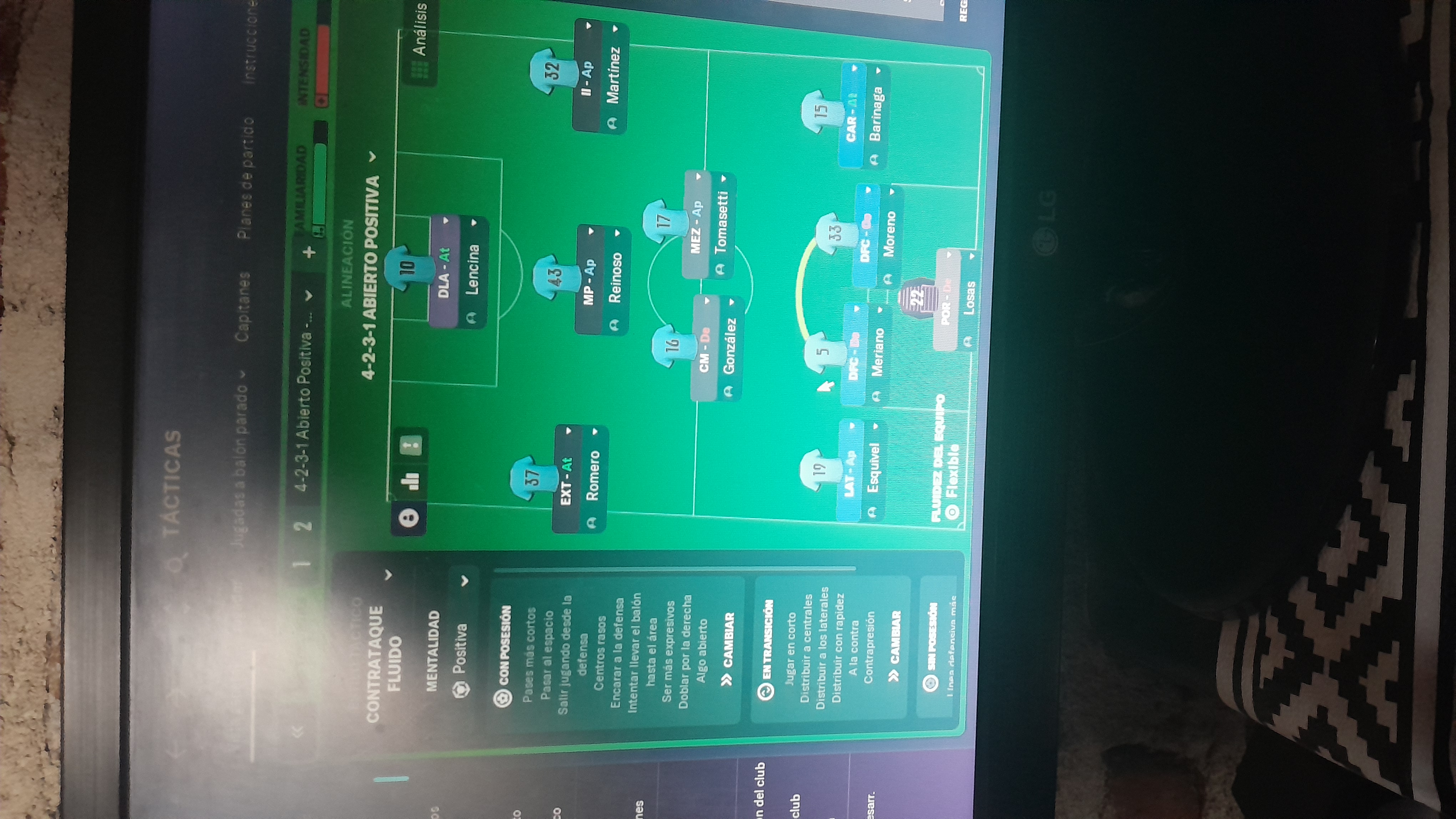
Formation & Style
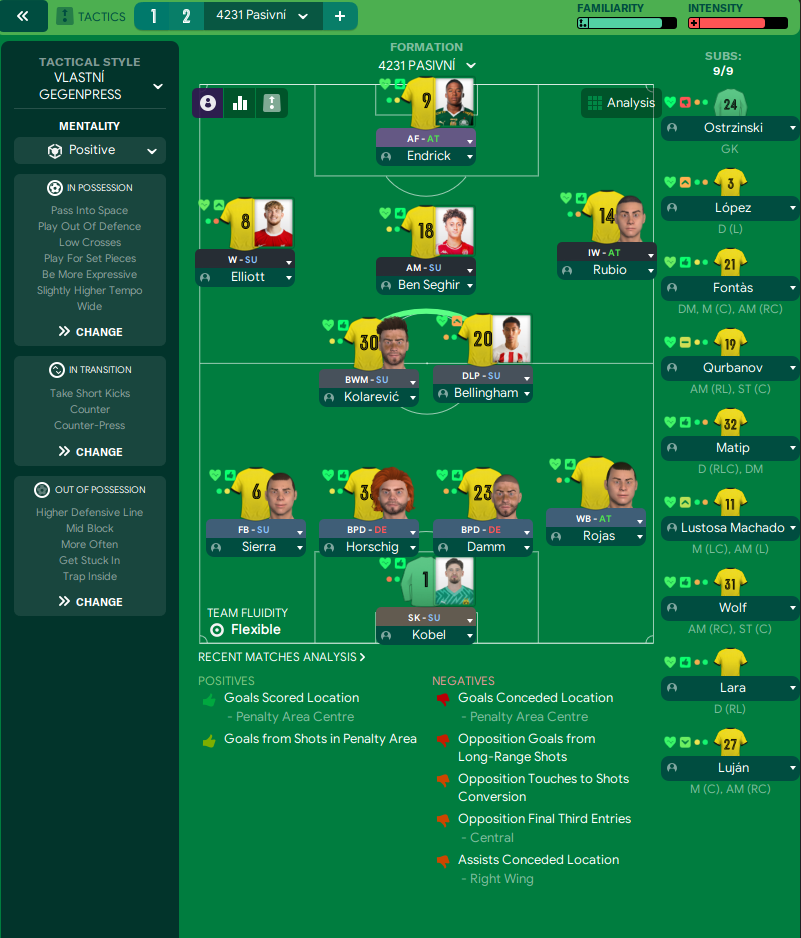
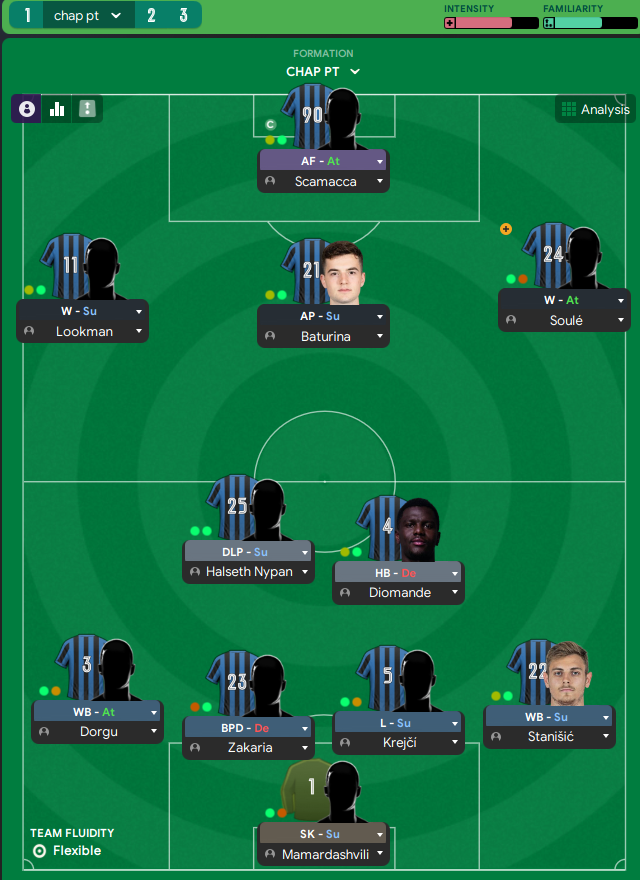
Tactical Style:Fluid Counter-Attack
Mentality:Positive
Formation:4-2-3-1
Team Fluidity:Flexible
In Possession
Shorter Passing
Pass Into Space
Focus Play Down Right
Be More Expressive
Overlap on Right
In Transition
Counter-Press
Distribute to Centre-Backs
Distribute to Full-Backs
Counter
Out of Possession
Standard Defensive Line
Standard Line of Engagement
Team Shape Without Ball
Shape:Standard
Description:Standard defensive shape with compactness allowing quick recovery.
Evidence:Standard Defensive Line and Line of Engagement settings.
Team Shape With Ball
Shape:Fluid Attacking Shape
Description:Utilizes width and interchanging roles to create opportunities.
Evidence:Roles of Wing-Backs and Inverted Winger indicated focus on wide play.
Phase Description
Attacking Play
Fluid movement with emphasis on quick transitions and exploiting space on the right.
Defensive Transition
Focus on immediate pressure to regain possession after losing ball.
Main Focus
Utilizing width and quick passing to transition effectively.
Key Strengths
Width Exploitation
The use of wing-backs and wide forwards creates opportunities in wider areas.
Fluidity in Attack
Interchanging roles between the attacking players increases unpredictability.
Counter-Attack Effectiveness
Quick transitions can exploit the opponent's defensive gaps.
Conflicting Directions
Defensive Vulnerability on Flanks
While focusing on width, there may be spaces left in wide areas defensively.
Potential Overcommitment
High attacking roles may lead to transitions being less balanced if possession is lost.
Central Overcrowding
Mezzala and Advanced Playmaker could congest the middle if not properly spaced.
Tactical Suggestions
Adjust Counter-Press Intensity
Consider varying the intensity based on opponent's strengths or weaknesses.
Evaluate Wing-Back Duties
Depending on match conditions, balance between attack and defend roles might be necessary.
More Structured Defensive Setup
Consider moving to a slightly more defensive shape when ahead in games.
Ask Questions About Your Lineup
Related Tactics
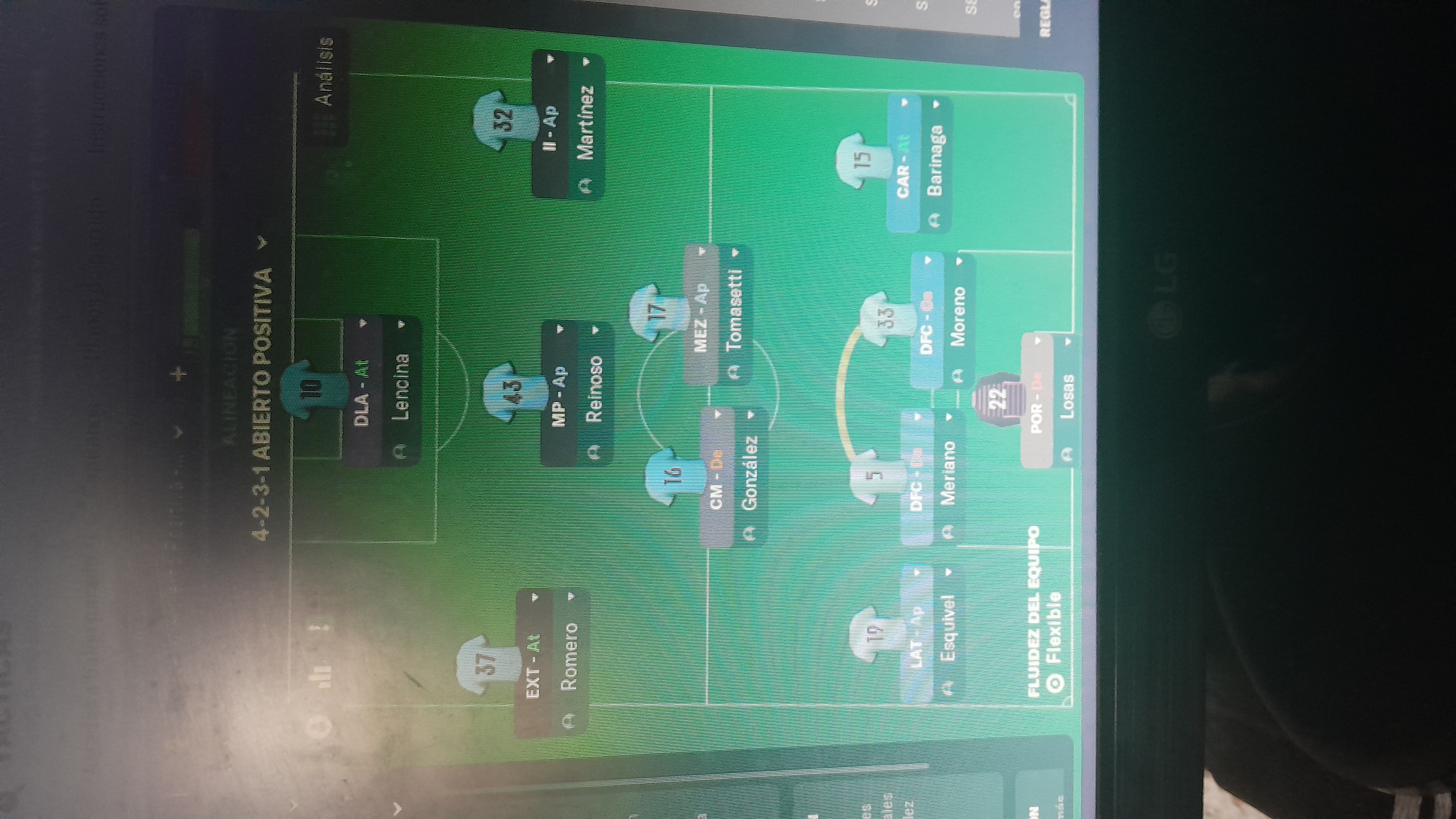
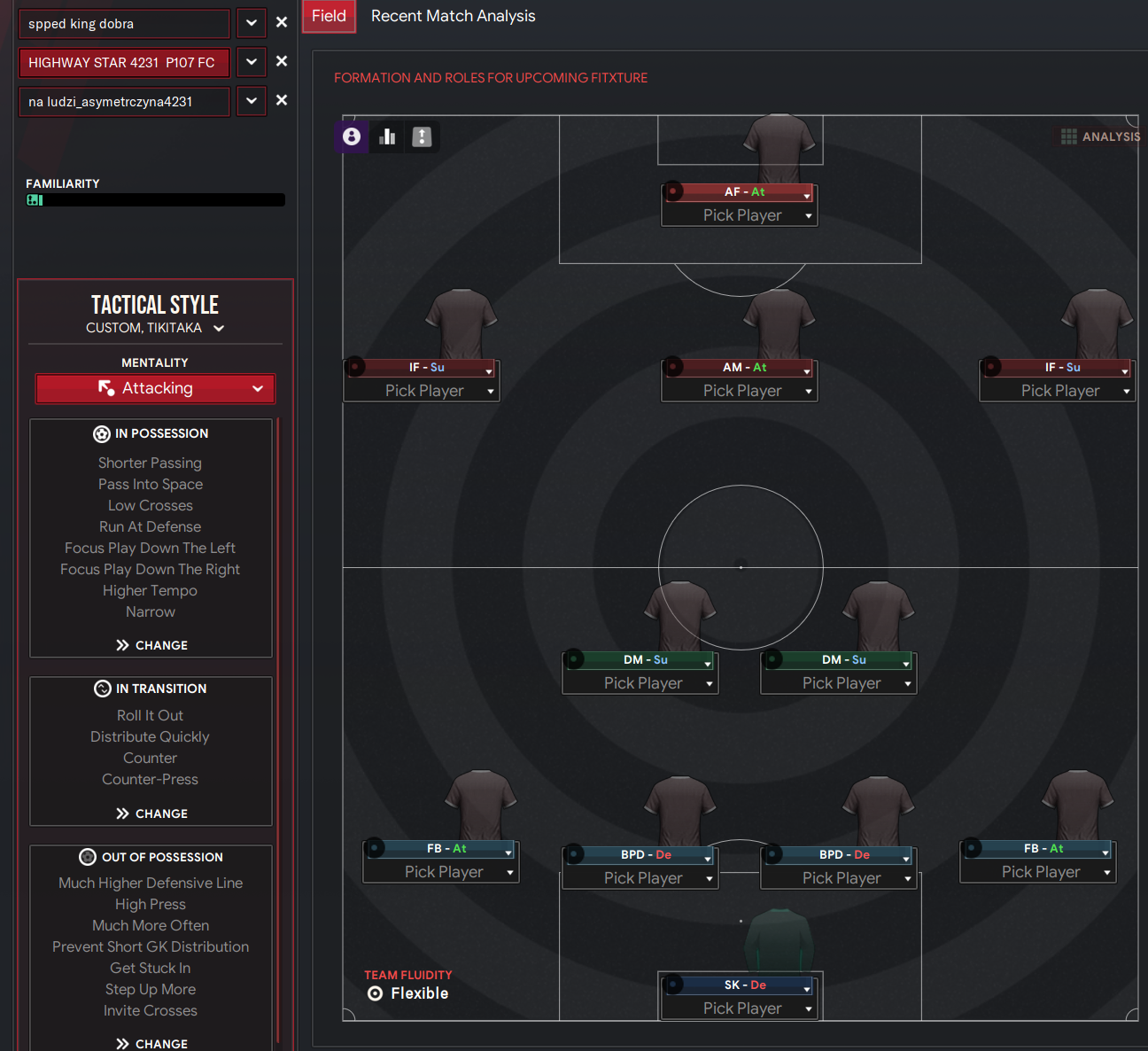
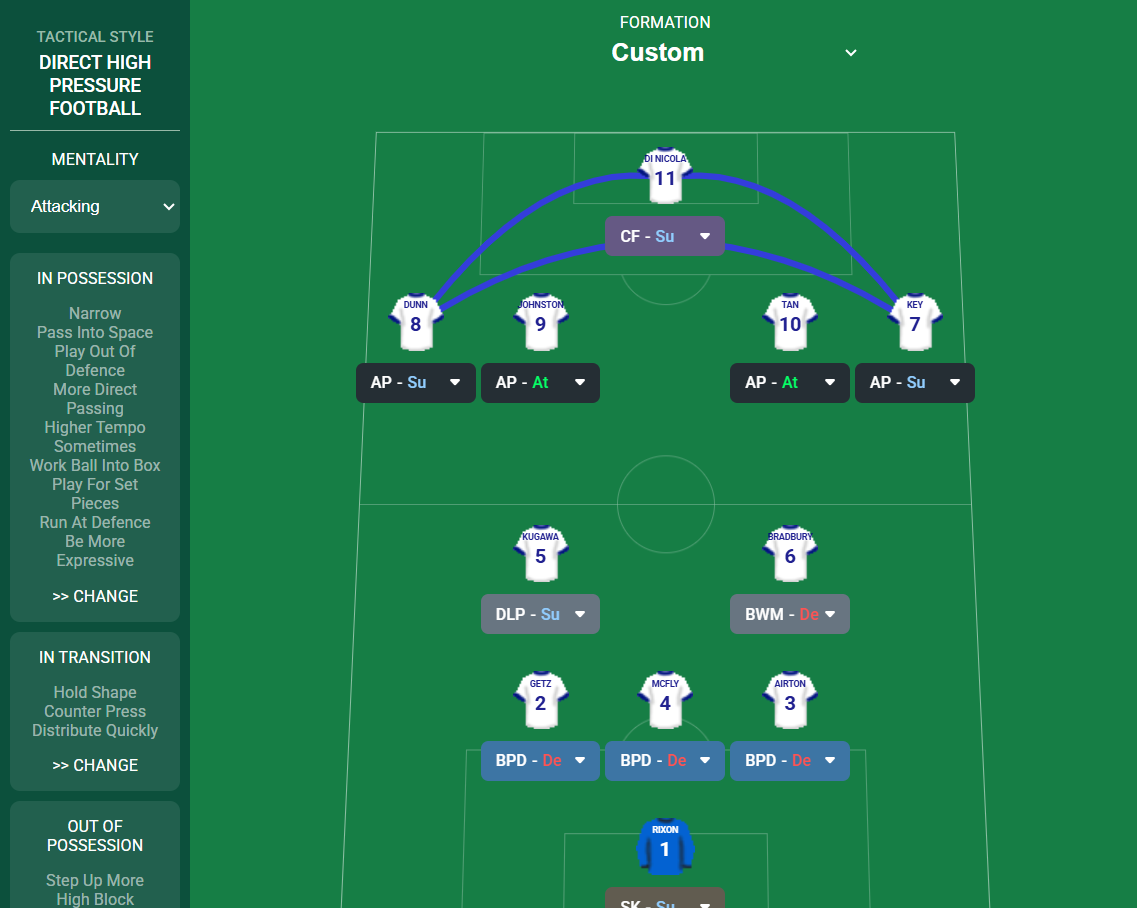
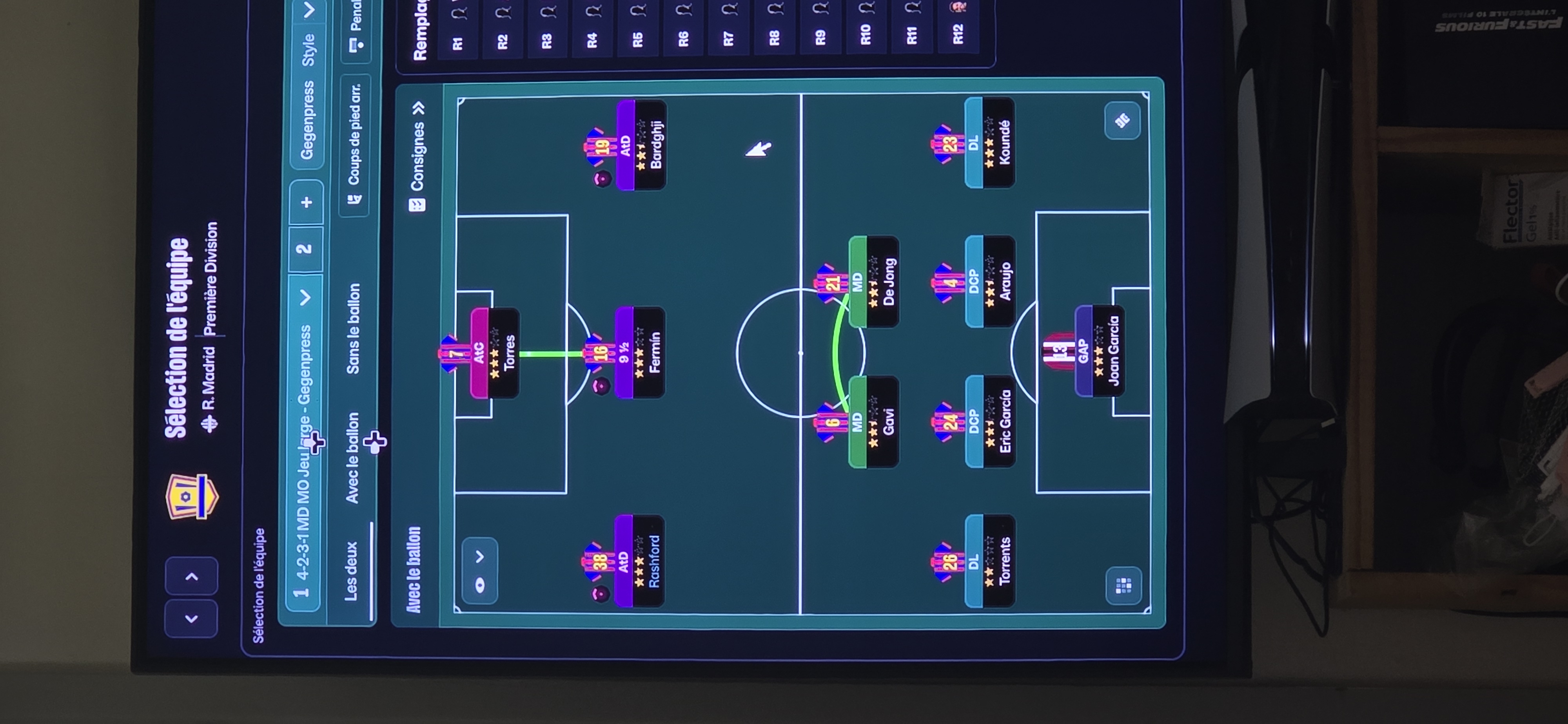
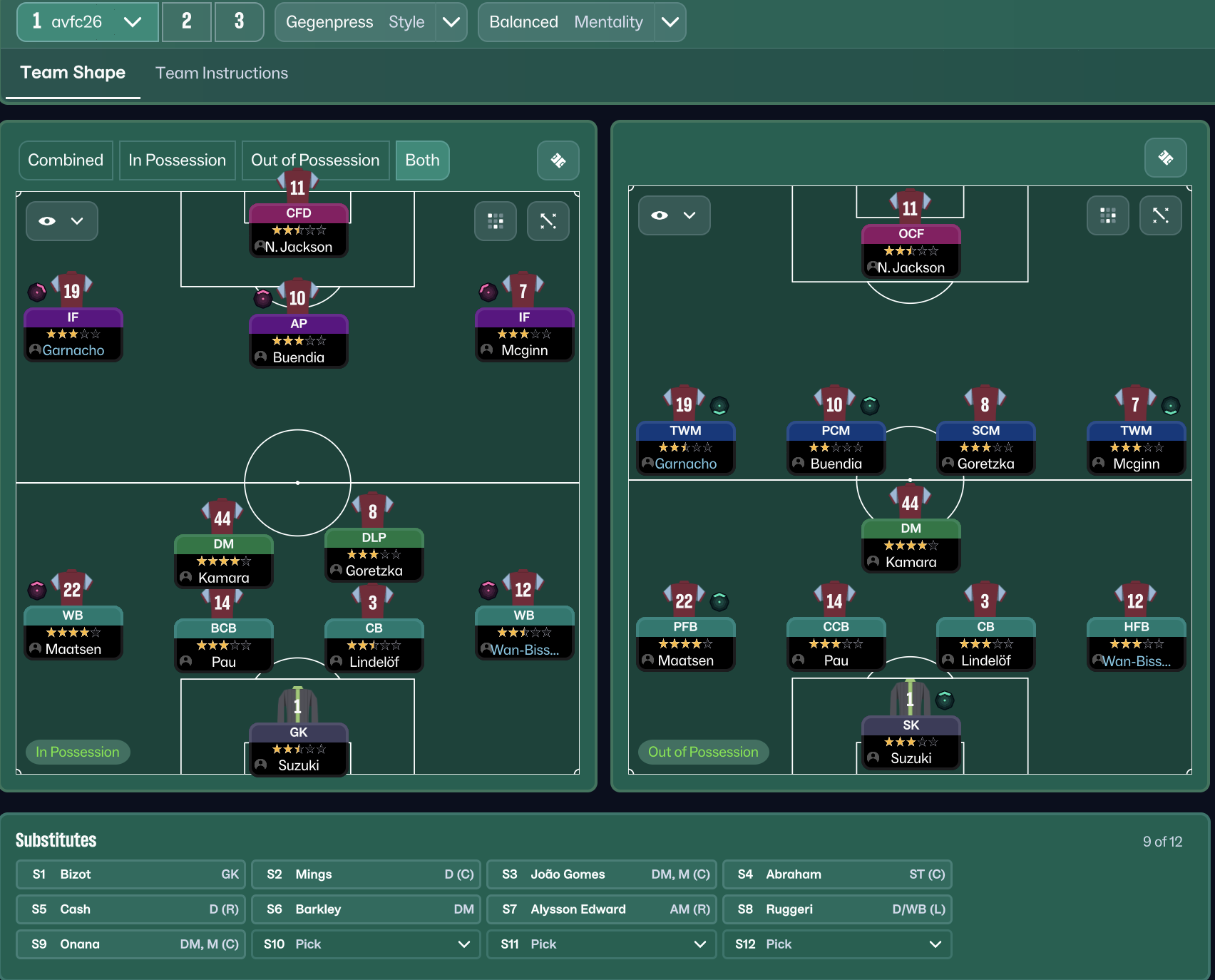
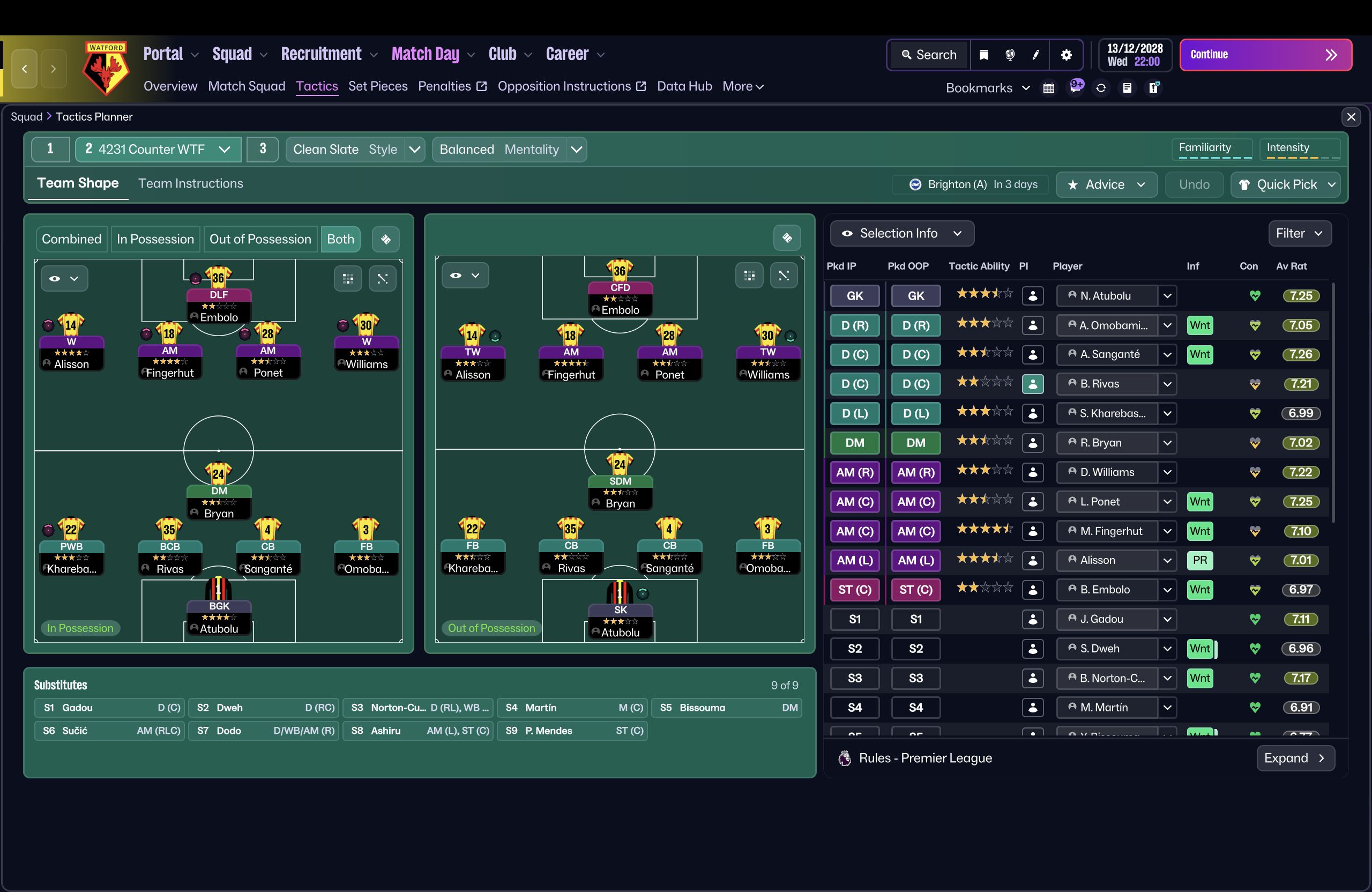
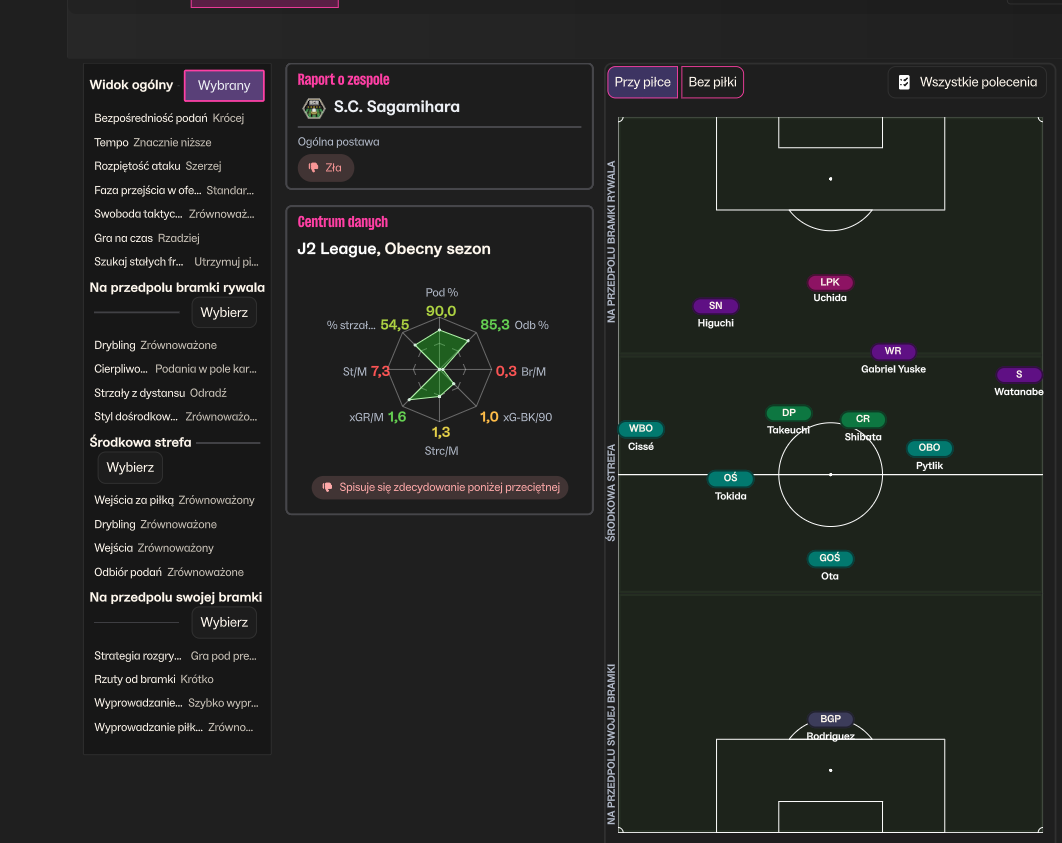
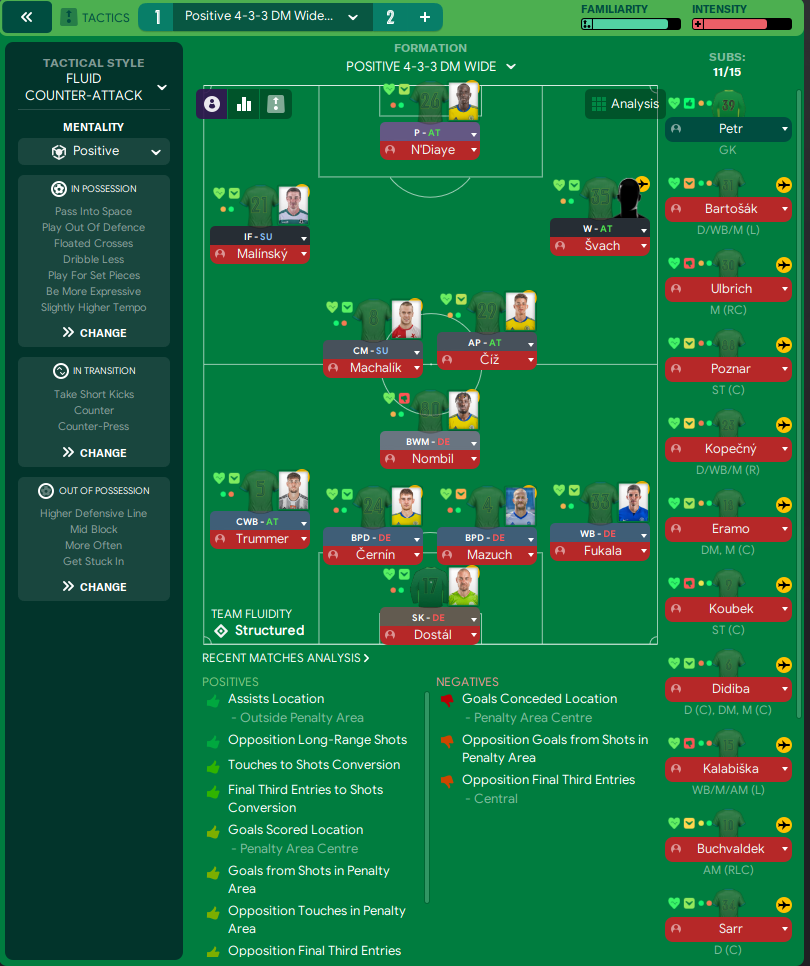
More Fluid Counter-Attack tactics
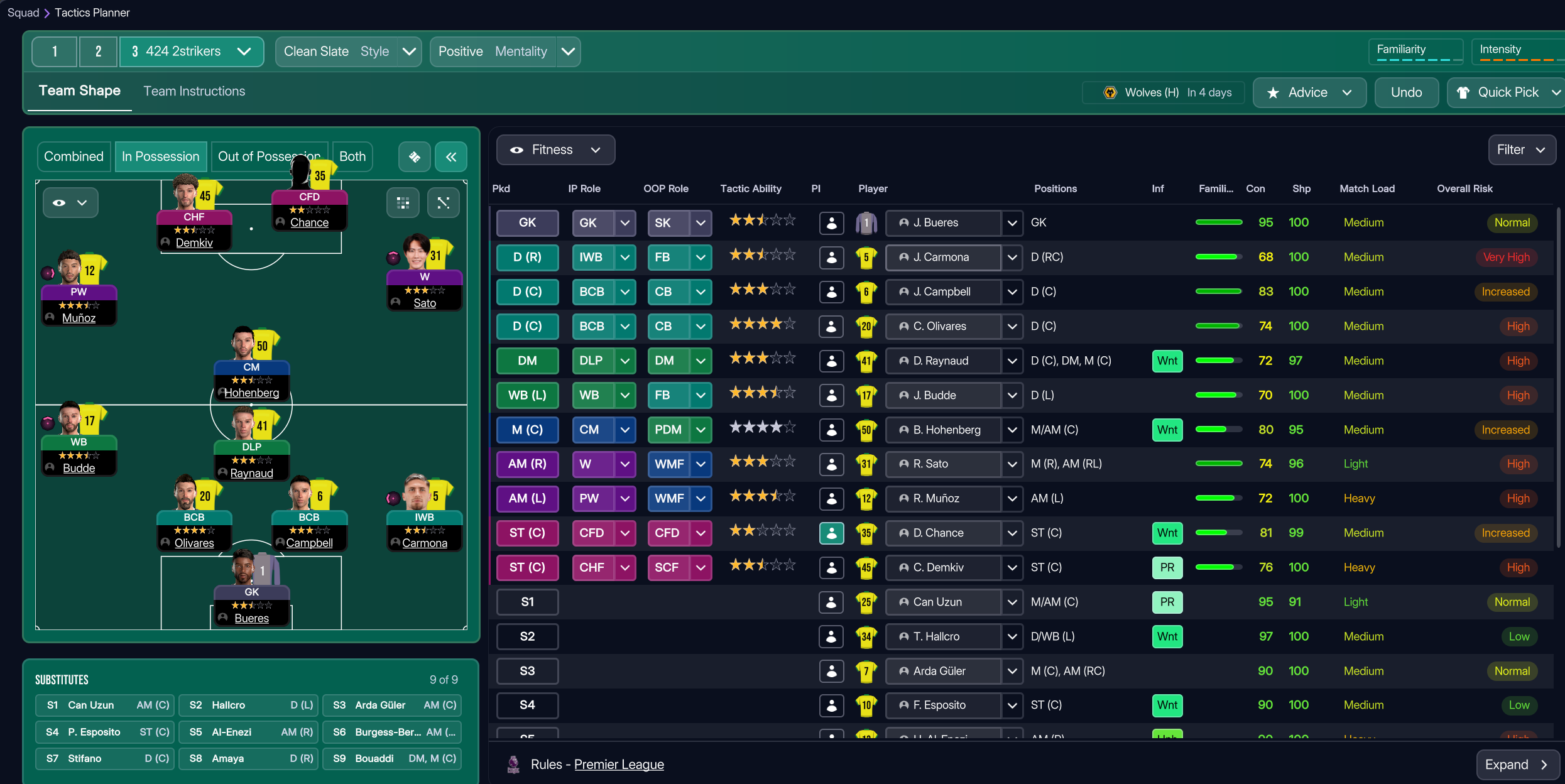
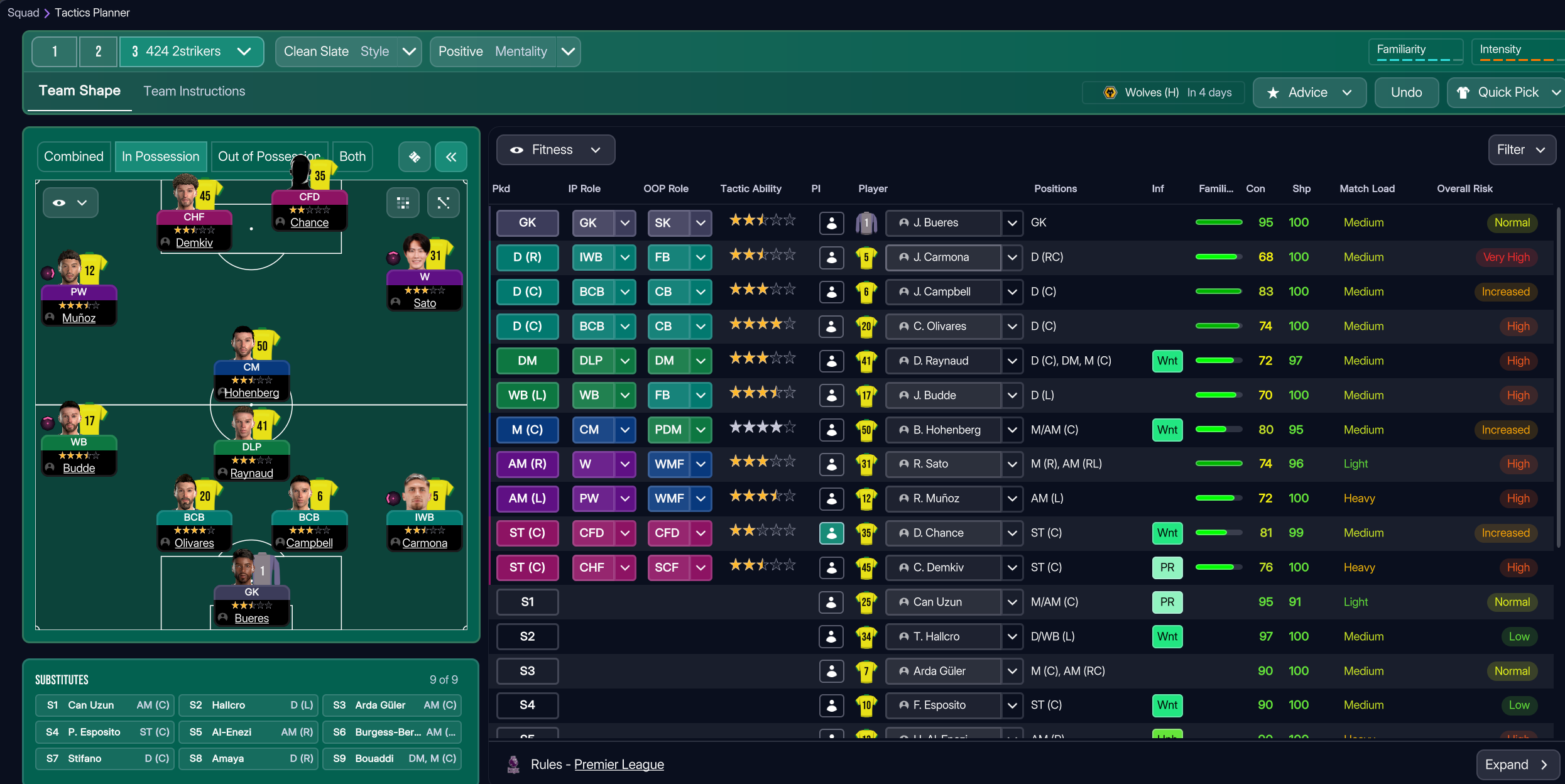
Guides for this formation
The tactical theory behind the 4-2-3-1: roles, instructions, and the trade-offs that decide whether the system holds up.
Player pairings
Midfield Pairs in 4-2-3-1 and 4-4-2
Double pivots and flat pairs in 4-2-3-1 and 4-4-2: when each pairing works, when it collapses, and the AMC unicorn that rescues both.
Read guide
Playing styles
Gegenpressing: A Full Guide
Klopp-style gegenpressing in FM, including squad profile, line-and-press pairing, sustainable workload, and the antipatterns to avoid.
Read guide