Uploaded Tactic
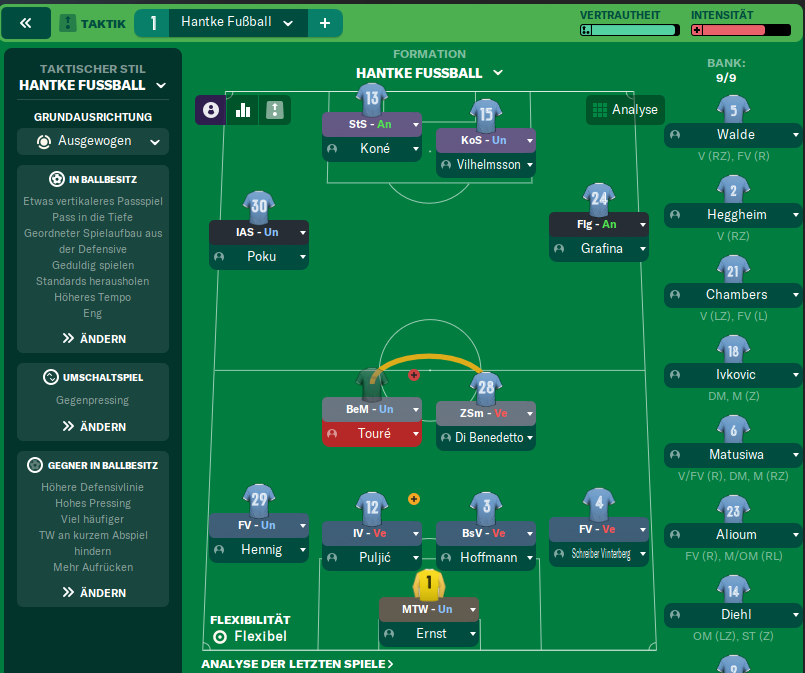
Formation & Style
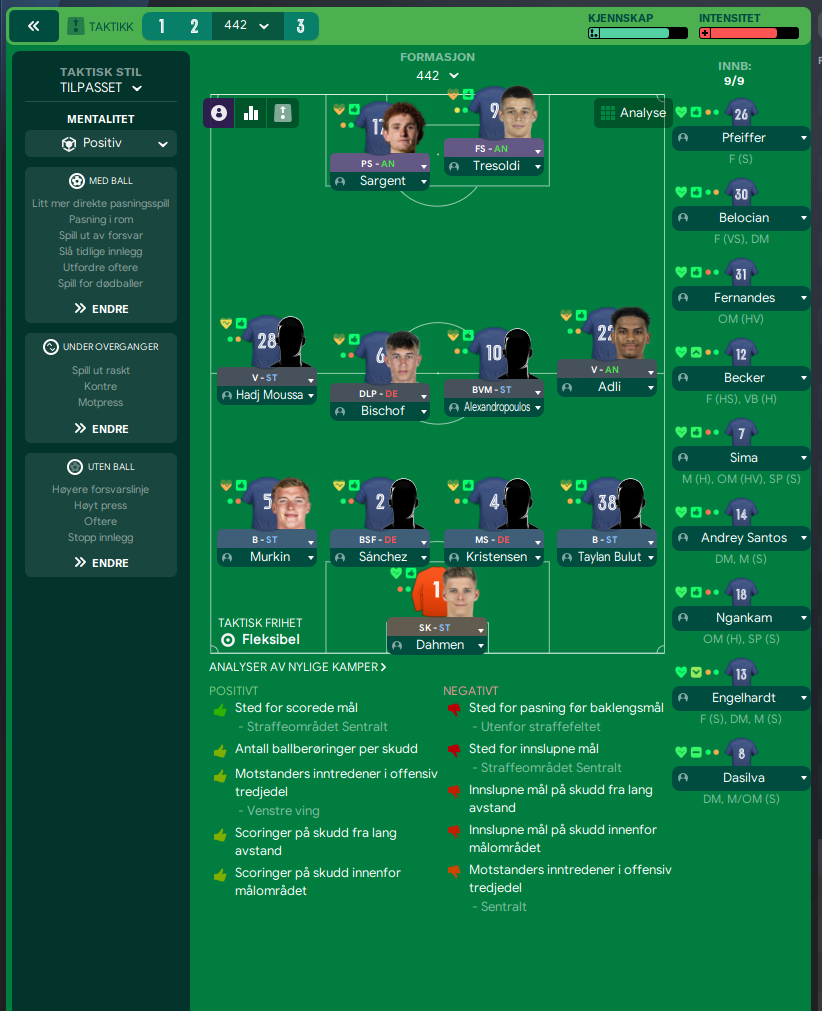
Tactical Style:Flexibel
Mentality:Unspecified
Formation:4-2-3-1
Team Fluidity:Structured
In Possession
Etwas vertikaleres Passspiel
Pass in die Tiefe
Höheres Tempo
In Transition
Gegenpressing
Out of Possession
Höhere Defensivlinie
Viel häufiger pressen
Team Shape Without Ball
Shape:4-2
Description:The team sets up in a compact 4-2 shape when defending, maintaining a solid flat line across the back.
Evidence:DF shapes at [2,1], [2,2], [2,4], and [2,5], supporting a solid defensive structure.
Team Shape With Ball
Shape:4-2-3-1
Description:In attack, the formation expands with full-backs providing width and two strikers supported by an attacking midfielder.
Evidence:ST positions filled at [6,2] and [6,4] with support from AM at [5,3].
Phase Description
Attacking Play
Focused on vertical movement and quick passing into space. Utilizes wide areas to stretch the opposition.
Defensive Transition
Emphasizes aggressive pressing to recover possession quickly, leveraging the team’s physicality.
Main Focus
Creating goal-scoring opportunities through fast, direct attacking play.
Key Strengths
Quick Transition
Effective at regaining possession and shifting quickly into attack.
Vertical Play
Utilizes direct passing to penetrate defensive lines swiftly.
Defensive Solidity
Organized defensive line with both center-backs and a deep midfield shield.
Conflicting Directions
High Line Risks
A higher defensive line may leave gaps against quick counter-attacks.
Pressing Overcommitment
High pressing might lead to fatigue, especially during transitions.
Lack of Width
With a compact shape, it could get congested in central areas, affecting creativity.
Tactical Suggestions
Adjust Defensive Line
Consider lowering the defensive line to mitigate counter-attacking threats.
Flexible Midfield Roles
Experiment with different duties in midfield to enhance creativity.
Incorporate Wider Play
Encourage full-backs to engage more in wide play to stretch opponents’ defence.
Ask Questions About Your Lineup
Related Tactics
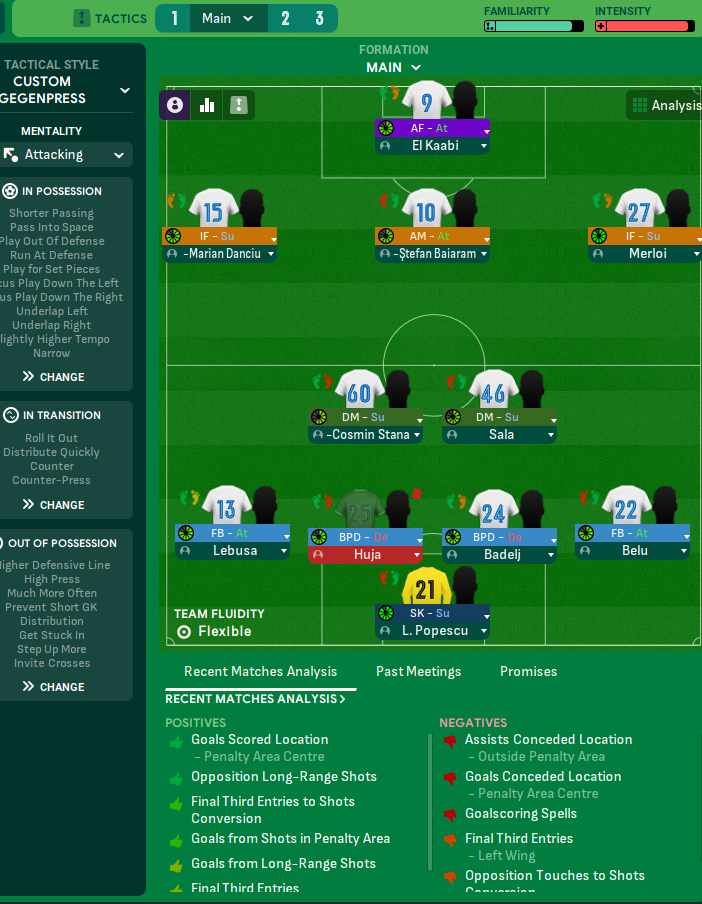
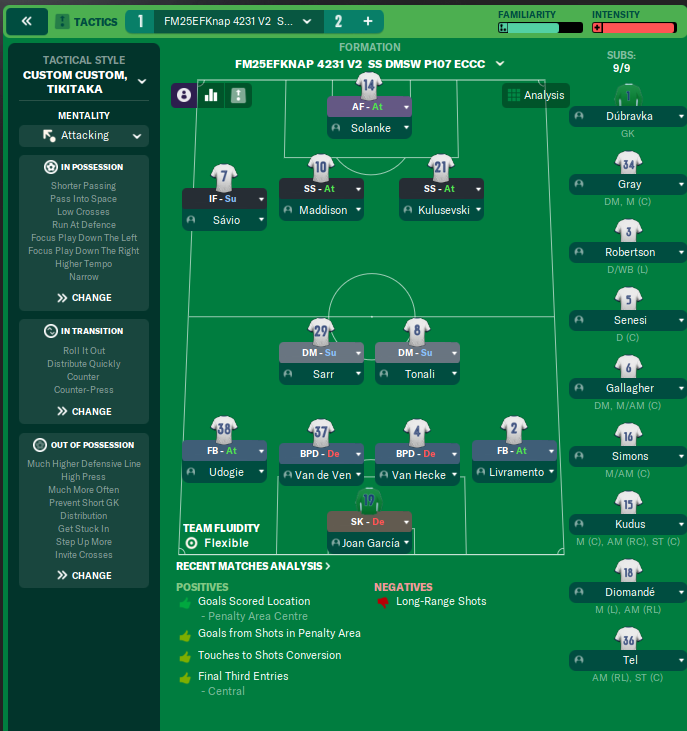
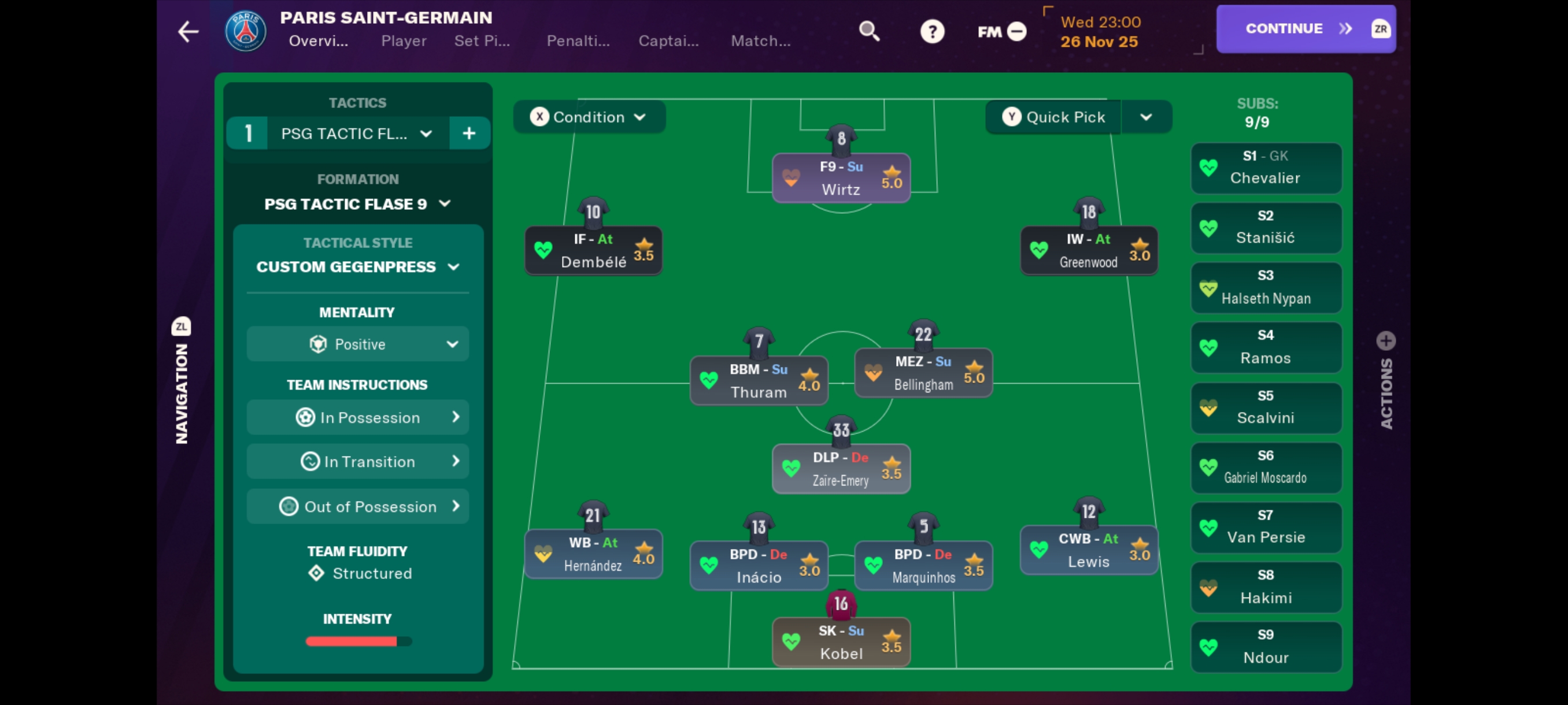
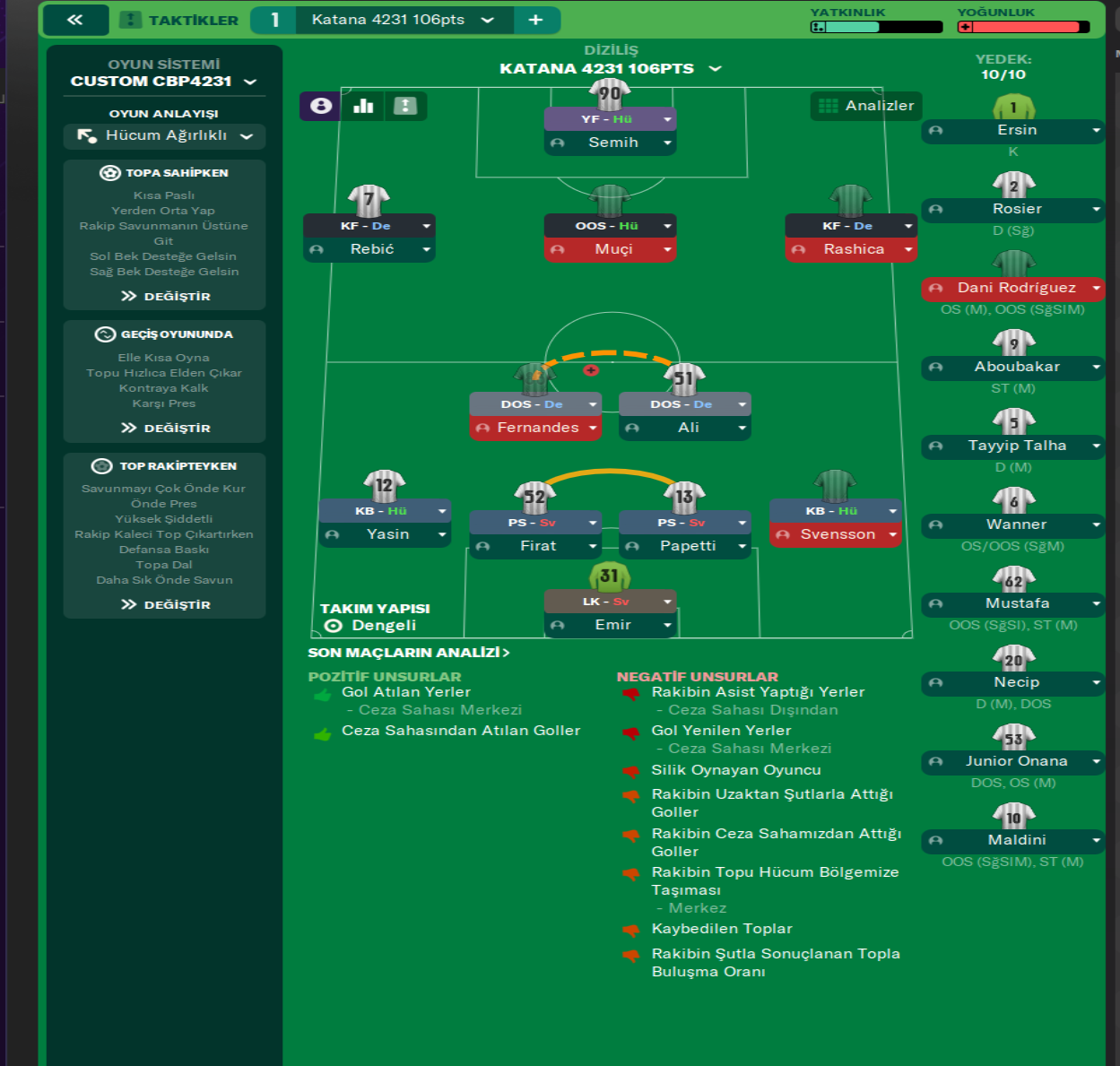
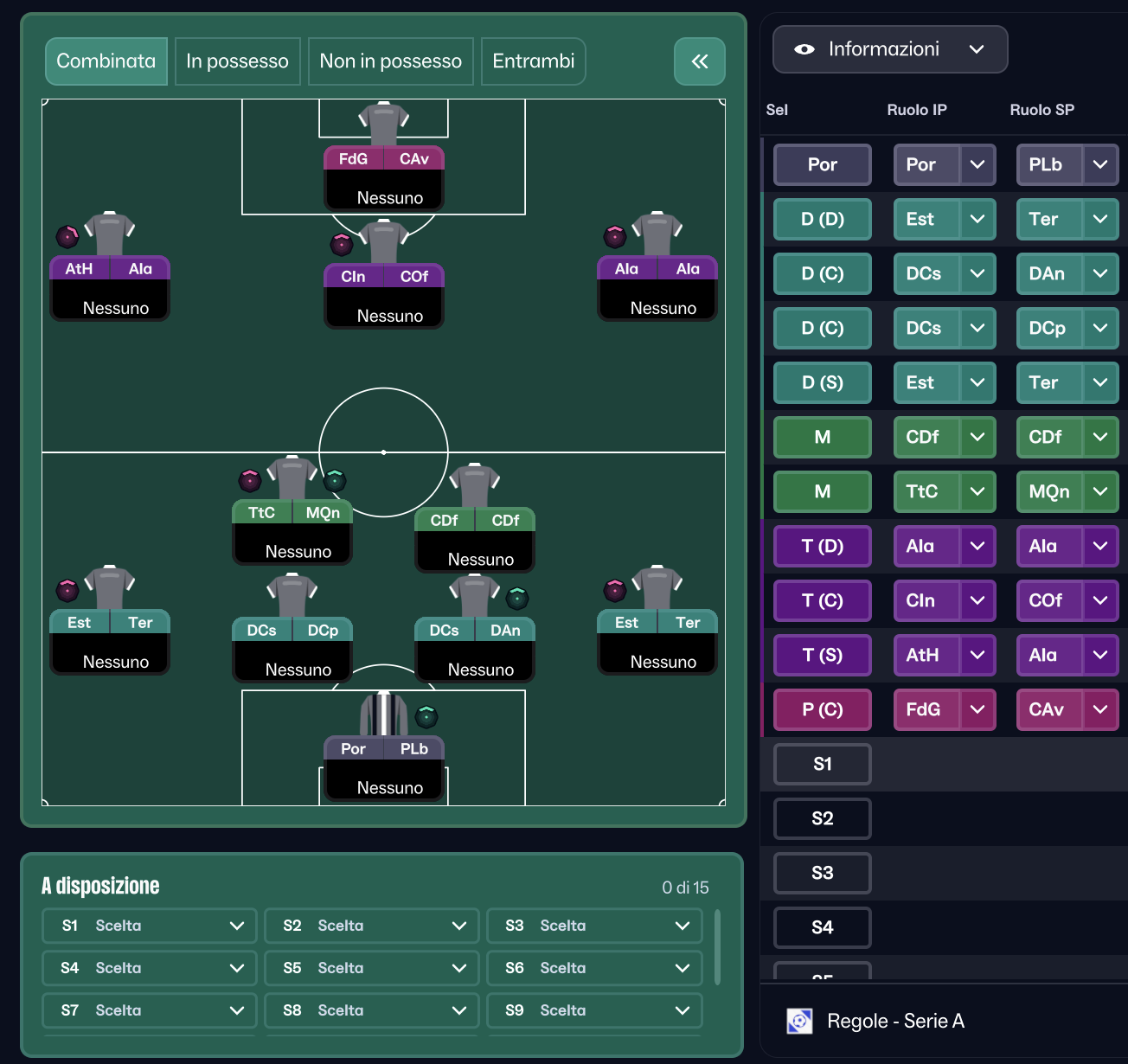
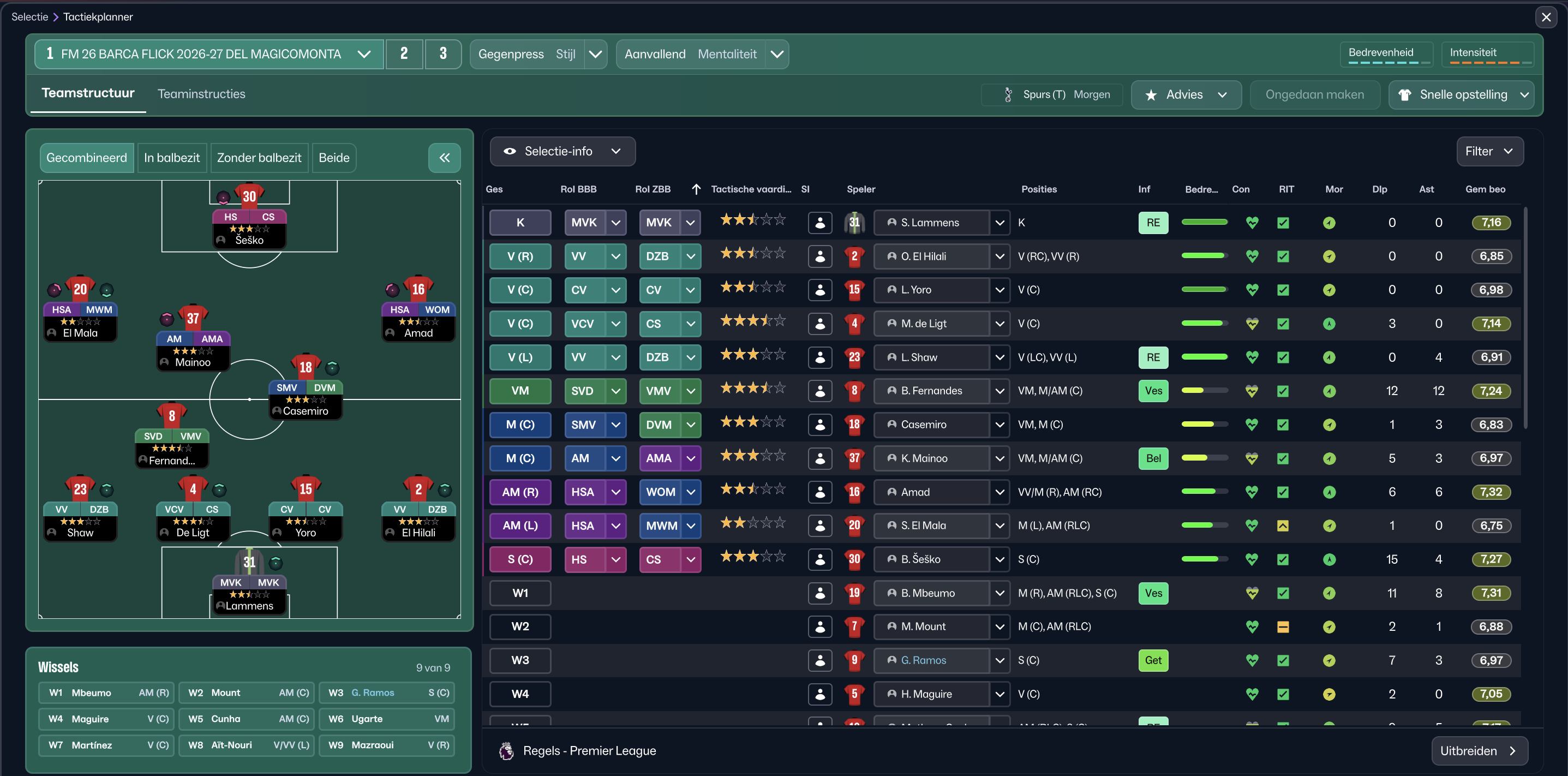
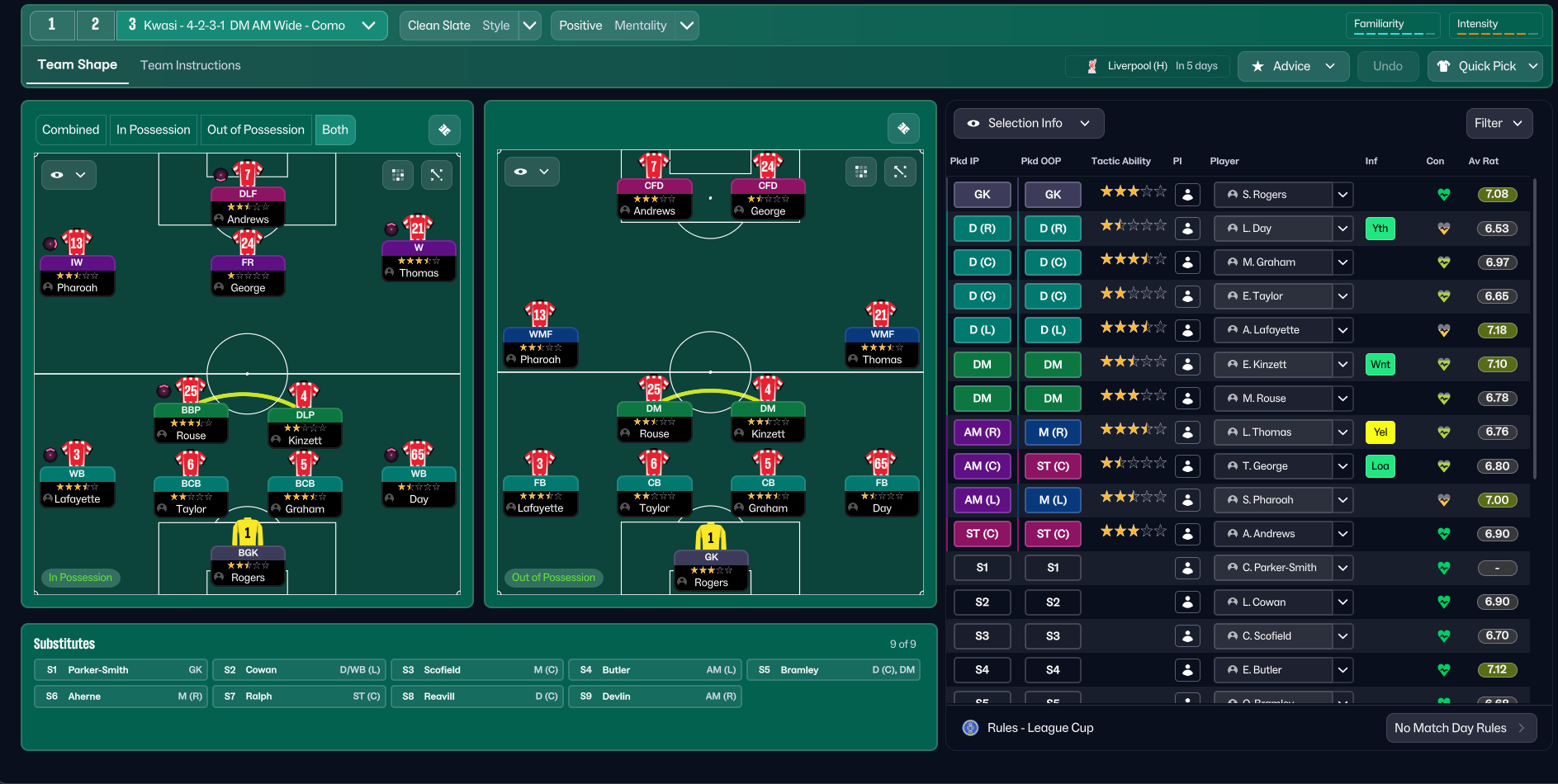
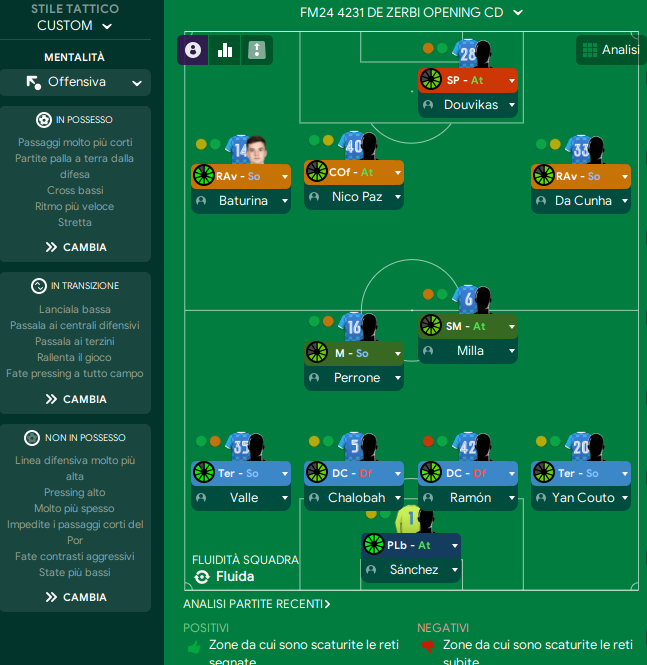
More Flexibel tactics
Guides for this formation
The tactical theory behind the 4-2-3-1: roles, instructions, and the trade-offs that decide whether the system holds up.
Player pairings
Midfield Pairs in 4-2-3-1 and 4-4-2
Double pivots and flat pairs in 4-2-3-1 and 4-4-2: when each pairing works, when it collapses, and the AMC unicorn that rescues both.
Read guide
Playing styles
Gegenpressing: A Full Guide
Klopp-style gegenpressing in FM, including squad profile, line-and-press pairing, sustainable workload, and the antipatterns to avoid.
Read guide