Uploaded Tactic
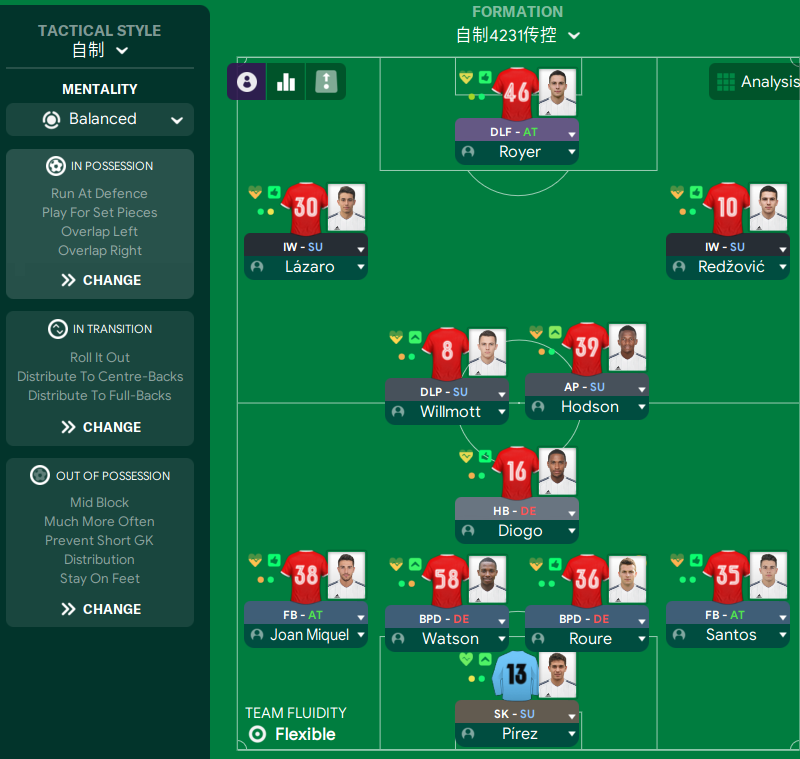
Formation & Style
Tactical Style:Balanced
Mentality:Balanced
Formation:4-2-3-1
Team Fluidity:Flexible
In Possession
Run At Defence
Play For Set Pieces
Overlap Left
Overlap Right
In Transition
Roll It Out
Distribute To Centre-Backs
Distribute To Full-Backs
Out of Possession
Mid Block
Much More Often Prevent Short GK Distribution
Stay On Feet
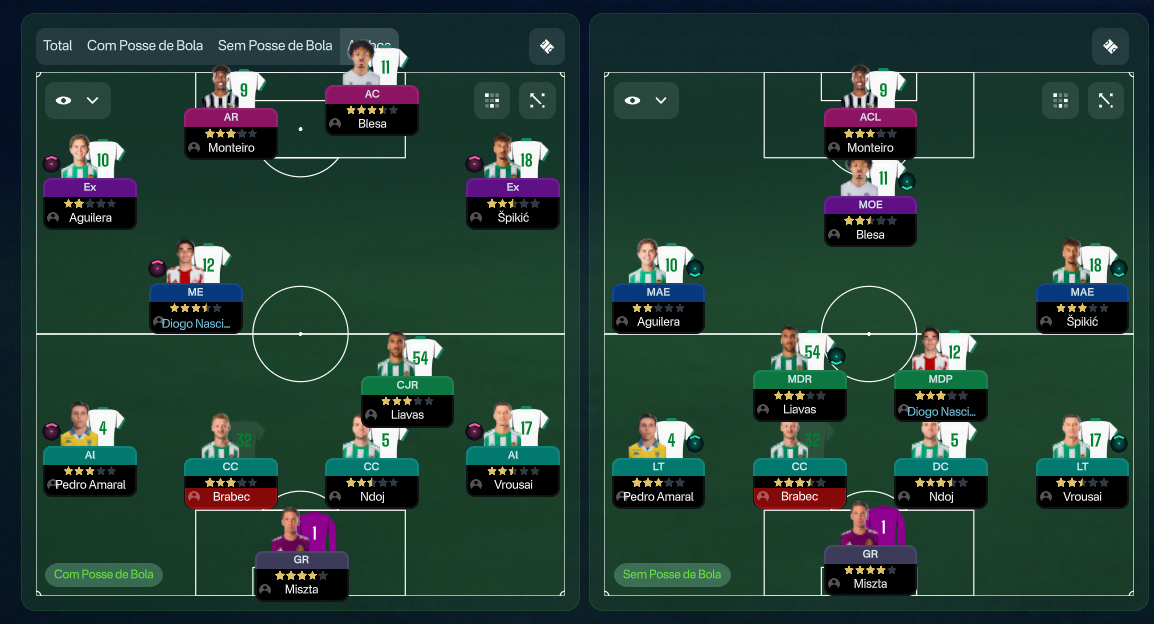
Team Shape Without Ball
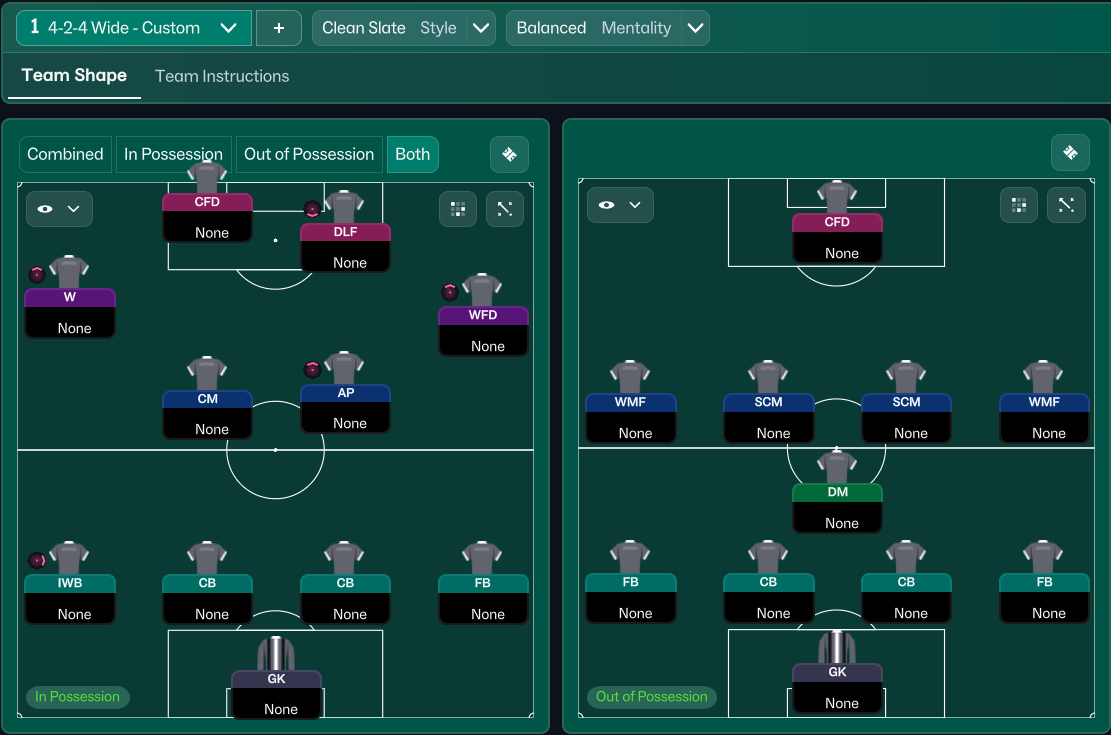
Shape:4-2-3-1 Mid Block
Description:The team adopts a compact shape, aiming to limit the opponent's space and force turnovers.
Evidence:Mid Block instruction along with two defensive midfielders (DM at [3,3] and CM at [4,2]) supports this defensive strategy.
Team Shape With Ball
Shape:4-2-3-1 with Width
Description:Attacks predominantly through the wings with overlapping full-backs, enabling the wingers to cut inside.
Evidence:Overlap instructions for left and right emphasize width, with Inverted Wingers at [6,2] and [6,4] cutting inside.
Phase Description
Attacking Play
Utilizes width through inverted wingers and playmaking from the midfield to create goal-scoring opportunities.
Defensive Transition
Prioritizes maintaining a solid midfield block before pressing when possession is lost.
Main Focus
Control through midfield and attacking width.
Key Strengths
Midfield Control
The combination of a Half Back and Deep-Lying Playmaker provides stability and strong ball retention.
High Press Potential
The tactic features a mid-block with the potential for high pressing when winning the ball back.
Versatile Attackers
Inverted Wingers can exploit narrow defensive setups and open spaces for overlapping full-backs.
Conflicting Directions
Defensive Stability vs. Openness
While the defensive setup provides stability, it may lack coverage against fast counters due to high pressing.
Fluidity of Attack vs. Defensive Midfield
The fluidity in attack might sometimes create gaps in midfield if the players commit forward.
Overlap Strategy vs. Control
Overlapping full-backs may lead to over-commitment in attacks, risking defensive balance.
Tactical Suggestions
Adjust Defensive Line
Consider lowering the defensive line to mitigate risks from counter-attacks.
Rotate Inverted Wingers
Regularly rotating the wingers can create confusion in opposition defenses and exploit mismatches.
Incorporate a Central Forward
Adding a central forward instead of a deep-lying forward could provide a focal point in the attack.
Ask Questions About Your Lineup
Related Tactics
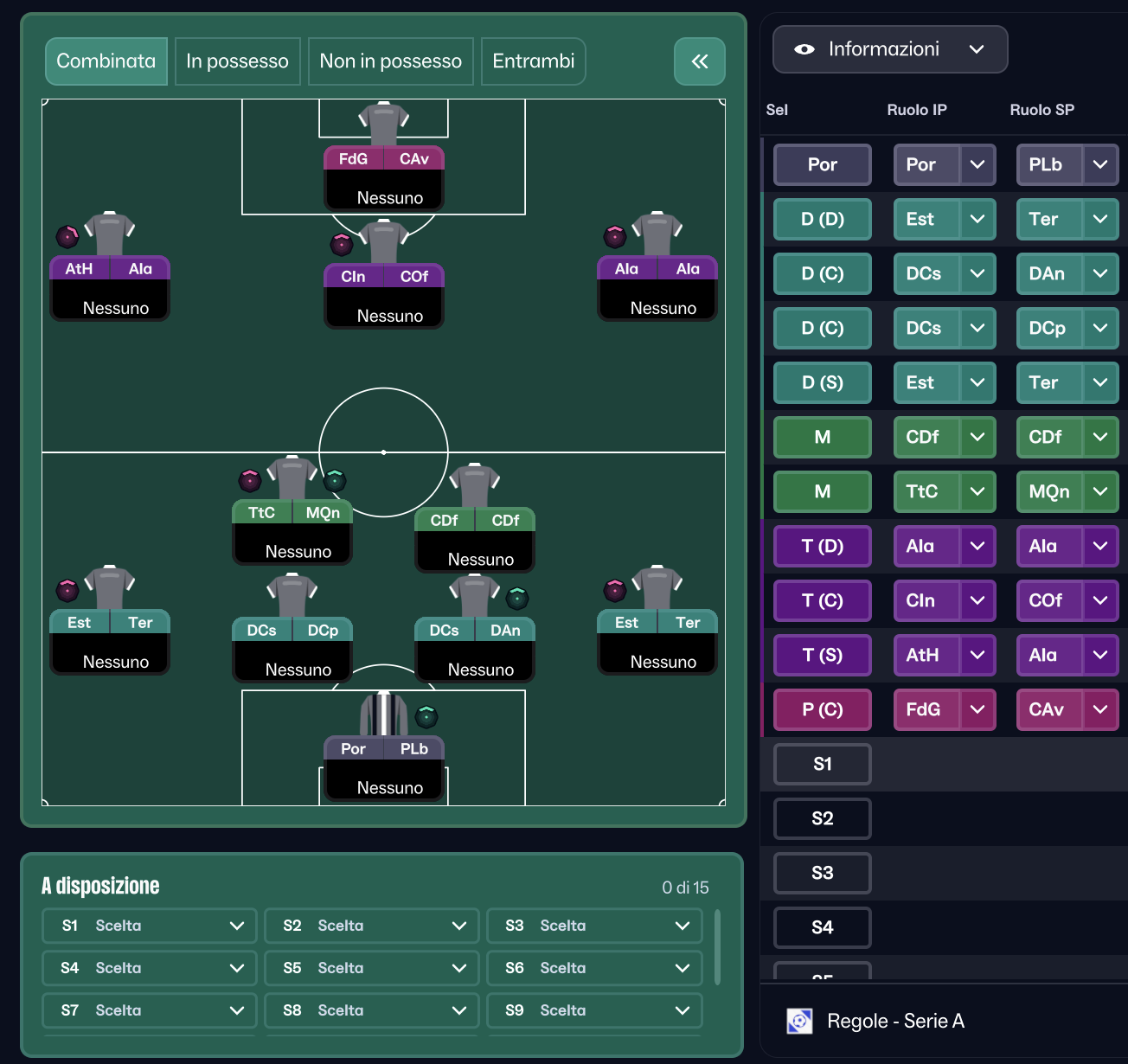
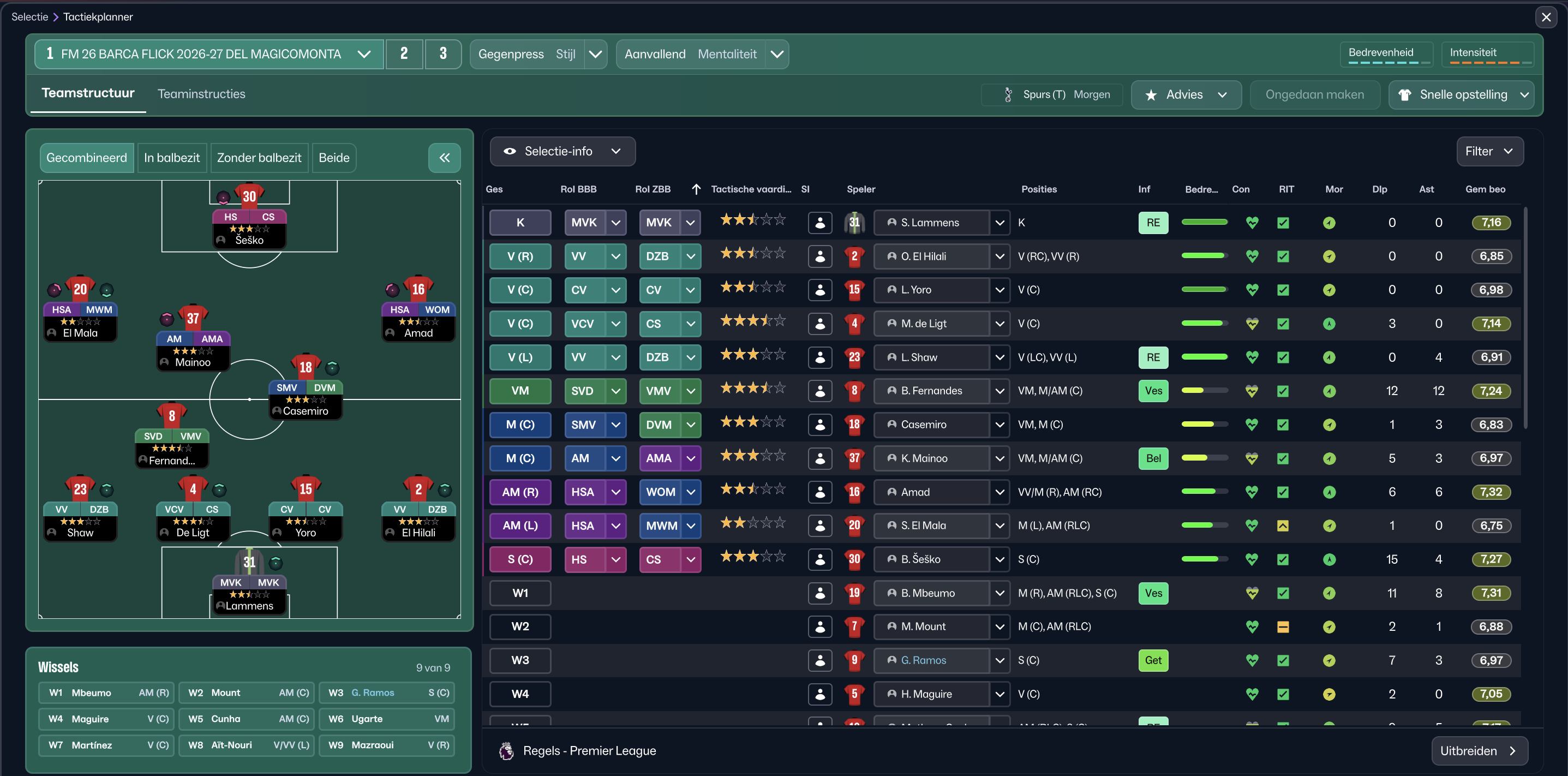
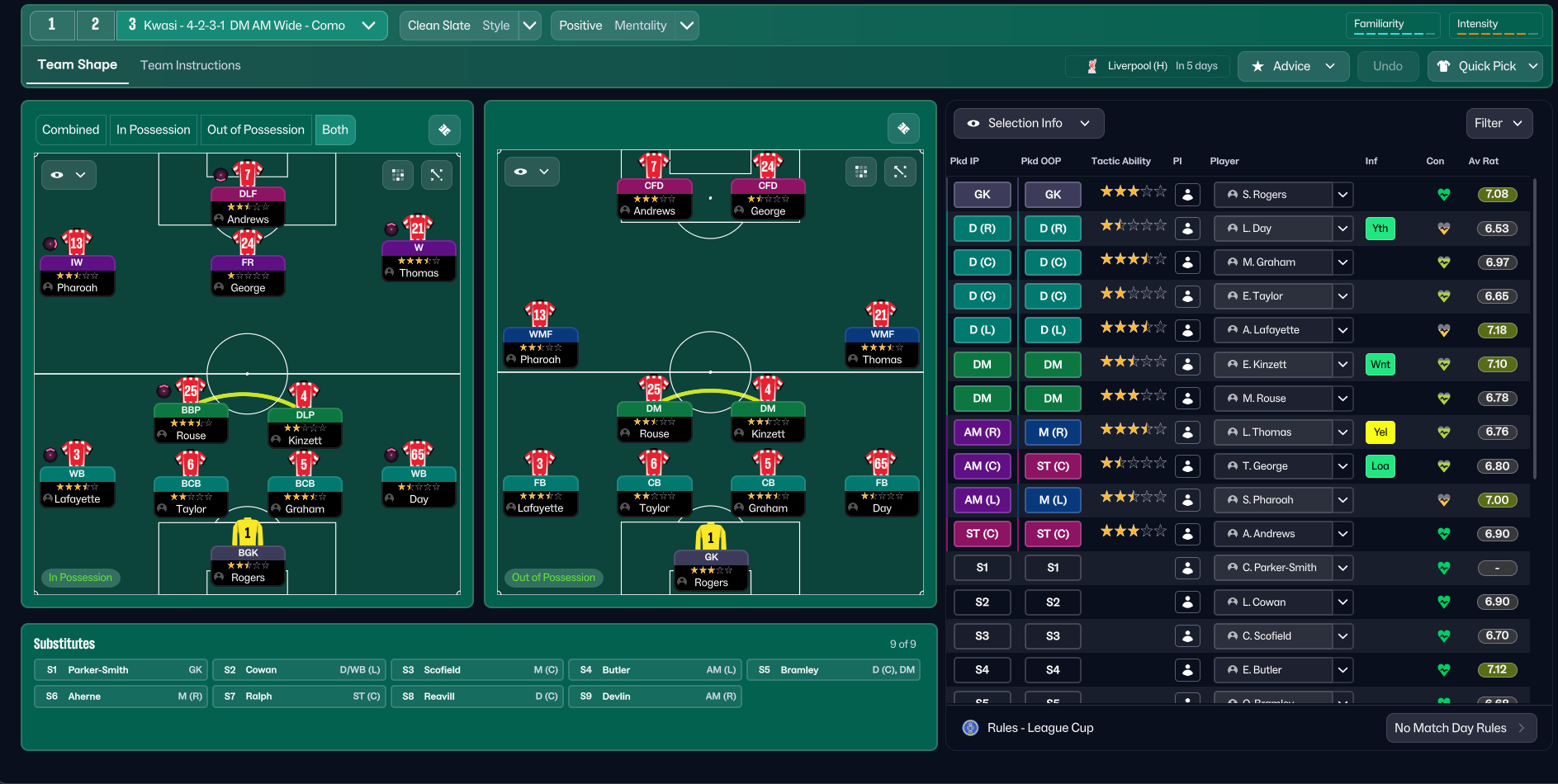
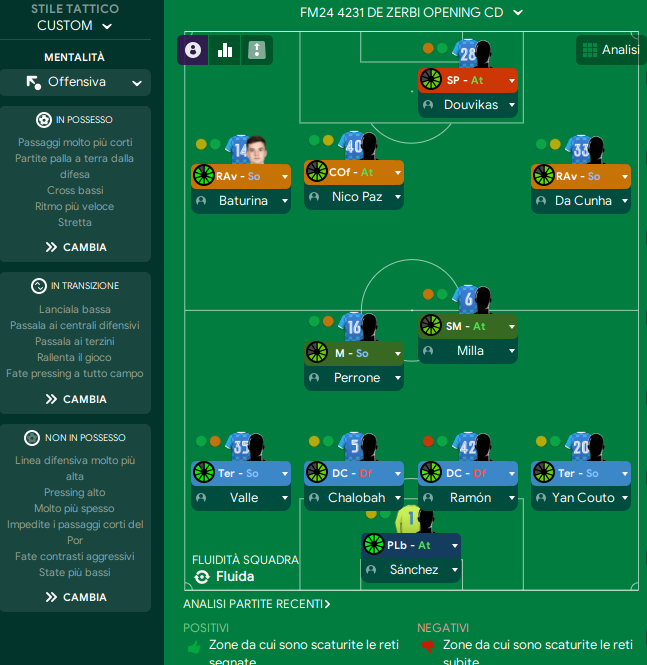
More Balanced tactics
Guides for this formation
The tactical theory behind the 4-2-3-1: roles, instructions, and the trade-offs that decide whether the system holds up.
Player pairings
Midfield Pairs in 4-2-3-1 and 4-4-2
Double pivots and flat pairs in 4-2-3-1 and 4-4-2: when each pairing works, when it collapses, and the AMC unicorn that rescues both.
Read guide
Playing styles
Gegenpressing: A Full Guide
Klopp-style gegenpressing in FM, including squad profile, line-and-press pairing, sustainable workload, and the antipatterns to avoid.
Read guide